Overview
In this unit, you will examine contemporary issues in human resource management (HRM) and explore the impact that new developments in people analytics have on an organisation's ability to strategically attract, recruit, retain and manage its human resources in a competitive environment. In addition, this unit will raise your awareness of the relevance of Aboriginal and Torres Strait Islander cultures in good business practices, as well as apply lessons from those cultures for good ethical, social, and governance outcomes in HRM contexts.
Details
Pre-requisites or Co-requisites
There are no requisites for this unit.
Important note: Students enrolled in a subsequent unit who failed their pre-requisite unit, should drop the subsequent unit before the census date or within 10 working days of Fail grade notification. Students who do not drop the unit in this timeframe cannot later drop the unit without academic and financial liability. See details in the Assessment Policy and Procedure (Higher Education Coursework).
Offerings For Term 1 - 2026
Attendance Requirements
All on-campus students are expected to attend scheduled classes - in some units, these classes are identified as a mandatory (pass/fail) component and attendance is compulsory. International students, on a student visa, must maintain a full time study load and meet both attendance and academic progress requirements in each study period (satisfactory attendance for International students is defined as maintaining at least an 80% attendance record).
Recommended Student Time Commitment
Each 6-credit Postgraduate unit at CQUniversity requires an overall time commitment of an average of 12.5 hours of study per week, making a total of 150 hours for the unit.
Class Timetable
Assessment Overview
Assessment Grading
This is a graded unit: your overall grade will be calculated from the marks or grades for each assessment task, based on the relative weightings shown in the table above. You must obtain an overall mark for the unit of at least 50%, or an overall grade of 'pass' in order to pass the unit. If any 'pass/fail' tasks are shown in the table above they must also be completed successfully ('pass' grade). You must also meet any minimum mark requirements specified for a particular assessment task, as detailed in the 'assessment task' section (note that in some instances, the minimum mark for a task may be greater than 50%). Consult the University's Grades and Results Policy for more details of interim results and final grades.
All University policies are available on the CQUniversity Policy site.
You may wish to view these policies:
- Grades and Results Policy
- Assessment Policy and Procedure (Higher Education Coursework)
- Review of Grade Procedure
- Student Academic Integrity Policy and Procedure
- Academic Progression Policy and Procedure
- Student Refund and Credit Balance Policy and Procedure
- Complaints Policy and Procedure
- Information and Communications Technology Acceptable Use Policy and Procedure
This list is not an exhaustive list of all University policies. The full list of University policies are available on the CQUniversity Policy site.
Feedback, Recommendations and Responses
Every unit is reviewed for enhancement each year. At the most recent review, the following staff and student feedback items were identified and recommendations were made.
Feedback from Student Survey
Low response rates and lower satisfaction scores in T2-2025 suggest reduced student engagement and limited opportunities for feedback dialogue, particularly in smaller cohorts.
Increase structured opportunities for formative feedback and engagement, including targeted check-in activities prior to major assessments, and clearer promotion of student evaluation processes. Teaching staff should explicitly close the feedback loop by communicating how student feedback has informed unit improvements.
Feedback from Unit Coordinator
some students required clearer guidance on assessment expectations, evaluation criteria, and performance standards, particularly for the analytics-focused components of the unit.
Implement explicit, structured in-class assessment activities across all cohorts from the early weeks of the term, including assessment walkthroughs, discussion of marking criteria and exemplars, and guided evaluation of sample responses during workshops.
Feedback from Unit Coordinator
Lower engagement levels in some cohorts suggest that group formation and peer engagement may not have been sufficiently established early in the term, limiting collaboration and participation in workshops.
Introduce early, staff-supported group development activities within the first two weeks of the term. Teaching staff should actively facilitate group formation, clarify group roles and expectations, and encourage early collaboration through low-stakes, in-class activities. This approach should be supported by structured icebreaker tasks and early collaborative exercises to promote engagement and accountability from the outset.
- Identify key contemporary issues throughout the employment cycle and evaluate those which could affect HRM effectiveness.
- Critically analyse key contemporary HR issues and their implications for effective HRM.
- Evaluate approaches that could be used to address contemporary HRM issues.
- Develop an understanding of people analytics, its opportunities and risks in relation to HRM.
- Analyse and interpret organisation's data to make evidence-based HRM decisions.
None
Alignment of Assessment Tasks to Learning Outcomes
| Assessment Tasks | Learning Outcomes | ||||
|---|---|---|---|---|---|
| 1 | 2 | 3 | 4 | 5 | |
| 1 - Presentation - 15% | |||||
| 2 - Group Work - 35% | |||||
| 3 - Written Assessment - 50% | |||||
Alignment of Graduate Attributes to Learning Outcomes
| Graduate Attributes | Learning Outcomes | ||||
|---|---|---|---|---|---|
| 1 | 2 | 3 | 4 | 5 | |
| 1 - Knowledge | |||||
| 2 - Communication | |||||
| 3 - Cognitive, technical and creative skills | |||||
| 4 - Research | |||||
| 5 - Self-management | |||||
| 6 - Ethical and Professional Responsibility | |||||
| 7 - Leadership | |||||
| 8 - First Nations Knowledges | |||||
| 9 - Aboriginal and Torres Strait Islander Cultures | |||||
Textbooks
Introduction to People Analytics: A Practical Guide to Data-Driven HR
- Edition: 2 (2023)
- Authors: Khan, N., & Millner, D.
- Kogan Page, Limited
- London London , UK
- ISBN: 9781398610057
The 2023 e-book is accessible for on-line reading via CQUni Library.
- Binding: eBook
Predictive Analytics in Human Resource Management : A Hands-On Approach
- Edition: 1 (2021)
- Authors: Nijjer, S., & Raj, S.
- Taylor & Francis Group
- Milton Milton
- ISBN: 9781000208139
The 2021 e-book is accessible for on-line reading via CQUniversity Library.
- Binding: eBook
IT Resources
- CQUniversity Student Email
- Internet
- Unit Website (Moodle)
All submissions for this unit must use the referencing style: American Psychological Association 7th Edition (APA 7th edition)
For further information, see the Assessment Tasks.
m.babagolzadeh@cqu.edu.au
Week 1
Begin Date: 09 Mar 2026Module/Topic
Contemporary HRM and Introduction to People/HR Analytics
Chapter
Week1 e-reading list on Moodle
Events and Submissions/Topic
Week 2
Begin Date: 16 Mar 2026Module/Topic
Diversity, Indigenisation and Talent Management
Chapter
Week 2 e-reading list on Moodle
Events and Submissions/Topic
Week 3
Begin Date: 23 Mar 2026Module/Topic
Flexibility, Future of Work, and Career Management
Chapter
Week 3 e-reading list on Moodle
Events and Submissions/Topic
Week 4
Begin Date: 30 Mar 2026Module/Topic
Sustainable HRM and Well-being
Chapter
Week 4 e-reading list on Moodle
Events and Submissions/Topic
Week 5
Begin Date: 06 Apr 2026Module/Topic
Introduction to HR Analytics
Chapter
Chapters 1 and 2 of Nijjer, S., & Raj, S. (2021) and other weekly readings on Moodle
Events and Submissions/Topic
PPT Group presentation in class
PPT slides submission on Moodle
Presentation (Group) Due: Week 5 Monday (6 Apr 2026) 5:00 pm AEST
Week 6
Begin Date: 13 Apr 2026Module/Topic
Data Acquisition & and Problem Modeling
Chapter
Chapter 3 of Nijjer, S., & Raj, S. (2021) and other weekly readings on Moodle
Events and Submissions/Topic
Vacation Week
Begin Date: 20 Apr 2026Module/Topic
No class
Chapter
No reading
Events and Submissions/Topic
Week 7
Begin Date: 27 Apr 2026Module/Topic
Predictive Analytical Tools, and Techniques
Chapter
Chapter 4 of Nijjer, S., & Raj, S. (2021) and other weekly readings on Moodle
Events and Submissions/Topic
Week 8
Begin Date: 04 May 2026Module/Topic
Predictive HR Analytics in Recruitment & Selection
Chapter
Chapters 6 and 7 of Nijjer, S., & Raj, S. (2021) and other weekly readings on Moodle
Events and Submissions/Topic
Week 9
Begin Date: 11 May 2026Module/Topic
Predictive HR Analytics in Turnover and Separation
Chapter
Chapters 6 and 7 of Nijjer, S., & Raj, S. (2021) and other weekly readings on Moodle
Events and Submissions/Topic
Week 10
Begin Date: 18 May 2026Module/Topic
Predictive HR Analytics in Engagement, Performance, and Compensation (Part 1)
Chapter
Chapter 8 of Nijjer, S., & Raj, S. (2021) and other weekly readings on Moodle
Events and Submissions/Topic
Week 11
Begin Date: 25 May 2026Module/Topic
Emerging Trends in Predictive HR Analytics and Ethical Considerations (Part 1)
Chapter
Chapter 8 of Nijjer, S., & Raj, S. (2021) and other weekly readings on Moodle
Events and Submissions/Topic
Week 12
Begin Date: 01 Jun 2026Module/Topic
Emerging Trends in Predictive HR Analytics and Ethical Considerations (Part 2)
Chapter
Chapter 9 of Nijjer, S., & Raj, S. (2021) and other weekly readings on Moodle
Events and Submissions/Topic
Preparation for the final report
Exam Week
Begin Date: 08 Jun 2026Module/Topic
Chapter
Events and Submissions/Topic
Vacation/Exam Week
Begin Date: 15 Jun 2026Module/Topic
Chapter
Events and Submissions/Topic
1 Presentation
In this assessment task, you are required to
- Form a group of 3 to 4 students from the same workshop.
- Prepare a 10-minute PowerPoint (PPT) presentation or poster presentation to be delivered in class to the CEO and top management team of a chosen organisation.
- Your presentation will focus on a topic (or topics) related to Human Resource Management (HRM) challenges and/or opportunities discussed in Weeks 1–4.
- The presentation will serve as a preview of your written report for the CEO (Assessment 2).
Your PowerPoint presentation should
- provide a comprehensive and critical analysis of contemporary HRM challenges and/or opportunities related to your chosen topic(s).
- have recommendations for short-term and long-term action to address the above HRM challenges.
- provide at least three real-world examples to support your analysis.
- cite recent (2020 to 2025), and relevant peer-reviewed academic journal articles throughout the PPT slides, and include them in a reference list, using the APA referencing style.
Other information
- Oral presentations: All members of the group should participate equally in the presentation.
- Submission: One member will submit the presentation on the Moodle site on behalf of the team.
- Feedback will be provided in the class after your presentation.
Important: For this assessment, students must adhere to the guidelines outlined in the Artificial Intelligence Assessment Scale (AIAS). You are permitted to use AI tools for planning, idea development, and research. However, your final submission should clearly demonstrate how you have developed, refined, and critically engaged with these ideas. Failure to properly disclose the use of AI tools or any misuse will be regarded as a breach of academic integrity and will be handled in accordance with the university's academic misconduct policies.
Week 5 Monday (6 Apr 2026) 5:00 pm AEST
Verbal feedback will be provided in class and marks will be released to students two working weeks after the submission.
Your presentation will be assessed on the extent to which it meets each of the following criteria:
1) Quality of research and analysis: Draw from a topic from the unit and refer to recent and relevant peer-reviewed academic journal articles. (20%)
2) Application of theory: Incorporate theory and literature to identify key issues and provide recommendations to meet the assessment requirements. (20%)
3) Visual aid and structure: Quality of visual aids (PPT slides); Concise and structured presentation with an introduction, main presentation, and conclusion. In-text citations and the reference list using the APA referencing style. (20%)
4) Delivery: Quality and professionalism of the oral presentation delivered within the allocated time. (35%)
5) Teamwork: Work collaboratively as a team. (5%)
You will lose marks for this task if you are not present on the day.
Late Submission: Penalties for late submissions are applied according to policy (5% per day).
Plagiarism: Any detected plagiarism will be reported to the Academic Services Centre and may result in a
“zero” mark.
- Identify key contemporary issues throughout the employment cycle and evaluate those which could affect HRM effectiveness.
- Critically analyse key contemporary HR issues and their implications for effective HRM.
- Evaluate approaches that could be used to address contemporary HRM issues.
2 Group Work
Based on the topic your group has selected in Assessment 1, develop a fully written report to the CEO.
In line with your PPT presentation, your report should
- provide a comprehensive and critical analysis of contemporary HRM challenges and/or opportunities related to your chosen topic(s).
- have recommendations for short-term and long-term action to address the above HRM challenges relevant to the chosen organisation.
- provide at least three real-world examples to support your analysis.
- cite at least eight recent (2020 to 2025), and relevant peer-reviewed academic journal articles throughout the report, and include them in a reference list, using the APA referencing style.
Submission: One member can submit the report on the unit Moodle site on behalf of the group.
Before commencing this task, carefully read the detailed assessment task and the marking rubric available on the unit Moodle site.
Important: For this assessment, students must adhere to the guidelines outlined in the Artificial Intelligence Assessment Scale (AIAS). You are permitted to use AI tools for planning, idea development, and research. However, your final submission should clearly demonstrate how you have developed, refined, and critically engaged with these ideas. Failure to properly disclose the use of AI tools or any misuse will be regarded as a breach of academic integrity and will be handled in accordance with the university's academic misconduct policies.
Week 7 Monday (27 Apr 2026) 5:00 pm AEST
Written feedback and marks will be released to students two working weeks after the submission.
A full marking rubric will be available on the Moodle site. Your report will be assessed on the extent to which it meets each of the following criteria:
1) Executive summary: Clearly presented and summarised the report succinctly. (5%)
2) Research: A thorough knowledge of the relevant material demonstrated through the use of an appropriate body of quality sources. (25%)
3) Analysis: Identification of the issue(s), critical analysis, and clear argumentation supported by evidence. (25%)
4) Application of theory/literature: Application and/or integration of relevant theory and literature in the discussion to address the assessment task. (25%)
5) Communication: Logical structure including a clear introduction, conclusion, and recommendation; Clear and concise written communication. (15%)
6) Referencing: Correct use of the APA reference style. (5%)
Additional Notes:
Late Submission: A penalty of 5% per day applies without prior approval.
Plagiarism: Any detected plagiarism will be reported to the Academic Services Centre and may result in a
“zero” mark.
- Identify key contemporary issues throughout the employment cycle and evaluate those which could affect HRM effectiveness.
- Critically analyse key contemporary HR issues and their implications for effective HRM.
- Evaluate approaches that could be used to address contemporary HRM issues.
3 Written Assessment
This task requires you to write three (3) Portfolios in relation to HR analytics and HR challenges. You are required to have Desktop version of Excel in your computer. You will be given a dataset (in Excel) on HRM challenges. You are required to analyse the dataset to answer a number of questions or tasks in each portfolio. You will then discuss the implications of the findings for human resource managers (see Moodle for more details on questions and tasks in each Portfolio).
Important: For this assessment, students must adhere to the guidelines outlined in the Artificial Intelligence Assessment Scale (AIAS). You are permitted to use AI tools for planning, idea development, and research. However, your final submission should clearly demonstrate how you have developed, refined, and critically engaged with these ideas. Failure to properly disclose the use of AI tools or any misuse will be regarded as a breach of academic integrity and will be handled in accordance with the university's academic misconduct policies.
Exam Week Monday (8 June 2026) 5:00 pm AEST
Feedback and marks will be released to students along with the certification of grades process
Your portfolio will be assessed on the extent to which it meets each of the following criteria:
1) Data analysis: Completion of required statistical analyses. You are required to include the detail of the statistical analysis in the appendix section (20%)
2) Interpretation of the results: Quality of descriptions and interpretations of the results; Identification of the issue(s). (20%)
3) Research: A thorough knowledge of the relevant material demonstrated through the use of an appropriate body of quality sources. (15%)
4) Application of theory/literature: Application and/or integration of relevant theory and literature in the discussion of the findings to address the assessment task; Provide appropriate implications. (30%)
5) Communication (written): Following the recommended format, structure, and presentation; Clear, concise, and correct written communication. (10%)
6) Referencing: Correct use of the APA reference style. (5%)
Additional Notes:
Late Submission: A penalty of 5% per day applies without prior approval.
Plagiarism: Any detected plagiarism will be reported to the Academic Services Centre and may result in a
“zero” mark.
- Develop an understanding of people analytics, its opportunities and risks in relation to HRM.
- Analyse and interpret organisation's data to make evidence-based HRM decisions.
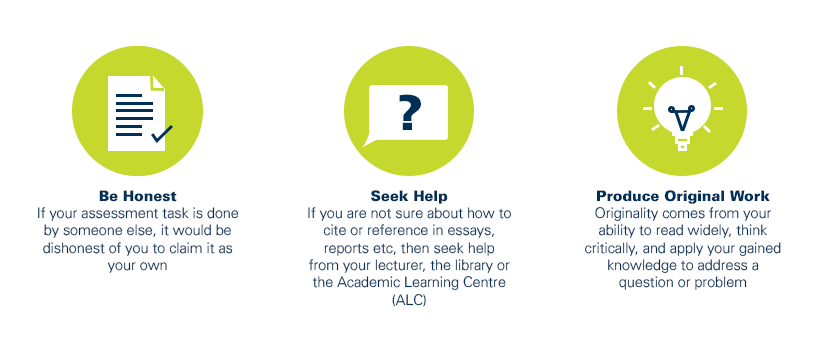
As a CQUniversity student you are expected to act honestly in all aspects of your academic work.
Any assessable work undertaken or submitted for review or assessment must be your own work. Assessable work is any type of work you do to meet the assessment requirements in the unit, including draft work submitted for review and feedback and final work to be assessed.
When you use the ideas, words or data of others in your assessment, you must thoroughly and clearly acknowledge the source of this information by using the correct referencing style for your unit. Using others’ work without proper acknowledgement may be considered a form of intellectual dishonesty.
Participating honestly, respectfully, responsibly, and fairly in your university study ensures the CQUniversity qualification you earn will be valued as a true indication of your individual academic achievement and will continue to receive the respect and recognition it deserves.
As a student, you are responsible for reading and following CQUniversity’s policies, including the Student Academic Integrity Policy and Procedure. This policy sets out CQUniversity’s expectations of you to act with integrity, examples of academic integrity breaches to avoid, the processes used to address alleged breaches of academic integrity, and potential penalties.
What is a breach of academic integrity?
A breach of academic integrity includes but is not limited to plagiarism, self-plagiarism, collusion, cheating, contract cheating, and academic misconduct. The Student Academic Integrity Policy and Procedure defines what these terms mean and gives examples.
Why is academic integrity important?
A breach of academic integrity may result in one or more penalties, including suspension or even expulsion from the University. It can also have negative implications for student visas and future enrolment at CQUniversity or elsewhere. Students who engage in contract cheating also risk being blackmailed by contract cheating services.
Where can I get assistance?
For academic advice and guidance, the Academic Learning Centre (ALC) can support you in becoming confident in completing assessments with integrity and of high standard.
What can you do to act with integrity?