Overview
This unit studies the employment relationship. It studies the ways in which people are employed in various countries. You will analyse the labour markets and systems of employment relations in these countries. You will discuss the issues that emerge from this labour market analysis. This discussion will provide you with an insight into contemporary public policy and human resource management issues in a number of countries. HRMT20027 Employment Relations introduces students to the study of employment relations. HRMT20029 International Employment Relations builds upon this base by analysing employment relations in a number of significant market economies. The focus of this unit is the study of employment relations on a comparative basis. The theoretical perspectives that underpin the study of employment relations in HRMT20027 are incorporated into the theories that inform the study of comparative employment relations in HRMT20029.
Details
Pre-requisites or Co-requisites
There are no requisites for this unit.
Important note: Students enrolled in a subsequent unit who failed their pre-requisite unit, should drop the subsequent unit before the census date or within 10 working days of Fail grade notification. Students who do not drop the unit in this timeframe cannot later drop the unit without academic and financial liability. See details in the Assessment Policy and Procedure (Higher Education Coursework).
Offerings For Term 1 - 2026
Attendance Requirements
All on-campus students are expected to attend scheduled classes - in some units, these classes are identified as a mandatory (pass/fail) component and attendance is compulsory. International students, on a student visa, must maintain a full time study load and meet both attendance and academic progress requirements in each study period (satisfactory attendance for International students is defined as maintaining at least an 80% attendance record).
Recommended Student Time Commitment
Each 6-credit Postgraduate unit at CQUniversity requires an overall time commitment of an average of 12.5 hours of study per week, making a total of 150 hours for the unit.
Class Timetable
Assessment Overview
Assessment Grading
This is a graded unit: your overall grade will be calculated from the marks or grades for each assessment task, based on the relative weightings shown in the table above. You must obtain an overall mark for the unit of at least 50%, or an overall grade of 'pass' in order to pass the unit. If any 'pass/fail' tasks are shown in the table above they must also be completed successfully ('pass' grade). You must also meet any minimum mark requirements specified for a particular assessment task, as detailed in the 'assessment task' section (note that in some instances, the minimum mark for a task may be greater than 50%). Consult the University's Grades and Results Policy for more details of interim results and final grades.
All University policies are available on the CQUniversity Policy site.
You may wish to view these policies:
- Grades and Results Policy
- Assessment Policy and Procedure (Higher Education Coursework)
- Review of Grade Procedure
- Student Academic Integrity Policy and Procedure
- Academic Progression Policy and Procedure
- Student Refund and Credit Balance Policy and Procedure
- Complaints Policy and Procedure
- Information and Communications Technology Acceptable Use Policy and Procedure
This list is not an exhaustive list of all University policies. The full list of University policies are available on the CQUniversity Policy site.
Feedback, Recommendations and Responses
Every unit is reviewed for enhancement each year. At the most recent review, the following staff and student feedback items were identified and recommendations were made.
Feedback from Unit Coordinator’s Response, In-Class Students’ Comments, and Self-Reflection
Simplify content delivery and enhance coordination
Adapt lectures and workshops for non-business students by simplifying complex concepts into clear, accessible language and using relatable, real-world examples. Maintain consistent communication and structured weekly guidance, supported by prompt responses to queries. Provide additional resources such as step-by-step study guides, simplified summaries, and targeted support materials to help students from diverse academic backgrounds strengthen understanding and engagement.
- Identify and discuss the main characteristics of employment relations in a number of countries
- Compare and contrast employment relations in various countries
- Critically analyse the labour markets of a number of countries
- Critically discuss various human resource management issues that arise from the study of a number of labour markets. Explain the significance of these matters to both a specialist and general audience
- Critically evaluate and demonstrate understanding of the theories that inform comparative employment relations.
The proposed change in the assessment format keeps the same goals as before, like improving communication, critical thinking, technical skills, research abilities, self-management, ethics, and leadership qualities. This means the impact on external accreditation will likely not be applicable. It is important to check that the changes match existing accreditation criteria. Clear documentation and open communication will help address any concerns from external accreditation bodies. Regular monitoring and feedback will ensure the ongoing fit of the new assessment format with accreditation standards.
Alignment of Assessment Tasks to Learning Outcomes
| Assessment Tasks | Learning Outcomes | ||||
|---|---|---|---|---|---|
| 1 | 2 | 3 | 4 | 5 | |
| 1 - Written Assessment - 50% | |||||
| 2 - Presentation - 50% | |||||
Alignment of Graduate Attributes to Learning Outcomes
| Graduate Attributes | Learning Outcomes | ||||
|---|---|---|---|---|---|
| 1 | 2 | 3 | 4 | 5 | |
| 1 - Knowledge | |||||
| 2 - Communication | |||||
| 3 - Cognitive, technical and creative skills | |||||
| 4 - Research | |||||
| 5 - Self-management | |||||
| 6 - Ethical and Professional Responsibility | |||||
| 7 - Leadership | |||||
| 8 - First Nations Knowledges | |||||
| 9 - Aboriginal and Torres Strait Islander Cultures | |||||
Textbooks
International and Comparative Employment Relations: Global Crises and Institutional Responses
- Edition: 7th (2021)
- Authors: Greg J. Bamber, Fang Lee Cooke, Virginia Doellgast, & Chris F Wright
- Sage
- ISBN: 978-1-5264-9965-3
IT Resources
- CQUniversity Student Email
- Internet
- Unit Website (Moodle)
All submissions for this unit must use the referencing style: American Psychological Association 7th Edition (APA 7th edition)
For further information, see the Assessment Tasks.
a.haque@cqu.edu.au
Week 1
Begin Date: 09 Mar 2026Module/Topic
Introduction: Internationally Comparative Approaches to Studying Employment Relations (Chapter 1)
Employment Relations in the United Kingdom (Chapter 2)
Chapter
Chapters 1 & 2
Events and Submissions/Topic
Week 2
Begin Date: 16 Mar 2026Module/Topic
Employment Relations in the United States
Chapter
Chapter 3
Events and Submissions/Topic
Week 3
Begin Date: 23 Mar 2026Module/Topic
Employment Relations in Canada
Chapter
Chapter 4
Events and Submissions/Topic
Week 4
Begin Date: 30 Mar 2026Module/Topic
Employment Relations in Australia
Chapter
Chapter 5
Events and Submissions/Topic
Week 5
Begin Date: 06 Apr 2026Module/Topic
Employment Relations in Italy
Chapter
Chapter 6
Events and Submissions/Topic
Week 6
Begin Date: 13 Apr 2026Module/Topic
Employment Relations in France
Chapter
Chapter 7
Events and Submissions/Topic
Vacation Week
Begin Date: 20 Apr 2026Module/Topic
Chapter
Events and Submissions/Topic
Week 7
Begin Date: 27 Apr 2026Module/Topic
Employment Relations in Germany
Chapter
Chapter 8
Events and Submissions/Topic
Week 8
Begin Date: 04 May 2026Module/Topic
Employment Relations in Denmark
Chapter
Chapter 9
Events and Submissions/Topic
Week 9
Begin Date: 11 May 2026Module/Topic
Employment Relations in Japan
Chapter
Chapter 10
Events and Submissions/Topic
Week 10
Begin Date: 18 May 2026Module/Topic
Employment Relations in South Korea
Chapter
Chapter 11
Events and Submissions/Topic
Week 11
Begin Date: 25 May 2026Module/Topic
Employment Relations in China
Chapter
Chapter 12
Events and Submissions/Topic
Week 12
Begin Date: 01 Jun 2026Module/Topic
Employment Relations in India (Chapter 13)
Conclusions: Globalisation, Crises and Institutional Responses (Chapter 15)
Chapter
Chapters 13 &15
Events and Submissions/Topic
Exam Week
Begin Date: 08 Jun 2026Module/Topic
Chapter
Events and Submissions/Topic
Vacation/Exam Week
Begin Date: 15 Jun 2026Module/Topic
Chapter
Events and Submissions/Topic
1 Written Assessment
In this assignment, you are required to identify and critically analyse two to three (2–3) key challenges currently facing employment relations in Australia, with a particular focus on labour market fragmentation and migration. Your analysis should extend to the challenges experienced by trade unions and the enterprise bargaining system in responding to these evolving labour market conditions.
You are expected to situate your discussion within a comparative international employment relations context, drawing insights from other advanced economies where relevant. The assignment should demonstrate an understanding of how migration, non-standard employment, outsourcing, and regulatory change are reshaping employment relations institutions, power dynamics, and worker protections.
Word Length : 2500 words (excluding references and appendices)
Key Focus Areas:
Emerging Challenges in Employment Relations: Identify and analyse 2–3 major challenges impacting employment relations in Australia, such as labour market fragmentation, migration and temporary work visas, the growth of precarious or non-standard employment, regulatory reforms, or shifting labour market dynamics. Discuss how these challenges affect employers, employees, and employment relations institutions across different sectors.
Challenges for Unions and the Enterprise Bargaining System: Critically evaluate how trade unions are responding to contemporary employment relations challenges, including declining membership, fragmented workforces, migrant labour, and changes in workforce structure. Examine the effectiveness of the enterprise bargaining system in protecting worker rights and promoting fair outcomes in increasingly segmented labour markets.
Comparative and Structural Dimensions of Employment Relations: Analyse how labour market fragmentation and migration are managed in other advanced economies, and compare these approaches with the Australian context. Consider differences in regulatory frameworks, union strategies, collective bargaining arrangements, and institutional protections for vulnerable and migrant workers.
Additional Guidelines:
Literature Review: Conduct a literature review using scholarly articles, academic journals, and reputable policy sources to examine contemporary challenges in Australian and international employment relations. Emphasis should be placed on labour market fragmentation, migration, institutional change, and regulatory developments.
Unions, Regulation, and Enterprise Bargaining: Discuss the implications of fragmented and migrant labour markets for union representation, collective bargaining coverage, and employment relations regulation. Analyse how the enterprise bargaining system is adapting to these challenges, including recent legislative and policy developments.
Critical Reflection and Policy Implications: Reflect critically on the current state of employment relations in Australia and comparable economies. Propose evidence-based strategies or policy responses to address labour market fragmentation and migration-related challenges, with particular attention to improving equity, representation, and employment protections.
Level of GenAI use allowed (Level 1: No AI): This assessment requires students to adhere to the guidelines on the use of artificial intelligence tools as specified in the Artificial Intelligence Assessment Scale (AIAS). Any misuse or lack of disclosure regarding the use of AI tools will be considered a breach of academic integrity. You must not use artificial intelligence (AI) tools at any point during this assessment (Level 1: No AI). You can read further information about the scale here: https://leonfurze.com/2024/08/28/updating-the-ai-assessment-scale/ https://ajet.org.au/index.php/AJET/article/view/9434
Week 6 Friday (17 Apr 2026) 11:55 pm AEST
Submissions must be uploaded to the Moodle website
Week 8 Monday (4 May 2026)
Assignments will be returned at the completion of the marking and moderation process
Literature Review (10 marks) : Conduct a focused and critical literature review that identifies and discusses scholarly articles and reputable sources related to labour market fragmentation, migration, and contemporary employment relations challenges in Australia. The review should establish a strong theoretical and institutional foundation by engaging with key employment relations debates, including regulatory change, workforce diversification, and relevant international comparative perspectives.
Union Challenges and Enterprise Bargaining (10 marks): Analyse the challenges facing trade unions and the enterprise bargaining system in Australia in the context of fragmented labour markets, migrant labour, and non-standard forms of employment. Evaluate how unions and collective bargaining arrangements are responding to changes in workforce composition, regulatory reforms, and shifting power relations within employment relations systems.
Labour Market Fragmentation and Structural Change (10 marks): Critically examine the structural drivers of labour market fragmentation in Australia, including migration pathways, temporary work arrangements, outsourcing, and insecure employment. Assess the implications of these developments for worker representation, job security, equity, and the regulation of employment relationships. Comparative insights from other advanced economies should be incorporated where appropriate.
Critical Reflection and Policy Implications (15 marks): Provide a critical reflection on the current state of employment relations in Australia, informed by your analysis. Propose evidence-based strategies, policy responses, or institutional reforms aimed at addressing labour market fragmentation and improving protections for migrant and precarious workers, while strengthening the role of unions and enterprise bargaining mechanisms.
Clear Structure and Expression (2 marks): The essay should be logically organised and easy to follow, demonstrating clear argumentation and coherent progression of ideas. Writing should be clear, concise, and appropriate for an academic audience.
Correct Referencing Style (2 marks): Demonstrate accurate and consistent use of the prescribed referencing style (APA 7th edition) for in-text citations and the reference list.
Appropriate Word Length (1 mark): Ensure the essay adheres to the specified word limit of a maximum of 2,500 words, excluding references and appendices.
- Identify and discuss the main characteristics of employment relations in a number of countries
- Compare and contrast employment relations in various countries
- Critically analyse the labour markets of a number of countries
- Critically discuss various human resource management issues that arise from the study of a number of labour markets. Explain the significance of these matters to both a specialist and general audience
- Critically evaluate and demonstrate understanding of the theories that inform comparative employment relations.
2 Presentation
Individual Presentation - Comparative Analysis of State Role in Employment Relations
In this individual presentation, you are required to conduct an in-depth comparative analysis of the state's role in employment relations within two specific countries covered in the unit. Your primary objective is to evaluate how government policies, regulations, and interventions shape and influence employment relations in these nations.
Key Points to Address:
Comparison and Contrast: Provide a detailed comparison of how each country's government influences employment relations, considering factors such as legislation, labour market policies, collective bargaining, and workplace regulations.
Impact Analysis: Examine how these governmental interventions affect both employers and employees in each country, with a focus on job security, wage policies, and workers' rights.
Professional Presentation: The presentation should be structured, clear, and engaging, maintaining a professional tone and appearance throughout. It must be a recorded presentation lasting 15 minutes, with the student visible throughout the recording.
Presentation Guidelines:
For your individual presentation, which constitutes 50% of your overall assessment, you are required to:
Presentation Video: Create a 15-minute video presentation supported by 12-15 PowerPoint slides. Ensure that your slides are clear, concise, and visually engaging to support the key points of your presentation.
Executive Summary: The presentation should be structured, clear, and engaging, maintaining a professional tone and appearance throughout. It must be a recorded presentation lasting 15 minutes, with the student visible throughout the recording. The recording should be submitted preferably via Echo360 or Google Drive with the appropriate access permissions provided. YouTube must not be used as a submission platform. Submission Instructions: Submit both your Executive Summary and PowerPoint slides on Moodle by the Week 11 deadline.
Level of GenAI use allowed (Level 1: No AI): This assessment requires students to adhere to the guidelines on the use of artificial intelligence tools as specified in the Artificial Intelligence Assessment Scale (AIAS). Any misuse or lack of disclosure regarding the use of AI tools will be considered a breach of academic integrity. You must not use artificial intelligence (AI) tools at any point during this assessment (Level 1: No AI). You can read further information about the scale here: https://leonfurze.com/2024/08/28/updating-the-ai-assessment-scale/ https://ajet.org.au/index.php/AJET/article/view/9434
Week 12 Friday (5 June 2026) 11:55 pm AEST
All assignments must be submitted through the Moodle site. No email submissions will be accepted.
As this is the final assessment item for this unit, submissions, along with marks and comments, will not be returned until the Certification of Grades date.
Country Selection & State’s Role Assessment (10 marks):
- Evaluation of carefully selected countries with distinct employment relations systems.
- Provide an insightful overview of the state's role, covering aspects such as labour laws, regulations, and the impact on both workers and employers.
Institutional Framework Analysis (10 marks):
- Analyse the institutional frameworks established by each state.
- Highlight the roles played by institutions, agencies, and regulatory bodies in mediating employment relations within each country.
Impact on Stakeholders Evaluation (10 marks):
- Assess how the state's role influences various stakeholders in the employment landscape.
- Analyse the implications on workplace dynamics, negotiation processes, and overall employment conditions for both workers and employers.
Future Trends and Recommendations/Critical Reflection (20 marks):
- Provide insights into potential future trends in the state's role for each country, based on your analysis.
- Present well-founded recommendations for enhancing or modifying the state's approach to effectively address emerging challenges in employment relations.
No submission method provided.
- Identify and discuss the main characteristics of employment relations in a number of countries
- Compare and contrast employment relations in various countries
- Critically analyse the labour markets of a number of countries
- Critically discuss various human resource management issues that arise from the study of a number of labour markets. Explain the significance of these matters to both a specialist and general audience
- Critically evaluate and demonstrate understanding of the theories that inform comparative employment relations.
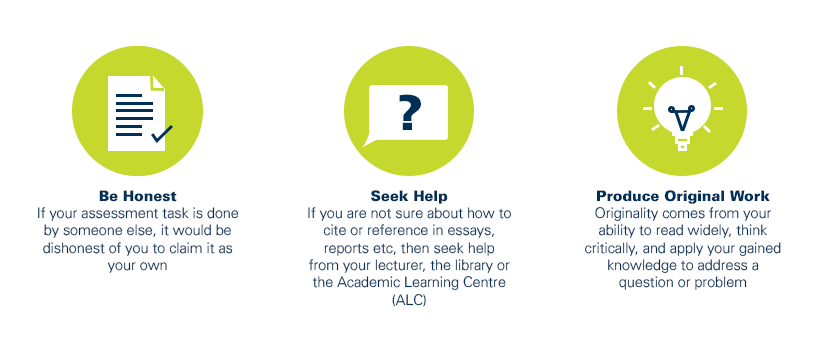
As a CQUniversity student you are expected to act honestly in all aspects of your academic work.
Any assessable work undertaken or submitted for review or assessment must be your own work. Assessable work is any type of work you do to meet the assessment requirements in the unit, including draft work submitted for review and feedback and final work to be assessed.
When you use the ideas, words or data of others in your assessment, you must thoroughly and clearly acknowledge the source of this information by using the correct referencing style for your unit. Using others’ work without proper acknowledgement may be considered a form of intellectual dishonesty.
Participating honestly, respectfully, responsibly, and fairly in your university study ensures the CQUniversity qualification you earn will be valued as a true indication of your individual academic achievement and will continue to receive the respect and recognition it deserves.
As a student, you are responsible for reading and following CQUniversity’s policies, including the Student Academic Integrity Policy and Procedure. This policy sets out CQUniversity’s expectations of you to act with integrity, examples of academic integrity breaches to avoid, the processes used to address alleged breaches of academic integrity, and potential penalties.
What is a breach of academic integrity?
A breach of academic integrity includes but is not limited to plagiarism, self-plagiarism, collusion, cheating, contract cheating, and academic misconduct. The Student Academic Integrity Policy and Procedure defines what these terms mean and gives examples.
Why is academic integrity important?
A breach of academic integrity may result in one or more penalties, including suspension or even expulsion from the University. It can also have negative implications for student visas and future enrolment at CQUniversity or elsewhere. Students who engage in contract cheating also risk being blackmailed by contract cheating services.
Where can I get assistance?
For academic advice and guidance, the Academic Learning Centre (ALC) can support you in becoming confident in completing assessments with integrity and of high standard.
What can you do to act with integrity?