Overview
The strategic integration of effective human resource management (HRM) is essential for both organisational and employee success. Introducing core HRM functions such as human resources planning, recruitment, training and development, and reward management, this unit will equip you with foundational HRM knowledge. Through a combination of theoretical frameworks and practical application activities focused on diverse organisational and industry contexts, this unit will also enhance the skills you require to effectively manage human resources in your team/organisation, irrespective of your chosen industry/sector.
Details
Pre-requisites or Co-requisites
There are no requisites for this unit.
Important note: Students enrolled in a subsequent unit who failed their pre-requisite unit, should drop the subsequent unit before the census date or within 10 working days of Fail grade notification. Students who do not drop the unit in this timeframe cannot later drop the unit without academic and financial liability. See details in the Assessment Policy and Procedure (Higher Education Coursework).
Offerings For Term 1 - 2026
Attendance Requirements
All on-campus students are expected to attend scheduled classes - in some units, these classes are identified as a mandatory (pass/fail) component and attendance is compulsory. International students, on a student visa, must maintain a full time study load and meet both attendance and academic progress requirements in each study period (satisfactory attendance for International students is defined as maintaining at least an 80% attendance record).
Recommended Student Time Commitment
Each 6-credit Postgraduate unit at CQUniversity requires an overall time commitment of an average of 12.5 hours of study per week, making a total of 150 hours for the unit.
Class Timetable
Assessment Overview
Assessment Grading
This is a graded unit: your overall grade will be calculated from the marks or grades for each assessment task, based on the relative weightings shown in the table above. You must obtain an overall mark for the unit of at least 50%, or an overall grade of 'pass' in order to pass the unit. If any 'pass/fail' tasks are shown in the table above they must also be completed successfully ('pass' grade). You must also meet any minimum mark requirements specified for a particular assessment task, as detailed in the 'assessment task' section (note that in some instances, the minimum mark for a task may be greater than 50%). Consult the University's Grades and Results Policy for more details of interim results and final grades.
All University policies are available on the CQUniversity Policy site.
You may wish to view these policies:
- Grades and Results Policy
- Assessment Policy and Procedure (Higher Education Coursework)
- Review of Grade Procedure
- Student Academic Integrity Policy and Procedure
- Academic Progression Policy and Procedure
- Student Refund and Credit Balance Policy and Procedure
- Complaints Policy and Procedure
- Information and Communications Technology Acceptable Use Policy and Procedure
This list is not an exhaustive list of all University policies. The full list of University policies are available on the CQUniversity Policy site.
Feedback, Recommendations and Responses
Every unit is reviewed for enhancement each year. At the most recent review, the following staff and student feedback items were identified and recommendations were made.
Feedback from External reviewer
I would query the scaffolding between A1 and A2. It goes from analysing an article to and annotated bibliography, should these be the other way around?
Assessments 1 and 2 will be combined as a literature review activity, which involves a 10 minute recorded presentation and 1200-word written reflection activity.
- Critically assess the role and functions of HRM for strategic integration and achieving organisational objectives.
- Analyse contemporary issues in managing human resources within the context of current professional and academic literature.
- Identify and evaluate human resource management strategies and practices to respond to internal and external changes.
- Evaluate the contemporary human resources context, including strategies for enhancing engagement in Aboriginal and Torres Strait Islander employment and addressing ethical issues.
N/A
Alignment of Assessment Tasks to Learning Outcomes
| Assessment Tasks | Learning Outcomes | |||
|---|---|---|---|---|
| 1 | 2 | 3 | 4 | |
| 1 - Presentation - 50% | ||||
| 2 - Written Assessment - 50% | ||||
Alignment of Graduate Attributes to Learning Outcomes
| Graduate Attributes | Learning Outcomes | |||
|---|---|---|---|---|
| 1 | 2 | 3 | 4 | |
| 1 - Knowledge | ||||
| 2 - Communication | ||||
| 3 - Cognitive, technical and creative skills | ||||
| 4 - Research | ||||
| 5 - Self-management | ||||
| 6 - Ethical and Professional Responsibility | ||||
| 7 - Leadership | ||||
| 8 - First Nations Knowledges | ||||
| 9 - Aboriginal and Torres Strait Islander Cultures | ||||
Textbooks
Human Resource Management
- Edition: 12th (2025)
- Authors: Alan Nankervis, Marian Baird, Jane Coffey, and John Shields
- Cengage
- Sydney Sydney , NSW , Australia
- ISBN: 9780170486477
IT Resources
- CQUniversity Student Email
- Internet
- Unit Website (Moodle)
All submissions for this unit must use the referencing style: American Psychological Association 7th Edition (APA 7th edition)
For further information, see the Assessment Tasks.
a.haque@cqu.edu.au
u.amarakoon@cqu.edu.au
Week 1
Begin Date: 09 Mar 2026Module/Topic
Evolution of strategic human resource management
Chapter
Chapter 1
Events and Submissions/Topic
Week 2
Begin Date: 16 Mar 2026Module/Topic
The context of strategic human resource management
Chapter
Chapter 2 and other materials on the Moodle site (under weekly learning materials) on engaging Aboriginal and Torres Strait Islander employees.
Events and Submissions/Topic
Week 3
Begin Date: 23 Mar 2026Module/Topic
Industrial relations and work health and safety
Chapter
Chapter 3 and other materials on the Moodle site (under weekly learning materials) on health and safety in Australian workplaces.
Events and Submissions/Topic
Week 4
Begin Date: 30 Mar 2026Module/Topic
Human resource planning
Chapter
Chapter 4
Events and Submissions/Topic
Week 5
Begin Date: 06 Apr 2026Module/Topic
Designing work
Chapter
Chapter 5
Events and Submissions/Topic
Week 6
Begin Date: 13 Apr 2026Module/Topic
Recruitment and selection
Chapter
Chapter 6
Events and Submissions/Topic
Vacation Week
Begin Date: 20 Apr 2026Module/Topic
Vacation Week
Chapter
Events and Submissions/Topic
Week 7
Begin Date: 27 Apr 2026Module/Topic
Retention, learning, and development
Chapter
Chapter 7
Events and Submissions/Topic
Week 8
Begin Date: 04 May 2026Module/Topic
Managing base pay and benefits
Chapter
Chapter 8
Events and Submissions/Topic
Week 9
Begin Date: 11 May 2026Module/Topic
Managing employee performance
Chapter
Chapter 9
Events and Submissions/Topic
Week 10
Begin Date: 18 May 2026Module/Topic
Rewarding performance
Chapter
Chapter 10
Events and Submissions/Topic
Week 11
Begin Date: 25 May 2026Module/Topic
Evaluating SHRM: Towards the future
Chapter
Chapter 11
Events and Submissions/Topic
Week 12
Begin Date: 01 Jun 2026Module/Topic
Revise and Review
Chapter
Events and Submissions/Topic
Exam Week
Begin Date: 08 Jun 2026Module/Topic
Chapter
Events and Submissions/Topic
Vacation/Exam Week
Begin Date: 15 Jun 2026Module/Topic
Chapter
Events and Submissions/Topic
1 Presentation
Objective
The primary purpose of Assessment 1 is to help you develop your research and communication skills by exploring a specific topic in depth within the context of current academic literature.
Assessment brief
In this assessment, you will conduct a literature review on Integrating Artificial Intelligence (AI) into Human Resource Management (HRM). You will select five (5) peer-reviewed journal articles published since 2020 via the CQU Library (online) and use them as the evidence base for two deliverables:
1) an 8-minute recorded presentation – summarising and critically discussing key themes, and insights, from the five articles, and
2) a 1000 word written reflection – reflecting on what you learned and how the literature connects to workshop learning activities.
In your review, you are expected to critically analyse key concerns and opportunities associated with AI integration in HRM. A key requirement is to link your analysis to learning from the unit by evaluating how your selected articles align with one workshop activity from Weeks 3, 4, 5 or 6.
Use the step-by-step guide available in the Assessment 1 Task Description on the Moodle site to plan your work and meet the assessment requirements.
Week 7 Friday (1 May 2026) 11:45 pm AEST
Marks and feedback usually will be returned approximately two (2) working weeks from submission for on-time submissions.
Your assignment will be assessed based on the following criteria:
- Article selection (10%): Quality and relevance of the five peer-reviewed articles selected
- Analysis (20%): Critical analysis of articles and their integration to support your arguments
- Alignment with workshop activities (15%): Linking articles to one workshop activity, synthesising how articles supports, challenges, or extends workshop learning
- References (5%): Following APA 7 conventions in-text and in the references list
- Delivery (20%): Clarity and professionalism of the recorded presentation, and presenting within the allocated time
- Visual aids (5%): Effective and professional use of visual aids throughout the presentation
- Reflection (20%): Demonstrating critical learning reflecting on challenges, learnings, and implications to future academic and professional practise
- Written communication (5%): Clarity, coherence, and professionalism in writing within the allocated word limit
- Critically assess the role and functions of HRM for strategic integration and achieving organisational objectives.
- Analyse contemporary issues in managing human resources within the context of current professional and academic literature.
- Identify and evaluate human resource management strategies and practices to respond to internal and external changes.
2 Written Assessment
Objective
Assessment 2 is designed to enhance your research, analysis, critical thinking and written communication skills, particularly in the areas of argument development and report writing.
Assignment Brief
In the role of a Human Resource Consultant, you will critically analyse the recent news feed provided in the “News item” folder on the unit Moodle site. Drawing from one key contemporary HRM issue (or two closely linked issues) identified in your analysis, you will develop a formal business report tailored to an Australian organisation of your choice. This report will provide evidence-based HRM implications raised by the key HRM issue (or two closely linked issues) you identified. You will also integrate implications for current and future employees from an Aboriginal and Torres Strait Islander background. Your report must provide strategic recommendations on how the chosen organisation can effectively address the key HRM issue to secure organisational success and enhance employee well-being. Recommendations must be actionable and supported throughout the report by credible evidence (e.g., peer reviewed journal articles and relevant Australian workplace guidelines/legislation where applicable).
Use the step-by-step guide available in the Assessment 2 Task Description on the Moodle site to help manage this assessments task and meet assessment requirements.
Week 12 Friday (5 June 2026) 11:45 pm AEST
Marks and feedback usually will be returned approximately two (2) working weeks from submission for on-time submissions.
Your assignment will be assessed based on the following criteria:
- Research evidence (15%) - Integrating high-quality, relevant sources to support your claims
- Issue analysis (20%) - Critical analysis of the news item to present a well-justified issues for employee well-being and/or organisational success
- HRM Implications (25%) - Presenting three (3) well developed HRM implications integrating chosen organisational context and unit themes
- Implications for Aboriginal and Torres Strait Islander employees (10%) - Culturally informed analysis and respectful presentation of implications for current and future employees from Aboriginal and Torres Strait Islander backgrounds
- Recommendations (15%) - Presenting practical and relevant recommendations aligned with the overall analysis
- Report structure (5%) - Clear and professional report structure appropriately targeted for the senior management
- Written Communication (5%) - Clarity, coherence, and professionalism in writing within the allocated word limit
- Referencing (5%)- Following APA 7 conventions in-text and in the references list
- Critically assess the role and functions of HRM for strategic integration and achieving organisational objectives.
- Analyse contemporary issues in managing human resources within the context of current professional and academic literature.
- Identify and evaluate human resource management strategies and practices to respond to internal and external changes.
- Evaluate the contemporary human resources context, including strategies for enhancing engagement in Aboriginal and Torres Strait Islander employment and addressing ethical issues.
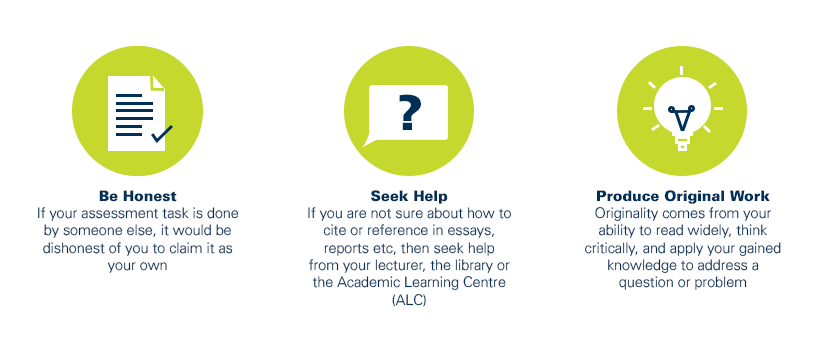
As a CQUniversity student you are expected to act honestly in all aspects of your academic work.
Any assessable work undertaken or submitted for review or assessment must be your own work. Assessable work is any type of work you do to meet the assessment requirements in the unit, including draft work submitted for review and feedback and final work to be assessed.
When you use the ideas, words or data of others in your assessment, you must thoroughly and clearly acknowledge the source of this information by using the correct referencing style for your unit. Using others’ work without proper acknowledgement may be considered a form of intellectual dishonesty.
Participating honestly, respectfully, responsibly, and fairly in your university study ensures the CQUniversity qualification you earn will be valued as a true indication of your individual academic achievement and will continue to receive the respect and recognition it deserves.
As a student, you are responsible for reading and following CQUniversity’s policies, including the Student Academic Integrity Policy and Procedure. This policy sets out CQUniversity’s expectations of you to act with integrity, examples of academic integrity breaches to avoid, the processes used to address alleged breaches of academic integrity, and potential penalties.
What is a breach of academic integrity?
A breach of academic integrity includes but is not limited to plagiarism, self-plagiarism, collusion, cheating, contract cheating, and academic misconduct. The Student Academic Integrity Policy and Procedure defines what these terms mean and gives examples.
Why is academic integrity important?
A breach of academic integrity may result in one or more penalties, including suspension or even expulsion from the University. It can also have negative implications for student visas and future enrolment at CQUniversity or elsewhere. Students who engage in contract cheating also risk being blackmailed by contract cheating services.
Where can I get assistance?
For academic advice and guidance, the Academic Learning Centre (ALC) can support you in becoming confident in completing assessments with integrity and of high standard.
What can you do to act with integrity?