Overview
This unit explores the management of human resources within the context of current and emerging issues in contemporary organisations. You will be engaged in identifying and delineating contemporary issues within the internal and external organisational environments and the development of strategic HRM responses. You will make predictions about HRM issues and rigorously analyse, research, and apply HRM models to address such concerns. You will be expected to develop a strategic mindset in this unit.
Details
Pre-requisites or Co-requisites
Pre-requisite: HRMT11011 and completion of 48 credit points
Important note: Students enrolled in a subsequent unit who failed their pre-requisite unit, should drop the subsequent unit before the census date or within 10 working days of Fail grade notification. Students who do not drop the unit in this timeframe cannot later drop the unit without academic and financial liability. See details in the Assessment Policy and Procedure (Higher Education Coursework).
Offerings For Term 1 - 2026
Attendance Requirements
All on-campus students are expected to attend scheduled classes - in some units, these classes are identified as a mandatory (pass/fail) component and attendance is compulsory. International students, on a student visa, must maintain a full time study load and meet both attendance and academic progress requirements in each study period (satisfactory attendance for International students is defined as maintaining at least an 80% attendance record).
Recommended Student Time Commitment
Each 6-credit Undergraduate unit at CQUniversity requires an overall time commitment of an average of 12.5 hours of study per week, making a total of 150 hours for the unit.
Class Timetable
Assessment Overview
Assessment Grading
This is a graded unit: your overall grade will be calculated from the marks or grades for each assessment task, based on the relative weightings shown in the table above. You must obtain an overall mark for the unit of at least 50%, or an overall grade of 'pass' in order to pass the unit. If any 'pass/fail' tasks are shown in the table above they must also be completed successfully ('pass' grade). You must also meet any minimum mark requirements specified for a particular assessment task, as detailed in the 'assessment task' section (note that in some instances, the minimum mark for a task may be greater than 50%). Consult the University's Grades and Results Policy for more details of interim results and final grades.
All University policies are available on the CQUniversity Policy site.
You may wish to view these policies:
- Grades and Results Policy
- Assessment Policy and Procedure (Higher Education Coursework)
- Review of Grade Procedure
- Student Academic Integrity Policy and Procedure
- Academic Progression Policy and Procedure
- Student Refund and Credit Balance Policy and Procedure
- Complaints Policy and Procedure
- Information and Communications Technology Acceptable Use Policy and Procedure
This list is not an exhaustive list of all University policies. The full list of University policies are available on the CQUniversity Policy site.
Feedback, Recommendations and Responses
Every unit is reviewed for enhancement each year. At the most recent review, the following staff and student feedback items were identified and recommendations were made.
Feedback from External reviewer feedback
Is there opportunity for individual members in the groups to give feedback on their group experience? Could a reflection be added in here?
Assessment requirements and marking criteria of Assessment 2 be updated to integrate individual group member experiences.
- Develop, communicate, and apply an understanding of the role of strategic HRM in contemporary organisations
- Demonstrate professional understanding of the internal and external organisational environments to which strategic HRM should be directed
- Analyse and critique organisational responses to manage HRM issues within contemporary organisations
- Identify and critically evaluate different perspectives on, and approaches to contemporary HRM issues, and the theories, models and assumptions that underpin them.
Alignment of Assessment Tasks to Learning Outcomes
| Assessment Tasks | Learning Outcomes | |||
|---|---|---|---|---|
| 1 | 2 | 3 | 4 | |
| 1 - Online Test - 30% | ||||
| 2 - Group Work - 30% | ||||
| 3 - Presentation - 40% | ||||
Alignment of Graduate Attributes to Learning Outcomes
| Graduate Attributes | Learning Outcomes | |||
|---|---|---|---|---|
| 1 | 2 | 3 | 4 | |
| 1 - Communication | ||||
| 2 - Problem Solving | ||||
| 3 - Critical Thinking | ||||
| 4 - Information Literacy | ||||
| 5 - Team Work | ||||
| 6 - Information Technology Competence | ||||
| 7 - Cross Cultural Competence | ||||
| 8 - Ethical practice | ||||
| 9 - Social Innovation | ||||
| 10 - First Nations Knowledges | ||||
| 11 - Aboriginal and Torres Strait Islander Cultures | ||||
Textbooks
There are no required textbooks.
Additional Textbook Information
Given the contemporary nature of topics covered in this unit, no textbook is prescribed.
IT Resources
- CQUniversity Student Email
- Internet
- Unit Website (Moodle)
All submissions for this unit must use the referencing style: American Psychological Association 7th Edition (APA 7th edition)
For further information, see the Assessment Tasks.
u.amarakoon@cqu.edu.au
p.verma3@cqu.edu.au
Week 1
Begin Date: 09 Mar 2026Module/Topic
HRM in the contemporary workplace
Chapter
The journal articles and study materials for Week 1 can be found on Moodle .
Additional readings are also available in the eReading list.
Events and Submissions/Topic
Week 2
Begin Date: 16 Mar 2026Module/Topic
The changing nature of work: Outsourcing, Offshoring, Gig economy, alternative work arrangements
Chapter
The journal articles and study materials for Week 2 can be found on Moodle.
Additional readings are also available in the eReading list.
Events and Submissions/Topic
Week 3
Begin Date: 23 Mar 2026Module/Topic
Human resource management and the legal framework
Chapter
The journal papers and study materials for Week 3 can be found on Moodle.
Additional readings are also available in the eReading list.
Events and Submissions/Topic
Week 4
Begin Date: 30 Mar 2026Module/Topic
Workplace diversity
Chapter
The journal papers and study materials for Week 4 can be found on Moodle.
Additional readings are also available in the eReading list.
Events and Submissions/Topic
Assessment 1 - Case Analysis (Online Test) Due: Week 4 workshop time
Week 5
Begin Date: 06 Apr 2026Module/Topic
Powered by talent
Chapter
The journal papers and study materials for Week 5 can be found on Moodle (see Tile: 5).
Additional readings are also available in the eReading list.
Events and Submissions/Topic
Assessment 2 - Group Registration Due: Week 5 Monday (6 Apr 2026) 11:45 pm AEST
Week 6
Begin Date: 13 Apr 2026Module/Topic
The psychological contract
Chapter
The journal papers and study materials for Week 6 can be found on Moodle.
Additional readings are also available in the eReading list.
Events and Submissions/Topic
Vacation Week
Begin Date: 20 Apr 2026Module/Topic
Chapter
Events and Submissions/Topic
Week 7
Begin Date: 27 Apr 2026Module/Topic
Career management in the 21st century
Chapter
The journal papers and study materials for Week 7 can be found on Moodle.
Additional readings are also available in the eReading list.
Events and Submissions/Topic
Week 8
Begin Date: 04 May 2026Module/Topic
HR disruption: Trends and opportunities
Chapter
The journal papers and study materials for Week 8 can be found on Moodle.
Additional readings are also available in the eReading list.
Events and Submissions/Topic
Week 9
Begin Date: 11 May 2026Module/Topic
Employee health and well-being in the workplace
Chapter
The journal papers and study materials for Week 9 can be found on Moodle.
Additional readings are also available in the eReading list.
Events and Submissions/Topic
Week 10
Begin Date: 18 May 2026Module/Topic
Workplace behaviour, ethics, and integrity
Chapter
The journal papers and study materials for Week 10 can be found on Moodle.
Additional readings are also available in the eReading list.
Events and Submissions/Topic
Week 11
Begin Date: 25 May 2026Module/Topic
Risk & Crisis Management
Chapter
The journal papers and study materials for Week 11 can be found on Moodle.
Additional readings are also available in the eReading list.
Events and Submissions/Topic
Week 12
Begin Date: 01 Jun 2026Module/Topic
HR analytics: Applications and challenges
Chapter
The journal papers and study materials for Week 12 can be found on Moodle.
Additional readings are also available in the eReading list.
Events and Submissions/Topic
Exam Week
Begin Date: 08 Jun 2026Module/Topic
Chapter
Events and Submissions/Topic
Vacation/Exam Week
Begin Date: 15 Jun 2026Module/Topic
Chapter
Events and Submissions/Topic
1 Online Test
Purpose
This assessment task gives you the opportunity to apply relevant HRM frameworks and models to address HRM issues in the context of contemporary workplaces.
Task Details
During the workshop time in Week 4, you will be provided news item/mini-case/ video on a contemporary human resource management issue. After reviewing the news item/case/video, you will have to answer five short answer questions. Total duration of this online test will be 60 minutes (including the time to review the news item/case/video).
Important: This assessment requires students to adhere to the guidelines on the use of artificial intelligence tools as specified in the Artificial Intelligence Assessment Scale (AIAS). You must not use artificial intelligence at any point during this assessment. Any misuse or lack of disclosure regarding the use of AI tools will be considered a breach of academic integrity.
This test will be held during the weekly workshop in Week 4
Grades and feedback usually will be returned in approximately two (2) working weeks
Each question will carry equal marks.
Six (6) marks will be allocated for each question (5 x 6 = 30 marks).
Each response will be evaluated for its,
- relevance and appropriateness for the given context (4 marks), and
- relatedness to HRM concepts discussed in class (2 marks).
- Develop, communicate, and apply an understanding of the role of strategic HRM in contemporary organisations
2 Group Work
Purpose
This assessment will assist you to develop skills in analysing an HRM‑specific issue and proposing an evidence‑based workplace solution informed by contemporary HRM frameworks and models. It will also provide you with the opportunity to strengthen your analytical, critical thinking, problem‑solving, and written communication skills.
Task Details
This Assessment involves a few steps.
Step 1: You are expected to get in to a group of two (2) to three (3) members and register your group before the group registration deadline.
Step 2: Assuming that you are a group of Senior HR Advisors to an Australian organisation of your choice, you are expected to write a business report on a contemporary news item/case provided to you on the unit Moodle site.
Your group's business report should:
- demonstrate a critically analysis of the news item/case provided to you,
- clearly present the key implications to your chosen organisation and the recommendations you propose,
- integrate relevant peer-reviewed journal articles (minimum of six published in 2016 or later) and references related to the chosen organisation to justify your arguments, and
- be within 1800 words +/-10% excluding the reference list and any appendices.
Step 3: Drawing on your individual experience in working within your group, prepare a 500‑word reflective piece on (a) the key learnings gained from your group‑work experience, and (b) how these learnings will inform and shape your current and/or future career.
Note: Please also refer to the detailed Assessment Task Description on Moodle before commencing this task.
Important : This assessment requires students to adhere to the guidelines on the use of artificial intelligence tools as specified in the Artificial Intelligence Assessment Scale (AIAS). You may use artificial intelligence (AI) for planning, idea development, and research. Your final submission should show how you have developed and refined those ideas. Any misuse or lack of disclosure regarding the use of AI tools will be considered a breach of academic integrity
Week 8 Monday (4 May 2026) 11:45 pm AEST
Only one member is expected to submit the business report on behalf of his/her group; Each student is expected to submit his/her own reflection.
Marks and feedback usually will be returned approximately two (2) working weeks from the due date.
Your assignment will be assessed based on the following criteria:
- Group registration (5%): Registers the group before the registration deadline.
- Research (15%): Presents evidence of extensive research and integrates relevant references to support arguments. Should have a minimum of six (6) academic peer-reviewed journal articles (published in 2016 or later) and appropriate references from your chosen organisation.
- Analysis (30%): Demonstrates critical analysis and provides a clearly articulated and well-developed argument throughout with appropriate reference to relevant HRM concepts, frameworks, and theories discussed in this unit.
- Recommendations (10%): Provides appropriate and practical recommendations well aligned with the discussion in the body of the report.
- Referencing (5%): Complies with the CQU APA 7.0 Referencing Guide, in the list of references and in-text referencing throughout the report.
- Report structure (10%): Maintains a logical flow; uses relevant topic headings/sub headings throughout
- Communication (5%): The report uses clear and concise communication; structures sentences and paragraphs appropriately; uses language appropriate for HR advisors; accurate grammar, spelling (Australian English), and punctuation.
- Reflection (20%): Critically reflects on the learnings and how they shape current/future career. Presents clearly and coherently within the word limit.
Your assessment will be marked out of 100 and converted to a mark out of 30 as per the Assessment weighting.
Note: Penalties for late submission will be applied according to the CQUniversity Policy.
- Develop, communicate, and apply an understanding of the role of strategic HRM in contemporary organisations
- Demonstrate professional understanding of the internal and external organisational environments to which strategic HRM should be directed
- Analyse and critique organisational responses to manage HRM issues within contemporary organisations
- Identify and critically evaluate different perspectives on, and approaches to contemporary HRM issues, and the theories, models and assumptions that underpin them.
3 Presentation
Purpose
This assessment will assist you to develop skills in analysing an HRM‑specific issue and proposing an evidence‑based workplace solution informed by contemporary HRM frameworks and models. It will also provide you with the opportunity to strengthen your analytical, critical thinking, problem‑solving, and communication skills, as well as your competence in integrating appropriate technologies to support effective workplace practice.
Task Details
You (as a Senior HR Advisor) have identified the need to implement one of the recommendations from your group's business report (in Assessment 2). The HR Manager of your organisation has advised you to use generative artificial intelligence (GenAI) tool to develop an implementation plan. During the upcoming monthly senior management meeting, you plan to present why/why not the implementation plan generated by AI would be appropriate for your organisation.
Your key deliverables include:
- a 10-minute recorded presentation - Introduce the chosen recommendation, outline the AI‑generated implementation plan, evaluate its suitability for addressing the HRM issues in your organisational context, justify any recommended modifications, and reflect on your experience using AI responsibly and ethically.
- a 1800 word script - Written in paragraph form to guide your presentation and supported by appropriate references throughout
Please also refer to the Assessment 3 Task Description on the unit Moodle site before commencing this task.
Important: This assessment requires students to adhere to the guidelines on the use of artificial intelligence tools as specified in the Artificial Intelligence Assessment Scale (AIAS). You should focus on directing artificial intelligence (AI) to achieve your goal while demonstrating your critical thinking. Any misuse or lack of disclosure regarding the use of AI tools will be considered a breach of academic integrity.
Exam Week Monday (8 June 2026) 11:45 pm AEST
Your presentation recording should be uploaded along with the script.
Marks and feedback will be released after the certification of grades.
Your assignment will be assessed based on the following criteria:
- Knowledge (15%) - Presenting a thorough knowledge of the topic and critical analysis evident within both the presentation and script.
- Analysis (25%) - Critical reviewing the AI generated implementation plan, accompanied by academic literature relevant to the topic, integrated throughout the presentation and accompanying script.
- Justification (10%) - Appropriateness of the evidence based responses presented, using relevant industry examples.
- Research (10%) - Accurate integration of relevant academic literature and additional sources, including industry/business sources, to support your arguments.
- Visual aids (15%) - Effective and professional use of visual aids throughout the presentation.
- Presentation skills (15%) - Clarity and professionalism of the recorded presentation, appropriateness to an audience of senior managers, and presenting within the allocated time.
- Referencing (5%) - Strict conformity to APA 7.0 Referencing Guide. References are used throughout the PowerPoint slides as appropriate and a dedicated slide provides the reference list.
- Script presentation (5%) - Clarity, coherence, and professionalism in writing within the allocated word limit. Inclusion of in-text references and list of references strictly conforming to APA 7.0 Referencing Guide
You will be marked out of 100 and converted to a mark out of 40 as per the Assessment weighting.
Note: Penalties for late submission will be applied according to the CQUniversity Policy.
- Develop, communicate, and apply an understanding of the role of strategic HRM in contemporary organisations
- Demonstrate professional understanding of the internal and external organisational environments to which strategic HRM should be directed
- Analyse and critique organisational responses to manage HRM issues within contemporary organisations
- Identify and critically evaluate different perspectives on, and approaches to contemporary HRM issues, and the theories, models and assumptions that underpin them.
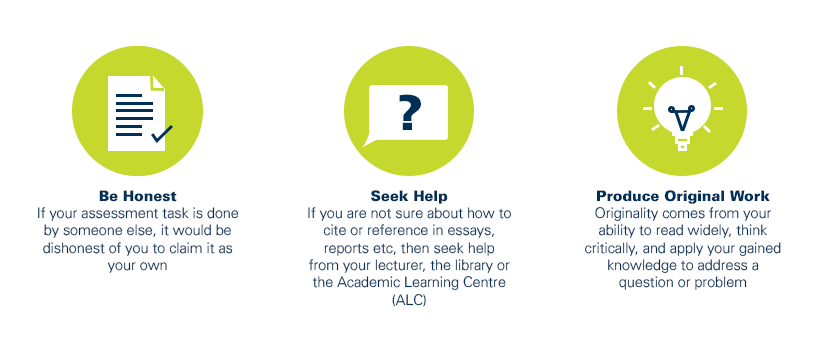
As a CQUniversity student you are expected to act honestly in all aspects of your academic work.
Any assessable work undertaken or submitted for review or assessment must be your own work. Assessable work is any type of work you do to meet the assessment requirements in the unit, including draft work submitted for review and feedback and final work to be assessed.
When you use the ideas, words or data of others in your assessment, you must thoroughly and clearly acknowledge the source of this information by using the correct referencing style for your unit. Using others’ work without proper acknowledgement may be considered a form of intellectual dishonesty.
Participating honestly, respectfully, responsibly, and fairly in your university study ensures the CQUniversity qualification you earn will be valued as a true indication of your individual academic achievement and will continue to receive the respect and recognition it deserves.
As a student, you are responsible for reading and following CQUniversity’s policies, including the Student Academic Integrity Policy and Procedure. This policy sets out CQUniversity’s expectations of you to act with integrity, examples of academic integrity breaches to avoid, the processes used to address alleged breaches of academic integrity, and potential penalties.
What is a breach of academic integrity?
A breach of academic integrity includes but is not limited to plagiarism, self-plagiarism, collusion, cheating, contract cheating, and academic misconduct. The Student Academic Integrity Policy and Procedure defines what these terms mean and gives examples.
Why is academic integrity important?
A breach of academic integrity may result in one or more penalties, including suspension or even expulsion from the University. It can also have negative implications for student visas and future enrolment at CQUniversity or elsewhere. Students who engage in contract cheating also risk being blackmailed by contract cheating services.
Where can I get assistance?
For academic advice and guidance, the Academic Learning Centre (ALC) can support you in becoming confident in completing assessments with integrity and of high standard.
What can you do to act with integrity?