Overview
Health in All Policies (HiAP) is a public health movement and policy approach that contributes to the improvement of population health, equity, wellness and improved policy outcomes across participating sectors. This unit outlines how and why HiAP was established and what benefits it has had on promoting health across populations. Factors that influence the implementation of HiAP are examined, including Health Impact Assessment (HIA) and Health Lens Assessment (HLA). This unit will allow you to bring together assessment, research and evaluation skills learned throughout your course in order to consider where and how health fits in the policy cycle.
Details
Pre-requisites or Co-requisites
96 credit points
Important note: Students enrolled in a subsequent unit who failed their pre-requisite unit, should drop the subsequent unit before the census date or within 10 working days of Fail grade notification. Students who do not drop the unit in this timeframe cannot later drop the unit without academic and financial liability. See details in the Assessment Policy and Procedure (Higher Education Coursework).
Offerings For Term 2 - 2026
Attendance Requirements
All on-campus students are expected to attend scheduled classes - in some units, these classes are identified as a mandatory (pass/fail) component and attendance is compulsory. International students, on a student visa, must maintain a full time study load and meet both attendance and academic progress requirements in each study period (satisfactory attendance for International students is defined as maintaining at least an 80% attendance record).
Recommended Student Time Commitment
Each 6-credit Undergraduate unit at CQUniversity requires an overall time commitment of an average of 12.5 hours of study per week, making a total of 150 hours for the unit.
Class Timetable
Assessment Overview
Assessment Grading
This is a graded unit: your overall grade will be calculated from the marks or grades for each assessment task, based on the relative weightings shown in the table above. You must obtain an overall mark for the unit of at least 50%, or an overall grade of 'pass' in order to pass the unit. If any 'pass/fail' tasks are shown in the table above they must also be completed successfully ('pass' grade). You must also meet any minimum mark requirements specified for a particular assessment task, as detailed in the 'assessment task' section (note that in some instances, the minimum mark for a task may be greater than 50%). Consult the University's Grades and Results Policy for more details of interim results and final grades.
All University policies are available on the CQUniversity Policy site.
You may wish to view these policies:
- Grades and Results Policy
- Assessment Policy and Procedure (Higher Education Coursework)
- Review of Grade Procedure
- Student Academic Integrity Policy and Procedure
- Academic Progression Policy and Procedure
- Student Refund and Credit Balance Policy and Procedure
- Complaints Policy and Procedure
- Information and Communications Technology Acceptable Use Policy and Procedure
This list is not an exhaustive list of all University policies. The full list of University policies are available on the CQUniversity Policy site.
Feedback, Recommendations and Responses
Every unit is reviewed for enhancement each year. At the most recent review, the following staff and student feedback items were identified and recommendations were made.
Feedback from SUTE
Lack of meaningful feedback on assessments
Detailed feedback will be provided for all assessments in future offerings of this unit.
Feedback from SUTE
Repetitiveness of the unit content
The content will be reviewed and reevaluated to identify and eliminate redundant material.
- Compare and contrast 'Health in all policies' with health policy
- Explain the 'health in all policy' process, Health Impact Assessment process, and the Health Lens Assessment process, and how these relate to the development of policy
- Articulate the major components of the Australian health system, how it differs from health systems of other nations and how this relates to health in all policy
- Evaluate the economic influences and barriers to adopting health in all policy at both national and international levels
- Explore Health in All Policy as a form of social innovation.
Alignment of Assessment Tasks to Learning Outcomes
| Assessment Tasks | Learning Outcomes | ||||
|---|---|---|---|---|---|
| 1 | 2 | 3 | 4 | 5 | |
| 1 - Online Quiz(zes) - 25% | |||||
| 2 - Written Assessment - 30% | |||||
| 3 - Presentation - 45% | |||||
Alignment of Graduate Attributes to Learning Outcomes
| Graduate Attributes | Learning Outcomes | ||||
|---|---|---|---|---|---|
| 1 | 2 | 3 | 4 | 5 | |
| 1 - Communication | |||||
| 2 - Problem Solving | |||||
| 3 - Critical Thinking | |||||
| 4 - Information Literacy | |||||
| 5 - Team Work | |||||
| 6 - Information Technology Competence | |||||
| 7 - Cross Cultural Competence | |||||
| 8 - Ethical practice | |||||
| 9 - Social Innovation | |||||
| 10 - First Nations Knowledges | |||||
| 11 - Aboriginal and Torres Strait Islander Cultures | |||||
Textbooks
There are no required textbooks.
IT Resources
- CQUniversity Student Email
- Internet
- Unit Website (Moodle)
- Zoom access: microphone and webcam required
All submissions for this unit must use the referencing styles below:
For further information, see the Assessment Tasks.
g.haintz@cqu.edu.au
Week 1
Begin Date: 13 Jul 2026Module/Topic
Module 1: Foundations and framing
Topic 1.1: Health, policy, and the determinants of health
Chapter
Events and Submissions/Topic
Week 2
Begin Date: 20 Jul 2026Module/Topic
Module 1: Foundations and framing
Topic 1.2: What is Health in All Policy (HiAP)?
Chapter
Events and Submissions/Topic
Week 3
Begin Date: 27 Jul 2026Module/Topic
Module 1: Foundations and framing
Topic 1.3: Government, governance, and power
Chapter
Events and Submissions/Topic
Week 4
Begin Date: 03 Aug 2026Module/Topic
Module 2: Operationalising HiAP
Topic 2.1 Embedding health in policy processes
Chapter
Events and Submissions/Topic
Week 5
Begin Date: 10 Aug 2026Module/Topic
Module 2: Operationalising HiAP
Topic 2.2: Health Impact Assessment
Chapter
Events and Submissions/Topic
Week 6
Begin Date: 17 Aug 2026Module/Topic
Module 2: Operationalising HiAP
Module 2.3: Health Lens Analysis
Chapter
Events and Submissions/Topic
Assessment 2 Part A Due: Week 6 Wednesday
(19 Aug 2026) 3:00 pm AEST
Vacation Week
Begin Date: 24 Aug 2026Module/Topic
Chapter
Events and Submissions/Topic
Week 7
Begin Date: 31 Aug 2026Module/Topic
Module 3: Actors, engagement, and influence
Topic 3.1: Stakeholders, power, and whole-of-society approaches
Chapter
Events and Submissions/Topic
Week 8
Begin Date: 07 Sep 2026Module/Topic
Module 3: Actors, engagement, and influence
Topic 3.2: Community engagement and equity in HiAP
Chapter
Events and Submissions/Topic
Week 9
Begin Date: 14 Sep 2026Module/Topic
Module 3: Actors, engagement, and influence
Topic 3.3: Advocacy, negotiation, and health diplomacy
Chapter
Events and Submissions/Topic
Week 10
Begin Date: 21 Sep 2026Module/Topic
Module 4: Implementation, evaluation, and futures
Topic 4.1: Implementing HiAP across contexts
Chapter
Events and Submissions/Topic
Week 11
Begin Date: 28 Sep 2026Module/Topic
Module 4: Implementation, evaluation, and futures
Topic 4.2: Evaluating HiAP
Chapter
Events and Submissions/Topic
Assessment 3 Due: Presentation slides - Week 12 Monday
(5 Oct 2026) 9:00 am AEST
Assessment 3 Due: Oral presentation delivery - Week 12 Monday - Friday
(5 Oct - 9 Oct 2026, by appointment)
Assessment 2 Part B Due: Week 12 Wednesday
(7 Oct 2026) 3:00 pm AEST
Week 12
Begin Date: 05 Oct 2026Module/Topic
Module 4: Implementation, evaluation, and futures
Topic 4.3: The future of HiAP
Chapter
Events and Submissions/Topic
Exam Week
Begin Date: 12 Oct 2026Module/Topic
Chapter
Events and Submissions/Topic
Vacation/Exam Week
Begin Date: 19 Oct 2026Module/Topic
Chapter
Events and Submissions/Topic
Tutorials and drop-in sessions
This unit runs in a 'flipped classroom' mode. That is, resources such as lectures, readings and learning activities are provided each week via the unit Moodle site. Students are expected to work through the materials prior to coming along to a tutorial. A weekly tutorial will be held online via zoom (check unit Moodle site, under the 'Virtual Classes' tile, for information on scheduling) . The tutorials are not compulsory - however, students are strongly encouraged to attend and participate. Tutorials provide a structured opportunity to explore, discuss and clarify unit concepts, learning activities, and assessment tasks. Weekly topics and tutorial activities are 'scaffolded' each week (that is, build on one another) and replicate the concepts and skills you be required to apply in your assessments; so often, tutorial tasks may either directly build your assessment task, or be like a 'practice' for your assessment.
There may also be occasional additional 'drop-in' sessions run on zoom on an ad-hoc manner throughout the term to provide additional opportunities for support with assessments or unit concepts. The 'drop-in' sessions run in the style of a 'Q&A' session where students can come along at any time during the 30 minute session with their specific queries, and stay for as long or as little they wish to/need to within the session.
Use of generative AI in this unit
Please see the specific permissions for the use of generative AI for each assessment task. This information is under the 'Assessment Information' in this unit profile, and under the 'Assessment' tile on the unit Moodle site.
Communication with teaching staff/the Unit Coordinator
The primary mode of communication about the unit will be during online live tutorial sessions, or via the discussion forums on the unit Moodle site. For matters of a more personal/private nature, please email the teaching staff/Unit Coordinator.
Please note, emails and discussion boards are only monitored and responded to within teaching staff's allocated unit time within business hours. You are free to post or email outside of this (e.g. weekends, public holidays, etc.) but you will receive a response within staff's next available time within business hours.
1 Online Quiz(zes)
Assessment 1 online quizzes will focus on your understanding of concepts related to topics covered in the first module of the unit (weeks 1-3: Foundations and framing), including the Australian health care system, and the role of local, state and national governments in health system governance in Australia.
Full task details and guidelines will be available on the unit Moodle site 'Assessments' tile, under the 'Assessment 1' information.
You must attain an overall mark of 50% on Assessment 1 as a requirement to pass the unit.
Level of GenAI use allowed
Level 2: You may use AI for planning, idea development, and research. Your final submission should show how you have developed and refined these ideas.
Extensions
The 72-hour grace period does not apply to this assessment
Week 4 Wednesday (5 Aug 2026) 3:00 pm AEST
Online
Week 6 Wednesday (19 Aug 2026)
For any questions with a structured response (e.g. multiple choice, matching, etc.), selection of the correct response(s).
For any short answer questions, responses will be assessed on relevance (40%), validity (40%), organisation and presentation (20%).
Further details on marking criteria will be available on the unit Moodle site under the Assessment 1 information.
- Compare and contrast 'Health in all policies' with health policy
- Articulate the major components of the Australian health system, how it differs from health systems of other nations and how this relates to health in all policy
2 Written Assessment
A workbook has been prepared for weeks 3 to 11 (inclusive) that contains learning activities to support application of the concepts and learning materials to authentic scenarios, and to develop critical thinking. You will apply and critique the unit concepts covered in those weeks. As part of that process you will need to discuss the ideas and answers with your fellow students online via the discussion boards, before writing and submitting a written response in the workbook. Your contributions and online interactions with your peers will be assessed as well as the submitted workbook. You will need to provide your input in a timely manner for it to be of value to your colleagues and constitute appropriate participation and contribution. Workbooks must be written in your own words and use appropriate referencing.
Assessment 2 Part A (workbook activities for weeks 3 to 5) is due in Week 6, Wednesday 19 August 2026, 3:00pm AEST (10% of 30%)
Assessment 2 Part B (workbook activities for weeks 6 to 11) is due in Week 12, Wednesday 07 October 2025, 3:00pm (20% of 30%) AEST
You must attain an overall mark of 50% on Assessment 2 (parts A & B combined) as a requirement to pass the unit.
Full task details and guidelines will be available on the unit Moodle site.
Level of GenAI use allowed
Level 2: You may use AI for planning, idea development, and research. Your final submission should show how you have developed and refined these ideas.
Part A due Wednesday 19 August (week 6), 3:00pm AEST. Part B due Wednesday 7 October (week 12), 3:00pm AEST.
Students will receive formative feedback through tutorials. Additionally, summative feedback on Part A can also be used formatively to inform the development of Part B. Summative marks and feedback will be provided two weeks after the due date for each part of the task.
The workbook will be marked using criterion-referenced assessment. The criteria are:
1. Relevance (40%)
- Communicates comprehension and understanding of the appropriate concepts and topics
- Appropriate contextual consideration and application of arguments and examples
- Originality of arguments
- Completion of activities
2. Validity (40%)
- Depth and extent of critical analysis of HiAP and its application
- Accuracy of interpretation and application of unit concepts and resources
- Quality and sufficiency of appropriate references or examples used
3. Organisation and presentation (10%)
- Clear communication of ideas
- Logical structure, synthesis and flow of report
- Clarity, consistency and fluency of academic communication
- Correct spelling, punctuation and grammar
- Referencing - consistent and correct according to CQU Harvard or CQU APA7 style
Discussion contributions (10%)
- Originality and relevance of contributions
- Engagement with peer contributions
A marking rubric will be available on the unit Moodle site.
- Explain the 'health in all policy' process, Health Impact Assessment process, and the Health Lens Assessment process, and how these relate to the development of policy
- Explore Health in All Policy as a form of social innovation.
3 Presentation
For assessment 3 you will research and deliver a presentation examining the potential for your local government in Australia to adopt a Health in All Policies approach to influence a non-communicable disease in the population. You will draw on unit concepts and resources, and Australian and international case studies and evidence, and relate the presentation to your local government area.
The presentation will be 10 to 15 minutes in duration. You are to submit a pdf copy of your PowerPoint slides (or other presentation format) on the Moodle site by 9.00am AEST on the Monday 5 October 2026 (week 12). You will deliver your oral presentation live to the unit coordinator and any peers who are present in a zoom session held in week 12, between Monday 5 October and Friday 09 October. A sign-up wiki with available presentation timeslots will be available on the unit Moodle site.
You must attain an overall mark of 50% on Assessment 3 as a requirement to pass the unit.
Full task details and guidelines will be available on the unit Moodle site.
Level of GenAI use allowed
Level 2: You may use AI for planning, idea development, and research. Your final submission should show how you have developed and refined these ideas.
Extensions
The 72-hour grace period does not apply to this assessment
Presentation slides due 9.00am AEST Monday 05 October (week 12). Presentation to be given at a scheduled time between Monday 05 October - Friday 09 October (week 12).
Verbal feedback and discussion will be provided immediately following each presentation. Final feedback and marks will be provided by Friday 23 October.
The presentation will be marked using criterion-referenced assessment. The criteria are:
1. Relevance (40%)
- Communication of the context of the health issue in Australia (e.g. epidemiology; significance - population health/economic/ social; policy background/context to date, etc.)
- Comprehension and application of key concepts of HiAP to in the local government context to address the issue
- Consideration of challenges and facilitators to implementation of HiAP at the local level
- Suitability of recommendations
- Cohesiveness and congruence of all aspects of the discussion (i.e. alignment between the issue, context, application of HiAP concepts, barriers and facilitators, and recommendations)
2. Validity (30%)
- Depth and extent of critical analysis of HiAP and its application in the local government context to address the issue (including critical discussion of barriers, facilitators and recommendations)
- Depth, extent and quality of evidence used to provide strong and credible evidence-based arguments
- Accuracy of interpretation and application of unit concepts and resources
3. Presentation (20%)
- Clarity and fluency of verbal communication of concepts and ideas
- Engaged and engaging expression and presentation
- Quality of, and engagement with, visual aids to support the presentation
- Capacity to respond to questions and discussion
- Referencing - consistent and correct according to CQU Harvard or CQU APA7 style
Organisation (10%)
- Logic and clarity of the structure of the presentation
- All required aspects of the task included in the presentation
- Timeliness
A marking rubric will be available on the unit Moodle site.
- Compare and contrast 'Health in all policies' with health policy
- Evaluate the economic influences and barriers to adopting health in all policy at both national and international levels
- Explore Health in All Policy as a form of social innovation.
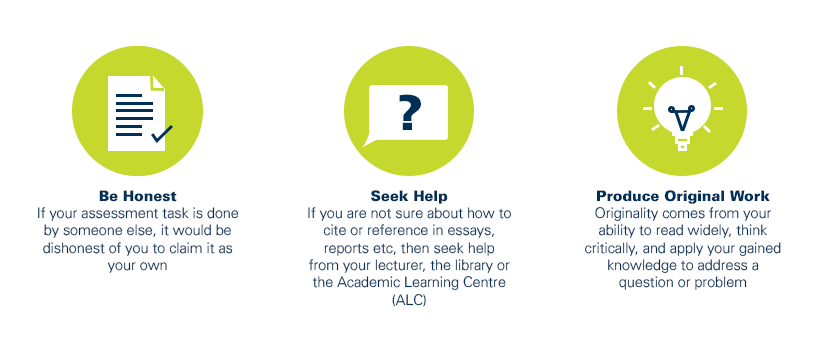
As a CQUniversity student you are expected to act honestly in all aspects of your academic work.
Any assessable work undertaken or submitted for review or assessment must be your own work. Assessable work is any type of work you do to meet the assessment requirements in the unit, including draft work submitted for review and feedback and final work to be assessed.
When you use the ideas, words or data of others in your assessment, you must thoroughly and clearly acknowledge the source of this information by using the correct referencing style for your unit. Using others’ work without proper acknowledgement may be considered a form of intellectual dishonesty.
Participating honestly, respectfully, responsibly, and fairly in your university study ensures the CQUniversity qualification you earn will be valued as a true indication of your individual academic achievement and will continue to receive the respect and recognition it deserves.
As a student, you are responsible for reading and following CQUniversity’s policies, including the Student Academic Integrity Policy and Procedure. This policy sets out CQUniversity’s expectations of you to act with integrity, examples of academic integrity breaches to avoid, the processes used to address alleged breaches of academic integrity, and potential penalties.
What is a breach of academic integrity?
A breach of academic integrity includes but is not limited to plagiarism, self-plagiarism, collusion, cheating, contract cheating, and academic misconduct. The Student Academic Integrity Policy and Procedure defines what these terms mean and gives examples.
Why is academic integrity important?
A breach of academic integrity may result in one or more penalties, including suspension or even expulsion from the University. It can also have negative implications for student visas and future enrolment at CQUniversity or elsewhere. Students who engage in contract cheating also risk being blackmailed by contract cheating services.
Where can I get assistance?
For academic advice and guidance, the Academic Learning Centre (ALC) can support you in becoming confident in completing assessments with integrity and of high standard.
What can you do to act with integrity?