Overview
This unit provides you with a broad survey of world history in the twentieth century. There is no doubt that the modern world has been profoundly shaped by this often bloody century, sometimes called the age of extremes. In this unit, you will examine the decline of European influence, the devastation of the world wars and the collapse of colonial structures. You will also learn about the emergence of independent states in Asia and Africa, and the rise (and fall) of two super powers, the USA and the USSR. You will be asked to consider the emergence of conflicting ideologies: communism, fascism, Zionism, pan-Arabism and political Islam. This unit is designed to equip you with a comprehensive understanding of the forces that have shaped the modern world order.
Details
Pre-requisites or Co-requisites
Prerequisite: Minimum of 18 credit points
Important note: Students enrolled in a subsequent unit who failed their pre-requisite unit, should drop the subsequent unit before the census date or within 10 working days of Fail grade notification. Students who do not drop the unit in this timeframe cannot later drop the unit without academic and financial liability. See details in the Assessment Policy and Procedure (Higher Education Coursework).
Offerings For Term 1 - 2026
Attendance Requirements
All on-campus students are expected to attend scheduled classes - in some units, these classes are identified as a mandatory (pass/fail) component and attendance is compulsory. International students, on a student visa, must maintain a full time study load and meet both attendance and academic progress requirements in each study period (satisfactory attendance for International students is defined as maintaining at least an 80% attendance record).
Recommended Student Time Commitment
Each 6-credit Undergraduate unit at CQUniversity requires an overall time commitment of an average of 12.5 hours of study per week, making a total of 150 hours for the unit.
Class Timetable
Assessment Overview
Assessment Grading
This is a graded unit: your overall grade will be calculated from the marks or grades for each assessment task, based on the relative weightings shown in the table above. You must obtain an overall mark for the unit of at least 50%, or an overall grade of 'pass' in order to pass the unit. If any 'pass/fail' tasks are shown in the table above they must also be completed successfully ('pass' grade). You must also meet any minimum mark requirements specified for a particular assessment task, as detailed in the 'assessment task' section (note that in some instances, the minimum mark for a task may be greater than 50%). Consult the University's Grades and Results Policy for more details of interim results and final grades.
All University policies are available on the CQUniversity Policy site.
You may wish to view these policies:
- Grades and Results Policy
- Assessment Policy and Procedure (Higher Education Coursework)
- Review of Grade Procedure
- Student Academic Integrity Policy and Procedure
- Academic Progression Policy and Procedure
- Student Refund and Credit Balance Policy and Procedure
- Complaints Policy and Procedure
- Information and Communications Technology Acceptable Use Policy and Procedure
This list is not an exhaustive list of all University policies. The full list of University policies are available on the CQUniversity Policy site.
Feedback, Recommendations and Responses
Every unit is reviewed for enhancement each year. At the most recent review, the following staff and student feedback items were identified and recommendations were made.
Feedback from Student Evaluation Survey
Students identified there was insufficient qualitative feedback from the group discussion assessment to accompany the numerical grade
Change the peer-reviewed group discussion assessment so that peer-assessors must provide some feedback to explain their marks.
- Develop a broad knowledge of the history of international relations in the 20th Century
- Foster unprejudiced knowledge of the history of international relations in the 20th Century and acceptance of the informed opinions of others
- Identify some of the key problems in the history of international relations in the 20th Century and their elucidation by evidence-based research
- Develop historical skills including the ability to locate and analyse historical evidence and the ability to critique historical interpretations and their applications to contemporary global issues
N/A
Alignment of Assessment Tasks to Learning Outcomes
| Assessment Tasks | Learning Outcomes | |||
|---|---|---|---|---|
| 1 | 2 | 3 | 4 | |
| 1 - Presentation - 30% | ||||
| 2 - Group Discussion - 30% | ||||
| 3 - Essay - 40% | ||||
Alignment of Graduate Attributes to Learning Outcomes
| Graduate Attributes | Learning Outcomes | |||
|---|---|---|---|---|
| 1 | 2 | 3 | 4 | |
| 1 - Communication | ||||
| 2 - Problem Solving | ||||
| 3 - Critical Thinking | ||||
| 4 - Information Literacy | ||||
| 5 - Team Work | ||||
| 6 - Information Technology Competence | ||||
| 7 - Cross Cultural Competence | ||||
| 8 - Ethical practice | ||||
| 9 - Social Innovation | ||||
| 10 - First Nations Knowledges | ||||
| 11 - Aboriginal and Torres Strait Islander Cultures | ||||
Textbooks
There are no required textbooks.
IT Resources
- CQUniversity Student Email
- Internet
- Unit Website (Moodle)
All submissions for this unit must use the referencing style: Turabian
For further information, see the Assessment Tasks.
b.t.jones@cqu.edu.au
Week 1
Begin Date: 09 Mar 2026Module/Topic
Introduction to the Unit
Chapter
Events and Submissions/Topic
First tutorial is Wednesday at 1pm
Week 2
Begin Date: 16 Mar 2026Module/Topic
WW1 and its aftermath
Chapter
Best et al. Chapters 1 and 2
Events and Submissions/Topic
Attend the Wednesday tutorial to take part in the Group Discussion assessment. If you cannot attend, you must listen to the recording and post a comment on moodle.
Week 3
Begin Date: 23 Mar 2026Module/Topic
Empires and Nationalism before WW2
Chapter
Chapters 3 and 4
Events and Submissions/Topic
Attend the Wednesday tutorial to take part in the Group Discussion assessment. If you cannot attend, you must listen to the recording and post a comment on moodle.
Week 4
Begin Date: 30 Mar 2026Module/Topic
USA and the Americas
Chapter
Chapters 6 and 16
Events and Submissions/Topic
Attend the Wednesday tutorial to take part in the Group Discussion assessment. If you cannot attend, you must listen to the recording and post a comment on moodle.
Week 5
Begin Date: 06 Apr 2026Module/Topic
Arab-Israeli Conflict
Chapter
Chapters 5 and 18
Events and Submissions/Topic
Attend the Wednesday tutorial to take part in the Group Discussion assessment. If you cannot attend, you must listen to the recording and post a comment on moodle.
Week 6
Begin Date: 13 Apr 2026Module/Topic
Path to WW2
Chapter
Chapters 7 and 8
Events and Submissions/Topic
This is your last week to take part in the Group Discussion assessment. If you cannot attend the tutorial on Wednesday, you must listen to the recording and post a comment on moodle.
Group Discussion Due: Week 6 Friday (17 Apr 2026) 11:45 pm AEST
Vacation Week
Begin Date: 20 Apr 2026Module/Topic
Chapter
Events and Submissions/Topic
Week 7
Begin Date: 27 Apr 2026Module/Topic
Cold War to Détente
Chapter
Chapters 9 and 11
Events and Submissions/Topic
Week 8
Begin Date: 04 May 2026Module/Topic
Vietnam Wars
Chapter
Ch 12
Events and Submissions/Topic
Week 9
Begin Date: 11 May 2026Module/Topic
The Non-Aligned Movement and Developmental States
Chapter
Chapters 13 and 14
Events and Submissions/Topic
Presentation Week
Oral Presentation Due: Week 9 Wednesday (13 May 2026) 11:45 pm AEST
Week 10
Begin Date: 18 May 2026Module/Topic
People's Republic of China 1949-1989
Chapter
Ch 15
Events and Submissions/Topic
Presentation Week
Week 11
Begin Date: 25 May 2026Module/Topic
Rise of Political Islam
Chapter
Ch 19
Events and Submissions/Topic
Presentation Week
Week 12
Begin Date: 01 Jun 2026Module/Topic
Conclusions
Chapter
Events and Submissions/Topic
Essay is due Monday 1 June at 11:45pm
Research Essay Due: Week 12 Monday (1 June 2026) 11:45 pm AEST
Exam Week
Begin Date: 08 Jun 2026Module/Topic
Chapter
Events and Submissions/Topic
Vacation/Exam Week
Begin Date: 15 Jun 2026Module/Topic
Chapter
Events and Submissions/Topic
1 Presentation
This presentation is designed to enhance the research essay and requires students to plan ahead. In a presentation of around 10 minutes, students are asked to share what essay question they have chosen and what approach they will take. They should include a description of what research tools and search engines have been used and also any AI tools being used and how they are ensuring the essay is still accurate and complies with CQU's academic integrity policies. They must show an understanding of the topic from the textbook and then give details of three (3) scholarly sources they have found through the CQU library and how these will help them make their argument. Students should use power point slides (or a similar program) to share the citation details of the sources and provide some notes on the basic arguments or key quotes. Finally, presenters will answer questions from the group about their approach. To complete this task successfully, the student must have started the research for their essay and completed some preliminary readings. It is expected that students take on any feedback from the presentation to improve their research essay.
The presentations will take place in the tutorials during weeks 9, 10, and 11. This assessment is peer assessed. Two students will be nominated as peer assessors for each presentation and will be expected to offer feedback and give a grade based on the marking criteria. To receive a grade for this assessment, you are expected to take part in the peer assessment process. The unit coordinator will moderate the peer assessment process.
Week 9 Wednesday (13 May 2026) 11:45 pm AEST
Oral presentation must be completed in week 9, 10, or 11
Oral presentation will be graded on the same day it is given
Oral presentations will be marked on the following criteria:
* Demonstrate that deep thought has gone into the essay question and the approach to answering it
* Explain the key concepts in 3 relevant scholarly sources
* Answer questions from the group about the essay plan
- Develop a broad knowledge of the history of international relations in the 20th Century
- Foster unprejudiced knowledge of the history of international relations in the 20th Century and acceptance of the informed opinions of others
- Identify some of the key problems in the history of international relations in the 20th Century and their elucidation by evidence-based research
- Develop historical skills including the ability to locate and analyse historical evidence and the ability to critique historical interpretations and their applications to contemporary global issues
2 Group Discussion
Between Weeks 2 and 6, there will be stimulus material and a prompting question for a Group Discussion posted on moodle. During the weekly tutorial students are expected to engage thoughtfully with this material and respectfully with each other. Students should not only offer their personal response to the prompting question but engage with their fellow students and offer thoughtful replies to comments from other students. Participation in the Group Discussion should indicate that the student has listened to the podcast and thought carefully about the prompting question. If a student is unable to attend the weekly tutorial to participate, they can listen to the recording and then post a comment and response to other students on the moodle Group Discussion page.
Week 6 Friday (17 Apr 2026) 11:45 pm AEST
Students will take part in the group discussion during the tutorials or post comments online after watching the recording.
Week 7 Friday (1 May 2026)
To achieve high marks in this assessment a student must:
1 Be an active participant in the Group Discussion and offer comments which show they have listened to the podcast and thoughtfully responded to the stimulus question.
2. Respond to comments from other students in a respectful way.
3. Listen to the recording of the tutorial and then post a comment in moodle if unable to attend.
- Foster unprejudiced knowledge of the history of international relations in the 20th Century and acceptance of the informed opinions of others
- Identify some of the key problems in the history of international relations in the 20th Century and their elucidation by evidence-based research
3 Essay
Select ONE (1) of the essay questions on Moodle and answer it in an essay of 2000 words (10% variation is acceptable).
References and bibliography must be included in the Turabian referencing style. Before commencing this task you should refer to the essay-writing and referencing guides provided on the Moodle website.
Thorough research requires that you look beyond your set textbook, Best et al. CQUni Library holds a range of 20th Century history books and there are additional resources in the Digital Readings (DRs) on Moodle. You should also search the CQUni Library databases for relevant scholarly articles on the topic of your choice. Only use articles from peer-reviewed journals or other reputable academic sources, and be sure to provide accurate citations (footnotes). In addition to the textbook, you are expected to consult a minimum of six (6) tertiary-standard academic books and/or journal articles in the preparation of the research essay. To pass this assessment, there must be clear evidence that you have used, read, and correctly cited sources from the CQU library in addition to the textbook and other material.
Before submission, ensure that your research essay meets the assessment criteria listed below.
Use of Generative Artificial Intelligence agents (Gen AI)
Within this assessment, Gen AI agents may be used in a limited way to improve grammar, punctuation, and syntax, and to help you understand a topic or concept or brainstorm ideas. The final product, however, must be your own original work. AI cannot be a substitute for reading and research and the normal plagiarism policy still applies. Any source you cite in your assessment must be something you have accessed through the CQU library and that you have personally read. All AI use must conform to the academic integrity policies of the university.
Week 12 Monday (1 June 2026) 11:45 pm AEST
Submit through the Turnitin link on Moodle.
Vacation/Exam Week Wednesday (17 June 2026)
Essays will be marked and returned within two weeks of receipt by the Unit Coordinator.
Assessment Criteria
In addition to the criteria below, students are expected to incorporate feedback from their oral presentation.
Content:
• presentation of accurate, relevant and unbiased historical evidence
• evidence that the relevant(s) lecture has been listened to
Research (and referencing):
• evidence drawn primarily from scholarly texts
• acknowledgement of all sources of ideas/evidence (footnote) and any quotations
(footnote and quote marks)
• correct use of the Turabian referencing style
Essay Writing:
• meeting the required number of words, the bulk of which should be own wording
• logical structure/organisation of ideas
• clear, concise and correct written English
• presentation in formal essay style and layout
- Develop a broad knowledge of the history of international relations in the 20th Century
- Foster unprejudiced knowledge of the history of international relations in the 20th Century and acceptance of the informed opinions of others
- Identify some of the key problems in the history of international relations in the 20th Century and their elucidation by evidence-based research
- Develop historical skills including the ability to locate and analyse historical evidence and the ability to critique historical interpretations and their applications to contemporary global issues
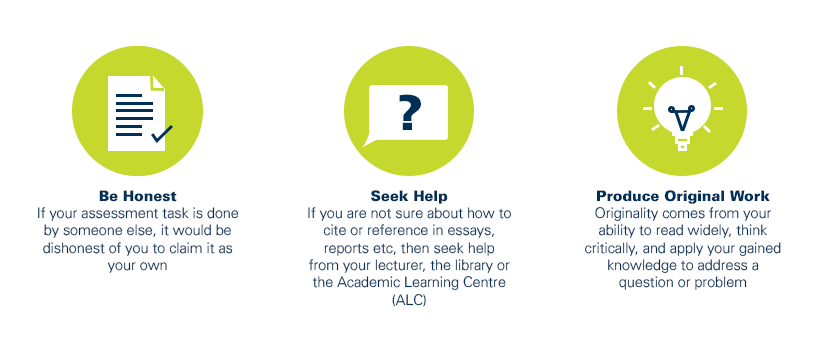
As a CQUniversity student you are expected to act honestly in all aspects of your academic work.
Any assessable work undertaken or submitted for review or assessment must be your own work. Assessable work is any type of work you do to meet the assessment requirements in the unit, including draft work submitted for review and feedback and final work to be assessed.
When you use the ideas, words or data of others in your assessment, you must thoroughly and clearly acknowledge the source of this information by using the correct referencing style for your unit. Using others’ work without proper acknowledgement may be considered a form of intellectual dishonesty.
Participating honestly, respectfully, responsibly, and fairly in your university study ensures the CQUniversity qualification you earn will be valued as a true indication of your individual academic achievement and will continue to receive the respect and recognition it deserves.
As a student, you are responsible for reading and following CQUniversity’s policies, including the Student Academic Integrity Policy and Procedure. This policy sets out CQUniversity’s expectations of you to act with integrity, examples of academic integrity breaches to avoid, the processes used to address alleged breaches of academic integrity, and potential penalties.
What is a breach of academic integrity?
A breach of academic integrity includes but is not limited to plagiarism, self-plagiarism, collusion, cheating, contract cheating, and academic misconduct. The Student Academic Integrity Policy and Procedure defines what these terms mean and gives examples.
Why is academic integrity important?
A breach of academic integrity may result in one or more penalties, including suspension or even expulsion from the University. It can also have negative implications for student visas and future enrolment at CQUniversity or elsewhere. Students who engage in contract cheating also risk being blackmailed by contract cheating services.
Where can I get assistance?
For academic advice and guidance, the Academic Learning Centre (ALC) can support you in becoming confident in completing assessments with integrity and of high standard.
What can you do to act with integrity?