Overview
This unit will explore the immense economic, social and environmental transformation of regional Australia. It is roughly organized into three parts. During Part I, we will examine what rural and regional Australia is defined by policies and scholarships. We will also examine how sustainability is defined and measured in relation to regional development. Part II we’ll use multi-disciplinary perspectives to examine the key drivers and processes of rural and regional development in Australia (globalization, economic restructuring, demographic transition, and environmental change including natural disasters etc.). This involves not only an understanding of the wider changes, but also an appreciation of how these changes are experienced differently by places and people in terms of sustainability. Finally, during Part III we will examine sustainable development at three scales: region, regional city and community through case studies. We will pay particular attentions to sustainable planning and look at different ways regions, cities and communities achieve sustainability. The unit will conclude by considering what is necessary to meet the ongoing challenges to create regions and cities that are socially, economically and environmentally sustainable.
Details
Pre-requisites or Co-requisites
There are no requisites for this unit.
Important note: Students enrolled in a subsequent unit who failed their pre-requisite unit, should drop the subsequent unit before the census date or within 10 working days of Fail grade notification. Students who do not drop the unit in this timeframe cannot later drop the unit without academic and financial liability. See details in the Assessment Policy and Procedure (Higher Education Coursework).
Offerings For Term 2 - 2026
Attendance Requirements
All on-campus students are expected to attend scheduled classes - in some units, these classes are identified as a mandatory (pass/fail) component and attendance is compulsory. International students, on a student visa, must maintain a full time study load and meet both attendance and academic progress requirements in each study period (satisfactory attendance for International students is defined as maintaining at least an 80% attendance record).
Recommended Student Time Commitment
Each 6-credit Undergraduate unit at CQUniversity requires an overall time commitment of an average of 12.5 hours of study per week, making a total of 150 hours for the unit.
Class Timetable
Assessment Overview
Assessment Grading
This is a graded unit: your overall grade will be calculated from the marks or grades for each assessment task, based on the relative weightings shown in the table above. You must obtain an overall mark for the unit of at least 50%, or an overall grade of 'pass' in order to pass the unit. If any 'pass/fail' tasks are shown in the table above they must also be completed successfully ('pass' grade). You must also meet any minimum mark requirements specified for a particular assessment task, as detailed in the 'assessment task' section (note that in some instances, the minimum mark for a task may be greater than 50%). Consult the University's Grades and Results Policy for more details of interim results and final grades.
All University policies are available on the CQUniversity Policy site.
You may wish to view these policies:
- Grades and Results Policy
- Assessment Policy and Procedure (Higher Education Coursework)
- Review of Grade Procedure
- Student Academic Integrity Policy and Procedure
- Academic Progression Policy and Procedure
- Student Refund and Credit Balance Policy and Procedure
- Complaints Policy and Procedure
- Information and Communications Technology Acceptable Use Policy and Procedure
This list is not an exhaustive list of all University policies. The full list of University policies are available on the CQUniversity Policy site.
Feedback, Recommendations and Responses
Every unit is reviewed for enhancement each year. At the most recent review, the following staff and student feedback items were identified and recommendations were made.
Feedback from Student feedback and UC self-reflection.
Students felt feedback was too generic and needed clearer links to assessment criteria.
All students to receive timely, individualised feedback that contains specific, actionable comments explicitly linked to the assessment criteria and key areas for improvement.
Feedback from UC self-assessment.
Students lacked guidance on appropriate use of generative AI tools.
The Unit Coordinator will incorporate explicit guidance on the acceptable use of generative AI tools in the unit’s assessment into tutorial sessions, clarifying expectations and reducing the risk of inappropriate use.
- Articulate the geography of scales and apply these to sustainable regions and cities
- Identify, analyze and evaluate key trends of change, challenges and opportunities of sustainability in regional Australia
- Deploy, under guidance, established frameworks and techniques of sustainability to urban and regional development in Australia
- Communicate geographical issues, ideas and arguments using appropriate written, cartographic and graphic forms.
N/A
Alignment of Assessment Tasks to Learning Outcomes
| Assessment Tasks | Learning Outcomes | |||
|---|---|---|---|---|
| 1 | 2 | 3 | 4 | |
| 1 - Written Assessment - 50% | ||||
| 2 - Written Assessment - 50% | ||||
Alignment of Graduate Attributes to Learning Outcomes
| Graduate Attributes | Learning Outcomes | |||
|---|---|---|---|---|
| 1 | 2 | 3 | 4 | |
| 1 - Communication | ||||
| 2 - Problem Solving | ||||
| 3 - Critical Thinking | ||||
| 4 - Information Literacy | ||||
| 5 - Team Work | ||||
| 6 - Information Technology Competence | ||||
| 7 - Cross Cultural Competence | ||||
| 8 - Ethical practice | ||||
| 9 - Social Innovation | ||||
| 10 - First Nations Knowledges | ||||
| 11 - Aboriginal and Torres Strait Islander Cultures | ||||
Alignment of Assessment Tasks to Graduate Attributes
| Assessment Tasks | Graduate Attributes | ||||||||||
|---|---|---|---|---|---|---|---|---|---|---|---|
| 1 | 2 | 3 | 4 | 5 | 6 | 7 | 8 | 9 | 10 | 11 | |
| 1 - Written Assessment - 50% | |||||||||||
| 2 - Written Assessment - 50% | |||||||||||
Textbooks
There are no required textbooks.
IT Resources
- CQUniversity Student Email
- Internet
- Unit Website (Moodle)
All submissions for this unit must use the referencing style: Harvard (author-date)
For further information, see the Assessment Tasks.
j.wu@cqu.edu.au
Week 1
Begin Date: 13 Jul 2026Module/Topic
Unit Introduction - What Is Sustainability?
Chapter
There is no textbook for this unit. Weekly study materials will be made available on the unit's Moodle site.
Events and Submissions/Topic
Week 2
Begin Date: 20 Jul 2026Module/Topic
Place Matters: Define Cities and Regions
Chapter
Events and Submissions/Topic
Week 3
Begin Date: 27 Jul 2026Module/Topic
Sustainability: Frameworks, Principles and Tools
Chapter
Events and Submissions/Topic
Week 4
Begin Date: 03 Aug 2026Module/Topic
Measuring Sustainability and Sustainability Development Goals
Chapter
Events and Submissions/Topic
Week 5
Begin Date: 10 Aug 2026Module/Topic
Australia's Regional Settlement System
Chapter
Events and Submissions/Topic
Week 6
Begin Date: 17 Aug 2026Module/Topic
How Do Regions Develop and Change?
Chapter
Events and Submissions/Topic
Vacation Week
Begin Date: 24 Aug 2026Module/Topic
Vacation week
Chapter
Events and Submissions/Topic
Week 7
Begin Date: 31 Aug 2026Module/Topic
A Changing Regional Environment: Natural Disasters
Chapter
Events and Submissions/Topic
Week 8
Begin Date: 07 Sep 2026Module/Topic
Whose Regions? Population, Health and Liveability in Australia Regions
Chapter
Events and Submissions/Topic
Week 9
Begin Date: 14 Sep 2026Module/Topic
Planning As A Sustainability Instrument: Sustainable Planning in Queensland
Chapter
Events and Submissions/Topic
Week 10
Begin Date: 21 Sep 2026Module/Topic
Sustainability by Planning: A Case Study
Chapter
Events and Submissions/Topic
Week 11
Begin Date: 28 Sep 2026Module/Topic
Sustainability by Urban Design: A Case Study
Chapter
Events and Submissions/Topic
Week 12
Begin Date: 05 Oct 2026Module/Topic
Toward Urban and Regional Sustainability
Chapter
Events and Submissions/Topic
Exam Week
Begin Date: 12 Oct 2026Module/Topic
Chapter
Events and Submissions/Topic
Vacation/Exam Week
Begin Date: 19 Oct 2026Module/Topic
Chapter
Events and Submissions/Topic
1 Written Assessment
The assessment task entails writing a report that delves into the sustainability challenges of a chosen region or topic. You must select a region, regional city, industry, or organization in Australia for study. The report should focus on the sustainability challenges encountered by the chosen region or topic. It is important to note that the same region or topic will be studied for Assessment 2. Therefore, it is crucial to review the instructions for Assessment 2 before making your choice. The report should be a minimum of 2,500 words in length.
Detailed instructions and resources for writing the report are provided on the unit's Moodle site.
Use of Generative Artificial Intelligence agents (Gen AI):
Within this assessment, the use of Microsoft Copilot, Chat GPT or other Gen AI agents is as follows: Gen AI content is used to generate ideas and general structures only.
Week 7 Friday (4 Sept 2026) 11:45 pm AEST
Online submission
Week 9 Friday (18 Sept 2026)
Assessments will be marked and returned in two weeks after submission
Your report will be evaluated based on the thoroughness of the research conducted and the effectiveness of written communication. The assessment criteria include:
- Extent of Research: Evaluating the depth and breadth of research conducted on the selected region or topic.
- Understanding of Sustainability: Demonstrating a comprehensive grasp of the sustainability challenges relevant to the chosen region or topic.
- Integration of Learning Activities: Demonstrating the ability to synthesise knowledge acquired from unit learning activities.
- Written Communication Proficiency: Assessing the clarity, coherence, and effectiveness in articulating ideas and presenting findings through writing.
An assessment rubric is available on the unit's Moodle site.
- Articulate the geography of scales and apply these to sustainable regions and cities
- Identify, analyze and evaluate key trends of change, challenges and opportunities of sustainability in regional Australia
- Deploy, under guidance, established frameworks and techniques of sustainability to urban and regional development in Australia
- Communicate geographical issues, ideas and arguments using appropriate written, cartographic and graphic forms.
- Communication
- Problem Solving
- Critical Thinking
- Information Literacy
2 Written Assessment
Following the insights garnered from your sustainability reports, this assessment requires you to: a) Investigate an existing plan relevant to the region or topic previously examined in Assessment 1. b) Create a paper evaluating the identified plan. This paper should present an assessment of the plan’s alignment with sustainable development principles and its contribution to the sustainable development of the region or topic. It should discuss the plan’s strengths, weaknesses, and potential areas for improvement in promoting sustainable development. This analysis should also include whether and how the sustainability challenges identified in the initial assessment were addressed by the plan.
The paper should be at least 3,000 words long. Detailed instructions and guidelines are provided on the unit's Moodle site.
Use of Generative Artificial Intelligence agents (Gen AI):
Within this assessment, the use of Microsoft Copilot, Chat GPT or other Gen AI agents is as follows: Gen AI content is used to generate ideas and general structures only.
Week 12 Friday (9 Oct 2026) 11:45 pm AEST
Online submission
Vacation/Exam Week Friday (23 Oct 2026)
The papers will be marked and returned at the end of the term.
Your paper will be evaluated based on the overall quality of the research and the effectiveness of written communication. The evaluation criteria include:
- Understanding the nature of a sustainability plan.
- Quality of research and evaluation of the chosen plan.
- Applying sustainability assessment tools and frameworks to evaluate the plan.
- Quality of written communication, including clarity, coherence, and effectiveness in articulating ideas and presenting findings.
An assessment rubric is available on the unit's Moodle site.
- Articulate the geography of scales and apply these to sustainable regions and cities
- Identify, analyze and evaluate key trends of change, challenges and opportunities of sustainability in regional Australia
- Deploy, under guidance, established frameworks and techniques of sustainability to urban and regional development in Australia
- Communicate geographical issues, ideas and arguments using appropriate written, cartographic and graphic forms.
- Problem Solving
- Critical Thinking
- Information Literacy
- Ethical practice
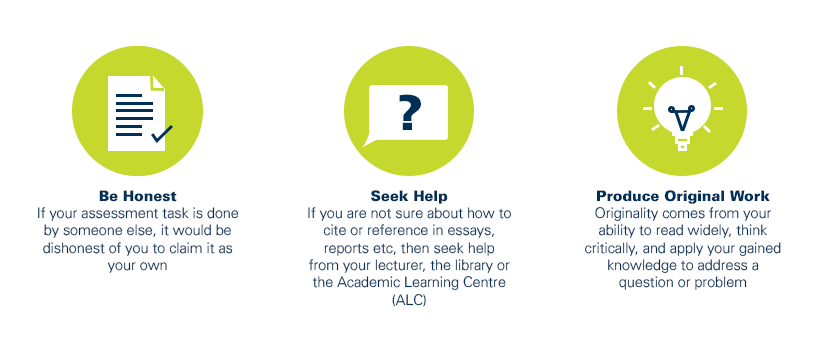
As a CQUniversity student you are expected to act honestly in all aspects of your academic work.
Any assessable work undertaken or submitted for review or assessment must be your own work. Assessable work is any type of work you do to meet the assessment requirements in the unit, including draft work submitted for review and feedback and final work to be assessed.
When you use the ideas, words or data of others in your assessment, you must thoroughly and clearly acknowledge the source of this information by using the correct referencing style for your unit. Using others’ work without proper acknowledgement may be considered a form of intellectual dishonesty.
Participating honestly, respectfully, responsibly, and fairly in your university study ensures the CQUniversity qualification you earn will be valued as a true indication of your individual academic achievement and will continue to receive the respect and recognition it deserves.
As a student, you are responsible for reading and following CQUniversity’s policies, including the Student Academic Integrity Policy and Procedure. This policy sets out CQUniversity’s expectations of you to act with integrity, examples of academic integrity breaches to avoid, the processes used to address alleged breaches of academic integrity, and potential penalties.
What is a breach of academic integrity?
A breach of academic integrity includes but is not limited to plagiarism, self-plagiarism, collusion, cheating, contract cheating, and academic misconduct. The Student Academic Integrity Policy and Procedure defines what these terms mean and gives examples.
Why is academic integrity important?
A breach of academic integrity may result in one or more penalties, including suspension or even expulsion from the University. It can also have negative implications for student visas and future enrolment at CQUniversity or elsewhere. Students who engage in contract cheating also risk being blackmailed by contract cheating services.
Where can I get assistance?
For academic advice and guidance, the Academic Learning Centre (ALC) can support you in becoming confident in completing assessments with integrity and of high standard.
What can you do to act with integrity?