Overview
This unit explores financial technology's (FinTech) transformative role in reshaping global financial systems and business practices. You will examine emerging technologies such as digital payments, cryptocurrencies, and artificial intelligence in finance and their implications for innovation, competition, and financial inclusion. Through case studies and practical applications, you will gain the skills to assess FinTech innovations and their impact on traditional financial systems and global markets.
Details
Pre-requisites or Co-requisites
There are no requisites for this unit.
Important note: Students enrolled in a subsequent unit who failed their pre-requisite unit, should drop the subsequent unit before the census date or within 10 working days of Fail grade notification. Students who do not drop the unit in this timeframe cannot later drop the unit without academic and financial liability. See details in the Assessment Policy and Procedure (Higher Education Coursework).
Offerings For Term 1 - 2026
Attendance Requirements
All on-campus students are expected to attend scheduled classes - in some units, these classes are identified as a mandatory (pass/fail) component and attendance is compulsory. International students, on a student visa, must maintain a full time study load and meet both attendance and academic progress requirements in each study period (satisfactory attendance for International students is defined as maintaining at least an 80% attendance record).
Recommended Student Time Commitment
Each 6-credit Undergraduate unit at CQUniversity requires an overall time commitment of an average of 12.5 hours of study per week, making a total of 150 hours for the unit.
Class Timetable
Assessment Overview
Assessment Grading
This is a graded unit: your overall grade will be calculated from the marks or grades for each assessment task, based on the relative weightings shown in the table above. You must obtain an overall mark for the unit of at least 50%, or an overall grade of 'pass' in order to pass the unit. If any 'pass/fail' tasks are shown in the table above they must also be completed successfully ('pass' grade). You must also meet any minimum mark requirements specified for a particular assessment task, as detailed in the 'assessment task' section (note that in some instances, the minimum mark for a task may be greater than 50%). Consult the University's Grades and Results Policy for more details of interim results and final grades.
All University policies are available on the CQUniversity Policy site.
You may wish to view these policies:
- Grades and Results Policy
- Assessment Policy and Procedure (Higher Education Coursework)
- Review of Grade Procedure
- Student Academic Integrity Policy and Procedure
- Academic Progression Policy and Procedure
- Student Refund and Credit Balance Policy and Procedure
- Complaints Policy and Procedure
- Information and Communications Technology Acceptable Use Policy and Procedure
This list is not an exhaustive list of all University policies. The full list of University policies are available on the CQUniversity Policy site.
- Analyse the impact of Financial Technologies (FinTech) on traditional financial systems and global markets
- Apply knowledge of digital payment systems, cryptocurrencies, and Artificial Intelligence to solve real-world financial challenges
- Evaluate the regulatory, ethical, and societal implications of FinTech innovations
- Assess the role of FinTech in promoting financial inclusion and driving global economic transformation.
Alignment of Assessment Tasks to Learning Outcomes
| Assessment Tasks | Learning Outcomes | |||
|---|---|---|---|---|
| 1 | 2 | 3 | 4 | |
| 1 - Report - 25% | ||||
| 2 - Group Work - 35% | ||||
| 3 - Critical Review - 40% | ||||
Alignment of Graduate Attributes to Learning Outcomes
| Graduate Attributes | Learning Outcomes | |||
|---|---|---|---|---|
| 1 | 2 | 3 | 4 | |
| 1 - Communication | ||||
| 2 - Problem Solving | ||||
| 3 - Critical Thinking | ||||
| 4 - Information Literacy | ||||
| 5 - Team Work | ||||
| 6 - Information Technology Competence | ||||
| 7 - Cross Cultural Competence | ||||
| 8 - Ethical practice | ||||
| 9 - Social Innovation | ||||
| 10 - First Nations Knowledges | ||||
| 11 - Aboriginal and Torres Strait Islander Cultures | ||||
Textbooks
There are no required textbooks.
Additional Textbook Information
No prescribed textbook. However, the Moodle site will refer to multiple resources available from the library.
IT Resources
- CQUniversity Student Email
- Internet
- Unit Website (Moodle)
- Different online resources indicated on Moodle.
- Office software (e.g. Microsoft Office, Open Office etc)
- GenAI (ChatGPT), Microsoft CoPilot or similar
All submissions for this unit must use the referencing style: American Psychological Association 7th Edition (APA 7th edition)
For further information, see the Assessment Tasks.
t.imam@cqu.edu.au
Week 1: Welcome
Begin Date: 09 Mar 2026Module/Topic
Chapter
Events and Submissions/Topic
Week 2: Foundations of FinTech and financial innovations
Begin Date: 16 Mar 2026Module/Topic
- Foundations of Financial Technologies (FinTech)
- Innovations and global disruptions in financial services, and their impacts
- FinTech ecosystems and stakeholders
Chapter
Resources on Moodle
Events and Submissions/Topic
Week 3: Digital payments and wallets
Begin Date: 23 Mar 2026Module/Topic
- Foundations of digital payments
- Digital payment models and platforms
- Digital wallets
- Impacts of digital payments on traditional systems
Chapter
Resources on Moodle
Events and Submissions/Topic
Week 4: Blockchain and cryptocurrency
Begin Date: 30 Mar 2026Module/Topic
- Blockchain basics and applications
- Cryptocurrency and financial applications
- Disruptive impacts of blockchain and cryptocurrency
- Debates and governance in blockchain and cryptocurrency
Chapter
Resources on Moodle
Events and Submissions/Topic
Week 5: Digital Financing
Begin Date: 06 Apr 2026Module/Topic
- Digital financing basics
- LendTech and digital lending platforms
- Crowdfunding and digital equity funding platforms
- Impacts of digital financing on traditional financing systems
Chapter
Resources on Moodle
Events and Submissions/Topic
Week 6: AI in Finance
Begin Date: 13 Apr 2026Module/Topic
- Foundations of Artificial Intelligence (AI)
- AI in financial decision-making and services automation
- Generative AI (GenAI) and its potential applications in finance
- Risks, bias, ethical considerations, and debates surrounding AI and GenAI in financial services
Chapter
Resources on Moodle
Events and Submissions/Topic
Vacation Week
Begin Date: 20 Apr 2026Module/Topic
Chapter
Events and Submissions/Topic
Week 7: FinTech Across Financial Sectors
Begin Date: 27 Apr 2026Module/Topic
- FinTech across sectors and inclusion challenges
- InsurTech and innovation in insurance services
- WealthTech and digital investment platforms
- Open banking and data-driven financial services
- Algorithmic trading and other applications
Chapter
Resources on Moodle
Events and Submissions/Topic
Week 8: Security in FinTech
Begin Date: 04 May 2026Module/Topic
- Overview of security and risks in FinTech systems
- Data privacy, identity, and trust issues in FinTech
- Security innovations and risk management in FinTech
Chapter
Resources on Moodle
Events and Submissions/Topic
Week 9: Social and Sustainability Issues in FinTech
Begin Date: 11 May 2026Module/Topic
- Financial exclusion and financial service access challenges
- FinTech and its social impact across regions
- Sustainable finance and innovations
Chapter
Resources on Moodle
Events and Submissions/Topic
Week 10: Legal and ethical dimensions of FinTech
Begin Date: 18 May 2026Module/Topic
- Legal and compliance issues in FinTech
- Ethical dimensions of FinTech
- Regulatory technologies (RegTech), compliance innovations, and sandboxes
Chapter
Resources on Moodle
Events and Submissions/Topic
Week 11: Future trends and policy debates in FinTech
Begin Date: 25 May 2026Module/Topic
- Emerging innovations and global trends in FinTech
- Future challenges in digital finance
- Policy debates surrounding FinTech
Chapter
Resources on Moodle
Events and Submissions/Topic
Week 12
Begin Date: 01 Jun 2026Module/Topic
Chapter
Events and Submissions/Topic
Exam Week
Begin Date: 08 Jun 2026Module/Topic
Chapter
Events and Submissions/Topic
Vacation/Exam Week
Begin Date: 15 Jun 2026Module/Topic
Chapter
Events and Submissions/Topic
1 Report
This is an individual assessment. You will select a FinTech company and prepare an industry brief, assessing how its technology has disrupted a specific traditional financial area. The brief will examine the company’s core innovation and its evolution, critically analyse the innovation's implications for its business context and financial markets, and relate the analysis to the broader industry and financial transformation trends, drawing on and applying relevant concepts covered in this unit. Further details, including the specific assessment questions and grading criteria, will be provided on Moodle by the end of Week 2. Additionally, specific instructions on how GenAI may be used will be provided in the assessment guidelines. As the permitted level of AI use is set at Level 2 or higher, you may use AI tools for brainstorming or planning. However, any use of GenAI must be declared, including the manual oversight, refinements, and verification undertaken. Please follow the GenAI use instructions outlined in the assessment details on Moodle.
Week 5 Friday (10 Apr 2026) 11:59 pm AEST
Week 8 Monday (4 May 2026)
Further information on specific return dates will be advised on Moodle.
The assessment evaluates your ability to critically assess FinTech innovation in relation to unit learning outcomes 1-2. Marks allocated for this assessment will consider different aspects, including:
- Completeness and clarity of the industry brief
- Accuracy and relevance of the analysis
- Quality of explanations
- Presentation and structure
- Appropriate use of academic and industry sources
More details will be provided on Moodle.
- Analyse the impact of Financial Technologies (FinTech) on traditional financial systems and global markets
- Apply knowledge of digital payment systems, cryptocurrencies, and Artificial Intelligence to solve real-world financial challenges
2 Group Work
This assessment is normally to be completed in groups of up to three students; alternative arrangements may be considered where required. You are to co-design a FinTech solution that addresses a real-world financial inclusion issue. You will then pitch your solution in a maximum 10-minute video format. The presentation should explain the associated technology stack, business model, user journey, impact on stakeholders, inclusion outcomes, and any risks and ethical considerations. Further details, including the specific assessment scope and criteria, will be provided on Moodle by the end of Week 5. Additionally, specific instructions on how GenAI may be used will be provided in the assessment guidelines. As the permitted level of AI use is set at Level 2 or higher, you may use AI tools for brainstorming or planning. However, any use of GenAI must be declared, including the manual oversight, refinements, and verification undertaken. Please follow the GenAI use instructions outlined in the assessment details on Moodle.
Week 8 Friday (8 May 2026) 11:59 pm AEST
Week 11 Monday (25 May 2026)
Specific return information will be advised on Moodle.
The assessment evaluates your ability to design and communicate a FinTech solution which addresses a real-world financial inclusion challenge, in relation to unit learning outcomes 2 and 4. Marks allocated for this assessment will consider different aspects, including:
- Identification and articulation of a real-world financial inclusion challenge
- Quality of the FinTech solution design and application of relevant technologies
- Consideration of stakeholder impacts, inclusion outcomes, key risks, and ethical considerations
- Clarity, structure, and professionalism of the presentation, including the articulation of individual contribution
- Appropriate use of academic and industry sources
More details will be provided on Moodle.
- Apply knowledge of digital payment systems, cryptocurrencies, and Artificial Intelligence to solve real-world financial challenges
- Assess the role of FinTech in promoting financial inclusion and driving global economic transformation.
3 Critical Review
This is an individual assessment with a minimum marking criterion (please refer to the relevant sub-section). You will analyse a current regulatory issue or ethical dilemma in FinTech. In the form of a written commentary, you will describe the issue or dilemma and the associated stakeholders, critically analyse the ethical, legal, and societal implications, and recommend policy or governance measures aligned with innovation and financial inclusion. You will also submit a short video (3 minutes maximum), summarising your findings targeted at a non-expert audience, such as policymakers or the general public. Further details, including the specific assessment scope and criteria, will be provided on Moodle by the end of Week 8. Additionally, specific instructions on how GenAI may be used will be provided in the assessment guidelines. As the permitted level of AI use is set at Level 2 or higher, you may use AI tools for brainstorming or planning. However, any use of GenAI must be declared, including the manual oversight, refinements, and verification undertaken. Please follow the GenAI use instructions outlined in the assessment details on Moodle.
Week 11 Friday (29 May 2026) 11:59 pm AEST
Since this is a final assessment, feedback may not be provided until the grade certification date.
The assessment evaluates your ability to critically assess, apply, and synthesise relevant concepts covered in this unit. Marks allocated for this assessment will consider different aspects, including:
- Completeness, clarity, and contemporariness of the policy and ethics commentary
- Accuracy and relevance of the ethical, legal, and societal analysis
- Quality of explanations
- Overall presentation and structure
- Appropriate use of academic and industry sources
More details will be provided on Moodle.
- Analyse the impact of Financial Technologies (FinTech) on traditional financial systems and global markets
- Evaluate the regulatory, ethical, and societal implications of FinTech innovations
- Assess the role of FinTech in promoting financial inclusion and driving global economic transformation.
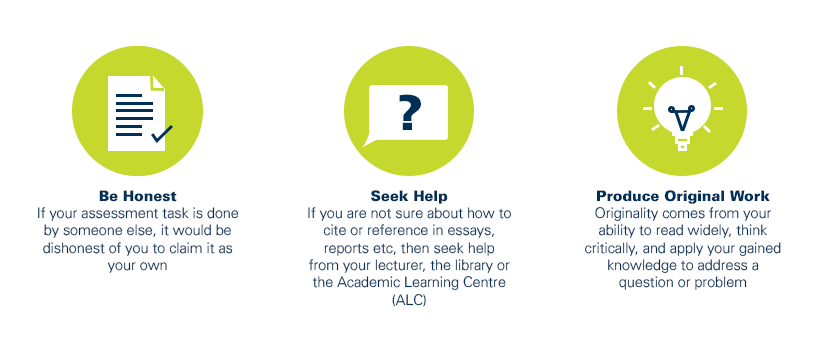
As a CQUniversity student you are expected to act honestly in all aspects of your academic work.
Any assessable work undertaken or submitted for review or assessment must be your own work. Assessable work is any type of work you do to meet the assessment requirements in the unit, including draft work submitted for review and feedback and final work to be assessed.
When you use the ideas, words or data of others in your assessment, you must thoroughly and clearly acknowledge the source of this information by using the correct referencing style for your unit. Using others’ work without proper acknowledgement may be considered a form of intellectual dishonesty.
Participating honestly, respectfully, responsibly, and fairly in your university study ensures the CQUniversity qualification you earn will be valued as a true indication of your individual academic achievement and will continue to receive the respect and recognition it deserves.
As a student, you are responsible for reading and following CQUniversity’s policies, including the Student Academic Integrity Policy and Procedure. This policy sets out CQUniversity’s expectations of you to act with integrity, examples of academic integrity breaches to avoid, the processes used to address alleged breaches of academic integrity, and potential penalties.
What is a breach of academic integrity?
A breach of academic integrity includes but is not limited to plagiarism, self-plagiarism, collusion, cheating, contract cheating, and academic misconduct. The Student Academic Integrity Policy and Procedure defines what these terms mean and gives examples.
Why is academic integrity important?
A breach of academic integrity may result in one or more penalties, including suspension or even expulsion from the University. It can also have negative implications for student visas and future enrolment at CQUniversity or elsewhere. Students who engage in contract cheating also risk being blackmailed by contract cheating services.
Where can I get assistance?
For academic advice and guidance, the Academic Learning Centre (ALC) can support you in becoming confident in completing assessments with integrity and of high standard.
What can you do to act with integrity?