Overview
This unit provides a comprehensive introduction to the foundational principles of accounting and economics, specifically designed for students pursuing careers in business. It combines both fields to equip you with the necessary skills to analyse and interpret financial information and make informed decisions in a dynamic business environment. You will gain a solid understanding of the ways accounting and economics interact to inform business decisions and public policy.
Details
Pre-requisites or Co-requisites
ACCT11059 - Anti-requisite
Important note: Students enrolled in a subsequent unit who failed their pre-requisite unit, should drop the subsequent unit before the census date or within 10 working days of Fail grade notification. Students who do not drop the unit in this timeframe cannot later drop the unit without academic and financial liability. See details in the Assessment Policy and Procedure (Higher Education Coursework).
Offerings For Term 2 - 2026
Attendance Requirements
All on-campus students are expected to attend scheduled classes - in some units, these classes are identified as a mandatory (pass/fail) component and attendance is compulsory. International students, on a student visa, must maintain a full time study load and meet both attendance and academic progress requirements in each study period (satisfactory attendance for International students is defined as maintaining at least an 80% attendance record).
Recommended Student Time Commitment
Each 6-credit Undergraduate unit at CQUniversity requires an overall time commitment of an average of 12.5 hours of study per week, making a total of 150 hours for the unit.
Class Timetable
Assessment Overview
Assessment Grading
This is a pass/fail (non-graded) unit. To pass the unit, you must pass all of the individual assessment tasks shown in the table above.
All University policies are available on the CQUniversity Policy site.
You may wish to view these policies:
- Grades and Results Policy
- Assessment Policy and Procedure (Higher Education Coursework)
- Review of Grade Procedure
- Student Academic Integrity Policy and Procedure
- Academic Progression Policy and Procedure
- Student Refund and Credit Balance Policy and Procedure
- Complaints Policy and Procedure
- Information and Communications Technology Acceptable Use Policy and Procedure
This list is not an exhaustive list of all University policies. The full list of University policies are available on the CQUniversity Policy site.
Feedback, Recommendations and Responses
Every unit is reviewed for enhancement each year. At the most recent review, the following staff and student feedback items were identified and recommendations were made.
Feedback from Student evaluation
Student feedback indicated that more detailed feedback could better support their learning
Implement rubric-aligned feedback with individualised comments to ensure students receive timely and constructive guidance.
- Explain the foundational financial literacy concepts within the contemporary business environment, including regulatory, social, and ethical considerations
- Record, summarise, and present basic business transactions, and prepare the primary financial statements such as income statement, balance sheet, and cash flow statement to reflect organisational performance and financial position
- Interpret and evaluate financial statements using key analytical tools, and assess how macroeconomic indicators such as inflation, interest rates, and GDP impact financial decision-making by internal and external stakeholders
- Apply budgeting, costing, and investment appraisal techniques to support financial planning and control, and analyse the impact of different market structures
- Compare and assess various sources of business finance, considering cost, risk, and suitability, and explain the role of individuals and businesses in diverse economic environments shaped by regulatory frameworks and market dynamics.
Alignment of Assessment Tasks to Learning Outcomes
| Assessment Tasks | Learning Outcomes | ||||
|---|---|---|---|---|---|
| 1 | 2 | 3 | 4 | 5 | |
| 1 - Group Work - 0% | |||||
| 2 - Case Study - 0% | |||||
Alignment of Graduate Attributes to Learning Outcomes
| Graduate Attributes | Learning Outcomes | ||||
|---|---|---|---|---|---|
| 1 | 2 | 3 | 4 | 5 | |
| 1 - Communication | |||||
| 2 - Problem Solving | |||||
| 3 - Critical Thinking | |||||
| 4 - Information Literacy | |||||
| 5 - Team Work | |||||
| 6 - Information Technology Competence | |||||
| 7 - Cross Cultural Competence | |||||
| 8 - Ethical practice | |||||
| 9 - Social Innovation | |||||
| 10 - First Nations Knowledges | |||||
| 11 - Aboriginal and Torres Strait Islander Cultures | |||||
Textbooks
Accounting: Business Reporting for Decision Making
- 9th edition (2026)
- Authors: Jacqueline Birt, Keryn Chalmers, Suzanne Maloney, Albie Brooks, Judy Oliver, and David Bond
- John Wiley & Sons Australia
- South Melbourne South Melbourne , VIC , Australia
- ISBN: 9781394333943
Economics for Business
- 9th Edition (2023)
- Authors: John Sloman, Dean Garratt, Jon Guest, Elizabeth Jones
- Pearson
- Sydney Sydney , NSW , Australia
- ISBN: 9781292440118
IT Resources
- CQUniversity Student Email
- Internet
- Unit Website (Moodle)
- PDF reader
- Microsft Office (Word, Excel, PowerPoint)
All submissions for this unit must use the referencing style: American Psychological Association 7th Edition (APA 7th edition)
For further information, see the Assessment Tasks.
c.le@cqu.edu.au
Week 1
Begin Date: 13 Jul 2026Module/Topic
No Workshop
Chapter
Chapter 1 (Birt et al., 2026)
Events and Submissions/Topic
Practice quiz 1 available opens this week.
Week 2
Begin Date: 20 Jul 2026Module/Topic
Financial literacy & regulatory context
Chapter
Chapters 2 and 3 (Birt et al., 2026)
Events and Submissions/Topic
Practice online quiz 2 opens this week.
Week 3
Begin Date: 27 Jul 2026Module/Topic
Recording & preparing financial statements
Chapter
Chapters 4 and 5 (Birt et al., 2026)
Events and Submissions/Topic
Practice Quiz 3 opens this week.
Week 4
Begin Date: 03 Aug 2026Module/Topic
Statement of profit and loss, and statement of cash flows
Chapter
Chapters 6 and 7 (Birt et al., 2026)
Events and Submissions/Topic
Practice Quiz 4 opens this week.
Week 5
Begin Date: 10 Aug 2026Module/Topic
Interpretation of financial statements
Chapter
Chapter 8 (Birt et al., 2026)
Events and Submissions/Topic
Practice Quiz 5 opens this week.
As part of assessment 1, each group (consisting of 4 students) must upload a 100-150 words summary about the idea of the project by Friday, Week 5, 5:00 pm AEST
Week 6
Begin Date: 17 Aug 2026Module/Topic
Sources of finance & economic context, and business environment
Chapter
Chapter 13 (Birt et al., 2026)
Chapters 4 and 5 (Sloman et al., 2023)
Events and Submissions/Topic
Practice Quiz 6 opens this week.
Vacation Week
Begin Date: 24 Aug 2026Module/Topic
Chapter
Events and Submissions/Topic
Week 7
Begin Date: 31 Aug 2026Module/Topic
Budgeting and Costing
Chapter
Chapters 9 and 10 (Birt et al., 2026)
Events and Submissions/Topic
Practice Quiz 7 opens this week.
Week 8
Begin Date: 07 Sep 2026Module/Topic
Capital Investment
Chapter
Chapter 12 (Birt et al., 2026)
Events and Submissions/Topic
Practice Quiz 8 opens this week.
Submission of Assessment 1 - Recorded group presentation and written report
Group Work 50% Due: Week 8 Monday (7 Sept 2026) 5:00 pm AEST
Week 9
Begin Date: 14 Sep 2026Module/Topic
Macroeconomic Environment
Chapter
Chapter 26 (Sloman et al., 2023)
Events and Submissions/Topic
Practice Quiz 9 opens this week.
As part of assessment 2, each student must submit a case proposal within 100-150 words by Friday, Week 9, 5:00 pm AEST.
Week 10
Begin Date: 21 Sep 2026Module/Topic
Sources of Finance & Government and Business
Chapter
Chapter 13 (Birt et al., 2026)
Chapter 20 (Sloman et al., 2023)
Events and Submissions/Topic
Practice Quiz 10 opens this week.
Week 11
Begin Date: 28 Sep 2026Module/Topic
Government and Business
Chapter
Chapters 21 and 22 (Sloman et al., 2023)
Events and Submissions/Topic
Practice Quiz 10 opens this week.
Week 12
Begin Date: 05 Oct 2026Module/Topic
Individual case study submission
Chapter
Events and Submissions/Topic
Submission of Assessment 2 - Recorded presentation and written report
Case Study 50% Due: Week 12 Monday (5 Oct 2026) 5:00 pm AEST
Exam Week
Begin Date: 12 Oct 2026Module/Topic
Chapter
Events and Submissions/Topic
Vacation/Exam Week
Begin Date: 19 Oct 2026Module/Topic
Chapter
Events and Submissions/Topic
1 Group Work
Students will participate in a simulated business environment where they manage a company’s financial and economic decisions. Working in teams, they will record and interpret financial transactions, assess economic trends, and make strategic business decisions based on real-world economic policies and financial data. The simulation will introduce macroeconomic shifts (e.g., inflation, interest rate changes) and business events (e.g., supplier cost increases) that teams must respond to using accounting and economic principles.
More details about the group formation and other information is available in the unit Moodle.
Week 8 Monday (7 Sept 2026) 5:00 pm AEST
Word file of group work and recorded group presentation must be uploaded by the due date.
Week 11 Monday (28 Sept 2026)
Results will be available in Moodle grade area.
This assessment is aligned with learning outcomes 1, 2 and 5 and will be based on the marking rubric uploaded in the assessment 1 area in Moodle.
Assessment 1 has the following 3 components:
First, by week 5, each group (consisting of 4 students) must upload a 100-150 words summary about the idea of the project.
Second, a group work report is due by week 8.
Third, a recorded group presentation must be submitted by week 8.
All the above three steps must be followed to complete Assessment 1.
- Explain the foundational financial literacy concepts within the contemporary business environment, including regulatory, social, and ethical considerations
- Record, summarise, and present basic business transactions, and prepare the primary financial statements such as income statement, balance sheet, and cash flow statement to reflect organisational performance and financial position
- Compare and assess various sources of business finance, considering cost, risk, and suitability, and explain the role of individuals and businesses in diverse economic environments shaped by regulatory frameworks and market dynamics.
2 Case Study
Students will research and analyse a real-world business case, focusing on how accounting and economic principles influence financial decision-making and business strategy. Each student will evaluate the financial statements of a company and explore how macroeconomic factors (e.g., inflation, government regulations) have shaped its performance and strategic choices.
More details about the individual case study information are available in the unit Moodle.
Week 12 Monday (5 Oct 2026) 5:00 pm AEST
Assessment 2 must be submitted via online.
Grade will be available on the grade release date.
This assessment has 3 components:
First, students must submit a 100-150 words summary about the case/company they will study by week 9.
Second, a case study report must be submitted by the due time in week 12.
Third, each student must submit 5-7 minutes recording about their case in week 12.
- Interpret and evaluate financial statements using key analytical tools, and assess how macroeconomic indicators such as inflation, interest rates, and GDP impact financial decision-making by internal and external stakeholders
- Apply budgeting, costing, and investment appraisal techniques to support financial planning and control, and analyse the impact of different market structures
- Compare and assess various sources of business finance, considering cost, risk, and suitability, and explain the role of individuals and businesses in diverse economic environments shaped by regulatory frameworks and market dynamics.
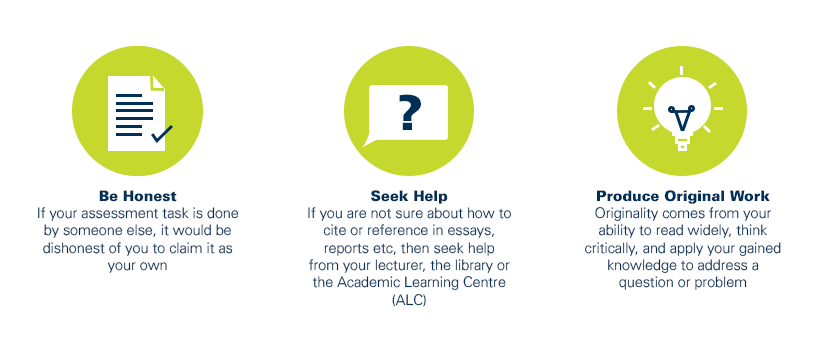
As a CQUniversity student you are expected to act honestly in all aspects of your academic work.
Any assessable work undertaken or submitted for review or assessment must be your own work. Assessable work is any type of work you do to meet the assessment requirements in the unit, including draft work submitted for review and feedback and final work to be assessed.
When you use the ideas, words or data of others in your assessment, you must thoroughly and clearly acknowledge the source of this information by using the correct referencing style for your unit. Using others’ work without proper acknowledgement may be considered a form of intellectual dishonesty.
Participating honestly, respectfully, responsibly, and fairly in your university study ensures the CQUniversity qualification you earn will be valued as a true indication of your individual academic achievement and will continue to receive the respect and recognition it deserves.
As a student, you are responsible for reading and following CQUniversity’s policies, including the Student Academic Integrity Policy and Procedure. This policy sets out CQUniversity’s expectations of you to act with integrity, examples of academic integrity breaches to avoid, the processes used to address alleged breaches of academic integrity, and potential penalties.
What is a breach of academic integrity?
A breach of academic integrity includes but is not limited to plagiarism, self-plagiarism, collusion, cheating, contract cheating, and academic misconduct. The Student Academic Integrity Policy and Procedure defines what these terms mean and gives examples.
Why is academic integrity important?
A breach of academic integrity may result in one or more penalties, including suspension or even expulsion from the University. It can also have negative implications for student visas and future enrolment at CQUniversity or elsewhere. Students who engage in contract cheating also risk being blackmailed by contract cheating services.
Where can I get assistance?
For academic advice and guidance, the Academic Learning Centre (ALC) can support you in becoming confident in completing assessments with integrity and of high standard.
What can you do to act with integrity?