Overview
This unit will cover essential knowledge of natural and impacted (mining, urban and industrial) landscape features and their management. You will gain a theoretical and practical understanding of landforms, biogeography, and the effects of natural and man-made impacts on the sustainability of local ecosystems. You will also learn how erosion control, vegetation surveys, modern techniques of rehabilitation, productive use of degraded land and rehabilitation success criteria are used to return disturbed landscapes into sustainable or productive ecosystems. You will gain practical experience through field trips to disturbed and rehabilitated sites. The emphasis will be on Central Queensland sites with links to broader Australian landscapes.
Details
Pre-requisites or Co-requisites
Students must have completed 72 units of credit.
Important note: Students enrolled in a subsequent unit who failed their pre-requisite unit, should drop the subsequent unit before the census date or within 10 working days of Fail grade notification. Students who do not drop the unit in this timeframe cannot later drop the unit without academic and financial liability. See details in the Assessment Policy and Procedure (Higher Education Coursework).
Offerings For Term 2 - 2026
Attendance Requirements
All on-campus students are expected to attend scheduled classes - in some units, these classes are identified as a mandatory (pass/fail) component and attendance is compulsory. International students, on a student visa, must maintain a full time study load and meet both attendance and academic progress requirements in each study period (satisfactory attendance for International students is defined as maintaining at least an 80% attendance record).
Recommended Student Time Commitment
Each 6-credit Undergraduate unit at CQUniversity requires an overall time commitment of an average of 12.5 hours of study per week, making a total of 150 hours for the unit.
Class Timetable
Assessment Overview
Assessment Grading
This is a graded unit: your overall grade will be calculated from the marks or grades for each assessment task, based on the relative weightings shown in the table above. You must obtain an overall mark for the unit of at least 50%, or an overall grade of 'pass' in order to pass the unit. If any 'pass/fail' tasks are shown in the table above they must also be completed successfully ('pass' grade). You must also meet any minimum mark requirements specified for a particular assessment task, as detailed in the 'assessment task' section (note that in some instances, the minimum mark for a task may be greater than 50%). Consult the University's Grades and Results Policy for more details of interim results and final grades.
All University policies are available on the CQUniversity Policy site.
You may wish to view these policies:
- Grades and Results Policy
- Assessment Policy and Procedure (Higher Education Coursework)
- Review of Grade Procedure
- Student Academic Integrity Policy and Procedure
- Academic Progression Policy and Procedure
- Student Refund and Credit Balance Policy and Procedure
- Complaints Policy and Procedure
- Information and Communications Technology Acceptable Use Policy and Procedure
This list is not an exhaustive list of all University policies. The full list of University policies are available on the CQUniversity Policy site.
Feedback, Recommendations and Responses
Every unit is reviewed for enhancement each year. At the most recent review, the following staff and student feedback items were identified and recommendations were made.
Feedback from In-person feedback
Some students commented that visiting the open cut coal mine to see how land is rehabilitated after mining, and talking to practitioners about progressive rehabilitation and closure planning, was insightful and complementary to the online learning resources and associated assessment item.
Continue to include visits to mine site rehabilitation whenever possible. Continue to include up to date information about Progressive Rehabilitation and Closure Planning, including the latest technical advice from the Office of the Queensland Mine Rehabilitation Commissioner.
Feedback from SUTE Unit Feedback – Areas to Improve
One student indicated that some of the video resources could be improved.
Review the few remaining older videos and update accordingly.
Feedback from In-person feedback and personal observations
The majority of students seemed to enjoy conducting field work, specifically, monitoring to assess landscape function and revegetation success. They also appeared to appreciate hearing from volunteers, industry, and government personnel involved in land rehabilitation and monitoring.
Continue to offer students the opportunity to conduct hands on tasks, such as sampling, monitoring and assessment. Continue to engage industry, government, and local restoration practitioners to give regionally relevant talks.
Feedback from Student performance data and email communication
Some students found research, data interpretation, and analysis more challenging than others.
Increase communication to students about the importance of being prepared, reading through all assessment materials, and seeking help through the appropriate channels as early in the term as possible. Continue to remind students about the research guides, videos, and other support resources available via the university library. Continue to set aside time during the residential school to assist students with processing the collected data.
- Describe key features of the biogeographic landscape
- Discuss the impacts of mining, urbanisation, industrial development and tree clearing activities on the sustainability of Australian landscapes
- Conduct land and vegetation surveys, simulate erosion events and describe disturbed land rehabilitation techniques
- Analyse the techniques used in the rehabilitation of degraded Australian landscapes
- Design a protocol for rehabilitation and/or sustainable management of a disturbed landscape
- Assess the criteria used to determine cost effectiveness and success of rehabilitation processes.
Alignment of Assessment Tasks to Learning Outcomes
| Assessment Tasks | Learning Outcomes | |||||
|---|---|---|---|---|---|---|
| 1 | 2 | 3 | 4 | 5 | 6 | |
| 1 - Practical and Written Assessment - 40% | ||||||
| 2 - Written Assessment - 30% | ||||||
| 3 - Online Test - 30% | ||||||
Alignment of Graduate Attributes to Learning Outcomes
| Graduate Attributes | Learning Outcomes | |||||
|---|---|---|---|---|---|---|
| 1 | 2 | 3 | 4 | 5 | 6 | |
| 1 - Communication | ||||||
| 2 - Problem Solving | ||||||
| 3 - Critical Thinking | ||||||
| 4 - Information Literacy | ||||||
| 5 - Team Work | ||||||
| 6 - Information Technology Competence | ||||||
| 7 - Cross Cultural Competence | ||||||
| 8 - Ethical practice | ||||||
| 9 - Social Innovation | ||||||
| 10 - First Nations Knowledges | ||||||
| 11 - Aboriginal and Torres Strait Islander Cultures | ||||||
Textbooks
Restoring Disturbed Landscapes Putting Principles into Practice
- (2011)
- Authors: Tongway, D & Ludwig, J
- Island Press
- Washington DC Washington DC , Washington , USA
- ISBN: 9781597265812
This textbook is also available for viewing online via the Unit's eReading list and via the CQUniversity Library.
- Binding: Paperback
IT Resources
- CQUniversity Student Email
- Internet
- Unit Website (Moodle)
All submissions for this unit must use the referencing style: Harvard (author-date)
For further information, see the Assessment Tasks.
p.m.rajapakshapathirannahalage@cqu.edu.au
Week 1
Begin Date: 13 Jul 2026Module/Topic
Landscape ecology, rehabilitation, restoration - overview
Land and vegetation management - overview
Chapter
Online readings/ eReading List
Events and Submissions/Topic
Week 2
Begin Date: 20 Jul 2026Module/Topic
Adaptive management
Landscape Function Analysis (LFA)
LFA monitoring indicators
Chapter
Tongway & Ludwig, Chapters 13 and 16 (informed by Chapters 1-3)
Events and Submissions/Topic
Week 3
Begin Date: 27 Jul 2026Module/Topic
Soil disturbance and erosion
Predicting erosion by water
Management controls
Chapter
Online readings/ eReading List
Events and Submissions/Topic
Week 4
Begin Date: 03 Aug 2026Module/Topic
Restoring landscapes - open-cut coal mining
Chapter
Tongway & Ludwig, Chapters 4 and 8
Online readings/ eReading List
Events and Submissions/Topic
Assessment 1 - Activity 1 - Literature Review and preparation for field work Due: Week 4, Monday (3 August 2026) 11:55 pm AEST
Week 5
Begin Date: 10 Aug 2026Module/Topic
Restoring landscapes - waste-rock dumps and tailings storage areas
Chapter
Tongway & Ludwig, Chapters 6 and 7
Online readings/ eReading List
Events and Submissions/Topic
Compulsory Residential School - See Moodle tile for more information
Assessment 1 - Activity 2 - Landscape Function Analysis data collection (for Research Report) Due: Week 5, during Residential School field trip
Week 6
Begin Date: 17 Aug 2026Module/Topic
Restoring landscapes - rangelands
Chapter
Tongway & Ludwig, Chapters 5 and 9
Online readings/ eReading List
Events and Submissions/Topic
Vacation Week
Begin Date: 24 Aug 2026Module/Topic
Chapter
Events and Submissions/Topic
Week 7
Begin Date: 31 Aug 2026Module/Topic
Restoring landscapes - farmlands and forests
Chapter
Tongway & Ludwig, Chapters 10 and 11
Online readings/ eReading List
Events and Submissions/Topic
Assessment 1 - Activity 3 - Research Report Due: Week 7 Friday (4 September 2026) 11:55 pm AEST
Week 8
Begin Date: 07 Sep 2026Module/Topic
Restoring Landscapes - road verges
Native vegetation in Australia
Chapter
Tongway & Ludwig, Chapter 12
Online readings/ eReading List
Events and Submissions/Topic
Week 9
Begin Date: 14 Sep 2026Module/Topic
Remediation - landfills
Estimated rehabilitation costs (ERC) and ERC calculator
Chapter
Online readings/ eReading List
Events and Submissions/Topic
Week 10
Begin Date: 21 Sep 2026Module/Topic
Remote sensing and GIS in landscape assessment
Chapter
Online readings/ eReading List
Events and Submissions/Topic
Week 11
Begin Date: 28 Sep 2026Module/Topic
Introduction to environmental models and software
Chapter
Online readings/ eReading List
Events and Submissions/Topic
Week 12
Begin Date: 05 Oct 2026Module/Topic
Revision and Assessment 3
Chapter
All resources
Events and Submissions/Topic
Assessment 3 - Open Book, Timed Online Written Test Opens: Week 12 Thursday (8 Oct 2026) 2:00 pm AEST
Assessment 3 - Open Book, Timed Online Written Test Closes: Week 12 Thursday (8 Oct 2026) 5:00 pm AEST
Exam Week
Begin Date: 12 Oct 2026Module/Topic
Chapter
Events and Submissions/Topic
Vacation/Exam Week
Begin Date: 19 Oct 2026Module/Topic
Chapter
Events and Submissions/Topic
1 Practical and Written Assessment
Landscape restoration involves several stages, such as planning, execution (on-site restoration), and evaluation of restoration success. In Assessment 1, you will gain experience in evaluating the success of a restored landscape. You will produce a research report that is informed by a review of recent literature and contains the methods, results, discussion, and conclusions of a Landscape Function Analysis that you will conduct using data that you will collect from the field.
Assessment 1 is comprised of three activities that build on each other and directly relate to the practical component of the compulsory Residential School. The three activities are:
- Activity 1 – Literature Review and preparation for field work
- Activity 2 – Landscape Function Analysis data collection (field work)
- Activity 3 – Results interpretation and preparation of Final Research Report
Further guidance and recommended approaches for these activities are provided in the Task Sheet on the unit Moodle site.
The 72 hour grace period does not apply to Activities 1 and 2 of this assessment.
Level of GenAI use allowed:
Level 2: You may use Al for planning, idea development, and research. Your final submission should show how you have developed and refined these ideas.
You must acknowledge and correctly reference all sources of information (including any large language models) that you use. There is no requirement or expectation to use GenAI if you prefer not to.
Assessment 1 is comprised of three activities. Activity 1: Due week 4, Monday (3 August 2026) 11:55 PM AEST; Activity 2: conducted in Week 5, during the residential school; Activity 3: Due week 7, Friday (4 September 2026) 11:55 pm AEST
Week 10 Friday (25 Sept 2026)
Marks and feedback will be provided via the unit Moodle site.
- Organisation and planning – including level of effort and standard of completion of Activity 1 by the Activity 1 due date (20%)
- Information literacy skills – including evidence of appropriate database searches, accurate review of literature from a broad range of credible sources, and correct referencing style, including in-text citations(20%)
- Data analysis and presentation – including how well the data were collected, processed, and presented (in tables and graphs), using appropriate software packages (20%)
- Communication skills – including use of an appropriate academic writing style, presenting the work as per the specified report layout, and providing an accurate and succinct interpretation of results (20%)
- Critical thinking skills – including evaluation of findings, critique of the restoration work and responses to the targeted discussion questions (20%)
- Describe key features of the biogeographic landscape
- Discuss the impacts of mining, urbanisation, industrial development and tree clearing activities on the sustainability of Australian landscapes
- Conduct land and vegetation surveys, simulate erosion events and describe disturbed land rehabilitation techniques
- Analyse the techniques used in the rehabilitation of degraded Australian landscapes
2 Written Assessment
Evidence-based practices and policies inform the management and rehabilitation of mined land in Queensland. For Assessment 2 – You will use the provided resources and further research to propose a Progressive Rehabilitation and Closure Plan (PRCP) schedule for a fictitious mine site.
The provided resources will draw on information from the Office of the Queensland Mine Rehabilitation Commissioner, the Department of Environment, Tourism, Science and Innovation, other relevant government agencies, and the broader scientific literature.
You will be provided with:
- Information about the fictitious mine site
- The PRCP statutory guideline
- The PRCP schedule template
- Examples of approved PRCPs (available from the public register)
- Technical and scientific publications about final landforms, post-mining land uses, and non-use management areas (if applicable)
Further guidance will be provided in the Task Sheet on the unit Moodle site.
Level of GenAI use allowed:
Level 3: You may use Al to assist with specific tasks such as drafting text, refining and evaluating your work. You must critically evaluate and modify any Al-generated content you use.
You must acknowledge and correctly reference all sources of information (including any large language models) that you use. There is no requirement to use GenAI if you prefer not to.
Week 11 Monday (28 Sept 2026) 11:45 pm AEST
Exam Week Monday (12 Oct 2026)
Marks and feedback will be provided via the unit Moodle site.
- Accuracy of information summarised from the provided examples (15%)
- Demonstration of understanding of rehabilitation planning and best practices (25%)
- Reasonableness and level of detail of proposed rehabilitation plan (PRCP schedule) (30%)
- Communication skills - clear and succinct style, use of appropriate formatting (10%)
- Correct and appropriate referencing (10%), and evidence of critical evaluation (10%)
- Design a protocol for rehabilitation and/or sustainable management of a disturbed landscape
- Assess the criteria used to determine cost effectiveness and success of rehabilitation processes.
3 Online Test
Assessment 3 is an Open Book, Timed Online Written Test.
The test has been designed to assess your understanding of concepts covered throughout the term.
The test is timed. The maximum time to complete the test is 3 hours (180 minutes).
Online, typed, written answers to short answer and long answer questions will be required.
The Online Written Test must be completed individually, and answers must be of your own work.
Level of GenAI use allowed:
Level 1: No AI. You must not use Al at any point during the assessment. You must demonstrate your core skills and knowledge.
All quiz responses must be your own. Collusion with others or the use of Gen AI to produce any part of the answers to this assessment is not permitted. You may be required to provide further information to demonstrate that the answers provided are your own and that you understand the concepts being assessed.
The 72-hour grace period does not apply to this assessment.
The test will open at 2:00 pm (AEST) Thursday 8 Oct 2026. The test will close at 5:00 pm (AEST) Thursday 8 Oct 2026.
Vacation/Exam Week Thursday (22 Oct 2026)
Marks will be provided via the unit Moodle site.
Assessment 3 - Open Book, Timed Online Written Test will be marked out of 180 marks.
The maximum marks available for each question will be clearly indicated in the online test.
The number of marks allocated for a question will give an indication of the time (number of minutes) to spend on that question.
Marks will be awarded in accordance with the level of understanding demonstrated, the level of detail provided, and the appropriateness of the answer to the question.
- Describe key features of the biogeographic landscape
- Discuss the impacts of mining, urbanisation, industrial development and tree clearing activities on the sustainability of Australian landscapes
- Analyse the techniques used in the rehabilitation of degraded Australian landscapes
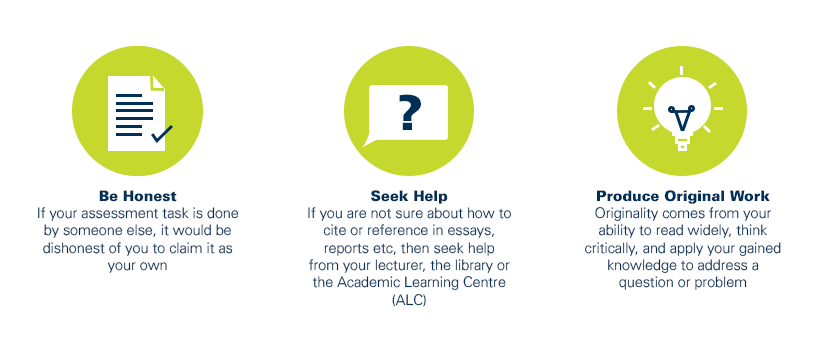
As a CQUniversity student you are expected to act honestly in all aspects of your academic work.
Any assessable work undertaken or submitted for review or assessment must be your own work. Assessable work is any type of work you do to meet the assessment requirements in the unit, including draft work submitted for review and feedback and final work to be assessed.
When you use the ideas, words or data of others in your assessment, you must thoroughly and clearly acknowledge the source of this information by using the correct referencing style for your unit. Using others’ work without proper acknowledgement may be considered a form of intellectual dishonesty.
Participating honestly, respectfully, responsibly, and fairly in your university study ensures the CQUniversity qualification you earn will be valued as a true indication of your individual academic achievement and will continue to receive the respect and recognition it deserves.
As a student, you are responsible for reading and following CQUniversity’s policies, including the Student Academic Integrity Policy and Procedure. This policy sets out CQUniversity’s expectations of you to act with integrity, examples of academic integrity breaches to avoid, the processes used to address alleged breaches of academic integrity, and potential penalties.
What is a breach of academic integrity?
A breach of academic integrity includes but is not limited to plagiarism, self-plagiarism, collusion, cheating, contract cheating, and academic misconduct. The Student Academic Integrity Policy and Procedure defines what these terms mean and gives examples.
Why is academic integrity important?
A breach of academic integrity may result in one or more penalties, including suspension or even expulsion from the University. It can also have negative implications for student visas and future enrolment at CQUniversity or elsewhere. Students who engage in contract cheating also risk being blackmailed by contract cheating services.
Where can I get assistance?
For academic advice and guidance, the Academic Learning Centre (ALC) can support you in becoming confident in completing assessments with integrity and of high standard.
What can you do to act with integrity?