Overview
This unit is designed to enhance your understanding and application of exercise prescription and programming, including strength and conditioning concepts, and practical exercise delivery skills. You will also undertake authentic practical exercise delivery via work integrated learning. This will involve working with a variety of apparently healthy populations under the supervision of appropriate health or exercise and sport science practitioners.
Details
Pre-requisites or Co-requisites
Pre-requisites: ESSC12005 Applied Exercise and Sport Physiology, AND ESSC12008 Applied Exercise and Sport Biomechanics
Important note: Students enrolled in a subsequent unit who failed their pre-requisite unit, should drop the subsequent unit before the census date or within 10 working days of Fail grade notification. Students who do not drop the unit in this timeframe cannot later drop the unit without academic and financial liability. See details in the Assessment Policy and Procedure (Higher Education Coursework).
Offerings For Term 1 - 2026
Attendance Requirements
All on-campus students are expected to attend scheduled classes - in some units, these classes are identified as a mandatory (pass/fail) component and attendance is compulsory. International students, on a student visa, must maintain a full time study load and meet both attendance and academic progress requirements in each study period (satisfactory attendance for International students is defined as maintaining at least an 80% attendance record).
Recommended Student Time Commitment
Each 6-credit Undergraduate unit at CQUniversity requires an overall time commitment of an average of 12.5 hours of study per week, making a total of 150 hours for the unit.
Class Timetable
Assessment Overview
Assessment Grading
This is a graded unit: your overall grade will be calculated from the marks or grades for each assessment task, based on the relative weightings shown in the table above. You must obtain an overall mark for the unit of at least 50%, or an overall grade of 'pass' in order to pass the unit. If any 'pass/fail' tasks are shown in the table above they must also be completed successfully ('pass' grade). You must also meet any minimum mark requirements specified for a particular assessment task, as detailed in the 'assessment task' section (note that in some instances, the minimum mark for a task may be greater than 50%). Consult the University's Grades and Results Policy for more details of interim results and final grades.
All University policies are available on the CQUniversity Policy site.
You may wish to view these policies:
- Grades and Results Policy
- Assessment Policy and Procedure (Higher Education Coursework)
- Review of Grade Procedure
- Student Academic Integrity Policy and Procedure
- Academic Progression Policy and Procedure
- Student Refund and Credit Balance Policy and Procedure
- Complaints Policy and Procedure
- Information and Communications Technology Acceptable Use Policy and Procedure
This list is not an exhaustive list of all University policies. The full list of University policies are available on the CQUniversity Policy site.
Feedback, Recommendations and Responses
Every unit is reviewed for enhancement each year. At the most recent review, the following staff and student feedback items were identified and recommendations were made.
Feedback from SUTE Feedback
Students commented that group work and assessments within the residential school can be challenging if others in their group are not properly prepared.
It is recommended to review the structure of group assessments within the residential school.
Feedback from SUTE Feedback
Students commented that they enjoyed the podcasts related to the weekly content. They also commented that additional podcasts related to Activities of Daily Living could be included.
It is recommended to continue to include weekly podcasts and update them accordingly, in-line with changes to unit content.
Feedback from Unit Coordinators Feedback
Placement supervisors commented more work needed on students soft skills to help them prepare for placement.
It is recommended that students complete a workshop in Year 2, Term 2, on placement preparation.
- Identify and explain why various types of exercise programming confers health, fitness, or sports performance benefits
- Design and deliver safe, appropriate and effective exercise programs, based on best practice that are aligned with the health, fitness, or sports performance needs and goals of clients
- Apply your exercise and sport science knowledge to behave and operate as an effective sport and exercise science practitioner in a workplace setting.
Alignment of Assessment Tasks to Learning Outcomes
| Assessment Tasks | Learning Outcomes | ||
|---|---|---|---|
| 1 | 2 | 3 | |
| 1 - Case Study - 50% | |||
| 2 - Practical Assessment - 50% | |||
| 3 - Professional Practice Placement - 0% | |||
| 4 - Learning logs / diaries / Journal / log books - 0% | |||
Alignment of Graduate Attributes to Learning Outcomes
| Graduate Attributes | Learning Outcomes | ||
|---|---|---|---|
| 1 | 2 | 3 | |
| 1 - Communication | |||
| 2 - Problem Solving | |||
| 3 - Critical Thinking | |||
| 4 - Information Literacy | |||
| 5 - Team Work | |||
| 6 - Information Technology Competence | |||
| 7 - Cross Cultural Competence | |||
| 8 - Ethical practice | |||
| 9 - Social Innovation | |||
| 10 - First Nations Knowledges | |||
| 11 - Aboriginal and Torres Strait Islander Cultures | |||
Alignment of Assessment Tasks to Graduate Attributes
| Assessment Tasks | Graduate Attributes | ||||||||||
|---|---|---|---|---|---|---|---|---|---|---|---|
| 1 | 2 | 3 | 4 | 5 | 6 | 7 | 8 | 9 | 10 | 11 | |
| 1 - Case Study - 50% | |||||||||||
| 2 - Practical Assessment - 50% | |||||||||||
| 3 - Professional Practice Placement - 0% | |||||||||||
| 4 - Learning logs / diaries / Journal / log books - 0% | |||||||||||
Textbooks
Advanced Strength and Conditioning an Evidence-based Approach
- 2nd Edition (2022)
- Authors: Anthony Turner and Paul Comfort
- Routledge (Taylor and Francis)
- ISBN: 9780367491352
- Binding: Paperback
Essentials of Strength Training and Conditioning
- 4th Edition (2015)
- Authors: Gregory Haff & Travis Triplett
- Human Kinetics
- ISBN: 9781492501626
- Binding: Other
Strength and Conditioning in Sports From Science to Practice
- (2022)
- Authors: Michael Stone, Timothy Suchomel, W. Hornsby, John Wagle, Aaron Cunanan
- Taylor & Francis Ltd
- ISBN: 9781000602425
- Binding: Paperback
IT Resources
- CQUniversity Student Email
- Internet
- Unit Website (Moodle)
- Computer - ability to access study materials, including instructional videos and scan and upload assessment.
- Smart phone or tablet with recording capabilities (required for residential school to access coaching apps for exercise analysis)
- Office software (e.g. Microsoft Office, Open Office etc)
All submissions for this unit must use the referencing style: American Psychological Association 7th Edition (APA 7th edition)
For further information, see the Assessment Tasks.
s.fien@cqu.edu.au
j.guy@cqu.edu.au
Week 1
Begin Date: 09 Mar 2026Module/Topic
Professional Practice, Safety and Readiness
- Unit overview, expectations, and assessment briefing
- Risk stratification, scope of practice, referral and escalation
- Injury management and sports first aid (exercise professional focus)
Chapter
Resources are available on the unit Moodle site
Events and Submissions/Topic
Mandatory tutorial for information regarding Work Integrated Learning (placement). See ESSC13008 Moodle site for specific date and time and Zoom link
Week 2
Begin Date: 16 Mar 2026Module/Topic
Coaching and Exercise Delivery
- Coaching as decision-making (cueing, communication, adaptation)
- Applying coaching principles to functional tasks (ADLs)
Chapter
Resources are available on the unit Moodle site
Events and Submissions/Topic
Week 3
Begin Date: 23 Mar 2026Module/Topic
Programming Logic and Load Management
- Programming logic, load, volume, intensity, and progression
- Periodisation models and planning frameworks
Chapter
Resources are available on the unit Moodle site
Events and Submissions/Topic
Week 4
Begin Date: 30 Mar 2026Module/Topic
Assessment Interpretation and Prioritisation
- Interpreting assessment data for programming decisions
- Social and contextual factors influencing prioritisation
Chapter
Resources are available on the unit Moodle site
Events and Submissions/Topic
Week 5
Begin Date: 06 Apr 2026Module/Topic
Strength and Hypertrophy Programming
- Strength and hypertrophy programming decisions
- Managing volume, intensity, and recovery
Chapter
Resources are available on the unit Moodle site
Events and Submissions/Topic
Week 6
Begin Date: 13 Apr 2026Module/Topic
Speed, Agility and Power Programming
- High-velocity and high-neural-load training
- Sequencing, fatigue management, and integration with strength work
Chapter
Resources are available on the unit Moodle site
Events and Submissions/Topic
Mandatory tutorial for information and content regarding Residential School assessment items. See ESSC13008 Moodle site for specific date and time and Zoom link
Vacation Week
Begin Date: 20 Apr 2026Module/Topic
No lecture
Chapter
No readings
Events and Submissions/Topic
Week 7
Begin Date: 27 Apr 2026Module/Topic
Aerobic Performance Programming
- Aerobic programming logic (zones, MAS, thresholds)
- Applied aerobic program examples and progression
Chapter
Resources are available on the unit Moodle site
Events and Submissions/Topic
Week 8
Begin Date: 04 May 2026Module/Topic
Anaerobic Performance Programming
- Anaerobic power vs capacity
- Programming repeat sprint and high-intensity conditioning
Chapter
Resources are available on the unit Moodle site
Events and Submissions/Topic
Week 9
Begin Date: 11 May 2026Module/Topic
Training for Different Populations
- Older adults and female athletes
- Youth and athletes with disability
Chapter
Resources are available on the unit Moodle site
Events and Submissions/Topic
Week 10
Begin Date: 18 May 2026Module/Topic
Integration, Recovery, and Peaking
- Warm-ups, team sport conditioning, and session integration
- Recovery, tapering, and performance readiness
Chapter
Resources are available on the unit Moodle site
Events and Submissions/Topic
Week 11
Begin Date: 25 May 2026Module/Topic
No lecture
Chapter
Events and Submissions/Topic
Week 12
Begin Date: 01 Jun 2026Module/Topic
No lecture
Chapter
Events and Submissions/Topic
Exam Week
Begin Date: 08 Jun 2026Module/Topic
Chapter
Events and Submissions/Topic
Vacation/Exam Week
Begin Date: 15 Jun 2026Module/Topic
Chapter
Events and Submissions/Topic
Work Integrated Learning (WIL)
A key component of this unit is mandatory placement. You will undertake a minimum 50 hours of placement at sites complying with Exercise and Sports Science Australia (ESSA) guidelines. Once enrolled in this unit, you can access Sonia (WIL student portal) to arrange and/or view details of your placement site. You must complete your mandatory checks and student nomination form on Sonia. You are not able to begin your placement until the beginning of Term 1 and all mandatory checks have been completed via Sonia. You should contact the WIL team as soon as possible to arrange your placement if you have not already received your placement nomination form. Please note you may be required to travel and make necessary work arrangements in order to complete the minimum 50 hours of placement in this unit.
Further WIL information is available on the ESSC13008 Moodle site.
Residential School
You are required to attend a compulsory two-day residential school as a part of this unit. You will be required to register which residential school you will be attending via MyCQU and the poll available on the ESSC13008 Moodle site by the end of Week 2. Throughout these two days, you will complete your exercise delivery and coaching practical assessment item. The residential school is offered in Rockhampton, Mackay, and Cairns. Please see below for specific dates for each of the residential schools. Additional information regarding the residential school, such as an overview of the daily schedule and workbook will be made available on the ESSC13008 Moodle site.
Rockhampton offering (ROK and MIX students can enrol)
The Rockhampton residential school will be held on Tuesday 21st and Wednesday 22nd April, 2026 (Break Week).
All students should meet at 8:30 am AEST in the upstairs classroom in Building 81 room 1.17 (Rockhampton North Campus, Yaamba Road, Norman Gardens).
Mackay offering (MKY and MIX students can enrol)
The Mackay residential school will be held on Tuesday 5th and Wednesday 6th May, 2026 (Week 8).
All students should meet at 8:30am AEST in the Biomechanics laboratory in Building 4 room G.14 (Mackay City Campus, Sydney Street, Mackay City).
Cairns offering (CNS and MIX students can enrol)
The Cairns residential school will be held on Thursday 30th April and Friday 1st May, 2026 (Week 7).
All students should meet at 8:30 am AEST in the classroom above the CQUniversity Exercise and Sport Science labs located at Cairns Basketball (Building 3, Mezzanine, 289 Aumuller Street, Manunda).
1 Case Study
This assessment item is comprised into six sections and you will be given a choice of multiple case studies to select from. You must choose two of these case studies and complete every section for each case study as outlined below. Tables and/or figures can be used where appropriate and do not count towards the word count for each section. References are required for every section.
Your case studies will contain information pertaining to a hypothetical client including their age, gender, exercise history, goals, and the results of exercise assessments. From your two case studies selected you are required to answer the following sections:
S1: Interpret the data from the case study, including their demographic, outcomes of assessments, and goals. Outline their goals and test outcomes in relation to normative data. Each response for this section must be 100-150 words per case study.
S2: Identify movement patterns important for improving performance and injury prevention and/or activities of daily living. Each response for this section must be 100-150 words per case study.
S3: Outline the expected exercises and modalities that will be included in your plan, include reference to equipment and space requirements, while also considering two (different) social determinants of health for each client. Each response for this section must be 150-200 words per case study.
S4: Design an 8-week training program, to maintain and/or improve health and fitness, wellbeing, and performance. This plan should contain sufficient detail for another exercise professional to be able to deliver this plan without any assistance from you. It must include the names of each exercise, instructions on how to complete the exercise (with images if required), specific reps, sets, rest periods, and intensity (RIR/RPE, speed, etc). If conditioning-based exercises are prescribed you must also include the time/distance/calories, etc required to complete. You must justify the prescription of specific exercises, selection of sets and reps, frequency, and intensity. Tables are required to respond to this section, and each case study must be presented in separate tables.
S5: Outline the expected physiological response to acute exercise bouts (e.g. HR, BP, body temperature, hormonal responses, etc) and the adaptations to chronic exercise (e.g. VO2max, hypertrophy, neural adaptations, etc), as a result of this program. Each response for this section must be 150-200 words per case study.
S6: Outline how you would monitor and progress this client (including exercises and modalities), based on their individual needs. Each response for this section must be 150-200 words per case study.
The case studies will be made available on the ESSC13008 Moodle site.
Week 11 Monday (25 May 2026) 5:00 pm AEST
In the absence of an approved extension, any submissions received after the due date will incur penalties in accordance with CQUniversity policy.
Exam Week Monday (8 June 2026)
Students will receive feedback and marks via Moodle Grademark within two (2) weeks of the due date.
A detailed marking rubric for this assessment will be made available on the ESSC13008 Moodle site, covering the following areas:
- Interpretation of case study data and goals
- Identification of common movement patterns and injuries
- Identification of exercise modalities, space requirements, and social determinants
- Program design, including sets, reps, and distance (volume), intensity (%RM, RPE, RIR, velocity/speed, HR etc)
- Identification of expected chronic and acute physiological changes and adaptations.
- Identification of methods to monitor client progress
- Correct and suitable use of references
- Spelling, grammar, and formatting
Use of Generative AI:
Level 2 - AI Planning. You may use AI for planning, idea development, and research. Your final submission should show how you have developed and refined these ideas.
- Identify and explain why various types of exercise programming confers health, fitness, or sports performance benefits
- Design and deliver safe, appropriate and effective exercise programs, based on best practice that are aligned with the health, fitness, or sports performance needs and goals of clients
- Communication
- Problem Solving
- Critical Thinking
- Information Literacy
- Team Work
2 Practical Assessment
Throughout the residential school, you will be assessed on your ability to plan, organise, deliver, coach, reflect, and critique exercise delivery sessions and training programs. These sessions will include client pre-screening and movement assessments, resistance training, group exercise, speed and agility, and aerobic endurance. You will be provided with case studies and group allocations prior to your attendance at the residential school. These case studies form the basis of some of the exercise sessions you will be required to prescribe and deliver exercise for. Further information will be provided in the residential school workbook, tutorials, and at the residential school.
As part of this assessment item you are required to attend a compulsory online tutorial held in Week 6. This tutorial will ensure all students are aware of their group and case study allocations so that they can undertake the required preparatory work before participating in the residential school. As part of this assessment you will be assessed both individually (60% of the total total grade for this assessment item) and within small groups (40% of the total grade for this assessment item).
Please see the ESSC13008 Moodle site for the most up to date residential school dates, locations, and information.
You will be marked by the teaching staff during the ESSC13008 residential school.
You will be informed of your preliminary mark at the residential school, and your final mark within two weeks of completing the residential school via Moodle.
A detailed marking guide will be made available on the ESSC13008 Moodle site, covering the following areas:
- Exercise knowledge
- Exercise prescription
- Movement analysis
- Coaching delivery skills
- Planning and organisation
- Communication
- Attitude and teamwork
The 72-hour grace period does not apply to this assessment.
Use of Generative AI:
Level 2 - AI Planning. You may use AI for planning, idea development, and research. Your final submission should show how you have developed and refined these ideas.
- Identify and explain why various types of exercise programming confers health, fitness, or sports performance benefits
- Design and deliver safe, appropriate and effective exercise programs, based on best practice that are aligned with the health, fitness, or sports performance needs and goals of clients
- Communication
- Problem Solving
- Critical Thinking
- Team Work
- Cross Cultural Competence
- Ethical practice
3 Professional Practice Placement
In this assessment task, you will undertake ESSA-approved work-integrated learning (placement) and be assessed on your competency as a student Exercise Scientist. You are required to undertake a minimum of 50 hours Your competency in this assessment will be graded as pass or fail.
- Professional Practice Evaluation 1 is due at the completion of 25 hours (mid-point).
- Professional Practice Evaluation 2 is due at the completion 50 hours (end-point).
Irrespective of when you commence your placement, both Evaluations must be submitted by Review/Exam Week Tuesday (9 June 2026) 11:59 pm AEST. In the event your documentation contains insufficient detail or is incomplete and requires resubmission, the resubmission must be no later than Review/Exam Week Friday (12 June 2026) 11:59 pm AEST.
You are required to submit two (2) Professional Placement Evaluations. This assessment item includes assessment tools that your placement supervisor will complete regarding your, goals, performance and capabilities while on placement. It is expected that you and your placement supervisor complete the Professional Practice Evaluations together. This should be viewed as an open process designed to enhance your placement experience and exercise assessment, prescription, and delivery skills and competency.
You must complete the templates available on the ESSC13008 Moodle site for Professional Placement Evaluation 1, which documents the first 25 hours of your placement, and for Professional Placement Evaluation 2, which documents the second 25 hours of your placement. During your placement, you will be evaluated by your placement supervisor at the end of 25 hours and the end of 50 hours of placement. Together, Professional Placement Evaluation 1 and Professional Placement Evaluation 2 must show evidence of your competency in completing your minimum 50-hour placement. In the absence of an approved extension, evaluations that do not contain sufficient detail, or are not completed by the placement supervisor(s) will be returned for corrections and you may not be able to pass this assessment item, or this unit, unless the evaluations are completed according to these instructions. You will have one (1) opportunity to resubmit returned evaluations.
Please Note: Failure to comply with the Professional Practice Placement agreement for any site with regard to student attendance, expectations, behaviour, or communication during a placement may result in cancellation of all placements at that site. Consequently, this may result in a Fail grade being awarded for the unit to which non-compliance applies and rescheduling of placement site(s) for other units where WIL activities are required.
Further details regarding placement and this assessment task will be made available on the ESSC13008 Moodle site.
Professional Practice Evaluation 1 (formative assessment) must be submitted immediately on completion of the first 25 hours of your placement. Professional Practice Evaluation 2 (summative assessment) must be submitted on immediately on completion of the final 25 hours of your placement. In the absence of an approved extension, any submissions received after the due date will not be graded and you may not be able to pass this unit.
Professional Practice Evaluations will be returned within two (2) weeks of submission.
The Professional Practice Evaluations comprises an assessment tool that your placement supervisor will complete regarding your performance and competency while on placement. The evaluation tool is made up of two sections including Professional Practice Competencies and Exercise Scientist Competencies. In the event of completing placement across multiple sites, your evaluation must be completed for the site in which you completed the most hours.
Professional Practice Evaluation 1 is a formative assessment and the outcomes of this assessment are used to help identify areas in that you are doing well in, and areas that need improvement.
Professional Practice Evaluation 2 is a summative assessment and you must attain the minimum pass mark to pass this assessment item.
A detailed marking rubric for this assessment will be made available on the ESSC13008 Moodle site, covering these areas:
Professional Practice Competencies
- Professional behaviour and demeanor
- Communication with clients
- Communication and teamwork with colleagues
- Critical thinking and analysis
- Self-improvement and development
Exercise Scientist Competencies
- Client assessment
- Interpretation of findings
- Development of exercise plan(s)
- Implementation of exercise plan(s)
- Evaluation of exercise plan(s)
The 72-hour grace period does not apply to this assessment.
Use of Generative AI:
Level 1 - No AI. You must not use AI at any point during this assessment. You must demonstrate your core skills and knowledge.
- Apply your exercise and sport science knowledge to behave and operate as an effective sport and exercise science practitioner in a workplace setting.
- Communication
- Problem Solving
- Critical Thinking
- Team Work
- Cross Cultural Competence
- Ethical practice
4 Learning logs / diaries / Journal / log books
In this assessment task, you will provide details and evidence of your ESSA-approved placement and be assessed on how this evidence aligns with ESSA Accredited Exercise Scientist (AES) professional attributes. Your evidence presented in this assessment will be graded as pass or fail.
You are required to submit 1 (one) Record of Student Engagement. You must complete the template available on the ESSC13008 Moodle site, which also includes a logbook of the hours you have completed. The Record of Student Engagement must also be signed by your placement supervisor. An example of the level of detail required for the Record of Student Engagement and further detail regarding this assessment task will be made available on the ESSC13008 Moodle site.
In the event your documentation contains insufficient detail or is incomplete and requires resubmission, the re-submission must be no later than Friday 12 June 2026, 11:59 pm AEST. In the absence of an approved extension, any submissions received after the due date will not be graded and you may not be able to pass this unit.
Feedback for the Record of Student Engagement will be returned within two (2) weeks of submission.
The Record of Student Engagement is graded as Pass/Fail. Sufficient detail is required in regard to the client description and description of services, reference to the appropriate ESSA AES professional attributes, as well as the detail and adequacy of the placement hours. In the event of completing placement across multiple sites, the Record of Student Engagement must be completed for each site.
Your Record of Student Engagement will be marked according to the following criteria to comply with guidelines stipulated by ESSA:
- Sufficient detail of dates, hours, client(s) description (anonymised), description of services, supervisor's name, and supervisor's signature
- Reference to the appropriate ESSA AES professional attributes completed during placement
- A breakdown of hours for "Exercise Assessment, Prescription, and Delivery" (Category 1) and "Sport Science Other" (Category 2) tasks is included, using the descriptors provided on the ESSC13008 Moodle site
- Typed and uploaded as a .pdf, .doc, or .docx file
An example of the level of detail required for the Record of Student Engagement will be made available on the ESSC13008 Moodle site.
Records of Student Engagement that do not contain sufficient detail, are not signed by the placement supervisor, or are not clearly typed, will be returned for corrections. You may not be able to pass this assessment item, or this unit unless the Record of Student Engagement meets the requirements described above, which are in accordance with ESSA standards. If a Record of Student Engagement is returned for corrections you will be given one (1) opportunity to resubmit that Record of Student Engagement.
Use of Generative AI:
Level 1 - No AI. You must not use AI at any point during this assessment. You must demonstrate your core skills and knowledge.
- Apply your exercise and sport science knowledge to behave and operate as an effective sport and exercise science practitioner in a workplace setting.
- Communication
- Cross Cultural Competence
- Ethical practice
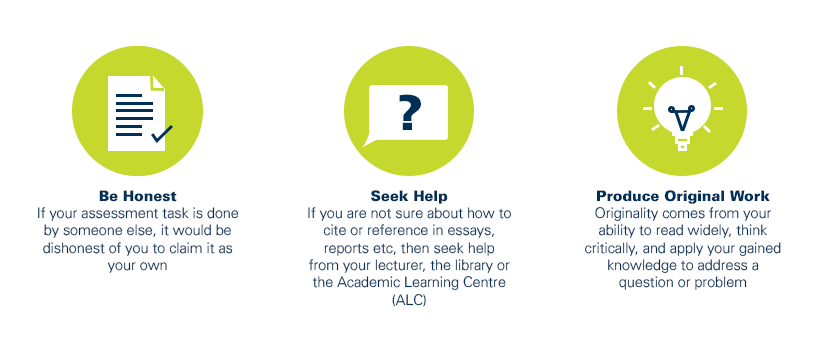
As a CQUniversity student you are expected to act honestly in all aspects of your academic work.
Any assessable work undertaken or submitted for review or assessment must be your own work. Assessable work is any type of work you do to meet the assessment requirements in the unit, including draft work submitted for review and feedback and final work to be assessed.
When you use the ideas, words or data of others in your assessment, you must thoroughly and clearly acknowledge the source of this information by using the correct referencing style for your unit. Using others’ work without proper acknowledgement may be considered a form of intellectual dishonesty.
Participating honestly, respectfully, responsibly, and fairly in your university study ensures the CQUniversity qualification you earn will be valued as a true indication of your individual academic achievement and will continue to receive the respect and recognition it deserves.
As a student, you are responsible for reading and following CQUniversity’s policies, including the Student Academic Integrity Policy and Procedure. This policy sets out CQUniversity’s expectations of you to act with integrity, examples of academic integrity breaches to avoid, the processes used to address alleged breaches of academic integrity, and potential penalties.
What is a breach of academic integrity?
A breach of academic integrity includes but is not limited to plagiarism, self-plagiarism, collusion, cheating, contract cheating, and academic misconduct. The Student Academic Integrity Policy and Procedure defines what these terms mean and gives examples.
Why is academic integrity important?
A breach of academic integrity may result in one or more penalties, including suspension or even expulsion from the University. It can also have negative implications for student visas and future enrolment at CQUniversity or elsewhere. Students who engage in contract cheating also risk being blackmailed by contract cheating services.
Where can I get assistance?
For academic advice and guidance, the Academic Learning Centre (ALC) can support you in becoming confident in completing assessments with integrity and of high standard.
What can you do to act with integrity?