Overview
This unit examines the processes involved in neuromotor control, skill acquisition, and retention within a sport and exercise context. Throughout this unit, you will explore theoretical concepts of motor learning and skill acquisition, evaluation of skill performance, and processes for designing learning environments. Further, you will gain a better understanding of the changes in motor performance that may occur with learning, aging, and injury. Particular emphasis will be focused on motor learning and skill development as relevant to the role of a coach or exercise and sport scientist.
Details
Pre-requisites or Co-requisites
Pre-requisite - ESSC11003 Skill Acquisition and Movement
Important note: Students enrolled in a subsequent unit who failed their pre-requisite unit, should drop the subsequent unit before the census date or within 10 working days of Fail grade notification. Students who do not drop the unit in this timeframe cannot later drop the unit without academic and financial liability. See details in the Assessment Policy and Procedure (Higher Education Coursework).
Offerings For Term 1 - 2026
Attendance Requirements
All on-campus students are expected to attend scheduled classes - in some units, these classes are identified as a mandatory (pass/fail) component and attendance is compulsory. International students, on a student visa, must maintain a full time study load and meet both attendance and academic progress requirements in each study period (satisfactory attendance for International students is defined as maintaining at least an 80% attendance record).
Recommended Student Time Commitment
Each 6-credit Undergraduate unit at CQUniversity requires an overall time commitment of an average of 12.5 hours of study per week, making a total of 150 hours for the unit.
Class Timetable
Assessment Overview
Assessment Grading
This is a graded unit: your overall grade will be calculated from the marks or grades for each assessment task, based on the relative weightings shown in the table above. You must obtain an overall mark for the unit of at least 50%, or an overall grade of 'pass' in order to pass the unit. If any 'pass/fail' tasks are shown in the table above they must also be completed successfully ('pass' grade). You must also meet any minimum mark requirements specified for a particular assessment task, as detailed in the 'assessment task' section (note that in some instances, the minimum mark for a task may be greater than 50%). Consult the University's Grades and Results Policy for more details of interim results and final grades.
All University policies are available on the CQUniversity Policy site.
You may wish to view these policies:
- Grades and Results Policy
- Assessment Policy and Procedure (Higher Education Coursework)
- Review of Grade Procedure
- Student Academic Integrity Policy and Procedure
- Academic Progression Policy and Procedure
- Student Refund and Credit Balance Policy and Procedure
- Complaints Policy and Procedure
- Information and Communications Technology Acceptable Use Policy and Procedure
This list is not an exhaustive list of all University policies. The full list of University policies are available on the CQUniversity Policy site.
Feedback, Recommendations and Responses
Every unit is reviewed for enhancement each year. At the most recent review, the following staff and student feedback items were identified and recommendations were made.
Feedback from SUTE
The Residential School provided excellent links to real world scenarios.
It is recommended that Residential School activities continue to provide application to industry and real world experience in a simulated environment.
Feedback from Head of Course
The unit requires updates to reflect changes in the Exercise and Sports Science Australia standards during the re-accreditation process.
It is recommended that unit content and assessment tasks align with feedback from the external accreditation report from Exercise and Sports Science Australia.
- Interpret and explain theories and principles of skill acquisition to sport and exercise
- Apply motor learning principles to design plans to facilitate the learning process for diverse populations
- Apply principles of motor learning and control to design or choose evidence-based assessments for the evaluation of motor performance
- Describe changes in motor performance, and prescribe suitable exercises for individuals and groups across in different developmental stages or common conditions
The Learning Outcomes and Assessment tasks are aligned with the Exercise Scientist Professional Standards for Accreditation as outlined by Exercise and Sport Science Australia (ESSA).
Alignment of Assessment Tasks to Learning Outcomes
| Assessment Tasks | Learning Outcomes | |||
|---|---|---|---|---|
| 1 | 2 | 3 | 4 | |
| 1 - Online Quiz(zes) - 30% | ||||
| 2 - Written Assessment - 30% | ||||
| 3 - Portfolio - 40% | ||||
| 4 - On-campus Activity - 0% | ||||
Alignment of Graduate Attributes to Learning Outcomes
| Graduate Attributes | Learning Outcomes | |||
|---|---|---|---|---|
| 1 | 2 | 3 | 4 | |
| 1 - Communication | ||||
| 2 - Problem Solving | ||||
| 3 - Critical Thinking | ||||
| 4 - Information Literacy | ||||
| 5 - Team Work | ||||
| 6 - Information Technology Competence | ||||
| 7 - Cross Cultural Competence | ||||
| 8 - Ethical practice | ||||
| 9 - Social Innovation | ||||
| 10 - First Nations Knowledges | ||||
| 11 - Aboriginal and Torres Strait Islander Cultures | ||||
Textbooks
Dynamics of Skill Acquisition: An Ecological Dynamics Approach
- Edition: 2nd (2021)
- Authors: Chris Button, Ludovic Seifert, Jia Yi Chow, Duarte Araujo, Keith Davids
- Human Kinetics
- ISBN: 9781492594741
Motor Control Translating Research into Clinical Practice
- Edition: 6th
- Authors: Anne Shumway-Cook, Marjorie H Woollacott, Jaya Rachwani, Victor Santamaria
- ISBN: 9781975209568
IT Resources
- CQUniversity Student Email
- Internet
- Unit Website (Moodle)
- Computer - ability to access study materials, including instructional videos & upload assessment
- Microsoft Office
All submissions for this unit must use the referencing style: American Psychological Association 7th Edition (APA 7th edition)
For further information, see the Assessment Tasks.
n.elsworthy@cqu.edu.au
Week 1
Begin Date: 09 Mar 2026Module/Topic
Unit introduction
Traditional theories of skill acquisition
Chapter
Online readings (see Moodle e-Reading list)
Dynamics of Skill Acquisition: An Ecological Dynamics Approach Chapter 1
Events and Submissions/Topic
Week 2
Begin Date: 16 Mar 2026Module/Topic
Physical constraints & skill performance
Chapter
Dynamics of Skill Acquisition: An Ecological Dynamics Approach Chapter 2
Events and Submissions/Topic
Week 3
Begin Date: 23 Mar 2026Module/Topic
Informational constraints on coordination
Chapter
Dynamics of Skill Acquisition: An Ecological Dynamics Approach Chapter 3
Events and Submissions/Topic
Week 4
Begin Date: 30 Mar 2026Module/Topic
Understanding the dynamics of skill acquisition
Chapter
Dynamics of Skill Acquisition: An Ecological Dynamics Approach Chapter 4 & 5
Events and Submissions/Topic
Week 5
Begin Date: 06 Apr 2026Module/Topic
Interacting constraints and practical issues for representative learning design
Chapter
Dynamics of Skill Acquisition: An Ecological Dynamics Approach Chapter 6 & 7
Events and Submissions/Topic
Week 6
Begin Date: 13 Apr 2026Module/Topic
Designing practice environments
Chapter
Dynamics of Skill Acquisition: An Ecological Dynamics Approach Chapter 8 & 9
Events and Submissions/Topic
Vacation Week
Begin Date: 20 Apr 2026Module/Topic
Chapter
Events and Submissions/Topic
Residential School - Rockhampton. Thursday and Friday (23 and 24 April 2026) 8:30 am - 5:00 pm AEST
Week 7
Begin Date: 27 Apr 2026Module/Topic
Implementing the constraints-led approach
Chapter
Dynamics of Skill Acquisition: An Ecological Dynamics Approach Chapter 11
Events and Submissions/Topic
Residential School - Cairns. Tuesday and Wednesday (28 and 29 April 2026) 8:30 am - 5:00 pm AEST
Week 8
Begin Date: 04 May 2026Module/Topic
Advanced motor function assessment & risk management
Chapter
Online readings (see Moodle e-Reading list)
Events and Submissions/Topic
Residential School - Mackay. Thursday and Friday (7 and 8 May 2026) 8:30 am - 5:00 pm AEST
Week 9
Begin Date: 11 May 2026Module/Topic
Changes in motor performance across the life span
Chapter
Online readings (see Moodle e-Reading list)
Events and Submissions/Topic
Week 10
Begin Date: 18 May 2026Module/Topic
Designing practice for diverse populations
Chapter
Online readings (see Moodle e-Reading list)
Events and Submissions/Topic
Week 11
Begin Date: 25 May 2026Module/Topic
Modified perceptual training
Chapter
Dynamics of Skill Acquisition: An Ecological Dynamics Approach Chapter 10
Events and Submissions/Topic
Week 12
Begin Date: 01 Jun 2026Module/Topic
Future directions, reflections, and applied practice
Chapter
Events and Submissions/Topic
Exam Week
Begin Date: 08 Jun 2026Module/Topic
Chapter
Events and Submissions/Topic
Vacation/Exam Week
Begin Date: 15 Jun 2026Module/Topic
Chapter
Events and Submissions/Topic
Residential School
You are required to attend a compulsory two-day residential school as a part of this unit. You will be required to register which residential school you will be attending via MyCQU and the poll available on the ESSC13006 Moodle site by the end of Week 3. The residential school is offered in Rockhampton, Mackay, and Cairns. Please see below for specific dates for each of the residential schools. Additional information regarding the residential school, such as an overview of the daily schedule and workbook will be made available on the ESSC13006 Moodle site.
Rockhampton offering (ROK and MIX students can enrol)
The Rockhampton residential school will be held on Thursday 23rd, and Friday 24th April, 2026 (Break Week). All students should meet at 8:30 am AEST in the upstairs classroom in Building 81 room 1.17 (Rockhampton North Campus, Yaamba Road, Norman Gardens).
Cairns offering (CNS and MIX students can enrol)
The Cairns residential school will be held on Tuesday 28th and Wednesday 29th April, 2026 (Week 7). All students should meet at 8:30 am AEST in the classroom above the CQUniversity Exercise and Sport Science labs located at Cairns Basketball (Building 3, Mezzanine, 289 Aumuller Street, Manunda).
Mackay offering (MKY and MIX students can enrol)
The Mackay residential school will be held on Thursday 7th and Friday 8th May, 2026 (Week 8). All students should meet at 8:30am AEST in the Biomechanics laboratory in Building 4 room G.14 (Mackay City Campus, Sydney Street, Mackay City).
1 Online Quiz(zes)
You will be required to complete one (1) Online Quiz during the Residential School. The Online Quiz will assess content presented in lectures/tutorials, online learning activities, and compulsory readings from Weeks 1-6 (inclusive). The quiz will be comprised of two parts: Part A will include 30 multiple choice questions (each question worth 1 mark each); Part B will include short answer questions, fill in the blanks and matching questions. There will be 30 marks available in total for Part B. NB: For questions with text-based responses (e.g. fill-in-the-blank) you should take care with spelling (Australian English) and grammar, as answers are spelling and grammar sensitive. Failure to follow this instruction will result in your answer marked as incorrect. Questions and allocated marks will be equally spread from each week.
The Online Quiz is closed book, and will be administered in a fully invigilated setting during the first session of the Residential School session that you attend. Students are required to complete the Online Quiz on their own laptop device. In the event you do not own a laptop, please contact the unit coordinator so alternative arrangements can be made.
Level of GenAI use allowed: Level 1 No AI Use: You must not use AI at any point during the assessment. You must demonstrate your core skills and knowledge.
The 72-hour grace period does NOT apply to this assessment. In the absence of an approved extension there will be no late submissions will be allowed for any of the online quizzes that make up this assessment task.
The Online Quiz will be administered during the first session of your Residential School session (8:30 am - 9:30 am AEST): Rockhampton: 23 April, 2026; Cairns: 28 April, 2026; Mackay: 7 May, 2026
Students will receive feedback and marks via Moodle Grademark within two (2) weeks of the due date.
You will be assessed on your knowledge pertaining to:
- Theories and principles of skill acquisition
- Physical constraints & skill performance
- Informational constraints on coordination
- Dynamics of skill acquisition
- Interacting constraints and practical issues for representative learning design
- Designing practice environments
Responses to online quiz questions will be marked as correct or incorrect by Moodle, and tabulated to give your mark for each online quiz. For fill-in-the-blank questions, you should take care with spelling (Australian English) and grammar, as answers are spelling and grammar sensitive.
- Interpret and explain theories and principles of skill acquisition to sport and exercise
2 Written Assessment
Traditional coaching often relies on an Information Processing (IP) model, where the coach provides explicit instructions and athletes attempt to execute idealised movement patterns. This model assumes the brain acts as a central controller that “plans” and “programs” movements. Contemporary approaches to skill acquisition, particularly Ecological Dynamics and the Constraints-Led Approach (CLA), argue that movement instead emerges through self-organization, shaped by the interaction of individual, task, and environmental constraints.
In this assessment, you will critically argue why an Ecological Dynamics / CLA perspective provides a more effective basis for long-term skill acquisition, adaptability, and representative practice design than a traditional IP-based coaching approach. You will be provided with a “traditional” coaching session that includes block drills, prescriptive instructions, and technique-focused coaching.
Your task is to complete two components:
- Part 1: Critical Evaluation of the Traditional Session. Using relevant scientific literature, you will identify the key theoretical assumption underpinning the session; critically evaluating the session design, and explain the limitations of the traditional session design for developing skilled performance in sport.
- Part 2: Session Redesign. Redesign the coaching session using principles from Ecological Dynamics and CLA. Your redesign must, identify the key constraints manipulated in each task (individual, task, environmental), and justify why these constraints were selected, using academic research by outlining how the sessions enhances performance.
Further details regarding layout, formatting requirements, references, and marking rubric will be available on Moodle
Level of GenAI use allowed: Level 2 - AI Planning. You may use AI for planning, idea development, and research. Your final submission should show how you have developed and refined these ideas.
Week 6 Friday (17 Apr 2026) 5:00 pm AEST
In the absence of an approved extension, any submissions received after the due date will incur penalties in accordance with CQUniversity policy.
Week 8 Friday (8 May 2026)
Students will receive feedback and marks via Moodle Grademark within two (2) weeks of the due date.
You will be assessed on your understanding of skill acquisition theory, quality of critical evaluation of the session, application of ecological dynamics and constraints led approach in the redesigned session, appropriate use of scientific literature, clarity, structure, and quality of writing, and adherence to assessment guidelines. A detailed marking rubric will be available on the ESSC13006 Moodle site.
- Interpret and explain theories and principles of skill acquisition to sport and exercise
- Apply motor learning principles to design plans to facilitate the learning process for diverse populations
3 Portfolio
The practical activities undertaken in this unit provide an opportunity for you to complete a range of tasks related to aspects of motor learning and skill acquisition. Throughout these activities, you will be assessing different aspects of skill acquisition, and you will be required to develop a Portfolio, from data collected during the residential school, and design an inclusive, evidence-based skill learning program for a specific population. You will demonstrate understanding of how task, environment, and individual constraints shape learning, and how practice environments can support adaptation, inclusivity, skill acquisition, and retention for specific population groups.
There are five key parts to this Portfolio:
- Client information. You will be provided with information related to a specific client. This will include background information, and details related to a movement, skill or performance area of interest.
- Performance assessment. During the residential school, you will undertake a series of practical tests and assessments. During this time, you will collect data relevant to the movement, skill or performance areas related to the background information of your client. You will be required to identify and summarise the performance assessment outcomes, and use this information in the following sections of the Portfolio
- Skill-training program. You will be required to design a practice program to improve the movement, skill or performance area of interest. You are expected to develop an evidence-based program, using relevant motor learning principles. A template will be provided on Moodle for you to follow.
- Justification. Provide a detailed justification of the design of your training program. You must use appropriate scientific literature to support the features of the training program.
- Relevant to professional practice. In the final section, you are to provide a personal comment/self-reflection on how this learning process relates to professional practice and your career goals.
Further details will be provided on Moodle, and you will have opportunity to work on this task during the residential school session.
Level of GenAI use allowed: Level 2 - AI Planning. You may use AI for planning, idea development, and research. Your final submission should show how you have developed and refined these ideas.
Week 11 Friday (29 May 2026) 5:00 pm AEST
In the absence of an approved extension, any submissions received after the due date will incur penalties in accordance with CQUniversity policy.
Exam Week Friday (12 June 2026)
Students will receive feedback and marks via Moodle Grademark within two (2) weeks of the due date.
The Portfolio will be assessed according to the following criteria:
- Understanding of client information and constraints relevant to the skill/performance
- Data presentation and interpretation of outcomes
- Skill training program design and application of skill acquisition principles
- Justification and support using scientific literature
- Professional practice and reflection
- Adherence to assessment guidelines
A detailed marking rubric and assessment information sheet are available on the ESSC13006 Moodle site.
- Apply motor learning principles to design plans to facilitate the learning process for diverse populations
- Describe changes in motor performance, and prescribe suitable exercises for individuals and groups across in different developmental stages or common conditions
4 On-campus Activity
This assessment involves the compulsory attendance and active participation in the residential school session for the unit. You are required to attend (and actively participate in) ONE of the timetabled residential school sessions (Mackay, Rockhampton, or Cairns). Further details regarding the times and dates of these residential school sessions can be found in the Term Specific Information section of the ESSC13006 Unit Profile, on the ESSC13006 Moodle site and via the CQUniversity Handbook. A series of practical activities will be completed during the residential school sessions and you are expected to attend and participate in all tasks. A Practical Activity Manual will be provided to you via the ESSC13006 Moodle site prior to the residential school which contains information to assist in performing each task, tables for data collection, and critical thinking/discussion questions. These sessions contribute to the data collection and analysis for your Portfolio assessment task. To complete this assessment item you must:
- Sign the attendance sheet. Please note there will be multiple attendance sheets to sign throughout the residential school
- Bring a printed copy of the Practical Activity Manual to the residential school
- Actively participate in each of the tasks delivered throughout the residential school
If you miss any part of the residential school without an approved reason, there will not be an opportunity to simply catch up at any time. The Assessment Policy and Procedure (Higher Education Coursework) outlines acceptable reasons for adjusting assessment. If you do not attend part of the residential school and provide a valid reason with supporting documentation, then an attempt to make alternate arrangements will be made in consultation with your unit coordinator.
Level of GenAI use allowed: Level 2 - AI Planning. You may use AI for planning, idea development, and research. Your final submission should show how you have developed and refined these ideas.
The 72-hour grace period does NOT apply to this assessment.
Attendance at Residential School will be recorded at the sessions in Mackay, Rockhampton and Cairns. See Term specific information for relevant dates and times for each location.
Attendance at a residential school with sufficient participation will result in a passing grade for this assessment. Failure to attend and adequately participate in a residential school may result in failing this assessment item, and being unable to pass this unit. Attendance for all practical activities will be assessed through attendance records documented by staff managing the sessions.
If you miss any part of the residential school without an approved reason, there will not be an opportunity to simply catch up at any time. The Assessment Policy and Procedure (Higher Education Coursework) outlines acceptable reasons for adjusting assessment. If you do not attend part of the residential school and provide a valid reason with supporting documentation, then an attempt to make alternate arrangements will be made in consultation with your unit coordinator.
- Apply principles of motor learning and control to design or choose evidence-based assessments for the evaluation of motor performance
- Describe changes in motor performance, and prescribe suitable exercises for individuals and groups across in different developmental stages or common conditions
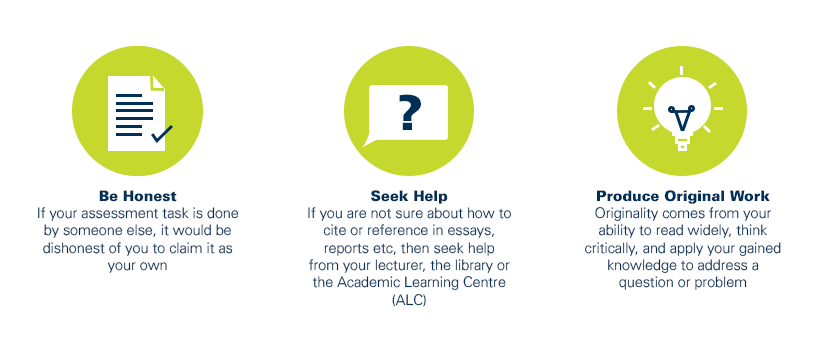
As a CQUniversity student you are expected to act honestly in all aspects of your academic work.
Any assessable work undertaken or submitted for review or assessment must be your own work. Assessable work is any type of work you do to meet the assessment requirements in the unit, including draft work submitted for review and feedback and final work to be assessed.
When you use the ideas, words or data of others in your assessment, you must thoroughly and clearly acknowledge the source of this information by using the correct referencing style for your unit. Using others’ work without proper acknowledgement may be considered a form of intellectual dishonesty.
Participating honestly, respectfully, responsibly, and fairly in your university study ensures the CQUniversity qualification you earn will be valued as a true indication of your individual academic achievement and will continue to receive the respect and recognition it deserves.
As a student, you are responsible for reading and following CQUniversity’s policies, including the Student Academic Integrity Policy and Procedure. This policy sets out CQUniversity’s expectations of you to act with integrity, examples of academic integrity breaches to avoid, the processes used to address alleged breaches of academic integrity, and potential penalties.
What is a breach of academic integrity?
A breach of academic integrity includes but is not limited to plagiarism, self-plagiarism, collusion, cheating, contract cheating, and academic misconduct. The Student Academic Integrity Policy and Procedure defines what these terms mean and gives examples.
Why is academic integrity important?
A breach of academic integrity may result in one or more penalties, including suspension or even expulsion from the University. It can also have negative implications for student visas and future enrolment at CQUniversity or elsewhere. Students who engage in contract cheating also risk being blackmailed by contract cheating services.
Where can I get assistance?
For academic advice and guidance, the Academic Learning Centre (ALC) can support you in becoming confident in completing assessments with integrity and of high standard.
What can you do to act with integrity?