Overview
This unit provides an introduction to common injuries that occur in sports. You will learn about mechanisms and risk factors of various sports injuries, injury prevention and rehabilitation processes and interventions, and how these apply to different athlete populations and training scenarios. Emphasis is placed on providing an understanding of the aetiology, treatment and prevention, and acute management of common sports injuries. You will also gain practical skills in sports taping techniques, delivery of injury prevention programs, assessing and monitoring injury risk factors, and assessing return to sport. The content of this unit builds on knowledge gained in other units related to anatomy and physiology, functional anatomy, and physical activity, health, and fitness.
Details
Pre-requisites or Co-requisites
Pre-requisites: ESSC11001 Physical Activity, Fitness and Health; BMSC11001 Human Body Systems 1 AND BMSC11002 Human Body Systems 2 OR BMSC11010 Human Anatomy and Physiology 1 AND BMSC 11011 Human Anatomy and Physiology 2 Co-requisite: ESSC13007 Functional Anatomy OR ESSC12010 Functional Anatomy
Important note: Students enrolled in a subsequent unit who failed their pre-requisite unit, should drop the subsequent unit before the census date or within 10 working days of Fail grade notification. Students who do not drop the unit in this timeframe cannot later drop the unit without academic and financial liability. See details in the Assessment Policy and Procedure (Higher Education Coursework).
Offerings For Term 2 - 2026
Attendance Requirements
All on-campus students are expected to attend scheduled classes - in some units, these classes are identified as a mandatory (pass/fail) component and attendance is compulsory. International students, on a student visa, must maintain a full time study load and meet both attendance and academic progress requirements in each study period (satisfactory attendance for International students is defined as maintaining at least an 80% attendance record).
Recommended Student Time Commitment
Each 6-credit Undergraduate unit at CQUniversity requires an overall time commitment of an average of 12.5 hours of study per week, making a total of 150 hours for the unit.
Class Timetable
Assessment Overview
Assessment Grading
This is a graded unit: your overall grade will be calculated from the marks or grades for each assessment task, based on the relative weightings shown in the table above. You must obtain an overall mark for the unit of at least 50%, or an overall grade of 'pass' in order to pass the unit. If any 'pass/fail' tasks are shown in the table above they must also be completed successfully ('pass' grade). You must also meet any minimum mark requirements specified for a particular assessment task, as detailed in the 'assessment task' section (note that in some instances, the minimum mark for a task may be greater than 50%). Consult the University's Grades and Results Policy for more details of interim results and final grades.
All University policies are available on the CQUniversity Policy site.
You may wish to view these policies:
- Grades and Results Policy
- Assessment Policy and Procedure (Higher Education Coursework)
- Review of Grade Procedure
- Student Academic Integrity Policy and Procedure
- Academic Progression Policy and Procedure
- Student Refund and Credit Balance Policy and Procedure
- Complaints Policy and Procedure
- Information and Communications Technology Acceptable Use Policy and Procedure
This list is not an exhaustive list of all University policies. The full list of University policies are available on the CQUniversity Policy site.
Feedback, Recommendations and Responses
Every unit is reviewed for enhancement each year. At the most recent review, the following staff and student feedback items were identified and recommendations were made.
Feedback from SUTE
Students have requested that more time be provided for the quizzes as they feel there is not enough time to effectively answer the short answer questions.
It is recommended that the Unit Coordinator review the time allocation for the quizzes.
Feedback from SUTE
Students have suggested that the timing of residential schools make volunteering at sporting organizations difficult as most competitive seasons are wrapping up by that time of year.
It is recommended that the assessment requiring volunteer hours (Assessment #4 - Part B) be adjusted to allow students to begin earlier in the term.
- Identify risk factors, mechanisms, and processes associated with sports injuries
- Recognise factors that impact different athlete populations and training scenarios as they relate to sports injuries
- Summarise current evidence regarding the aetiology, prevention and management of sports injuries
- Demonstrate professional practice and ethical behaviour for appropriate prevention and management of sports injuries as expected in exercise and sport science settings.
Alignment of Assessment Tasks to Learning Outcomes
| Assessment Tasks | Learning Outcomes | |||
|---|---|---|---|---|
| 1 | 2 | 3 | 4 | |
| 1 - Online Quiz(zes) - 30% | ||||
| 2 - Case Study - 40% | ||||
| 3 - Written Assessment - 30% | ||||
| 4 - Practical Assessment - 0% | ||||
Alignment of Graduate Attributes to Learning Outcomes
| Graduate Attributes | Learning Outcomes | |||
|---|---|---|---|---|
| 1 | 2 | 3 | 4 | |
| 1 - Communication | ||||
| 2 - Problem Solving | ||||
| 3 - Critical Thinking | ||||
| 4 - Information Literacy | ||||
| 5 - Team Work | ||||
| 6 - Information Technology Competence | ||||
| 7 - Cross Cultural Competence | ||||
| 8 - Ethical practice | ||||
| 9 - Social Innovation | ||||
| 10 - First Nations Knowledges | ||||
| 11 - Aboriginal and Torres Strait Islander Cultures | ||||
Textbooks
There are no required textbooks.
IT Resources
- CQUniversity Student Email
- Internet
- Unit Website (Moodle)
- Microphone and camera for use with Zoom
- Adobe Acrobat Reader (or similar) software for viewing PDF documents
- Endnote bibliographic software. This is optional for formatting references.
- Microsft Office (Word, Excel, PowerPoint) or similar software such as Open Office
- ZOOM Videoconferencing software. A ZOOM account is available with your student credentials.
All submissions for this unit must use the referencing style: American Psychological Association 7th Edition (APA 7th edition)
For further information, see the Assessment Tasks.
r.bartlett@cqu.edu.au
Week 1
Begin Date: 13 Jul 2026Module/Topic
Introduction to Sport Injury Prevention and Management
Chapter
Readings provided via Moodle
Events and Submissions/Topic
Week 2
Begin Date: 20 Jul 2026Module/Topic
Overview of Sport Injuries
Chapter
Readings provided via Moodle
Events and Submissions/Topic
Week 3
Begin Date: 27 Jul 2026Module/Topic
Injury Prevention, Injury Assessment, and Return to Play
Chapter
Readings provided via Moodle
Events and Submissions/Topic
Week 4
Begin Date: 03 Aug 2026Module/Topic
Common Injuries of the Lower Body I
Chapter
Readings provided via Moodle
Events and Submissions/Topic
Written Assessment Part A - Due Week 4 Friday (7 Aug 2026)
Week 5
Begin Date: 10 Aug 2026Module/Topic
Common Injuries of the Lower Body II
Chapter
Readings provided via Moodle
Events and Submissions/Topic
Week 6
Begin Date: 17 Aug 2026Module/Topic
Common Injuries of the Upper Body I
Chapter
Readings provided via Moodle
Events and Submissions/Topic
Vacation Week
Begin Date: 24 Aug 2026Module/Topic
Chapter
Events and Submissions/Topic
Quiz 1 for Mackay Res School - Scheduled Break Week Wednesday (26 Aug 2026)
Week 7
Begin Date: 31 Aug 2026Module/Topic
Common Injuries of the Upper Body II
Chapter
Readings provided via Moodle
Events and Submissions/Topic
Quiz 1 for Rockhampton Res School - Scheduled Week 7 Tuesday (1 Sep 2026)
Case Study Part A - Due Week 7 Friday (4 Sep 2026) 5:00 pm AEST
Week 8
Begin Date: 07 Sep 2026Module/Topic
Common Injuries of the Head and Trunk
Chapter
Readings provided via Moodle
Events and Submissions/Topic
Quiz 1 for Cairns Res School - Scheduled Week 8 Tuesday (8 Sep 2026)
Week 9
Begin Date: 14 Sep 2026Module/Topic
Extrinsic Considerations in Sports Injury
Chapter
Readings provided via Moodle
Events and Submissions/Topic
Written Assessment Part B - Due Week 9 Friday (18 Sep 2026) 5:00 pm AEST
Week 10
Begin Date: 21 Sep 2026Module/Topic
Intrinsic Considerations in Sports Injury
Chapter
Readings provided via Moodle
Events and Submissions/Topic
Week 11
Begin Date: 28 Sep 2026Module/Topic
Select Topics in Sport Injury
Chapter
Readings provided via Moodle
Events and Submissions/Topic
Case Study Part B - Due Week 11 Friday (2 Oct 2026) 5:00 pm AEST
Week 12
Begin Date: 05 Oct 2026Module/Topic
No lecture this week
Chapter
Events and Submissions/Topic
Quiz 2 Opens - Week 12 Tuesday (6 Oct 2026) 9:00 am AEST
Exam Week
Begin Date: 12 Oct 2026Module/Topic
Chapter
Events and Submissions/Topic
Quiz 2 Closes - Exam Week Tuesday (13 Oct 2026) 5:00 pm AEST
Practical Assessment Part B Due - Exam Week Friday (16 Oct 2026) 5:00 pm AEST
Vacation/Exam Week
Begin Date: 19 Oct 2026Module/Topic
Chapter
Events and Submissions/Topic
Compulsory On-campus Activity Information
This unit includes compulsory on-campus activities (residential school). You must attend the residential school specific to your mode of enrolment as outlined below. If you prefer to attend an alternate session to that specified for your enrolment mode, please contact the Unit Coordinator to discuss attendance at an alternative residential school. Please see the CQUniversity Handbook and the ESSC12010 Moodle site for up-to-date information.
Please ensure you complete your class registration via MyCQU.
Mackay (MKY or MKC) and mixed-mode (MIX) students:
The Mackay residential school is scheduled in Break Week (Wednesday and Thursday, 26th and 27th August 2026) at the Exercise and Sport Science Labs located on the Mackay City Campus (Building 4).
Rockhampton (ROK) and mixed-mode (MIX) students:
The Rockhampton residential school is scheduled in Week 7 (Monday and Tuesday, 31st August and 1st September 2026) at the Exercise and Sport Science Labs located on the Rockhampton North Campus (Building 81).
Cairns (CNS) and mixed-mode (MIX) students:
The Cairns residential school is scheduled in Week 8 (Monday and Tuesday, 7th and 8th September 2026) at the Exercise and Sport Science Labs located at Cairns Basketball Association Headquarters (289 Aumuller St.).
Note for mixed-mode (MIX) students:
Students enrolled via MIX may attend any residential school option; however, it is preferred that you attend the residential school as specified above based on your geographic location. If the residential school in which you register reaches the cap number, and you do not live in the surrounding area, you may be reallocated to a different residential school. This is due to limited teaching and space resources across each campus. We aim to finalise residential school allocations by the end of Week 2, but this is dependent on students completing class registration via MyCQU.
1 Online Quiz(zes)
This assessment item comprises of two (2) online quizzes. Quiz 1 is to be completed online at the residential school you are attending and Quiz 2 is to be completed during Week 12. Quiz 1 must be completed in-person at the residential school and invigilated by a member of staff. The quizzes will include multiple choice, fill-in-the-blank, labelling, matching, and short-answer questions.
You must log on and access the ESSC12009 Moodle site when the online quiz is open and complete the quizzes before the closing time and date as outlined in the Assessment due date section below. You can only attempt the online quiz once and the quiz must be completed in a single session. The online quiz should be completed on a computer, as attempting the quiz on a smartphone can result in your session being ended in the event of a phone-call or notification. You cannot save your answers and return to the online quiz at a later time.
Quiz 1 (20% of final grade)
Quiz 1 will assess content related to lectures, tutorials, and compulsory readings/videos associated with Weeks 1 – 6 (inclusive). Quiz 1 will contain 30 questions, and you will have 60 minutes to complete this quiz. You can only attempt Quiz 1 once and it must be completed in a single session at the residential school. You cannot save your answers and return to this quiz at a later time.
Quiz 1 is scheduled for:
Mackay Res School - Break Week Wednesday (26 Aug 2026)
Rockhampton Res School - Week 7 Tuesday (1 Sep 2026)
Cairns Res School - Week 8 Tuesday (8 Sep 2026)
Quiz 2 (10% of final grade)
Quiz 2 will assess content related to lectures, tutorials, and compulsory readings/videos associated with Weeks 7-11 (including residential school content). Quiz 2 will contain 15 questions, and you will have 30 minutes to complete this quiz. You can only attempt Quiz 2 once and it must be completed in a single session. You cannot save your answers and return to this quiz at a later time. The quiz will be available during the following times; please ensure you complete the quiz prior to the Close Date.
Open Date: Week 12 Tuesday (6 Oct 2026) 9:00 am AEST
Close Date: Review/Exam Week Tuesday (13 Oct 2026) 5:00 pm AEST
NOTE: In the absence of an approved extension there will be no late submissions allowed for any of the online quizzes that make up this assessment item.
The 72-hour grace period does not apply to this assessment.
Level of GenAI use allowed:
Level 1 - You must not use Al at any point during the assessment. You must demonstrate your core skills and knowledge.
Due dates for each quiz are as per the Task Description. In the absence of an approved extension, no attempts will be permitted after the specified due dates.
Marks and individual feedback will be made available via the ESSC12009 Moodle site within 10 business days of final student submission.
Quiz 1 contributes 20% and Quiz 2 10% to your overall grade. The quizzes consist of multiple-choice, fill-in-the-blank, labelling, matching, and short-answer questions. For questions with text-based responses (e.g. fill-in-the-blank) you should take care with spelling (Australian English) and grammar, as answers marked by Moodle are spelling and grammar sensitive.
- Identify risk factors, mechanisms, and processes associated with sports injuries
- Recognise factors that impact different athlete populations and training scenarios as they relate to sports injuries
2 Written Assessment
This assessment has two parts and requires you to analyse common injuries in team sports, develop an evidence-based injury prevention strategy, and evaluate the effectiveness of the strategy across multiple sporting contexts.
For this task you will select two (2) sports from the categories below, but no more than one (1) per category:
Category A: Baseball (pitcher), Tennis, or Volleyball
Category B: Rugby League, Australian Rules Football, or Soccer
Category C: Basketball, Netball, or Handball
Part A (15% of your final grade)
Requires you to develop an overview of common injuries in team sports.
For each of your selected sports you need to:
• Identify three (3) common injuries and report injury rates (i.e., incidence or prevalence).
• Briefly interpret these injury rates by explaining what they indicate about injury risk within the context of the sport (e.g., match vs training, population, level of play)
• Select one (1) injury from those identified. Explain the mechanism of injury and identify the key intrinsic and extrinsic risk factors associated with this injury.
Part B (15% of your final grade)
Requires you to develop and evaluate an injury prevention program. This will be directly informed by the injuries, mechanisms, and risk factors you identified in Part A.
Using one (1) sport from Part A you need to:
• Develop an injury prevention program that can be integrated into the training warm-up.
• Provide a clear explanation for the inclusion of each component of the program. Specifically, how the program addresses the common injuries from Part A.
• Evaluate the effectiveness of the program if it were applied to your second sport from Part A and provide explanation on what would be effective, and what would require modification.
Key factual and analytical statements in Part A and B need to be supported by peer-reviewed literature. You will be assessed on your interpretation of evidence and your ability to apply research findings within the context of your selected sports. You should prioritise recent evidence and therefore, it is recommended that your sources are from the last 10 years. In some cases, older sources may be appropriate when they are influential or the most recent investigations.
Please be advised the assessment submission will be checked for plagiarism (and other breaches of academic integrity). You are advised to familiarise yourself with CQUniversity’s Student Academic Integrity Policy and Procedure. Any assessments suspected of plagiarism (or other breaches of academic integrity) will be handled in accordance with CQUniversity’s Student Academic Integrity Policy and Procedure with subsequent penalties applied.
NOTE: In the absence of an approved extension, there will be no late submissions allowed for either part of the written assessment.
Level of GenAI use allowed:
Level 1 - You must not use Al at any point during the assessment. You must demonstrate your core skills and knowledge.
Part A is due Week 4 Friday (7 Aug 2026) 5:00 pm AEST. Part B is due Week 9 Friday (18 Sep 2026) 5:00 pm AEST.
Marks and feedback for each part will be returned 10 business days after the last student submission.
In this written assessment you will be assessed on the following criteria.
- Part A:
• Identification of common injuries and reporting of injury rates
• Interpretation and contextualisation of injury data
• Understanding of injury mechanisms
• Identification of intrinsic and extrinsic risk factors - Part B:
• Development of a structured and appropriate injury prevention program
• Explanation and justification of program components, including their function and their relationship to injury mechanisms and risk factors
• Evaluation of program application to a second sport, including what would transfer, what would not, and what modifications would be required
• Demonstration of critical insight, including justification of decisions, recognition of limitations, and consideration of practical constraints - Across both parts you will also be assessed on:
• Appropriate use of peer-reviewed sources to support statements and your decision making
• Clarity and structure of writing
• Adherence to formatting and referencing guidelines
A detailed marking rubric will be made available on the Moodle site later in the term.
- Identify risk factors, mechanisms, and processes associated with sports injuries
- Summarise current evidence regarding the aetiology, prevention and management of sports injuries
3 Case Study
This assessment has two parts. You will be provided with a selection of case studies describing a team sport scenario that contains two distinct injury cases within the same sport context. The case study you select must be from a different sport to those you researched in Assessment 2: Written Assessment.
Part A (20% of your final grade)
Written response addressing the following criteria:
- Key areas of monitoring and screening within the specified team sport, including how injury risk may be identified and tracked
- Identify the roles of key practitioners (e.g. Accredited Exercise Scientist, physiotherapist, strength and conditioning coach) in injury management
- Injury 1: Outline the return-to-play (RTP) process following diagnosis, when sport-specific exercise can be introduced, with relevant examples
- Injury 2: Design and justify a gym session that maintains strength and conditioning while accommodating the athlete’s stage of rehabilitation, and identify key RTP benchmarks (e.g. strength, functional performance, movement quality, sport-specific readiness) with justification
The intended audience of these written responses is healthcare professionals (e.g. team doctor and physiotherapist). Your language should be appropriately technical and supported by evidence (i.e., peer-reviewed literature). Specific injury details (e.g., diagnosis and rehabilitation stage) will be provided in the case study.
Part B (20% of your final grade)
Short video response addressing the following criteria:
- Explain your approach to monitoring and screening within the team and why it is important for injury prevention
- Explain the RTP process for Injury 1, including key stages, when activity can be introduced, and risks of not following the progression
- Explain RTP considerations for Injury 2, including performance benchmarks, risks of returning too early, and expected limitations upon return
The intended audience for this video is coaching staff (e.g. head and assistant coaches). Your communication should be clear, practical, and appropriate for this audience.
Please be advised the assessment submission will be checked for plagiarism (and other breaches of academic integrity). You are advised to familiarise yourself with CQUniversity’s Student Academic Integrity Policy and Procedure. Any assessments suspected of plagiarism (or other breaches of academic integrity) will be handled in accordance with CQUniversity’s Student Academic Integrity Policy and Procedure with subsequent penalties applied.
NOTE: In the absence of an approved extension, there will be no late submissions allowed for either part of the case study assessment.
Level of GenAI use allowed:
Level 1 - You must not use Al at any point during the assessment. You must demonstrate your core skills and knowledge.
Part A is due Week 7 Friday (4 Sep 2026) 5:00 pm AEST. Part B is due Week 11 Friday (2 Oct 2026) 5:00 pm AEST.
Marks and feedback for each part will be returned 10 business days after the last student submission.
Marks for this assessment will be awarded based on the extent to which students demonstrate the ability to apply injury management principles within a team sport context. Students will be assessed on their ability to:
- Apply appropriate screening and monitoring concepts to identify and manage injury risk within a team environment
- Demonstrate understanding of the roles and scope of key practitioners involved in injury management and return‑to‑play
- Apply evidence‑based return‑to‑play (RTP) principles, including progression, risk management, and performance considerations
- Design and justify strength and conditioning strategies that maintain performance while accommodating injury‑related constraints
- Communicate injury management and RTP information clearly and appropriately for the intended audience (healthcare professionals in Part A, coaching staff in Part B)
- Adhere to assessment instructions and submission requirements
- Recognise factors that impact different athlete populations and training scenarios as they relate to sports injuries
- Summarise current evidence regarding the aetiology, prevention and management of sports injuries
4 Practical Assessment
This assessment item has two parts.
Part A (Pass/Fail)
This is linked to your attendance and participation in the compulsory practical assessment (residential school) associated with this unit. During the residential school you will undertake a series of practical activities, which will develop your hands-on skills related to assessing an athlete, delivering an injury prevention program, and applying appropriate taping techniques. You will then be assessed on your practical skills during the residential school.
Part B (Pass/Fail)
This is an opportunity for you to engage with a sporting organization within your community by volunteering for 15 hours. The activities associated with your volunteering should align with exercise and sport science activities such as coaching, injury prevention, athlete education, and sports training (where qualified).
The 72-hour grace period does not apply to Part A of the assessment.
Level of GenAI use allowed:
Level 1 - You must not use Al at any point during the assessment. You must demonstrate your core skills and knowledge.
Part A will be marked by the teaching staff during the residential school. Part B requires your submission of the volunteer experience form to the ESSC12009 Moodle site.
Part A feedback will be received during the residential school. Part B feedback will be returned within 10 business days of submission.
Part A.
Attendance at the residential school, with sufficient active participation and demonstrations of competency, will result in a passing grade for this assessment. Failure to attend, lack of active participation, or failed competency demonstration may result in a 'Fail' grade for this part of the assessment item, and you will be unable to pass this unit.
There are three (3) areas of criteria that must be met to pass Part A:
- Attendance - You must attend the entire residential school. Attendance will be monitored through signing attendance sheets which will be facilitated by Exercise and Sport Sciences staff. Please note, there may be multiple attendance sheets to sign.
- Active Participation - Exercise and Sport Sciences staff instructing each session will monitor your participation during each practical task and ensure you meet the criteria within the Participation Checklist. To meet the criteria for ‘active participation’ you must complete each item within the Participation Checklist, which includes completion of the Workbook. A copy of the Participation Checklist is available in the Workbook which will be made available on Moodle.
- Skill Competency - Exercise and Sport Sciences staff with knowledge and expertise in the field will use a Competency Checklist to evaluate your ability to correctly setup of equipment and participant; provide participant with instructions; and collect data. For each assessed practical activity you must achieve 60% or higher, including a "pass" for all mandatory risk/safety management components within the Competency Checklist. A copy of the Competency Checklist will be made available on Moodle. If you fail to pass any of the skill competencies, you will be provided with one reattempt. The reattempt will take place on the afternoon of the final day of the residential school. You must pass all items to receive a "pass" grade for this assessment task.
Please note:
If you miss a session without an approved reason, it will result in a 'Fail' on this assessment item.
If you are unable to attend one of the residential schools, and provide a valid reason with supporting documentation, then an attempt to make alternate arrangements will be made in consultation with the Deputy Dean Learning and Teaching or equivalent manager. The CQUniversity Assessment Policy and Procedure (Higher Education Coursework) outlines acceptable reasons for adjusts to assessment.
Part B.
You must complete a minimum of 15-hours of service learning in a community sporting organisation. This is an opportunity for you to move beyond and away from your usual work and study context and to engage with a specific organisation within your local community. The activities associated with your volunteering should align with exercise and sport science activities such as coaching, injury prevention, athlete education, and sports training (where qualified).
You must complete minimum 15-hours of volunteer experience in a community sport organisation as identified in your Assessment 4 Part B and may start after you have emailed the Unit Coordinator a copy of your ESSA Student Membership. You are required to register as an ESSA student before volunteering at a site. Noting, some sites may require you to also complete and provide a Working with Children Check.
To pass Part B you are required to complete the template that is found on Moodle and have the document signed and submitted to the Practical Assessment Part B submission link. An example and a rubric marking guide will also be made available on ESSC12009 Moodle page.
Failure to submit this assessment item may result in a 'Fail' grade for this part of the assessment item, and you will be unable to pass this unit.
- Demonstrate professional practice and ethical behaviour for appropriate prevention and management of sports injuries as expected in exercise and sport science settings.
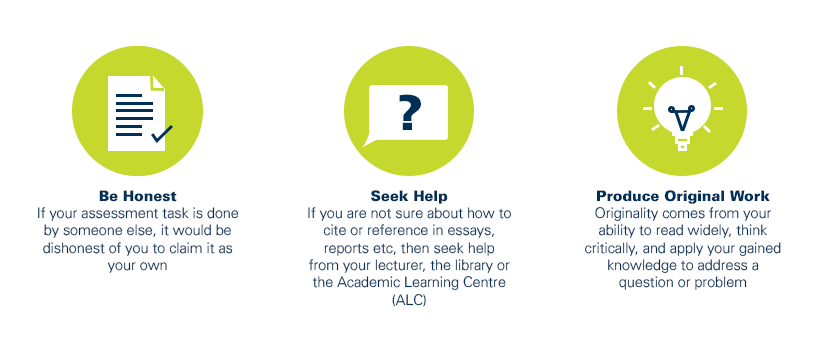
As a CQUniversity student you are expected to act honestly in all aspects of your academic work.
Any assessable work undertaken or submitted for review or assessment must be your own work. Assessable work is any type of work you do to meet the assessment requirements in the unit, including draft work submitted for review and feedback and final work to be assessed.
When you use the ideas, words or data of others in your assessment, you must thoroughly and clearly acknowledge the source of this information by using the correct referencing style for your unit. Using others’ work without proper acknowledgement may be considered a form of intellectual dishonesty.
Participating honestly, respectfully, responsibly, and fairly in your university study ensures the CQUniversity qualification you earn will be valued as a true indication of your individual academic achievement and will continue to receive the respect and recognition it deserves.
As a student, you are responsible for reading and following CQUniversity’s policies, including the Student Academic Integrity Policy and Procedure. This policy sets out CQUniversity’s expectations of you to act with integrity, examples of academic integrity breaches to avoid, the processes used to address alleged breaches of academic integrity, and potential penalties.
What is a breach of academic integrity?
A breach of academic integrity includes but is not limited to plagiarism, self-plagiarism, collusion, cheating, contract cheating, and academic misconduct. The Student Academic Integrity Policy and Procedure defines what these terms mean and gives examples.
Why is academic integrity important?
A breach of academic integrity may result in one or more penalties, including suspension or even expulsion from the University. It can also have negative implications for student visas and future enrolment at CQUniversity or elsewhere. Students who engage in contract cheating also risk being blackmailed by contract cheating services.
Where can I get assistance?
For academic advice and guidance, the Academic Learning Centre (ALC) can support you in becoming confident in completing assessments with integrity and of high standard.
What can you do to act with integrity?