Overview
In this unit, you will examine the application of physiological concepts and skills based on current trends in exercise and sport science settings. Furthermore, you will develop scientific knowledge and skills by undertaking an applied research project and disseminating the outcomes in verbal and written forms.
Details
Pre-requisites or Co-requisites
Pre-requisites For CG85 Bachelor of Exercise and Sport Sciences students: ESSC11002 Measurement and Evaluation in Health Science AND ESSC12001 Exercise and Sport Physiology For CC13 Bachelor of Education (Secondary) students: ESSC12001 Exercise and Sport Physiology
Important note: Students enrolled in a subsequent unit who failed their pre-requisite unit, should drop the subsequent unit before the census date or within 10 working days of Fail grade notification. Students who do not drop the unit in this timeframe cannot later drop the unit without academic and financial liability. See details in the Assessment Policy and Procedure (Higher Education Coursework).
Offerings For Term 2 - 2026
Attendance Requirements
All on-campus students are expected to attend scheduled classes - in some units, these classes are identified as a mandatory (pass/fail) component and attendance is compulsory. International students, on a student visa, must maintain a full time study load and meet both attendance and academic progress requirements in each study period (satisfactory attendance for International students is defined as maintaining at least an 80% attendance record).
Recommended Student Time Commitment
Each 6-credit Undergraduate unit at CQUniversity requires an overall time commitment of an average of 12.5 hours of study per week, making a total of 150 hours for the unit.
Class Timetable
Assessment Overview
Assessment Grading
This is a graded unit: your overall grade will be calculated from the marks or grades for each assessment task, based on the relative weightings shown in the table above. You must obtain an overall mark for the unit of at least 50%, or an overall grade of 'pass' in order to pass the unit. If any 'pass/fail' tasks are shown in the table above they must also be completed successfully ('pass' grade). You must also meet any minimum mark requirements specified for a particular assessment task, as detailed in the 'assessment task' section (note that in some instances, the minimum mark for a task may be greater than 50%). Consult the University's Grades and Results Policy for more details of interim results and final grades.
All University policies are available on the CQUniversity Policy site.
You may wish to view these policies:
- Grades and Results Policy
- Assessment Policy and Procedure (Higher Education Coursework)
- Review of Grade Procedure
- Student Academic Integrity Policy and Procedure
- Academic Progression Policy and Procedure
- Student Refund and Credit Balance Policy and Procedure
- Complaints Policy and Procedure
- Information and Communications Technology Acceptable Use Policy and Procedure
This list is not an exhaustive list of all University policies. The full list of University policies are available on the CQUniversity Policy site.
Feedback, Recommendations and Responses
Every unit is reviewed for enhancement each year. At the most recent review, the following staff and student feedback items were identified and recommendations were made.
Feedback from Deputy Dean of Learning and Teaching SHMAS and Exercise and Sports Science Australia accreditation panel
Reducing the weighting or removing the use of online quizzes should be considered
It is recommended that the assessment strategy in this unit be reviewed concerning the use of online quizzes
Feedback from Student Unit Teaching Evaluation feedback
Some education students failed to identify the relevance of the unit to their discipline
It is recommended that the lecture content, practical tasks, and assessment strategy be further refined to better align with physical education contexts
- Recognise and reflect on applications of exercise and sport physiology concepts in practice
- Collect and analyse research data in exercise and sport settings
- Evaluate and disseminate research findings in verbal and written forms.
Alignment of Assessment Tasks to Learning Outcomes
| Assessment Tasks | Learning Outcomes | ||
|---|---|---|---|
| 1 | 2 | 3 | |
| 1 - Portfolio - 70% | |||
| 2 - Written Assessment - 30% | |||
| 3 - On-campus Activity - 0% | |||
Alignment of Graduate Attributes to Learning Outcomes
| Graduate Attributes | Learning Outcomes | ||
|---|---|---|---|
| 1 | 2 | 3 | |
| 1 - Communication | |||
| 2 - Problem Solving | |||
| 3 - Critical Thinking | |||
| 4 - Information Literacy | |||
| 5 - Team Work | |||
| 6 - Information Technology Competence | |||
| 7 - Cross Cultural Competence | |||
| 8 - Ethical practice | |||
| 9 - Social Innovation | |||
| 10 - First Nations Knowledges | |||
| 11 - Aboriginal and Torres Strait Islander Cultures | |||
Textbooks
There are no required textbooks.
IT Resources
- CQUniversity Student Email
- Internet
- Unit Website (Moodle)
- Computer / laptop with webcam to allow videoconferencing.
- Microphone and camera for use with Zoom
- Adobe Acrobat Reader (or similar) software for viewing PDF documents
- Endnote bibliographic software. This is optional for formatting references.
- Zoom videoconferencing software. A Zoom account is available with your student credentials
- Microsoft Office (Word, Excel, PowerPoint) or similar software such as Open Office
- Jamovi (free statistics analysis program) or other statistics software
- Microsoft CoPilot Generative Artificial Intelligence tool.
All submissions for this unit must use the referencing styles below:
For further information, see the Assessment Tasks.
a.scanlan@cqu.edu.au
Week 1 - Module 1
Begin Date: 13 Jul 2026Module/Topic
The research process
1.1 The importance of research
1.2 Information sources
1.3 Finding and reviewing the literature
1.4 Research designs
1.5 Analyses for descriptive data and relationships
1.6 Analyses for comparisons
Chapter
Various readings with links will be made available on the unit Moodle site.
Events and Submissions/Topic
The scheduled lectorial this week will reinforce key content covered in the pre-recorded lecture videos and discuss applications in relation to Assessment 1: Content Application to Career via Generative AI and Reflection.
Week 2 - Module 2
Begin Date: 20 Jul 2026Module/Topic
Measurement and testing in exercise and sport
2.1 Measurement concepts
2.2 Reliability and validity
2.3 The testing process
2.4 Types of testing
2.5 Anaerobic fitness and performance tests
2.6 Aerobic fitness and performance tests
Chapter
Various readings with links will be made available on the unit Moodle site.
Events and Submissions/Topic
The scheduled lectorial this week will reinforce key content covered in the pre-recorded lecture videos and discuss applications in relation to Assessment 1: Content Application to Career via Generative AI and Reflection.
Week 3 - Module 3
Begin Date: 27 Jul 2026Module/Topic
Measuring physiological attributes and responses
3.1 Body composition concepts
3.2 Assessing body composition
3.3 Assessing cardiovascular responses
3.4 Assessing oxygen utilisation
3.5 Assessing thermoregulatory responses
3.6 Assessing hydration status
Chapter
Various readings with links will be made available on the unit Moodle site.
Events and Submissions/Topic
The scheduled lectorial this week will reinforce key content covered in the pre-recorded lecture videos and discuss applications in relation to Assessment 1: Content Application to Career via Generative AI and Reflection.
Week 4 - Module 4
Begin Date: 03 Aug 2026Module/Topic
Monitoring recovery and fatigue
4.1 Sleep concepts and monitoring
4.2 Sleep and exercise
4.3 Water immersion recovery approaches
4.4 Other recovery approaches
4.5 Neuromuscular approaches to measure fatigue
4.6 Physiological approaches to measure fatigue
Chapter
Various readings with links will be made available on the unit Moodle site.
Events and Submissions/Topic
The scheduled lectorial this week will reinforce key content covered in the pre-recorded lecture videos and discuss applications in relation to Assessment 1: Content Application to Career via Generative AI and Reflection.
Week 5 - Module 5
Begin Date: 10 Aug 2026Module/Topic
Monitoring load and enhancing performance
5.1 Load monitoring concepts
5.2 Application of load monitoring
5.3 External load measurement approaches
5.4 Internal load measurement approaches
5.5 Training modifications to enhance performance
5.6 Ergogenic practices to enhance performance
Chapter
Various readings consisting of journal articles and websites with links will be made available on the unit Moodle site.
Events and Submissions/Topic
The scheduled lectorial this week will reinforce key content covered in the pre-recorded lecture videos and discuss applications in relation to Assessment 1: Content Application to Career via Generative AI and Reflection.
Week 6 - Self-directed study
Begin Date: 17 Aug 2026Module/Topic
Preparation for Portfolio assessment (written task)
1. The introduction section
2. Scientific writing advice
3. Aims and hypotheses
4. The study design statement
5. Reporting participant details
6. The statistical analysis section
Chapter
Events and Submissions/Topic
There is no scheduled lectorial this week. The pre-recorded lecture videos will discuss key requirements in Assessment 3: Portfolio (written task).
Assessment 1: Content Application to Career via Generative AI and Reflection: Due Week 6 Friday 21 August 5:00 pm AEST.
Assessment 1: Content Application to Career via Generative AI and Reflection Due: Week 6 Friday (21 Aug 2026) 5:00 pm AEST
Vacation Week - Residential school (Cairns)
Begin Date: 24 Aug 2026Module/Topic
No lecture recordings or lectorial
Chapter
Events and Submissions/Topic
Assessment 2: Participation and Demonstration of Competencies in Residential School (Cairns) on Tuesday and Wednesday 25-26 August.
Week 7 - Residential school (Rockhampton)
Begin Date: 31 Aug 2026Module/Topic
No lecture recordings or lectorial
Chapter
Events and Submissions/Topic
Assessment 2: Participation and Demonstration of Competencies in Residential School (Rockhampton) on Wednesday and Thursday 2-3 September.
Week 8 - Residential school (Mackay)
Begin Date: 07 Sep 2026Module/Topic
Preparation for Portfolio assessment (written task)
1. Selecting statistical tests
2. Reporting statistical test outcomes
3. The data spreadsheet from the residential schools
4. Running statistical analyses using Excel
5. Running statistical analyses using JASP
6. The results section
Chapter
Events and Submissions/Topic
Assessment 2: Participation and Demonstration of Competencies in Residential School (Mackay) on Tuesday and Wednesday 8-9 September.
There is no scheduled lectorial this week. The pre-recorded lecture videos will discuss key requirements in Assessment 3: Research Portfolio Part A (Written Task).
Week 9 - Self-directed study
Begin Date: 14 Sep 2026Module/Topic
No lecture recordings or lectorial
Chapter
Events and Submissions/Topic
ZOOM drop-in sessions will be offered to support completion of Assessment 3: Research Portfolio Part A (Written Task).
Week 10 - Presentation preparation
Begin Date: 21 Sep 2026Module/Topic
Preparation for Portfolio assessment (presentation task)
1. Research presentation overview
2. Presentation contents
3. Presentation design
4. Presentation delivery
5. Presentation examples
6. Advice for the presentation task
Chapter
Events and Submissions/Topic
Assessment 3: Research Portfolio Part A (Written Task): Due Week 10 Friday 25 September 5:00 pm AEST.
Week 11 - Self-directed study
Begin Date: 28 Sep 2026Module/Topic
No lecture recordings or lectorial
Chapter
Events and Submissions/Topic
ZOOM drop-in sessions will be offered to support completion of Assessment 3: Research Portfolio Part B (Presentation Task).
Week 12 - Self-directed study
Begin Date: 05 Oct 2026Module/Topic
No lecture recordings or lectorial
Chapter
Events and Submissions/Topic
ZOOM drop-in sessions will be offered to support completion of Assessment 3: Research Portfolio Part B (Presentation Task).
Exam Week
Begin Date: 12 Oct 2026Module/Topic
No lecture recordings or lectorial
Chapter
Events and Submissions/Topic
Assessment 3: Research Portfolio Part B (Presentation Task). Due to be delivered during a pre-selected online ZOOM session scheduled this week. Presentation slides to be submitted by Friday 16 October 5:00 pm AEST.
Vacation/Exam Week
Begin Date: 19 Oct 2026Module/Topic
Chapter
Events and Submissions/Topic
Residential schools
This unit includes compulsory on-campus practical activities at a residential school. You must attend one of the residential schools suited to your mode of enrolment from the three options below. Please see the CQUniversity Handbook and the unit Moodle site for further information.
Cairns residential school: This residential school will be held across Tuesday 25 August and Wednesday 26 August. All students attending this residential school should meet in the Exercise and Sport Sciences Laboratories (Cairns Basketball Association Headquarters, Aumuller Street).
Rockhampton residential school: This residential school will be held across Wednesday 2 September and Thursday 3 September. All students attending this residential school should meet in the Exercise and Sport Sciences facilities (Building 81, Rockhampton North Campus, Yaamba Road).
Mackay residential school: This residential school will be held across Tuesday 8 September and Wednesday 9 September. All students attending this residential school should meet in the Exercise and Sport Sciences Laboratories (Building 4, Mackay City Campus, Sydney Street).
1 Written Assessment
This assessment involves you bridging the gap between the theoretical content covered and professional practice alongside collaborating with a Generative AI tool. You are required to select three key concepts covered in the unit lectures and explain how they apply to your future career. In completing this task, you are required to use a Generative AI tool (Microsoft Copilot available via your CQU Microsoft 365 login) to identify applications of your chosen concepts to your career and critically evaluate the generated output. This evaluation should involve contrasting the strengths and limitations of the output against your own independent thoughts, unit insights, and scholarly research. This assessment is to be completed individually using the template provided (which contains correct formatting) on the unit Moodle site.
You will be required to identify your chosen career/position (e.g., Secondary Physical Education Teacher, Exercise Scientist, Accredited Exercise Physiologist, Strength and Conditioning Coach), potential place of employment (e.g., school, rehabilitation clinic, gym, sports club), and selected key concepts from those provided (three concepts must be chosen from “Research”, “Fitness/Performance Testing”, “Measurement of Physiological Responses”, "Sleep Monitoring and Optimisation", “Recovery Approaches”, "Fatigue Monitoring", and “Load monitoring”). You will then use provided resources to develop targeted prompts that ask Microsoft Copilot how your chosen concepts apply to your chosen career/position, documenting the prompts and AI-generated responses in the process. You will then critically evaluate the AI output for each chosen concept with your own understanding and research, identifying inaccuracies and limitations (e.g., incorrect citations, outdated industry trends, generic advice, biases, failure to capture local contexts). You will then provide some reflective reasoning guided by specific questions that extend upon the details provided in the AI output.
General information
Word limit: 1500 words (up to 500 words for each chosen concept - does not include the reference list).
Program: Microsoft Word.
Font: Use Times New Roman, size 11.
Layout: Single-spaced throughout with 2.54 cm margins on all sides. Number the pages consecutively at the bottom right corner. Set the text alignment to justified.
Submission: Online via the unit Moodle site
Template: Follow the template provided on the unit Moodle site for correct layout and formatting.
Level of GenAI use permitted
Level 3: You may use Al to help complete the task in generating the requested output as well as refining your work. In addition to providing the required prompts and outputs, you must critically evaluate and modify Al-generated content as necessary.
Week 6 Friday (21 Aug 2026) 5:00 pm AEST
In the absence of an approved extension, any submissions received after the due date will incur penalties in accordance with CQUniversity Assessment Policy and Procedure (Higher Education Coursework).
Week 7 Friday (4 Sept 2026)
Submissions will be returned with feedback within two weeks of the due date.
This assessment will be a written document assessed in the following areas: identification of relevant career/position, place of employment, and key concepts; prompt development and outputs generated with Microsoft Copilot; critical evaluation of outputs; personal reflection; and writing/presentation. A detailed assessment rubric will be available on the unit Moodle site for further information on the criteria used to grade this assessment.
- Recognise and reflect on applications of exercise and sport physiology concepts in practice
2 On-campus Activity
This assessment involves compulsory attendance, active participation, and demonstration of key competencies in the on-campus practical activities of the unit delivered in a residential school. You are required to attend one of the on-campus residential schools. Different offerings are available depending on your mode of enrolment (Cairns, Rockhampton, Mackay, or mixed-mode). Further details regarding these residential schools can be found in the Term Specific Information section of the ESSC12005 Unit Profile, on the unit Moodle site, and via the CQUniversity Handbook.
The 72-hour grade period does not apply to the presentation portfolio task.
Level of GenAI use permitted
Level 1: You must not use Al at any point during the assessment to ensure you demonstrate your core skills and knowledge.
You will successfully complete this assessment following attendance. participation, and demonstration of competencies at your designated residential school.
You will immediately pass this assessment following attendance, participation, and demonstration of competencies at your designated residential school.
Attendance at your chosen on-campus residential school, with sufficient participation and demonstration of skill competencies, will result in a passing grade for this assessment. Failure to attend and adequately participate may result in a fail grade for this assessment and being unable to pass this unit. This assessment will be assessed through attendance records documented by the Unit Coordinator as well as competent demonstration of key skills, including participant screening, anthropometry assessment, test administration, monitoring responses, use of a metabolic analysis system, and capillary blood sampling.
If you miss any part of the residential school without an approved reason, there will not be an opportunity to simply catch up at any time. The Assessment Policy and Procedure (Higher Education Coursework) outlines acceptable reasons for adjusting assessment. If you do not attend part of the residential school and provide a valid reason with supporting documentation, then an attempt to make alternate arrangements will be made in consultation with the Unit Coordinator, which may include deferral until the following year.
- Collect and analyse research data in exercise and sport settings
3 Portfolio
In this unit, you will apply knowledge and skills related to exercise and sport physiology to complete various research projects during the practical sessions. You are required to actively participate in data collection for all research projects and select one of the research project topics to develop your research portfolio. The research portfolio will consist of Part A: Written Task and Part B: Presentation Task.
Part A: Written Task
This assessment involves performing background research related to your chosen project topic and developing an introduction section that effectively provides a rationale for the project while highlighting key research in the area to show a need for the project. In addition, you will need to identify the aim, hypotheses, study design, and participant details for your chosen project, as well as identify and run statistical tests to formulate results for your project using data collected at the residential schools. This assessment is to be completed individually using the template provided (which contains correct formatting) on the unit Moodle site.
General information
Word limit: 1500 words (does not include any tables or the reference list).
Program: Microsoft Word.
Font: Use Times New Roman, size 11.
Layout: Single-spaced throughout with 2.54 cm margins on all sides. Number the pages consecutively at the bottom right corner. Set the text alignment to justified.
Submission: Online via the unit Moodle site
Template: Follow the template provided on the unit Moodle site for correct layout and formatting.
Part B: Presentation Task
This assessment involves developing and delivering a presentation encompassing all aspects of the research process for your chosen research topic. It will extend upon the written portfolio task with more extensive interpretation and implications of the results. The presentation is to be completed individually and delivered at one of the scheduled online ZOOM sessions.
General information
Time limit: Up to 12 minutes (followed by up to 3 minutes of questions).
Slide volumes: 15-20 slides are recommended; however, this might vary with different content and styles.
Program: Microsoft PowerPoint.
Submission: This assessment will be graded during the session in which you present, but your presentation slides are to be submitted online via the unit Moodle site.
Grace period: The 72-hour grade period does not apply to the presentation portfolio task.
Level of GenAI use permitted
Level 2: You may use generative Al for pre-task activities like brainstorming, planning, idea development, and initial research across portfolio tasks. Your final submissions should be constructed by developing and refining these ideas independently.
Part A: Written Task is due Week 10 Friday 25 September 5:00 pm AEST; Part B: Presentation Task delivered during your selected session in the exam week commencing 12 October with the presentation slides due 16 October 5:00 pm AEST.
Feedback for Part A: Written Task will be returned with two weeks of the due date. Feedback for Part B: Presentation Task will be returned following grade certification.
Part A: Written Task (30% of the final grade) will be a written document assessed in the following areas: background of key concepts, review and interpretation of the related literature, development of the rationale for the project, development of aim and hypotheses, identification of study design, description of participants, use and interpretation of statistical analyses, presentation of data and findings in written and tabular forms, and writing/presentation.
Part B: Presentation Task (40% of the final grade) will be assessed in the following areas: introduction, methods, results, discussion, conclusion, practical implications, and presentation skills, including duration, slide design, structure, use of cues for speech, use of eye contact and voice, professionalism, ability to answer questions, and participation. Non-attendance at a presentation session without active delivery of your presentation will result in zero marks being awarded across all criteria.
Detailed assessment rubrics will be available for each portfolio task on the unit Moodle site for further information on the criteria used to grade them.
- Recognise and reflect on applications of exercise and sport physiology concepts in practice
- Collect and analyse research data in exercise and sport settings
- Evaluate and disseminate research findings in verbal and written forms.
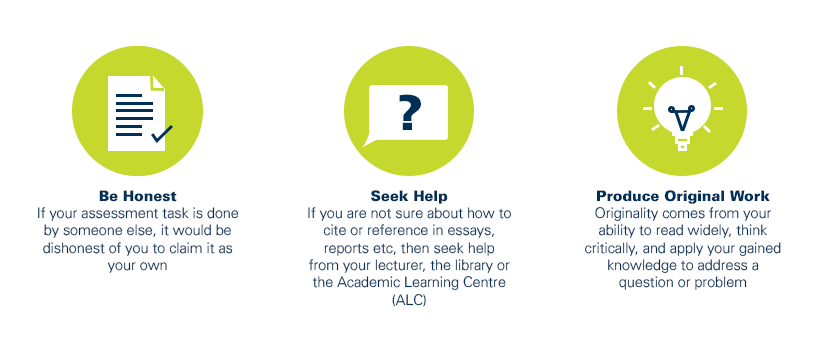
As a CQUniversity student you are expected to act honestly in all aspects of your academic work.
Any assessable work undertaken or submitted for review or assessment must be your own work. Assessable work is any type of work you do to meet the assessment requirements in the unit, including draft work submitted for review and feedback and final work to be assessed.
When you use the ideas, words or data of others in your assessment, you must thoroughly and clearly acknowledge the source of this information by using the correct referencing style for your unit. Using others’ work without proper acknowledgement may be considered a form of intellectual dishonesty.
Participating honestly, respectfully, responsibly, and fairly in your university study ensures the CQUniversity qualification you earn will be valued as a true indication of your individual academic achievement and will continue to receive the respect and recognition it deserves.
As a student, you are responsible for reading and following CQUniversity’s policies, including the Student Academic Integrity Policy and Procedure. This policy sets out CQUniversity’s expectations of you to act with integrity, examples of academic integrity breaches to avoid, the processes used to address alleged breaches of academic integrity, and potential penalties.
What is a breach of academic integrity?
A breach of academic integrity includes but is not limited to plagiarism, self-plagiarism, collusion, cheating, contract cheating, and academic misconduct. The Student Academic Integrity Policy and Procedure defines what these terms mean and gives examples.
Why is academic integrity important?
A breach of academic integrity may result in one or more penalties, including suspension or even expulsion from the University. It can also have negative implications for student visas and future enrolment at CQUniversity or elsewhere. Students who engage in contract cheating also risk being blackmailed by contract cheating services.
Where can I get assistance?
For academic advice and guidance, the Academic Learning Centre (ALC) can support you in becoming confident in completing assessments with integrity and of high standard.
What can you do to act with integrity?