Overview
This unit introduces you to basic concepts of mechanics (kinematics, kinetics, and fluid mechanics) as they relate to human movement, sports performance, and injury. In this unit, you will learn qualitative and quantitative approaches to solving biomechanical problems and analysing human movement to optimise movement patterns and performance. The theoretical content is supported with practical activities, which introduce you to basic biomechanical equipment and measurement techniques.
Details
Pre-requisites or Co-requisites
Pre-requisites: ESSC11001 Physical Activity, Fitness and Health; ESSC11003 Skill Acquisition and Movement
Important note: Students enrolled in a subsequent unit who failed their pre-requisite unit, should drop the subsequent unit before the census date or within 10 working days of Fail grade notification. Students who do not drop the unit in this timeframe cannot later drop the unit without academic and financial liability. See details in the Assessment Policy and Procedure (Higher Education Coursework).
Offerings For Term 1 - 2026
Attendance Requirements
All on-campus students are expected to attend scheduled classes - in some units, these classes are identified as a mandatory (pass/fail) component and attendance is compulsory. International students, on a student visa, must maintain a full time study load and meet both attendance and academic progress requirements in each study period (satisfactory attendance for International students is defined as maintaining at least an 80% attendance record).
Recommended Student Time Commitment
Each 6-credit Undergraduate unit at CQUniversity requires an overall time commitment of an average of 12.5 hours of study per week, making a total of 150 hours for the unit.
Class Timetable
Assessment Overview
Assessment Grading
This is a graded unit: your overall grade will be calculated from the marks or grades for each assessment task, based on the relative weightings shown in the table above. You must obtain an overall mark for the unit of at least 50%, or an overall grade of 'pass' in order to pass the unit. If any 'pass/fail' tasks are shown in the table above they must also be completed successfully ('pass' grade). You must also meet any minimum mark requirements specified for a particular assessment task, as detailed in the 'assessment task' section (note that in some instances, the minimum mark for a task may be greater than 50%). Consult the University's Grades and Results Policy for more details of interim results and final grades.
All University policies are available on the CQUniversity Policy site.
You may wish to view these policies:
- Grades and Results Policy
- Assessment Policy and Procedure (Higher Education Coursework)
- Review of Grade Procedure
- Student Academic Integrity Policy and Procedure
- Academic Progression Policy and Procedure
- Student Refund and Credit Balance Policy and Procedure
- Complaints Policy and Procedure
- Information and Communications Technology Acceptable Use Policy and Procedure
This list is not an exhaustive list of all University policies. The full list of University policies are available on the CQUniversity Policy site.
Feedback, Recommendations and Responses
Every unit is reviewed for enhancement each year. At the most recent review, the following staff and student feedback items were identified and recommendations were made.
Feedback from SUTE Survey
More explicit provision of feedback on the Biomechanical Movement Analysis Assessment Task.
As it appeared that at least one student missed where the feedback file was uploaded to Moodle, it is recommended that the Unit Coordinator provide more explicit direction as to where that feedback has been posted. Additionally, opportunities for draft feedback prior to submission will be investigated.
Feedback from Self-reflection
A lack of fundamental content knowledge associated with the tasks to be completed during the Residential School.
It is recommended that the Unit Coordinator investigate methods of improving student engagement in the unit content prior to the Residential School.
Feedback from Personal communication with students
Students reported that the ALC mathematical support provided was valuable.
It is recommended that the Unit Coordinator continue to work with ALC and investigate methods of further encouraging student uptake of those resources.
- Describe biomechanical concepts related to kinematics, kinetics, and fluid mechanics
- Apply biomechanical principles to various forms of human movement with a focus on exercise, sports performance, and injury
- Apply quantitative approaches to analyse biomechanical problems
- Conduct a biomechanical movement analysis and communicate findings
- Demonstrate professional practice and ethical behaviour expected in exercise and sport science settings.
Alignment of Assessment Tasks to Learning Outcomes
| Assessment Tasks | Learning Outcomes | ||||
|---|---|---|---|---|---|
| 1 | 2 | 3 | 4 | 5 | |
| 1 - Online Quiz(zes) - 20% | |||||
| 2 - Presentation - 50% | |||||
| 3 - Examination - 30% | |||||
| 4 - On-campus Activity - 0% | |||||
Alignment of Graduate Attributes to Learning Outcomes
| Graduate Attributes | Learning Outcomes | ||||
|---|---|---|---|---|---|
| 1 | 2 | 3 | 4 | 5 | |
| 1 - Communication | |||||
| 2 - Problem Solving | |||||
| 3 - Critical Thinking | |||||
| 4 - Information Literacy | |||||
| 5 - Team Work | |||||
| 6 - Information Technology Competence | |||||
| 7 - Cross Cultural Competence | |||||
| 8 - Ethical practice | |||||
| 9 - Social Innovation | |||||
| 10 - First Nations Knowledges | |||||
| 11 - Aboriginal and Torres Strait Islander Cultures | |||||
Textbooks
Biomechanics of Sport and Exercise
- Edition: 4th (2020)
- Authors: Peter McGinnis
- Human Kinetics
- Champaign Champaign , IL , USA
- ISBN: 978-1-4925-7140-7
- Binding: Hardcover
IT Resources
- CQUniversity Student Email
- Internet
- Unit Website (Moodle)
- Microphone and camera for use with Zoom
- 2D motion analysis software such as Kinovea - see Moodle for other software options
- Adobe Acrobat Reader (or similar) software for viewing PDF documents
- Zoom video conferencing software (can be installed via Moodle) or other video recording software
- Microsoft Office (Word, Excel, PowerPoint) or similar software such as Open Office
All submissions for this unit must use the referencing style: American Psychological Association 7th Edition (APA 7th edition)
For further information, see the Assessment Tasks.
g.warman@cqu.edu.au
Week 1
Begin Date: 09 Mar 2026Module/Topic
What is Biomechanics?
Forces
Chapter
Introduction. Why Study Biomechanics?
Chapter 1. Forces: Maintaining Equilibrium or Changing Motion
Events and Submissions/Topic
Week 2
Begin Date: 16 Mar 2026Module/Topic
Linear Kinematics
Chapter
Chapter 2. Linear Kinematics: Describing Objects in Linear Motion
Events and Submissions/Topic
Week 3
Begin Date: 23 Mar 2026Module/Topic
Linear Kinetics I
Chapter
Chapter 1. Forces: Maintaining Equilibrium or Changing Motion
Chapter 3. Linear Kinetics: Explaining the Cause of Linear Motion
Events and Submissions/Topic
Week 4
Begin Date: 30 Mar 2026Module/Topic
Linear Kinetics II
Chapter
Chapter 4. Work, Power, and Energy: Explaining the Causes of Motion without Newton
Events and Submissions/Topic
Week 5
Begin Date: 06 Apr 2026Module/Topic
Biomechanical Movement Analysis
Chapter
Chapter 13. Qualitative Biomechanical Analysis to Improve Technique
Online Readings
Events and Submissions/Topic
Week 6
Begin Date: 13 Apr 2026Module/Topic
Torques
Angular Kinematics
Chapter
Chapter 5.Torque and Moments of Force: Maintaining Equilibrium or Changing Angular Motion
Chapter 6. Angular Kinematics: Describing Objects in Angular Motion
Events and Submissions/Topic
Vacation Week
Begin Date: 20 Apr 2026Module/Topic
Chapter
Events and Submissions/Topic
Quiz 1: First session of Residential School (CNS)
Week 7
Begin Date: 27 Apr 2026Module/Topic
Angular Kinetics
Chapter
Chapter 7. Angular Kinetics: Explaining the Causes of Angular Motion
Events and Submissions/Topic
Quiz 1: First session of Residential School (MKY & ROK)
Week 8
Begin Date: 04 May 2026Module/Topic
Fluid Mechanics
Chapter
Chapter 8. Fluid Mechanics: The Effects of Water and Air
Events and Submissions/Topic
Week 9
Begin Date: 11 May 2026Module/Topic
Applications in Throwing and Kicking
Chapter
Online Readings
Events and Submissions/Topic
Quiz 2 Opens: Week 9 Friday (15 May 2026) 8:00 am AEST
Week 10
Begin Date: 18 May 2026Module/Topic
Applications in Weightlifting and Jumping
Chapter
Online Readings
Events and Submissions/Topic
Quiz 2 Closes: Week 10 Friday (22 May 2026) 5:00 pm AEST
Week 11
Begin Date: 25 May 2026Module/Topic
Exam Preparation
Chapter
Events and Submissions/Topic
Week 12
Begin Date: 01 Jun 2026Module/Topic
Review and Final Exam Preparation
Chapter
Events and Submissions/Topic
Examination Period
Begin Date: 08 Jun 2026Module/Topic
Chapter
Events and Submissions/Topic
1 Online Quiz(zes)
The Online Quizzes assessment task comprises of two (2) online quizzes. Each online quiz is to be completed on your own during the period that the quiz is available. As some questions will require calculations, please have a scientific calculator and your ESSC12004 Formula Sheet (available on Moodle) accessible when completing the quiz. Each online quiz should be completed on a computer as some question formats do not work, or display well on mobile devices such as smartphones and tablets. In addition, attempting the quiz on a smartphone can result in your session being interrupted in the event of a phone call or notification. This may result in submission of your quiz with whatever has been completed at that point in time.
NB: For questions with text-based responses (e.g. fill-in-the-blank) you should take care with spelling (Australian English) and grammar, as answers are spelling and grammar sensitive. For calculation-based question, please provide numeric responses with two decimal places. Failure to follow this instruction will result in your answer marked as incorrect.
Quiz 1 (10% of final grade)
Quiz 1 will assess content presented in lectures, online learning activities, and compulsory readings/videos from Weeks 1 – 5 (inclusive). This quiz will consist of 30 multiple-choice, fill-in-the-blank, labelling, and matching questions. You will have 60 minutes to complete this task. NB: You will need to complete calculations for some answers. Please ensure that you have one available (it cannot be the calculator available on your laptop).
Quiz 1 is a closed-book, online quiz that you will be required to complete during the first session of the Residential School that you attend. Therefore, it is your responsibility to ensure that you prepare for this task prior to attending the Residential School, and bring your laptop and a scientific calculator.
Due Date: First session ESSC12004 Residential School.
CNS: Vacation Week Wednesday 22nd April 2026, 9:00am AEST.
MKY: Week 7 Tuesday 28th April, 9:00am AEST.
ROK: Week 7 Thursday 30th April, 9:00am AEST.
Level of GenAI use allowed:
Level 1 No AI Use: You must not use AI at any point during the assessment. You must demonstrate your core skills and knowledge.
Note: The 72-hour grace period does not apply to this assessment. In the absence of an approved extension there will be no late submissions will be allowed for any of the online quizzes that make up this assessment task.
Quiz 2 (10% of final grade)
Quiz 2 will assess content presented in lectures, online learning activities, and compulsory readings/videos from lectures, online learning activities, and compulsory readings/videos from Weeks 6 – 8 (inclusive). This quiz will consist of 30 multiple-choice, fill-in-the-blank, labelling, and matching questions. You will have 60 minutes to complete this task. NB: You will need to complete calculations for some answers. Please ensure that you have one available (it cannot be the calculator available on your laptop).
Quiz 2 is a open-book, online quiz that you will be required to complete during the period that the quiz is available online (see below). It is your responsibility to ensure that you prepare for this task and log onto Moodle to complete it during the time period scheduled. You can only attempt Quiz 2 once, and it must be completed in a single session. You cannot save your answers and return to this quiz at a later time.
Open Date: Week 9, Friday 15 May 2026, 8:00 am AEST.
Close Date: Week 10, Friday 22 May 2026, 5:00 pm AEST.
Level of GenAI use allowed:
Level 1 No AI Use: You must not use AI at any point during the assessment. You must demonstrate your core skills and knowledge.
Note: The 72-hour grace period does not apply to this assessment. In the absence of an approved extension there will be no late submissions will be allowed for any of the online quizzes that make up this assessment task.
Due dates/times for each quiz are as per the dates listed in the task description above. Times stated are AEST (Qld). In the absence of an approved extension, no attempts will be permitted after the specified due dates.
You will receive the result for each quiz upon completion. Additionally, you will see feedback regarding the correct answers for each question upon closure of the quiz.
Responses to quiz questions will be marked based on the correctness of the response by the Moodle Online Quiz System. For each quiz, marks will be collated and a total issued. Individual quiz totals will be calculated as a percentage out of ten (per the individual quiz weighting) and the combined total for this assessment task (out of twenty) will be applied to your unit grade. Questions that require a text-based response (e.g. fill-in-the-blank) are spelling and grammar sensitive (Australian English). Questions that are calculation-based will require the answer to be provided, rounded to two decimal places (e.g. 2 would need to be entered as 2.00; and 2.768 would need to be entered as 2.77). Failure to comply with these conditions will result in your answer marked as incorrect.
- Describe biomechanical concepts related to kinematics, kinetics, and fluid mechanics
- Apply quantitative approaches to analyse biomechanical problems
2 Presentation
For this assessment task, you will be required act as a biomechanist to complete a movement analysis of one (1) of the activities listed on the Moodle site. Time will be provided during the Residential School to record the videos required to complete the analysis. In addition, time will be provided to commence analysing the videos. However, you may need additional time outside of the scheduled laboratory times to complete your analysis.
Once you have completed your analysis, it is to be summarised in an audio-visual presentation that is 10-12 minutes in length. Presentations that do not meet this criteria will be deducted marks per the marking rubric available on Moodle. NB: Any information presented beyond the fourteen (14) minute mark will not be assessed.
Your audio-visual presentation should be prepared using PowerPoint (or similar software) and is to include:
- A brief introduction/description of the movement analysed.
- The identification of at least six (6) observable, critical features and a rationale for their selection (based on biomechanical principles).
- A summary of your movement analysis, evaluating the client’s performance in relation to the identified critical features and includes annotated images and/or video showing measurement of the critical features.
- A description of two (2) drills and/or exercises designed to improve performance in one (1), or more, of the identified critical features with a rationale based on biomechanical principles for the suggested drills and/or exercises.
- A minimum of five (5) relevant and reputable references that are used throughout the presentation. References are to be peer-reviewed journal articles, textbooks, or coaching manuals.
Your presentation is to be a video file recorded and uploaded to Moodle (.mp4, .avi, .mov, or .wmv file extension). Instructions on how to successfully submit your video file are available on Moodle. The recommended software for recording your presentation video is Zoom. However, you may use other video recording software to record the presentation. Information on using Zoom to record a presentation is provided on Moodle. The Unit Coordinator must receive acceptable files that are viewable/readable. If an unacceptable/corrupt file is submitted, you will be notified and your assessment will be subject to late submission penalties in line with CQUniversity's Assessment Policy and Procedure (Higher Education Coursework) until an acceptable file is submitted. NB: It is your responsibility to ensure that your submission is submitted via Moodle and able to be viewed. Submission of files via email or other cloud-based platform (e.g. OneDrive, etc) will not be accepted for marking.
Please be advised the assessment submission will be checked for plagiarism (and other types of academic misconduct). You are advised to familiarise yourself with CQUniversity’s Academic Misconduct Procedures. Any assessments suspected of plagiarism (or other types of academic misconduct) will be dealt with in accordance to CQUniversity’s Academic Misconduct Procedures with subsequent penalties applied.
Additional resources related to the movement analyses and how to submit this task is provided on Moodle.
Due Date: Week 12 Tuesday 2 June 2026, 5:00 pm AEST
Level of GenAI use allowed:
Level 2 AI Planning: You may use AI for planning, idea development and research. Your final submission must include a statement on how you have used AI to develop and refine your submission.
Week 12 Tuesday (2 June 2026) 5:00 pm AEST
Dates/times stated are AEST (Qld). Assessments submitted after the due date, without an approved extension, will incur late penalties in accordance with CQUniversity's Assessment Policy and Procedure (Higher Education Coursework).
Marks and feedback will be returned within two (2) weeks of the due date.
Marks will be awarded based on the marking rubric provided on Moodle. Some points of focus are:
- Identification of the overall performance objective and description of the movement analysed
- Identification of six (6) critical features and the biomechanical rationale for the selection of these features
- Appropriate use of video analysis software to identify and measure the six (6) critical features
- Summary of the client’s performance based on the six (6) critical features
- Summary of the two (2) drills/exercises to improve performance in one (1), or more, of the identified critical features with justification for their selection
- Appropriate use of referencing throughout the presentation (APA 7 style)
- Presentation skills (including quality of slide design; use of cues/notes during the presentation; use of voice/eye contact/body language; adherence to time limit; professionalism; and presentation structure)
NB: You must achieve a minimum of 50% in this assessment item to pass the unit.
- Apply biomechanical principles to various forms of human movement with a focus on exercise, sports performance, and injury
- Conduct a biomechanical movement analysis and communicate findings
3 On-campus Activity
This assessment item is linked to your attendance and participation in the compulsory on-campus activities and completion of the Laboratory Workbook. Therefore, you are required to attend one (1) of the timetabled on-campus Residential Schools. Different sessions are available depending on your mode of enrolment (i.e. ROK, MIX, MKY/MKC, CNS), please ensure your complete your class registration via MyCQU. Further details regarding the Residential School sessions can be found in the Term Specific Information section of this Unit Profile, on the ESSC12004 Moodle site, and via the CQUniversity Handbook.
During the Residential School, you will participate in a series of practical activities that will develop your hands-on skills related to collecting and interpreting biomechanical data. A Laboratory Manual and Laboratory Workbook will be provided via the Moodle site prior to these sessions.
To complete this assessment task, you must do the following:
- Review the Exercise and Sport Science Laboratory Induction information available on Moodle.
- Submit a complete Laboratory Health Screening Form and participate in the Exercise and Sport Science Laboratory Induction process conducted in the first session of the Residential School.
- Attend and actively participate in all Residential School activities.
- Submit a complete Laboratory Workbook - The Laboratory Workbook contains questions and data tables for each practical activity. This should be completed during the Residential School and submitted via Moodle the week following the Residential School session that you attended.
Due Date: One week after attending the ESSC12004 Residential School.
CNS: Week 7 Friday 1 May, 2026 5:00 pm AEST.
MKY and ROK: Week 8 Friday 8 May 2026, 5:00 pm AEST.
Level of GenAI use allowed:
Level 1 No AI Use: You must not use AI at any point during the assessment. You must demonstrate your core skills and knowledge.
Due dates/times stated ate AEST (Qld). Attendance, and participation will be assessed throughout the on-campus laboratory activity sessions and submission of a complete Laboratory Workbook is required. No additional sessions will be available beyond the due date, unless acceptable reasons (with supporting documentation) are provided to warrant an adjustment to the assessment. Please see the CQUniversity Assessment Policy and Procedures (Higher Education Coursework) for further information.
Marks (Pass/Fail) will be returned within two (2) weeks of the due date.
There are three (3) criteria that must be met to pass this assessment item:
- Attendance – You must attend the entire on-campus Residential School. Attendance will be monitored via laboratory attendance sheets which will be facilitated by the teaching staff. Please note, attendance will be checked during each session of the Residential School.
- Active Participation – Teaching staff instructing each session will monitor your participation during each practical task.
- Submission of the Laboratory Workbook – Teaching staff with knowledge and expertise in the field will review your Laboratory Workbook for completion of all questions. If your Laboratory Workbook is not completed with sufficient detail, it will be returned to you for corrections and you will be given one opportunity to resubmit. Feedback will be provided to assist you with the resubmission.
- Conduct a biomechanical movement analysis and communicate findings
- Demonstrate professional practice and ethical behaviour expected in exercise and sport science settings.
Examination
Calculator - non-programmable, no text retrieval, silent only
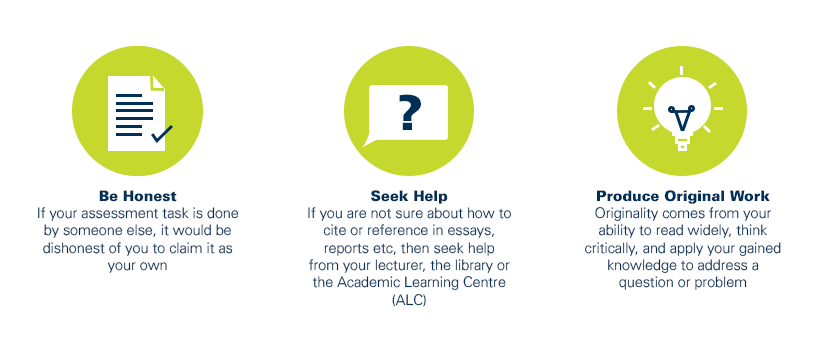
As a CQUniversity student you are expected to act honestly in all aspects of your academic work.
Any assessable work undertaken or submitted for review or assessment must be your own work. Assessable work is any type of work you do to meet the assessment requirements in the unit, including draft work submitted for review and feedback and final work to be assessed.
When you use the ideas, words or data of others in your assessment, you must thoroughly and clearly acknowledge the source of this information by using the correct referencing style for your unit. Using others’ work without proper acknowledgement may be considered a form of intellectual dishonesty.
Participating honestly, respectfully, responsibly, and fairly in your university study ensures the CQUniversity qualification you earn will be valued as a true indication of your individual academic achievement and will continue to receive the respect and recognition it deserves.
As a student, you are responsible for reading and following CQUniversity’s policies, including the Student Academic Integrity Policy and Procedure. This policy sets out CQUniversity’s expectations of you to act with integrity, examples of academic integrity breaches to avoid, the processes used to address alleged breaches of academic integrity, and potential penalties.
What is a breach of academic integrity?
A breach of academic integrity includes but is not limited to plagiarism, self-plagiarism, collusion, cheating, contract cheating, and academic misconduct. The Student Academic Integrity Policy and Procedure defines what these terms mean and gives examples.
Why is academic integrity important?
A breach of academic integrity may result in one or more penalties, including suspension or even expulsion from the University. It can also have negative implications for student visas and future enrolment at CQUniversity or elsewhere. Students who engage in contract cheating also risk being blackmailed by contract cheating services.
Where can I get assistance?
For academic advice and guidance, the Academic Learning Centre (ALC) can support you in becoming confident in completing assessments with integrity and of high standard.
What can you do to act with integrity?