Overview
This unit will introduce the student to the concept of environmental determinants of health and the need to protect people from hazards in the environment that pose a risk to health. Students will study the links between good health and the state of the environment, particularly those between the environment and society, economics and environment, politics and environment and environmental health development. Students will develop an appreciation of the interdisciplinary nature of environmental health issues and the interaction between human lifestyles, consumption patterns, urbanisation and health. It is a requirement of this unit to have access to the CQU website and the internet.
Details
Pre-requisites or Co-requisites
There are no requisites for this unit.
Important note: Students enrolled in a subsequent unit who failed their pre-requisite unit, should drop the subsequent unit before the census date or within 10 working days of Fail grade notification. Students who do not drop the unit in this timeframe cannot later drop the unit without academic and financial liability. See details in the Assessment Policy and Procedure (Higher Education Coursework).
Offerings For Term 1 - 2026
Attendance Requirements
All on-campus students are expected to attend scheduled classes - in some units, these classes are identified as a mandatory (pass/fail) component and attendance is compulsory. International students, on a student visa, must maintain a full time study load and meet both attendance and academic progress requirements in each study period (satisfactory attendance for International students is defined as maintaining at least an 80% attendance record).
Recommended Student Time Commitment
Each 6-credit Undergraduate unit at CQUniversity requires an overall time commitment of an average of 12.5 hours of study per week, making a total of 150 hours for the unit.
Class Timetable
Assessment Overview
Assessment Grading
This is a graded unit: your overall grade will be calculated from the marks or grades for each assessment task, based on the relative weightings shown in the table above. You must obtain an overall mark for the unit of at least 50%, or an overall grade of 'pass' in order to pass the unit. If any 'pass/fail' tasks are shown in the table above they must also be completed successfully ('pass' grade). You must also meet any minimum mark requirements specified for a particular assessment task, as detailed in the 'assessment task' section (note that in some instances, the minimum mark for a task may be greater than 50%). Consult the University's Grades and Results Policy for more details of interim results and final grades.
All University policies are available on the CQUniversity Policy site.
You may wish to view these policies:
- Grades and Results Policy
- Assessment Policy and Procedure (Higher Education Coursework)
- Review of Grade Procedure
- Student Academic Integrity Policy and Procedure
- Academic Progression Policy and Procedure
- Student Refund and Credit Balance Policy and Procedure
- Complaints Policy and Procedure
- Information and Communications Technology Acceptable Use Policy and Procedure
This list is not an exhaustive list of all University policies. The full list of University policies are available on the CQUniversity Policy site.
Feedback, Recommendations and Responses
Every unit is reviewed for enhancement each year. At the most recent review, the following staff and student feedback items were identified and recommendations were made.
Feedback from Personal reflection
Student attendance of lectures and tutorials was poor across the term.
Emphasise at the start of, and during, term how important it is to attend lectures and tutorials. As well as the importance to student learning of regularly engaging with the teaching staff.
Feedback from Unit comments
Dale & Lisa are doing great work, they inspire me to think outside the box, which has exp(a)nded my knowledge a lot.
Encourage all students to reflect on the positives of the unit teaching as the term unfolds. Have students provide in depth feedback on the unit curriculum during the term, so changes can be considered.
Feedback from Student reflection
Possibly not so much reading
Not clear why the student felt the amount of reading was too much. The reading material meets the learning outcome needs and where reading can be replaced it is replaced with audiovisual materials, e.g. podcasts, vidcasts and audio recordings. As with other resources provided for this unit the readings are regularly under review.
- Describe environmental determinants of health
- Explain the principles of environmental protection, ecologically sustainable development and the precautionary principle
- Discuss the historical development and current paradigms pertaining to the discipline of environmental health in Australia and overseas
- Analyse case studies which highlight the interdisciplinary nature of environmental health issues and the need to protect people from hazards in the environment that pose a risk to health
Describe This unit relates to the following requirements for accreditation by Environmental Health Australia:
Environmental health literacies
- Public heath principles
- Sustainable development and environmental health principles
- Foundational sciences
- Foundational environmental health practice
- Environmental health management
Environmental health graduate attributes
1. Apply relevant knowledge, principles and concepts to workplace needs
- Apply basic public health science principles and concepts to issues of concern
- Understand the discipline of environmental health, its theoretical underpinnings and spheres of operation
2. Communicate effectively
- Exchange of information with colleagues, practitioners, clients, policy-makers, interest groups and the public
- Persuasively argue for the value and importance of environmental & public health
3. Access, evaluate and synthesise information
- Identify and access information sources and compile relevant & appropriate information when needed
- Analyse data, recognise meaningful test results, and interpret results
4. Utilise lifelong learning skills
- Take responsibility for their own learning and development
- Critically evaluate personal beliefs and assumptions
5. Demonstrate international and cultural awareness and understanding
- Recognise individual and collective human rights
- Recognise the importance of cultural diversity and sensitivity
- Think globally
6. Apply professional skills
- Work independently and in teams
- Demonstrate ethical practices
- Employ systems thinking skills
7. Use technologies appropriately
- Decide on appropriate applications, recognising their advantages & limitations
8. Think critically, creatively and reflectively
- Apply logical and rational processes to analyse the components of an issue
Alignment of Assessment Tasks to Learning Outcomes
| Assessment Tasks | Learning Outcomes | |||
|---|---|---|---|---|
| 1 | 2 | 3 | 4 | |
| 1 - Online Quiz(zes) - 5% | ||||
| 2 - Written Assessment - 20% | ||||
| 3 - Written Assessment - 20% | ||||
| 4 - Written Assessment - 55% | ||||
Alignment of Graduate Attributes to Learning Outcomes
| Graduate Attributes | Learning Outcomes | |||
|---|---|---|---|---|
| 1 | 2 | 3 | 4 | |
| 1 - Communication | ||||
| 2 - Problem Solving | ||||
| 3 - Critical Thinking | ||||
| 4 - Information Literacy | ||||
| 5 - Team Work | ||||
| 6 - Information Technology Competence | ||||
| 7 - Cross Cultural Competence | ||||
| 8 - Ethical practice | ||||
| 9 - Social Innovation | ||||
| 10 - First Nations Knowledges | ||||
| 11 - Aboriginal and Torres Strait Islander Cultures | ||||
Alignment of Assessment Tasks to Graduate Attributes
| Assessment Tasks | Graduate Attributes | ||||||||||
|---|---|---|---|---|---|---|---|---|---|---|---|
| 1 | 2 | 3 | 4 | 5 | 6 | 7 | 8 | 9 | 10 | 11 | |
| 1 - Online Quiz(zes) - 5% | |||||||||||
| 2 - Written Assessment - 20% | |||||||||||
| 3 - Written Assessment - 20% | |||||||||||
| 4 - Written Assessment - 55% | |||||||||||
Textbooks
There are no required textbooks.
IT Resources
- CQUniversity Student Email
- Internet
- Unit Website (Moodle)
All submissions for this unit must use the referencing style: Harvard (author-date)
For further information, see the Assessment Tasks.
s.delport@cqu.edu.au
Week 1
Begin Date: 09 Mar 2026Module/Topic
Introduction to Environmental Health
Chapter
Frumkin (2016) Chp. 1 - Introduction to Environmental Health (What is Environmental Health > The forces that drive Environmental Health)
Events and Submissions/Topic
Tutorial
Week 2
Begin Date: 16 Mar 2026Module/Topic
The nature of Environmental Health Hazards
Chapter
Yassi et al. (2001) Chp. 2 - Nature of Environmental Health Hazards
Events and Submissions/Topic
Tutorial
Week 3
Begin Date: 23 Mar 2026Module/Topic
Managing Environmental Health Hazards
Chapter
Frumkin (2016) Chp. 27 - Risk Assessment in Environmental Health
Events and Submissions/Topic
Tutorial
Week 4
Begin Date: 30 Mar 2026Module/Topic
Environmental determinants of health - Air Quality Management
Chapter
Frumkin (2016) Chp. 13 - Air Pollution (History of Air Pollution > Summary)
Events and Submissions/Topic
Tutorial
Week 5
Begin Date: 06 Apr 2026Module/Topic
Environmental determinants of health - Water quality and Sanitation
Chapter
Frumkin (2016) Chp. 16 - Water and Health
Events and Submissions/Topic
Tutorial
Week 6
Begin Date: 13 Apr 2026Module/Topic
Environmental determinants of health - Food and Agriculture
Chapter
Frumkin (2016) Chp. 19 - Food Systems, the Environment, and Public Health
Events and Submissions/Topic
Mid-Term Break
Begin Date: 20 Apr 2026Module/Topic
Chapter
Events and Submissions/Topic
Week 7
Begin Date: 27 Apr 2026Module/Topic
The role of Insects and Animals in Disease Transmission
Chapter
Frumkin (2016) Chp. 18 - Pest Control and Pesticides
Events and Submissions/Topic
Tutorial
Week 8
Begin Date: 04 May 2026Module/Topic
Human Settlement and Urbanisation
Chapter
Frumkin (2016) Chp. 15 - Healthy Communities
Events and Submissions/Topic
Tutorial
Week 9
Begin Date: 11 May 2026Module/Topic
Environmental Health and Indigenous Communities
Chapter
Online lecture & selected readings
Frumkin (2016) Chp. 11 - Environmental Justice and Vulnerable Populations
Events and Submissions/Topic
Tutorial
Assessment task 3: Short report Due: Week 9 Monday (11 May 2026) 5:00 pm AEST
Week 10
Begin Date: 18 May 2026Module/Topic
Environmental Health Hazards in Industrial and Occupational Environments
Chapter
Frumkin (2016) Chp. 21 - Work, Health and Well-Being
Events and Submissions/Topic
Tutorial
Week 11
Begin Date: 25 May 2026Module/Topic
Transboundary Environmental Health Concerns
Chapter
Frumkin (2016) Chp. 12 - Climate Change and Human Health
Events and Submissions/Topic
Tutorial
Week 12
Begin Date: 01 Jun 2026Module/Topic
Protecting Health and the Environment
Chapter
Frumkin (2016) Chp. 26 - Environmental Public Health: From Theory to Practice
Events and Submissions/Topic
Tutorial
Assessment task 4: Case study Due: Week 12 Friday (5 June 2026) 5:00 pm AEST
Exam Week
Begin Date: 08 Jun 2026Module/Topic
Chapter
Events and Submissions/Topic
Vacation/Exam Week
Begin Date: 15 Jun 2026Module/Topic
Chapter
Events and Submissions/Topic
1 Online Quiz(zes)
* The quiz will open on the Monday of Week 3 and remain open until 9:00 am on the Monday of Week 4.
* There is no time limit to complete the quiz and you can save your quiz and return to it later (while the quiz is available).
* You will get your final result from the quiz showing which questions you got right or wrong. This will let you know what areas you need to study/revise.
* You should choose the most correct answer.
Quiz opens Mon. (Wk.3) at 8 AM and closes Mon. (Wk.4) at 5 PM
Results available when quiz has closed.
This assessment task assesses your knowledge of fundamental environmental health concepts and understanding of the principles of academic integrity.
- Analyse case studies which highlight the interdisciplinary nature of environmental health issues and the need to protect people from hazards in the environment that pose a risk to health
- Communication
- Information Literacy
- Information Technology Competence
2 Written Assessment
Air quality is one of the most significant environmental determinants of health, shaping respiratory, cardiovascular, developmental, and overall population health outcomes.Through critical analysis of the literature, you will examine how air quality hazards emerge, how they are managed, and how interdisciplinary collaboration is essential to protecting communities from environmental risks.
Instructions:
1. Choose a Focus Topic from the list below, or another with permission from your lecturer:
- Bushfire smoke exposure and population health
- Urban particulate matter and chronic disease
- Indoor air quality in schools, workplaces, or housing
- Industrial emissions and community health
You may need to further refine your topic based on your reading.
2. Locate five high-quality, credible sources that collectively deepen your understanding of your chosen topic.
Your selected sources must include:
- At least three peer‑reviewed journal articles (including at least two primary sources)
- At least one government or regulatory report
You may also include
- Policy or framework documents (e.g., precautionary principle, risk assessment models)
- Non-governmental organisation reports
3. Write an Annotation for Each Source
Each annotation (150–200 words) must include:
a. Summary
- Explanation of whether the article represents primary, secondary or tertiary evidence
- What the source is about
- Key findings, arguments, or case details
b. Evaluation
- Credibility and relevance
- Strengths and limitations
- How the source informs your chosen topic
Word Count: 150-250 words for each bibliographic entry.
Formatting Requirements
- Start each new entry on a separate page, with the bibliographic reference at the top
- Bibliographic entries should be presented in alphabetical order by author surname
- 12‑point font, double line spacing
- Clear headings for each annotation
Level of GenAI use allowed:
Level 2: You may use AI for planning, idea development, and research. Your final submission should show how you have developed and refined these ideas.
Week 6 Monday (13 Apr 2026) 5:00 pm AEST
Submission due Mon. (Wk.6)
Week 8 Monday (4 May 2026)
Please see the Moodle page for the full marking guide and assessment criteria.
- Describe environmental determinants of health
- Explain the principles of environmental protection, ecologically sustainable development and the precautionary principle
- Analyse case studies which highlight the interdisciplinary nature of environmental health issues and the need to protect people from hazards in the environment that pose a risk to health
- Communication
- Problem Solving
- Critical Thinking
- Information Literacy
- Cross Cultural Competence
3 Written Assessment
Write an explainer‑style article for an educated but non-expert audience that describes how Shiga toxin–producing E. coli (STEC) can contaminate salad vegetables, why this matters for public health, and what environmental health principles can teach us about preventing future outbreaks.
Your goal is to translate complex environmental health concepts into clear, engaging writing suitable for readers of The Conversation, ABC Health, or a public health blog. Your explainer should use plain language, be easy to follow, include subheadings, and use analogies or examples where helpful while avoiding overly technical explanations.
Word Count: 1,000 words (+/- 10%)
Your Explainer Article Must Include:
- An overview/description of STEC
- How Salad Vegetables Become Contaminated
- Case Example (real outbreak)
- Why Environmental Protection Matters
- How Outbreaks Can Be Prevented
References:
Use at least five credible sources, such as peer-reviewed articles, government reports, environmental health guidelines and outbreak investigation summaries. Include CQU Harvard Style in‑text citations and a reference list.
Level of GenAI use allowed:
Level 2: You may use AI for planning, idea development, and research. Your final submission should show how you have developed and refined these ideas.
Week 9 Monday (11 May 2026) 5:00 pm AEST
Week 11 Monday (25 May 2026)
Please see the Moodle page for the full marking guide and assessment criteria.
- Describe environmental determinants of health
- Explain the principles of environmental protection, ecologically sustainable development and the precautionary principle
- Discuss the historical development and current paradigms pertaining to the discipline of environmental health in Australia and overseas
- Analyse case studies which highlight the interdisciplinary nature of environmental health issues and the need to protect people from hazards in the environment that pose a risk to health
- Communication
- Problem Solving
- Critical Thinking
- Information Literacy
- Ethical practice
4 Written Assessment
You will investigate environmental health challenges faced by remote Indigenous communities in Australia and apply the DPSEEA framework to analyse causes, impacts, and potential solutions. The task encourages systems thinking, cultural awareness, and evidence‑based reasoning.
Context
Remote Indigenous communities in Australia often face unique environmental health challenges shaped by geography, climate, infrastructure, cultural practices, and historical inequities. Issues may include:
- Limited access to safe drinking water
- Overcrowded or poorly maintained housing
- Waste management difficulties
- Food insecurity and limited access to fresh produce
- Climate‑related risks (heat, flooding, bushfires)
- Contaminated land or water from mining or industry
- Vector‑borne diseases
- Limited access to healthcare and environmental health services
Instructions
1. Select a Focus Area
Choose one of the environmental health issues relevant to remote Indigenous communities from the list above to explore in depth.
2. Analyse the issue using the DPSEEA Framework
Complete a structured analysis of the issue using the DPSEEA model:
| Driver | Identify broad social, economic, cultural, or historical factors contributing to the issue. | E.g. colonisation impacts, remoteness, economic disadvantage, climate change, policy gaps |
| Pressure | Describe the specific pressures these driving forces create. | E.g. inadequate infrastructure funding, overcrowding, limited food supply chains, mining activity. |
| State | Explain the condition of the environment or infrastructure. | E.g. contaminated water sources, failing septic systems, degraded housing, high temperatures. |
| Environment | Identify how people come into contact with the hazard. | E.g. drinking unsafe water, sleeping in overcrowded rooms, handling contaminated soil. |
| Effect | Describe the health outcomes. | E.g. gastrointestinal illness, respiratory disease, heat exhaustion, skin infections, chronic disease risk. |
| Action | Propose culturally respectful, feasible interventions at multiple levels, emphasising Indigenous knowledge systems and community-led solutions. |
Policy (e.g. funding, regulation, Indigenous governance) Community (e.g. local programs, education, co‑design) Infrastructure (e.g. water treatment, housing upgrades) Individual (e.g. behavioural strategies, protective measures) |
Your analysis must be supported by evidence from the literature. You should consult a range of credible sources, including peer reviewed research, government reports, Indigenous-led organisations and environmental health practitioner case studies.
3. Write a Report
Your report must include the following sections:
Introduction
Your introduction should provide the background and context for your chosen environmental health issue. Clearly outline the aims and scope of your report and identify any key questions you intend to address.
Analysis
This section is the main body of your report. You must apply the DPSEEA framework to your chosen environmental health issue. You may use additional subheadings to organise your discussion.
Tables and figures may be included where appropriate. If used, they must:
- be clearly labelled (e.g., Table 1, Figure 1)
- be referred to in the text
- include correct citations if adapted from another source
All information must be accurately referenced using CQU Harvard Style referencing.
Conclusion
Your conclusion should summarise your key findings and provide a clear response to the questions or aims outlined in your introduction. No new information should be introduced in this section.
References
Your reference list should be formatted in CQU Harvard Style.
Word limit: 1500 - 2000 words
Submissions: Online. Submit as a Word document (not PDF). Use double line spacing and size 12 font.
Level of GenAI use allowed:
Level 2: You may use AI for planning, idea development, and research. Your final submission should show how you have developed and refined these ideas.
Week 12 Friday (5 June 2026) 5:00 pm AEST
Vacation/Exam Week Friday (19 June 2026)
Prior to certification of grades.
Please see the Moodle page for the full marking guide and assessment criteria.
- Describe environmental determinants of health
- Discuss the historical development and current paradigms pertaining to the discipline of environmental health in Australia and overseas
- Analyse case studies which highlight the interdisciplinary nature of environmental health issues and the need to protect people from hazards in the environment that pose a risk to health
- Communication
- Problem Solving
- Critical Thinking
- Information Literacy
- Cross Cultural Competence
- Ethical practice
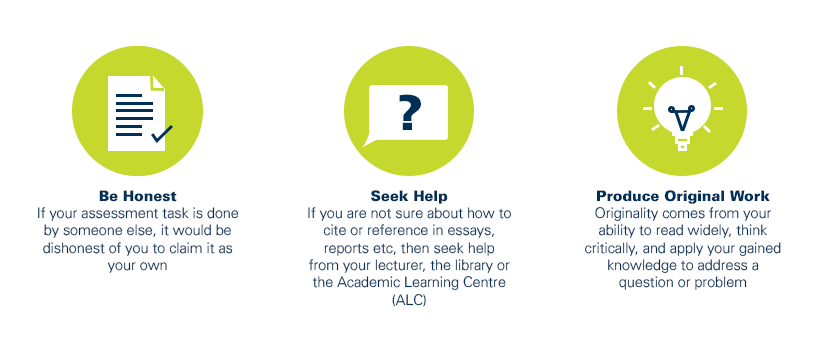
As a CQUniversity student you are expected to act honestly in all aspects of your academic work.
Any assessable work undertaken or submitted for review or assessment must be your own work. Assessable work is any type of work you do to meet the assessment requirements in the unit, including draft work submitted for review and feedback and final work to be assessed.
When you use the ideas, words or data of others in your assessment, you must thoroughly and clearly acknowledge the source of this information by using the correct referencing style for your unit. Using others’ work without proper acknowledgement may be considered a form of intellectual dishonesty.
Participating honestly, respectfully, responsibly, and fairly in your university study ensures the CQUniversity qualification you earn will be valued as a true indication of your individual academic achievement and will continue to receive the respect and recognition it deserves.
As a student, you are responsible for reading and following CQUniversity’s policies, including the Student Academic Integrity Policy and Procedure. This policy sets out CQUniversity’s expectations of you to act with integrity, examples of academic integrity breaches to avoid, the processes used to address alleged breaches of academic integrity, and potential penalties.
What is a breach of academic integrity?
A breach of academic integrity includes but is not limited to plagiarism, self-plagiarism, collusion, cheating, contract cheating, and academic misconduct. The Student Academic Integrity Policy and Procedure defines what these terms mean and gives examples.
Why is academic integrity important?
A breach of academic integrity may result in one or more penalties, including suspension or even expulsion from the University. It can also have negative implications for student visas and future enrolment at CQUniversity or elsewhere. Students who engage in contract cheating also risk being blackmailed by contract cheating services.
Where can I get assistance?
For academic advice and guidance, the Academic Learning Centre (ALC) can support you in becoming confident in completing assessments with integrity and of high standard.
What can you do to act with integrity?