Overview
This unit will teach students about designing fluid power systems for automated and semi-automated industrial plants. You will be exploring fluid power elements and their ISO standard symbols, designing fluid power circuits using hydraulic and pneumatic actuators, power sources, directional control and other control valves, sensors and control systems. Control technology may include both hydraulic and pneumatic systems integrated with programmable controllers (PLCs and micro-controllers). During the mandatory residential school you will attain, in a team, hands-on skills in automation circuit design experiencing several laboratory experiments in areas of hydraulic and pneumatic operating system design and control circuit design integrated with PLCs for automated machines. Simulation systems like SimScape and FluidSim may be applied for confirming the functionality of your designed projects. You will communicate professionally using discipline-specific terminology to present designs and problem solutions accomplishing a Student Portfolio. Relevant problem solving, technical reports on projects and laboratory experiments are the formative assessment items during the Term. Online students are required to have access to a computer and internet to make frequent use of the Unit Moodle.
Details
Pre-requisites or Co-requisites
Prereq: ENAG11002 Energy & Electricity or ENEG11009 Fundamentals of Energy & Electricity or PHYS11185 Engineering Physics B
Important note: Students enrolled in a subsequent unit who failed their pre-requisite unit, should drop the subsequent unit before the census date or within 10 working days of Fail grade notification. Students who do not drop the unit in this timeframe cannot later drop the unit without academic and financial liability. See details in the Assessment Policy and Procedure (Higher Education Coursework).
Offerings For Term 1 - 2026
Attendance Requirements
All on-campus students are expected to attend scheduled classes - in some units, these classes are identified as a mandatory (pass/fail) component and attendance is compulsory. International students, on a student visa, must maintain a full time study load and meet both attendance and academic progress requirements in each study period (satisfactory attendance for International students is defined as maintaining at least an 80% attendance record).
Recommended Student Time Commitment
Each 6-credit Undergraduate unit at CQUniversity requires an overall time commitment of an average of 12.5 hours of study per week, making a total of 150 hours for the unit.
Class Timetable
Assessment Overview
Assessment Grading
This is a graded unit: your overall grade will be calculated from the marks or grades for each assessment task, based on the relative weightings shown in the table above. You must obtain an overall mark for the unit of at least 50%, or an overall grade of 'pass' in order to pass the unit. If any 'pass/fail' tasks are shown in the table above they must also be completed successfully ('pass' grade). You must also meet any minimum mark requirements specified for a particular assessment task, as detailed in the 'assessment task' section (note that in some instances, the minimum mark for a task may be greater than 50%). Consult the University's Grades and Results Policy for more details of interim results and final grades.
All University policies are available on the CQUniversity Policy site.
You may wish to view these policies:
- Grades and Results Policy
- Assessment Policy and Procedure (Higher Education Coursework)
- Review of Grade Procedure
- Student Academic Integrity Policy and Procedure
- Academic Progression Policy and Procedure
- Student Refund and Credit Balance Policy and Procedure
- Complaints Policy and Procedure
- Information and Communications Technology Acceptable Use Policy and Procedure
This list is not an exhaustive list of all University policies. The full list of University policies are available on the CQUniversity Policy site.
Feedback, Recommendations and Responses
Every unit is reviewed for enhancement each year. At the most recent review, the following staff and student feedback items were identified and recommendations were made.
Feedback from SUTE
Carry out experiments in-person instead of lab via Zoom.
Opportunity to organise on-campus residential school should be considered.
Feedback from SUTE
Reorganise lab instruction sheets for easy andquick comprehension.
It is recommended that the UC should revisit the Lab instruction sheets, rewrite and reorganise them for the unit.
Feedback from SUTE
Six lab reports at a time is too much.
It is recommended to start lab experiments earlier in the term to avoid report submissionat the end of the term.
Feedback from Evaluation Report
The contents of the unit are aligned to modernday industry practices.
It is recommended that the unit content bekept as it is and that more modern examples and experiences from the industry should be adopted.
- Explain and analyse the design and working principles of fluid power system elements
- Select appropriate sizes of fluid power components to achieve functional objectives of fluid machineries
- Design suitable pressure control to protect circuit components and to minimise energy loss for sustainability
- Design and draw simple pneumatic/hydraulic circuits for automation of machine systems
- Work, learn and communicate in an ethical, professional manner individually and collaboratively, using information literacy skills to investigate problems and present solutions.
The Learning Outcomes for this unit are linked with the Engineers Australia Stage 1 Competency Standards for Engineering Associates in the areas of 1. Knowledge and Skill Base, 2. Engineering Application Ability and 3. Professional and Personal Attributes at the following levels:
Introductory
2.4 Application of systematic project management processes. (LO: 3N)
Intermediate
1.1 Descriptive, formula-based understanding of the underpinning natural and physical sciences and the engineering fundamentals applicable to the practice area. (LO: 1I 3I)
1.2 Procedural-level understanding of the mathematics, numerical analysis, statistics, and computer and information sciences which underpin the practice area. (LO: 2I 3I)
2.2 Application of technical and practical techniques, tools and resources to well-defined engineering problems. (LO: 1N 2I 4I)
3.2 Effective oral and written communication in professional and lay domains. (LO: 1N 2I 4I 5I)
3.5 Orderly management of self, and professional conduct. (LO: 1I 2I 3I 4I)
Advanced
1.3 In-depth practical knowledge and skills within specialist sub-disciplines of the practice area. (LO: 1I 2A 3I 4A)
1.4 Discernment of engineering developments within the practice area. (LO: 1A 2A 3A 4A)
1.5 Knowledge of engineering design practice and contextual factors impacting the practice area. (LO: 1I 3A 4I)
1.6 Understanding of the scope, principles, norms, accountabilities and bounds of sustainable engineering practice in the area of practice. (LO: 2I 3I 4A 5N)
2.1 Application of established technical and practical methods to the solution of well-defined engineering problems. (LO: 1I 3A)
2.3 Application of systematic design processes to well-defined engineering problems. (LO: 2A 3A 4A)
3.1 Ethical conduct and professional accountability. (LO: 2N 3N 4A 5I)
3.3 Creative, innovative and pro-active demeanour. (LO: 1I 2A 3A 4A 5I)
3.4 Professional use and management of information. (LO: 3A 4A 5N)
Note: LO refers to the Learning Outcome number(s) which link to the competency and the levels: N – Introductory, I – Intermediate and A - Advanced.
Refer to the Engineering Undergraduate Course Moodle site for further information on the Engineers Australia's Stage 1 Competency Standard for Professional Engineers and course level mapping information https://moodle.cqu.edu.au/course/view.php?id=1511
Alignment of Assessment Tasks to Learning Outcomes
| Assessment Tasks | Learning Outcomes | ||||
|---|---|---|---|---|---|
| 1 | 2 | 3 | 4 | 5 | |
| 1 - Written Assessment - 30% | |||||
| 2 - Written Assessment - 40% | |||||
| 3 - Laboratory/Practical - 30% | |||||
| 4 - Written Assessment - 0% | |||||
Alignment of Graduate Attributes to Learning Outcomes
| Graduate Attributes | Learning Outcomes | ||||
|---|---|---|---|---|---|
| 1 | 2 | 3 | 4 | 5 | |
| 1 - Communication | |||||
| 2 - Problem Solving | |||||
| 3 - Critical Thinking | |||||
| 4 - Information Literacy | |||||
| 5 - Team Work | |||||
| 6 - Information Technology Competence | |||||
| 7 - Cross Cultural Competence | |||||
| 8 - Ethical practice | |||||
| 9 - Social Innovation | |||||
| 10 - First Nations Knowledges | |||||
| 11 - Aboriginal and Torres Strait Islander Cultures | |||||
Textbooks
Introduction to Fluid Power
- (2002)
- Authors: James L. Johnson
- Delmar Cengage Learning
- NY NY , USA
- ISBN: 07668923652
IT Resources
- CQUniversity Student Email
- Internet
- Unit Website (Moodle)
All submissions for this unit must use the referencing style: Harvard (author-date)
For further information, see the Assessment Tasks.
n.mandal@cqu.edu.au
Week 1: Fluid properties
Begin Date: 09 Mar 2026Module/Topic
Lecture 1: Fluid Properties and Principles
(Lecture hours are dedicated to theories and analysis)
Tutorial 1: Characteristics of hydraulic fluid
(Tutorial hours dedicated to problem solving)
Chapter
Chapters 1 and 2
Events and Submissions/Topic
Week 2: Hydraulic pumps
Begin Date: 16 Mar 2026Module/Topic
Lecture 2: Hydraulic Pumps - Design construction and performances
Tutorial 2: Characteristics of fluid pumps
Chapter
Chapter 3
Events and Submissions/Topic
Week 3: Actuators linear
Begin Date: 23 Mar 2026Module/Topic
Lecture 3: Fluid Cylinders - Linear actuators
Tutorial 3: Analysis, sizing and selection of actuators
Chapter
Chapter 4
Events and Submissions/Topic
Week 4: Actuators rotary
Begin Date: 30 Mar 2026Module/Topic
Lecture 4: Hydraulic Motors - Rotary actuators - design construction and performances
Tutorial 4: Hydraulic motor sizing and Selection
Chapter
Chapter 5
Events and Submissions/Topic
Week 5: Control valves
Begin Date: 06 Apr 2026Module/Topic
Lecture 5: Hydraulic Control Valves and DCVs
Tutorial 5: Valve design construction and performances
Chapter
Chapter 6
Events and Submissions/Topic
Week 6: Pressure control
Begin Date: 13 Apr 2026Module/Topic
Lecture 6: Fluid Control Circuit Design; Pressure Control Devices
Tutorial 6: Design and working principles of pressure control valves
Chapter
Chapter 7
Events and Submissions/Topic
Vacation Week
Begin Date: 20 Apr 2026Module/Topic
No lecture or tutorial classes.
Work on completion of Assignment
Chapter
Chapters 1~7
Events and Submissions/Topic
Revisit all learning materials delivered in Weeks 1 to 5. Consultation on request, via Zoom.
Week 7: Flow control
Begin Date: 27 Apr 2026Module/Topic
Lecture 7: Flow Control Units in Fluid Control Systems; Flow Control Devices
Tutorial 7: Fluid Control Circuit Design
Chapter
Chapter 8
Events and Submissions/Topic
Residential School - Virtual mode (delivered from Rockhampton/Melbourne Campus via Zoom): Thursday Week 7 from 9:00~5:00pm.
Week 8: Pneumatic fluid power systems
Begin Date: 04 May 2026Module/Topic
Lecture 8: Pneumatic fluid power systems
Tutorial 8: A few problems will be solved
Chapter
Chapter 10, 11
Events and Submissions/Topic
Week 9: Pneumatic control Circuit
Begin Date: 11 May 2026Module/Topic
Lecture 9: Pneumatic Logic Elements and Control Circuits
Tutorial 9: Working principles of Pneumatic Control Elements
Chapter
Chapter 12 and Handout
Events and Submissions/Topic
Week 10: Pneumatic controls
Begin Date: 18 May 2026Module/Topic
Lecture 10: Pneumatic controls
Tutorial 10: Design and working principles of Pneumatic Logic Elements.
Chapter
Chapter 12
Events and Submissions/Topic
Lab experiments: Fluid System Design Experiments and Report Writing Due: Week 10 Friday (22 May 2026) 11:45 pm AEST
Week 11: maintenance of fluid power system
Begin Date: 25 May 2026Module/Topic
Lecture 11: maintenance of fluid power system
Tutorial 11: A few problems will be solved
Chapter
Chapter 9
Events and Submissions/Topic
Week 12: Review
Begin Date: 01 Jun 2026Module/Topic
Lecture 12: Review of contents
No tutorial
Chapter
Chapters - all
Events and Submissions/Topic
Exam Week
Begin Date: 08 Jun 2026Module/Topic
Chapter
Events and Submissions/Topic
Vacation/Exam Week
Begin Date: 15 Jun 2026Module/Topic
Chapter
Events and Submissions/Topic
1 Written Assessment
Assignment 1 involves problem solving and analysis of hydraulic drive and control systems of industrial machines. This assignment covers learning materials for Weeks 1 to 4. This may involve fluid system circuit design for a selected industrial automated or semi-automated machine.
You must not use AI at any point carrying out the solution of the assessment item. You do have 72-hour assignment submission exemption period.
Week 6 Friday (17 Apr 2026) 11:45 pm AEST
Upload one pdf document, include title page.
Week 8 Friday (8 May 2026)
After two weeks of submission date
Each question in this assignment will be assessed separately for the criterion accuracy and correct results.
20% of the total marks for this assignment are based on accuracy and correct results, including:
- Correct application of maths and arithmetic
- Accuracy and quality of hydraulic circuit
- Answers clearly identified
- Correct results
In addition, the assignment, as a whole, will be assessed against the following criteria:
Evidence of correct procedures (40% of the total marks for the assignment)
- All necessary steps in analysis are present in correct order
- Clear presentation of mathematical and arithmetical works linking the given details of the problem to obtain the results.
Evidence of understanding of the topic (30% of the total marks for the assignment)
- Explanation of choices made in the analysis
- Interpretation of results, eg limitations etc, if any.
Professional presentation (10% of the total marks for the assignment)
- Assignment title page indicating assignment detail and student detail
- The problem is clearly identified
- Clear statement of each problem and its details and requirements
- Logical layout of analysis
- Appropriate use of diagrams and ISO standard, units, neatness of diagrams
- Correct use of terminology and conventions
- Scan quality, if used, must be high quality
- Explain and analyse the design and working principles of fluid power system elements
- Select appropriate sizes of fluid power components to achieve functional objectives of fluid machineries
2 Written Assessment
The assignment covers the weekly topics 5-8. The assignment tasks and questions will be uploaded on the course website by the end of week 5. In this assessment item, students are required to answer problem solving and numerical questions. Hydraulic / pneumatic circuit design for an industrial machine may be other part of this assignment.
You must not use AI at any point carrying out the solution of the assessment item. You do have 72-hour assignment submission exemption period.
Week 9 Friday (15 May 2026) 11:45 pm AEST
Upload one PDF document
Week 11 Friday (29 May 2026)
After two weeks of submission date
Each question in this assignment will be assessed separately for the criterion accuracy and correct results.
20% of the total marks for this assignment are based on accuracy and correct results, including:
- Correct application of maths and arithmetic
- Presenting functional and accurate control circuit for automated or semi-automated industrial machine
- Answers clearly identified
- Use of relevant ISO standard
- Correct results
In addition, the assignment, as a whole, will be assessed against the following criteria:
Evidence of correct procedures (40% of the total marks for the assignment)
- All necessary steps in analysis are present on correct order
- Clear presentation of mathematical and arithmetical working linking given details of the problem to the results obtained.
Evidence of understanding of the topic (30% of the total marks for the assignment)
- Explanation of choices made in the analysis
- Interpretation of results, eg limitations etc, if any.
Professional presentation (10% of the total marks for the assignment)
- The problem is clearly identified
- Clear statement of each problem and its details and requirements
- Logical layout of analysis
- Appropriate use of diagrams, units, clear diagrams
- Correct use of terminology, ISO symbols and conventions
- A title page indicating assignment detail and student detail
- High quality scan, if used
- Select appropriate sizes of fluid power components to achieve functional objectives of fluid machineries
- Design and draw simple pneumatic/hydraulic circuits for automation of machine systems
- Work, learn and communicate in an ethical, professional manner individually and collaboratively, using information literacy skills to investigate problems and present solutions.
3 Laboratory/Practical
Lab experiments are major part of one-day residential school in ENTM12006.
Students in group will accomplish three lab experiments (in day one) in hydraulic control and another three experiments (in day two) in pneumatic control. Students are supposed to demonstrate their professional and skillful attitude towards every experiments. Performances may include clear understanding of the objective, procedures and setup, capability of constructing the control circuits as required and finally running the experiments and collect information and data as required. A group report of each experiment is an essential part of assessment. Students are supposed to follow the OHS regulations.
You must not use AI at any point carrying out the solution of the assessment item. You do have 72-hour assignment submission exemption period.
Week 10 Friday (22 May 2026) 11:45 pm AEST
Compulsory submission
Week 12 Friday (5 June 2026)
After two weeks of submission date
Assessment of lab experiments will consist of two phases: physically performing the experiments in group and submission of complete technical report (individual) on the performed experiments.
Assessment criteria are based on:
1) Detailed calculations and presentations of data required for setting up the hydraulic/pneumatic equipment.
2) How accurately the students are using ISO symbols to construct hydraulic/pneumatic circuit diagrams to present sequence of operations in the experiments.
3) Expected content of lab report may contain a title page indicating experiment detail and group member detail, labelled sketch of set-up used, data sheet and result with a short comment section.
More particular information will be provided in due time for individual experiment.
- Design suitable pressure control to protect circuit components and to minimise energy loss for sustainability
- Design and draw simple pneumatic/hydraulic circuits for automation of machine systems
- Work, learn and communicate in an ethical, professional manner individually and collaboratively, using information literacy skills to investigate problems and present solutions.
4 Written Assessment
The Workbook provides a record or detailed diary of each individual student’s study and learning activities throughout the course and should include all individual work carried out. Preparation of a Workbook should be understood as good study technique. It also provides evidence that students have adequately studied the whole course and achieved course learning outcomes. Each entry should be dated, pages should be numbered and show your name or initials. It should be prepared week by week, not at the end of term. Show rough attempts at problems including failures and fixes, brainstorming, draft notes and developing ideas. In the Workbook students should record:
- study notes taken while studying textbooks and course resources
- study notes taken during lectures and/or workshops
- personal study summaries of key concepts
- notes, sketches/ drawings or mind-maps
- planning and preparation for team/project tasks
- planning and preparation for online course discussions
- workbook practice tasks you are asked to complete in the Course Website
- initial attempts at set tutorial tasks
- initial attempts at assignment tasks
- preparation for class tests or exams.
You must not use AI at any point carrying out the solution of the assessment item. You do have 72-hour assignment submission exemption period.
Week 12 Friday (5 June 2026) 11:45 pm AEST
Compulsory submission
Exam Week Friday (12 June 2026)
After two weeks of submission date
Workbook questions will be set for each topic and will be available on the Course Website. If students have difficulty with Workbook questions, they should seek assistance. All questions must be successfully completed in the workbook and responses must show sufficient working and explanation to allow step-by-step checking by the marker. At least 50% of the questions must be completed to achieve a passing grade. A question will be deemed to have been completed if the student has shown correct procedure and sound understanding of the work. All calculations should be justified with reference to the text or relevant Standards and Codes.
- Explain and analyse the design and working principles of fluid power system elements
- Design suitable pressure control to protect circuit components and to minimise energy loss for sustainability
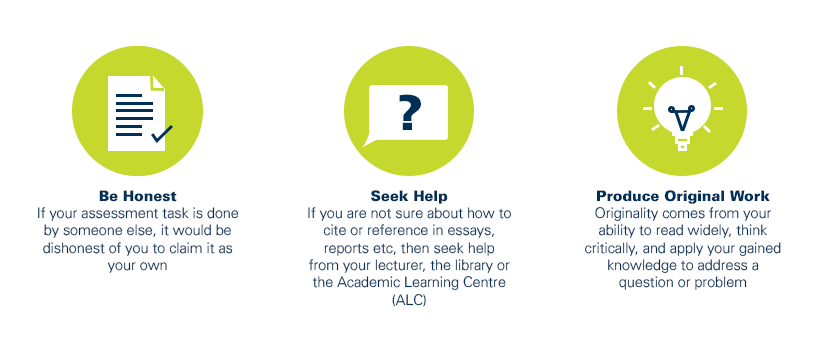
As a CQUniversity student you are expected to act honestly in all aspects of your academic work.
Any assessable work undertaken or submitted for review or assessment must be your own work. Assessable work is any type of work you do to meet the assessment requirements in the unit, including draft work submitted for review and feedback and final work to be assessed.
When you use the ideas, words or data of others in your assessment, you must thoroughly and clearly acknowledge the source of this information by using the correct referencing style for your unit. Using others’ work without proper acknowledgement may be considered a form of intellectual dishonesty.
Participating honestly, respectfully, responsibly, and fairly in your university study ensures the CQUniversity qualification you earn will be valued as a true indication of your individual academic achievement and will continue to receive the respect and recognition it deserves.
As a student, you are responsible for reading and following CQUniversity’s policies, including the Student Academic Integrity Policy and Procedure. This policy sets out CQUniversity’s expectations of you to act with integrity, examples of academic integrity breaches to avoid, the processes used to address alleged breaches of academic integrity, and potential penalties.
What is a breach of academic integrity?
A breach of academic integrity includes but is not limited to plagiarism, self-plagiarism, collusion, cheating, contract cheating, and academic misconduct. The Student Academic Integrity Policy and Procedure defines what these terms mean and gives examples.
Why is academic integrity important?
A breach of academic integrity may result in one or more penalties, including suspension or even expulsion from the University. It can also have negative implications for student visas and future enrolment at CQUniversity or elsewhere. Students who engage in contract cheating also risk being blackmailed by contract cheating services.
Where can I get assistance?
For academic advice and guidance, the Academic Learning Centre (ALC) can support you in becoming confident in completing assessments with integrity and of high standard.
What can you do to act with integrity?