Overview
Materials used in the aviation industry have become ever diverse, more sophisticated, and very important as aerospace technologies developed rapidly. The selection of materials in the aircraft industry has a significant impact on all stages of aircraft life from the initial design phase, to manufacturing, flight operations, and maintenance, and when decommissioning. In this unit, you will learn about the principles and fundamentals of materials science and engineering. You will apply this knowledge to various types of advanced materials in aviation.
Details
Pre-requisites or Co-requisites
ENTA11014 Aircraft Maintenance Practices.
Important note: Students enrolled in a subsequent unit who failed their pre-requisite unit, should drop the subsequent unit before the census date or within 10 working days of Fail grade notification. Students who do not drop the unit in this timeframe cannot later drop the unit without academic and financial liability. See details in the Assessment Policy and Procedure (Higher Education Coursework).
Offerings For Term 2 - 2026
Attendance Requirements
All on-campus students are expected to attend scheduled classes - in some units, these classes are identified as a mandatory (pass/fail) component and attendance is compulsory. International students, on a student visa, must maintain a full time study load and meet both attendance and academic progress requirements in each study period (satisfactory attendance for International students is defined as maintaining at least an 80% attendance record).
Recommended Student Time Commitment
Each 6-credit Undergraduate unit at CQUniversity requires an overall time commitment of an average of 12.5 hours of study per week, making a total of 150 hours for the unit.
Class Timetable
Assessment Overview
Assessment Grading
This is a graded unit: your overall grade will be calculated from the marks or grades for each assessment task, based on the relative weightings shown in the table above. You must obtain an overall mark for the unit of at least 50%, or an overall grade of 'pass' in order to pass the unit. If any 'pass/fail' tasks are shown in the table above they must also be completed successfully ('pass' grade). You must also meet any minimum mark requirements specified for a particular assessment task, as detailed in the 'assessment task' section (note that in some instances, the minimum mark for a task may be greater than 50%). Consult the University's Grades and Results Policy for more details of interim results and final grades.
All University policies are available on the CQUniversity Policy site.
You may wish to view these policies:
- Grades and Results Policy
- Assessment Policy and Procedure (Higher Education Coursework)
- Review of Grade Procedure
- Student Academic Integrity Policy and Procedure
- Academic Progression Policy and Procedure
- Student Refund and Credit Balance Policy and Procedure
- Complaints Policy and Procedure
- Information and Communications Technology Acceptable Use Policy and Procedure
This list is not an exhaustive list of all University policies. The full list of University policies are available on the CQUniversity Policy site.
Feedback, Recommendations and Responses
Every unit is reviewed for enhancement each year. At the most recent review, the following staff and student feedback items were identified and recommendations were made.
Feedback from Verbally in class
Students mentioned that the unit materials were relevant to their degree.
The unit coordinator should strive to keep the unit content up to date with current industry trends and practices.
- Develop equations for the governing theories of material failures in aviation
- Evaluate applications of advanced materials in electrical and mechanical components of aviation systems
- Investigate material selection for aviation systems by applying international standards and industry regulations
- Discuss advanced techniques for structural monitoring, non-destructive testing, and sustainable aircraft materials.
The Learning Outcomes for this unit are linked with the Engineers Australia Stage 1 Competency Standards for Professional Engineers in the areas of 1. Knowledge and Skill Base, 2. Engineering Application Ability and 3. Professional and Personal Attributes at the following levels:
Introductory
2.4 Application of systematic approaches to the conduct and management of engineering projects. (LO: 1N 2N 3N )
Intermediate
1.2 Conceptual understanding of the mathematics, numerical analysis, statistics, and computer and information sciences that underpin the engineering discipline. (LO: 1I 3I )
1.4 Discernment of knowledge development and research directions within the engineering discipline. (LO: 2I )
1.5 Knowledge of engineering design practice and contextual factors impacting the engineering discipline. (LO: 3I )
3.2 Effective oral and written communication in professional and lay domains. (LO: 2I 4I )
3.3 Creative, innovative and pro-active demeanour (LO: 1I 2I )
3.4 Professional use and management of information. (LO: 1I )
Advanced
1.1 Comprehensive, theory-based understanding of the underpinning natural and physical sciences and the engineering fundamentals applicable to the engineering discipline. (LO: 1A 3I )
1.3 In-depth understanding of specialist bodies of knowledge within the engineering discipline. (LO: 2A 3I 4A )
1.6 Understanding of the scope, principles, norms, accountabilities and bounds of sustainable engineering practice in the specific discipline. (LO: 2A )
2.1 Application of established engineering methods to complex engineering problem solving. (LO: 1A 2I 3I )
2.3 Application of systematic engineering synthesis and design processes. (LO: 1I 2I 3A )
Note: LO refers to the Learning Outcome number(s) which link to the competency and the levels: N - Introductory, I - Intermediate and A - Advanced.
Refer to the Engineering Undergraduate Course Moodle site for further information on the Engineers Australia State 1 Competency Standards for Professional Engineers and course level mapping information. https://moodle.cqu.edu.au/course/view.php?id=1511
Alignment of Assessment Tasks to Learning Outcomes
| Assessment Tasks | Learning Outcomes | |||
|---|---|---|---|---|
| 1 | 2 | 3 | 4 | |
| 1 - Online Quiz(zes) - 20% | ||||
| 2 - Written Assessment - 15% | ||||
| 3 - Group Work - 30% | ||||
| 4 - Online Test - 35% | ||||
Alignment of Graduate Attributes to Learning Outcomes
| Graduate Attributes | Learning Outcomes | |||
|---|---|---|---|---|
| 1 | 2 | 3 | 4 | |
| 1 - Communication | ||||
| 2 - Problem Solving | ||||
| 3 - Critical Thinking | ||||
| 4 - Information Literacy | ||||
| 5 - Team Work | ||||
| 6 - Information Technology Competence | ||||
| 7 - Cross Cultural Competence | ||||
| 8 - Ethical practice | ||||
| 9 - Social Innovation | ||||
| 10 - First Nations Knowledges | ||||
| 11 - Aboriginal and Torres Strait Islander Cultures | ||||
Textbooks
Civil Avionics System
- (2013)
- Authors: Ian Moir, Allan Seabridge, Malcolm Jukes
- ISBN: 978-0470029299
- Binding: eBook
Introduction to Aerospace Materials
- (2012)
- Authors: Adrian Mouritz
- ISBN: 978-1-85573-946-8
- Binding: eBook
IT Resources
- CQUniversity Student Email
- Internet
- Unit Website (Moodle)
All submissions for this unit must use the referencing style: Harvard (author-date)
For further information, see the Assessment Tasks.
y.q.sun@cqu.edu.au
Week 1
Begin Date: 13 Jul 2026Module/Topic
Introduction to materials engineering
and materials in aviation
- Introduction to the unit
- What is Materials Science and Engineering?
- Importance of materials in aviation
- Main types of aerospace materials
- History of aerospace materials
Chapter
Events and Submissions/Topic
Week 2
Begin Date: 20 Jul 2026Module/Topic
Microstructural aspects of aerospace materials
- Importance of atomic structures
- Crystalline structures of aerospace materials
Chapter
Events and Submissions/Topic
Week 3
Begin Date: 27 Jul 2026Module/Topic
Mechanical properties of aerospace materials and testing standards
- Stress and strain
- Elastic and plastic deformation of aerospace materials
- Standards in aerospace materials testing
Chapter
Events and Submissions/Topic
Week 4
Begin Date: 03 Aug 2026Module/Topic
Failure of general engineering and aviation materials
- Why failure studies (case study)?
- Fracture modes
- Crack propagation in aerospace materials
- Factor of safety in aircraft design
Chapter
Events and Submissions/Topic
Week 5
Begin Date: 10 Aug 2026Module/Topic
Principles of materials selection and materials selection in aerospace
- Materials selection in design
- Ashby's materials selection process
- Economic and manufacturing considerations in materials selection
- Durability and environmental considerations in materials selection
Chapter
Events and Submissions/Topic
Week 6
Begin Date: 17 Aug 2026Module/Topic
Imperfection and strengthening mechanism of metals
- Roles and types of impurities in aerospace materials
- Specification of compositions in alloys
- Strengthening mechanisms in metals
Chapter
Events and Submissions/Topic
Literature review on advanced materials in aviation Due: Week 6 Monday (17 Aug 2026) 11:59 pm AEST
Literature review on advanced materials in aviation Due: Week 6 Monday (17 Aug 2026) 11:59 pm AEST
Vacation Week
Begin Date: 24 Aug 2026Module/Topic
Chapter
Events and Submissions/Topic
Week 7
Begin Date: 31 Aug 2026Module/Topic
Phase diagram, phase transformation, and metal alloys in aerospace engineering
- Diffusion and types of diffusion
- Phase, phase diagram, and phase transformation
- Microstructure of steel
- Applications and processing of metal alloys
Chapter
Events and Submissions/Topic
Week 8
Begin Date: 07 Sep 2026Module/Topic
Thermal and electrical properties of aerospace materials
- Thermal properties and heat
- Heart capacity and coefficient of thermal expansion
- Thermal conductivity and thermal stress
Chapter
Events and Submissions/Topic
Week 9
Begin Date: 14 Sep 2026Module/Topic
Metal alloys in aviation and their corrosion
- Steel, aluminium, titanium, and magnesium alloys
- Superalloys; Nickel, iron-nickel, and cobalt superalloys
Chapter
Events and Submissions/Topic
Week 10
Begin Date: 21 Sep 2026Module/Topic
Polymers and polymeric composites in aerospace applications
- Types of polymers; thermoplastics, thermosets, and elastomers
- Polymers as structural adhesive
- Composites
Chapter
Events and Submissions/Topic
Materials selection process for aviation materials Due: Week 10 Monday (21 Sept 2026) 11:59 pm AEST
Materials selection process for aviation materials Due: Week 10 Monday (21 Sept 2026) 11:59 pm AEST
Week 11
Begin Date: 28 Sep 2026Module/Topic
Metal matrix composites, ceramics, and ceramic matrix composites in aerospace engineering
- Metal matrix composites
- Ceramics
- Ceramic matrix composites
Chapter
Events and Submissions/Topic
Week 12
Begin Date: 05 Oct 2026Module/Topic
Non-destructive testing and structural health monitoring
- Non-destructive inspection (NDI) and testing (NDT); visual inspecting, ultrasonic, radiography, thermography and magnetic particle test, and acoustic emission
- Structural health monitoring; optical fibre sensors, piezoelectric sensors, and comparative vacuum monitoring
Chapter
Events and Submissions/Topic
Exam Week
Begin Date: 12 Oct 2026Module/Topic
Chapter
Events and Submissions/Topic
Vacation/Exam Week
Begin Date: 19 Oct 2026Module/Topic
Chapter
Events and Submissions/Topic
End-of-term online test Due: Exam
Week Monday (19 Oct 2026) 11:45 pm
AEST
End-of-term online test Due: Vacation/Exam Week Monday (19 Oct 2026) 11:59 pm AEST
1 Online Quiz(zes)
This assessment consists of four tri-weekly online quizzes which can be accessed via the unit's Moodle site. A set of multiple-choice, short-answer, drag-and-drop, and calculation questions is assigned every three weeks (viz. Weeks 3, 6, 9 and 12). Each online quiz will cover the contents in the previous two weeks and the corresponding week (e.g. Online Quiz 1 covers the contents in Weeks 1 to 3).
AI ASSESSMENT SCALE - NO AI
You must not use AI at any point during the assessment. You must demonstrate your core skills and knowledge.
GUIDELINES FOR AI TOOL USAGE FOR STUDENTS
The assessment should be completed entirely without AI assistance, usually in a controlled environment. However, even if the assessment is not conducted in a controlled environment (such as an online test), you must not use AI to complete any parts of the assessment.
You are allowed to use Grammarly or similar writing improvement tools to improve the quality of your assessment.
Four tri-weekly online quizzes are held in Weeks 3, 6, 9 and 12.
Sudents will receive their marks immediately after the due date of each quiz.
- The total marks of each of the four online quizzes will be scaled to a maximum of 5 marks for the unit total.
- Numerical answers must be entered to 3 significant figures.
- Develop equations for the governing theories of material failures in aviation
- Discuss advanced techniques for structural monitoring, non-destructive testing, and sustainable aircraft materials.
2 Written Assessment
A literature review on aviation materials is a critical component of research in the field of aerospace engineering. It involves gathering, analysing, and synthesising existing knowledge and scholarly work related to the properties, applications, and advancements in materials used in aviation. The aim is to provide a comprehensive overview of the subject, identify gaps in knowledge, and highlight areas for further research and development. Students will choose a topic / area of their interest to summarise and analyse the literature to demonstrate knowledge and understanding of a topic.
AI ASSESSMENT SCALE - AI PLANNING
You may use AI for planning, idea development, and research. Your final submission should show how you have developed and refined your ideas.
GUIDELINES FOR AI TOOL USAGE FOR STUDENTS
Al may be used for pre-task activities such as brainstorming, outlining and initial research. You may use AI-assisted automatic speech recognition to transcribe notes, AI tools to convert notes into outlines, and AI tools to brainstorm or suggest improvements to already created work. Image generation technologies might be used to generate starting points for designs or tools used to explore possibilities for producing software. You must then use the AI-generated ideas as the starting point and apply your skills and knowledge to refine and improve the initial ideas to the final submission. No GenAI-created content without changes should be included in the final submissions.
You do not need to cite the AI-generated content, as it has been substantially changed in the final submission. However, you need to briefly describe how AI tools were used during the planning, research and initial idea-generation stage of the assessment.
Week 6 Monday (17 Aug 2026) 11:59 pm AEST
Students to submit their report to the link provided in the unit's Moodle site.
Week 8 Monday (7 Sept 2026)
Students can check their mark and feedback through the link used for submission.
Students work will be assessed by the following criteria.
Language (15%) - Very few or no spelling or grammar errors with a professional standard of language and writing.
Structure (20%) - The document commences by briefly introducing the sections which follow. The document concludes with a summary of the primary outcomes from each section of the review. Each topic should include multiped citations to reputable sources that are distinct, if practical.
Presentation (20%) - All but the cover page contains headers, footers, and page numbers. Text font and formatting are consistent throughout. Tables and figures have consistent formatting. All tables are recreated from consistent formatting and to remove superfluous information.
Referencing style (10%) - The in-text citations and reference list are formatted correctly but for a few very minor exceptions. A citation supports all technical points. Where required, multiple sources are grouped correctly for the in-text citations.
Information sources (10%) - A broad range of information types is included (academic journals, conference papers, textbooks, or reports). Papers based on similar projects are included to demonstrate the breath of knowledge.
Comprehension (20%) - The methods applied in the articles reviewed are correctly summarised and are relevant to the project.
Knowledge synthesis (15%) - Connections are made between separate information sources to explain some topics. Most topics include citations from separate information sources to demonstrate knowledge synthesis. Conflicts or varied opinions between separate articles are explained for some topics in the review.
- Evaluate applications of advanced materials in electrical and mechanical components of aviation systems
- Discuss advanced techniques for structural monitoring, non-destructive testing, and sustainable aircraft materials.
3 Group Work
Your task is to complete the materials selection process template by analysing a product / application of your interest and suggesting an alternative material(s) to improve its design for any purpose (e.g. process and/or manufacturing cost, performance, better use and environmental friendliness, improved safety, improved operation conditions, etc.).
Your approach to this task should include (but not be limited to):
- Choose a component within an aircraft of your interest. This can be ANYTHING that is composed of materials
- Investigate the chosen component to identify materials used and select a material (up to two) that has more room to improve
- Analyse the material(s) to identify its design requirements as per the following criteria: Function- What does the component do?, Constraints- What non-negotiable conditions must be met? What are negotiable?, Objective- What is to be maximised or minimised?, and Free variables- What parameters of the problem is the designer free to change?
- Look for possible alternatives and eliminate those that cannot meet the criteria set earlier
- Rank the short-listed materials after screening
- Further investigation into the top-ranked material to support
- Report your findings and the rationale behind your objectives and detail the procedures
AI ASSESSMENT SCALE - AI PLANNING
You may use AI for planning, idea development, and research. Your final submission should show how you have developed and refined your ideas.
GUIDELINES FOR AI TOOL USAGE FOR STUDENTS
Al may be used for pre-task activities such as brainstorming, outlining and initial research. You may use AI-assisted automatic speech recognition to transcribe notes, AI tools to convert notes into outlines, and AI tools to brainstorm or suggest improvements to already created work. Image generation technologies might be used to generate starting points for designs or tools used to explore possibilities for producing software. You must then use the AI-generated ideas as the starting point and apply your skills and knowledge to refine and improve the initial ideas to the final submission. No GenAI-created content without changes should be included in the final submissions.
You do not need to cite the AI-generated content, as it has been substantially changed in the final submission. However, you need to briefly describe how AI tools were used during the planning, research and initial idea-generation stage of the assessment.
Week 10 Monday (21 Sept 2026) 11:59 pm AEST
Students will complete and submit the materials selection process template to the link provided in the unit's Moodle site.
Week 12 Monday (5 Oct 2026)
Students can check their mark and feedback through the link used for submission.
- Report language (15%)
- Justification (15%)
- Methodology (20%)
- Results and discussion (25%)
- Conclusions and recommendations (15%)
- References (10%)
- Evaluate applications of advanced materials in electrical and mechanical components of aviation systems
- Investigate material selection for aviation systems by applying international standards and industry regulations
4 Online Test
This end-of-term online test, as a summative assessment, will test your achievement of the learning outcomes. It will consist of various types of questions, including calculation questions, drag-and-drop questions, multiple-choice questions, short & long description questions, etc. This final online test will cover all content from Week 1 to Week 12, including the assignment items. You could sit for this online test wherever you want, as it is a synchronous, timed online test for three hours, which means every student starts simultaneously. Only one attempt is allowed, and it will be a three-hour online test. After you finish the test, you must upload your workings for calculation questions to the unit's Moodle page.
AI ASSESSMENT SCALE - NO AI
You must not use AI at any point during the assessment. You must demonstrate your core skills and knowledge.
GUIDELINES FOR AI TOOL USAGE FOR STUDENTS
The assessment should be completed entirely without AI assistance, usually in a controlled environment. However, even if the assessment is not conducted in a controlled environment (such as an online test), you must not use AI to complete any parts of the assessment.
You are allowed to use Grammarly or similar writing improvement tools to improve the quality of your assessment.
Vacation/Exam Week Monday (19 Oct 2026) 11:59 pm AEST
Students will be notified of the exact date and time for this assessment towards the end of the term.
Students will be able to access their results on the grade certification day.
Students will be assessed for the correctness of their answers to the questions given in the final test. Drag-and-drop and multiple-choice questions will be marked automatically, while short and long description questions will be marked manually. Your understanding and own interpretation of the topics will be sought. You will need to present your answer for the calculation questions with correct units and relevant significant figures. You are required to upload your workings for the calculation questions after the test to prove your genuine attempt and to receive partial marks where applicable.
- Develop equations for the governing theories of material failures in aviation
- Investigate material selection for aviation systems by applying international standards and industry regulations
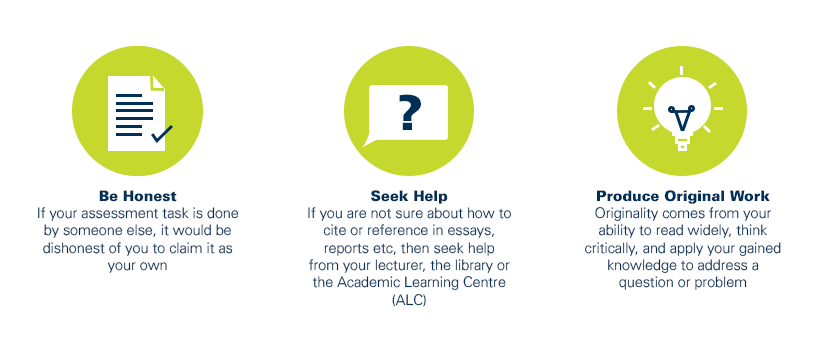
As a CQUniversity student you are expected to act honestly in all aspects of your academic work.
Any assessable work undertaken or submitted for review or assessment must be your own work. Assessable work is any type of work you do to meet the assessment requirements in the unit, including draft work submitted for review and feedback and final work to be assessed.
When you use the ideas, words or data of others in your assessment, you must thoroughly and clearly acknowledge the source of this information by using the correct referencing style for your unit. Using others’ work without proper acknowledgement may be considered a form of intellectual dishonesty.
Participating honestly, respectfully, responsibly, and fairly in your university study ensures the CQUniversity qualification you earn will be valued as a true indication of your individual academic achievement and will continue to receive the respect and recognition it deserves.
As a student, you are responsible for reading and following CQUniversity’s policies, including the Student Academic Integrity Policy and Procedure. This policy sets out CQUniversity’s expectations of you to act with integrity, examples of academic integrity breaches to avoid, the processes used to address alleged breaches of academic integrity, and potential penalties.
What is a breach of academic integrity?
A breach of academic integrity includes but is not limited to plagiarism, self-plagiarism, collusion, cheating, contract cheating, and academic misconduct. The Student Academic Integrity Policy and Procedure defines what these terms mean and gives examples.
Why is academic integrity important?
A breach of academic integrity may result in one or more penalties, including suspension or even expulsion from the University. It can also have negative implications for student visas and future enrolment at CQUniversity or elsewhere. Students who engage in contract cheating also risk being blackmailed by contract cheating services.
Where can I get assistance?
For academic advice and guidance, the Academic Learning Centre (ALC) can support you in becoming confident in completing assessments with integrity and of high standard.
What can you do to act with integrity?