Overview
The unit will provide you with the fundamental knowledge of Remote Piloted Aircraft Systems technology. You will explore current and future developments of Remote Piloted Aircraft Systems applications such as surveying, photography, inspections, agriculture, and mining with a focus on applying automation in these areas. You will cover important elements of Remote Piloted Aircraft Systems operations, including weight and balance on design and structure. You will also evaluate the impact of the various navigation systems on Remote Piloted Aircraft Systems applications and will have exposure to other aspects associated with operating a Remote Piloted Aircraft such as Human Factors, Air Legislation, and Meteorology. You will get the opportunity to select components, and assemble, operate and maintain a Remote Piloted Aircraft System to support a given scenario. At the end of this unit, you will be able to build and fly a Remote Piloted Aircraft. If you complete the optional residential school activity, you will be eligible to apply for Certificate III in Aviation (Remote Pilot) and the Australian Civil Aviation Safety Authority Remote Pilot License and Aeronautical Radio Operator Certificate.
Details
Pre-requisites or Co-requisites
Prerequisites: Completion of 72cps.
Important note: Students enrolled in a subsequent unit who failed their pre-requisite unit, should drop the subsequent unit before the census date or within 10 working days of Fail grade notification. Students who do not drop the unit in this timeframe cannot later drop the unit without academic and financial liability. See details in the Assessment Policy and Procedure (Higher Education Coursework).
Offerings For Term 1 - 2026
Attendance Requirements
All on-campus students are expected to attend scheduled classes - in some units, these classes are identified as a mandatory (pass/fail) component and attendance is compulsory. International students, on a student visa, must maintain a full time study load and meet both attendance and academic progress requirements in each study period (satisfactory attendance for International students is defined as maintaining at least an 80% attendance record).
Recommended Student Time Commitment
Each 6-credit Undergraduate unit at CQUniversity requires an overall time commitment of an average of 12.5 hours of study per week, making a total of 150 hours for the unit.
Class Timetable
Assessment Overview
Assessment Grading
This is a graded unit: your overall grade will be calculated from the marks or grades for each assessment task, based on the relative weightings shown in the table above. You must obtain an overall mark for the unit of at least 50%, or an overall grade of 'pass' in order to pass the unit. If any 'pass/fail' tasks are shown in the table above they must also be completed successfully ('pass' grade). You must also meet any minimum mark requirements specified for a particular assessment task, as detailed in the 'assessment task' section (note that in some instances, the minimum mark for a task may be greater than 50%). Consult the University's Grades and Results Policy for more details of interim results and final grades.
All University policies are available on the CQUniversity Policy site.
You may wish to view these policies:
- Grades and Results Policy
- Assessment Policy and Procedure (Higher Education Coursework)
- Review of Grade Procedure
- Student Academic Integrity Policy and Procedure
- Academic Progression Policy and Procedure
- Student Refund and Credit Balance Policy and Procedure
- Complaints Policy and Procedure
- Information and Communications Technology Acceptable Use Policy and Procedure
This list is not an exhaustive list of all University policies. The full list of University policies are available on the CQUniversity Policy site.
Feedback, Recommendations and Responses
Every unit is reviewed for enhancement each year. At the most recent review, the following staff and student feedback items were identified and recommendations were made.
Feedback from SUTE
Some students had difficulties completing practical tasks.
Greater care should be exercised to ensure students receive the correct components to complete the practical aspects of the course
Feedback from SUTE
Student satisfaction with the usefulness of assessment feedback remains low.
Marking rubrics, assignment instructions, and feedback provided should be reviewed for clarity and relevance to the unit and course.
- Compare different types of Remote Piloted Aircraft Systems applications, associated structural devices, and their integration into a working unit
- Demonstrate problem-solving skills by assembling components, and operating and maintaining a Remote Piloted Aircraft System
- Reflect and report on the impact of the various navigation systems, human factors, and meteorology on Remote Piloted Aircraft operations
- Build and fly a Remote Piloted Aircraft safely and competently
- Provide evidence of a professional capacity to communicate, work and learn individually and in a team by completing a mini-project.
Alignment of Assessment Tasks to Learning Outcomes
| Assessment Tasks | Learning Outcomes | ||||
|---|---|---|---|---|---|
| 1 | 2 | 3 | 4 | 5 | |
| 1 - Written Assessment - 20% | |||||
| 2 - Practical Assessment - 20% | |||||
| 3 - Online Quiz(zes) - 30% | |||||
| 4 - Project (applied) - 30% | |||||
Alignment of Graduate Attributes to Learning Outcomes
| Graduate Attributes | Learning Outcomes | ||||
|---|---|---|---|---|---|
| 1 | 2 | 3 | 4 | 5 | |
| 1 - Communication | |||||
| 2 - Problem Solving | |||||
| 3 - Critical Thinking | |||||
| 4 - Information Literacy | |||||
| 5 - Team Work | |||||
| 6 - Information Technology Competence | |||||
| 7 - Cross Cultural Competence | |||||
| 8 - Ethical practice | |||||
| 9 - Social Innovation | |||||
| 10 - First Nations Knowledges | |||||
| 11 - Aboriginal and Torres Strait Islander Cultures | |||||
Textbooks
There are no required textbooks.
IT Resources
- CQUniversity Student Email
- Internet
- Unit Website (Moodle)
All submissions for this unit must use the referencing style: American Psychological Association 7th Edition (APA 7th edition)
For further information, see the Assessment Tasks.
ben.taylor@cqu.edu.au
Week 1
Begin Date: 09 Mar 2026Module/Topic
Lecture 1
RPA Applications
Chapter
Lesson book 1
Events and Submissions/Topic
Quiz 1
Week 2
Begin Date: 16 Mar 2026Module/Topic
Lecture 2
Info technological devices
Chapter
Lesson book 2
Events and Submissions/Topic
Quiz 2
Week 3
Begin Date: 23 Mar 2026Module/Topic
Lecture 3
RPA Hardware
Chapter
Lesson book 3
Events and Submissions/Topic
Quiz 3
Week 4
Begin Date: 30 Mar 2026Module/Topic
Lecture 4
RPA Software, sensors, telemetry
Chapter
Lesson book 4
Events and Submissions/Topic
Quiz 4
Research RPAS Future Due: Week 4 Friday (3 Apr 2026) 10:00 pm AEST
Week 5
Begin Date: 06 Apr 2026Module/Topic
Lecture 5
RPA Aeronautical knowledge-fixed wing
Chapter
Lesson book 5
Events and Submissions/Topic
Quiz 5
Week 6
Begin Date: 13 Apr 2026Module/Topic
Lecture 6
RPA Aeronautical Knowledge-rotary wing
Chapter
Lesson book 6
Events and Submissions/Topic
Quiz 6
Vacation Week
Begin Date: 20 Apr 2026Module/Topic
Break Week - enjoy a break or catch up with your studies.
Chapter
Events and Submissions/Topic
Week 7
Begin Date: 27 Apr 2026Module/Topic
Lecture 7
Automated vs autonomous flight management systems
Chapter
Lesson book 7
Events and Submissions/Topic
Quiz 7
Week 8
Begin Date: 04 May 2026Module/Topic
Lecture 8
RPA Navigation
Chapter
Lesson book 8
Events and Submissions/Topic
Quiz 8
Week 9
Begin Date: 11 May 2026Module/Topic
Lecture 9
Meteorology
Chapter
Aviation Australia Guest Lecture
Events and Submissions/Topic
Week 10
Begin Date: 18 May 2026Module/Topic
Lecture 10
Human Factors
Chapter
Events and Submissions/Topic
Week 11
Begin Date: 25 May 2026Module/Topic
Lecture 11
Build project and flight test
Chapter
Events and Submissions/Topic
Kits to be provided
RPAS Build Project Due: Week 11 Friday (29 May 2026) 10:00 pm AEST
Week 12
Begin Date: 01 Jun 2026Module/Topic
Summary and Assessment for Cert III
Chapter
Events and Submissions/Topic
Exact dates to be advised.
RPAS Flight Test Due: Week 12 Friday (5 June 2026) 10:00 pm AEST
Exam Week
Begin Date: 08 Jun 2026Module/Topic
Chapter
Events and Submissions/Topic
Vacation/Exam Week
Begin Date: 15 Jun 2026Module/Topic
Chapter
Events and Submissions/Topic
1 Written Assessment
The Remotely Piloted Aircraft Systems (RPAS) industry is continually evolving, and research drives innovation by exploring new technologies and methods for the design and operation of RPAS. This can lead to the development of new applications for RPAS and to the expansion of the market for RPAS-based products and services.
You must identify six (6) RPAS hardware components and investigate their functions. You must explain how researchers can develop new and improved versions to enhance RPAS performance. There is no strict word or page limit, either minimum or maximum. You should write for an educated audience, aiming to present opportunities succinctly while providing sufficient background information.
Assessment Structure
1. Introduction - Provide an overview of the study, including
a. The background and context of the study
b. The purpose and objectives of the research
2. Main Body
a. Identify the six components
b. Describe how each component functions
c. Explain the influence each component has on the components it is attached to
d. Discuss what innovative modifications can be applied to the RPAS componentry to improve performance and safety
e. Use diagrams, schematics or photos to clarify your discussion
3. Conclusion
a. Provide a conclusion as to how, by understanding RPAS componentry and functions, researchers can develop new and improved versions to enhance the performance of RPAS.
Assessment submission
The assessment must be saved as a single PDF without password protection. No other forms of submission are permitted. The 72-hour submission grace period applies to this assessment.
AI Assessment Scale
AI Planning - You may use AI for planning, idea development, and research. Your final submission should show how you have developed and refined these ideas.
Week 4 Friday (3 Apr 2026) 10:00 pm AEST
Week 6 Friday (17 Apr 2026)
Your submission is graded against the following criteria:
1. Introduction (3 marks)
a. The background and context of the study
b. The purpose and objectives of the research
2. Main Body (15 Marks)
a. Identify the six components
b. Describe how each component functions
c. Explain the influence each component has on the components it is attached to
d. Discuss what innovative modifications can be applied to the RPAS componentry to improve performance and safety
e. Use diagrams, schematics or photos to clarify your discussion
3. Conclusion (2 Marks)
a. Provide a conclusion as to how, by understanding RPAS componentry and functions, researchers can develop new and improved versions to enhance the performance of RPAS.
4. Referencing Style is to be American Psychological Association 7th Edition (APA 7th edition)
Refer to Moodle for further information on assessment expectations.
- Compare different types of Remote Piloted Aircraft Systems applications, associated structural devices, and their integration into a working unit
- Demonstrate problem-solving skills by assembling components, and operating and maintaining a Remote Piloted Aircraft System
- Reflect and report on the impact of the various navigation systems, human factors, and meteorology on Remote Piloted Aircraft operations
2 Project (applied)
You must work individually to build a pre-approved UAV kit, including:
1. Assemble the frame
2. Mount the FPV System
3. Mount and power the receiver
4. Mount the motors
5. Mount the power distribution board
6. Mount and wire the Flight Controller
7. Complete a "Continuity test"
8. Test the First-Person View system (if applicable)
9. Complete the build
10. Configure software (use BetaFlight)
11. Bench Test
12. High-resolution photos of each step for assessment submission (overall photos and close-ups of assembly and soldering)
Where possible, contact your local CQU campus to arrange times to complete this task in an engineering laboratory. Otherwise, you must demonstrate that the risk assessment and other guidelines for home-build arrangements are followed.
Assessment submission
The assessment must be a PDF collation of the build process. The bench test can be a short video clip with the video link included in the PDF. No other forms of submission are permitted. The 72-hour submission grace period applies to this assessment.
AI Assessment Scale
No AI - You must not use AI at any point during the assessment. You must demonstrate your core skills and knowledge. You should not need to apply AI tools to follow the assembly instructions.
Week 11 Friday (29 May 2026) 10:00 pm AEST
Within 2 weeks of a properly made submission
Your submission is graded against the following criteria:
1. assemble the frame - 2 Marks
2. Mount the FPV System - 2 Marks
3. Mount and power the receiver - 2 Marks
4. Mount the motors - 2 Marks
5. Mount the power distribution board - 2 Marks
6. Mount and wire the Flight Controller - 2 Marks
7. Complete a "Continuity test" - 3 Marks
8. Test the FPV system - 3 Marks
9. Complete the build - 2 Marks
10. Configure software (use BetaFlight) - 4 Marks
11. Bench test - 4 Marks
Refer to Moodle for further information on assessment expectations.
- Demonstrate problem-solving skills by assembling components, and operating and maintaining a Remote Piloted Aircraft System
- Build and fly a Remote Piloted Aircraft safely and competently
- Provide evidence of a professional capacity to communicate, work and learn individually and in a team by completing a mini-project.
3 Online Quiz(zes)
You must complete eight (8) open-book online quizzes designed to assess your skills in locating, reviewing, and applying information from lectures and relevant online sources. Each quiz consists of 10 multiple-choice questions. You will have 20 minutes to complete each quiz. Only one attempt is allowed. You can refer to your lecture notes. Feedback is provided at the conclusion of each quiz.
Assessment submission
The assessment is submitted by completing Moodle quizzes. No other forms of submission are permitted. Each quiz will be open on Wednesday at 5.00 pm and will close the following Wednesday at 5.00 pm. There will be a link to each quiz in Moodle. This assessment is exempt from the 72-hour submission grace period as the quizzes are only available during the scheduled times.
AI Assessment Scale
No AI - You must not use AI at any point during the assessment. You must demonstrate your core skills and knowledge. All information needed to complete these quizzes is provided in the unit lectures and other Moodle resources.
Each quiz is due every Wednesday for the first 8 lectures. It is online through Moodle.
Each quiz is automatically marked immediately after completion.
Quizzes 1-8 will assess knowledge from Lectures 1-8, which include:
1. RPA - applications
2. Infotechnological devices
3. RPA - hardware
4. RPA - software, sensors, telemetry
5. RPA Knowledge - fixed wing
6. RPA Knowledge - rotary wing
7. Automated vs autonomous flight management systems
8. RPA - navigation
- Compare different types of Remote Piloted Aircraft Systems applications, associated structural devices, and their integration into a working unit
- Reflect and report on the impact of the various navigation systems, human factors, and meteorology on Remote Piloted Aircraft operations
4 Practical Assessment
You must conduct a flight test that includes the following steps:
1. Preparation
2. Pre-flight checks
3. Take-off
4. Basic flight maneuvers
5. Landing
6. Post-flight inspection
Assessment submission
If conducting the flight test off campus, you must submit a short video (no more than 5 minutes) demonstrating the results and that the test was conducted in accordance with the risk assessment and other guidelines provided on Moodle. The assessment must be a video recording of the flight test. No other forms of submission are permitted. The 72-hour submission grace period applies to this assessment.
AI Assessment Scale
No AI - You must not use AI at any point during the assessment. You must demonstrate your core skills and knowledge. This is a practical task that should not require AI or other online tools.
Week 12 Friday (5 June 2026) 10:00 pm AEST
Within 2 weeks of properly made submission
Your submission is graded against the following criteria:
1. Preparation: - 2 Marks
2. Pre-flight checks: - 1 Mark
3. Take-off: - 5 Marks
4. Basic flight maneuvers - 5 Marks
5. Landing: - 5 Marks
6. Post-flight inspection: - 2 Marks
- Build and fly a Remote Piloted Aircraft safely and competently
- Provide evidence of a professional capacity to communicate, work and learn individually and in a team by completing a mini-project.
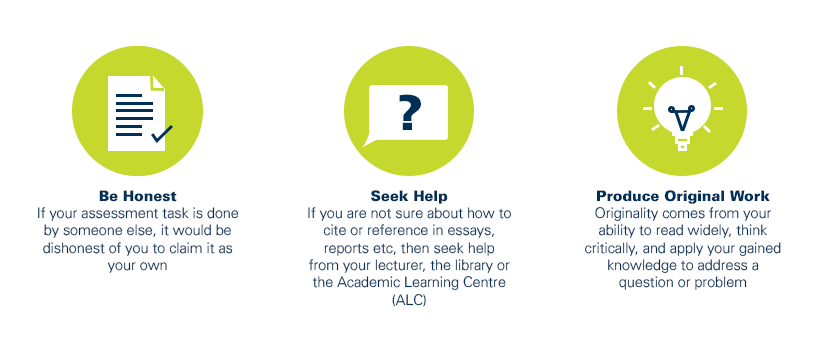
As a CQUniversity student you are expected to act honestly in all aspects of your academic work.
Any assessable work undertaken or submitted for review or assessment must be your own work. Assessable work is any type of work you do to meet the assessment requirements in the unit, including draft work submitted for review and feedback and final work to be assessed.
When you use the ideas, words or data of others in your assessment, you must thoroughly and clearly acknowledge the source of this information by using the correct referencing style for your unit. Using others’ work without proper acknowledgement may be considered a form of intellectual dishonesty.
Participating honestly, respectfully, responsibly, and fairly in your university study ensures the CQUniversity qualification you earn will be valued as a true indication of your individual academic achievement and will continue to receive the respect and recognition it deserves.
As a student, you are responsible for reading and following CQUniversity’s policies, including the Student Academic Integrity Policy and Procedure. This policy sets out CQUniversity’s expectations of you to act with integrity, examples of academic integrity breaches to avoid, the processes used to address alleged breaches of academic integrity, and potential penalties.
What is a breach of academic integrity?
A breach of academic integrity includes but is not limited to plagiarism, self-plagiarism, collusion, cheating, contract cheating, and academic misconduct. The Student Academic Integrity Policy and Procedure defines what these terms mean and gives examples.
Why is academic integrity important?
A breach of academic integrity may result in one or more penalties, including suspension or even expulsion from the University. It can also have negative implications for student visas and future enrolment at CQUniversity or elsewhere. Students who engage in contract cheating also risk being blackmailed by contract cheating services.
Where can I get assistance?
For academic advice and guidance, the Academic Learning Centre (ALC) can support you in becoming confident in completing assessments with integrity and of high standard.
What can you do to act with integrity?