Overview
Communication systems are an essential component of modern manned and unmanned aircraft. In this unit, you will learn about the advanced communication technologies and networks used in the aviation industry. You will study the communication technologies, standards and protocols that form the backbone of all modern communication systems and various techniques to analyse and design simple communication networks to meet real-world requirements. You will study the various communication technologies and equipment used in modern aircraft and mechanisms that are utilised to enable high-speed communications between aircraft, ground stations and satellites.
Details
Pre-requisites or Co-requisites
Prerequisite: Automatic Flight Control and Communication Systems
Important note: Students enrolled in a subsequent unit who failed their pre-requisite unit, should drop the subsequent unit before the census date or within 10 working days of Fail grade notification. Students who do not drop the unit in this timeframe cannot later drop the unit without academic and financial liability. See details in the Assessment Policy and Procedure (Higher Education Coursework).
Offerings For Term 1 - 2026
Attendance Requirements
All on-campus students are expected to attend scheduled classes - in some units, these classes are identified as a mandatory (pass/fail) component and attendance is compulsory. International students, on a student visa, must maintain a full time study load and meet both attendance and academic progress requirements in each study period (satisfactory attendance for International students is defined as maintaining at least an 80% attendance record).
Recommended Student Time Commitment
Each 6-credit Undergraduate unit at CQUniversity requires an overall time commitment of an average of 12.5 hours of study per week, making a total of 150 hours for the unit.
Class Timetable
Assessment Overview
Assessment Grading
This is a graded unit: your overall grade will be calculated from the marks or grades for each assessment task, based on the relative weightings shown in the table above. You must obtain an overall mark for the unit of at least 50%, or an overall grade of 'pass' in order to pass the unit. If any 'pass/fail' tasks are shown in the table above they must also be completed successfully ('pass' grade). You must also meet any minimum mark requirements specified for a particular assessment task, as detailed in the 'assessment task' section (note that in some instances, the minimum mark for a task may be greater than 50%). Consult the University's Grades and Results Policy for more details of interim results and final grades.
All University policies are available on the CQUniversity Policy site.
You may wish to view these policies:
- Grades and Results Policy
- Assessment Policy and Procedure (Higher Education Coursework)
- Review of Grade Procedure
- Student Academic Integrity Policy and Procedure
- Academic Progression Policy and Procedure
- Student Refund and Credit Balance Policy and Procedure
- Complaints Policy and Procedure
- Information and Communications Technology Acceptable Use Policy and Procedure
This list is not an exhaustive list of all University policies. The full list of University policies are available on the CQUniversity Policy site.
- Explain the operation of modern aircraft data communications network devices, data links and systems
- Apply mathematical analytical techniques to calculate capacity requirements of aircraft communication networks
- Design antennas to meet given aviation communication requirements
- Design simple aircraft communication networks using appropriate tools
- Evaluate communication technologies, standards, and protocols to satisfy aviation communication requirements
- Create professional documentation of the solutions, designs and analysis process using electrical terminology, diagrams and symbols that conform to relevant standards.
Alignment of Assessment Tasks to Learning Outcomes
| Assessment Tasks | Learning Outcomes | |||||
|---|---|---|---|---|---|---|
| 1 | 2 | 3 | 4 | 5 | 6 | |
| 1 - Online Quiz(zes) - 20% | ||||||
| 2 - Written Assessment - 30% | ||||||
| 3 - Report - 50% | ||||||
Alignment of Graduate Attributes to Learning Outcomes
| Graduate Attributes | Learning Outcomes | |||||
|---|---|---|---|---|---|---|
| 1 | 2 | 3 | 4 | 5 | 6 | |
| 1 - Communication | ||||||
| 2 - Problem Solving | ||||||
| 3 - Critical Thinking | ||||||
| 4 - Information Literacy | ||||||
| 5 - Team Work | ||||||
| 6 - Information Technology Competence | ||||||
| 7 - Cross Cultural Competence | ||||||
| 8 - Ethical practice | ||||||
| 9 - Social Innovation | ||||||
| 10 - First Nations Knowledges | ||||||
| 11 - Aboriginal and Torres Strait Islander Cultures | ||||||
Alignment of Assessment Tasks to Graduate Attributes
| Assessment Tasks | Graduate Attributes | ||||||||||
|---|---|---|---|---|---|---|---|---|---|---|---|
| 1 | 2 | 3 | 4 | 5 | 6 | 7 | 8 | 9 | 10 | 11 | |
| 1 - Online Quiz(zes) - 20% | |||||||||||
| 2 - Written Assessment - 30% | |||||||||||
| 3 - Report - 50% | |||||||||||
Textbooks
Aircraft Communications and Navigation Systems
- Edition: 3rd (2024)
- Authors: Mike Tooley and David Wyatt
- Routledge
- New York New York , New York , U.S.A.
- ISBN: 978-1-003-41193-2
The textbook is available in both print and electronic formats. Students can purchase the textbook online from the publisher's website.
EASA B1-11f Aeroplane Systems - Instruments and Avionics 2024 Update
- Edition: N/A (2024)
- Authors: Aviation Australia
- Aviation Australia
- ISBN: N/A
EASA B2-13d Aircraft Systems - Communications 2024 Update
- Edition: N/A (2024)
- Authors: Aviation Australia
- Aviation Australia
- ISBN: N/A
IT Resources
- CQUniversity Student Email
- Internet
- Unit Website (Moodle)
- PDF reader
- Matlab
- Pdf creator/scanner
- Microsft Office (Word, Excel, PowerPoint)
- Video conferencing (Zoom) or Teams
All submissions for this unit must use the referencing style: Harvard (author-date)
For further information, see the Assessment Tasks.
d.moratuwage@cqu.edu.au
Week 1
Begin Date: 09 Mar 2026Module/Topic
Introduction to Aircraft Communication Systems
Chapter
Chapter 1:
- 1.1 The radio frequency spectrum
- 1.4–1.5 The atmosphere and radio wave propagation
- 1.10 Satellite communications (SATCOM)
- 1.11 Communication systems integration and management
- 1.12 Aircraft Communications Addressing and Reporting System (ACARS)
Events and Submissions/Topic
Week 2
Begin Date: 16 Mar 2026Module/Topic
Fundamentals of Communication Systems
Chapter
Chapter 1:
- 1.2–1.3 Electromagnetic waves, frequency and wavelength
Chapter 3:
- 3.1 A simple radio system
- 3.2 Modulation and demodulation (conceptual understanding only)
Events and Submissions/Topic
Week 3
Begin Date: 23 Mar 2026Module/Topic
Aircraft Data Links and Networks
Chapter
Chapter 4:
- 4.1 VHF range and propagation
- 4.7 Data modes
- 4.8 ACARS
Chapter 5:
- 5.1 HF range and propagation
- 5.4 HF datalink
Events and Submissions/Topic
Week 4
Begin Date: 30 Mar 2026Module/Topic
Capacity & Link Budget Basics
Chapter
Chapter 1:
- 1.4–1.7 Atmosphere, ionosphere, and propagation effects
Appendix 4: Decibels
Events and Submissions/Topic
Week 5
Begin Date: 06 Apr 2026Module/Topic
Antennas for Aircraft Applications
Chapter
Chapter 2:
- 2.1–2.8 Antenna types and radiation characteristics
- 2.9 Feeders
- 2.11 Standing wave ratio
Events and Submissions/Topic
Week 6
Begin Date: 13 Apr 2026Module/Topic
Communication Standards and Protocols
Chapter
Chapter 19:
- 19.1 ATC overview
- 19.5 Automatic Dependent Surveillance–Broadcast (ADS-B)
- 19.6 CNS/ATM
- 19.10 Drones
Events and Submissions/Topic
Vacation Week
Begin Date: 20 Apr 2026Module/Topic
Chapter
Events and Submissions/Topic
Week 7
Begin Date: 27 Apr 2026Module/Topic
Designing a Simple Aircraft Communication Network
Chapter
Chapter 1:
- 1.11 Communication systems integration and management
Review relevant sections from:
- Chapter 4 (VHF communications)
- Chapter 5 (HF communications)
- Chapter 19 (ADS-B, CNS/ATM)
Events and Submissions/Topic
Week 8
Begin Date: 04 May 2026Module/Topic
Design Trade-offs and Constraints
Chapter
Chapter 21:
- 21.1 The avionic electromagnetic environment
- 21.2–21.6 EMI effects, sources, and mitigation
- 21.9 Case study – The 5G problem
Events and Submissions/Topic
Week 9
Begin Date: 11 May 2026Module/Topic
System Integration, Design Justification & Reporting Expectations
Chapter
Revisit:
- Chapter 1.11 (systems integration)
- Chapter 21 (EMC considerations)
Events and Submissions/Topic
Week 10
Begin Date: 18 May 2026Module/Topic
System Integration and Design Review
Chapter
Relevant chapters based on the chosen communication system design.
Events and Submissions/Topic
Week 11
Begin Date: 25 May 2026Module/Topic
Report support.
Chapter
Events and Submissions/Topic
Week 12
Begin Date: 01 Jun 2026Module/Topic
Report support.
Chapter
Events and Submissions/Topic
Exam Week
Begin Date: 08 Jun 2026Module/Topic
Chapter
Events and Submissions/Topic
Vacation/Exam Week
Begin Date: 15 Jun 2026Module/Topic
Chapter
Events and Submissions/Topic
1 Online Quiz(zes)
This assessment consists of one online quiz covering material presented from Week 1 to Week 5. The quiz includes multiple-choice questions and short calculation-based questions designed to evaluate students’ understanding of fundamental aircraft communication concepts.
The quiz assesses knowledge of core topics including communication fundamentals, RF spectrum usage, aircraft data links (e.g., VHF and HF systems), propagation concepts, and antenna basics. It also evaluates the ability to apply relevant theoretical principles to short analytical and calculation-based problems.
Minimum mark requirement: You must achieve at least 30% for this assessment.
This assessment uses the University’s 72‑hour grace period after the deadline; no late penalty applies within that window.
AI ASSESSMENT SCALE - AI COLLABORATION
You may use AI to assist with specific tasks such as drafting text, refining, and evaluating your work. You must critically evaluate and modify any AI-generated content you use.
Week 5 Thursday (9 Apr 2026) 11:45 pm AEST
Refer to the unit Moodle site for specific instructions and submission deadlines.
Multiple-choice questions are auto-marked, and marks will be available immediately upon quiz completion via the unit Moodle site. Marks and feedback for structured questions will be released through the unit Moodle site.
Marks will be allocated based on the following:
- Understanding of Aircraft Communication Concepts
- Application of Theoretical Knowledge
- Accuracy of Responses (for multiple choice questions).
- Method and clear and logically structured working steps.
- Use of Appropriate Terminology
- Explain the operation of modern aircraft data communications network devices, data links and systems
- Apply mathematical analytical techniques to calculate capacity requirements of aircraft communication networks
- Problem Solving
- Critical Thinking
2 Written Assessment
This assessment evaluates your understanding of modern aircraft communication systems and your ability to analyse and evaluate communication technologies used in aviation. You will examine selected systems (e.g., VHF, HF, SATCOM, data links) and assess their suitability for different operational contexts.
The task focuses on conceptual understanding, comparative evaluation, and clear technical reasoning. Where appropriate, simplified analytical reasoning may be used to support your discussion. Responses should be structured in a professional technical format using appropriate engineering terminology.
This assessment strengthens your ability to evaluate communication technologies prior to developing a complete system design in the final assessment.
This assessment uses the University’s 72‑hour grace period after the deadline; no late penalty applies within that window.
AI ASSESSMENT SCALE - AI COLLABORATION
You may use AI to assist with specific tasks such as drafting text, refining, and evaluating your work. You must critically evaluate and modify any AI-generated content you use.
Week 8 Thursday (7 May 2026) 11:45 pm AEST
Please read the specific instructions in Moodle, and submit electronically via Moodle.
Returned through the unit Moodle site. We strive to release the assessment marks in 2 weeks after due date.
Marks will be allocated based on:
- Demonstrated understanding of aircraft communication systems
- Quality of comparative evaluation and critical analysis
- Correct application of relevant technical principles
- Logical structure and clarity of explanation
- Use of appropriate engineering terminology and diagrams
- Explain the operation of modern aircraft data communications network devices, data links and systems
- Apply mathematical analytical techniques to calculate capacity requirements of aircraft communication networks
- Design antennas to meet given aviation communication requirements
- Evaluate communication technologies, standards, and protocols to satisfy aviation communication requirements
- Create professional documentation of the solutions, designs and analysis process using electrical terminology, diagrams and symbols that conform to relevant standards.
- Communication
- Problem Solving
- Critical Thinking
- Information Literacy
- Information Technology Competence
3 Report
In this assessment, students will design a simple aircraft communication system that meets specified requirements. The task involves conducting a conceptual design and analysis, considering key aspects such as requirement analysis, technology selection, and practical implementation considerations.
This assessment uses the University’s 72‑hour grace period after the deadline; no late penalty applies within that window.
AI ASSESSMENT SCALE - AI COLLABORATION
You may use AI to assist with specific tasks such as drafting text, refining, and evaluating your work. You must critically evaluate and modify any AI-generated content you use.
Exam Week Monday (8 June 2026) 11:45 pm AEST
Please read the specific instructions in Moodle, and submit electronically via Moodle.
Mark and feedback for the design report will be provided to students after the grade moderation day.
Marks will be allocated based on:
- Requirement Analysis
- Technology Selection
- Practical Considerations
- Conceptual System Design
- Reflection on the Learning Experience
- Report Quality and Presentation
- Design antennas to meet given aviation communication requirements
- Design simple aircraft communication networks using appropriate tools
- Evaluate communication technologies, standards, and protocols to satisfy aviation communication requirements
- Create professional documentation of the solutions, designs and analysis process using electrical terminology, diagrams and symbols that conform to relevant standards.
- Communication
- Problem Solving
- Critical Thinking
- Information Literacy
- Information Technology Competence
- Cross Cultural Competence
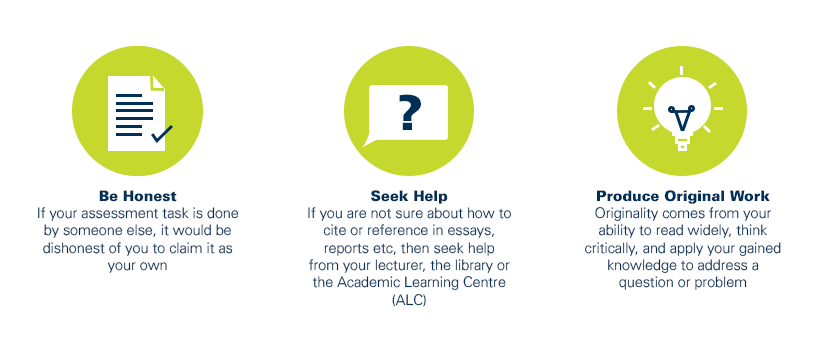
As a CQUniversity student you are expected to act honestly in all aspects of your academic work.
Any assessable work undertaken or submitted for review or assessment must be your own work. Assessable work is any type of work you do to meet the assessment requirements in the unit, including draft work submitted for review and feedback and final work to be assessed.
When you use the ideas, words or data of others in your assessment, you must thoroughly and clearly acknowledge the source of this information by using the correct referencing style for your unit. Using others’ work without proper acknowledgement may be considered a form of intellectual dishonesty.
Participating honestly, respectfully, responsibly, and fairly in your university study ensures the CQUniversity qualification you earn will be valued as a true indication of your individual academic achievement and will continue to receive the respect and recognition it deserves.
As a student, you are responsible for reading and following CQUniversity’s policies, including the Student Academic Integrity Policy and Procedure. This policy sets out CQUniversity’s expectations of you to act with integrity, examples of academic integrity breaches to avoid, the processes used to address alleged breaches of academic integrity, and potential penalties.
What is a breach of academic integrity?
A breach of academic integrity includes but is not limited to plagiarism, self-plagiarism, collusion, cheating, contract cheating, and academic misconduct. The Student Academic Integrity Policy and Procedure defines what these terms mean and gives examples.
Why is academic integrity important?
A breach of academic integrity may result in one or more penalties, including suspension or even expulsion from the University. It can also have negative implications for student visas and future enrolment at CQUniversity or elsewhere. Students who engage in contract cheating also risk being blackmailed by contract cheating services.
Where can I get assistance?
For academic advice and guidance, the Academic Learning Centre (ALC) can support you in becoming confident in completing assessments with integrity and of high standard.
What can you do to act with integrity?