Overview
This unit introduces the key concepts involved in the reliability, availability, maintainability and safety of fixed and mobile plants and equipment. Through this unit, students will develop skills to analyse faults and failure data related to maintenance activities to achieve high plant integrity.
Details
Pre-requisites or Co-requisites
Prerequisites: ENMM20023 and ENMM20025
Important note: Students enrolled in a subsequent unit who failed their pre-requisite unit, should drop the subsequent unit before the census date or within 10 working days of Fail grade notification. Students who do not drop the unit in this timeframe cannot later drop the unit without academic and financial liability. See details in the Assessment Policy and Procedure (Higher Education Coursework).
Offerings For Term 3 - 2026
Attendance Requirements
All on-campus students are expected to attend scheduled classes - in some units, these classes are identified as a mandatory (pass/fail) component and attendance is compulsory. International students, on a student visa, must maintain a full time study load and meet both attendance and academic progress requirements in each study period (satisfactory attendance for International students is defined as maintaining at least an 80% attendance record).
Recommended Student Time Commitment
Each 6-credit Postgraduate unit at CQUniversity requires an overall time commitment of an average of 12.5 hours of study per week, making a total of 150 hours for the unit.
Class Timetable
Assessment Overview
| Assessment Task | Part Weighting (% of assessment) |
Assessment Security Level | Gen AI Guidance Levels |
|---|---|---|---|
| 1. ASSESSMENT 1 (40% of unit · 2 parts ) | |||
| Part 1 – Sologic e-RCA Online Learning (Written Assessment) | 25% of 40% | Medium | AI Integration (Authentic Professional Use) |
| Part 2 – Written Report (Written Assessment) | 75% of 40% | Medium | AI Integration (Authentic Professional Use) |
| 2. ASSESSMENT 2 (20% of unit · 2 parts ) | |||
| Part 1 – Reliability Project Report (Written Assessment) | 50% of 20% | Medium | AI Integration (Authentic Professional Use) |
| Part 2 – Moodle Quiz (50 Online randomised time-limited questions) (Online Test) | 50% of 20% | Low | AI-Assisted (Guided Collaboration) |
| 3. ASSESSMENT 3 (40% of unit ) | |||
| Written Report (Written Assessment) | 100% of 40% | Medium | AI Integration (Authentic Professional Use) |
Assessment Grading
This is a graded unit: your overall grade will be calculated from the marks or grades for each assessment task, based on the relative weightings shown in the table above. You must obtain an overall mark for the unit of at least 50%, or an overall grade of 'pass' in order to pass the unit. If any 'pass/fail' tasks are shown in the table above they must also be completed successfully ('pass' grade). You must also meet any minimum mark requirements specified for a particular assessment task, as detailed in the 'assessment task' section (note that in some instances, the minimum mark for a task may be greater than 50%). Consult the University's Grades and Results Policy for more details of interim results and final grades.
All University policies are available on the CQUniversity Policy site.
You may wish to view these policies:
- Grades and Results Policy
- Assessment Policy and Procedure (Higher Education Coursework)
- Review of Grade Procedure
- Student Academic Integrity Policy and Procedure
- Academic Progression Policy and Procedure
- Student Refund and Credit Balance Policy and Procedure
- Complaints Policy and Procedure
- Information and Communications Technology Acceptable Use Policy and Procedure
This list is not an exhaustive list of all University policies. The full list of University policies are available on the CQUniversity Policy site.
Feedback, Recommendations and Responses
Every unit is reviewed for enhancement each year. At the most recent review, the following staff and student feedback items were identified and recommendations were made.
Feedback from Student -teacher interaction
Faster turnaround times for assignment marking and full access to the AWB software.
Implement a structured marking schedule aligned with institutional timeframes.
Feedback from SUTE
Encouraging students to interact.
Use early‑term icebreakers and early‑intervention outreach for inactive students.
Feedback from Student -teacher interaction
Full access to AWB software
Monitor early‑term access logs and follow up with students lacking access to access to AWB software.
- Identify factors influencing the reliability and maintainability in plant operations.
- Investigate operational safety and plant integrity in plant operations.
- Apply reliability concepts, tools and techniques to achieve plant integrity.
- Develop a safety and risk plan in a maintenance organisation.
n/a
Alignment of Assessment Tasks to Learning Outcomes
| Assessment Tasks | Learning Outcomes | |||
|---|---|---|---|---|
| 1 | 2 | 3 | 4 | |
|
1.
Assessment 1
(40% of unit · 2 parts
)
Part 1 -
Written Assessment
Part 2 -
Written Assessment
|
||||
|
2.
Assessment 2
(20% of unit · 2 parts
)
Part 1 -
Online Test
Part 2 -
Written Assessment
|
||||
|
3.
Assessment 3
(40% of unit )
Written Assessment
|
||||
Alignment of Graduate Attributes to Learning Outcomes
| Graduate Attributes | Learning Outcomes | |||
|---|---|---|---|---|
| 1 | 2 | 3 | 4 | |
| 1 - Knowledge | ||||
| 2 - Communication | ||||
| 3 - Cognitive, technical and creative skills | ||||
| 4 - Research | ||||
| 5 - Self-management | ||||
| 6 - Ethical and Professional Responsibility | ||||
| 7 - Leadership | ||||
| 8 - First Nations Knowledges | ||||
Textbooks
There are no required textbooks.
IT Resources
- CQUniversity Student Email
- Internet
- Unit Website (Moodle)
No referencing style set.
p.langat@cqu.edu.au
Week 1
Begin Date: 09 Nov 2026Module/Topic
Module 1 – Introduction to Reliability, Availability, Maintainability & Safety (RAMS)
Chapter
Module 1: Read Sections 1.1 to 1.2
Events and Submissions/Topic
Online lectures and tutorials are scheduled via Zoom sessions. Details are provided on the Moodle website for this unit. Please attend the first Zoom session this week and have an overview of the unit, including requirements for attempting assignments.
Lecture: Introduction to Reliability, Availability, Maintainability & Safety (RAMS)
Tutorial: Exercises on RAMS
Week 2
Begin Date: 16 Nov 2026Module/Topic
Module 2– Root Cause Analysis (RCA), Fault Tree Analysis (FTA) & Event Tree Analysis (ETA)
Chapter
Module 2: Read Sections 2.1 to 2.3
Events and Submissions/Topic
Lecture: Introduction to RCA, FTA & ETA
Tutorial: Exercises on RCA, FTA & ETA
Week 3
Begin Date: 23 Nov 2026Module/Topic
Module 3 – Root Cause Analysis (RCA) in the Workplace
Chapter
Module 3 – Read Section 3.1
Events and Submissions/Topic
Lecture: RCA in the Workplace
Tutorial: Exercises on RCA
Week 4
Begin Date: 30 Nov 2026Module/Topic
Module 4 – Failure Data & Weibull Analysis
Chapter
Module 4: Read Section 4.0 to 4.6
Events and Submissions/Topic
Lecture: Failure Data & Weibull Analysis
Tutorial: Exercises on Weibull Analysis
This week, Tuesday, 1 December 2026, is the Census Date; after this day, you cannot drop this unit.
Week 5
Begin Date: 07 Dec 2026Module/Topic
Module 5 – Failure Mode Effect Analysis (FMEA), Failure Mode Effect and Criticality Analysis (FMECA) & reliability Centered Maintenance (RCM)
Chapter
Module 5: Read Section 5.0 to 5.15
Events and Submissions/Topic
Lecture: FMEA, FMECA, & RCM
Tutorial: Exercises on FMEA, FMECA, & RCM
Week 6
Begin Date: 14 Dec 2026Module/Topic
Module 6 – Monte Carlo Simulation, Reliability Block Diagrams, Lifecycle Costing (LCC)
Chapter
Module 6: Read Section 6.1 to 6.9.3
Events and Submissions/Topic
Lecture: Monte Carlo Simulation, Reliability Block Diagrams, LCC
Tutorial: Exercises on Monte Carlo Simulation, Reliability Block Diagrams, LCC
Assessment 1 Due: Week 6 Monday 14 December 2026 11:45 pm AEST
Sologic e-RCA Online Learning Due: Week 6 Monday (14 Dec 2026) 11:45 pm AEST
Written Report Due: Week 6 Monday (14 Dec 2026) 11:45 pm AEST
Mid-Term Break
Begin Date: 21 Dec 2026Module/Topic
Chapter
Events and Submissions/Topic
Week 7
Begin Date: 04 Jan 2027Module/Topic
Module 7 –Safety and Reliability
Chapter
Module 7: Read Section 7.1 to 7.12
Events and Submissions/Topic
ecture: Safety and Reliability
Tutorial: Exercises on Safety and Reliability
Week 8
Begin Date: 11 Jan 2027Module/Topic
Module 8 – Reliability Centered Maintenance (RCM) Practical Project
Chapter
Module 8: Read Section 8.1 to 8.3
Events and Submissions/Topic
Lecture: RCM Practical Project
Tutorial: Exercises on RCM
Week 9
Begin Date: 18 Jan 2027Module/Topic
Module 9 – Availability Prediction Practical Project
Chapter
Module 9: Read Section 9.1 to 9.3
Events and Submissions/Topic
Lecture: Availability Prediction Practical Project
Tutorial: Exercises on Availability Prediction
Week 10
Begin Date: 25 Jan 2027Module/Topic
Module 10 – Hazards Operations (HAZOP), vulnerability Assessment & Analysis (VAA), & Production Reliability
Chapter
Module 10: Read Sections 10.1 to 10.10
Events and Submissions/Topic
Lecture: HAZOP, VAA, & Production Reliability
Tutorial: Exercises on HAZOP, VAA, & Production Reliability
Assessment 2 Due: Week 10 Monday (25 January 2027) 11:45 pm AEST
Reliability Project Report Due: Week 10 Monday (25 Jan 2027) 11:45 pm AEST
Moodle Quiz (50 Online randomised time-limited questions) Due: Week 10 Monday (25 Jan 2027) 11:45 pm AEST
Week 11
Begin Date: 01 Feb 2027Module/Topic
Module 11 – ISO 55001
Chapter
Module 11: Read Sections 11.1 to 11.9
Events and Submissions/Topic
Lecture: ISO 55001
Tutorial: Exercises on ISO 55001
Week 12
Begin Date: 08 Feb 2027Module/Topic
Module 12 – Return on Investment & Overall Equipment Effectiveness (OEE)
Chapter
Chapter
Module 12: Read Sections 12.1 to 12.10
Events and Submissions/Topic
Lecture: Return on Investment & OEE
Tutorial: Exercises on Return on Investment & OEE
Exam Week
Begin Date: 15 Feb 2027Module/Topic
Chapter
Events and Submissions/Topic
Assessment 3 Due: Review/Exam Week Monday (15 February 2027) 11:45 pm AEST
Written Report Due: Exam Week Monday (15 Feb 2027) 11:45 pm AEST
1. ASSESSMENT 1 ( 40% of unit · 2 parts )
Part 1 - Written Assessment
Students must complete the Sologic e-RCA Online Learning Program and submit their e-RCA Certificate of Completion.
Week 6 Monday (14 Dec 2026) 11:45 pm AEST
It is expected that the marked assessment will be returned within 2 weeks of the due date when submitted on time
e-RCA Learning Achievement: Successful completion and submission of the Sologic e-RCA Certificate of Completion.
- Identify factors influencing the reliability and maintainability in plant operations.
- Investigate operational safety and plant integrity in plant operations.
- Apply reliability concepts, tools and techniques to achieve plant integrity.
Part 2 - Written Assessment
This assessment requires students to demonstrate their understanding and application of reliability, risk, uncertainty, and root cause analysis techniques in an asset management context.
Students are required to complete a Written Assessment (1,500-1,750 words) consisting of two questions. Question 1 requires students to discuss the practical application of either Fault Tree Analysis (FTA) or Failure Modes, Effects and Criticality Analysis (FMECA) in a real workplace environment. Question 2 requires students to explain how Monte Carlo simulation can be used to model uncertainty and support maintenance or asset management decision-making using a workplace-based example.
Students must also complete a Root Cause Analysis (RCA) Practical Project using Sologic CauseLink® software. The project must analyse a real workplace problem, failure event, or incident and identify the underlying causes and appropriate corrective actions. Students are required to submit both the Sologic CauseLink® project file and the Incident Final Report (PDF) generated from the software.
In addition, students must prepare a five-minute recorded RCA presentation using the PowerPoint template provided. The presentation should summarise the incident, investigation process, key causes, findings, recommendations, and lessons learned. Both the presentation recording and PowerPoint slides must be submitted.
AI ASSESSMENT SCALE - Medium AI Integration (Authentic Professional Use)
Students may use AI tools to support research, analysis, problem-solving and report writing. However, students must critically evaluate AI-generated outputs, verify information using reliable sources, and demonstrate their own understanding, professional judgement and independent contribution. AI use must be transparent and comply with the university's academic integrity requirements.
Week 6 Monday (14 Dec 2026) 11:45 pm AEST
Two weeks after submission due date
Assessment 1.2 evaluates your ability to apply reliability, risk, uncertainty, and root cause analysis techniques to real-world asset management and maintenance problems.
Marks will be awarded for:
Written Assessment: Demonstrates understanding of the selected technique and its application in a real workplace or industry context, including strengths, limitations, and decision-making value and understanding of uncertainty modelling, selection of appropriate inputs, interpretation of results, and application to asset management or maintenance decisions.
RCA Practical Project: Defines the problem clearly, applies the Sologic RCA methodology correctly, identifies root causes, and develops practical corrective and preventive actions.
Recorded RCA Presentation: Clearly communicates the incident, investigation process, key findings, recommendations, and lessons learned in a professional five-minute presentation
- Identify factors influencing the reliability and maintainability in plant operations.
- Investigate operational safety and plant integrity in plant operations.
- Apply reliability concepts, tools and techniques to achieve plant integrity.
2. ASSESSMENT 2 ( 20% of unit · 2 parts )
Part 1 - Written Assessment
Development of an RCM analysis using ISOGRAPH Availability Workbench (AWB) for a selected asset or system. The project requires identification of functions, failures, failure causes and effects, maintenance tasks, reliability data, lifecycle costs, and maintenance strategies. Students must generate and interpret AWB reports and provide practical recommendations based on the analysis.
Submit the completed AWB project file and required reports as specified. Further guidance, templates, software resources, and submission details are available on Moodle.
AI ASSESSMENT SCALE - Medium AI Integration (Authentic Professional Use)
Students may use AI tools to support research, analysis, problem-solving and report writing. However, students must critically evaluate AI-generated outputs, verify information using reliable sources, and demonstrate their own understanding, professional judgement and independent contribution. AI use must be transparent and comply with the university's academic integrity requirements.
Week 10 Monday (25 Jan 2027) 11:45 pm AEST
Two Weeks after submission
Understanding of reliability and maintenance concepts.
Application of RCM methodology.
Analysis of functions, failures, and maintenance strategies.
Interpretation of reliability and cost outputs.
Quality of recommendations and conclusions.
Professional presentation of the AWB project and reports.
- Investigate operational safety and plant integrity in plant operations.
- Apply reliability concepts, tools and techniques to achieve plant integrity.
- Develop a safety and risk plan in a maintenance organisation.
Part 2 - Online Test
This assessment evaluates your understanding and application of reliability, maintainability, operational safety, and plant integrity principles. It consists of Moodle Quiz (10 marks): A 50-question multiple-choice quiz assessing key reliability and maintenance engineering concepts.
AI ASSESSMENT SCALE - Low AI-Assisted (Guided Collaboration):
Students may use AI tools for limited support, such as clarifying concepts, checking grammar and improving the clarity of their work. The main ideas, analysis and responses must be the student's own work. Students must verify any AI-generated information and comply with the university's academic integrity requirements.
Week 10 Monday (25 Jan 2027) 11:45 pm AEST
Two weeks after submission due date
Application of RCM methodology.
Analysis of functions, failures, and maintenance strategies.
Interpretation of reliability and cost outputs.
Quality of recommendations and conclusions.
Professional presentation of the AWB project and reports.
- Investigate operational safety and plant integrity in plant operations.
- Apply reliability concepts, tools and techniques to achieve plant integrity.
- Develop a safety and risk plan in a maintenance organisation.
3. ASSESSMENT 3 ( 40% of unit )
Written Assessment
This assessment evaluates your ability to apply reliability, availability, maintainability, safety, risk management, and asset management principles in an engineering context. Students are required to complete a written report (3500–3800 words) and an Availability Simulation Project using ISOGRAPH Availability Workbench (AWB).
The written report addresses four questions covering Monte Carlo simulation and availability modelling, ISO 55001 asset management, Safety Integrity Level (SIL) and asset reliability, and the interpretation of availability simulation outcomes.
The practical component requires the development of an availability model for a selected asset, system, or process, including reliability block diagrams (RBDs), maintenance strategies, labour and spare parts modelling, availability analysis, and cost predictions over a 10-year period. Students must demonstrate critical analysis, application of industry best practices, and the effective use of AWB software to support maintenance and asset management decision-making. Supporting reports generated from the software must be submitted as appendices. Further guidance, templates, software resources, and submission requirements are provided on Moodle
AI ASSESSMENT SCALE - Medium AI Integration (Authentic Professional Use)
Students may use AI tools to support research, analysis, problem-solving and report writing. However, students must critically evaluate AI-generated outputs, verify information using reliable sources, and demonstrate their own understanding, professional judgement and independent contribution. AI use must be transparent and comply with the university's academic integrity requirements.
Exam Week Monday (15 Feb 2027) 11:45 pm AEST
Assessment marks will be posted only after the approval of the School Course Committee meeting (on grade certification date)
Understanding and application of RAMS and asset management concepts.
Quality of analysis, critical evaluation, and industry relevance.
Application of availability modelling principles and AWB software.
Accuracy and interpretation of simulation results.
Quality of recommendations and conclusions.
- Identify factors influencing the reliability and maintainability in plant operations.
- Develop a safety and risk plan in a maintenance organisation.
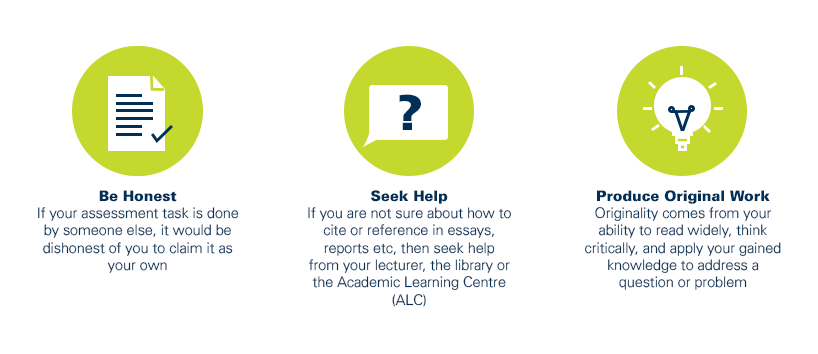
As a CQUniversity student you are expected to act honestly in all aspects of your academic work.
Any assessable work undertaken or submitted for review or assessment must be your own work. Assessable work is any type of work you do to meet the assessment requirements in the unit, including draft work submitted for review and feedback and final work to be assessed.
When you use the ideas, words or data of others in your assessment, you must thoroughly and clearly acknowledge the source of this information by using the correct referencing style for your unit. Using others’ work without proper acknowledgement may be considered a form of intellectual dishonesty.
Participating honestly, respectfully, responsibly, and fairly in your university study ensures the CQUniversity qualification you earn will be valued as a true indication of your individual academic achievement and will continue to receive the respect and recognition it deserves.
As a student, you are responsible for reading and following CQUniversity’s policies, including the Student Academic Integrity Policy and Procedure. This policy sets out CQUniversity’s expectations of you to act with integrity, examples of academic integrity breaches to avoid, the processes used to address alleged breaches of academic integrity, and potential penalties.
What is a breach of academic integrity?
A breach of academic integrity includes but is not limited to plagiarism, self-plagiarism, collusion, cheating, contract cheating, and academic misconduct. The Student Academic Integrity Policy and Procedure defines what these terms mean and gives examples.
Why is academic integrity important?
A breach of academic integrity may result in one or more penalties, including suspension or even expulsion from the University. It can also have negative implications for student visas and future enrolment at CQUniversity or elsewhere. Students who engage in contract cheating also risk being blackmailed by contract cheating services.
Where can I get assistance?
For academic advice and guidance, the Academic Learning Centre (ALC) can support you in becoming confident in completing assessments with integrity and of high standard.
What can you do to act with integrity?