Overview
This unit will introduce you to robotics and artificial intelligence in autonomous systems. You will learn the principles of robotic manipulators, mobile robots, robotic vision systems, forward kinematics, inverse kinematics of robotic manipulators, and programming. You will program industrial and mobile robots using Python programming language to model robotic systems mathematically, plan their path trajectories and predict and avoid collision with objects in the surrounding environment by fusing information from various sensors. The Robotic Operating System (ROS) is used with Gazebo robotic simulator to build and test various robotic applications. You are introduced to Linux operating system and will learn different ROS commands to test and troubleshoot real-world robotic systems. In addition, you will complete laboratory activities with real robots to strengthen your knowledge before completing a project in Gazebo simulated environment to solve a real-world problem. This unit supports the UN sustainable development goal 9- industry, innovation and infrastructure by discussing sustainable industrialisation using robotic applications.
Details
Pre-requisites or Co-requisites
Prerequisites: ENEM12010 Engineering Dynamics AND MATH11219 Applied Calculus.
Important note: Students enrolled in a subsequent unit who failed their pre-requisite unit, should drop the subsequent unit before the census date or within 10 working days of Fail grade notification. Students who do not drop the unit in this timeframe cannot later drop the unit without academic and financial liability. See details in the Assessment Policy and Procedure (Higher Education Coursework).
Offerings For Term 1 - 2026
Attendance Requirements
All on-campus students are expected to attend scheduled classes - in some units, these classes are identified as a mandatory (pass/fail) component and attendance is compulsory. International students, on a student visa, must maintain a full time study load and meet both attendance and academic progress requirements in each study period (satisfactory attendance for International students is defined as maintaining at least an 80% attendance record).
Recommended Student Time Commitment
Each 6-credit Undergraduate unit at CQUniversity requires an overall time commitment of an average of 12.5 hours of study per week, making a total of 150 hours for the unit.
Class Timetable
Assessment Overview
Assessment Grading
This is a graded unit: your overall grade will be calculated from the marks or grades for each assessment task, based on the relative weightings shown in the table above. You must obtain an overall mark for the unit of at least 50%, or an overall grade of 'pass' in order to pass the unit. If any 'pass/fail' tasks are shown in the table above they must also be completed successfully ('pass' grade). You must also meet any minimum mark requirements specified for a particular assessment task, as detailed in the 'assessment task' section (note that in some instances, the minimum mark for a task may be greater than 50%). Consult the University's Grades and Results Policy for more details of interim results and final grades.
All University policies are available on the CQUniversity Policy site.
You may wish to view these policies:
- Grades and Results Policy
- Assessment Policy and Procedure (Higher Education Coursework)
- Review of Grade Procedure
- Student Academic Integrity Policy and Procedure
- Academic Progression Policy and Procedure
- Student Refund and Credit Balance Policy and Procedure
- Complaints Policy and Procedure
- Information and Communications Technology Acceptable Use Policy and Procedure
This list is not an exhaustive list of all University policies. The full list of University policies are available on the CQUniversity Policy site.
Feedback, Recommendations and Responses
Every unit is reviewed for enhancement each year. At the most recent review, the following staff and student feedback items were identified and recommendations were made.
Feedback from SUTE Data
The response rate to the student unit evaluation survey is low.
Students should be encouraged to participate in SUTE surveys through announcements and in-class reminders.
- Analyse robotic systems and manipulators by applying knowledge of kinematics and coordinate system transformation
- Develop mathematical models to simulate robotic systems using the Robotic Operating System (ROS)
- Program industrial robots using industry-standard programming software
- Develop control systems for robotics sub-systems by extracting meaningful information from sensors using artificial intelligence techniques
- Develop complete robotic solutions to solve real-life problems by combining theoretical knowledge and practical skills
- Work individually and collaboratively in teams, communicate professionally by using robotic engineering terminology, symbols, and diagrams.
The Learning Outcomes for this unit are linked with the Engineers Australia Stage 1 Competency Standards for Professional Engineers in the areas of 1. Knowledge and Skill Base, 2. Engineering Application Ability and 3. Professional and Personal Attributes at the following levels:
Note: LO refers to the Learning Outcome number(s) which link to the competency and the levels: N – Introductory, I – Intermediate and A - Advanced.
Alignment of Assessment Tasks to Learning Outcomes
| Assessment Tasks | Learning Outcomes | |||||
|---|---|---|---|---|---|---|
| 1 | 2 | 3 | 4 | 5 | 6 | |
| 1 - Written Assessment - 20% | ||||||
| 2 - Written Assessment - 20% | ||||||
| 3 - Practical and Written Assessment - 20% | ||||||
| 4 - Project (applied) - 40% | ||||||
Alignment of Graduate Attributes to Learning Outcomes
| Graduate Attributes | Learning Outcomes | |||||
|---|---|---|---|---|---|---|
| 1 | 2 | 3 | 4 | 5 | 6 | |
| 1 - Communication | ||||||
| 2 - Problem Solving | ||||||
| 3 - Critical Thinking | ||||||
| 4 - Information Literacy | ||||||
| 5 - Team Work | ||||||
| 6 - Information Technology Competence | ||||||
| 7 - Cross Cultural Competence | ||||||
| 8 - Ethical practice | ||||||
| 9 - Social Innovation | ||||||
| 10 - First Nations Knowledges | ||||||
| 11 - Aboriginal and Torres Strait Islander Cultures | ||||||
Textbooks
There are no required textbooks.
IT Resources
- CQUniversity Student Email
- Internet
- Unit Website (Moodle)
- Microsoft Teams - camera and microphone
- Virtualbox (Version 7 or later)
- A computer with suitable hardware resources ( 8GB Memory, Intel core i5 and above CPU, Dedicated GPU is desired) and Windows(10 or later) with admin rights to install Virtual Box software.
All submissions for this unit must use the referencing style: Harvard (author-date)
For further information, see the Assessment Tasks.
l.piyathilaka@cqu.edu.au
Week 1
Begin Date: 09 Mar 2026Module/Topic
- Introduction to Robotics
- Robotic Software Installation
- Linux Basics
- Introduction to Robotic Operating System (ROS)
Chapter
- Moodle Week 1 Learning Resources
Events and Submissions/Topic
Week 2
Begin Date: 16 Mar 2026Module/Topic
- Robot Spatial Descriptions and Transformations
- Robotic Simulation Environments
- ROS Programming with Python
- Robotic Coordinate Transformation
Chapter
- Moodle Week 2 Learning Resources
Events and Submissions/Topic
Week 3
Begin Date: 23 Mar 2026Module/Topic
- Robotic Manipulator Modeling
- Forward Kinematics
- Robotic Arm Simulation
Chapter
- Moodle Week 3 Learning Resources
Events and Submissions/Topic
Week 4
Begin Date: 30 Mar 2026Module/Topic
- Inverse Kinematics (IK) of Robotic Manipulators
- Programming with Inverse Kinematic Solvers
- Manipulator Motion Planning
Chapter
- Moodle Week 4 Learning Resources
Events and Submissions/Topic
Week 5
Begin Date: 06 Apr 2026Module/Topic
- Machine-learning and visual object recognition
Chapter
- Moodle Week 5 Learning Resources
Events and Submissions/Topic
Week 6
Begin Date: 13 Apr 2026Module/Topic
Mobile Robots
- Modelling
- Kinematics
Chapter
- Moodle Week 6 Learning Resources
Events and Submissions/Topic
Vacation Week
Begin Date: 20 Apr 2026Module/Topic
Chapter
Events and Submissions/Topic
Week 7
Begin Date: 27 Apr 2026Module/Topic
Robotic Perception
- Robotic Sensors
- Image Processing Techniques
Chapter
- Moodle Week 7 Learning Resources
Events and Submissions/Topic
Week 8
Begin Date: 04 May 2026Module/Topic
Robotic Localisation
- Map building
- Localisation algorithms
Chapter
- Moodle Week 8 Learning Resources
Events and Submissions/Topic
Week 9
Begin Date: 11 May 2026Module/Topic
Robotic Navigation
- Path planning algorithms
- Global Planner
- Local Planner
Chapter
- Moodle Week 9 Learning Resources
Events and Submissions/Topic
Week 10
Begin Date: 18 May 2026Module/Topic
Lab exercises
Chapter
Events and Submissions/Topic
Residential School
Practical and Written assessment - Labs Due: Week 10 Thursday (21 May 2026) 11:45 pm AEST
Week 11
Begin Date: 25 May 2026Module/Topic
Project Help
Chapter
Events and Submissions/Topic
Week 12
Begin Date: 01 Jun 2026Module/Topic
Project demonstrations
Chapter
Events and Submissions/Topic
Project Demonstration.
Robotic Project Due: Week 12 Thursday (4 June 2026) 11:45 pm AEST
Exam Week
Begin Date: 08 Jun 2026Module/Topic
Chapter
Events and Submissions/Topic
Vacation/Exam Week
Begin Date: 15 Jun 2026Module/Topic
Chapter
Events and Submissions/Topic
This unit includes a compulsory residential school conducted at the Mackay Ooralea and Rockhampton campuses.
1 Written Assessment
This assessment will consist of problems that require you to implement software using the Robotic Operating System (ROS) and the Python programming language. You are expected to learn the basics of the Python programming language and the ROS framework during the first two weeks of the course. Interactive software tutorials will be provided using ROS to help you gain hands-on experience, and the assessment items will be extensions of these tutorials. Therefore, you are required to complete the interactive tutorials before attempting the assessment items.
The assessment questions and marking criteria will be available on the Moodle course page. This assessment will test your understanding of coordinate system transformations, mathematical modelling of robotic manipulators, and trajectory generation. You are required to demonstrate your understanding by developing robotic models in ROS simulation environments and generating trajectories using the Python programming language.
Your final submission must include the software codes, the simulation outputs, video demonstrations, and a report.
Minimum mark requirement: You must achieve at least 30% for this assessment.
This assessment uses the University’s 72‑hour grace period after the deadline; no late penalty applies within that window.
AI ASSESSMENT SCALE - AI COLLABORATION
You may use AI to assist with specific tasks such as drafting text, refining, and evaluating your work. You must critically evaluate and modify any AI-generated content you use.
Week 5 Monday (6 Apr 2026) 11:45 pm AEST
Marked work will be returned two weeks from submission.
To obtain full marks for this assessment, you must satisfy the following requirements:
- Your computer code must be appropriately structured, properly commented, and demonstrate relevant coding practices.
- The mathematical models you develop must be accurate and produce logically justified results.
- Your computer code must execute without compilation or runtime errors.
- The software output must be consistent with the explanations provided in the report and the simulation results included in the submission.
- All workings and assumptions must be clearly presented.
- Analyse robotic systems and manipulators by applying knowledge of kinematics and coordinate system transformation
- Develop mathematical models to simulate robotic systems using the Robotic Operating System (ROS)
2 Written Assessment
For this assessment, you will be tested on your understanding of inverse kinematics and the application of machine-learning models for object detection. You will also be required to develop mathematical models for multi-link robotic manipulators and create simulation models using the Robotic Operating System (ROS) framework. In addition, you will be expected to create an image dataset and train the YOLO deep learning network for object detection.
To complete this assignment, you will need a strong understanding of advanced ROS concepts. Weekly interactive tutorials will cover the required topics and provide relevant code samples to support your learning. You must also prepare a report that includes code outputs, explanations, and simulation results.
Your final submission must include the software codes, the simulation outputs, video demonstrations, and a report.
Minimum mark requirement: You must achieve at least 50% for this assessment.
This assessment uses the University’s 72‑hour grace period after the deadline; no late penalty applies within that window.
AI ASSESSMENT SCALE - AI COLLABORATION
You may use AI to assist with specific tasks such as drafting text, refining, and evaluating your work. You must critically evaluate and modify any AI-generated content you use.
Week 8 Monday (4 May 2026) 11:45 pm AEST
Marked work will be returned two weeks from submission.
To obtain full marks for this assessment, you must satisfy the following requirements:
- Your computer code must be appropriately structured, properly commented, and demonstrate relevant coding practices.
- The mathematical models you develop must be accurate and produce logically justified results.
- Your computer code must execute without compilation or runtime errors.
- The software output must be consistent with the explanations provided in the report and the simulation results included in the submission.
- All workings and assumptions must be clearly presented.
- Analyse robotic systems and manipulators by applying knowledge of kinematics and coordinate system transformation
- Develop mathematical models to simulate robotic systems using the Robotic Operating System (ROS)
3 Practical and Written Assessment
This assessment consists of computer laboratory sessions and practical activities with robots and is divided into four laboratory assessments (Labs 1 to 4). You are required to use the specified software and simulation environment to complete each lab. Most labs can be completed within the simulation environment; however, you must attend the mandatory laboratory sessions that involve direct robot interaction.
Details of these labs and practical activities will be available on the unit Moodle website. The laboratory and practical components are compulsory, and you must pass them in order to pass the unit. All students are required to complete the labs during the compulsory residential school. Laboratory reports must be submitted individually, and team reports will not be accepted.
Minimum mark requirement: You must achieve at least 50% for this assessment.
This assessment uses the 72‑hour grace period for submissions; however, attendance at scheduled in‑person lab sessions is mandatory and cannot be deferred
AI ASSESSMENT SCALE - AI COLLABORATION
You may use AI to assist with specific tasks such as drafting text, refining, and evaluating your work. You must critically evaluate and modify any AI-generated content you use.
Week 10 Thursday (21 May 2026) 11:45 pm AEST
Marked work will be returned two weeks from submission.
To obtain full marks for this assessment, you must satisfy the following requirements:
- You must provide correct answers, including relevant plots and figures where appropriate.
- Your code must be readable, well-structured, neat, and clearly organised.
- You must properly comment and appropriately format your computer code.
- Your computer code must run without compilation or execution errors.
- Your software output must be consistent with the explanations in your report and the simulation results included in your submission.
- You must clearly show all workings and assumptions.
- Program industrial robots using industry-standard programming software
- Develop control systems for robotics sub-systems by extracting meaningful information from sensors using artificial intelligence techniques
- Work individually and collaboratively in teams, communicate professionally by using robotic engineering terminology, symbols, and diagrams.
4 Project (applied)
This is a project-based assignment that addresses a real-world challenge, where the project and its report form the primary assessment components. You are permitted to work in a group of two to three students. The project is task-based and requires your group to program robotic platforms to complete specified tasks, with marks awarded based on the successful completion of each task.
You are expected to commence your group project work in Week 5, with the final demonstration scheduled for Week 12. Each student must submit an individual report outlining their specific contributions; a single report per group will not be accepted. The project output must be demonstrated within a simulation environment, and the final codebase must be submitted to the assigned code repository. Peer evaluation will also be conducted to assess individual contributions within each group.
Minimum mark requirement: You must achieve at least 50% for this assessment.
This assessment uses the University’s 72‑hour grace period after the deadline; no late penalty applies within that window.
AI ASSESSMENT SCALE - AI COLLABORATION
You may use AI to assist with specific tasks such as drafting text, refining, and evaluating your work. You must critically evaluate and modify any AI-generated content you use.
Week 12 Thursday (4 June 2026) 11:45 pm AEST
Marked work will be returned two weeks from submission.
Marks for this project will be awarded based on two main components: Project Demonstration and Project Report.
1. Project Demonstration
You will be assessed on:
- Successful completion of each assigned task
- Clear explanation of how each task was solved
- Your ability to answer questions from the audience and the Unit Coordinator
2. Project Report
You will be assessed on:
- A well-structured report with appropriate formatting
- Clear and detailed explanation of the code and implementation
- Inclusion of the project timeline and progress
- Critical analysis of the project’s success and challenges
- Reflection on your learning outcomes and areas for improvement
To achieve high marks, you must demonstrate strong practical performance during the project demonstration and provide clear technical understanding and reflection in your written report.
- Program industrial robots using industry-standard programming software
- Develop control systems for robotics sub-systems by extracting meaningful information from sensors using artificial intelligence techniques
- Develop complete robotic solutions to solve real-life problems by combining theoretical knowledge and practical skills
- Work individually and collaboratively in teams, communicate professionally by using robotic engineering terminology, symbols, and diagrams.
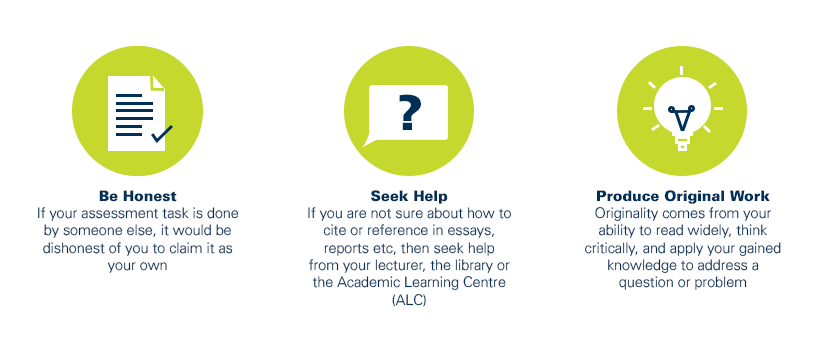
As a CQUniversity student you are expected to act honestly in all aspects of your academic work.
Any assessable work undertaken or submitted for review or assessment must be your own work. Assessable work is any type of work you do to meet the assessment requirements in the unit, including draft work submitted for review and feedback and final work to be assessed.
When you use the ideas, words or data of others in your assessment, you must thoroughly and clearly acknowledge the source of this information by using the correct referencing style for your unit. Using others’ work without proper acknowledgement may be considered a form of intellectual dishonesty.
Participating honestly, respectfully, responsibly, and fairly in your university study ensures the CQUniversity qualification you earn will be valued as a true indication of your individual academic achievement and will continue to receive the respect and recognition it deserves.
As a student, you are responsible for reading and following CQUniversity’s policies, including the Student Academic Integrity Policy and Procedure. This policy sets out CQUniversity’s expectations of you to act with integrity, examples of academic integrity breaches to avoid, the processes used to address alleged breaches of academic integrity, and potential penalties.
What is a breach of academic integrity?
A breach of academic integrity includes but is not limited to plagiarism, self-plagiarism, collusion, cheating, contract cheating, and academic misconduct. The Student Academic Integrity Policy and Procedure defines what these terms mean and gives examples.
Why is academic integrity important?
A breach of academic integrity may result in one or more penalties, including suspension or even expulsion from the University. It can also have negative implications for student visas and future enrolment at CQUniversity or elsewhere. Students who engage in contract cheating also risk being blackmailed by contract cheating services.
Where can I get assistance?
For academic advice and guidance, the Academic Learning Centre (ALC) can support you in becoming confident in completing assessments with integrity and of high standard.
What can you do to act with integrity?