Overview
In this unit you will critique approaches to community engagement with First Nations community members, communities and agencies within your disciplinary context. You will study culturally appropriate principles and strategies for community engagement, participatory planning and stakeholder relationships. Drawing on transdisciplinary perspectives from First Nations studies, community development, history, planning, natural resource planning, public health and sociology, you will learn to evaluate the requirements of First Nations community engagement. You will develop a professional approach to First Nations community engagement in your disciplinary context.
Details
Pre-requisites or Co-requisites
Students must have completed a minimum of 48 credit points to enrol in this unit.
Important note: Students enrolled in a subsequent unit who failed their pre-requisite unit, should drop the subsequent unit before the census date or within 10 working days of Fail grade notification. Students who do not drop the unit in this timeframe cannot later drop the unit without academic and financial liability. See details in the Assessment Policy and Procedure (Higher Education Coursework).
Offerings For Term 3 - 2026
Attendance Requirements
All on-campus students are expected to attend scheduled classes - in some units, these classes are identified as a mandatory (pass/fail) component and attendance is compulsory. International students, on a student visa, must maintain a full time study load and meet both attendance and academic progress requirements in each study period (satisfactory attendance for International students is defined as maintaining at least an 80% attendance record).
Recommended Student Time Commitment
Each 6-credit Undergraduate unit at CQUniversity requires an overall time commitment of an average of 12.5 hours of study per week, making a total of 150 hours for the unit.
Class Timetable
Assessment Overview
| Assessment Task | Part Weighting (% of assessment) |
Assessment Security Level | Gen AI Guidance Levels |
|---|---|---|---|
| 1. Community Engagement Plan (40% of unit ) | |||
| Community Engagement Plan (Written Assessment) | 100% of 40% | Low | AI-Assisted (Guided Collaboration) |
| 2. Community Engagement Presentation (60% of unit ) | |||
| Community Engagement Presentation (Presentation) | 100% of 60% | Low | AI-Assisted (Guided Collaboration) |
Assessment Grading
This is a graded unit: your overall grade will be calculated from the marks or grades for each assessment task, based on the relative weightings shown in the table above. You must obtain an overall mark for the unit of at least 50%, or an overall grade of 'pass' in order to pass the unit. If any 'pass/fail' tasks are shown in the table above they must also be completed successfully ('pass' grade). You must also meet any minimum mark requirements specified for a particular assessment task, as detailed in the 'assessment task' section (note that in some instances, the minimum mark for a task may be greater than 50%). Consult the University's Grades and Results Policy for more details of interim results and final grades.
All University policies are available on the CQUniversity Policy site.
You may wish to view these policies:
- Grades and Results Policy
- Assessment Policy and Procedure (Higher Education Coursework)
- Review of Grade Procedure
- Student Academic Integrity Policy and Procedure
- Academic Progression Policy and Procedure
- Student Refund and Credit Balance Policy and Procedure
- Complaints Policy and Procedure
- Information and Communications Technology Acceptable Use Policy and Procedure
This list is not an exhaustive list of all University policies. The full list of University policies are available on the CQUniversity Policy site.
Feedback, Recommendations and Responses
Every unit is reviewed for enhancement each year. At the most recent review, the following staff and student feedback items were identified and recommendations were made.
Feedback from SUTE PDP Teaching Reflection
Students would like to know how to apply skills to clinical practice.
Greater consultation with professionals in the field (e.g., practicing paramedics ) to help translate cultural knowledge into "real-world clinical interactions" (e.g. Interview current practitioners to highlight how they use knowledge and skills in practice).
Feedback from SUTE PDP Teaching Reflection
Students wanted clearer unit materials.
Review the volume of material on the Moodle site and provide clearer signposting.
Feedback from SUTE
One student commented that some features of the unit assumed that students were not from diverse backgrounds.
Review unit materials, particularly the "positionality" and "background" sections of the unit to ensure that these are inclusive of the diverse lived experiences of the contemporary student cohort.
Feedback from SUTE
Two students wanted weekly or bi-weekly tutorials
Trial bi-weekly tutorials in T1 2027.
Feedback from PDP Teaching Reflection
Several students were in first year of first term and lacked some academic literacy skills.
Request Academic Learning Centre support.
- Discuss the importance of cultural and historical awareness of First Nations community engagement within Australia and globally
- Critique the key issues that shape contemporary discourses of First Nations community engagement
- Identify the implications of diverse approaches to First Nations community engagement in discipline specific contexts
- Identify professional practice factors that facilitate quality community engagement plans, programs and services for First Nations peoples and communities in discipline specific contexts
- Develop culturally appropriate community engagement plans for First Nations peoples and communities based on discipline specific principles.
N/A
Alignment of Assessment Tasks to Learning Outcomes
| Assessment Tasks | Learning Outcomes | ||||
|---|---|---|---|---|---|
| 1 | 2 | 3 | 4 | 5 | |
|
1.
Assessment 1
(40% of unit )
Written Assessment
|
|||||
|
2.
Assessment 2
(60% of unit )
Presentation
|
|||||
Alignment of Graduate Attributes to Learning Outcomes
| Graduate Attributes | Learning Outcomes | ||||
|---|---|---|---|---|---|
| 1 | 2 | 3 | 4 | 5 | |
| 1 - Communication | |||||
| 2 - Problem Solving | |||||
| 3 - Critical Thinking | |||||
| 4 - Information Literacy | |||||
| 5 - Team Work | |||||
| 6 - Information Technology Competence | |||||
| 7 - Cross Cultural Competence | |||||
| 8 - Ethical practice | |||||
| 9 - Social Innovation | |||||
| 10 - First Nations Knowledges | |||||
| 11 - Aboriginal and Torres Strait Islander Cultures | |||||
Textbooks
There are no required textbooks.
IT Resources
- CQUniversity Student Email
- Internet
- Unit Website (Moodle)
- Microphone and headset
- Microsoft PowerPoint or other program designed to produce presentation slides.
- WebCam
- Zoom access
All submissions for this unit must use the referencing styles below:
For further information, see the Assessment Tasks.
r.preston@cqu.edu.au
Week 1
Begin Date: 09 Nov 2026Module/Topic
Theme 1: Introduction to First Nations Community Engagement: Why Engage?
Chapter
Prescribed learning activities - Moodle book, narrated PowerPoint/lecture, e-Readings, quizzes and online discussion forum.
Micro-Credential PDC151653 First Nations Cultural Awareness Training (Level 1)
Micro-credential PDC115414: A Guide to First Nations Community Engagement at CQUniversity.
Events and Submissions/Topic
Zoom Tutorial: Introduction to the Unit: Monday 9 November 1.00pm to 2.00pm (AEST) (QLD time).
Week 2
Begin Date: 16 Nov 2026Module/Topic
Theme 1: Introduction to First Nations Community Engagement: Why Engage?
Chapter
Prescribed learning activities - Moodle book, narrated PowerPoint/lecture, e-Readings, quizzes and online discussion forum.
Micro-Credential PDC151653 First Nations Cultural Awareness Training (Level 1)
Micro-credential PDC115414 A Guide to First Nations Community Engagement at CQUniversity.
Events and Submissions/Topic
Week 3
Begin Date: 23 Nov 2026Module/Topic
Theme 2: First Nations Communities, Stakeholders and Levels of Engagement: WHO to engage with?
Chapter
Prescribed learning activities - Moodle book, narrated PowerPoint/lecture, e-Readings, quizzes and online discussion forum.
Micro-Credential PDC151653 First Nations Cultural Awareness Training (Level 1).
Micro-credential PDC115414 A Guide to First Nations Community Engagement at CQUniversity.
Events and Submissions/Topic
Zoom Tutorial on Assessment 1: Monday 23 November 1.00pm to 2.00pm (AEST) (QLD time)
Week 4
Begin Date: 30 Nov 2026Module/Topic
Theme 2: First Nations Communities, Stakeholders and Levels of Engagement: WHO to engage with?
Chapter
Prescribed learning activities - Moodle book, narrated PowerPoint/lecture, e-Readings, quizzes and online discussion forum.
Micro-Credential PDC151653 First Nations Cultural Awareness Training (Level 1).
Micro-credential PDC115414 A Guide to First Nations Community Engagement at CQUniversity.
Events and Submissions/Topic
Week 5
Begin Date: 07 Dec 2026Module/Topic
Theme 2: First Nations Communities, Stakeholders and Levels of Engagement: WHO to engage with?
Chapter
Prescribed learning activities - Moodle book, narrated PowerPoint/lecture, e-Readings, quizzes and online discussion forum.
Micro-Credential PDC151653 First Nations Cultural Awareness Training (Level 1).
Micro-credential PDC115414 A Guide to First Nations Community Engagement at CQUniversity.
Events and Submissions/Topic
Complete Micro-credential PDC151653 First Nations Cultural Awareness (Level 1) at CQUniversity. Submit certificate with Assessment 1.
Community Engagement Plan Due: Week 5 Friday (11 Dec 2026) 4:00 pm AEST
Week 6
Begin Date: 14 Dec 2026Module/Topic
Theme 3: Approaches and Strategies for First Nations Community Engagement: HOW to Engage
Chapter
Prescribed learning activities - Moodle book, narrated PowerPoint/lecture, e-Readings, quizzes and online discussion forum.
Micro-credential PDC151655 First Nations Cultural Awareness Training (Level 2).
Micro-credential PDC115414 A Guide to First Nations Community Engagement at CQUniversity.
Events and Submissions/Topic
Mid-Term Break
Begin Date: 21 Dec 2026Module/Topic
Chapter
Events and Submissions/Topic
Week 7
Begin Date: 04 Jan 2027Module/Topic
Theme 3: Approaches and Strategies for First Nations Community Engagement: HOW to Engage
Chapter
Prescribed learning activities - Moodle book, narrated PowerPoint/lecture, e-Readings, quizzes and online discussion forum.
Micro-credential PDC151655 First Nations Cultural Awareness Training (Level 2).
Micro-credential PDC115414 A Guide to First Nations Community Engagement at CQUniversity.
Events and Submissions/Topic
Week 8
Begin Date: 11 Jan 2027Module/Topic
Theme 3: Approaches and Strategies for First Nations Community Engagement: HOW to Engage
Chapter
Prescribed learning activities - Moodle book, narrated PowerPoint/lecture, e-Readings, quizzes and online discussion forum.
Micro-credential PDC151655 First Nations Cultural Awareness Training (Level 2).
Micro-credential PDC115414 A Guide to First Nations Community Engagement at CQUniversity.
Events and Submissions/Topic
Zoom Tutorial on Assessment 2: Monday 11 January, 1.00pm to 2.00pm (AEST) (QLD time)
Week 9
Begin Date: 18 Jan 2027Module/Topic
Theme 4: Evaluating Impact and Reflecting on Practice – HOW to Learn and Improve
Chapter
Prescribed learning activities - Moodle book, narrated PowerPoint/lecture, e-Readings, quizzes and online discussion forum.
Micro-credential PDC151655 First Nations Cultural Awareness Training (Level 2).
Micro-credential PDC115414 A Guide to First Nations Community Engagement at CQUniversity.
Events and Submissions/Topic
Week 10
Begin Date: 25 Jan 2027Module/Topic
Theme 4: Evaluating Impact and Reflecting on Practice – HOW to Learn and Improve
Chapter
Prescribed learning activities - Moodle book, narrated PowerPoint/lecture, e-Readings, quizzes and online discussion forum.
Micro-credential PDC151655 First Nations Cultural Awareness Training (Level 2).
Micro-credential PDC115414 A Guide to First Nations Community Engagement at CQUniversity.
Events and Submissions/Topic
Week 11
Begin Date: 01 Feb 2027Module/Topic
Theme 4: Evaluating Impact and Reflecting on Practice – HOW to Learn and Improve
Chapter
Prescribed learning activities - Moodle book, narrated PowerPoint/lecture, e-Readings, quizzes and online discussion forum.
Micro-credential PDC151655 First Nations Cultural Awareness Training (Level 2).
Micro-credential PDC115414 A Guide to First Nations Community Engagement at CQUniversity.
Events and Submissions/Topic
Week 12
Begin Date: 08 Feb 2027Module/Topic
Unit Review and Assessment 2 Preparation
Chapter
Overview of Unit: Narrative PowerPoint/Lecture
Micro-credential PDC151655 First Nations Cultural Awareness Training (Level 2).
Micro-credential PDC115414 A Guide to First Nations Community Engagement at CQUniversity.
Events and Submissions/Topic
Complete Micro-credentials:
PDC151655 First Nations Cultural Awareness Training (Level 2).
PDC115414 A Guide to First Nations Community Engagement at CQUniversity.
Submit certificates with Assessment 2.
Community Engagement Presentation Due: Week 12 Wednesday (10 Feb 2027) 4:00 pm AEST
Exam Week
Begin Date: 15 Feb 2027Module/Topic
Chapter
Events and Submissions/Topic
1. Community Engagement Plan ( 40% of unit )
Written Assessment
Why are you doing this?
Before engaging with First Nations communities, you need to undertake research on history, local context and relevant stakeholders. You also need to be clear about your own positionality and how you should work with the community in a culturally safe manner. This information is critical for workplaces and teams.
What do you need to do?
In this assessment you will develop a community engagement plan in the form of a short report for your colleagues.
You will choose one of the four case studies:
- Case Study 1: Controlling Feral Pigs in the Bunya Mountains, Queensland.
- Case Study 2: Diphtheria Prevention in Mount Isa, North West Queensland.
- Case Study 3: Rebuilding trust in Emergency Services, Derby, The Kimberley, Western Australia.
- Case Study 4: Helping Older people stay at home in Lake Tyers, Gippsland, Victoria.
Further information about these case studies and relevant stimulus materials are found in the Assessment 1 preparation guide on the Moodle and in the e-readings.
The locations are real to provide some historical and contemporary contexts for your research, but the case scenarios/studies are entirely fictional.
Your engagement plan should include the following essential elements, including, but not limited to:
- Introduction to the topic, the community and what the report will outline.
- Background including location, history of First Nations peoples, and synthesis of historical and contemporary issues with scholarly and local sources, critically analysing the lens in which information is presented.
- Identification of stakeholders (including but not limited to: Native Title holders, if relevant, community-controlled organisations, traditional custodians and other First Nations communities and organisations).
- Analysis of stakeholder priorities using an appropriate tool from Theme 2.
- Principles of your engagement plan (drawn from the 9 principles discussed in Theme 1).
- Aims of your community engagement plan.
- Reflection on positionality and cultural awareness and what you could apply from PDC151653 First Nations Cultural Awareness Training (Level 1).
- GenAI Use Declaration (NOT included in word count, see the Assessment 1 Preparation Guide on the Moodle for wording and guidance).
You must provide the certificate for the Micro-Credential course PDC151653: First Nation Cultural Awareness Training (Level1). This certificate must show your name. The micro-credential badge is not evidence of completion. See guidance in the Moodle on how to download your certificate.
Level of GenAI use allowed: AI-Assisted (Guided Collaboration).
Level 1. This assessment develops the real-world skills of working ethically and strategically with GenAI – skills employers now expect.
Week 5 Friday (11 Dec 2026) 4:00 pm AEST
Week 7 Friday (8 Jan 2027)
This assessment will be marked using criterion-referenced assessment. There is a detailed marking criteria on the Moodle:
- 20% Overview of the community and topic
- 30% Identification and prioritisation of stakeholders
- 25% Principles and aims of community engagement plan
- 15% Reflective Positionality, Terminology and Cultural Awareness including certificate as evidence of completion of Micro-Credential PDC151653 First Nations Cultural Awareness Training (Level 1)
- 10% Report Presentation - format, grammar, spelling, punctuation, structure, and referencing
- Discuss the importance of cultural and historical awareness of First Nations community engagement within Australia and globally
- Critique the key issues that shape contemporary discourses of First Nations community engagement
- Identify the implications of diverse approaches to First Nations community engagement in discipline specific contexts
2. Community Engagement Presentation ( 60% of unit )
Presentation
Why am I doing this?
This assessment is designed to replicate a real-world workplace task in which you present a community engagement plan to colleagues, managers, or a working group based on the case study selected in Assessment 1. Instead of delivering the presentation to an actual audience, you will submit a recorded presentation that demonstrates how you would communicate your plan in a professional setting.
What do I need to do?
You will develop a Community Engagement Presentation in the format of PowerPoint slides.
You will record the presentation as if you are presenting to the working group/your workplace in your case study.
Ensure that you incorporate feedback from Assessment 1. This simulates the real process of discussion and feedback from your colleagues.
Essential Components
The format can be adapted as needed but must contain the essential components. Further information is available on the Moodle in the Assessment 2 Preparation Guide.
- Title page: title, your name, unit name, date.
- Acknowledgement of country.
- Introduction to what your presentation will outline and yourself (you and your positionality).
- Background: Include the principles and aims of your community engagement plan, information on the community, the topic, location and any definitions.
- Stakeholders and stakeholder analysis.
- Recommended strategies and tools for engaging the community and stakeholders, including an example tool.
- Recommendations for Culturally Safe practice and further learning.
- Discussion.
- Conclusion.
- References.
- Evidence of completion of micro-credentials: PDC115414 A Guide to First Nations Community Engagement at CQUniversity AND PDC151655 First Nations Cultural Awareness Training (Level 2) (certificates with your name).
Presentation Format
- Recorded Presentation
- PowerPoint Slides (pdf)
- Speaking notes (in Word or on PowerPoint notes) - including GenAI use declaration (see the Assessment 2 Preparation Guide on the Moodle for wording and guidance).
- Example tool e.g. handout for community meeting, proposed interview questions, proposed focus group discussions, etc. (This tool could be included in presentation or a word document).
- Certificates demonstrating evidence of completion of PDC115414: A Guide to First Nations Community Engagement at CQUniversity AND PDC151655 First Nations Cultural Awareness Training (Level 2) (certificates with your name)
Level of GenAI use allowed: AI-Assisted (Guided Collaboration).
Level 1. This assessment develops the real-world skills of working ethically and strategically with GenAI – skills employers now expect.
Week 12 Wednesday (10 Feb 2027) 4:00 pm AEST
Three weeks after submission.
This assessment will be marked using criterion-referenced assessment. There is a detailed marking criteria on the Moodle:
- 10% Introduction and Background
- 10% Stakeholders analysis
- 30% Recommended strategies and tools for engaging stakeholders including certificate as evidence of completion of micro-credentials PDC115414: A Guide to First Nations Community Engagement at CQUniversity
- 25% Discussion and Conclusion
- 15% Recommendations for Culturally Safe practice and further learning including certificate as evidence of completion of micro-credential PDC151655 First Nations Cultural Awareness Training (Level 2)
- 5% Presentation Skills
- 5% Visual Aids (PowerPoint Slides)
- Discuss the importance of cultural and historical awareness of First Nations community engagement within Australia and globally
- Critique the key issues that shape contemporary discourses of First Nations community engagement
- Identify the implications of diverse approaches to First Nations community engagement in discipline specific contexts
- Identify professional practice factors that facilitate quality community engagement plans, programs and services for First Nations peoples and communities in discipline specific contexts
- Develop culturally appropriate community engagement plans for First Nations peoples and communities based on discipline specific principles.
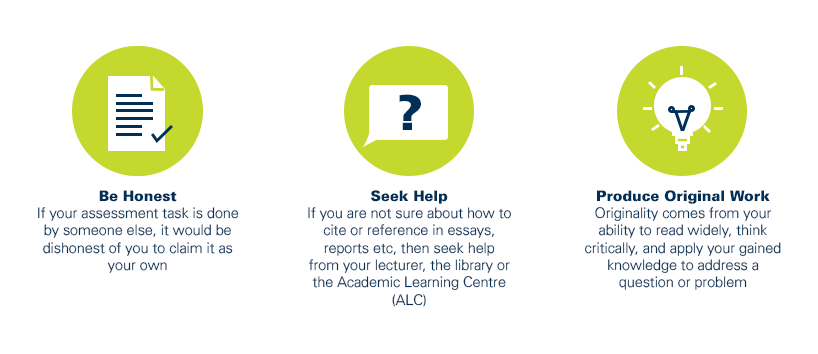
As a CQUniversity student you are expected to act honestly in all aspects of your academic work.
Any assessable work undertaken or submitted for review or assessment must be your own work. Assessable work is any type of work you do to meet the assessment requirements in the unit, including draft work submitted for review and feedback and final work to be assessed.
When you use the ideas, words or data of others in your assessment, you must thoroughly and clearly acknowledge the source of this information by using the correct referencing style for your unit. Using others’ work without proper acknowledgement may be considered a form of intellectual dishonesty.
Participating honestly, respectfully, responsibly, and fairly in your university study ensures the CQUniversity qualification you earn will be valued as a true indication of your individual academic achievement and will continue to receive the respect and recognition it deserves.
As a student, you are responsible for reading and following CQUniversity’s policies, including the Student Academic Integrity Policy and Procedure. This policy sets out CQUniversity’s expectations of you to act with integrity, examples of academic integrity breaches to avoid, the processes used to address alleged breaches of academic integrity, and potential penalties.
What is a breach of academic integrity?
A breach of academic integrity includes but is not limited to plagiarism, self-plagiarism, collusion, cheating, contract cheating, and academic misconduct. The Student Academic Integrity Policy and Procedure defines what these terms mean and gives examples.
Why is academic integrity important?
A breach of academic integrity may result in one or more penalties, including suspension or even expulsion from the University. It can also have negative implications for student visas and future enrolment at CQUniversity or elsewhere. Students who engage in contract cheating also risk being blackmailed by contract cheating services.
Where can I get assistance?
For academic advice and guidance, the Academic Learning Centre (ALC) can support you in becoming confident in completing assessments with integrity and of high standard.
What can you do to act with integrity?