Overview
This unit provides you with the opportunity to apply skills and knowledge developed in your academic course to engineering practice. This unit will also develop new engineering practice skills and knowledge. You will document and reflect on work activities and relate them to Engineers Australia's Stage 1 Competency Standards and develop a strategic approach to personal growth in the workplace. You are required to undertake a minimum of 300 hours of work placement, which may require relocation of accommodation to suit the placement. Students should contact the unit coordinator prior to enrolment in this unit to discuss placement requirements.
Details
Pre-requisites or Co-requisites
Pre-requisite: A GPA of 4.1 across 48 credit points in the first year of CV82 Master of Engineering course.
Important note: Students enrolled in a subsequent unit who failed their pre-requisite unit, should drop the subsequent unit before the census date or within 10 working days of Fail grade notification. Students who do not drop the unit in this timeframe cannot later drop the unit without academic and financial liability. See details in the Assessment Policy and Procedure (Higher Education Coursework).
Offerings For Term 1 - 2026
Attendance Requirements
All on-campus students are expected to attend scheduled classes - in some units, these classes are identified as a mandatory (pass/fail) component and attendance is compulsory. International students, on a student visa, must maintain a full time study load and meet both attendance and academic progress requirements in each study period (satisfactory attendance for International students is defined as maintaining at least an 80% attendance record).
Recommended Student Time Commitment
Each 12-credit Postgraduate unit at CQUniversity requires an overall time commitment of an average of 25 hours of study per week, making a total of 300 hours for the unit.
Class Timetable
Assessment Overview
Assessment Grading
This is a graded unit: your overall grade will be calculated from the marks or grades for each assessment task, based on the relative weightings shown in the table above. You must obtain an overall mark for the unit of at least 50%, or an overall grade of 'pass' in order to pass the unit. If any 'pass/fail' tasks are shown in the table above they must also be completed successfully ('pass' grade). You must also meet any minimum mark requirements specified for a particular assessment task, as detailed in the 'assessment task' section (note that in some instances, the minimum mark for a task may be greater than 50%). Consult the University's Grades and Results Policy for more details of interim results and final grades.
All University policies are available on the CQUniversity Policy site.
You may wish to view these policies:
- Grades and Results Policy
- Assessment Policy and Procedure (Higher Education Coursework)
- Review of Grade Procedure
- Student Academic Integrity Policy and Procedure
- Academic Progression Policy and Procedure
- Student Refund and Credit Balance Policy and Procedure
- Complaints Policy and Procedure
- Information and Communications Technology Acceptable Use Policy and Procedure
This list is not an exhaustive list of all University policies. The full list of University policies are available on the CQUniversity Policy site.
Feedback, Recommendations and Responses
Every unit is reviewed for enhancement each year. At the most recent review, the following staff and student feedback items were identified and recommendations were made.
Feedback from SUTE
Students feel that the unit requirements were not clearly stated.
The unit requirements should be clearly stated on the unit profile and the unit Moodle site.
Feedback from SUTE
Students feel the need for more useful learning materials.
The unit learning materials should be enhanced in future offerings.
Feedback from UC reflection
Students valued the opportunity to participate in the poster presentation.
Students should be given the opportunity to present their work through a poster presentation in future offerings of the unit.
- Analyse the structure, products, and services of an engineering organisation
- Apply skills and knowledge developed in the academic course to engineering practice in an engineering organisation
- Demonstrate Engineers Australia Stage 1 Competencies through work activities
- Reflect on and map Engineers Australia's Stage 1 Competency Standards to work activities
- Develop a strategic approach to personal and professional growth in the workplace.
Alignment of Assessment Tasks to Learning Outcomes
| Assessment Tasks | Learning Outcomes | ||||
|---|---|---|---|---|---|
| 1 | 2 | 3 | 4 | 5 | |
| 1 - Written Assessment - 35% | |||||
| 2 - Written Assessment - 40% | |||||
| 3 - Portfolio - 10% | |||||
| 4 - Presentation - 15% | |||||
Alignment of Graduate Attributes to Learning Outcomes
| Graduate Attributes | Learning Outcomes | ||||
|---|---|---|---|---|---|
| 1 | 2 | 3 | 4 | 5 | |
| 1 - Knowledge | |||||
| 2 - Communication | |||||
| 3 - Cognitive, technical and creative skills | |||||
| 4 - Research | |||||
| 5 - Self-management | |||||
| 6 - Ethical and Professional Responsibility | |||||
| 7 - Leadership | |||||
| 8 - First Nations Knowledges | |||||
| 9 - Aboriginal and Torres Strait Islander Cultures | |||||
Textbooks
There are no required textbooks.
IT Resources
- CQUniversity Student Email
- Internet
- Unit Website (Moodle)
- Microsoft office suite
- Zoom
All submissions for this unit must use the referencing style: Harvard (author-date)
For further information, see the Assessment Tasks.
n.das@cqu.edu.au
Week 1
Begin Date: 09 Mar 2026Module/Topic
Commence development of work placement objectives and descriptions.
Commence work placement and document your activities in your weekly journals.
Chapter
Events and Submissions/Topic
Attend the host organisation
Week 2
Begin Date: 16 Mar 2026Module/Topic
Continue work placement and document your activities in your weekly journals.
Collate pictorial evidence of applications of engineering knowledge in the workplace from your activities and weekly journals.
Chapter
Events and Submissions/Topic
Attend the host organisation
Week 3
Begin Date: 23 Mar 2026Module/Topic
Complete work placement objectives and planning descriptions.
Continue work placement and document your activities in your weekly journals.
Commence development of Assignment 1: application of engineering knowledge in the workplace.
Chapter
Events and Submissions/Topic
Attend the host organisation
Week 4
Begin Date: 30 Mar 2026Module/Topic
Continue work placement and document your activities in your weekly journals.
Complete Assignment 1: application of engineering knowledge in the workplace.
Chapter
Events and Submissions/Topic
Attend the host organisation
Week 5
Begin Date: 06 Apr 2026Module/Topic
Continue work placement and document your activities in your weekly journals.
Chapter
Events and Submissions/Topic
Attend the host organisation
Week 6
Begin Date: 13 Apr 2026Module/Topic
Continue work placement and document your activities in your weekly journals.
Formulate the narrative for your professional engineering project report.
Chapter
Events and Submissions/Topic
Attend the host organisation
Vacation Week
Begin Date: 20 Apr 2026Module/Topic
Continue work placement and document your activities in your weekly journals.
Complete Assignment 2: application of engineering knowledge in the workplace.
Chapter
Events and Submissions/Topic
Attend the host organisation (if they are open during this time of the year).
This may not be a vacation week at your host organisation. Please attend your internship.
APPLICATION OF ENGINEERING KNOWLEDGE IN WORKPLACE Due: Vacation Week Monday (20 Apr 2026) 11:55 pm AEST
Week 7
Begin Date: 27 Apr 2026Module/Topic
Continue work placement and document your activities in your weekly journals.
Complete Assignment 2: professional engineering project report.
Chapter
Events and Submissions/Topic
Attend the host organisation
Week 8
Begin Date: 04 May 2026Module/Topic
Continue work placement and document your activities in your weekly journals.
Revise and update your professional resume.
Commence development of self-assessment and reflection against the EA' Stage 1 Competencies.
Collate necessary documents and paperwork for the internship portfolio.
Chapter
Events and Submissions/Topic
Attend the host organisation
PROFESSIONAL ENGINEERING PROJECT REPORT Due: Week 8 Monday (4 May 2026) 11:55 pm AEST
Week 9
Begin Date: 11 May 2026Module/Topic
Continue work placement and document your activities in your weekly journals.
Complete the internship portfolio.
Chapter
Events and Submissions/Topic
Attend the host organisation
Week 10
Begin Date: 18 May 2026Module/Topic
Continue work placement and document your activities in your weekly journals.
Collate necessary documents and work on the internship presentation.
Complete the internship portfolio.
Chapter
Events and Submissions/Topic
Attend the host organisation
PORTFOLIO Due: Week 10 Monday (18 May 2026) 11:55 pm AEST
Week 11
Begin Date: 25 May 2026Module/Topic
Continue work placement and document your activities in your weekly journals.
Prepare your presentation slides and poster.
Chapter
Events and Submissions/Topic
Attend the host organisation
Week 12
Begin Date: 01 Jun 2026Module/Topic
Continue work placement and document your activities in your weekly journals.
Complete your internship video presentation.
Chapter
Events and Submissions/Topic
Attend the host organisation
PRESENTATION Due: Week 12 Monday (1 June 2026) 11:55 pm AEST
Exam Week
Begin Date: 08 Jun 2026Module/Topic
Chapter
Events and Submissions/Topic
Vacation/Exam Week
Begin Date: 15 Jun 2026Module/Topic
Chapter
Events and Submissions/Topic
1 Written Assessment
Provide pictorial evidence of the engineering, technical and nontechnical activities performed during your internship placement. Present the evidence in detail in a formal engineering report format. The report will enable you to reflect on the actions or decisions made during the internship placement. It will also allow you to demonstrate how you expanded your knowledge, maintained up-to-date technical skills and progressed your engineering career.
Guidelines on AI Tool Usage
AI Assessment Scale: AI Planning
AI can be used for pre-task activities like brainstorming, outlining, and research. Tools such as speech-to-text, note converters, and image generators (for design) are allowed but must not replace core skills. If you significantly refine AI-generated ideas using your own knowledge, the content is considered your own and doesn’t require citation. However, if there’s no clear evidence of substantial changes, the work will be treated as AI-assisted at the idea stage. Your final submission should show how you have developed and refined these ideas.
This assessment is exempted from the 72-hour submission grace period and must be completed by the stated submission date/time.
Vacation Week Monday (20 Apr 2026) 11:55 pm AEST
Submit the assessment item on or before the due date and time. Late submission penalty is 5% per day of the allotted mark. Extension requests greater than 14 days will be denied except under exceptional circumstances. Any extension request submitted on the day of submission will be denied. All extension reques should be submitted through Moodle.
Marked report will be returned within 2 weeks of submission (excl. vacation)
Your report should include, pictorial evidence of the engineering activities you performed at the internship. Include a short paragraph/note to describe each of the images/figures/outcomes you provided. Detailed marking criteria for this assessment item can be found on the ENEP29001 Moodle site. The marking criteria sheet guides the type of evidence required for each level of achievement. You must review the criteria sheet before commencing your internship placement at the host organisation, so you are familiar with the evidence you need to collect throughout the placement.
Any photo and other confidential information about the company must be accompanied by written permission from the hosting company. Any photo you include in your report should be your own work and not developed using AI.
- Analyse the structure, products, and services of an engineering organisation
- Apply skills and knowledge developed in the academic course to engineering practice in an engineering organisation
- Demonstrate Engineers Australia Stage 1 Competencies through work activities
2 Written Assessment
Describe at least one professional engineering project you completed while at the host organisation. The report should show how your contribution to the project aligns with all 16 of the Engineers Australia Stage-1 competencies and cover all 16 components as mentioned in the Summary of Table of Competencies. You will be required to demonstrate how you applied/linked the theoretical engineering knowledge with real-world engineering practices.
Guidelines on AI Tool Usage
AI Assessment Scale: AI Planning
AI can be used for pre-task activities like brainstorming, outlining, and research. Tools such as speech-to-text, note converters, and image generators (for design) are allowed but must not replace core skills. If you significantly refine AI-generated ideas using your own knowledge, the content is considered your own and doesn’t require citation. However, if there’s no clear evidence of substantial changes, the work will be treated as AI-assisted at the idea stage. Your final submission should show how you have developed and refined these ideas.
This assessment is exempted from the 72-hour submission grace period and must be completed by the stated submission date/time.
Week 8 Monday (4 May 2026) 11:55 pm AEST
Submit the assessment item on or before the due date and time. Late submission penalty is 5% per day of the allotted mark. Extension requests greater than 14 days will be denied except under exceptional circumstances. Any extension request submitted on the day of submission will be denied. All extension reques should be submitted through Moodle.
Marked report will be returned within 2 weeks of submission
You will be required to demonstrate the engineering, technical and nontechnical activities you performed in this project, as well as your personal and professional developments and achievements in terms of the improvement in your communication, organisational and time management skills. In this report, you must comprehensively describe the actual work you performed. You should state what you did and then describe how you did it. Note, that it is not sufficient to describe the activities performed by a team/group, your own role/actions must be clearly mentioned. Remember, your personal engineering competencies during the internship are being assessed not the internship host organisation you worked for or the complexity of the project. A detailed report writing guideline and marking criteria of the project report can be found on the ENEP29001 Moodle site. The marking criteria sheet gives guidance regarding the type of evidence required for each level of achievement. It is important that you review the criteria sheet through your internship placement, so you are familiar with the evidence you need to collect.
- Apply skills and knowledge developed in the academic course to engineering practice in an engineering organisation
- Demonstrate Engineers Australia Stage 1 Competencies through work activities
- Develop a strategic approach to personal and professional growth in the workplace.
3 Portfolio
The Portfolio gives you the opportunity to demonstrate what you have learnt in this internship program. The portfolio should include all the component items and follow the sequence mentioned below:
- Portfolio cover page
- Executive summary
- Submission checklist
- Table of contents
- List of figures
- Weekly log hours and work progress report
- Summary of the table of competencies
- Appendix A: Application of engineering knowledge in the workplace
- Appendix B: Professional engineering project report
- Appendix C: Up-to-date curriculum vitae
- Appendix D: Internship Certificate and Signed Logbook
- A declaration stating that the content of this portfolio is your own work and you are aware of the University and faculty policy on plagiarism.
All components of the portfolio must be written (typed) in English using Times New Roman font (size 12), in your own words and will act as evidence of your communication skills. Each assessment item within the portfolio must clearly demonstrate your ability to apply engineering knowledge and skills. State what you did and describe how you did it. Emphasise your role and your contribution to the project (for example I designed, I checked, I investigated etc.). Each component should discuss the engineering problems you identified and/or particular problem-solving techniques you applied. The purpose of this is to assess your personal contribution to meeting project goals.
Guidelines on AI Tool Usage
For the Summary of Table of Competencies - AI Planning: You may use Al for planning, idea development, and research. Your final submission should show how you have developed and refined these ideas.
AI Assessment Scale: No AI
This assessment must be completed without the use of AI tools such as ChatGPT, Copilot, or other generative technologies, even if completed outside a controlled environment. However, students may use basic grammar and spelling aids (e.g., Grammarly) to refine written expression, provided these tools do not assist with solving the numerical problems or generating content.
Please ensure your submission reflects your own understanding and problem-solving process. You must demonstrate your core skills and knowledge.
This assessment is exempted from the 72-hour submission grace period and must be completed by the stated submission date/time.
Week 10 Monday (18 May 2026) 11:55 pm AEST
Submit the assessment item on or before the due date and time. Late submission penalty is 5% per day of the allotted mark. Extension requests greater than 14 days will be denied except under exceptional circumstances. Any extension request submitted on the day of submission will be denied. All extension reques should be submitted through Moodle.
Marked report will be returned within 2 weeks of submission
You must provide evidence of your achievement of each of the unit learning outcomes, required log hours and internship certificate from the host organisation. There is a marking criteria sheet for this portfolio available on the ENEP29001 Moodle site. The criteria sheet gives guidance regarding the type of evidence required for each level of achievement. It is important that you carefully review the criteria sheet before compiling your portfolio. There are minimum requirements for the Portfolio and you must provide evidence of achieving the minimum requirements in order to be eligible for a passing grade for this assessment.
Any photo and other confidential information about the company must be accompanied by written permission from the hosting company.
- Reflect on and map Engineers Australia's Stage 1 Competency Standards to work activities
4 Presentation
The professional engineering presentation will provide you with the scope to demonstrate the skills you developed in the particular engineering field through the internship program. It will also enable you to demonstrate your ability to communicate with team members and clients professionally. The presentation will be divided into two components, i.e., oral presentation and poster presentation. All students must participate in both types of presentation.
Please note that the presentation will be on campus. Students should do their presentation from their respective campuses. Academics from various disciplines and students from junior years may join the presentation.
Guidelines on AI Tool Usage
AI Assessment Scale: AI Planning
AI can be used for pre-task activities like brainstorming, outlining, and research. Tools such as speech-to-text, note converters, and image generators (for design) are allowed but must not replace core skills. If you significantly refine AI-generated ideas using your own knowledge, the content is considered your own and doesn’t require citation. However, if there’s no clear evidence of substantial changes, the work will be treated as AI-assisted at the idea stage. Your final submission should show how you have developed and refined these ideas.
This assessment is exempted from the 72-hour submission grace period and must be completed by the stated submission date/time.
Week 12 Monday (1 June 2026) 11:55 pm AEST
The presentation date and time will be announced through Moodle. The PPT file for oral presentation and internship poster should be submitted minimum 2 days before the presentation day.
Mark of presentation will be available to students after grade certification.
- Appropriateness of presentation
- Explanation of the contents
- Preparation and consistency of presentation
- Set up and use of visual aids, including PowerPoint slides
- Duration of presentation
- Answer any questions appropriately.
- Analyse the structure, products, and services of an engineering organisation
- Develop a strategic approach to personal and professional growth in the workplace.
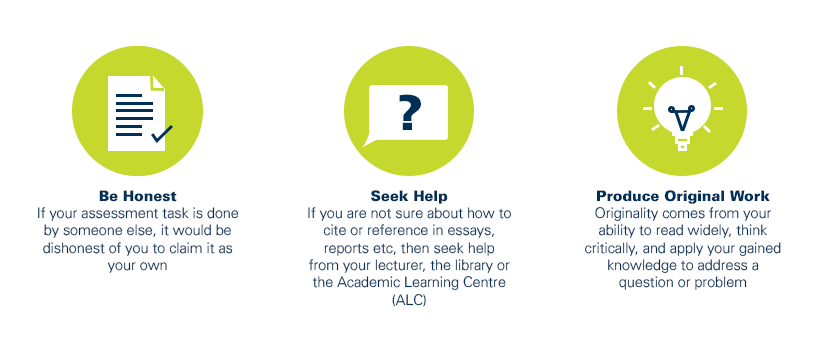
As a CQUniversity student you are expected to act honestly in all aspects of your academic work.
Any assessable work undertaken or submitted for review or assessment must be your own work. Assessable work is any type of work you do to meet the assessment requirements in the unit, including draft work submitted for review and feedback and final work to be assessed.
When you use the ideas, words or data of others in your assessment, you must thoroughly and clearly acknowledge the source of this information by using the correct referencing style for your unit. Using others’ work without proper acknowledgement may be considered a form of intellectual dishonesty.
Participating honestly, respectfully, responsibly, and fairly in your university study ensures the CQUniversity qualification you earn will be valued as a true indication of your individual academic achievement and will continue to receive the respect and recognition it deserves.
As a student, you are responsible for reading and following CQUniversity’s policies, including the Student Academic Integrity Policy and Procedure. This policy sets out CQUniversity’s expectations of you to act with integrity, examples of academic integrity breaches to avoid, the processes used to address alleged breaches of academic integrity, and potential penalties.
What is a breach of academic integrity?
A breach of academic integrity includes but is not limited to plagiarism, self-plagiarism, collusion, cheating, contract cheating, and academic misconduct. The Student Academic Integrity Policy and Procedure defines what these terms mean and gives examples.
Why is academic integrity important?
A breach of academic integrity may result in one or more penalties, including suspension or even expulsion from the University. It can also have negative implications for student visas and future enrolment at CQUniversity or elsewhere. Students who engage in contract cheating also risk being blackmailed by contract cheating services.
Where can I get assistance?
For academic advice and guidance, the Academic Learning Centre (ALC) can support you in becoming confident in completing assessments with integrity and of high standard.
What can you do to act with integrity?