Overview
Engineers are often required to evaluate the performance of various types of engineering assets. The ability to analyse maintenance data and develop effective maintenance plans are important skills for today’s engineers. This unit will introduce you to asset maintenance standards, strategies, philosophies, and procedures, including the basic principles of asset management systems. You will investigate and report on key concepts relating to asset and maintenance management in engineering organisations. You will learn the fundamentals of asset maintenance and management strategies, reliability, and life cycle engineering of assets to maximise and optimise their value. You will gain insight into the governing ISO standards and their application in real-world scenarios. You will learn how to use different diagnostic tools such as failure mode effect and critical analysis, reliability-centred maintenance, and collect and analyse maintenance data in several engineering contexts.
Details
Pre-requisites or Co-requisites
There are no requisites for this unit.
Important note: Students enrolled in a subsequent unit who failed their pre-requisite unit, should drop the subsequent unit before the census date or within 10 working days of Fail grade notification. Students who do not drop the unit in this timeframe cannot later drop the unit without academic and financial liability. See details in the Assessment Policy and Procedure (Higher Education Coursework).
Offerings For Term 3 - 2026
Attendance Requirements
All on-campus students are expected to attend scheduled classes - in some units, these classes are identified as a mandatory (pass/fail) component and attendance is compulsory. International students, on a student visa, must maintain a full time study load and meet both attendance and academic progress requirements in each study period (satisfactory attendance for International students is defined as maintaining at least an 80% attendance record).
Recommended Student Time Commitment
Each 6-credit Postgraduate unit at CQUniversity requires an overall time commitment of an average of 12.5 hours of study per week, making a total of 150 hours for the unit.
Class Timetable
Assessment Overview
| Assessment Task | Part Weighting (% of assessment) |
Assessment Security Level | Gen AI Guidance Levels |
|---|---|---|---|
| 1. Online Test (20% of unit ) | |||
| Online Quiz(zes) (Online Test) | 100% of 20% | Low | AI-Assisted (Guided Collaboration) |
| 2. Team Project Report (40% of unit · 2 parts ) | |||
| Part 1 – Team Project Report (Group Work) | 50% of 40% | Low | AI-Assisted (Guided Collaboration) |
| Part 2 – Oral Examination (Individual) (Oral Examination) | 50% of 40% | High | No Gen AI Use |
| 3. Individual Project (40% of unit · 2 parts ) | |||
| Part 1 – Individual Project (Applied) Report (Project (applied)) | 50% of 40% | Low | AI-Assisted (Guided Collaboration) |
| Part 2 – Presentation (Individual Project (Applied)) (Presentation) | 50% of 40% | Medium | AI-Assisted (Guided Collaboration) |
Assessment Grading
This is a graded unit: your overall grade will be calculated from the marks or grades for each assessment task, based on the relative weightings shown in the table above. You must obtain an overall mark for the unit of at least 50%, or an overall grade of 'pass' in order to pass the unit. If any 'pass/fail' tasks are shown in the table above they must also be completed successfully ('pass' grade). You must also meet any minimum mark requirements specified for a particular assessment task, as detailed in the 'assessment task' section (note that in some instances, the minimum mark for a task may be greater than 50%). Consult the University's Grades and Results Policy for more details of interim results and final grades.
All University policies are available on the CQUniversity Policy site.
You may wish to view these policies:
- Grades and Results Policy
- Assessment Policy and Procedure (Higher Education Coursework)
- Review of Grade Procedure
- Student Academic Integrity Policy and Procedure
- Academic Progression Policy and Procedure
- Student Refund and Credit Balance Policy and Procedure
- Complaints Policy and Procedure
- Information and Communications Technology Acceptable Use Policy and Procedure
This list is not an exhaustive list of all University policies. The full list of University policies are available on the CQUniversity Policy site.
Feedback, Recommendations and Responses
Every unit is reviewed for enhancement each year. At the most recent review, the following staff and student feedback items were identified and recommendations were made.
Feedback from UC reflection
Students would benefit from personalised consultation with the lecturer.
The lecturer should provide extra consultation time for the required students.
- Apply theoretical principles, standards, frameworks, and strategies underpinning engineering asset and maintenance management through group project and individual assignments
- Analyse the performance of engineering assets using different fault detection, diagnostic, and life cycle management tools
- Apply maintenance and reliability methods to predict the useful life of engineering assets
- Model and predict the performance of engineering assets through data acquisition using analytical and statistical tools
- Critique contemporary theories of leadership for effective management of assets
- Work autonomously and as part of a team to deliver high-quality technical reports.
The Learning Outcomes for this unit are linked with the Engineers Australia Stage 1 Competency Standards for Professional Engineers in the areas of 1. Knowledge and Skill Base, 2. Engineering Application Ability, and 3. Professional and Personal Attributes at the following levels:
Intermediate
1.5 Knowledge of engineering design practice and contextual factors impacting the engineering discipline. (LO: 2I 3I)
1.6 Understanding of the scope, principles, norms, accountabilities and bounds of sustainable engineering practice in the specific discipline. (LO: 3I 5I)
2.2 Fluent application of engineering techniques, tools and resources. (LO: 2I 4I)
2.4 Application of systematic approaches to the conduct and management of engineering projects. (LO: 1I 3I)
3.1 Ethical conduct and professional accountability. (LO: 6I)
3.2 Effective oral and written communication in professional and lay domains. (LO: 5I)
3.4 Professional use and management of information. (LO: 4I)
3.5 Orderly management of self and professional conduct. (LO: 5I)
3.6 Effective team membership and team leadership. (LO: 6I)
Advanced
1.2 Conceptual understanding of the mathematics, numerical analysis, statistics, and computer and information sciences that underpin the engineering discipline. (LO: 3A)
1.4 Discernment of knowledge development and research directions within the engineering discipline. (LO: 1A)
Note: LO refers to the Learning Outcomes number(s) that link to the competency and the levels: N – Introductory, I – Intermediate and A – Advanced.
Refer to the Engineering Postgraduate Units Moodle site for further information on the Engineers Australia Stage 1 Competency Standard for Professional Engineers and course-level mapping information https://moodle.cqu.edu.au/course/view.php?id=11382
Alignment of Assessment Tasks to Learning Outcomes
| Assessment Tasks | Learning Outcomes | |||||
|---|---|---|---|---|---|---|
| 1 | 2 | 3 | 4 | 5 | 6 | |
|
1.
Assessment 1
(20% of unit )
Online Test
|
||||||
|
2.
Assessment 2
(40% of unit · 2 parts
)
Part 1 -
Group Work
Part 2 -
Oral Examination
|
||||||
|
3.
Assessment 3
(40% of unit · 2 parts
)
Part 1 -
Project (applied)
Part 2 -
Presentation
|
||||||
Alignment of Graduate Attributes to Learning Outcomes
| Graduate Attributes | Learning Outcomes | |||||
|---|---|---|---|---|---|---|
| 1 | 2 | 3 | 4 | 5 | 6 | |
| 1 - Knowledge | ||||||
| 2 - Communication | ||||||
| 3 - Cognitive, technical and creative skills | ||||||
| 4 - Research | ||||||
| 5 - Self-management | ||||||
| 6 - Ethical and Professional Responsibility | ||||||
| 7 - Leadership | ||||||
| 8 - First Nations Knowledges | ||||||
| 9 - Aboriginal and Torres Strait Islander Cultures | ||||||
Textbooks
Physical Asset Management
- Authors: Hastings, Nicholas Anthony John
- Springer Verlag
- ISBN: 9781848827516
Reliability Centered Maintenance - Implementation Made Simple
- Authors: Neil Bloom
- McGraw Hill
- ISBN: 0071460691
IT Resources
- CQUniversity Student Email
- Internet
- Unit Website (Moodle)
All submissions for this unit must use the referencing style: Harvard (author-date)
For further information, see the Assessment Tasks.
m.nabi@cqu.edu.au
Week 1
Begin Date: 09 Nov 2026Module/Topic
Unit overview.
Introducing industrial assets and maintenance management.
Evolution of asset maintenance.
Chapter
Textbook chapter (Hastings) - 1.
Events and Submissions/Topic
Assessment overview.
Lecture and Tutorial classes.
Week 2
Begin Date: 16 Nov 2026Module/Topic
Principles of asset maintenance; Applicable management theory.
Chapter
Textbook chapters (Hastings) - 2, and 3.
Events and Submissions/Topic
Lecture and Tutorial classes.
Week 3
Begin Date: 23 Nov 2026Module/Topic
Maintenance planning and scheduling.
Chapter
Textbook chapter (Hastings) - 7.
Events and Submissions/Topic
Lecture and Tutorial classes.
Week 4
Begin Date: 30 Nov 2026Module/Topic
Methods for maintenance plans, and budgets developments.
Chapter
Textbook chapters (Hastings)- 2, 4, 5, 6, 12, and 29.
Events and Submissions/Topic
Lecture and Tutorial classes.
Week 5
Begin Date: 07 Dec 2026Module/Topic
Maintenance engineering management principle – 1.
Chapter
Textbook chapters (Hastings) - 4, 5, 6, and 8.
Events and Submissions/Topic
Lecture and Tutorial classes.
Online quiz #1
Week 6
Begin Date: 14 Dec 2026Module/Topic
Maintenance engineering management principle – 2
Chapter
Textbook Chapters (Hastings) - 4, 5, 6, 8, and 16.
Events and Submissions/Topic
Lecture and Tutorial classes.
Team Project Report Due: Week 6 Thursday (17 Dec 2026) 3:00 pm AEST
Vacation Week
Begin Date: 21 Dec 2026Module/Topic
Vacation Week
Chapter
NA
Events and Submissions/Topic
Vacation Week
Week 7
Begin Date: 04 Jan 2027Module/Topic
Reliability centered maintenance principle – 1.
Chapter
Textbook Chapter (Hastings) – 21
Textbook Chapter (Bloom) – 2
Events and Submissions/Topic
Lecture and Tutorial classes.
Oral Examination (Individual) Due: Week 7 Wednesday (6 Jan 2027) 12:00 am AEST
Week 8
Begin Date: 11 Jan 2027Module/Topic
Reliability centered maintenance principle – 2.
Chapter
Textbook Chapters (Bloom) – 4, and 5.
Events and Submissions/Topic
Lecture and Tutorial classes.
Week 9
Begin Date: 18 Jan 2027Module/Topic
Performance measures in maintenance engineering and management.
Chapter
Textbook Chapter (Hastings) – 28.
Events and Submissions/Topic
Lecture and Tutorial classes.
Week 10
Begin Date: 25 Jan 2027Module/Topic
Technologies in maintenance management, and engineering practices.
Chapter
Textbook Chapter (Hastings) - 13, and 21.
Textbook Chapter (Bloom) – 7, and 9.
Events and Submissions/Topic
Lecture and Tutorial classes.
Online quiz #2
Week 11
Begin Date: 01 Feb 2027Module/Topic
Safety issues in maintenance engineering, and managements.
Chapter
Textbook Chapters (Hastings) - 15, and 22.
Events and Submissions/Topic
Lecture and Tutorial classes.
Individual Project (Applied) Report Due: Week 11 Thursday (4 Feb 2027) 4:00 pm AEST
Week 12
Begin Date: 08 Feb 2027Module/Topic
Revision.
Chapter
Events and Submissions/Topic
Sharing industrial experiences with students.
Presentation (Individual Project (Applied)) Due: Week 12 Wednesday (10 Feb 2027) 10:00 am AEST
Exam Week
Begin Date: 15 Feb 2027Module/Topic
Chapter
Events and Submissions/Topic
Week 12
Begin Date: 07 Feb 2028Module/Topic
Revision.
Chapter
Events and Submissions/Topic
Sharing industrial experiences with students.
1. Online Test ( 20% of unit )
Online Test
This is a mandatory assessment item. This assessment item consists of two online quizzes, which can be accessed through the Moodle site. Each quiz will comprise a combination of true/false and multiple-choice questions and will assess the learning content covered during the preceding four weeks and the corresponding teaching week. Specifically, Online Quiz 1 will cover the content from Weeks 1–5, while Online Quiz 2 will cover the content from Weeks 6–10.
Each online quiz will be available from Thursday of the designated testing week until Sunday Midnight of the same week, allowing you to complete the quiz at a time that is convenient for you. You will have two attempts for each quiz, and the higher mark from the two attempts will be recorded in the Moodle Gradebook. Each attempt will have a time limit of 60 minutes. Once a quiz has been started, it cannot be paused or resumed later, and it will no longer be accessible after the closing time.
There are no restrictions on the venue or learning materials you may use while completing the quizzes. However, given the limited time available, you are strongly encouraged to review and prepare the relevant learning materials in advance to ensure that you can complete the questions within the allocated time.
Quizzes will be held on teaching Week 5 & Week 10, respectively. The due date and time will be available on Moodle for the corresponding week.
Students will receive the marks at the end of the attempt.
- The total marks of each of the two online quizzes will be scaled to out of 20 marks for the unit total.
- Numerical answers must be entered to 3 significant figures.
- THERE IS NO OPPORTUNITY TO REDO THIS ASSESSMENT.
- Apply theoretical principles, standards, frameworks, and strategies underpinning engineering asset and maintenance management through group project and individual assignments
- Apply maintenance and reliability methods to predict the useful life of engineering assets
- Critique contemporary theories of leadership for effective management of assets
2. Team Project Report ( 40% of unit · 2 parts )
Part 1 - Group Work
Part 1 of Assessment 2
This is also a mandatory assessment item. In this team assessment, students will form teams of 2–4 members, depending on the number of students enrolled, and undertake an engineering asset and maintenance management project of their choice. Each team will investigate a relevant engineering problem or asset and prepare a high-quality professional report presenting their findings.
This assessment provides students with an opportunity to develop and demonstrate their ability to apply asset and maintenance management tools and principles to support effective engineering decision-making. It will also assess students’ ability to work effectively as a team, conduct relevant background research, retrieve and process information, undertake original engineering analysis, and present logical interpretations, conclusions, and recommendations.
The final submission will be a group report that demonstrates the development of the project from problem identification through to the investigation and evaluation of potential solutions. The report should include appropriate analysis, discussion, conclusions, and recommendations, and should clearly explain the development and implementation strategy for the proposed solution, including any relevant assumptions, constraints, and limitations.
The report must be presented in a professional and technically appropriate format. It should contain sufficient detail for another engineer to understand, verify, and, where necessary, reproduce the work undertaken. To maximise the time available for focusing on the core objectives of the unit, students are encouraged to use hand-drawn diagrams and handwritten mathematical equations or calculations, provided these are clear, legible, and appropriately scanned into the final document. Detailed marking criteria, specific to the project requirements and assessment components, are available on the Moodle site.
Week 6 Thursday (17 Dec 2026) 3:00 pm AEST
Only one report from each Team should be submitted via the Moodle submission link.
Week 8 Thursday (14 Jan 2027)
The marks and comments are expected to be uploaded to Moodle within two weeks.
A criteria-referenced assessment practice will be used to assess this task. This assessment's philosophy is to determine students' ability to work in a small team, use technical tools to analyse and evaluate information or data, and communication tools to showcase their problem-solving and communication skills. Although this is a group submission, each member of the group may receive varying grades. In the final report, the group will be asked to specify each members percentage contribution in the project. This percentage contribution will be used to determine the grade of each student. To help with team management, the percentage of contribution should be discussed at the beginning and end of the project. Each team member should reference their own contributions in the team report by use of the Harvard author-date system.
The group report will be marked on the main elements of analysing a problem leading towards possible solutions, discussion, and conclusions. The report should also be professionally presented, clearly showing, and explaining the development strategy of the solution including any assumptions or limitations. The report should be written and contain enough detail so that an engineer can understand the work described. Detailed marking criteria specific to this assessment are available on the Moodle site.
PLEASE NOTE THAT THERE IS NO OPPORTUNITY TO RESUBMIT OR REDO THIS ASSESSMENT.
- Apply maintenance and reliability methods to predict the useful life of engineering assets
- Model and predict the performance of engineering assets through data acquisition using analytical and statistical tools
- Work autonomously and as part of a team to deliver high-quality technical reports.
Part 2 - Oral Examination
Part 2 of Assessment 2
This is also a mandatory assessment item. This oral exam is a part of your assessment 2. The date and time scheduled in Moodle for the individual oral examination are fixed and cannot be changed. All students are required to attend the oral examination at the scheduled date and time. As the oral examination is an individual component of the assessment, attendance and participation are mandatory requirements for successful completion of the assessment.
Students are expected to make the necessary arrangements in advance to ensure that they are available at the scheduled date and time. Failure to attend the oral examination will result in the student not completing a mandatory component of the assessment and consequently receiving a fail garde for the unit.
Students should also ensure that they are adequately prepared for the oral examination. A set of sample questions and preparation guidance will be provided on Moodle. These materials are intended to indicate the nature, scope and level of understanding expected during the oral examination; however, the questions provided will not be the exact questions used in the examination.
Students are therefore strongly advised to carefully note the scheduled date and time and make all necessary arrangements to attend. The assessment task description, requirements, and marking criteria are available on Moodle. Students are strongly advised to read these materials carefully before commencing the assessment and to ensure that their work addresses all specified requirements and assessment criteria.
THERE WILL BE NO OPPORTUNITY TO REPEAT, REDO OR OTHERWISE UNDERTAKE THIS ASSESSMENT AT A LATER TIME.
Week 7 Wednesday (6 Jan 2027) 12:00 am AEST
Students must attend the oral examination at the date and time specified in Moodle.
Week 9 Thursday (21 Jan 2027)
Marks and comments will be released in two weeks
The assessment will evaluate the following key areas, but is not limited to these areas:
- Project design and implementation: Appropriate application of engineering principles, methods, and relevant software to develop the team project.
- Technical understanding: Demonstrated understanding of the project methodology, assumptions, design parameters, and engineering concepts.
- Analysis and results: Accuracy and quality of analysis, interpretation of results, and ability to draw appropriate conclusions.
- Contribution to team: Demonstrated level of contribution to the team project, as evidenced through the submitted work and individual oral examination.
- Communication and presentation: Ability to clearly and professionally explain the project, justify decisions, and respond appropriately to questions during the oral examination.
- Individual understanding: Demonstrated knowledge of the overall project and the student's specific contribution, including the ability to explain and defend the work independently.
Further details regarding the assessment requirements, criteria, and expectations are available on Moodle.
No submission method provided.
- Apply maintenance and reliability methods to predict the useful life of engineering assets
- Model and predict the performance of engineering assets through data acquisition using analytical and statistical tools
- Work autonomously and as part of a team to deliver high-quality technical reports.
3. Individual Project ( 40% of unit · 2 parts )
Part 1 - Project (applied)
Each student will work on an engineering situation where they will have to model and predict the performance of an engineering asset. The project will investigate failures of relevant engineering components or failures of a related product in a facility. The aim of the undertaken project work is to present a complete solution to the problem in a cohesive and holistic manner. They must thoroughly research the situation, apply relevant theories and asset andmaintenance management frameworks, and recommend the most appropriate solution. Thus, in researching, examining, and obtaining an achievable result, students will need to use proper analytical techniques extensively (e.g. Work Study, Queuing Theory, FMECA, Planned Maintenance Optimisation, Pareto Analysis, Control Charts, etc.). The submission will be in the form of an individual report. Detailed marking criteria for the project elements are available on the Moodle site.
Week 11 Thursday (4 Feb 2027) 4:00 pm AEST
The assessment must be submitted via the designated Moodle link within the scheduled date and time.
Exam Week Friday (19 Feb 2027)
Marks and comments will be released on the Certification of Grades day.
The individual report will assess the gain in knowledge, effective self-management, communication, and technical work documentation. This must be substantiated with evidence of individual work. The submission will be assessed based on how well the material in the report demonstrates the student’s ability and understanding of the engineering problem and strategic approach of the maintenance management for the engineering assets. Detailed marking criteria specific to the project elements are available on the Moodle site.
- Analyse the performance of engineering assets using different fault detection, diagnostic, and life cycle management tools
- Model and predict the performance of engineering assets through data acquisition using analytical and statistical tools
- Work autonomously and as part of a team to deliver high-quality technical reports.
Part 2 - Presentation
This is an individual mandatory assessment which is a part of assessment 3. Each student will present their project execution plan and expected outcome. The detailed schedule for the presentation will be available in the Unit Moodle in due time. Students are required to give approximately 12 to 15-minute oral presentation on their project with PowerPoint (PPT) slides followed by approximately 8 to 10 minutes for questions and answers. Each student should upload PPT slides to the Moodle submission link at least 24 hours before the presentation.
Presentation slides (.pptx) must be submitted via the Moodle submission link. The file name should be in the format "Student name_unit code_assessment number.pptx". An example of a file format is "Biru Bilas_ENEM28005_PPT slides.pptx".
PLEASE NOTE THAT IT IS NOT POSSIBLE TO APPLY FOR A POSTPONEMENT OR EXTENSION FOR THIS ASSESSMENT. ALSO, PLEASE NOTE THAT THERE IS NO OPPORTUNITY TO RESUBMIT OR REDO THIS ASSESSMENT.
Week 12 Wednesday (10 Feb 2027) 10:00 am AEST
Students are required to attend the presentation at the date and time scheduled in Moodle.
The marks and comments will be released on the Certification of Grades Day.
Refer to the Moodle site for the detailed marking rubric and assessment criteria used to assess your submission. These criteria outline the expectations for each component of the assessment and provide guidance on how marks are allocated. You are encouraged to review the rubric carefully and use it to reflect on the strengths of your work and areas that may require further improvement. The marks and detailed comments/feedback will be released on the Certification of Grades Day.
- Analyse the performance of engineering assets using different fault detection, diagnostic, and life cycle management tools
- Model and predict the performance of engineering assets through data acquisition using analytical and statistical tools
- Work autonomously and as part of a team to deliver high-quality technical reports.
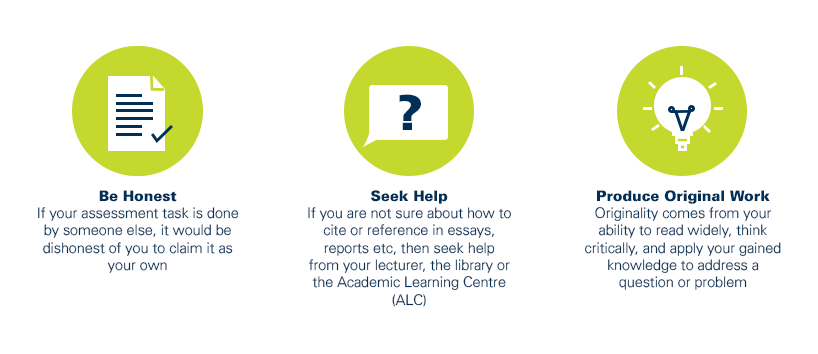
As a CQUniversity student you are expected to act honestly in all aspects of your academic work.
Any assessable work undertaken or submitted for review or assessment must be your own work. Assessable work is any type of work you do to meet the assessment requirements in the unit, including draft work submitted for review and feedback and final work to be assessed.
When you use the ideas, words or data of others in your assessment, you must thoroughly and clearly acknowledge the source of this information by using the correct referencing style for your unit. Using others’ work without proper acknowledgement may be considered a form of intellectual dishonesty.
Participating honestly, respectfully, responsibly, and fairly in your university study ensures the CQUniversity qualification you earn will be valued as a true indication of your individual academic achievement and will continue to receive the respect and recognition it deserves.
As a student, you are responsible for reading and following CQUniversity’s policies, including the Student Academic Integrity Policy and Procedure. This policy sets out CQUniversity’s expectations of you to act with integrity, examples of academic integrity breaches to avoid, the processes used to address alleged breaches of academic integrity, and potential penalties.
What is a breach of academic integrity?
A breach of academic integrity includes but is not limited to plagiarism, self-plagiarism, collusion, cheating, contract cheating, and academic misconduct. The Student Academic Integrity Policy and Procedure defines what these terms mean and gives examples.
Why is academic integrity important?
A breach of academic integrity may result in one or more penalties, including suspension or even expulsion from the University. It can also have negative implications for student visas and future enrolment at CQUniversity or elsewhere. Students who engage in contract cheating also risk being blackmailed by contract cheating services.
Where can I get assistance?
For academic advice and guidance, the Academic Learning Centre (ALC) can support you in becoming confident in completing assessments with integrity and of high standard.
What can you do to act with integrity?