Overview
This project-based unit will introduce you to fluid drive systems and the design and control of integrated drive systems for use in industries. It covers comparison of characteristics, construction, selection, design and operation of fluid drives and control systems; use of mathematical models to analyse performance; machine protection and control schemes; and evaluation of drive system performance. You will apply formulas and explain and record calculations. You will adopt professional approaches to work in teams and learn collaboratively to manage and complete projects. You will manage your own learning; investigate, design and check designed works performed; and communicate professionally using discipline language to present designs and problem solutions. Distance education students are required to have access to a computer, to make frequent use of the internet, and are required to participate in residential school activities.
Details
Pre-requisites or Co-requisites
Pre-requisites: ENEM12006 Fluid Mechanics and ENEM12010 Engineering Dynamics
Important note: Students enrolled in a subsequent unit who failed their pre-requisite unit, should drop the subsequent unit before the census date or within 10 working days of Fail grade notification. Students who do not drop the unit in this timeframe cannot later drop the unit without academic and financial liability. See details in the Assessment Policy and Procedure (Higher Education Coursework).
Offerings For Term 1 - 2026
Attendance Requirements
All on-campus students are expected to attend scheduled classes - in some units, these classes are identified as a mandatory (pass/fail) component and attendance is compulsory. International students, on a student visa, must maintain a full time study load and meet both attendance and academic progress requirements in each study period (satisfactory attendance for International students is defined as maintaining at least an 80% attendance record).
Recommended Student Time Commitment
Each 6-credit Undergraduate unit at CQUniversity requires an overall time commitment of an average of 12.5 hours of study per week, making a total of 150 hours for the unit.
Class Timetable
Assessment Overview
Assessment Grading
This is a graded unit: your overall grade will be calculated from the marks or grades for each assessment task, based on the relative weightings shown in the table above. You must obtain an overall mark for the unit of at least 50%, or an overall grade of 'pass' in order to pass the unit. If any 'pass/fail' tasks are shown in the table above they must also be completed successfully ('pass' grade). You must also meet any minimum mark requirements specified for a particular assessment task, as detailed in the 'assessment task' section (note that in some instances, the minimum mark for a task may be greater than 50%). Consult the University's Grades and Results Policy for more details of interim results and final grades.
All University policies are available on the CQUniversity Policy site.
You may wish to view these policies:
- Grades and Results Policy
- Assessment Policy and Procedure (Higher Education Coursework)
- Review of Grade Procedure
- Student Academic Integrity Policy and Procedure
- Academic Progression Policy and Procedure
- Student Refund and Credit Balance Policy and Procedure
- Complaints Policy and Procedure
- Information and Communications Technology Acceptable Use Policy and Procedure
This list is not an exhaustive list of all University policies. The full list of University policies are available on the CQUniversity Policy site.
Feedback, Recommendations and Responses
Every unit is reviewed for enhancement each year. At the most recent review, the following staff and student feedback items were identified and recommendations were made.
Feedback from SUTE of unit comments report
The weekly materials and information flow are managed in the right order.
Continue to follow the delivery pattern and unit materials.
Feedback from SUTE of unit comments report
Lab demonstrations need improvement.
Better laboratory demonstrations should be planned based on available resources.
- Design and analyse the fluid drives using mathematical modeling
- Evaluate the charateristics of different drive systems with regard to the application
- Design protection and control systems
- Analyse electro-mechanical power and energy conversion systems
- Evaluate methods to improve energy efficiency
- Create professional documentation using terminology, symbols and diagrams related to electric and fluid drives.
The Learning Outcomes for this unit are linked with the Engineers Australia Stage 1 Competency Standards for Professional Engineers in the areas of 1. Knowledge and Skill Base, 2. Engineering Application Ability and 3. Professional and Personal Attributes at the following levels:
Advanced
Refer to the Engineering Undergraduate Course Moodle site for further information on the Engineers Australia's Stage 1 Competency Standard for Professional Engineers and course level mapping information
Alignment of Assessment Tasks to Learning Outcomes
| Assessment Tasks | Learning Outcomes | |||||
|---|---|---|---|---|---|---|
| 1 | 2 | 3 | 4 | 5 | 6 | |
| 1 - Written Assessment - 20% | ||||||
| 2 - Written Assessment - 20% | ||||||
| 3 - Practical and Written Assessment - 20% | ||||||
| 4 - Online Quiz(zes) - 40% | ||||||
Alignment of Graduate Attributes to Learning Outcomes
| Graduate Attributes | Learning Outcomes | |||||
|---|---|---|---|---|---|---|
| 1 | 2 | 3 | 4 | 5 | 6 | |
| 1 - Communication | ||||||
| 2 - Problem Solving | ||||||
| 3 - Critical Thinking | ||||||
| 4 - Information Literacy | ||||||
| 5 - Team Work | ||||||
| 6 - Information Technology Competence | ||||||
| 7 - Cross Cultural Competence | ||||||
| 8 - Ethical practice | ||||||
| 9 - Social Innovation | ||||||
| 10 - First Nations Knowledges | ||||||
| 11 - Aboriginal and Torres Strait Islander Cultures | ||||||
Alignment of Assessment Tasks to Graduate Attributes
| Assessment Tasks | Graduate Attributes | ||||||||||
|---|---|---|---|---|---|---|---|---|---|---|---|
| 1 | 2 | 3 | 4 | 5 | 6 | 7 | 8 | 9 | 10 | 11 | |
| 1 - Written Assessment - 20% | |||||||||||
| 2 - Written Assessment - 20% | |||||||||||
| 3 - Practical and Written Assessment - 20% | |||||||||||
| 4 - Online Quiz(zes) - 40% | |||||||||||
Textbooks
Fluid Power with Applications
- Edition: 7th (2014)
- Authors: Esposito
- Pearson
- Essek Essek , Essek , UK
- ISBN: 978-1-292-02387-8
IT Resources
- CQUniversity Student Email
- Internet
- Unit Website (Moodle)
All submissions for this unit must use the referencing style: Harvard (author-date)
For further information, see the Assessment Tasks.
n.mandal@cqu.edu.au
Week 1
Begin Date: 09 Mar 2026Module/Topic
Lecture: Introduction to Fluid
Power
Chapter
Chapters 1~4 of Esposito
Events and Submissions/Topic
Tutorial: Four tute problems will be
solved & demonstration of
SimScape software, Project 1
scope of hydraulic power systems
will be introduced. Team building
activities will be finished.
Week 2
Begin Date: 16 Mar 2026Module/Topic
Lecture: Hydraulic Pumps
Chapter
Chapter 5 of Esposito
Events and Submissions/Topic
Tutorial: Four tute problems will be
solved & SimScape Library
tutorials, For project 1, the
progress of it will be monitored
and recorded using meeting
minutes, 4-square charts,
agenda items, and weekly
planning documents
Week 3
Begin Date: 23 Mar 2026Module/Topic
Lecture: Hydraulic motors
Chapter
Chapter 7 of Esposito
Events and Submissions/Topic
Tutorial: Four tute problems will be
solved and SimScape tutorials, For
project 1, the progress of it will
be monitored and recorded
using meeting minutes, 4-
square charts, agenda items,
and weekly planning
documents
Week 4
Begin Date: 30 Mar 2026Module/Topic
Lecture: Hydraulic Cylinders,
Cushioning and shock absorbers
Chapter
Chapter 6 of Esposito
Events and Submissions/Topic
Tutorial: Four tute problems will be
solved and SimScape tutorials, For
project 1, the progress of it will
be monitored and recorded
using meeting minutes, 4-
square charts, agenda items,
and weekly planning
documents
Week 5
Begin Date: 06 Apr 2026Module/Topic
Lecture: Hydraulic valves and
controls
Chapter
Chapters 8, 16 of Esposito
Events and Submissions/Topic
Tutorial: Four tute problems will be
solved and SimScape tutorials, For
project 1, the progress of it will
be monitored and recorded
using meeting minutes, 4-
square charts, agenda items,
and weekly planning
documents
Week 6
Begin Date: 13 Apr 2026Module/Topic
Lecture: Hydraulic Circuit Design
and Analysis
Chapter
Chapter 9 of Esposito
Events and Submissions/Topic
Tutorial: Four tute problems will be
solved, For project 1, team
presentation.
Project 1 Due: Week 6 Friday (17 Apr 2026) 11:45 pm AEST
Vacation Week
Begin Date: 20 Apr 2026Module/Topic
Teaching free week
Chapter
N/A
Events and Submissions/Topic
Week 7
Begin Date: 27 Apr 2026Module/Topic
Lecture: Hydraulic Accumulators
and receivers, further controls of
fluid power systems
Chapter
Chapters11, 15, 16 of Esposito
Events and Submissions/Topic
Tutorial: Four tute problems will be
solved, Project 2 scope of fluid
power systems will be introduced.
The same Team will be employed
if it is ok
Week 8
Begin Date: 04 May 2026Module/Topic
Lecture: Hydraulic Conductors and
fittings
Chapter
Chapter 10 of Esposito
Events and Submissions/Topic
Tutorial: Four tute problems will be
solved, For project 2, the progress
of it will be monitored and
recorded using meeting minutes,
4-square charts, agenda items,
and weekly planning documents
Week 9
Begin Date: 11 May 2026Module/Topic
Lecture: Pneumatics: components
- compressors, circuits, and
applications
Chapter
Chapters 13, 14 of Esposito
Events and Submissions/Topic
Tutorial: Four tute problems will be
solved, For project 2, the progress
of it will be monitored and
recorded using meeting minutes,
4-square charts, agenda items,
and weekly planning documents
Laboratory Team Report Due: Week 9 Friday (15 May 2026) 11:45 pm AEST
Week 10
Begin Date: 18 May 2026Module/Topic
Lecture: Electrical Machines and
controls by guest lecturers
Chapter
Chapters 15, 17 of Esposito,
lecture notes
Events and Submissions/Topic
Tutorial: For project 2, the progress
of it will be monitored and
recorded using meeting minutes,
4-square charts, agenda items,
and weekly planning documents
Week 11
Begin Date: 25 May 2026Module/Topic
Lecture: Maintenance of Hydraulic
System
Chapter
Chapter 12 of Esposito
Events and Submissions/Topic
Tutorial: An online quiz will be
held for 2.5 hours
Online Test Due: Week 11 Tuesday (26 May 2026) 11:00 am AEST
Week 12
Begin Date: 01 Jun 2026Module/Topic
Lecture: Review of the unit
Chapter
Chapters: all
Events and Submissions/Topic
Tutorial: Project 2 formal progress
presentation in the workshop
section and getting ready to
submit the team project on Friday,
Week 12 in the submission link set
in the Moodle.
Project 2 Due: Week 12 Friday (5 June 2026) 11:45 pm AEST
Exam Week
Begin Date: 08 Jun 2026Module/Topic
Chapter
Events and Submissions/Topic
Vacation/Exam Week
Begin Date: 15 Jun 2026Module/Topic
Chapter
Events and Submissions/Topic
1 Written Assessment
Project 1 is a team project. It focuses on the content of the unit covered in week 1 to week 6. The scope of Assignment 1
will be populated in the unit Moodle before term starts and will be discussed in the week 1 tutorial
session. It is a team submission. A team project presentation of this project will be held on Week 6 in tutorial time and
venue.
Project 1 is focusing on Hydraulic fluid power applications. Matlab, SimScape and SimScape simulation software will be used to model the fluid power system design as per the Project 1 scopes provided in the unit Moodle site.
Week 6 Friday (17 Apr 2026) 11:45 pm AEST
Compulsory team submission
Week 8 Friday (8 May 2026)
After two weeks of submission date
This team-based project will be assessed considering both technical and professional aspects. The technical aspects
cover a wide range of applications of design and analysis of a hydraulic system, comparison and safety checking of the
new design using proper engineering procedures. The professional skills cover a higher level of teamwork, leadership,
research and communication skills.
Students should refer to the Unit Moodle site for team project report assessment criteria and individual marking criteria
of the team-based projects. A detailed description of both marking schemes will be provided in the Moodle site on time.
It is based on some factors such as Team Charter and/or peer assessments.
- Design and analyse the fluid drives using mathematical modeling
- Evaluate the charateristics of different drive systems with regard to the application
- Analyse electro-mechanical power and energy conversion systems
- Evaluate methods to improve energy efficiency
- Create professional documentation using terminology, symbols and diagrams related to electric and fluid drives.
- Communication
- Problem Solving
- Critical Thinking
- Information Literacy
- Team Work
- Information Technology Competence
- Ethical practice
2 Written Assessment
Project 2 is a team project. It focuses on the content of the unit covered in week 1 to week 12. The scope of project 2 will
be populated in the unit Moodle in Week 7 and will be discussed in the week 7 tutorial session. It is a team submission. A
team project presentation of this project will be held on Week 12 in tutorial time and venue.
Project 2 is focusing on Pneumatic fluid power applications. Matlab, SimScape and SimScape simulation software will be used to model the fluid power system design as per the Project 2 scopes provided in the unit Moodle site.
Week 12 Friday (5 June 2026) 11:45 pm AEST
Compulsory team submission
Exam Week Friday (12 June 2026)
After two weeks of submission date
This team-based project will be assessed considering both technical and professional aspects. The technical aspects
cover a wide range of applications of design and analysis of a fluid powered system, comparison and safety checking of
the new design using proper engineering procedures. The professional skills cover a higher level of teamwork,
leadership, research and communication skills.
Students should refer to the Unit Moodle site for team project report assessment criteria and individual marking criteria
of the team-based projects. A detailed description of both marking schemes will be provided in the Moodle site on time.
It is based on some factors such as Team Charter and/or peer assessments.
- Design and analyse the fluid drives using mathematical modeling
- Evaluate the charateristics of different drive systems with regard to the application
- Analyse electro-mechanical power and energy conversion systems
- Evaluate methods to improve energy efficiency
- Communication
- Problem Solving
- Critical Thinking
- Information Literacy
- Team Work
- Information Technology Competence
- Ethical practice
3 Practical and Written Assessment
It is based on the content covered in Hydraulic Test rig experiments. It is a team submission. For any change of date and
time, the students will be notified before in the Moodle site. Pl. see the information in the Moodle site regularly.
Week 9 Friday (15 May 2026) 11:45 pm AEST
Compulsory Team submission
Week 11 Friday (29 May 2026)
After two weeks of submission date
Assessment criteria are based on detailed calculations and presentations of data obtained in the hydraulic test rig
experiments. It is based on accuracy in calculations, and validation of results obtained by properly interpreting results. It
is also based on the way how students are putting symbols and hydraulic diagrams to present the sequence of
operations in the experiments.
No team charter approach or other marking schemes are considered for individual student marking. All students on
a team will get the same marks as those on the team lab report. The discipline's Practical assessment marking rubric will be available in the unit Moodle site.
- Design protection and control systems
- Create professional documentation using terminology, symbols and diagrams related to electric and fluid drives.
- Communication
- Problem Solving
- Critical Thinking
- Information Literacy
- Team Work
- Information Technology Competence
4 Online Quiz(zes)
This is an invigilated individual online class test that will be held in Week 11 of this unit during tutorial time. The duration
will be 2.5 hours. The detailed description and important information relating to this individual online test will be
populated on the unit Moodle site.
Week 11 Tuesday (26 May 2026) 11:00 am AEST
Due date and time is based on the tutorial time of this unit set by the timetable team. It will be held in Week 11. Information on it will be populated in Moodle site and weekly e-mails.
After a few days or the selected day stated above
You have to employ your technical knowledge and problem-solving skills to answer the questions. There are yes/no,
multiple-choice questions. You have to get answers to some questions by proper calculations focusing on units of
parameters. For a right answer, you will get 1 (one) and for a wrong answer, you will get a 0 (zero).
- Design protection and control systems
- Problem Solving
- Critical Thinking
- Information Literacy
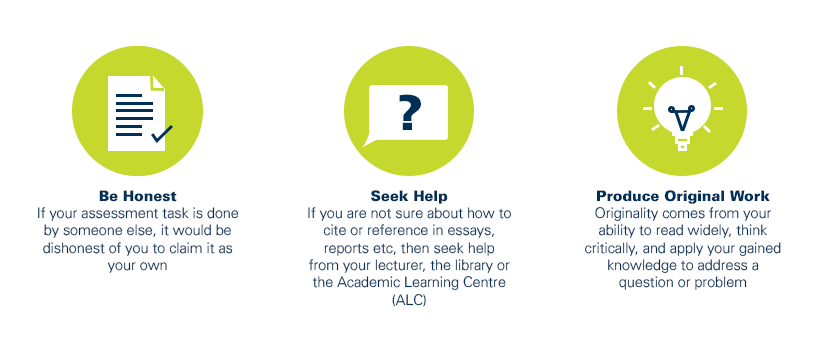
As a CQUniversity student you are expected to act honestly in all aspects of your academic work.
Any assessable work undertaken or submitted for review or assessment must be your own work. Assessable work is any type of work you do to meet the assessment requirements in the unit, including draft work submitted for review and feedback and final work to be assessed.
When you use the ideas, words or data of others in your assessment, you must thoroughly and clearly acknowledge the source of this information by using the correct referencing style for your unit. Using others’ work without proper acknowledgement may be considered a form of intellectual dishonesty.
Participating honestly, respectfully, responsibly, and fairly in your university study ensures the CQUniversity qualification you earn will be valued as a true indication of your individual academic achievement and will continue to receive the respect and recognition it deserves.
As a student, you are responsible for reading and following CQUniversity’s policies, including the Student Academic Integrity Policy and Procedure. This policy sets out CQUniversity’s expectations of you to act with integrity, examples of academic integrity breaches to avoid, the processes used to address alleged breaches of academic integrity, and potential penalties.
What is a breach of academic integrity?
A breach of academic integrity includes but is not limited to plagiarism, self-plagiarism, collusion, cheating, contract cheating, and academic misconduct. The Student Academic Integrity Policy and Procedure defines what these terms mean and gives examples.
Why is academic integrity important?
A breach of academic integrity may result in one or more penalties, including suspension or even expulsion from the University. It can also have negative implications for student visas and future enrolment at CQUniversity or elsewhere. Students who engage in contract cheating also risk being blackmailed by contract cheating services.
Where can I get assistance?
For academic advice and guidance, the Academic Learning Centre (ALC) can support you in becoming confident in completing assessments with integrity and of high standard.
What can you do to act with integrity?