Overview
In this unit, you will develop skills required to analyse the operation and maintenance of solid and liquid material handling systems. The characteristics of solid and liquid materials, and how their properties affect storage, conveying, pumping, and transfer operations, will be explored. Mass transfer principles are introduced with a focus on common operations, industrial applications, and basic equipment design. The unit also covers the dynamics of fluids and solid systems to support practical engineering analysis. You will evaluate the requirements for reliable conveyor and pumping systems, design hoppers and tanks, and identify suitable dust extraction and fluid-handling equipment. You will explain the use of feeders, valves, and related process components and apply materials handling and mass transfer principles to engineering problems. You will work independently to produce clear technical documentation that outlines methods, assumptions, and analysis. This unit supports the UN Sustainable Development Goal 9 (Industry, Innovation, and Infrastructure) by equipping you with the knowledge and skills to design efficient, reliable, and sustainable industrial material handling systems. In this unit, you are expected to complete mandatory practical activities. Refer to the Engineering Undergraduate Course Moodle site for proposed dates.
Details
Pre-requisites or Co-requisites
ENEG11006 Engineering Statics and MATH11218 Eng Foundation Mathematics OR MATH11160 Technology Mathematics
Important note: Students enrolled in a subsequent unit who failed their pre-requisite unit, should drop the subsequent unit before the census date or within 10 working days of Fail grade notification. Students who do not drop the unit in this timeframe cannot later drop the unit without academic and financial liability. See details in the Assessment Policy and Procedure (Higher Education Coursework).
Offerings For Term 1 - 2026
Attendance Requirements
All on-campus students are expected to attend scheduled classes - in some units, these classes are identified as a mandatory (pass/fail) component and attendance is compulsory. International students, on a student visa, must maintain a full time study load and meet both attendance and academic progress requirements in each study period (satisfactory attendance for International students is defined as maintaining at least an 80% attendance record).
Recommended Student Time Commitment
Each 6-credit Undergraduate unit at CQUniversity requires an overall time commitment of an average of 12.5 hours of study per week, making a total of 150 hours for the unit.
Class Timetable
Assessment Overview
Assessment Grading
This is a graded unit: your overall grade will be calculated from the marks or grades for each assessment task, based on the relative weightings shown in the table above. You must obtain an overall mark for the unit of at least 50%, or an overall grade of 'pass' in order to pass the unit. If any 'pass/fail' tasks are shown in the table above they must also be completed successfully ('pass' grade). You must also meet any minimum mark requirements specified for a particular assessment task, as detailed in the 'assessment task' section (note that in some instances, the minimum mark for a task may be greater than 50%). Consult the University's Grades and Results Policy for more details of interim results and final grades.
All University policies are available on the CQUniversity Policy site.
You may wish to view these policies:
- Grades and Results Policy
- Assessment Policy and Procedure (Higher Education Coursework)
- Review of Grade Procedure
- Student Academic Integrity Policy and Procedure
- Academic Progression Policy and Procedure
- Student Refund and Credit Balance Policy and Procedure
- Complaints Policy and Procedure
- Information and Communications Technology Acceptable Use Policy and Procedure
This list is not an exhaustive list of all University policies. The full list of University policies are available on the CQUniversity Policy site.
Feedback, Recommendations and Responses
Every unit is reviewed for enhancement each year. At the most recent review, the following staff and student feedback items were identified and recommendations were made.
Feedback from SUTE
Lectures and tutorials were clear, and the site visits strengthened applied understanding and industry relevance.
Retain the site visit and maintain the good practice in unit delivery.
Feedback from SUTE
The scope of assignment two was perceived as excessive.
Assessment 2 was designed to make them AI-proof, which some students find overwhelming. The tasks will be reviewed to help manage the workload.
Feedback from SUTE
Some laboratory sessions were time‑constrained.
Add an overflow timeslot to provide contingency for students.
Feedback from SUTE
Students noted the importance of timely feedback to support their learning and improvement.
The timing of assessments should be adjusted to enable students to effectively apply feedback from earlier assessments to subsequent tasks.
- Characterise the properties of bulk materials and explain their impact on the design components
- Apply mass transfer principles to common industrial operations and the design requirements for associated equipment
- Analyse the dynamics of fluids and solid systems to support practical engineering calculations in materials handling
- Design and select hoppers, feeders, valves, tanks, and other key components to ensure reliable flow and meet diverse industrial application needs
- Identify appropriate dust extraction systems and dust treatment methods for safe and efficient operation
- Design and select conveyor and pumping systems that meet reliability and performance requirements
- Work independently and in teams to solve problems and clearly record and communicate the methods used and the rationale behind each approach in a professional manner.
The Learning Outcomes for this unit are linked with the Engineers Australia Stage 1 Competency Standards for Professional Engineers in the areas of 1. Knowledge and Skill Base, 2. Engineering Application Ability and 3. Professional and Personal Attributes at the following levels:
Introductory
3.1 Ethical conduct and professional accountability. (LO: 6N 7N)
3.3 Creative, innovative and pro-active demeanour. (LO: 7N)
3.6 Effective team membership and team leadership. (LO: 2N 3N 7N)
Intermediate
1.1 Comprehensive, theory-based understanding of the underpinning natural and physical sciences and the engineering fundamentals applicable to the engineering discipline. (LO: 1I 2I 3N 4I 5N 6N)
1.2 Conceptual understanding of the mathematics, numerical analysis, statistics, and computer and information sciences which underpin the engineering discipline. (LO: 1N 2N 4I 6N)
1.3 In-depth understanding of specialist bodies of knowledge within the engineering discipline. (LO: 1I 2I 3I 4I 5I 6N)
1.5 Knowledge of engineering design practice and contextual factors impacting the engineering discipline. (LO: 1I 2I 3I 4I 5N 6N)
2.2 Fluent application of engineering techniques, tools and resources. (LO: 1I 2N 3N 4N)
2.3 Application of systematic engineering synthesis and design processes. (LO: 1I 2I 3N 4I 5N 6I)
2.4 Application of systematic approaches to the conduct and management of engineering projects. (LO: 2I 4I)
3.2 Effective oral and written communication in professional and lay domains. (LO: 1N 2I 3I 4I 5I 6N 7I)
3.4 Professional use and management of information. (LO: 7I)
Advanced
1.4 Discernment of knowledge development and research directions within the engineering discipline. (LO: 1N 2I 3I 4A 5N 6I)
1.6 Understanding of the scope, principles, norms, accountabilities and bounds of sustainable engineering practice in the specific discipline. (LO: 2A 4A)
2.1 Application of established engineering methods to complex engineering problem solving. (LO: 1I 2A 3N 4A 5N 6N 7I)
Note: LO refers to the Learning Outcome number(s) which link to the competency and the levels: N – Introductory, I – Intermediate and A - Advanced.
Refer to the Engineering Undergraduate Course Moodle site for further information on the Engineers Australia's Stage 1 Competency Standard for Professional Engineers and course level mapping information https://moodle.cqu.edu.au/course/view.php?id=1511
Alignment of Assessment Tasks to Learning Outcomes
| Assessment Tasks | Learning Outcomes | ||||||
|---|---|---|---|---|---|---|---|
| 1 | 2 | 3 | 4 | 5 | 6 | 7 | |
| 1 - Written Assessment - 40% | |||||||
| 2 - Written Assessment - 35% | |||||||
| 3 - Practical and Written Assessment - 25% | |||||||
Alignment of Graduate Attributes to Learning Outcomes
| Graduate Attributes | Learning Outcomes | ||||||
|---|---|---|---|---|---|---|---|
| 1 | 2 | 3 | 4 | 5 | 6 | 7 | |
| 1 - Communication | |||||||
| 2 - Problem Solving | |||||||
| 3 - Critical Thinking | |||||||
| 4 - Information Literacy | |||||||
| 5 - Team Work | |||||||
| 6 - Information Technology Competence | |||||||
| 7 - Cross Cultural Competence | |||||||
| 8 - Ethical practice | |||||||
| 9 - Social Innovation | |||||||
| 10 - First Nations Knowledges | |||||||
| 11 - Aboriginal and Torres Strait Islander Cultures | |||||||
Textbooks
There are no required textbooks.
IT Resources
- CQUniversity Student Email
- Internet
- Unit Website (Moodle)
All submissions for this unit must use the referencing style: Harvard (author-date)
For further information, see the Assessment Tasks.
a.chowdhury@cqu.edu.au
Week 1
Begin Date: 09 Mar 2026Module/Topic
Principles of Materials Handling & Material Properties
Chapter
Resource Material
Events and Submissions/Topic
- Weekly lecture and tutorial for on-campus and online students
Week 2
Begin Date: 16 Mar 2026Module/Topic
Dynamics of Fluids & Solid Systems
Chapter
Resource Material
Events and Submissions/Topic
- Weekly lecture and tutorial for on-campus and online students
Week 3
Begin Date: 23 Mar 2026Module/Topic
Gravity Flow & Mechanics of Bulk Solids
Chapter
Resource Material
Events and Submissions/Topic
- Weekly lecture and tutorial for on-campus and online students
Week 4
Begin Date: 30 Mar 2026Module/Topic
Mass Transfer Principles & Operations
Chapter
Resource Material
Events and Submissions/Topic
- Weekly lecture and tutorial for on-campus and online students
Week 5
Begin Date: 06 Apr 2026Module/Topic
Design of Storage Bins, Hoppers & Feeders
Chapter
Resource Material
Events and Submissions/Topic
- Weekly lecture and tutorial for on-campus and online students
Week 6
Begin Date: 13 Apr 2026Module/Topic
Major Mechanical Transport: Belt Conveyors & Bucket Elevators
Chapter
Resource Material
Events and Submissions/Topic
- Weekly lecture and tutorial for on-campus and online students
Vacation Week
Begin Date: 20 Apr 2026Module/Topic
Chapter
Events and Submissions/Topic
Week 7
Begin Date: 27 Apr 2026Module/Topic
Enclosed Conveying: Chain, Screw & Vibrating Systems
Chapter
Resource Material
Events and Submissions/Topic
- Weekly lecture and tutorial for on-campus and online students
Week 8
Begin Date: 04 May 2026Module/Topic
Pneumatic Conveying Systems
Chapter
Resource Material
Events and Submissions/Topic
- Weekly lecture and tutorial for on-campus and online students
Week 9
Begin Date: 11 May 2026Module/Topic
Hydraulic Conveying & Liquid Handling
Chapter
Resource Material
Events and Submissions/Topic
- Weekly lecture and tutorial for on-campus and online students
Week 10
Begin Date: 18 May 2026Module/Topic
Dust Hazards, Control & Explosion Prevention
Chapter
Resource Material
Events and Submissions/Topic
- Weekly lecture and tutorial for on-campus and online students
Week 11
Begin Date: 25 May 2026Module/Topic
Operational Safety & Maintenance Strategies
Chapter
Resource Material
Events and Submissions/Topic
- Weekly lecture and tutorial for on-campus and online students
Week 12
Begin Date: 01 Jun 2026Module/Topic
Integrated System Design & Review
Chapter
Resource Material
Events and Submissions/Topic
- Weekly lecture and tutorial for on-campus and online students
Assessment Two Due: Week 12 Friday (5 June 2026) 11:45 pm AEST
Exam Week
Begin Date: 08 Jun 2026Module/Topic
Chapter
Events and Submissions/Topic
Vacation/Exam Week
Begin Date: 15 Jun 2026Module/Topic
Chapter
Events and Submissions/Topic
1 Written Assessment
Task Description
In this assignment, students will demonstrate their understanding of Bulk Material Characterisation and fundamentals, Storage, Design, and Mass Transfer and Transport Systems, covering topics from weeks 1 to 6. The assignment tasks will be available on the unit Moodle page.
Assignment Submission
All assignments must be submitted online. To do so, save your work as a PDF and ensure the files are not password-protected. Hard copies are not accepted.
General rules
Non-PDF files will not be accepted. Access to the upload link closes at the scheduled submission time. No submissions will be accepted after the deadline unless a student has obtained an extension from the Course Coordinator prior to the due date. The submission link will be activated by the lecturer at the appropriate time.
AI ASSESSMENT SCALE - AI PLANNING
You may use AI for planning, idea development, and research. Your final submission should show how you have developed and refined these ideas.
Vacation Week Friday (24 Apr 2026) 11:45 pm AEST
Week 8 Friday (8 May 2026)
It is expected that assessment item will be returned in 2 weeks from the due date.
Assessment Criteria for All Students
- Content (45%): encompasses the application of subject knowledge, accuracy, relevance of answers, correct use of terminology, units, conventions, language, and grammar in responses.
- Evidence of understanding and engineering competence (45%): demonstrates an appropriate grasp of the theory/concept and showcases extensive subject knowledge sourced from literature beyond lecture notes and recommended textbooks.
- Professional presentation (10%): involves a logical structure, proper use of diagrams, referencing style, overall appearance, and attention to detail, ensuring the document or assignment is clear and easy to read.
Note
Students must avoid copying responses directly from the Lecture Slides or the Study Guide. All answers should be expressed in your own words. Marks will be deducted for poorly organised or poorly explained solutions.
- Characterise the properties of bulk materials and explain their impact on the design components
- Apply mass transfer principles to common industrial operations and the design requirements for associated equipment
- Analyse the dynamics of fluids and solid systems to support practical engineering calculations in materials handling
- Work independently and in teams to solve problems and clearly record and communicate the methods used and the rationale behind each approach in a professional manner.
2 Written Assessment
Task Description
In this assignment, students will demonstrate their understanding of Bulk Material Transport Systems (Mechanical & Fluid) and Safety, Hazards, and Operations, covering topics from weeks 7 to 12. The assignment tasks will be available on the unit Moodle page.
Assignment Submission
All assignments must be submitted online. To do so, save your work as a PDF and ensure the files are not password-protected. Hard copies are not accepted.
General rules
Non-PDF files will not be accepted. Access to the upload link closes at the scheduled submission time. No submissions will be accepted after the deadline unless a student has obtained an extension from the Course Coordinator prior to the due date. The submission link will be activated by the lecturer at the appropriate time.
AI ASSESSMENT SCALE - AI PLANNING
You may use AI for planning, idea development, and research. Your final submission should show how you have developed and refined these ideas.
Week 12 Friday (5 June 2026) 11:45 pm AEST
Vacation/Exam Week Friday (19 June 2026)
It is expected that assessment item will be returned in 2 weeks from the due date.
Assessment Criteria for All Students
- Content (45%): encompasses the application of subject knowledge, accuracy, relevance of answers, correct use of terminology, units, conventions, language, and grammar in responses.
- Evidence of understanding and engineering competence (45%): demonstrates an appropriate grasp of the theory/concept and showcases extensive subject knowledge sourced from literature beyond lecture notes and recommended textbooks.
- Professional presentation (10%): involves a logical structure, proper use of diagrams, referencing style, overall appearance, and attention to detail, ensuring the document or assignment is clear and easy to read.
Note
Students must avoid copying responses directly from the Lecture Slides or the Study Guide. All answers should be expressed in your own words. Marks will be deducted for poorly organised or poorly explained solutions.
- Design and select hoppers, feeders, valves, tanks, and other key components to ensure reliable flow and meet diverse industrial application needs
- Identify appropriate dust extraction systems and dust treatment methods for safe and efficient operation
- Design and select conveyor and pumping systems that meet reliability and performance requirements
- Work independently and in teams to solve problems and clearly record and communicate the methods used and the rationale behind each approach in a professional manner.
3 Practical and Written Assessment
Task Description
Each student must complete the laboratory exercises as per the instruction sheets, available on the unit Moodle page. Each session will last up to 2 hours. The laboratory timetable will be provided separately via Moodle. Students are expected to complete the entire laboratory exercise, including drawing graphs and calculating the final answer in the lab. All raw data must be entered immediately into the notebook and checked by the laboratory instructor. Arrive early for the laboratory session and site visit, communicate with team members, and be prepared for the experiment and activities. The list of activities in the workbook will be posted on Moodle. Please bring Laboratory instruction sheets, Notebook, Ruler (30 cm clear plastic), Pen & pencil, Scientific calculator, and Laboratory submission cover sheet. For electronic submissions, combine into a single PDF and upload via the Unit Moodle page. The first page must include team members’ names, student numbers, team number, year, term, course code, and experiment name.
Safety Statement
Under the Workplace Health and Safety Act 2011, everyone at a workplace must not act in ways that endanger health or safety. Your university is your workplace during labs. At all times, wear fully enclosed footwear covering the entire foot. Additional protective gear must be worn when required or directed by the lecturer or technical officer-in-charge. All requirements of the School of Engineering and Technology Workplace Clothing Policy must be followed. Clothing must fully cover the torso with at least short sleeves (no singlets). Failure to comply with these safety rules may result in exclusion from the laboratory, workshop, or activities, most of which are compulsory.
AI ASSESSMENT SCALE - AI PLANNING
You may use AI for planning, idea development, and research. Your final submission should show how you have developed and refined these ideas.
Vacation/Exam Week Monday (15 June 2026) 11:45 pm AEST
Vacation/Exam Week Friday (19 June 2026)
It is expected that assessment item will be returned in 2 weeks from the due date.
Assessment Criteria for All Students
- Content (45%): encompasses the application of subject knowledge, accuracy, relevance of answers, correct use of terminology, units, conventions, language, and grammar in responses.
- Evidence of understanding and engineering competence (45%): demonstrates an appropriate grasp of the theory/concept and showcases extensive subject knowledge sourced from literature beyond lecture notes and recommended textbooks.
- Professional presentation (10%): involves a logical structure, proper use of diagrams, referencing style, overall appearance, and attention to detail, ensuring the document or assignment is clear and easy to read.
No submission method provided.
- Work independently and in teams to solve problems and clearly record and communicate the methods used and the rationale behind each approach in a professional manner.
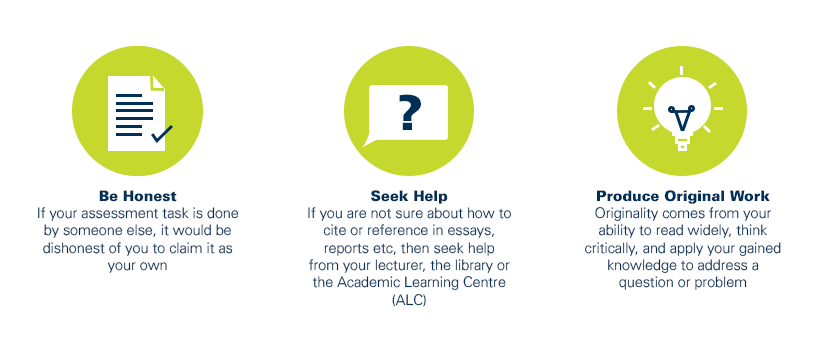
As a CQUniversity student you are expected to act honestly in all aspects of your academic work.
Any assessable work undertaken or submitted for review or assessment must be your own work. Assessable work is any type of work you do to meet the assessment requirements in the unit, including draft work submitted for review and feedback and final work to be assessed.
When you use the ideas, words or data of others in your assessment, you must thoroughly and clearly acknowledge the source of this information by using the correct referencing style for your unit. Using others’ work without proper acknowledgement may be considered a form of intellectual dishonesty.
Participating honestly, respectfully, responsibly, and fairly in your university study ensures the CQUniversity qualification you earn will be valued as a true indication of your individual academic achievement and will continue to receive the respect and recognition it deserves.
As a student, you are responsible for reading and following CQUniversity’s policies, including the Student Academic Integrity Policy and Procedure. This policy sets out CQUniversity’s expectations of you to act with integrity, examples of academic integrity breaches to avoid, the processes used to address alleged breaches of academic integrity, and potential penalties.
What is a breach of academic integrity?
A breach of academic integrity includes but is not limited to plagiarism, self-plagiarism, collusion, cheating, contract cheating, and academic misconduct. The Student Academic Integrity Policy and Procedure defines what these terms mean and gives examples.
Why is academic integrity important?
A breach of academic integrity may result in one or more penalties, including suspension or even expulsion from the University. It can also have negative implications for student visas and future enrolment at CQUniversity or elsewhere. Students who engage in contract cheating also risk being blackmailed by contract cheating services.
Where can I get assistance?
For academic advice and guidance, the Academic Learning Centre (ALC) can support you in becoming confident in completing assessments with integrity and of high standard.
What can you do to act with integrity?