Overview
As a student in the final year of your Bachelor of Engineering course, you will work independently to manage and implement a project (planned in ENEG14003) that allows you to demonstrate professional capabilities expected of graduating professional engineers. You will work and learn autonomously, communicate progress and prepare reports and presentations. You will conduct research to support your project decision-making, and you are required to demonstrate critical thinking and document sound analysis and judgement in project working documents and final reporting. You will solve technical problems that arise and evaluate project processes, outcomes and related learning experiences, and you will prepare a formal report, poster and project presentation. Note that if you completed the prerequisite Planning unit more than two terms ago then you need to check with your academic adviser to see if the project is still available.
Details
Pre-requisites or Co-requisites
Prerequisite: ENEG14003 Engineering Honours Project Planning
Important note: Students enrolled in a subsequent unit who failed their pre-requisite unit, should drop the subsequent unit before the census date or within 10 working days of Fail grade notification. Students who do not drop the unit in this timeframe cannot later drop the unit without academic and financial liability. See details in the Assessment Policy and Procedure (Higher Education Coursework).
Offerings For Term 1 - 2026
Attendance Requirements
All on-campus students are expected to attend scheduled classes - in some units, these classes are identified as a mandatory (pass/fail) component and attendance is compulsory. International students, on a student visa, must maintain a full time study load and meet both attendance and academic progress requirements in each study period (satisfactory attendance for International students is defined as maintaining at least an 80% attendance record).
Recommended Student Time Commitment
Each 12-credit Undergraduate unit at CQUniversity requires an overall time commitment of an average of 25 hours of study per week, making a total of 300 hours for the unit.
Class Timetable
Assessment Overview
Assessment Grading
This is a graded unit: your overall grade will be calculated from the marks or grades for each assessment task, based on the relative weightings shown in the table above. You must obtain an overall mark for the unit of at least 50%, or an overall grade of 'pass' in order to pass the unit. If any 'pass/fail' tasks are shown in the table above they must also be completed successfully ('pass' grade). You must also meet any minimum mark requirements specified for a particular assessment task, as detailed in the 'assessment task' section (note that in some instances, the minimum mark for a task may be greater than 50%). Consult the University's Grades and Results Policy for more details of interim results and final grades.
All University policies are available on the CQUniversity Policy site.
You may wish to view these policies:
- Grades and Results Policy
- Assessment Policy and Procedure (Higher Education Coursework)
- Review of Grade Procedure
- Student Academic Integrity Policy and Procedure
- Academic Progression Policy and Procedure
- Student Refund and Credit Balance Policy and Procedure
- Complaints Policy and Procedure
- Information and Communications Technology Acceptable Use Policy and Procedure
This list is not an exhaustive list of all University policies. The full list of University policies are available on the CQUniversity Policy site.
Feedback, Recommendations and Responses
Every unit is reviewed for enhancement each year. At the most recent review, the following staff and student feedback items were identified and recommendations were made.
Feedback from SUTE
Some students found the Moodle page navigation confusing.
The Moodle site should be reorganised and provide a detailed walkthrough during the first class.
Feedback from Self reflection
Students need more structured support.
UCs should conduct regular, structured weekly sessions focusing on tasks, examples, and assignments.
- Apply and reflect on Engineers Australia's Stage One Competencies for Professional Engineers to the planning and implementation phases of engineering projects
- Implement the project plan prepared in the Planning unit in consultation with and guidance from your project adviser(s)
- Think critically, demonstrate sound analysis and make rational judgements and decisions in the implementation phases of your project
- Communicate preliminary results to project adviser(s) promptly to solicit timely and constructive feedback
- Prepare professional project documents that convey the processes and outcomes of your project
- Communicate your project outcomes to project adviser(s), other stakeholders and the wider community.
The Learning Outcomes for this unit are linked with the Engineers Australia Stage 1 Competency Standards for Professional Engineers in the areas of 1. Knowledge and Skill Base, 2. Engineering Application Ability and 3. Professional and Personal Attributes at the following levels:
Advanced
Refer to the Engineering Undergraduate Course Moodle site for further information on the Engineers Australia's Stage 1 Competency Standard for Professional Engineers and course level mapping information
Alignment of Assessment Tasks to Learning Outcomes
| Assessment Tasks | Learning Outcomes | |||||
|---|---|---|---|---|---|---|
| 1 | 2 | 3 | 4 | 5 | 6 | |
| 1 - Presentation - 10% | ||||||
| 2 - Written Assessment - 10% | ||||||
| 3 - Written Assessment - 10% | ||||||
| 4 - Presentation - 10% | ||||||
| 5 - Thesis/Dissertation - 60% | ||||||
Alignment of Graduate Attributes to Learning Outcomes
| Graduate Attributes | Learning Outcomes | |||||
|---|---|---|---|---|---|---|
| 1 | 2 | 3 | 4 | 5 | 6 | |
| 1 - Communication | ||||||
| 2 - Problem Solving | ||||||
| 3 - Critical Thinking | ||||||
| 4 - Information Literacy | ||||||
| 5 - Team Work | ||||||
| 6 - Information Technology Competence | ||||||
| 7 - Cross Cultural Competence | ||||||
| 8 - Ethical practice | ||||||
| 9 - Social Innovation | ||||||
| 10 - First Nations Knowledges | ||||||
| 11 - Aboriginal and Torres Strait Islander Cultures | ||||||
Textbooks
There are no required textbooks.
IT Resources
- CQUniversity Student Email
- Internet
- Unit Website (Moodle)
- Presentation software such as MS Powerpoint
- Project management software such as MS Project
- Software specific to project
- Webcam and headset for on-line sessions.
- Word processing software such as MS Word
All submissions for this unit must use the referencing style: Harvard (author-date)
For further information, see the Assessment Tasks.
r.sharma@cqu.edu.au
Week 1 - Reconnect
Begin Date: 09 Mar 2026Module/Topic
Reconnect with your Advisor/s
Chapter
Objective: Organise fortnightly meetings with Advisor/s for the term
Events and Submissions/Topic
Read the Marking Rubric
Meet with your Advisor/s
Complete the Progress Update form
Week 2 - Consolidate
Begin Date: 16 Mar 2026Module/Topic
Consolidate reviewers' feedback and consider actions
Chapter
Objective: Tabulate all feedback to record responses against all items
Events and Submissions/Topic
Project Update Presentation (Online): Presentations are scheduled for Wednesday of Week 4 from 12:00 pm onwards. Please make the necessary arrangements.
Complete the Progress Update form
Week 3 - Manage
Begin Date: 23 Mar 2026Module/Topic
Manage scope change in consultation with Advisor/s
Chapter
Objective: With your Advisor/s, decide the best course of action to satisfy reviewers' feedback.
Events and Submissions/Topic
Meet with your Advisor/s
Present with your advisor
Complete the Progress Update form
Week 4 - Share
Begin Date: 30 Mar 2026Module/Topic
Share Post-planning progress and solicit feedback
Chapter
Objective: Demonstrate constructive responses to the reviewer's feedback and suitable progress in the early implementation phase
Events and Submissions/Topic
Project Update Presentation (Online): Present during your allocated session.
Complete the Progress Update form
Week 5 - Implement
Begin Date: 06 Apr 2026Module/Topic
Implement project methods (ongoing throughout the term)
Chapter
Objective: Complete the set tasks following your schedule and check in with your Advisor/s on delivering your project
Events and Submissions/Topic
Meet with your Advisor/s
Complete the Progress Update form
Week 6 - Analyse
Begin Date: 13 Apr 2026Module/Topic
Analyse initial outcomes for compliance with stated deliverables
Chapter
Objective: Take a moment to ensure you are tracking towards reasonable project outcomes
Events and Submissions/Topic
Thesis Presentation: Nominate your campus for the Engineering Showcase in Week 12
Complete the Progress Update form
Vacation Week
Begin Date: 20 Apr 2026Module/Topic
Catch up and enjoy a short break
Chapter
Catch up and enjoy a short break
Events and Submissions/Topic
Catch up and enjoy a short break
Week 7 - Refine
Begin Date: 27 Apr 2026Module/Topic
Refine your project to achieve practical completion
Chapter
Objective: Reassess the path to completion with your Advisor/s and make scope or schedule changes as necessary
Events and Submissions/Topic
Meet with your Advisor/s
Complete the Progress Update form
Preliminary Results Due: Week 7 Friday (1 May 2026) 11:45 am AEST
Week 8 - Deliver
Begin Date: 04 May 2026Module/Topic
Deliver key project outcomes and begin wrapping up methods
Chapter
Objective: Take a results-orientated approach to achieve key outcomes
Events and Submissions/Topic
Meet with your Advisor/s
Complete the Progress Update form
Week 9 - Verify
Begin Date: 11 May 2026Module/Topic
Verify project aim and objectives will be met
Chapter
Objective: Evaluate attainment of the project with your Advisor/s
Events and Submissions/Topic
Meet with your Advisor/s
Complete the Progress Update form
Week 10 - Decide
Begin Date: 18 May 2026Module/Topic
Decide on producing a conference poster or paper
Chapter
Objective: Choose the best method to briefly convey your project
Events and Submissions/Topic
Thesis presentation: Please check the presentation schedule and details for Week 12. Advise of any required changes to your allocated session by Friday of this week. No further changes will be possible after this deadline.
Complete the Progress Update form
Project Poster or Conference Paper Due: Week 10 Friday (22 May 2026) 11:45 am AEST
Week 11 - Compile
Begin Date: 25 May 2026Module/Topic
Compile a conference poster or paper and your reflections on attaining Engineers Australia's Stage One Competencies.
Chapter
Objective: Seek your Advisor/s' feedback on drafts for the Engineering Showcase
Events and Submissions/Topic
Meet with your Advisor/s
Complete the Progress Update form
Week 12 - Present
Begin Date: 01 Jun 2026Module/Topic
Present Thesis outcomes
Chapter
Objective: Confidently present your thesis and celebrate your project
Events and Submissions/Topic
Thesis Presentation: Present during your allocated session in the program.
Exam Week
Begin Date: 08 Jun 2026Module/Topic
Chapter
Events and Submissions/Topic
Vacation/Exam Week
Begin Date: 15 Jun 2026Module/Topic
Chapter
Events and Submissions/Topic
1 Presentation
Prepare a ten‑minute presentation to update your Academic Advisor and other academics on your project progress. Review the required content on Moodle. Present via Zoom or Teams (no on‑campus presentations). If you are unfamiliar with Zoom or Teams, ensure you are confident using it before the session. Present from a location with a reliable internet connection so your video and slides are visible. Be ready to answer questions and take guidance. Presentations are scheduled for Wednesday of Week 4. Check Moodle for the detail schedule. Distance‑mode students are given preference for evening timeslots. Add your name to your preferred time on the schedule spreadsheet in Moodle (access via your CQU email credentials). Watch the other presentations in your session to learn from the feedback they receive.
AI ASSESSMENT SCALE - No AI
You must not use AI at any point during the assessment. You must demonstrate your core skills and knowledge.
Present on Wednesday of Week 4 during your allocated session in the program. IMPORTANT NOTE: This assessment is exempted from the 72‑hour submission grace period and must be completed by the stated submission date/time
You will receive verbal advice and guidance immediately after your presentation. No written feedback will be provided. Pease take your own notes.
Presentations are marked on a five-point scale from Unacceptable to Excellent or Strongly Disagree to Strongly Agree on the following criteria. Refer to the Marking Rubric on the unit website for details.
- Progress is on time and the schedule is sensible
- The adopted methodology is appropriate and achievable
- The quality of work meets the graduate standard
- The presentation delivery was concise and confident
- The presentation was on time, and time was used well
- Responses to questions were concise, confident and accurate
Markers may also include comments on suggested improvements if not discussed during the session. Students should take notes of all feedback provided during the session.
Minimum marks to pass this assessment is 25%.
- Implement the project plan prepared in the Planning unit in consultation with and guidance from your project adviser(s)
- Communicate preliminary results to project adviser(s) promptly to solicit timely and constructive feedback
2 Written Assessment
Prepare a draft Thesis comprising updated chapters from your Project Proposal and your preliminary results. Check Moodle and the Q&A Forum for additional assessment advice.
AI ASSESSMENT SCALE - AI PLANNING
You may use AI for planning, idea development, and research. Your final submission should show how you have developed and refined these ideas.
Week 7 Friday (1 May 2026) 11:45 am AEST
The 72-hour grace period applies to this assessment.
Academic Advisors will endeavor to provide feedback within 2 weeks of the due date for on-time submissions.
You will be marked on the indicators of attainment based on the following criteria. Detail rubric is provided in the Moodle.
- Planning feedback discussion (conducted through project meetings)
- Planning feedback application
- Thesis preparation
- Project progress
- Methodology
- Analysis of data and information
- Presentation of results
- Discussion of results
- Project management (based on progress updates submitted and regular project meetings)
Minimum marks to pass this assessment is 25%.
- Implement the project plan prepared in the Planning unit in consultation with and guidance from your project adviser(s)
- Communicate preliminary results to project adviser(s) promptly to solicit timely and constructive feedback
3 Written Assessment
Decide to prepare either a portrait poster (A1) for conference display or a Conference Paper (max 6 pages). Your submission will be shared with engineering academics, project students, and Engineering Showcase attendees via a program link. Late submissions may not be linked in the program. Use the space effectively to present a holistic view of your project (posters), or choose the paper option if publication or detailed exposition suits your project better. Templates for both options are available on Moodle.
AI ASSESSMENT SCALE - AI PLANNING
You may use AI for planning, idea development, and research. Your final submission should show how you have developed and refined these ideas.
Week 10 Friday (22 May 2026) 11:45 am AEST
The 72-hour grace period applies to this assessment.
Feedback is provided at Certification of Grades.
Posters and Papers are marked on a five-point scale from Unacceptable to Excellent or Strongly Disagree to Strongly Agree on the following criteria. Refer to the Marking Rubric on the unit website for details.
- The paper abstract or poster layout concisely covers the main phases of a project: introduction and aim, methods, results, conclusions and recommendations
- The aim and objectives are clear, concise, logical and suited to a thesis / final-year project
- The methodology follows the correct industry practices and is suited to a thesis / final-year project
- The results are clear, accurate, and relevant to the title, aim and methodologies of the project
- The conclusions and recommendations follow logically from the results and close out all project objectives
- Suitable citations support discussions in the introduction, methodology and results, which demonstrate strong connections to industry practices where relevant
- Suitable language and grammar are used throughout to demonstrate a professional approach to the project
- The poster or paper is accurately prepared following the templates provided
- Any tables, figures, graphs or images are of a suitable size and style with clear text incorporating numbers with sensible precision and correct units
Markers may also include comments on suggested improvements if necessary.
Minimum marks to pass this assessment is 25%.
- Prepare professional project documents that convey the processes and outcomes of your project
- Communicate your project outcomes to project adviser(s), other stakeholders and the wider community.
4 Presentation
Prepare a ten-minute presentation to explain your Thesis holistically. Deliver your presentation at the CQU Engineering Showcase on Wednesday Week 12. You are required to present in person at one of the CQU Engineering campuses in Queensland; i.e. Bundaberg, Cairns City, Gladstone Marina, Mackay Ooralea or Rockhampton North. You may decide to present at any campus. A registration form is on Moodle. No extensions are possible - missed presentation are rescheduled to the following Engineering Showcase in the next term of offering.
AI ASSESSMENT SCALE - No AI
You must not use AI at any point during the assessment. You must demonstrate your core skills and knowledge.
This assessment is exempted from the 72-hour submission grace period and must be completed by the stated submission date/time
Feedback is provided at Certification of Grades.
Presentations are marked on a five-point scale from Unacceptable to Excellent or Strongly Disagree to Strongly Agree on the following criteria. Refer to the Marking Rubric on the unit website for details.
- The need for the project is convincingly stated
- The aim and objectives are clear, concise, and sensible
- The adopted methodology is suitable for the aim and objectives, and for a graduate
- The key results are visually prepared using sensible tables, figures, photos, or the correct types of graphs
- All text is legible, with all values having sensible precision and the correct units
- The conclusions and recommendations close out the entire project
- Delivery of the presentation was at the professional standard
- The presentation was of a suitable duration, and the time was used wisely
- Answers to any questions demonstrate thorough knowledge of the project
Markers may also include comments on suggested improvements if not discussed during the session. Students should take notes of all feedback provided during the session.
- Apply and reflect on Engineers Australia's Stage One Competencies for Professional Engineers to the planning and implementation phases of engineering projects
- Think critically, demonstrate sound analysis and make rational judgements and decisions in the implementation phases of your project
- Communicate your project outcomes to project adviser(s), other stakeholders and the wider community.
5 Thesis/Dissertation
Prepare a Thesis which communicates your project and results effectively. The first appendix of your thesis should contain your reflections on your attainment of the Engineers Australia's Stage One Competencies and demonstrate that you have applied a substantial degree of Engineers Australia's Stage One Competencies to the implementation phases of your project. Your thesis should be structured as follows with each section starting on a new page:
- Title page
- Summary
- Acknowledgments
- Table of Contents
- List of Figures
- List of Tables
- Glossary/Nomenclature
- Introduction to the Project and Thesis
- Literature Review
- Project Methodology Review
- Results and Discussion
- Conclusion
- Appendix 1 - Reflections on your attainment of Engineers Australia's Stage One Competencies
- Other appendices as appropriate (please note that other appendices will not be graded)
Further guidance and other resources are available in Moodle.
AI ASSESSMENT SCALE - AI PLANNING
You may use AI for planning, idea development, and research. Your final submission should show how you have developed and refined these ideas.
Exam Week Monday (8 June 2026) 11:45 am AEST
The 72-hour grace period applies to this assessment.
Feedback is provided at Certification of Grades.
Moodle contains a Marking Rubric with expectations given through indicators of attainment at various grading levels for all criteria (main criteria listed below). Understanding the marking rubric is critical to pass this unit. Students should look at the rubric before starting the assessment while working on the assessment, and as a final check before submitting.
Assessment Criteria
- Preface and Preparation (Cover page, executive summary, language, structure, presentation)
- Introduction (Background research, aim/objectives, scope)
- Literature Review (Referencing style, information sources, comprehension, knowledge synthesis, knowledge gaps)
- Methodology or Design Process (Methods/design, justification, referencing/linkages, error analysis/calibration/validation)
- Results and Discussion (Results, analysis, presentation of results, depth of discussion, relation to SDGs)
- Conclusion and Recommendations (Conclusion, recommendations, limitations)
- Reflection on Stage 1 Competencies (Engineering Stage 1 competency reflection)
Minimum marks to pass this assessment is 50%.
- Apply and reflect on Engineers Australia's Stage One Competencies for Professional Engineers to the planning and implementation phases of engineering projects
- Think critically, demonstrate sound analysis and make rational judgements and decisions in the implementation phases of your project
- Prepare professional project documents that convey the processes and outcomes of your project
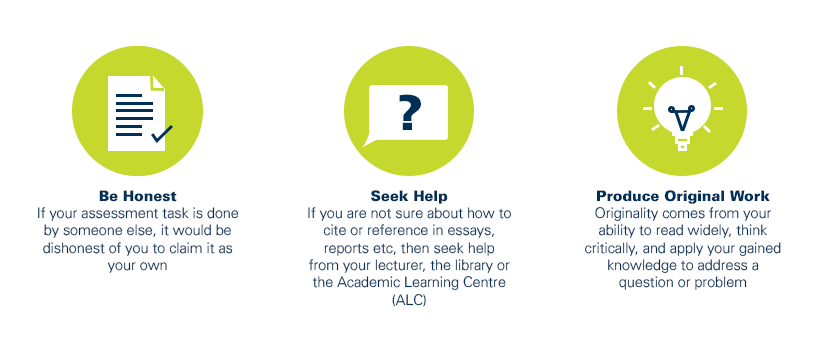
As a CQUniversity student you are expected to act honestly in all aspects of your academic work.
Any assessable work undertaken or submitted for review or assessment must be your own work. Assessable work is any type of work you do to meet the assessment requirements in the unit, including draft work submitted for review and feedback and final work to be assessed.
When you use the ideas, words or data of others in your assessment, you must thoroughly and clearly acknowledge the source of this information by using the correct referencing style for your unit. Using others’ work without proper acknowledgement may be considered a form of intellectual dishonesty.
Participating honestly, respectfully, responsibly, and fairly in your university study ensures the CQUniversity qualification you earn will be valued as a true indication of your individual academic achievement and will continue to receive the respect and recognition it deserves.
As a student, you are responsible for reading and following CQUniversity’s policies, including the Student Academic Integrity Policy and Procedure. This policy sets out CQUniversity’s expectations of you to act with integrity, examples of academic integrity breaches to avoid, the processes used to address alleged breaches of academic integrity, and potential penalties.
What is a breach of academic integrity?
A breach of academic integrity includes but is not limited to plagiarism, self-plagiarism, collusion, cheating, contract cheating, and academic misconduct. The Student Academic Integrity Policy and Procedure defines what these terms mean and gives examples.
Why is academic integrity important?
A breach of academic integrity may result in one or more penalties, including suspension or even expulsion from the University. It can also have negative implications for student visas and future enrolment at CQUniversity or elsewhere. Students who engage in contract cheating also risk being blackmailed by contract cheating services.
Where can I get assistance?
For academic advice and guidance, the Academic Learning Centre (ALC) can support you in becoming confident in completing assessments with integrity and of high standard.
What can you do to act with integrity?