Overview
ENEG11008: Materials for Engineers introduces you to the essential knowledge of materials science and the ways in which engineers understand, select and use materials and processes for engineering applications. In this unit, you will gain knowledge of engineering materials, microstructure and its effect on the material properties. You will learn how to identify and explain the properties of engineering materials and processes, and how to classify these materials. You will also learn how to select engineering materials and processes for engineering applications, as well as to conduct material tests and report on their results. Throughout this unit, you will develop teamwork, research and communication skills. In this unit, you must complete compulsory practical activities. Refer to the Engineering Undergraduate Course Moodle site for proposed dates.
Details
Pre-requisites or Co-requisites
There are no requisites for this unit.
Important note: Students enrolled in a subsequent unit who failed their pre-requisite unit, should drop the subsequent unit before the census date or within 10 working days of Fail grade notification. Students who do not drop the unit in this timeframe cannot later drop the unit without academic and financial liability. See details in the Assessment Policy and Procedure (Higher Education Coursework).
Offerings For Term 3 - 2026
Attendance Requirements
All on-campus students are expected to attend scheduled classes - in some units, these classes are identified as a mandatory (pass/fail) component and attendance is compulsory. International students, on a student visa, must maintain a full time study load and meet both attendance and academic progress requirements in each study period (satisfactory attendance for International students is defined as maintaining at least an 80% attendance record).
Recommended Student Time Commitment
Each 6-credit Undergraduate unit at CQUniversity requires an overall time commitment of an average of 12.5 hours of study per week, making a total of 150 hours for the unit.
Class Timetable
Assessment Overview
| Assessment Task | Part Weighting (% of assessment) |
Assessment Security Level | Gen AI Guidance Levels |
|---|---|---|---|
| 1. Online Quiz #1-4 (20% of unit ) | |||
| Online Quiz #1-4 (Online Quiz(zes)) | 100% of 20% | Medium | AI-Assisted (Guided Collaboration) |
| 2. Residential school and presentation (20% of unit ) | |||
| Residential school and presentation (Practical Assessment) | 100% of 20% | High | No Gen AI Use |
| 3. In-class test (25% of unit ) | |||
| In-class test (In-class Test(s)) | 100% of 25% | High | No Gen AI Use |
| 4. Material Selection and Properties Assignment (35% of unit ) | |||
| Material Selection and Properties Assignment (Written Assessment) | 100% of 35% | Medium | AI-Assisted (Guided Collaboration) |
Assessment Grading
This is a graded unit: your overall grade will be calculated from the marks or grades for each assessment task, based on the relative weightings shown in the table above. You must obtain an overall mark for the unit of at least 50%, or an overall grade of 'pass' in order to pass the unit. If any 'pass/fail' tasks are shown in the table above they must also be completed successfully ('pass' grade). You must also meet any minimum mark requirements specified for a particular assessment task, as detailed in the 'assessment task' section (note that in some instances, the minimum mark for a task may be greater than 50%). Consult the University's Grades and Results Policy for more details of interim results and final grades.
All University policies are available on the CQUniversity Policy site.
You may wish to view these policies:
- Grades and Results Policy
- Assessment Policy and Procedure (Higher Education Coursework)
- Review of Grade Procedure
- Student Academic Integrity Policy and Procedure
- Academic Progression Policy and Procedure
- Student Refund and Credit Balance Policy and Procedure
- Complaints Policy and Procedure
- Information and Communications Technology Acceptable Use Policy and Procedure
This list is not an exhaustive list of all University policies. The full list of University policies are available on the CQUniversity Policy site.
Feedback, Recommendations and Responses
Every unit is reviewed for enhancement each year. At the most recent review, the following staff and student feedback items were identified and recommendations were made.
Feedback from SUTE Teacher Evaluation
Students appreciated good examples and case studies from real-life applications that link theoretical learning to practical learning.
The unit coordinator should strive to introduce the latest case studies and state-of-the-art technologies related to the unit's contents.
Feedback from SUTE and Email
Some students reported difficulty locating the assessment feedback, which had been provided as an annotated document.
All assessment feedback should be uploaded alongside the annotated document in the assessment submission area.
- Define the atomic and microstructure of engineering materials and their relationship to physical behaviour
- Classify engineering materials into metals, ceramics, polymers and composites
- Characterise materials for mechanical properties based on Australian Standards and ASTM methods
- Explain the role of mechanical, electrical, optical and thermal properties of materials in engineering
- Apply the frameworks used to select materials for engineering applications.
Alignment of Assessment Tasks to Learning Outcomes
| Assessment Tasks | Learning Outcomes | ||||
|---|---|---|---|---|---|
| 1 | 2 | 3 | 4 | 5 | |
|
1.
Assessment 1
(20% of unit )
Online Quiz(zes)
|
|||||
|
2.
Assessment 2
(20% of unit )
Practical Assessment
|
|||||
|
3.
Assessment 3
(25% of unit )
In-class Test(s)
|
|||||
|
4.
Assessment 4
(35% of unit )
Written Assessment
|
|||||
Alignment of Graduate Attributes to Learning Outcomes
| Graduate Attributes | Learning Outcomes | ||||
|---|---|---|---|---|---|
| 1 | 2 | 3 | 4 | 5 | |
| 1 - Communication | |||||
| 2 - Problem Solving | |||||
| 3 - Critical Thinking | |||||
| 4 - Information Literacy | |||||
| 5 - Team Work | |||||
| 6 - Information Technology Competence | |||||
| 7 - Cross Cultural Competence | |||||
| 8 - Ethical practice | |||||
| 9 - Social Innovation | |||||
| 10 - First Nations Knowledges | |||||
| 11 - Aboriginal and Torres Strait Islander Cultures | |||||
Textbooks
There are no required textbooks.
IT Resources
- CQUniversity Student Email
- Internet
- Unit Website (Moodle)
- Australian Standards (through CQU library)
All submissions for this unit must use the referencing style: Harvard (author-date)
For further information, see the Assessment Tasks.
x.yang@cqu.edu.au
Week 1
Begin Date: 09 Nov 2026Module/Topic
1. Introduction to the Unit
2. Introduction to Materials Science and Engineering
Chapter
Callister's Chapter 1: 1.2-1.6 & Chapter 6: 6.1-6.2
Events and Submissions/Topic
1. Review lecture slides and read recommended chapters (1.2 ~ 1.6 & 6.1~6.2)
2. Attempt each tutorial before the ZOOM tutorial session through the link in Moodle.
3. Choose your preferred group for the residential school by 18 Dec 2026.
Week 2
Begin Date: 16 Nov 2026Module/Topic
Mechanical Properties of Engineering Materials
Chapter
Chapter 6: 6.3, 6.5-6.7 & 6.10
Events and Submissions/Topic
1. Review lecture slides
2. Read the recommended chapters (Chapter 6: 6.3, 6.5-6.7 & 6.10).
3. Attempt each tutorial before the ZOOM tutorial session through the link in Moodle.
Week 3
Begin Date: 23 Nov 2026Module/Topic
Week 3: Failure of Engineering Materials
Chapter
Chapters 8: 8.1-8.6
Events and Submissions/Topic
1. Review lecture slides
2. Read the recommended chapters (Chapters 8: 8.1-8.6)
3. Attempt each tutorial before the ZOOM tutorial session through the link in Moodle.
Week 4
Begin Date: 30 Nov 2026Module/Topic
Principles of Material Selection, Material Selection Process
Chapter
Chapter 5 of Materials Selection in Mechanical Design by M. Ashby
Events and Submissions/Topic
1. Review lecture slides
2. Read the recommended chapters (Chapter 5 of Materials Selection in Mechanical Design by M. Ashby)
3. Attempt each tutorial before the ZOOM tutorial session through the link in Moodle.
Week 5
Begin Date: 07 Dec 2026Module/Topic
Microstructure of Materials
Chapter
Chapters 3: 3.1 - 3.5, 3.7 & 3.13 - 3.15
Events and Submissions/Topic
1. Review lecture slides
2. Read recommended chapters (Chapters 3: 3.1 - 3.5, 3.7 & 3.13 - 3.15)
3. Consult your lecturer about your idea/topic for the materials selection process assessment if needed.
4. Attempt each tutorial before the ZOOM tutorial session through the link in Moodle.
Week 6
Begin Date: 14 Dec 2026Module/Topic
Imperfection and Dislocations of Metals
Chapter
Chapters 4: 4.1 - 4.5 & 7: 7.1 - 7.6
Events and Submissions/Topic
1. Review lecture slides
2. Read recommended chapters (Chapters 4: 4.1 - 4.5 & 7: 7.1 - 7.6)
3. Complete Part A of the materials selection template.
4. Attempt each tutorial before the ZOOM tutorial session through the link in Moodle.
Mid-Term Break
Begin Date: 21 Dec 2026Module/Topic
Chapter
Events and Submissions/Topic
Week 7
Begin Date: 04 Jan 2027Module/Topic
Strengthening Mechanism of Metals and Diffusion in Solids
Chapter
Chapter 5: 5.1 - 5.3 & 5.5 and Chapter 7: 7.8 - 7.13
Events and Submissions/Topic
1. Review lecture slides
2. Read recommended chapters (Chapter 5: 5.1 - 5.3 & 5.5 and Chapter 7: 7.8 - 7.13)
3. Attempt each tutorial before the ZOOM tutorial session through the link in Moodle.
4. Review the lab documents and the materials selection assignment document prior to attending the residential school.
Week 8
Begin Date: 11 Jan 2027Module/Topic
Phase Diagram, Phase Transformation and Metal Alloys
Residential School: Week 8, 11 -12 Jan (Monday - Tuesday)
Chapter
Chapter 9: 9.1 - 9.13 & 9.18, Chapter 10: 10.5 & 10.7 & Chapter 11: 11.1 - 11.3
Events and Submissions/Topic
1. Review lecture slides
2. Read recommended chapters (Chapter 9: 9.1 - 9.13 & 9.18, Chapter 10: 10.5 & 10.7 & Chapter 11: 11.1 - 11.3)
3. On-campus students: Don’t forget to attend the tutorial with a laptop or tablet PC
4. Mix students: Attempt each tutorial before the ZOOM tutorial session through the link in Moodle.
5. Review the lab documents and the materials selection assignment document for the residential school.
In-class test Due: Week 8 Tuesday (12 Jan 2027) 11:59 pm AEST
Residential school and presentation Due: Week 8 Tuesday (12 Jan 2027) 11:59 pm AEST
Week 9
Begin Date: 18 Jan 2027Module/Topic
Thermal Properties of Engineering Materials
Chapter
Chapters 18: 18.2, 18.3, 18.7, 18.8, 18.11, 18.13, 18.15, 18.18
Events and Submissions/Topic
1. Review lecture slides
2. Read recommended chapters (Chapters 18: 18.2, 18.3, 18.7, 18.8, 18.11, 18.13, 18.15, 18.18)
3. Attempt each tutorial before the ZOOM tutorial session through the link in Moodle.
Week 10
Begin Date: 25 Jan 2027Module/Topic
Electrical Properties of Engineering Materials
Chapter
Chapters 19: 19.1 - 19.5
Events and Submissions/Topic
1. Review lecture slides
2. Read recommended chapters (Chapters 19: 19.1 - 19.5)
3. Attempt each tutorial before the ZOOM tutorial session through the link in Moodle.
Week 11
Begin Date: 01 Feb 2027Module/Topic
Non-metallic Materials – Ceramics, Polymers and Composites
Chapter
Chapters 12: 12.1, 12.2, 12.4, 12.5 & 14.1, 14.2, 14.3, 14.6, 14.7, 14.9, & 15.2, 15.12, 15.13 & 16.1, 16.5
Events and Submissions/Topic
1. Review lecture slides
2. Read recommended chapters (Chapters 12: 12.1, 12.2, 12.4, 12.5 & 14.1, 14.2, 14.3, 14.6, 14.7, 14.9, & 15.2, 15.12, 15.13 & 16.1, 16.5)
3. Attempt each tutorial before the ZOOM tutorial session through the link in Moodle.
Week 12
Begin Date: 08 Feb 2027Module/Topic
Revision for the End-of-term Online Test
Chapter
Events and Submissions/Topic
1. Read recommended chapters (Chapters 17: 17.2-17.10).
2. Attempt each tutorial before the ZOOM tutorial session through the link in Moodle.
3. Submit the Material Selection and Properties Assignment
Material Selection and Properties Assignment Due: Week 12 Friday (12 Feb 2027) 11:59 pm AEST
Exam Week
Begin Date: 15 Feb 2027Module/Topic
Chapter
Events and Submissions/Topic
1. Online Quiz #1-4 ( 20% of unit )
Online Quiz(zes)
1. Tri-weekly online quizzes - You will be given a set of questions in Weeks 3, 6, 9 and 12 (Weighting: 20%)
2. You will be able to check your marks immediately after the deadline has passed.
3. The total marks of each online quiz will be scaled to out of 5 marks for the unit total.
4. 50% minimum mark is applied to this section to pass the unit.
IMPORTANT NOTE: This assessment is exempted from the 72‑hour submission grace period and must be completed by the stated submission date/time.
The due date of each quiz is Sunday in the following week, Quiz #1 (Week 4), Quiz #2 (Week 7), Quiz 3 (Week 10). Quiz (Exam Week)
Students can see the results at the end of each due date.
Quiz 1 contains the lecture materials in Weeks 1, 2 and 3 (Tutorial#1-3).
Quiz 2 contains the lecture materials in Weeks 3-6 (Tutorial#3-6).
Quiz 3 contains the lecture materials in Weeks 7-9 (Tutorial#7-9).
Quiz 4 contains the lecture materials in Weeks 10~12 (Tutorial#10~11).
- Define the atomic and microstructure of engineering materials and their relationship to physical behaviour
- Classify engineering materials into metals, ceramics, polymers and composites
- Explain the role of mechanical, electrical, optical and thermal properties of materials in engineering
2. Residential school and presentation ( 20% of unit )
Practical Assessment
You will form a group of 5, conduct labs, prepare for a presentation, and give a presentation as a group during the residential school. It is a two-day residential school in Week 8. By the end of the residential school, you should complete the following items.
a. Conduct a minimum of two labs (group)
b. Review of Materials selection tutorial: Part A (individual)
c. Determine your topic (product / application) for the materials selection process assignment (individual)
d. Analysis of raw data from the laboratory activities (group)
e. Presentation of your lab, data, and findings in relation to the real-life applications (group)
IMPORTANT NOTE: This assessment is exempted from the 72‑hour submission grace period and must be completed by the stated submission date/time.
Week 8 Tuesday (12 Jan 2027) 11:59 pm AEST
At the end of the residential school.
Week 9 Tuesday (19 Jan 2027)
Review marks and feedback for residential school presentation in Week 9.
Group presentation will be assessed against the following marking items:
1. Visual aids – Legibility of text, quality and relevance of figures, visual impact
2. Presentation skills / Preparation / Group dynamics
3. Content, comprehension, and depth of coverage
- Characterise materials for mechanical properties based on Australian Standards and ASTM methods
- Apply the frameworks used to select materials for engineering applications.
3. In-class test ( 25% of unit )
In-class Test(s)
The 2 hours in-class test will assess students’ understanding and application of the fundamental concepts of engineering materials covered in Weeks 1–7. The test will include a combination of single-choice, short-answer, and calculation-based questions covering mechanical properties, material behaviour, failure mechanisms, materials selection principles, and microstructure.
Students will be required to demonstrate their understanding of key concepts, apply relevant engineering principles and equations, and interpret material properties and behaviour in practical engineering contexts.
Week 8 Tuesday (12 Jan 2027) 11:59 pm AEST
At the end of the residential school.
Week 10 Tuesday (26 Jan 2027)
Review marks and feedback for in-class test in will be returned in 2 weeks.
Students will be assessed on their ability to:
1. Demonstrate accurate knowledge and understanding of fundamental engineering materials concepts and principles.
2. Explain the mechanical properties, behaviour, and failure mechanisms of engineering materials.
3. Apply appropriate engineering equations and methods to solve material-related problems.
4. Present clear, accurate, and logically structured answers using appropriate technical terminology and units.
- Define the atomic and microstructure of engineering materials and their relationship to physical behaviour
- Characterise materials for mechanical properties based on Australian Standards and ASTM methods
4. Material Selection and Properties Assignment ( 35% of unit )
Written Assessment
A written assessment focusing on engineering material selection, material phases, phase transformations, and their associated properties. Students will investigate the relationships between material composition, microstructure, processing methods, and material properties, and evaluate the suitability of different materials for specific engineering applications. With the completion of this assignment, you are expected to achieve the following learning outcomes.
1. Research and apply engineering standards, practices and materials optimisation and constraints
2. Work individually to produce quality outputs
Week 12 Friday (12 Feb 2027) 11:59 pm AEST
Due in week 12
Exam Week Friday (19 Feb 2027)
Students can see feedback from the submission link one week after submission.
Your task is to analysis an engineering product / application of your interest and suggest alternative material(s) to improve its design for any purpose (e.g. process and / or manufacturing cost, performance, better user and environmental friendliness, improved safety, improved operating conditions, etc.). Students will be assessed on their ability to:
1. Demonstrate understanding of engineering material properties and selection principles.
2. Analyse the relationships between material composition, microstructure, processing, and mechanical properties.
3. Evaluate and justify material selection for specific engineering applications.
4. Communicate technical information clearly and logically, supported by relevant scientific literature and appropriate references.
- Classify engineering materials into metals, ceramics, polymers and composites
- Explain the role of mechanical, electrical, optical and thermal properties of materials in engineering
- Apply the frameworks used to select materials for engineering applications.
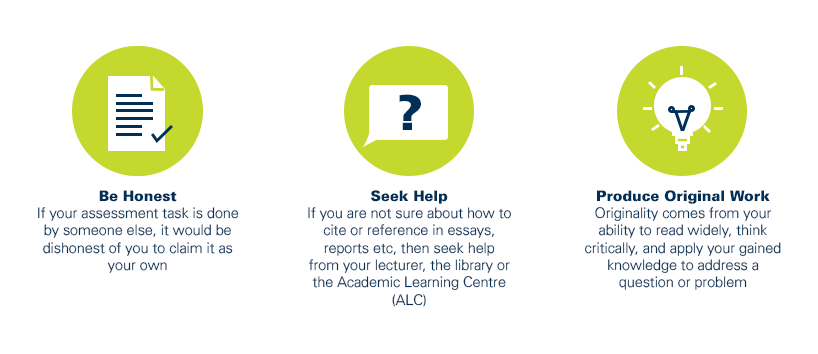
As a CQUniversity student you are expected to act honestly in all aspects of your academic work.
Any assessable work undertaken or submitted for review or assessment must be your own work. Assessable work is any type of work you do to meet the assessment requirements in the unit, including draft work submitted for review and feedback and final work to be assessed.
When you use the ideas, words or data of others in your assessment, you must thoroughly and clearly acknowledge the source of this information by using the correct referencing style for your unit. Using others’ work without proper acknowledgement may be considered a form of intellectual dishonesty.
Participating honestly, respectfully, responsibly, and fairly in your university study ensures the CQUniversity qualification you earn will be valued as a true indication of your individual academic achievement and will continue to receive the respect and recognition it deserves.
As a student, you are responsible for reading and following CQUniversity’s policies, including the Student Academic Integrity Policy and Procedure. This policy sets out CQUniversity’s expectations of you to act with integrity, examples of academic integrity breaches to avoid, the processes used to address alleged breaches of academic integrity, and potential penalties.
What is a breach of academic integrity?
A breach of academic integrity includes but is not limited to plagiarism, self-plagiarism, collusion, cheating, contract cheating, and academic misconduct. The Student Academic Integrity Policy and Procedure defines what these terms mean and gives examples.
Why is academic integrity important?
A breach of academic integrity may result in one or more penalties, including suspension or even expulsion from the University. It can also have negative implications for student visas and future enrolment at CQUniversity or elsewhere. Students who engage in contract cheating also risk being blackmailed by contract cheating services.
Where can I get assistance?
For academic advice and guidance, the Academic Learning Centre (ALC) can support you in becoming confident in completing assessments with integrity and of high standard.
What can you do to act with integrity?