Overview
In this unit, you will strengthen your understanding of wireless and optical communication systems. You will gain advanced knowledge of communication devices and systems, and learn to analyse key parameters such as loss, bandwidth, and signal quality. You will also use advanced simulation tools to verify theoretical concepts and explore current communication technologies. The unit further develops your professional communication skills through teamwork and class discussion, and highlights the importance of UN Sustainable Development Goal 9 in engineering practice through building resilient infrastructure and fostering sustainable innovation. Your learning will conclude with a design assignment, including written and viva components, allowing you to demonstrate your understanding and application of the unit’s learning outcomes.
Details
Pre-requisites or Co-requisites
There are no requisites for this unit.
Important note: Students enrolled in a subsequent unit who failed their pre-requisite unit, should drop the subsequent unit before the census date or within 10 working days of Fail grade notification. Students who do not drop the unit in this timeframe cannot later drop the unit without academic and financial liability. See details in the Assessment Policy and Procedure (Higher Education Coursework).
Offerings For Term 2 - 2026
Attendance Requirements
All on-campus students are expected to attend scheduled classes - in some units, these classes are identified as a mandatory (pass/fail) component and attendance is compulsory. International students, on a student visa, must maintain a full time study load and meet both attendance and academic progress requirements in each study period (satisfactory attendance for International students is defined as maintaining at least an 80% attendance record).
Recommended Student Time Commitment
Each 12-credit Postgraduate unit at CQUniversity requires an overall time commitment of an average of 25 hours of study per week, making a total of 300 hours for the unit.
Class Timetable
Assessment Overview
Assessment Grading
This is a graded unit: your overall grade will be calculated from the marks or grades for each assessment task, based on the relative weightings shown in the table above. You must obtain an overall mark for the unit of at least 50%, or an overall grade of 'pass' in order to pass the unit. If any 'pass/fail' tasks are shown in the table above they must also be completed successfully ('pass' grade). You must also meet any minimum mark requirements specified for a particular assessment task, as detailed in the 'assessment task' section (note that in some instances, the minimum mark for a task may be greater than 50%). Consult the University's Grades and Results Policy for more details of interim results and final grades.
All University policies are available on the CQUniversity Policy site.
You may wish to view these policies:
- Grades and Results Policy
- Assessment Policy and Procedure (Higher Education Coursework)
- Review of Grade Procedure
- Student Academic Integrity Policy and Procedure
- Academic Progression Policy and Procedure
- Student Refund and Credit Balance Policy and Procedure
- Complaints Policy and Procedure
- Information and Communications Technology Acceptable Use Policy and Procedure
This list is not an exhaustive list of all University policies. The full list of University policies are available on the CQUniversity Policy site.
Feedback, Recommendations and Responses
Every unit is reviewed for enhancement each year. At the most recent review, the following staff and student feedback items were identified and recommendations were made.
Feedback from UC's observation
Limited licenses of the VPI Photonics Design Suite created challenges for completing the design assessment.
Students should be advised to begin the design assignment early and use the booking form efficiently to ensure fair and effective access to the software.
Feedback from UC's observation
The range of topics covered may have been too extensive for a one-term unit.
The unit content should be revised to focus on key topics and streamline secondary material.
- Analyse communication systems by evaluating their requirements, design, operation, and performance
- Determine the power, bandwidth, and performance of communication systems
- Investigate the characteristics of common communication components and systems
- Verify the proposed design and performance of advanced communication systems through simulation
- Produce professional engineering reports adhering to electrical engineering standards using appropriate terminologies and symbols
- Successfully complete engineering projects autonomously and in a team with a responsible, ethical, and professional attitude.
Alignment of Assessment Tasks to Learning Outcomes
| Assessment Tasks | Learning Outcomes | |||||
|---|---|---|---|---|---|---|
| 1 | 2 | 3 | 4 | 5 | 6 | |
| 1 - Online Quiz(zes) - 25% | ||||||
| 2 - Written Assessment - 35% | ||||||
| 3 - Project (applied) - 40% | ||||||
Alignment of Graduate Attributes to Learning Outcomes
| Graduate Attributes | Learning Outcomes | |||||
|---|---|---|---|---|---|---|
| 1 | 2 | 3 | 4 | 5 | 6 | |
| 1 - Knowledge | ||||||
| 2 - Communication | ||||||
| 3 - Cognitive, technical and creative skills | ||||||
| 4 - Research | ||||||
| 5 - Self-management | ||||||
| 6 - Ethical and Professional Responsibility | ||||||
| 7 - Leadership | ||||||
| 8 - First Nations Knowledges | ||||||
| 9 - Aboriginal and Torres Strait Islander Cultures | ||||||
Textbooks
Optical Fiber Communications: Principles And Practice
- Edition: 3rd (2008)
- Authors: John Senior
- Pearson
- Harlow Harlow , Essex , England
- ISBN: 978-0-130-32681-2
The physical book is out of print, but the eBook is available on the CQUniversity Library website.
- Binding: Paperback
Wireless Communication Networks and Systems
- Global Edition, 1st edition (2016)
- Authors: Cory Beard, and William Stallings
- Pearson
- Harlow Harlow , Essex , England
- ISBN: 9781292108711
If you are having trouble accessing the eBook through the CQUniversity Library website, printed copies are available from the CQUni Bookshop. You can locate them by searching for your unit code at the following link: http://bookshop.cqu.edu.au
- Binding: Paperback
IT Resources
- CQUniversity Student Email
- Internet
- Unit Website (Moodle)
- Zoom app on your smart phone or access to Zoom on your laptop
- Matlab
- Pdf creator/scanner
- Microsoft Office (Word, Excel, PowerPoint)
- VPI Photonics Design Suite
All submissions for this unit must use the referencing style: Harvard (author-date)
For further information, see the Assessment Tasks.
l.bui@cqu.edu.au
Week 1
Begin Date: 13 Jul 2026Module/Topic
Teaching Arrangements and Introduction to Communication Systems
Chapter
Beard and Stallings' textbook Chapter 1 and Senior's textbook Chapter 1
Events and Submissions/Topic
Week 2
Begin Date: 20 Jul 2026Module/Topic
Transmission Fundamentals
Chapter
Beard and Stallings' textbook Chapter 2
Events and Submissions/Topic
Week 3
Begin Date: 27 Jul 2026Module/Topic
Communication Networks
Chapter
Beard and Stallings' textbook Chapter 3
Events and Submissions/Topic
Week 4
Begin Date: 03 Aug 2026Module/Topic
Wireless Communications
Chapter
Beard and Stallings' textbook Chapter 5
Events and Submissions/Topic
Online Quiz 1: Due on Thursday of Week 4 at 11:59 pm AEST
Week 5
Begin Date: 10 Aug 2026Module/Topic
The Wireless Channel
Chapter
Beard and Stallings' textbook Chapter 6
Events and Submissions/Topic
Week 6
Begin Date: 17 Aug 2026Module/Topic
Signal Encoding Techniques
Chapter
Beard and Stallings' textbook Chapter 7
Events and Submissions/Topic
Vacation Week
Begin Date: 24 Aug 2026Module/Topic
None teaching week
Chapter
N/A
Events and Submissions/Topic
Week 7
Begin Date: 31 Aug 2026Module/Topic
Introduction to Optical Fibre
Chapter
Senior's textbook Chapters 2 and 3
Events and Submissions/Topic
Online Quiz 2: Due on Thursday of Week 7 at 11:59 pm AEST
Week 8
Begin Date: 07 Sep 2026Module/Topic
Optical Sources - Lasers
Chapter
Senior's textbook Chapter 6
Events and Submissions/Topic
Week 9
Begin Date: 14 Sep 2026Module/Topic
Optical Receivers - Photodetectors
Chapter
Senior's textbook Chapters 8 and 9
Events and Submissions/Topic
Week 10
Begin Date: 21 Sep 2026Module/Topic
Optical Amplifiers
Chapter
Senior's textbook Chapter 10
Events and Submissions/Topic
Online Quiz 3: Due on Thursday of Week 10 at 11:59 pm AEST
Week 11
Begin Date: 28 Sep 2026Module/Topic
Optical Communication System Engineering - System Rise Time and Bandwidth
Chapter
Senior's textbook Chapter 12
Events and Submissions/Topic
Week 12
Begin Date: 05 Oct 2026Module/Topic
System Performances - Probability of Errors and Bit Error Rate (BER)
Chapter
Senior's textbook Chapter 12
Events and Submissions/Topic
Exam Week
Begin Date: 12 Oct 2026Module/Topic
Chapter
Events and Submissions/Topic
Online Quiz 4: Due on Thursday of Week 13 at 11:59 pm AEST
Design Assignment Due: Exam Week Thursday (15 Oct 2026) 11:59 pm AEST
Vacation/Exam Week
Begin Date: 19 Oct 2026Module/Topic
Chapter
Events and Submissions/Topic
This unit uses VPI Photonics Design Suite, an industry-standard tool for modelling optical communication systems. You are strongly encouraged to attend the VPI Photonics workshop and complete the weekly homework to build proficiency with the software. This is essential preparation, as the final design assignment requires the use of VPI Photonics Design Suite.
1 Online Quiz(zes)
AI Assessment Scale: No AI
You must not use AI at any point during this assessment. You must demonstrate your core skills and knowledge.
Task Description: You will complete four online quizzes consisting of multiple-choice and calculation questions designed to assess your understanding of key concepts. You may attempt each quiz multiple times, and your final score will be the average of all attempts. You are expected to complete quizzes independently and demonstrate your own understanding.
Minimum Requirement: You must achieve a minimum mark of 50% across all quizzes.
IMPORTANT NOTE: This assessment is exempt from the 72-hour submission grace period and must be completed by the stated deadline.
Due on Thursday of Weeks 4, 7, 10 and 13 (Exam Week) at 11:59 PM AEDT
Quiz results are available immediately after the attempt is finalised and submitted.
You must provide correct answers to numerical and multiple-choice questions. Marks are awarded based on the accuracy of responses.
- Determine the power, bandwidth, and performance of communication systems
- Investigate the characteristics of common communication components and systems
2 Written Assessment
AI Assessment Scale: AI Planning
You may use AI for planning, idea development, and research. Your final submission must demonstrate how you have developed and refined these ideas.
Task Description: You will complete a written assignment covering the contents of Weeks 1–6. You must solve all problems and present your answers clearly in a structured report. Each question must be clearly labelled, and working steps must be shown.
Minimum Requirement: You must achieve a minimum mark of 50% in this assessment.
Grace Period: This assessment is eligible for a 72-hour submission grace period.
Week 8 Thursday (10 Sept 2026) 11:59 pm AEST
You must submit a single PDF assignment report file via the submission link provided on the Unit Moodle.
The marked assignment report, along with feedback, will be returned to you within two weeks after the assignment due date.
- Accuracy of solutions (40%),
- Clarity and structure (20%),
- Completeness of working (20%),
- Use of tools and presentation of results (10%),
- Report formatting and referencing (10%)
- Determine the power, bandwidth, and performance of communication systems
- Investigate the characteristics of common communication components and systems
- Produce professional engineering reports adhering to electrical engineering standards using appropriate terminologies and symbols
- Successfully complete engineering projects autonomously and in a team with a responsible, ethical, and professional attitude.
3 Project (applied)
AI Assessment Scale: AI Planning
You may use AI for planning, idea development, and research. Your final submission must demonstrate how you have developed and refined these ideas.
Task Description: You will work in a group to design and evaluate an optical communication system using simulation software. You will submit a group report and complete an individual viva to demonstrate your understanding.
Minimum Requirement: You must achieve a minimum mark of 50% in this assessment.
IMPORTANT NOTE: This assessment is exempt from the 72-hour submission grace period and must be completed by the stated deadline.
Exam Week Thursday (15 Oct 2026) 11:59 pm AEST
Submit one PDF report per group. All group members must attend the viva in person and be prepared to answer questions about the assignment.
Submit one PDF report per group. All group members must attend the viva in person and be prepared to answer questions about the assignment.
- System design and modelling (30%),
- Result analysis and interpretation (30%),
- Report quality and communication (20%),
- Individual viva performance (20%).
- Analyse communication systems by evaluating their requirements, design, operation, and performance
- Verify the proposed design and performance of advanced communication systems through simulation
- Produce professional engineering reports adhering to electrical engineering standards using appropriate terminologies and symbols
- Successfully complete engineering projects autonomously and in a team with a responsible, ethical, and professional attitude.
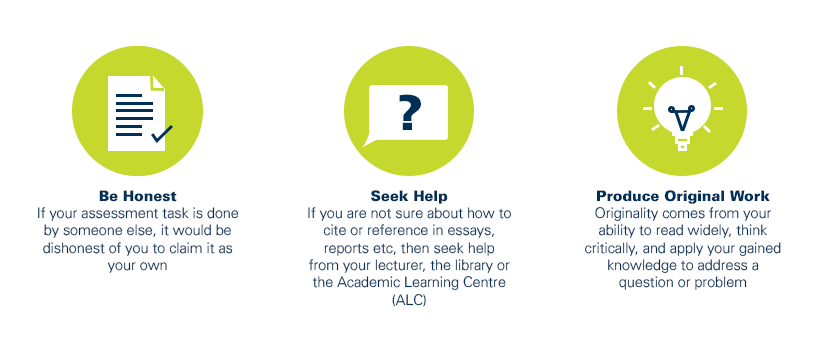
As a CQUniversity student you are expected to act honestly in all aspects of your academic work.
Any assessable work undertaken or submitted for review or assessment must be your own work. Assessable work is any type of work you do to meet the assessment requirements in the unit, including draft work submitted for review and feedback and final work to be assessed.
When you use the ideas, words or data of others in your assessment, you must thoroughly and clearly acknowledge the source of this information by using the correct referencing style for your unit. Using others’ work without proper acknowledgement may be considered a form of intellectual dishonesty.
Participating honestly, respectfully, responsibly, and fairly in your university study ensures the CQUniversity qualification you earn will be valued as a true indication of your individual academic achievement and will continue to receive the respect and recognition it deserves.
As a student, you are responsible for reading and following CQUniversity’s policies, including the Student Academic Integrity Policy and Procedure. This policy sets out CQUniversity’s expectations of you to act with integrity, examples of academic integrity breaches to avoid, the processes used to address alleged breaches of academic integrity, and potential penalties.
What is a breach of academic integrity?
A breach of academic integrity includes but is not limited to plagiarism, self-plagiarism, collusion, cheating, contract cheating, and academic misconduct. The Student Academic Integrity Policy and Procedure defines what these terms mean and gives examples.
Why is academic integrity important?
A breach of academic integrity may result in one or more penalties, including suspension or even expulsion from the University. It can also have negative implications for student visas and future enrolment at CQUniversity or elsewhere. Students who engage in contract cheating also risk being blackmailed by contract cheating services.
Where can I get assistance?
For academic advice and guidance, the Academic Learning Centre (ALC) can support you in becoming confident in completing assessments with integrity and of high standard.
What can you do to act with integrity?