Overview
The objective of this unit is to introduce you to advanced electrical machines, drives and their control. You will learn about dynamic modelling of various types of DC and AC electrical machines. The unit will also introduce you to space vector theory associated with dynamic modelling of AC electrical machines. You will also learn about DC and AC motor drives. The unit will enable you to apply vector control fundamentals in electrical machine control. You will also learn some advanced topics such as speed-sensorless control of electrical machines. You will be required to successfully complete an electrical machines and drives design team project. Online students will be required to attend a compulsory residential school in order to complete the laboratory experiments. Prior knowledge of the fundamental concepts of electrical circuit analysis and electrical power engineering is assumed.
Details
Pre-requisites or Co-requisites
ENEE14007 Electrical Machines and Drives Applications is an Anti-Requisite for this unit.
Important note: Students enrolled in a subsequent unit who failed their pre-requisite unit, should drop the subsequent unit before the census date or within 10 working days of Fail grade notification. Students who do not drop the unit in this timeframe cannot later drop the unit without academic and financial liability. See details in the Assessment Policy and Procedure (Higher Education Coursework).
Offerings For Term 1 - 2026
Attendance Requirements
All on-campus students are expected to attend scheduled classes - in some units, these classes are identified as a mandatory (pass/fail) component and attendance is compulsory. International students, on a student visa, must maintain a full time study load and meet both attendance and academic progress requirements in each study period (satisfactory attendance for International students is defined as maintaining at least an 80% attendance record).
Recommended Student Time Commitment
Each 12-credit Postgraduate unit at CQUniversity requires an overall time commitment of an average of 25 hours of study per week, making a total of 300 hours for the unit.
Class Timetable
Assessment Overview
Assessment Grading
This is a graded unit: your overall grade will be calculated from the marks or grades for each assessment task, based on the relative weightings shown in the table above. You must obtain an overall mark for the unit of at least 50%, or an overall grade of 'pass' in order to pass the unit. If any 'pass/fail' tasks are shown in the table above they must also be completed successfully ('pass' grade). You must also meet any minimum mark requirements specified for a particular assessment task, as detailed in the 'assessment task' section (note that in some instances, the minimum mark for a task may be greater than 50%). Consult the University's Grades and Results Policy for more details of interim results and final grades.
All University policies are available on the CQUniversity Policy site.
You may wish to view these policies:
- Grades and Results Policy
- Assessment Policy and Procedure (Higher Education Coursework)
- Review of Grade Procedure
- Student Academic Integrity Policy and Procedure
- Academic Progression Policy and Procedure
- Student Refund and Credit Balance Policy and Procedure
- Complaints Policy and Procedure
- Information and Communications Technology Acceptable Use Policy and Procedure
This list is not an exhaustive list of all University policies. The full list of University policies are available on the CQUniversity Policy site.
Feedback, Recommendations and Responses
Every unit is reviewed for enhancement each year. At the most recent review, the following staff and student feedback items were identified and recommendations were made.
Feedback from SUTE
Students are happy with the teaching style and support given by the staff.
This practice should be continued.
Feedback from SUTE and student consultation
Students appreciated the quality of the provided learning resources.
Same learning resources should be used for learning and teaching purposes.
- Evaluate various types of DC and AC electrical machines using dynamic modelling principles
- Model and control AC electrical machines using space vector theory
- Apply vector control fundamentals in advanced electrical machine control
- Analyse and design DC and AC motor drives considering stakeholder requirements
- Document and communicate professional engineering information, including computer-based simulations and drawings using appropriate electrical engineering standards, terminology, and symbols
- Scope, plan, manage and successfully complete engineering projects autonomously and in teams with a responsible, ethical, and professional attitude regarding the role of engineers.
Alignment of Assessment Tasks to Learning Outcomes
| Assessment Tasks | Learning Outcomes | |||||
|---|---|---|---|---|---|---|
| 1 | 2 | 3 | 4 | 5 | 6 | |
| 1 - Online Quiz(zes) - 0% | ||||||
| 2 - Written Assessment - 10% | ||||||
| 3 - Practical Assessment - 15% | ||||||
| 4 - Portfolio - 30% | ||||||
| 5 - Online Test - 45% | ||||||
Alignment of Graduate Attributes to Learning Outcomes
| Graduate Attributes | Learning Outcomes | |||||
|---|---|---|---|---|---|---|
| 1 | 2 | 3 | 4 | 5 | 6 | |
| 1 - Knowledge | ||||||
| 2 - Communication | ||||||
| 3 - Cognitive, technical and creative skills | ||||||
| 4 - Research | ||||||
| 5 - Self-management | ||||||
| 6 - Ethical and Professional Responsibility | ||||||
| 7 - Leadership | ||||||
| 8 - First Nations Knowledges | ||||||
| 9 - Aboriginal and Torres Strait Islander Cultures | ||||||
Textbooks
Power Electronics Circuit Devices and Applications
- Edition: 4th Ed. (2014)
- Authors: Muhammad H. Rashid
- Pearson Education
- Harlow Harlow , Essex , UK
- ISBN: 9780273769088
- Binding: Paperback
Power System Stability and Control
- 2nd edition (2022)
- Authors: Prabha Kundur
- McGraw-Hill, Inc
- ISBN: 9781260473544
- Binding: Paperback
IT Resources
- CQUniversity Student Email
- Internet
- Unit Website (Moodle)
All submissions for this unit must use the referencing style: Harvard (author-date)
For further information, see the Assessment Tasks.
n.das@cqu.edu.au
Week 1
Begin Date: 09 Mar 2026Module/Topic
1. Basics of AC Systems
2. Fundamentals of Electrical Machines
Chapter
Lecture Slides & Study guide
Events and Submissions/Topic
Week 2
Begin Date: 16 Mar 2026Module/Topic
Fundamentals of DC Motor
Chapter
Lecture Slides & Study guide
Events and Submissions/Topic
Week 3
Begin Date: 23 Mar 2026Module/Topic
DC Motor Drives
Chapter
Lecture Slides & Study guide
Events and Submissions/Topic
Week 4
Begin Date: 30 Mar 2026Module/Topic
Space Vector Theory
Chapter
Lecture Slides & Study guide
Events and Submissions/Topic
Week 5
Begin Date: 06 Apr 2026Module/Topic
Modelling of Permanent Magnet Synchronous Motor
Chapter
Lecture Slides & Study guide
Events and Submissions/Topic
Week 6
Begin Date: 13 Apr 2026Module/Topic
Modelling of Induction Motor
Chapter
Lecture Slides & Study guide
Events and Submissions/Topic
Vacation Week
Begin Date: 20 Apr 2026Module/Topic
Chapter
Events and Submissions/Topic
Week 7
Begin Date: 27 Apr 2026Module/Topic
Vector Control Fundamentals
Chapter
Lecture Slides & Study guide
Events and Submissions/Topic
Week 8
Begin Date: 04 May 2026Module/Topic
Vector Control of Permanent Magnet Synchronous Motor
Chapter
Lecture Slides & Study guide
Events and Submissions/Topic
Week 9
Begin Date: 11 May 2026Module/Topic
Vector Control of Induction Motor
Chapter
Lecture Slides & Study guide
Events and Submissions/Topic
Week 10
Begin Date: 18 May 2026Module/Topic
Fundamentals of Power Electronic Converters
Chapter
Lecture Slides & Study guide
Events and Submissions/Topic
Week 11
Begin Date: 25 May 2026Module/Topic
Power Electronic Converters: VSC & LCC
Chapter
Lecture Slides & Study guide
Events and Submissions/Topic
Week 12
Begin Date: 01 Jun 2026Module/Topic
Generation of Harmonics and Harmonic Filters
Chapter
Lecture Slides & Study guide
Events and Submissions/Topic
Exam Week
Begin Date: 08 Jun 2026Module/Topic
Chapter
Events and Submissions/Topic
Vacation/Exam Week
Begin Date: 15 Jun 2026Module/Topic
Chapter
Events and Submissions/Topic
ONLINE TEST
Date and time will be announced in due course.
1 Online Quiz(zes)
This assessment is designed to give the lecturer as well as the students a good understanding of the fundamental electrical machines knowledge that students have, coming into this unit. While there is no minimum pass mark for anyone to be able to continue studying the unit, the students who score lower marks in this assessment will be issued additional work to bring their fundamental knowledge up to par with the expectations of this unit. The content tested will be the electrical machines fundamental knowledge students must have acquired during their undergraduate studies. The test date will be announced in advanced and will be within Week 02 of the term. This is a pass/fail assessment and hence no marks will be added to the unit total. However, non-completion would cause a fail mark and would thus block the student from completing the unit.
Guidelines on AI Tool Usage
AI Assessment Scale: No AI
This assessment must be completed without the use of AI tools such as ChatGPT, Copilot, or other generative technologies, even if completed outside a controlled environment. However, students may use basic grammar and spelling aids (e.g., Grammarly) to refine written expression, provided these tools do not assist with solving the numerical problems or generating content.
Please ensure your submission reflects your own understanding and problem-solving process.
This assessment is exempted from the 72-hour submission grace period and must be completed by the stated submission date/time.
Week 2 Friday (20 Mar 2026) 11:55 pm AEST
This will be an online quiz with every question formulated as a multiple choice question. Each question will carry equal marks.
- Evaluate various types of DC and AC electrical machines using dynamic modelling principles
- Model and control AC electrical machines using space vector theory
2 Written Assessment
This assignment is designed to assess the learning outcomes 1, 2 and 3 of this unit. The assignment will involve problems associated with dynamic modelling and control of DC and AC electrical machines and modelling and control of AC electrical machines using space vector theory. Students will work individually and make individual submissions.
Guidelines on AI Tool Usage
AI Assessment Scale: No AI
This assessment must be completed without the use of AI tools such as ChatGPT, Copilot, or other generative technologies, even if completed outside a controlled environment. However, students may use basic grammar and spelling aids (e.g., Grammarly) to refine written expression, provided these tools do not assist with solving the numerical problems or generating content.
Please ensure your submission reflects your own understanding and problem-solving process.
This assessment is exempted from the 72-hour submission grace period and must be completed by the stated submission date/time.
Week 11 Monday (25 May 2026) 11:55 pm AEST
We strive to return assessments within 2 weeks of the submission deadline.
Marks will be allocated for the following:
1. Application of theoretical fundamentals and justification thereof.
2. Correct theory or method deployed to analyse and/or design machine-drive systems where applicable.
3. Correct and tidy circuit diagrams/schematics and relevant input/output waveforms.
4. Correct mathematical working and correct answers. Evidence of checking of the results and interpretation of results.
5. All work and intermediate steps must be shown with justification of steps taken.
6. Assignments must be tidy and legible with good English and grammar.
- Evaluate various types of DC and AC electrical machines using dynamic modelling principles
- Model and control AC electrical machines using space vector theory
- Analyse and design DC and AC motor drives considering stakeholder requirements
3 Practical Assessment
This compulsory assessment item covers the laboratory experiment component of the unit. On-campus students will carry out the experiments during laboratory experiment sessions scheduled each week (attendance is compulsory). Students will be formed into teams and each team must submit separate professional technical laboratory reports on each experiment. The details of the experiments will be notified to students through the unit Website. Please also refer to assessment criteria for more details.
Students will be formed into teams of generally 2-3 members for this assessment item. (NOTE: 72-hour grace period does not apply for attending the laboratory experiments).
Guidelines on AI Tool Usage
AI Assessment Scale: AI Planning
AI can be used for pre-task activities like brainstorming, outlining, and research. Tools such as speech-to-text, note converters, and image generators (for design) are allowed but must not replace core skills. If you significantly refine AI-generated ideas using your own knowledge, the content is considered your own and doesn’t require citation. However, if there’s no clear evidence of substantial changes, the work will be treated as AI-assisted at the idea stage.
This assessment is exempted from the 72-hour submission grace period and must be completed by the stated submission date/time.
Week 9 Monday (11 May 2026) 11:55 pm AEST
We strive to provide feedback within 2 weeks of the submission due date.
Laboratory Exercise Reports will be graded using the following criteria:
Correct description of laboratory concepts and procedures;
Correct calculations, analysis and thinking;
Photographic evidence that circuits were constructed by the team;
Correct measurements, answers and units;
Photographic and other evidence that correct results / measurements were obtained by the team;
Discussion and understanding of laboratory results;
Team reports must be professional and typed, including references;
All laboratory exercises must be attempted.
- Apply vector control fundamentals in advanced electrical machine control
- Analyse and design DC and AC motor drives considering stakeholder requirements
- Document and communicate professional engineering information, including computer-based simulations and drawings using appropriate electrical engineering standards, terminology, and symbols
- Scope, plan, manage and successfully complete engineering projects autonomously and in teams with a responsible, ethical, and professional attitude regarding the role of engineers.
4 Portfolio
This compulsory assessment item is the project component of the unit. Students will work in teams. Complete details of an electrical machines and drive system design project will be provided on the unit Moodle website at the beginning of the term. Teams will be working on their project throughout the term and submit a professional, typed team report. The project is carried out by the teams to mimic team work that consulting engineers would do. It requires the student teams to submit an expression of interest before a specified deadline communicated to the students through Moodle at the early stages of the term. Later, the teams are supposed to attend a debriefing meeting mid-way through the project. Final reports must be prepared as one submission per team are to be submitted before the deadline specified below.
Guidelines on AI Tool Usage
AI Assessment Scale: AI Planning
AI can be used for pre-task activities like brainstorming, outlining, and research. Tools such as speech-to-text, note converters, and image generators (for design) are allowed but must not replace core skills. If you significantly refine AI-generated ideas using your own knowledge, the content is considered your own and doesn’t require citation. However, if there’s no clear evidence of substantial changes, the work will be treated as AI-assisted at the idea stage.
This assessment is exempted from the 72-hour submission grace period and must be completed by the stated submission date/time.
Exam Week Monday (8 June 2026) 11:55 pm AEST
We strive to return assessments within 2 weeks of the submission deadline.
Marks for the project will be given out of 100 based on the quality of each project activity; i.e.:
Expression of Interest (12%)
Debriefing Meeting (8%)
Project Report (70%)
Peer Assessment (10%).
The marking schemes for each of those will be published on the Moodle site.
- Apply vector control fundamentals in advanced electrical machine control
- Document and communicate professional engineering information, including computer-based simulations and drawings using appropriate electrical engineering standards, terminology, and symbols
- Scope, plan, manage and successfully complete engineering projects autonomously and in teams with a responsible, ethical, and professional attitude regarding the role of engineers.
5 Online Test
This online test will be monitored through Zoom and students will have to provide written answers to some questions.
1. Online test will be time scheduled and will take place for everyone at the same time.
2. Each student stays home with a device (preferably a laptop).
3. The online test paper will be loaded to the Moodle site so that students only can access it during the online test period.
4. The student uses blank A4 papers (single side) to write answers.
5. At the end of the online test, he/she first takes photos of all written pages and email invigilator.
6. Later he/she scan the pages and upload to Moodle within a specified time at the end of online test.
7. Online test date and time will be within the standard examination period for Term 1-2026.
Guidelines on AI Tool Usage
AI Assessment Scale: No AI
This assessment must be completed without the use of AI tools such as ChatGPT, Copilot, or other generative technologies, even if completed outside a controlled environment. However, students may use basic grammar and spelling aids (e.g., Grammarly) to refine written expression, provided these tools do not assist with solving the numerical problems or generating content.
Please ensure your submission reflects your own understanding and problem-solving process.
This assessment is exempted from the 72-hour submission grace period and must be completed by the stated submission date/time.
This will be held during the examination week. The exact date and time of the examination will be released on Moodle in due course.
Outcomes will be published with the grade certification.
Marks will be allocated for the following:
1. Application of theoretical fundamentals and justification thereof.
2. Correct theory or method deployed to analyse and/or design machine-drive systems where applicable.
3. Correct and tidy circuit diagrams/schematics and relevant input/output waveforms.
4. Correct mathematical working and correct answers. Evidence of checking of the results and interpretation of results.
5. All work and intermediate steps must be shown with justification of steps taken.
6. Submissions must be tidy and legible with good English and grammar.
- Evaluate various types of DC and AC electrical machines using dynamic modelling principles
- Model and control AC electrical machines using space vector theory
- Apply vector control fundamentals in advanced electrical machine control
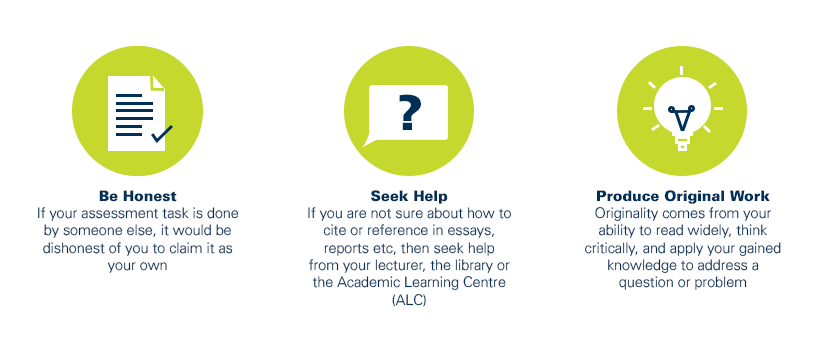
As a CQUniversity student you are expected to act honestly in all aspects of your academic work.
Any assessable work undertaken or submitted for review or assessment must be your own work. Assessable work is any type of work you do to meet the assessment requirements in the unit, including draft work submitted for review and feedback and final work to be assessed.
When you use the ideas, words or data of others in your assessment, you must thoroughly and clearly acknowledge the source of this information by using the correct referencing style for your unit. Using others’ work without proper acknowledgement may be considered a form of intellectual dishonesty.
Participating honestly, respectfully, responsibly, and fairly in your university study ensures the CQUniversity qualification you earn will be valued as a true indication of your individual academic achievement and will continue to receive the respect and recognition it deserves.
As a student, you are responsible for reading and following CQUniversity’s policies, including the Student Academic Integrity Policy and Procedure. This policy sets out CQUniversity’s expectations of you to act with integrity, examples of academic integrity breaches to avoid, the processes used to address alleged breaches of academic integrity, and potential penalties.
What is a breach of academic integrity?
A breach of academic integrity includes but is not limited to plagiarism, self-plagiarism, collusion, cheating, contract cheating, and academic misconduct. The Student Academic Integrity Policy and Procedure defines what these terms mean and gives examples.
Why is academic integrity important?
A breach of academic integrity may result in one or more penalties, including suspension or even expulsion from the University. It can also have negative implications for student visas and future enrolment at CQUniversity or elsewhere. Students who engage in contract cheating also risk being blackmailed by contract cheating services.
Where can I get assistance?
For academic advice and guidance, the Academic Learning Centre (ALC) can support you in becoming confident in completing assessments with integrity and of high standard.
What can you do to act with integrity?