Overview
In this project-based learning unit, you will analyse and design systems and components that convert electrical energy into mechanical energy. You will investigate the construction and operational characteristics of various DC and AC electrical machines, analyse machine protection and control schemes and select and specify machines for particular applications. Furthermore, you will learn about components and materials for electrical machines, and use power electronics to optimise the performance of energy conversion. You are expected to learn and work individually and in teams to complete projects, to develop interpersonal and technical communication skills and to prepare professional documentation, including problem solutions, electrical designs and project reports. Distance education students are required to have access to a computer, to make frequent use of the Internet. In this unit, you must complete compulsory practical activities. Refer to the Engineering Undergraduate Course Moodle site for proposed dates.
Details
Pre-requisites or Co-requisites
Pre-requisite: ENEE12015 Electrical Power Engineering
Important note: Students enrolled in a subsequent unit who failed their pre-requisite unit, should drop the subsequent unit before the census date or within 10 working days of Fail grade notification. Students who do not drop the unit in this timeframe cannot later drop the unit without academic and financial liability. See details in the Assessment Policy and Procedure (Higher Education Coursework).
Offerings For Term 2 - 2026
Attendance Requirements
All on-campus students are expected to attend scheduled classes - in some units, these classes are identified as a mandatory (pass/fail) component and attendance is compulsory. International students, on a student visa, must maintain a full time study load and meet both attendance and academic progress requirements in each study period (satisfactory attendance for International students is defined as maintaining at least an 80% attendance record).
Recommended Student Time Commitment
Each 12-credit Undergraduate unit at CQUniversity requires an overall time commitment of an average of 25 hours of study per week, making a total of 300 hours for the unit.
Class Timetable
Assessment Overview
Assessment Grading
This is a graded unit: your overall grade will be calculated from the marks or grades for each assessment task, based on the relative weightings shown in the table above. You must obtain an overall mark for the unit of at least 50%, or an overall grade of 'pass' in order to pass the unit. If any 'pass/fail' tasks are shown in the table above they must also be completed successfully ('pass' grade). You must also meet any minimum mark requirements specified for a particular assessment task, as detailed in the 'assessment task' section (note that in some instances, the minimum mark for a task may be greater than 50%). Consult the University's Grades and Results Policy for more details of interim results and final grades.
All University policies are available on the CQUniversity Policy site.
You may wish to view these policies:
- Grades and Results Policy
- Assessment Policy and Procedure (Higher Education Coursework)
- Review of Grade Procedure
- Student Academic Integrity Policy and Procedure
- Academic Progression Policy and Procedure
- Student Refund and Credit Balance Policy and Procedure
- Complaints Policy and Procedure
- Information and Communications Technology Acceptable Use Policy and Procedure
This list is not an exhaustive list of all University policies. The full list of University policies are available on the CQUniversity Policy site.
Feedback, Recommendations and Responses
Every unit is reviewed for enhancement each year. At the most recent review, the following staff and student feedback items were identified and recommendations were made.
Feedback from Student evaluation
Students valued the group assignment and its connection to industry practice.
Strengthening industry-linked group projects and practical components should be continued and maintained.
Feedback from Student evaluation
Some assessment questions, project expectations, and deliverables were unclear or not sufficiently aligned with real-world applications.
Assessment questions, project details, and marking criteria should be reviewed and refined through the ongoing industry review to improve clarity, consistency, deliverable expectations, and practical relevance. The peer review process should also be clarified to better reflect individual contributions.
Feedback from Student evaluation
The usefulness of learning materials and feedback was evaluated lower than in previous offerings.
Learning resources should be reorganised and updated, alignment between weekly unit materials and assessment tasks should be strengthened, and feedback clarity should be improved through clearer marking rubrics and brief in‑class discussions when assessments are returned, if necessary.
- Compare and explain features of DC and AC electrical machines
- Design and justify innovative electrical drive systems for industrial applications
- Apply protection and control schemes for electrical drives
- Deploy power electronic devices and circuits for optimising energy conversion in electrical drive system applications
- Create professional documentation of the design, analysis process and solutions using electrical terminology, symbols and diagrams
- Work collaboratively in a team to produce high quality outputs.
The Learning Outcomes for this unit are linked with the Engineers Australia Stage 1 Competency Standards for Professional Engineers in the areas of 1. Knowledge and Skill Base, 2. Engineering Application Ability and 3. Professional and Personal Attributes at the following levels:
Intermediate
Advanced
Refer to the Engineering Undergraduate Course Moodle site for further information on the Engineers Australia's Stage 1 Competency Standard for Professional Engineers and course level mapping information
Alignment of Assessment Tasks to Learning Outcomes
| Assessment Tasks | Learning Outcomes | |||||
|---|---|---|---|---|---|---|
| 1 | 2 | 3 | 4 | 5 | 6 | |
| 1 - Written Assessment - 15% | ||||||
| 2 - Written Assessment - 15% | ||||||
| 3 - Practical and Written Assessment - 15% | ||||||
| 4 - Written Assessment - 40% | ||||||
| 5 - Online Quiz(zes) - 15% | ||||||
Alignment of Graduate Attributes to Learning Outcomes
| Graduate Attributes | Learning Outcomes | |||||
|---|---|---|---|---|---|---|
| 1 | 2 | 3 | 4 | 5 | 6 | |
| 1 - Communication | ||||||
| 2 - Problem Solving | ||||||
| 3 - Critical Thinking | ||||||
| 4 - Information Literacy | ||||||
| 5 - Team Work | ||||||
| 6 - Information Technology Competence | ||||||
| 7 - Cross Cultural Competence | ||||||
| 8 - Ethical practice | ||||||
| 9 - Social Innovation | ||||||
| 10 - First Nations Knowledges | ||||||
| 11 - Aboriginal and Torres Strait Islander Cultures | ||||||
Textbooks
Electrical machines, drives and power systems
- 6th edn - new international edition (2013)
- Authors: Wildi, T
- Pearson Education
- Upper Saddle River Upper Saddle River , NJ , USA
- ISBN: 9781292024585
- Binding: Paperback
IT Resources
- CQUniversity Student Email
- Internet
- Unit Website (Moodle)
All submissions for this unit must use the referencing style: Harvard (author-date)
For further information, see the Assessment Tasks.
k.emami@cqu.edu.au
Week 1
Begin Date: 13 Jul 2026Module/Topic
Fundamentals of Electrical Machines
Chapter
Scan read Chapter 1, Chapter 2 and Chapter 3 as revision.
Events and Submissions/Topic
Week 2
Begin Date: 20 Jul 2026Module/Topic
DC Machines
Chapter
Chapter 4 and Chapter 5
Events and Submissions/Topic
Week 3
Begin Date: 27 Jul 2026Module/Topic
Induction (AC) Machines
Chapter
Chapter 13, Chapter 14 and Chapter 18
Events and Submissions/Topic
Online Quiz Part 1 opens Week 3 Monday 9:00 am AEST and closes Week 4 Monday 11:55 pm AEST
Week 4
Begin Date: 03 Aug 2026Module/Topic
Induction (AC) Machines
Chapter
Chapter 13, Chapter 14 and Chapter 18
Events and Submissions/Topic
Team Project Expression of Interest (EOI) due: Week 4 Friday (7 Aug 2026) 11:55 pm AEST.
Week 5
Begin Date: 10 Aug 2026Module/Topic
Synchronous (AC) Machines
Chapter
Chapter 16, Chapter 17
Events and Submissions/Topic
Week 6
Begin Date: 17 Aug 2026Module/Topic
Synchronous (AC) Machines
Chapter
Chapter 16, Chapter 17
Events and Submissions/Topic
Online Quiz Part 2 opens Week 6 Monday 9:00 am AEST and closes Week 7 Monday 11:55 pm AEST
Assignment 1 Due: Week 6 Friday (21 Aug 2026) 11:55 pm AEST
Vacation Week
Begin Date: 24 Aug 2026Module/Topic
Chapter
Events and Submissions/Topic
Week 7
Begin Date: 31 Aug 2026Module/Topic
Fundamentals in Protection and Control of Electrical Machines
Chapter
Chapter 20
Events and Submissions/Topic
Option 1 of Residential School is held in Mackay and Gladstone campuses from Wednesday (midday) to Friday. Mixed Mode/Online students can choose option 1 and attend the campus of their choice.
Week 8
Begin Date: 07 Sep 2026Module/Topic
Power Electronics and Power Converters
Chapter
Chapter 21
Events and Submissions/Topic
Option 2 of Residential School is held in Bundaberg, Cairns and Rockhampton campuses from Wednesday (midday) to Friday this week. Mixed Mode/Online students can choose option 2 and attend the campus of their choice.
Week 9
Begin Date: 14 Sep 2026Module/Topic
Electronic Control of DC machines
Chapter
Chapter 22
Events and Submissions/Topic
Online Quiz Part 3 opens Week 9 Monday 9:00 am AEST and closes Week 10 Monday 11:55 pm AEST
Team Project progress debriefing meetings will be held during this week. Refer to Moodle for more details.
Week 10
Begin Date: 21 Sep 2026Module/Topic
Electronic Control of AC machines
Chapter
Chapter 23
Events and Submissions/Topic
Week 11
Begin Date: 28 Sep 2026Module/Topic
Unconventional and Special Machines
Chapter
Chapter 19
Events and Submissions/Topic
Week 12
Begin Date: 05 Oct 2026Module/Topic
Reflection and completion of the Team Project Report
Chapter
Events and Submissions/Topic
Online Quiz Part 4 opens Week 12 Monday 9:00 am AEST and closes Week 13 Monday 11:55 pm AEST
Assignment 2 Due: Week 12 Friday (9 Oct 2026) 11:55 pm AEST
Exam Week
Begin Date: 12 Oct 2026Module/Topic
Chapter
Events and Submissions/Topic
Team Project Peer Assessment Report due: Exam Week Friday (16 Oct 2026) 11:55 pm AEST
Team Project Due: Exam Week Friday (16 Oct 2026) 11:55 pm AEST
Vacation/Exam Week
Begin Date: 19 Oct 2026Module/Topic
Chapter
Events and Submissions/Topic
1 Written Assessment
This compulsory assessment consists of 6 to 8 numerical problems. Students are expected to solve each problem and clearly present their step-by-step working, demonstrating logical reasoning and the application of relevant concepts.
- The problems are based on content covered from Week 1 to Week 5 of the unit.
- All assignment questions will be available on Moodle from the start of the term.
Guidelines on AI Tool Usage
- AI Assessment Scale: No AI
This assessment must be completed without the use of AI tools such as ChatGPT, Copilot, or other generative technologies, even if completed outside a controlled environment. However, students may use basic grammar and spelling aids (e.g., Grammarly) to refine written expression, provided these tools do not assist with solving the numerical problems or generating content.
Please ensure your submission reflects your own understanding and problem-solving process.
Week 6 Friday (21 Aug 2026) 11:55 pm AEST
To be submitted as WORD or PDF file to the unit Moodle website, One submission per student
Week 8 Friday (11 Sept 2026)
Feedback is given through the unit website in Moodle after 2 weeks from the submission deadline
Each question in this assignment will be assessed individually, with marks awarded out of 100. The total assessment will be evaluated based on the following weighted criteria:
1. Accuracy and Correct Results (10% of total marks)
This criterion assesses the precision of your final answers:
- Correct application of mathematical and arithmetic methods
- Final answers clearly and unambiguously identified
- Results reflect accurate calculations and sound computation
2. Evidence of Correct Procedures (50% of total marks)
This criterion evaluates the logical process and structure used to solve each problem:
- All necessary steps included in a logical and correct sequence
- Clear and structured presentation of mathematical and arithmetic working
- Effective use of provided information in deriving results
- Verification of results (mathematical checks, graphical validation, or logical/common-sense checks)
3. Evidence of Understanding (30% of total marks)
This criterion measures the depth of understanding demonstrated through analysis:
- Justification of chosen procedures (why a particular method is appropriate)
- Interpretation of results, including limitations or implications (e.g., direction of vectors, boundary conditions)
- Insightful reflection on the problem-solving process
4. Professional Presentation (10% of total marks)
This criterion assesses the clarity, formatting, and professionalism of the submission:
- Clear identification of the work (problem title, date, analyst)
- Concise statement of each problem, including all relevant details and requirements
- Logical layout and flow of the analysis
- Appropriate and clear use of diagrams
- Correct use of engineering terminology and mathematical conventions
- Clear and grammatically correct English in procedural explanations and result interpretations
- Proper referencing of authoritative sources for equations and data, where applicable
- Compare and explain features of DC and AC electrical machines
- Create professional documentation of the design, analysis process and solutions using electrical terminology, symbols and diagrams
2 Written Assessment
This compulsory assessment consists of 6 to 8 numerical problems. Students are required to solve each problem and clearly present their step-by-step working, demonstrating logical reasoning and the application of appropriate mathematical and engineering methods.
- The questions are based on unit content covered from Week 6 to Week 10.
- All assignment questions are published on Moodle at the beginning of the term.
Guidelines on AI Tool Usage
AI Assessment Scale: No AI
This assessment must be completed without the use of AI tools such as ChatGPT, Copilot, or other generative technologies, even if completed outside a controlled environment. However, students may use basic grammar and spelling aids (e.g., Grammarly) to refine written expression, provided these tools do not assist with solving the numerical problems or generating content.
Please ensure your submission reflects your own understanding and problem-solving process.
Week 12 Friday (9 Oct 2026) 11:55 pm AEST
To be submitted as WORD or PDF file in the unit Moodle website, One submission per student
Vacation/Exam Week Friday (23 Oct 2026)
Feedback is given through the unit website in Moodle after 2 weeks from the submission deadline
Each question in this assignment will be assessed individually, with marks awarded out of 100. The total assessment will be evaluated based on the following weighted criteria:
1. Accuracy and Correct Results (10% of total marks)
This criterion assesses the precision of your final answers:
- Correct application of mathematical and arithmetic methods
- Final answers clearly and unambiguously identified
- Results reflect accurate calculations and sound computation
2. Evidence of Correct Procedures (50% of total marks)
This criterion evaluates the logical process and structure used to solve each problem:
- All necessary steps included in a logical and correct sequence
- Clear and structured presentation of mathematical and arithmetic working
- Effective use of provided information in deriving results
- Verification of results (mathematical checks, graphical validation, or logical/common-sense checks)
3. Evidence of Understanding (30% of total marks)
This criterion measures the depth of understanding demonstrated through analysis:
- Justification of chosen procedures (why a particular method is appropriate)
- Interpretation of results, including limitations or implications (e.g., direction of vectors, boundary conditions)
- Insightful reflection on the problem-solving process
4. Professional Presentation (10% of total marks)
This criterion assesses the clarity, formatting, and professionalism of the submission:
- Clear identification of the work (problem title, date, analyst)
- Concise statement of each problem, including all relevant details and requirements
- Logical layout and flow of the analysis
- Appropriate and clear use of diagrams
- Correct use of engineering terminology and mathematical conventions
- Clear and grammatically correct English in procedural explanations and result interpretations
- Proper referencing of authoritative sources for equations and data, where applicable
- Design and justify innovative electrical drive systems for industrial applications
- Apply protection and control schemes for electrical drives
3 Practical and Written Assessment
Students will be formed into teams of generally 2-3 members for this assessment item. The laboratory experiments will be conducted in the following manner:
- On-campus and all MIX/Online students will conduct the labs in a three day intensive laboratory sessions (residential school). Therefore all ENEE14007 students will do all the lab exercises during residential schools.
- Attendance in one of those sessions is compulsory for all students.
- Scheduled date/time of residential school can be accessed in CQU Handbook, or Weekly Schedule Section of this Unit Profile, or Unit Moodle website.
- All students must submit team laboratory reports for this assessment. More information on the experiments and lab sheets is made available on the unit Moodle website.
Guidelines on AI Tool Usage
AI Assessment Scale: AI Planning
AI can be used for pre-task activities like brainstorming, outlining, and research. Tools such as speech-to-text, note converters, and image generators (for design) are allowed but must not replace core skills. If you significantly refine AI-generated ideas using your own knowledge, the content is considered your own and doesn’t require citation. However, if there’s no clear evidence of substantial changes, the work will be treated as AI-assisted at the idea stage.
Week 11 Friday (2 Oct 2026) 11:55 pm AEST
To be submitted as WORD or PDF file in Moodle, One submission per team.
Exam Week Friday (16 Oct 2026)
Feedback is given through the unit website in Moodle after 2 weeks from the submission deadline
Marking of the team reports is done according to the following criteria.
- The accuracy and relevance of information
- Application of knowledge
- Language and grammar used in answering questions
- Proper referencing of sources of information
- Inclusion of all relevant Equations, images, data and tables, and the quality of presentation and layout.
- The marking scheme is published in Moodle site together with Laboratory instruction sheets.
- Deploy power electronic devices and circuits for optimising energy conversion in electrical drive system applications
- Work collaboratively in a team to produce high quality outputs.
4 Written Assessment
This compulsory assessment item forms the major project component of the unit and is to be completed in teams. The project is designed to simulate an industry-style electrical machines and drives design task for a fictional external client, CQUCoal Surface Operations. Students will work as a professional electrical engineering consulting team to design and justify an electrical machine and drive system solution based on the project specification and tender document provided on Moodle.
The project includes the following stages:
- Team Formation
Students must form teams as instructed on Moodle. Team formation should be completed by the end of Week 2 and confirmed through the Moodle submission link by Week 3 Monday, unless otherwise advised. - Expression of Interest (EOI)
Each team must submit an Expression of Interest by Week 4 Friday. The EOI should demonstrate the team’s understanding of the project scope and include a preliminary fixed price estimate, proposed Gantt chart, team member roles and responsibilities, and planned content for the progress debriefing meeting. The EOI is intended to help students engage early with the project requirements, cost estimation, project planning and team responsibilities. - Project Design Work
Following EOI submission and review, teams will continue with the detailed design work. This may include machine and drive selection, engineering calculations, standards review, protection and control considerations, component selection, technical drawings, cost estimation and preparation of professional documentation. Students are expected to refer to the project specification, tender document, relevant Australian Standards and Moodle resources throughout the project. - Progress Debriefing Meeting
Each team must attend a progress debriefing meeting in Week 9. The purpose of this meeting is to present project progress, discuss key design decisions, clarify technical issues, and receive formative feedback before the final report is submitted. Teams should be prepared to explain their proposed design approach, progress against their Gantt chart, preliminary calculations, selected components, and any assumptions or limitations. - Final Project Report
Each team must submit one professional final project report by the due date shown in the weekly schedule. The final report should present the complete design solution and demonstrate clear technical understanding, professional engineering communication, teamwork, and appropriate use of electrical machines and drives terminology, symbols, diagrams and calculations. - Peer Assessment
Students may be required to complete a peer assessment report to reflect individual contributions to the team project. Details will be provided on Moodle.
Guidelines on AI Tool Usage
AI Assessment Scale: AI Planning
AI can be used for pre-task activities like brainstorming, outlining, and research. Tools such as speech-to-text, note converters, and image generators (for design) are allowed but must not replace core skills. If you significantly refine AI-generated ideas using your own knowledge, the content is considered your own and doesn’t require citation. However, if there’s no clear evidence of substantial changes, the work will be treated as AI-assisted at the idea stage.
Exam Week Friday (16 Oct 2026) 11:55 pm AEST
Submit to the link in the unit website in Moodle as a WORD or PDF file. One submission per team.
Feedback is given through the unit website in Moodle after 2 weeks from the submission deadline
Project Marking
Marks for the project are awarded based on the quality of each project activity, including the following components:
- Expression of Interest (EOI)
- Mid-Project Debriefing Meeting
- Final Project Report
Each component is assessed individually according to clearly defined marking rubrics, which are available on the unit Moodle site. Students are encouraged to review these rubrics carefully to understand the expectations and assessment criteria for each stage of the project.
- Design and justify innovative electrical drive systems for industrial applications
- Create professional documentation of the design, analysis process and solutions using electrical terminology, symbols and diagrams
- Work collaboratively in a team to produce high quality outputs.
5 Online Quiz(zes)
The Online Quiz consists of multiple parts containing a mix of numerical problems and multiple-choice questions. The questions are designed to assess students’ understanding of core concepts through simple calculations and applied problem-solving.
This is an individual assessment task, and students are expected to complete each quiz independently.
To encourage continuous engagement with the unit content, the quiz is divided into four parts, each aligned with a quarter of the term. These quizzes are distributed across the 12 weeks of the term as outlined in the Unit Schedule.
Key Features:
- Each quiz part covers content from the respective quarter of the term.
- Each quiz opens and closes according to the dates listed in the weekly schedule.
- Questions are randomly drawn from a pre-designed question bank, ensuring a unique set of questions for each student.
- All quizzes are time-limited to simulate exam-style conditions.
- Detailed instructions and information for each quiz part are provided on the unit Moodle site.
The combined marks from all four quizzes will be scaled to a score out of 15, which contributes to the final unit grade.
Guidelines on AI Tool Usage
AI Assessment Scale: No AI
This assessment must be completed without the use of AI tools such as ChatGPT, Copilot, or other generative technologies, even if completed outside a controlled environment. However, students may use basic grammar and spelling aids (e.g., Grammarly) to refine written expression, provided these tools do not assist with solving the numerical problems or generating content.
Please ensure your submission reflects your own understanding and problem-solving process.
72-hour Grace Period:
Online quizzes are exempted from the 72-hour submission grace period and must be completed by the stated submission date/time.
Please see the weekly schedule for information about due dates for the 4 quizzes.
The mark for each quiz is available immediately after completing the quiz.
The online quiz is divided into four parts, each released at specific intervals to align with the progression of unit content. The schedule is as follows:
- Part 1 – Opens during Week 3
- Part 2 – Opens during Week 6
- Part 3 – Opens during Week 9
- Part 4 – Opens during Week 12
Each quiz part will contain a combination of numerical and multiple-choice questions.
- Each correct answer is worth 1 mark.
- The total marks from all four parts will be summed and scaled to a score out of 15, which contributes to the final unit grade.
All quizzes are to be completed individually, and students are expected to adhere to academic integrity standards. Full details and instructions for each quiz part are available on the unit Moodle site.
- Compare and explain features of DC and AC electrical machines
- Apply protection and control schemes for electrical drives
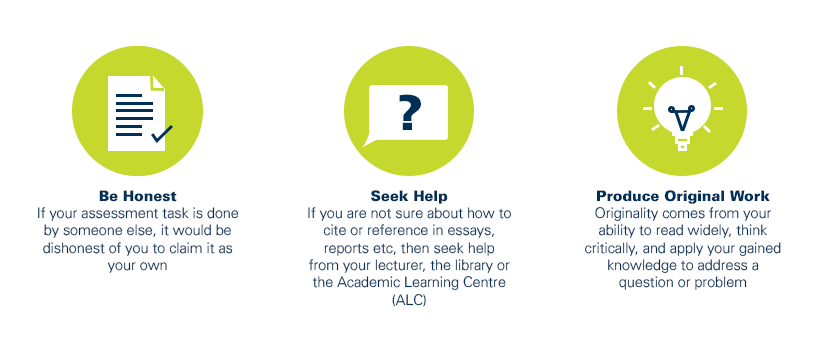
As a CQUniversity student you are expected to act honestly in all aspects of your academic work.
Any assessable work undertaken or submitted for review or assessment must be your own work. Assessable work is any type of work you do to meet the assessment requirements in the unit, including draft work submitted for review and feedback and final work to be assessed.
When you use the ideas, words or data of others in your assessment, you must thoroughly and clearly acknowledge the source of this information by using the correct referencing style for your unit. Using others’ work without proper acknowledgement may be considered a form of intellectual dishonesty.
Participating honestly, respectfully, responsibly, and fairly in your university study ensures the CQUniversity qualification you earn will be valued as a true indication of your individual academic achievement and will continue to receive the respect and recognition it deserves.
As a student, you are responsible for reading and following CQUniversity’s policies, including the Student Academic Integrity Policy and Procedure. This policy sets out CQUniversity’s expectations of you to act with integrity, examples of academic integrity breaches to avoid, the processes used to address alleged breaches of academic integrity, and potential penalties.
What is a breach of academic integrity?
A breach of academic integrity includes but is not limited to plagiarism, self-plagiarism, collusion, cheating, contract cheating, and academic misconduct. The Student Academic Integrity Policy and Procedure defines what these terms mean and gives examples.
Why is academic integrity important?
A breach of academic integrity may result in one or more penalties, including suspension or even expulsion from the University. It can also have negative implications for student visas and future enrolment at CQUniversity or elsewhere. Students who engage in contract cheating also risk being blackmailed by contract cheating services.
Where can I get assistance?
For academic advice and guidance, the Academic Learning Centre (ALC) can support you in becoming confident in completing assessments with integrity and of high standard.
What can you do to act with integrity?