Overview
Geotechnical Engineering Design will enable you to develop and apply your knowledge of Australian Standards and/or relevant guidelines to analyse and design advanced geotechnical engineering structures involving a broad range of investigations. You will learn to use computer software to analyse and design the geotechnical components; conduct site investigations; test and characterise geotechnical materials, design foundations, and earth retaining structures; and make assessments of geotechnical stability. Considering stakeholders and sustainability requirements, you will formulate, plan, manage, and complete projects individually and in teams in an ethical and professional manner by. You will also document and communicate engineering information using appropriate language for a professional engineer.
Details
Pre-requisites or Co-requisites
There are no requisites for this unit.
Important note: Students enrolled in a subsequent unit who failed their pre-requisite unit, should drop the subsequent unit before the census date or within 10 working days of Fail grade notification. Students who do not drop the unit in this timeframe cannot later drop the unit without academic and financial liability. See details in the Assessment Policy and Procedure (Higher Education Coursework).
Offerings For Term 1 - 2026
Attendance Requirements
All on-campus students are expected to attend scheduled classes - in some units, these classes are identified as a mandatory (pass/fail) component and attendance is compulsory. International students, on a student visa, must maintain a full time study load and meet both attendance and academic progress requirements in each study period (satisfactory attendance for International students is defined as maintaining at least an 80% attendance record).
Recommended Student Time Commitment
Each 12-credit Postgraduate unit at CQUniversity requires an overall time commitment of an average of 25 hours of study per week, making a total of 300 hours for the unit.
Class Timetable
Assessment Overview
Assessment Grading
This is a graded unit: your overall grade will be calculated from the marks or grades for each assessment task, based on the relative weightings shown in the table above. You must obtain an overall mark for the unit of at least 50%, or an overall grade of 'pass' in order to pass the unit. If any 'pass/fail' tasks are shown in the table above they must also be completed successfully ('pass' grade). You must also meet any minimum mark requirements specified for a particular assessment task, as detailed in the 'assessment task' section (note that in some instances, the minimum mark for a task may be greater than 50%). Consult the University's Grades and Results Policy for more details of interim results and final grades.
All University policies are available on the CQUniversity Policy site.
You may wish to view these policies:
- Grades and Results Policy
- Assessment Policy and Procedure (Higher Education Coursework)
- Review of Grade Procedure
- Student Academic Integrity Policy and Procedure
- Academic Progression Policy and Procedure
- Student Refund and Credit Balance Policy and Procedure
- Complaints Policy and Procedure
- Information and Communications Technology Acceptable Use Policy and Procedure
This list is not an exhaustive list of all University policies. The full list of University policies are available on the CQUniversity Policy site.
Feedback, Recommendations and Responses
Every unit is reviewed for enhancement each year. At the most recent review, the following staff and student feedback items were identified and recommendations were made.
Feedback from Teaching evaluation
The lecture and workshop should be face-to-face.
This unit should be delivered in Melbourne, as most students are there. Or at least three to four sessions should be delivered face-to-face.
Feedback from Teaching evaluation
The numerical cases can be more.
Increase case reviews to improve unit relevance.
- Identify and apply site investigation and geotechnical testing techniques to characterise sites and geotechnical materials based on Australian Standards
- Evaluate group piles, pad foundations and earth retaining structures and assess stability of slopes
- Plan, manage and complete projects individually or in teams in an ethical and professional manner considering stakeholder requirements and principals of sustainable development
- Use appropriate software to analyse geotechnical components
- Demonstrate a professional level of communication and leadership.
Alignment of Assessment Tasks to Learning Outcomes
| Assessment Tasks | Learning Outcomes | ||||
|---|---|---|---|---|---|
| 1 | 2 | 3 | 4 | 5 | |
| 1 - Written Assessment - 30% | |||||
| 2 - Written Assessment - 30% | |||||
| 3 - In-class Test(s) - 40% | |||||
Alignment of Graduate Attributes to Learning Outcomes
| Graduate Attributes | Learning Outcomes | ||||
|---|---|---|---|---|---|
| 1 | 2 | 3 | 4 | 5 | |
| 1 - Knowledge | |||||
| 2 - Communication | |||||
| 3 - Cognitive, technical and creative skills | |||||
| 4 - Research | |||||
| 5 - Self-management | |||||
| 6 - Ethical and Professional Responsibility | |||||
| 7 - Leadership | |||||
| 8 - First Nations Knowledges | |||||
| 9 - Aboriginal and Torres Strait Islander Cultures | |||||
Textbooks
FUNDAMENTALS OF GEOTECHNICAL ENGINEERING
- Edition: 5th (2017)
- Authors: Braja M. Das, Nagaratnam Sivakugan
- Cengage Learning
- ISBN: 9781305635180
IT Resources
- CQUniversity Student Email
- Internet
- Unit Website (Moodle)
All submissions for this unit must use the referencing style: Harvard (author-date)
For further information, see the Assessment Tasks.
s.ullah@cqu.edu.au
Week 1
Begin Date: 09 Mar 2026Module/Topic
Shallow foundations-bearing capacity
Chapter
Fundamentals of Geotechnical Engineering - Chapter 16
Events and Submissions/Topic
Tutorial Session: Shallow foundations-bearing capacity-Continuing lecture
Workshop Session: Tutorials for shallow foundation
Reading: Review the following materials before week 3: Introduction to numerical analysis in geotechnical engineering
Week 2
Begin Date: 16 Mar 2026Module/Topic
Deep foundations-bearing capacity
Chapter
Fundamentals of Geotechnical Engineering - Chapters 12 & 14
Events and Submissions/Topic
Tutorial Session: Deep foundations-bearing capacity -Continuing lecture
Workshop Session: Geotechnical numerical modelling module I
Week 3
Begin Date: 23 Mar 2026Module/Topic
Retaining walls
Chapter
Fundamentals of Geotechnical Engineering - Chapters 15
Events and Submissions/Topic
Tutorial Session: Retaining walls -Continuing lecture
Workshop Session: Geotechnical numerical modelling module I
Week 4
Begin Date: 30 Mar 2026Module/Topic
Soil reinforcement
Chapter
Fundamentals of Geotechnical Engineering - Chapters 15
Events and Submissions/Topic
Tutorial Session: Tutorials for retaining walls
Workshop Session: Geotechnical numerical modelling module I -continue
Week 5
Begin Date: 06 Apr 2026Module/Topic
Soil reinforcement -Continuing lecture
Chapter
Fundamentals of Geotechnical Engineering - Chapters 15
Events and Submissions/Topic
Tutorial Session: Tutorials for soil reinforcement
Workshop Session: Geotechnical numerical modelling module II
Week 6
Begin Date: 13 Apr 2026Module/Topic
Slope stability
Chapter
Fundamentals of Geotechnical Engineering - Chapters 13
Events and Submissions/Topic
Tutorial Session: Slope stability -Continuing lecture
Workshop Session: Geotechnical modelling numerical module II -continue
Assessment 1: Team Research Project Due Week 6 Monday (25 August 2025) 11:55 pm AEST
Team Research Project Due: Week 6 Monday (13 Apr 2026) 11:59 pm AEST
Vacation Week
Begin Date: 20 Apr 2026Module/Topic
N/A
Chapter
N/A
Events and Submissions/Topic
N/A
Week 7
Begin Date: 27 Apr 2026Module/Topic
Site investigation & Ground improvement
Chapter
Fundamentals of Geotechnical Engineering - Chapters 12
Events and Submissions/Topic
Tutorial Session: Tutorials for slope stability
Workshop Session: Geotechnical numerical modelling module III
Week 8
Begin Date: 04 May 2026Module/Topic
Site investigation & Ground improvement -Continuing lecture
Chapter
Fundamentals of Geotechnical Engineering - Chapters 12
Events and Submissions/Topic
Tutorial Session: Site investigation & Ground improvement -Continuing lecture
Workshop Session: Geotechnical numerical modelling module III -continue
Week 9
Begin Date: 11 May 2026Module/Topic
Site investigation & Ground improvement -Continuing lecture
Chapter
Fundamentals of Geotechnical Engineering - Chapters 12
Events and Submissions/Topic
Tutorial Session: Site investigation & Ground improvement -Continuing lecture
Workshop Session: Geotechnical modelling numerical module IV
Assessment 2: Numerical Analysis Due Week 9 Monday (15 September 2025) 11:55 pm AEST
Numerical Analysis Due: Week 9 Monday (11 May 2026) 11:59 pm AEST
Week 10
Begin Date: 18 May 2026Module/Topic
Geotechnical numerical modelling module IV -continue
Chapter
Events and Submissions/Topic
Tutorial Session: Geotechnical numerical modelling module V
Workshop Session: Geotechnical numerical modelling module V -continue
Week 11
Begin Date: 25 May 2026Module/Topic
Geotechnical numerical modelling module VI
Chapter
Events and Submissions/Topic
Tutorial Session: Q & A Session
Workshop Session: Geotechnical numerical modelling module VI -continue
Week 12
Begin Date: 01 Jun 2026Module/Topic
Review session
Chapter
Review session
Events and Submissions/Topic
Review session
In-class test Due: Week 12 Lecture
In-class test Due: Week 12 Monday (1 June 2026) 11:45 pm AEST
Exam Week
Begin Date: 08 Jun 2026Module/Topic
Chapter
Events and Submissions/Topic
Vacation/Exam Week
Begin Date: 15 Jun 2026Module/Topic
Chapter
Events and Submissions/Topic
1 Written Assessment
For this assessment, students will form teams and will conduct research on the given geotechnical engineering topics. These topics are related to the advanced methods for estimating the bearing capacity of the soil for foundation design, stability analyses, retaining structures design and exploration of the related Australian Standards. In some cases, students may also require using related geotechnical software packages for their report. Students are required to submit their report and also present it orally as a team. The oral presentation is exempt from the 72-hour submission grace period.
AI ASSESSMENT SCALE - AI PLANNING
You may use Al for planning, idea development, and research. Your final submission should show how you have developed and refined these ideas. A instruction of how AI planning can be used for this assessment will be available in Moodle system.
Week 6 Monday (13 Apr 2026) 11:59 pm AEST
Only one student should submit the report on behalf of the team.
Week 8 Friday (8 May 2026)
The following criteria will be assessed:
a) Format of the report and including cover page, table of contents, abstract, literature, conclusion and examples (if
any);
b) Work breakdown among team members;
c) The coherence of the research;
d) Completeness of the research and its details;
e) Complete Referencing; and
f) Quality of the presentation.
Professional presentation will have the following features:
The research is clearly identified; A clear statement of each topic and its details and requirements; Appropriate use of diagrams and clear diagrams; Correct use of terminologies; and Clear English in the explanation of the procedure and interpretation of the results. Grades for the assessment will be determined based on the evidence and substantiation of attainment of the Los (learning outcomes). After submission of the team report, students must individually present their report orally (or recorded) to the class. Students must be well prepared to answer any questions raised by the lecturer during the presentation about the topic of their research.
Individual Student's Grade:
Each team submission will be assessed and a grade will be given to each member of the team based on the submitted report that forms 50% of the assignment 1 mark. Students will also be assessed based on their individual presentation which forms the other 50% mark of assignment 1. A similarity check will be always done before marking the submitted assignments for all students. Upon detection of any plagiarism including: Similarity between submitted reports within the same cohort or With the previous cohorts or Submitted works to other institutes or Using the material provided by cheating websites will result in failing that assignment without marking and the student will be reported to the CQU Academic Misconduct team for further actions. Use of AI to prepare report will also be checked and upon detection of AI usage, the submission may not be accepted resulting to failure of the submitted assessment item.
- Identify and apply site investigation and geotechnical testing techniques to characterise sites and geotechnical materials based on Australian Standards
- Evaluate group piles, pad foundations and earth retaining structures and assess stability of slopes
- Plan, manage and complete projects individually or in teams in an ethical and professional manner considering stakeholder requirements and principals of sustainable development
- Demonstrate a professional level of communication and leadership.
2 Written Assessment
The aim of this assessment is to allow the students to demonstrate their understanding of various concepts, theories and processes developed in the course. This may include but is not limited to foundation design, foundation settlement, soil reinforcement, slope stability, site investigation, earth retaining wall and soil improvement techniques. Formal assessment is by submission of a portfolio which contains evidence of all the individual works that the student has performed throughout the term.
AI ASSESSMENT SCALE - NO AI
You must not use Al at any point during the assessment. You must demonstrate your core skills and knowledge.
All the coding process must be your own work.
Week 9 Monday (11 May 2026) 11:59 pm AEST
Please submit a MS word file.
Week 11 Friday (29 May 2026)
Each question in this assessment will be assessed separately for the:
Accuracy;
Correct application of mathematics and arithmetic;
Answers clearly identified; and correct results.
In addition, the assessment as a whole will be assessed against the following criteria:
Evidence of correct procedures;
All necessary steps in the analysis are present in the correct order;
Clear presentation of the mathematical and arithmetical working linking is given;
Details of the problem with the results are obtained; and
Evidence of checking results (mathematical, graphical, logic common sense) are presented.
Evidence of an understanding of the topic.
Explanation of choices made in the analysis (why is the procedure required, why this particular procedure); and
Interpretation of results.
A similarity check will be always done before marking the submitted assignments for all students. Upon detection of any plagiarism including:
i. Similarity between submitted reports within the same cohort or
ii. with the previous cohorts or
iii. submitted works to other institutes or
iv. using the material provided by cheating websites
will result in failing that assignment without marking and the student will be reported to the CQU Academic Misconduct team for further actions.
- Plan, manage and complete projects individually or in teams in an ethical and professional manner considering stakeholder requirements and principals of sustainable development
- Use appropriate software to analyse geotechnical components
- Demonstrate a professional level of communication and leadership.
3 In-class Test(s)
The class test will be arranged in lieu of one of the class sessions in week 12. The class test duration is 2 hours and 30 minutes and is closed-book. The complementary information about the class test will be provided on the unit website. This assessment is exempt from the 72-hour submission grace period and must be completed by the stated submission date/time.
AI ASSESSMENT SCALE - NO AI
You must not use Al at any point during the assessment. You must demonstrate your core skills and knowledge.
Week 12 Monday (1 June 2026) 11:45 pm AEST
The class test date will be announced by week 7.
Exam Week Friday (12 June 2026)
Exam scripts will be marked and returned with short feedback 2 weeks after the exam date.
You will be assessed for your understanding of various geotechnical concepts including your:
- comprehension of various topics
- numerical accuracy
- correct methodology
- clear presentation and writing
- communication of results
- Identify and apply site investigation and geotechnical testing techniques to characterise sites and geotechnical materials based on Australian Standards
- Evaluate group piles, pad foundations and earth retaining structures and assess stability of slopes
- Demonstrate a professional level of communication and leadership.
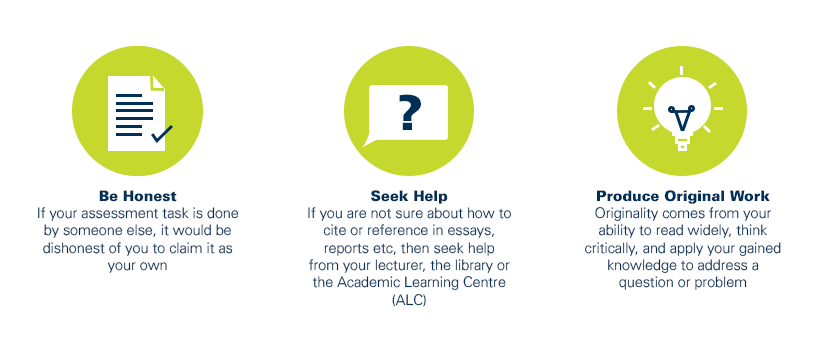
As a CQUniversity student you are expected to act honestly in all aspects of your academic work.
Any assessable work undertaken or submitted for review or assessment must be your own work. Assessable work is any type of work you do to meet the assessment requirements in the unit, including draft work submitted for review and feedback and final work to be assessed.
When you use the ideas, words or data of others in your assessment, you must thoroughly and clearly acknowledge the source of this information by using the correct referencing style for your unit. Using others’ work without proper acknowledgement may be considered a form of intellectual dishonesty.
Participating honestly, respectfully, responsibly, and fairly in your university study ensures the CQUniversity qualification you earn will be valued as a true indication of your individual academic achievement and will continue to receive the respect and recognition it deserves.
As a student, you are responsible for reading and following CQUniversity’s policies, including the Student Academic Integrity Policy and Procedure. This policy sets out CQUniversity’s expectations of you to act with integrity, examples of academic integrity breaches to avoid, the processes used to address alleged breaches of academic integrity, and potential penalties.
What is a breach of academic integrity?
A breach of academic integrity includes but is not limited to plagiarism, self-plagiarism, collusion, cheating, contract cheating, and academic misconduct. The Student Academic Integrity Policy and Procedure defines what these terms mean and gives examples.
Why is academic integrity important?
A breach of academic integrity may result in one or more penalties, including suspension or even expulsion from the University. It can also have negative implications for student visas and future enrolment at CQUniversity or elsewhere. Students who engage in contract cheating also risk being blackmailed by contract cheating services.
Where can I get assistance?
For academic advice and guidance, the Academic Learning Centre (ALC) can support you in becoming confident in completing assessments with integrity and of high standard.
What can you do to act with integrity?