Overview
In this unit, you will learn the idealisation and loading of complex structural systems. You will also learn how to calculate deflections in truss, beam, and frame structures using various analytical methods such as the virtual load method. You will be able to analyse indeterminate structures using fundamental techniques/methods e.g., force method, and slope-deflection method. You will be introduced to the fundamentals of structural analysis using the direct stiffness method and you will use industry-relevant software such as SPACE GASS or equivalent to analyse complex structures.
Details
Pre-requisites or Co-requisites
Prerequisites: ENEG11006 Engineering Statics and ENEC12012 Stress Analysis
Important note: Students enrolled in a subsequent unit who failed their pre-requisite unit, should drop the subsequent unit before the census date or within 10 working days of Fail grade notification. Students who do not drop the unit in this timeframe cannot later drop the unit without academic and financial liability. See details in the Assessment Policy and Procedure (Higher Education Coursework).
Offerings For Term 2 - 2026
Attendance Requirements
All on-campus students are expected to attend scheduled classes - in some units, these classes are identified as a mandatory (pass/fail) component and attendance is compulsory. International students, on a student visa, must maintain a full time study load and meet both attendance and academic progress requirements in each study period (satisfactory attendance for International students is defined as maintaining at least an 80% attendance record).
Recommended Student Time Commitment
Each 6-credit Undergraduate unit at CQUniversity requires an overall time commitment of an average of 12.5 hours of study per week, making a total of 150 hours for the unit.
Class Timetable
Assessment Overview
Assessment Grading
This is a graded unit: your overall grade will be calculated from the marks or grades for each assessment task, based on the relative weightings shown in the table above. You must obtain an overall mark for the unit of at least 50%, or an overall grade of 'pass' in order to pass the unit. If any 'pass/fail' tasks are shown in the table above they must also be completed successfully ('pass' grade). You must also meet any minimum mark requirements specified for a particular assessment task, as detailed in the 'assessment task' section (note that in some instances, the minimum mark for a task may be greater than 50%). Consult the University's Grades and Results Policy for more details of interim results and final grades.
All University policies are available on the CQUniversity Policy site.
You may wish to view these policies:
- Grades and Results Policy
- Assessment Policy and Procedure (Higher Education Coursework)
- Review of Grade Procedure
- Student Academic Integrity Policy and Procedure
- Academic Progression Policy and Procedure
- Student Refund and Credit Balance Policy and Procedure
- Complaints Policy and Procedure
- Information and Communications Technology Acceptable Use Policy and Procedure
This list is not an exhaustive list of all University policies. The full list of University policies are available on the CQUniversity Policy site.
Feedback, Recommendations and Responses
Every unit is reviewed for enhancement each year. At the most recent review, the following staff and student feedback items were identified and recommendations were made.
Feedback from SUTE
Students value the lecturer’s clear and engaging delivery, particularly the ability to explain complex concepts in an accessible way.
This teaching approach should be maintained and further strengthened by continuing to use worked examples, step-by-step explanations, and scaffolded problem-solving in lectures and tutorials.
Feedback from Low participation in Student Unit Evaluation surveys
Student feedback volume was very limited, with only a small number of comments received.
Students should be more actively encouraged to complete unit evaluations, with reminders during class and via Moodle announcements, to obtain more representative feedback for continuous improvement.
Feedback from SUTE
Students have indicated a need for more feedback on their submitted assessments.
More structured feedback should be provided for the assessments.
- Apply principles of structural idealisation, and loading (including moving loads) for practical structures
- Apply fundamental theories to determine deflection in structures
- Apply analytical methods to solve statically indeterminate structures
- Perform critical analyses of complex structures using industry-relevant software
- Demonstrate engineering values including professional communication and sustainable development.
The Learning Outcomes for this unit are linked with the Engineers Australia Stage 1 Competency Standards for Professional Engineers in the areas of 1. Knowledge and Skill Base, 2. Engineering Application Ability and 3. Professional and Personal Attributes at the following levels:
Introductory
1.4 Discernment of knowledge development and research directions within the engineering discipline. (LO: 3N )
3.5 Orderly management of self, and professional conduct. (LO: 2N 3N )
Intermediate
1.3 In-depth understanding of specialist bodies of knowledge within the engineering discipline. (LO: 1I )
3.2 Effective oral and written communication in professional and lay domains. (LO: 5I )
Advanced
1.1 Comprehensive, theory-based understanding of the underpinning natural and physical sciences and the engineering fundamentals applicable to the engineering discipline. (LO: 1I 2I 3I 4A )
1.2 Conceptual understanding of the mathematics, numerical analysis, statistics, and computer and information sciences that underpin the engineering discipline. (LO: 2A 3A )
1.5 Knowledge of engineering design practice and contextual factors impacting the engineering discipline. (LO: 1I 2I 3I 4A )
2.1 Application of established engineering methods to complex engineering problem-solving. (LO: 1A 2A 3A )
2.2 Fluent application of engineering techniques, tools, and resources. (LO: 3A 4A )
2.3 Application of systematic engineering synthesis and design processes. (LO: 1I 2I 3I 4A)
2.4 Application of systematic approaches to the conduct and management of engineering projects. (LO: 1A 4A )
3.4 Professional use and management of information. (LO: 4I 5A )
Note: LO refers to the Learning Outcome number(s) which link to the competency and the levels: N – Introductory, I – Intermediate, and A - Advanced.
Refer to the Engineering Undergraduate Course Moodle site for further information on Engineers Australia's Stage 1 Competency Standard for Professional Engineers and course-level mapping information https://moodle.cqu.edu.au/course/view.php?id=1511
Alignment of Assessment Tasks to Learning Outcomes
| Assessment Tasks | Learning Outcomes | ||||
|---|---|---|---|---|---|
| 1 | 2 | 3 | 4 | 5 | |
| 1 - Online Quiz(zes) - 20% | |||||
| 2 - Project (applied) - 30% | |||||
| 3 - Project (applied) - 30% | |||||
| 4 - Project (applied) - 20% | |||||
Alignment of Graduate Attributes to Learning Outcomes
| Graduate Attributes | Learning Outcomes | ||||
|---|---|---|---|---|---|
| 1 | 2 | 3 | 4 | 5 | |
| 1 - Communication | |||||
| 2 - Problem Solving | |||||
| 3 - Critical Thinking | |||||
| 4 - Information Literacy | |||||
| 5 - Team Work | |||||
| 6 - Information Technology Competence | |||||
| 7 - Cross Cultural Competence | |||||
| 8 - Ethical practice | |||||
| 9 - Social Innovation | |||||
| 10 - First Nations Knowledges | |||||
| 11 - Aboriginal and Torres Strait Islander Cultures | |||||
Textbooks
Structural Analysis in SI Units
- Edition: 11th edn (2024)
- Authors: Hibbeler, R
- Pearson Education
- Harlow Harlow , Essex , UK
- ISBN: 9781292469737
- Binding: Paperback
IT Resources
- CQUniversity Student Email
- Internet
- Unit Website (Moodle)
- Structural analysis software SpaceGass
All submissions for this unit must use the referencing style: Harvard (author-date)
For further information, see the Assessment Tasks.
h.baji@cqu.edu.au
Week 1
Begin Date: 13 Jul 2026Module/Topic
Introduction, Idealisation Loading, and Indeterminate Structures
Chapter
Chapter 2: Analysis of Statically Determinate Structures
Chapter 3: Analysis of Statically Determinate Trusses
Chapter 4: Internal Loadings Developed in Structural Members
Events and Submissions/Topic
Project 1 Uploaded
Week 2
Begin Date: 20 Jul 2026Module/Topic
Influence Lines for Beams
Qualitative Influence Lines
Influence Lines for Floor Girders
Influence Lines for Trusses
Maximum Influence at a Point due to a Series of Concentrated Loads
Chapter
Chapter 6: Influence Lines for Statically Determinate Structures
Events and Submissions/Topic
Week 3
Begin Date: 27 Jul 2026Module/Topic
Moment Area Theorems
Conjugate-Beam Method
Chapter
Chapter 7: Deflections
Events and Submissions/Topic
Progressive Online Test #1: The test opens at 9:00 AM Monday of this week and closes at 9:00 PM Monday of next week.
Week 4
Begin Date: 03 Aug 2026Module/Topic
Method of Virtual Work for Deflection Analysis: Trusses, Beams and Frames
Chapter
Chapter 8: Deflections Using Energy Methods
Events and Submissions/Topic
Week 5
Begin Date: 10 Aug 2026Module/Topic
Project 1 Workshop
Chapter
Events and Submissions/Topic
Progressive Online Test #2: The test opens at 9:00 AM Monday of this week and closes at 9:00 PM Monday of next week.
Week 6
Begin Date: 17 Aug 2026Module/Topic
Force Method of Analysis: Beams
Force Method of Analysis: Trusses
Chapter
Chapter 9: Analysis of Statically Indeterminate Structures by the Force Method
Events and Submissions/Topic
Project 2 Uploaded
Project 1 Due: Week 6 Monday (17 Aug 2026) 11:59 pm AEST
Vacation Week
Begin Date: 24 Aug 2026Module/Topic
Chapter
Events and Submissions/Topic
Week 7
Begin Date: 31 Aug 2026Module/Topic
Slope-Deflection Equations
Analysis of Beams
Analysis of Frames: No Sideway
Analysis of Frames: Sideway
Chapter
Chapter 10: Displacement Method of Analysis: Slope-Deflection Equations
Events and Submissions/Topic
Week 8
Begin Date: 07 Sep 2026Module/Topic
Moment Distribution for Beams
Stiffness-Factor Modifications
Moment Distribution for Frames: No Sideway
Moment Distribution for Frames: Sideway Frames
Chapter
Chapter 11: Displacement Method of Analysis: Moment Distribution Method
Events and Submissions/Topic
Week 9
Begin Date: 14 Sep 2026Module/Topic
Project 2 Workshop
Chapter
Events and Submissions/Topic
Progressive Online Test #3: The test opens at 9:00 AM Monday of this week and closes at 9:00 PM Monday of next week.
Week 10
Begin Date: 21 Sep 2026Module/Topic
Structural Analysis Modelling (SpaceGass): This session will introduce students to the fundamentals of SpaceGass structural analysis software, including model development, load application, and interpretation of analysis results. The training is designed to support students in developing the skills required to complete their assigned modelling tasks and Project 3
Chapter
Events and Submissions/Topic
Project 3 Uploaded
Project 2 Due: Week 10 Monday (21 Sept 2026) 11:59 pm AEST
Week 11
Begin Date: 28 Sep 2026Module/Topic
Structural Analysis Modelling (SpaceGass): This session will introduce students to the fundamentals of SpaceGass structural analysis software, including model development, load application, and interpretation of analysis results. The training is designed to support students in developing the skills required to complete their assigned modelling tasks and Project 3
Chapter
Events and Submissions/Topic
Week 12
Begin Date: 05 Oct 2026Module/Topic
Project 2 Workshop: This session will provide guidance on Project 3, including clarification of requirements, expectations, and assessment criteria. Students will have the opportunity to ask questions, discuss modelling approaches, and receive feedback to support the successful completion of the project
Chapter
Events and Submissions/Topic
Exam Week
Begin Date: 12 Oct 2026Module/Topic
Chapter
Events and Submissions/Topic
Vacation/Exam Week
Begin Date: 19 Oct 2026Module/Topic
Chapter
Events and Submissions/Topic
1 Online Quiz(zes)
This assessment task consists of three "Progressive Tests". First, second and third carries 7%, 7%, and 6% marks, respectively. Each test consists of a number of numerical questions.
Important Notes:
- Each Test is set for 90 minutes. You have 90 minutes from when you start your attempt to submit your answers.
- If you start but leave a test and come back to it later, your 90 min time may have lapsed, and you will be scored zero for that attempt.
- You can attempt each test up to three (3) times within the given time frame as specified in the schedule.
- The test will be automatically closed after the end of the given time frame.
- The final mark will be the highest of all the attempts.
- Even though the tests are open for a few days, it is expected that your first attempt would be on the first day.
- The Tests cannot generally be deferred. However, under exceptional circumstances, if you have valid reasons to defer the test(s), please contact the Unit Coordinator with documents of proof before the due date.
AI Assessment Scale - No AI: You must not use AI at any point during the assessment. You must demonstrate your core skills and knowledge.
This assessment is exempted from the 72-hour submission grace period and must be completed by the stated submission date/time.
Tests opening and closing details are given on the unit schedule.
Immediately after the test completion.
- Full marks allocated to a question will be awarded for each correct answer.
- No penalty for wrong answers.
- Apply principles of structural idealisation, and loading (including moving loads) for practical structures
- Apply fundamental theories to determine deflection in structures
- Apply analytical methods to solve statically indeterminate structures
2 Project (applied)
This assessment consists of several problems. You will need to use the knowledge and skills that you learned in weeks 1 to 5 to find the solution to the problems in these project.
AI Assessment Scale - AI Planning: You may use AI for planning, idea development, and research. Your final submission should show how you have developed and refined these ideas.
Week 6 Monday (17 Aug 2026) 11:59 pm AEST
Week 8 Monday (7 Sept 2026)
Feedback will be returned in two weeks following the assessment due date.
In this assessment, you are required to provide a detailed explanation of the procedure used to solve each problem. Your explanations must be sufficiently thorough to demonstrate a clear understanding of the methods applied. Both the correctness of the final answer and the appropriateness of the solution approach are important in this course. A substantial portion of the marks is allocated to evidence of your reasoning and problem‑solving process. Each question will be assessed according to the marking criteria provided with the uploaded assessment.
- Apply principles of structural idealisation, and loading (including moving loads) for practical structures
- Apply fundamental theories to determine deflection in structures
3 Project (applied)
In this project, you will analyse several problems in analysis of indeterminate structures. You will need to use the knowledge and skills that you learned in weeks 6 to 9 to find the solution to the problems in this project.
AI Assessment Scale - AI Planning: You may use AI for planning, idea development, and research. Your final submission should show how you have developed and refined these ideas.
Week 10 Monday (21 Sept 2026) 11:59 pm AEST
Week 12 Monday (5 Oct 2026)
Feedback will be returned in two weeks following the assessment due date.
In this assessment, you are required to provide a detailed explanation of the procedure you use to solve each problem. Your explanations must be sufficiently detailed to demonstrate a clear understanding of your approach. Both the correctness of the final answer and the appropriateness of the method used are important in this course. A substantial portion of the marks is awarded for evidence of your reasoning and thought process. Each question will be assessed against the marking criteria provided with the assessment.
- Apply analytical methods to solve statically indeterminate structures
4 Project (applied)
In this project, you will model and analyse a structure in SpaceGass software. You will need to use the knowledge and skills that you learned in weeks 10 to 12 to find the solution to the problems in this project. Major steps of modelling that should be followed are:
Loading: Based on the given geometry and loads, load the structural.
Idealisation: Given the structural information, and based on sound idealisation assumptions, prepare a simplified structural model.
Structural modelling: Create geometry, define support conditions, cross-sections, materials, loading, set analysis parameters and run analysis in SpaceGass
Extracting results: Extract some major outputs e.g., nodal displacement, reactions, internal forces, etc.
Model verification: Provide simple calculations to verify some of the software outputs
AI Assessment Scale - AI Planning: You may use AI for planning, idea development, software training, and research. Your final submission should show how you have developed and refined these ideas.
Exam Week Friday (16 Oct 2026) 11:59 pm AEST
Vacation/Exam Week Friday (23 Oct 2026)
Feedback will be returned in two weeks following the assessment due date.
“In this assessment, you are required to develop a detailed SpaceGass model. Using this model, the required structural outputs should be presented in a technical report that adheres to professional standards. The full marking criteria will be provided alongside the uploaded assessment.
- Perform critical analyses of complex structures using industry-relevant software
- Demonstrate engineering values including professional communication and sustainable development.
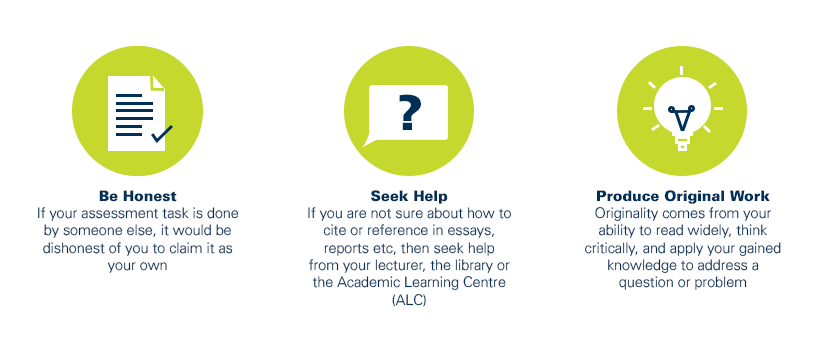
As a CQUniversity student you are expected to act honestly in all aspects of your academic work.
Any assessable work undertaken or submitted for review or assessment must be your own work. Assessable work is any type of work you do to meet the assessment requirements in the unit, including draft work submitted for review and feedback and final work to be assessed.
When you use the ideas, words or data of others in your assessment, you must thoroughly and clearly acknowledge the source of this information by using the correct referencing style for your unit. Using others’ work without proper acknowledgement may be considered a form of intellectual dishonesty.
Participating honestly, respectfully, responsibly, and fairly in your university study ensures the CQUniversity qualification you earn will be valued as a true indication of your individual academic achievement and will continue to receive the respect and recognition it deserves.
As a student, you are responsible for reading and following CQUniversity’s policies, including the Student Academic Integrity Policy and Procedure. This policy sets out CQUniversity’s expectations of you to act with integrity, examples of academic integrity breaches to avoid, the processes used to address alleged breaches of academic integrity, and potential penalties.
What is a breach of academic integrity?
A breach of academic integrity includes but is not limited to plagiarism, self-plagiarism, collusion, cheating, contract cheating, and academic misconduct. The Student Academic Integrity Policy and Procedure defines what these terms mean and gives examples.
Why is academic integrity important?
A breach of academic integrity may result in one or more penalties, including suspension or even expulsion from the University. It can also have negative implications for student visas and future enrolment at CQUniversity or elsewhere. Students who engage in contract cheating also risk being blackmailed by contract cheating services.
Where can I get assistance?
For academic advice and guidance, the Academic Learning Centre (ALC) can support you in becoming confident in completing assessments with integrity and of high standard.
What can you do to act with integrity?