Overview
In this unit you will be introduced to water and wastewater treatment, including water distribution systems and wastewater collection systems. The unit will cover characteristics of water and wastewater, different types of treatment processes and the design of different components of water and wastewater treatment plants.
Details
Pre-requisites or Co-requisites
Prerequisites: ENEC12010 Hydraulics and Hydrology
Important note: Students enrolled in a subsequent unit who failed their pre-requisite unit, should drop the subsequent unit before the census date or within 10 working days of Fail grade notification. Students who do not drop the unit in this timeframe cannot later drop the unit without academic and financial liability. See details in the Assessment Policy and Procedure (Higher Education Coursework).
Offerings For Term 1 - 2026
Attendance Requirements
All on-campus students are expected to attend scheduled classes - in some units, these classes are identified as a mandatory (pass/fail) component and attendance is compulsory. International students, on a student visa, must maintain a full time study load and meet both attendance and academic progress requirements in each study period (satisfactory attendance for International students is defined as maintaining at least an 80% attendance record).
Recommended Student Time Commitment
Each 6-credit Undergraduate unit at CQUniversity requires an overall time commitment of an average of 12.5 hours of study per week, making a total of 150 hours for the unit.
Class Timetable
Assessment Overview
Assessment Grading
This is a graded unit: your overall grade will be calculated from the marks or grades for each assessment task, based on the relative weightings shown in the table above. You must obtain an overall mark for the unit of at least 50%, or an overall grade of 'pass' in order to pass the unit. If any 'pass/fail' tasks are shown in the table above they must also be completed successfully ('pass' grade). You must also meet any minimum mark requirements specified for a particular assessment task, as detailed in the 'assessment task' section (note that in some instances, the minimum mark for a task may be greater than 50%). Consult the University's Grades and Results Policy for more details of interim results and final grades.
All University policies are available on the CQUniversity Policy site.
You may wish to view these policies:
- Grades and Results Policy
- Assessment Policy and Procedure (Higher Education Coursework)
- Review of Grade Procedure
- Student Academic Integrity Policy and Procedure
- Academic Progression Policy and Procedure
- Student Refund and Credit Balance Policy and Procedure
- Complaints Policy and Procedure
- Information and Communications Technology Acceptable Use Policy and Procedure
This list is not an exhaustive list of all University policies. The full list of University policies are available on the CQUniversity Policy site.
Feedback, Recommendations and Responses
Every unit is reviewed for enhancement each year. At the most recent review, the following staff and student feedback items were identified and recommendations were made.
Feedback from SUTE
Students expect the unit to integrate more real-world applications into the content to enhance their practical understanding.
It is suggested that more real-world applications and examples should be incorporated into the lecture content, and guest lectures from industry should be added.
Feedback from SUTE
Students expect more detailed feedback on group assignments.
Additional drop-in sessions should be organised to support the group assignments.
Feedback from SUTE
Students find it difficult to formulate answers for open-ended assessment tasks.
It should be clearly communicated to the students that the assessments are intentionally left open-ended to simulate real-world scenarios. Additional sessions should be organised to provide progressive feedback for open-ended assessment tasks.
Feedback from SUTE
Students find that the lecturer was passionate about the content and provided more opportunities to ask questions.
This practice should be continued in future offerings.
- Characterise the quality parameters of potable water and wastewater
- Formulate a preliminary design of water and wastewater treatment plants
- Design water distribution and wastewater collection networks
- Demonstrate a level of communication expected of professional engineers.
The Learning Outcomes for this unit are linked with the Engineers Australia Stage 1 Competency Standards for Professional Engineers in the areas of 1. Knowledge and Skill Base, 2. Engineering Application Ability and 3. Professional and Personal Attributes at the following levels:
Intermediate
1.6 Understanding of the scope, principles, norms, accountabilities and bounds of sustainable engineering practice in the specific discipline. (LO: 2I 3I)
Advanced
1.1 Comprehensive, theory-based understanding of the underpinning natural and physical sciences and the engineering fundamentals applicable to the engineering discipline. (LO: 1I 2A 3A)
1.2 Conceptual understanding of the mathematics, numerical analysis, statistics, and computer and information sciences which underpin the engineering discipline. (LO: 2A 3A)
1.3 In-depth understanding of specialist bodies of knowledge within the engineering discipline. (LO: 1N 2A 3A)
1.5 Knowledge of engineering design practice and contextual factors impacting the engineering discipline. (LO: 2A 3A)
2.1 Application of established engineering methods to complex engineering problem solving. (LO: 2A 3A)
2.2 Fluent application of engineering techniques, tools and resources. (LO: 2I 3A)
2.3 Application of systematic engineering synthesis and design processes. (LO: 2A 3A)
2.4 Application of systematic approaches to the conduct and management of engineering projects. (LO: 2I 3A)
3.2 Effective oral and written communication in professional and lay domains. (LO: 4A)
3.4 Professional use and management of information. (LO: 4A)
Note: LO refers to the Learning Outcome number(s) which link to the competency and the levels: N – Introductory, I – Intermediate and A - Advanced.
Refer to the Engineering Undergraduate Course Moodle site for further information on the Engineers Australia's Stage 1 Competency Standard for Professional Engineers and course level mapping information https://moodle.cqu.edu.au/course/view.php?id=1511
Alignment of Assessment Tasks to Learning Outcomes
| Assessment Tasks | Learning Outcomes | |||
|---|---|---|---|---|
| 1 | 2 | 3 | 4 | |
| 1 - Written Assessment - 30% | ||||
| 2 - Written Assessment - 30% | ||||
| 3 - Online Test - 40% | ||||
Alignment of Graduate Attributes to Learning Outcomes
| Graduate Attributes | Learning Outcomes | |||
|---|---|---|---|---|
| 1 | 2 | 3 | 4 | |
| 1 - Communication | ||||
| 2 - Problem Solving | ||||
| 3 - Critical Thinking | ||||
| 4 - Information Literacy | ||||
| 5 - Team Work | ||||
| 6 - Information Technology Competence | ||||
| 7 - Cross Cultural Competence | ||||
| 8 - Ethical practice | ||||
| 9 - Social Innovation | ||||
| 10 - First Nations Knowledges | ||||
| 11 - Aboriginal and Torres Strait Islander Cultures | ||||
Textbooks
Water and Wastewater Engineering: Design Principles and Practice
- (2020)
- Authors: Mackenzie L. Davis
- McGraw Hill
- Columbus Columbus , OH , USA
- ISBN: 9780071713849
- Binding: eBook
Water and Wastewater Engineering: Water Supply and Wastewater Removal
- Edition: 3rd edn (2010)
- Authors: Nazih K. Shammas, Lawrence K. Wang
- Wiley US
- Hoboken Hoboken , NJ , USA
- ISBN: 9780470411926
- Binding: eBook
IT Resources
- CQUniversity Student Email
- Internet
- Unit Website (Moodle)
All submissions for this unit must use the referencing style: Harvard (author-date)
For further information, see the Assessment Tasks.
k.jinadasa@cqu.edu.au
Week 1
Begin Date: 09 Mar 2026Module/Topic
Introduction to Project I
Hydraulics of sewer design
Chapter
Events and Submissions/Topic
Week 2
Begin Date: 16 Mar 2026Module/Topic
Modelling of the wastewater collection system
Chapter
Events and Submissions/Topic
Week 3
Begin Date: 23 Mar 2026Module/Topic
Sewerage system requirements- standards and guidelines
Chapter
Events and Submissions/Topic
Week 4
Begin Date: 30 Mar 2026Module/Topic
Wastewater sources and quantity
Chapter
Events and Submissions/Topic
Week 5
Begin Date: 06 Apr 2026Module/Topic
Wastewater quality and treatment
Chapter
Events and Submissions/Topic
Week 6
Begin Date: 13 Apr 2026Module/Topic
Design concepts - Water and wastewater treatment
Chapter
Events and Submissions/Topic
Vacation Week
Begin Date: 20 Apr 2026Module/Topic
Chapter
Events and Submissions/Topic
Week 7
Begin Date: 27 Apr 2026Module/Topic
Introduction to Project 2
Water distribution systems
Chapter
Events and Submissions/Topic
Online Test A (Part A will be open from 09:00am AEST Monday Week 7 to 09:00 am AEST Monday Week 8)
Week 8
Begin Date: 04 May 2026Module/Topic
Water distribution requirements - Standards and guidelines
Chapter
Events and Submissions/Topic
Week 9
Begin Date: 11 May 2026Module/Topic
Hydraulics of water distribution system
Chapter
Events and Submissions/Topic
Week 10
Begin Date: 18 May 2026Module/Topic
Modelling of the water distribution system
Chapter
Events and Submissions/Topic
Week 11
Begin Date: 25 May 2026Module/Topic
Water sources, storage, and water demand
Chapter
Events and Submissions/Topic
Week 12
Begin Date: 01 Jun 2026Module/Topic
Drinking water quality and water treatment
Chapter
Events and Submissions/Topic
Exam Week
Begin Date: 08 Jun 2026Module/Topic
Chapter
Events and Submissions/Topic
Online Test B (Part B will be open from 09:00 am AEST Monday Exam
Week to 09.00 AEST Monday Vacation/Exam Week)
Vacation/Exam Week
Begin Date: 15 Jun 2026Module/Topic
Chapter
Events and Submissions/Topic
1 Written Assessment
You are required to design a sewer network for a given area. Information related to the project area such as topography and population is provided. You may need to collect relevant information from suppliers, councils and market survey as appropriate. Additional information on the assignment is available on the Moodle website. This assessment have a 72-hour grace period after the stated deadline during which no late penalty will be applied.
AI Assessment Scale
You may use AI for planning, idea development, and research. Your final submission should show how you have developed and refined these ideas.
Week 6 Friday (17 Apr 2026) 11:45 am AEST
Within two weeks after the submission.
The final report will be evaluated based on the following:
1) Use of correct values, make reasonable assumptions as required and follow the standards and guidelines as applicable(12%);
2) Clear demonstration of the calculation/modelling steps (40%);
3) Presentation, interpretation and analysis of the results (36%);
4) Communication and teamwork (12%)
Students must clearly state in the report how individual contributions were made and how teamwork was undertaken. Submit a single PDF with all figures/tables embedded; include own model files as appendices if requested.
Full assessment details/marking rubric is available in Moodle.
- Characterise the quality parameters of potable water and wastewater
- Formulate a preliminary design of water and wastewater treatment plants
- Demonstrate a level of communication expected of professional engineers.
2 Written Assessment
You are required to design a water distribution system for a given area. Information related to the project area such as topography and population is provided. You may need to collect relevant information from suppliers, councils and market surveys as appropriate. Additional information on the assignment is available on the Moodle website. This assessment have a 72-hour grace period after the stated deadline during which no late penalty will be applied.
AI Assessment Scale
You may use AI for planning, idea development, and research. Your final submission should show how you have developed and refined these ideas.
Week 12 Friday (5 June 2026) 11:45 am AEST
Within two weeks after the submission.
The final report will be evaluated based on the following:
1) Use of correct values, make reasonable assumptions as required and follow the standards and guidelines as applicable (12%);
2) Clear demonstration of the calculation/modelling steps (40%);
3) Presentation, interpretation and analysis of the results (36%);
4) Communication and teamwork (12%)
Students must clearly state in the report how individual contributions were made and how teamwork was undertaken. Submit a single PDF with all figures/tables embedded; include own model files as appendices if requested
Full assessment details/marking rubric is available in Moodle.
- Design water distribution and wastewater collection networks
- Demonstrate a level of communication expected of professional engineers.
3 Online Test
This assessment task consists of one Online Test with two parts. The main characteristics of the Online Test are:
There will be two parts of the online test: Part A and Part B.
Parts A and B of the test cover the contents of weeks 1-6 and 7-12, respectively.
You will have 120 minutes from when you start your attempt to submit your answers.
You will be allowed to attempt each part of the test two times within a given time frame. The highest of the two
attempts will be your final score for the part of the test.
There shall be a minimum of two hours between the two attempts.
Each part will have 20 questions. Questions may vary from student to student and may change with different attempts.
The minimum combined score is 20/40 (50%), and each part contributes 20% to the unit total. This assessment is exempt from the 72-hour grace period.
AI Assessment Scale
No AI: You must not use AI at any point during the assessment. You must demonstrate your core skills and knowledge.
Part A will be open from 09:00am AEST Monday Week 7 to 09:00 am AEST Monday Week 8. Part B will be open from 09:00 am AEST Monday Exam Week to 09.00 AEST Monday Vacation/Exam Week.
After the certification of grades.
Answers will be automatically marked correct or incorrect.
- Characterise the quality parameters of potable water and wastewater
- Formulate a preliminary design of water and wastewater treatment plants
- Design water distribution and wastewater collection networks
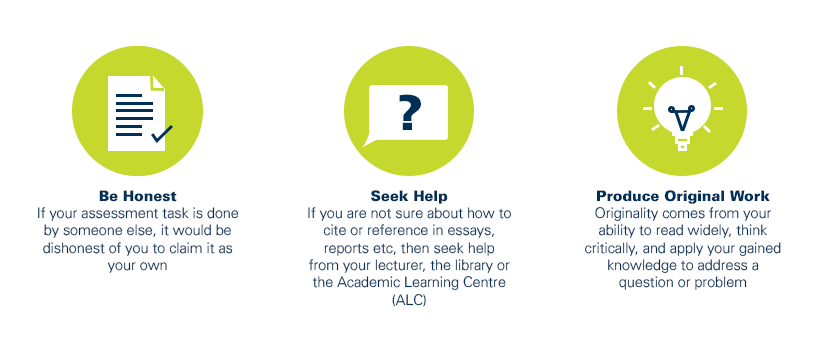
As a CQUniversity student you are expected to act honestly in all aspects of your academic work.
Any assessable work undertaken or submitted for review or assessment must be your own work. Assessable work is any type of work you do to meet the assessment requirements in the unit, including draft work submitted for review and feedback and final work to be assessed.
When you use the ideas, words or data of others in your assessment, you must thoroughly and clearly acknowledge the source of this information by using the correct referencing style for your unit. Using others’ work without proper acknowledgement may be considered a form of intellectual dishonesty.
Participating honestly, respectfully, responsibly, and fairly in your university study ensures the CQUniversity qualification you earn will be valued as a true indication of your individual academic achievement and will continue to receive the respect and recognition it deserves.
As a student, you are responsible for reading and following CQUniversity’s policies, including the Student Academic Integrity Policy and Procedure. This policy sets out CQUniversity’s expectations of you to act with integrity, examples of academic integrity breaches to avoid, the processes used to address alleged breaches of academic integrity, and potential penalties.
What is a breach of academic integrity?
A breach of academic integrity includes but is not limited to plagiarism, self-plagiarism, collusion, cheating, contract cheating, and academic misconduct. The Student Academic Integrity Policy and Procedure defines what these terms mean and gives examples.
Why is academic integrity important?
A breach of academic integrity may result in one or more penalties, including suspension or even expulsion from the University. It can also have negative implications for student visas and future enrolment at CQUniversity or elsewhere. Students who engage in contract cheating also risk being blackmailed by contract cheating services.
Where can I get assistance?
For academic advice and guidance, the Academic Learning Centre (ALC) can support you in becoming confident in completing assessments with integrity and of high standard.
What can you do to act with integrity?