Overview
This unit introduces students to the analysis of the behaviour of objects in motion. You will be able to explain the motion of objects and solve problems involving objects experiencing constant linear and angular acceleration, and constant force and torque; and apply principles of conservation of momentum and energy to solve problems involving moving objects and simple machines. You will be able to solve problems involving friction, kinematics and dynamics, and oscillatory motion, forced vibration and resonance. You will be able to analyse static and dynamic balance of shafts and determine bearing reactions. Students are required to develop a capacity to work and communicate ethically and professionally, as individuals and in teams, to investigate and solve problems and present solutions professionally.
Details
Pre-requisites or Co-requisites
Pre-Requisites: ENAG11005 Mechanics or ENEG11006 Engineering Statics
Important note: Students enrolled in a subsequent unit who failed their pre-requisite unit, should drop the subsequent unit before the census date or within 10 working days of Fail grade notification. Students who do not drop the unit in this timeframe cannot later drop the unit without academic and financial liability. See details in the Assessment Policy and Procedure (Higher Education Coursework).
Offerings For Term 3 - 2026
Attendance Requirements
All on-campus students are expected to attend scheduled classes - in some units, these classes are identified as a mandatory (pass/fail) component and attendance is compulsory. International students, on a student visa, must maintain a full time study load and meet both attendance and academic progress requirements in each study period (satisfactory attendance for International students is defined as maintaining at least an 80% attendance record).
Recommended Student Time Commitment
Each 6-credit Undergraduate unit at CQUniversity requires an overall time commitment of an average of 12.5 hours of study per week, making a total of 150 hours for the unit.
Class Timetable
Assessment Overview
| Assessment Task | Part Weighting (% of assessment) |
Assessment Security Level | Gen AI Guidance Levels |
|---|---|---|---|
| 1. Weekly online quizzes (20% of unit ) | |||
| Weekly online quizzes (Online Quiz(zes)) | 100% of 20% | Low | No Gen AI Use |
| 2. Written Assessment 1 (40% of unit · 2 parts ) | |||
| Part 1 – Assignment 1-1 (Written Assessment) | 85% of 40% | Low | AI-Assisted (Guided Collaboration) |
| Part 2 – Assignment 1-2 (Learning logs / diaries / Journal / log books) | 15% of 40% | Low | No Gen AI Use |
| 3. Written Assessment 2 (40% of unit · 2 parts ) | |||
| Part 1 – Assignment 2-1 (Written Assessment) | 85% of 40% | Low | AI-Assisted (Guided Collaboration) |
| Part 2 – Assignment 2-2 (Learning logs / diaries / Journal / log books) | 15% of 40% | Low | No Gen AI Use |
Assessment Grading
This is a graded unit: your overall grade will be calculated from the marks or grades for each assessment task, based on the relative weightings shown in the table above. You must obtain an overall mark for the unit of at least 50%, or an overall grade of 'pass' in order to pass the unit. If any 'pass/fail' tasks are shown in the table above they must also be completed successfully ('pass' grade). You must also meet any minimum mark requirements specified for a particular assessment task, as detailed in the 'assessment task' section (note that in some instances, the minimum mark for a task may be greater than 50%). Consult the University's Grades and Results Policy for more details of interim results and final grades.
All University policies are available on the CQUniversity Policy site.
You may wish to view these policies:
- Grades and Results Policy
- Assessment Policy and Procedure (Higher Education Coursework)
- Review of Grade Procedure
- Student Academic Integrity Policy and Procedure
- Academic Progression Policy and Procedure
- Student Refund and Credit Balance Policy and Procedure
- Complaints Policy and Procedure
- Information and Communications Technology Acceptable Use Policy and Procedure
This list is not an exhaustive list of all University policies. The full list of University policies are available on the CQUniversity Policy site.
Feedback, Recommendations and Responses
Every unit is reviewed for enhancement each year. At the most recent review, the following staff and student feedback items were identified and recommendations were made.
Feedback from Student feedback
Clear Requirements, Useful Materials, Effective Assessment Learning, Helpful Feedback, Skill Development, Degree Relevance, and Overall Satisfaction.
Details should be kept and continuously improved.
Feedback from Student feedback
Provide clearer marking criteria/expectations.
The marking rubric should be added.
Feedback from Student feedback
Improve clarity of quiz questions.
Additional explanatory notes should be incorporated into the quiz questions.
- Apply kinematics and dynamics to the solution of practical examples of linear and rotational motion of particles and rigid bodies
- Apply the principles of conservation of momentum and energy to the solution of problems involving moving objects and simple machines
- Solve problems involving the effect of friction on the motion of objects and explain these effects
- Solve problems involving oscillating motion and explain the effects of oscillating motion, forced vibration and resonance on rotating machinery
- Analyse static and dynamic balance of shafts and flywheels and determine bearing reactions
- Communicate professionally and provide evidence of personal reflection on, and critical assessment of, team contributions and professional development
- Solve problems and record and communicate, clearly and professionally, the approach used to solve problems and the reasons for adopting such approaches to problems.
The Learning Outcomes for this unit are linked with the Engineers Australia Stage 1 Competency Standards for Engineering Associates in the areas of 1. Knowledge and Skill Base, 2. Engineering Application Ability and 3. Professional and Personal Attributes at the following levels:
Introductory
2.2 Application of technical and practical techniques, tools and resources to well-defined engineering problems. (LO: 1N 2N 3N 4N 5N)
2.3 Application of systematic design processes to well-defined engineering problems. (LO: 1N 2N)
3.1 Ethical conduct and professional accountability. (LO: 6N 7N)
Intermediate
1.1 Descriptive, formula-based understanding of the underpinning natural and physical sciences and the engineering fundamentals applicable to the practice area. (LO: 1I 2I 3I 4I 5I 6I 7I)
1.2 Procedural-level understanding of the mathematics, numerical analysis, statistics, and computer and information sciences which underpin the practice area. (LO: 1I 2I 3I 4I 5I 7I)
1.3 In-depth practical knowledge and skills within specialist sub-disciplines of the practice area. (LO: 1I 2I 3I 4I 5I 7I)
1.4 Discernment of engineering developments within the practice area. (LO: 1I 2I 3I 4I 5I 7I)
1.5 Knowledge of engineering design practice and contextual factors impacting the practice area. (LO: 1I 2I 3I 4I 5I)
1.6 Understanding of the scope, principles, norms, accountabilities and bounds of sustainable engineering practice in the specific discipline. (LO: 1I 2I 3I 4I 5I)
2.1 Application of established technical and practical methods to the solution of well-defined engineering problems. (LO: 1I 2I 3I 4I 5I)
3.2 Effective oral and written communication in professional and lay domains. (LO: 6N 7I)
3.5 Orderly management of self, and professional conduct. (LO: 6I 7I)
Note: LO refers to the Learning Outcome number(s) which link to the competency and the levels: N – Introductory, I – Intermediate and A - Advanced.
Refer to the Engineering Undergraduate Course Moodle site for further information on the Engineers Australia's Stage 1 Competency Standard for Professional Engineers and course level mapping information https://moodle.cqu.edu.au/course/view.php?id=1511
Alignment of Assessment Tasks to Learning Outcomes
| Assessment Tasks | Learning Outcomes | ||||||
|---|---|---|---|---|---|---|---|
| 1 | 2 | 3 | 4 | 5 | 6 | 7 | |
|
1.
Assessment 1
(20% of unit )
Online Quiz(zes)
|
|||||||
|
2.
Assessment 2
(40% of unit · 2 parts
)
Part 1 -
Written Assessment
Part 2 -
Learning logs / diaries / Journal / log books
|
|||||||
|
3.
Assessment 3
(40% of unit · 2 parts
)
Part 1 -
Written Assessment
Part 2 -
Learning logs / diaries / Journal / log books
|
|||||||
Alignment of Graduate Attributes to Learning Outcomes
| Graduate Attributes | Learning Outcomes | ||||||
|---|---|---|---|---|---|---|---|
| 1 | 2 | 3 | 4 | 5 | 6 | 7 | |
| 1 - Communication | |||||||
| 2 - Problem Solving | |||||||
| 3 - Critical Thinking | |||||||
| 4 - Information Literacy | |||||||
| 5 - Team Work | |||||||
| 6 - Information Technology Competence | |||||||
| 7 - Cross Cultural Competence | |||||||
| 8 - Ethical practice | |||||||
| 9 - Social Innovation | |||||||
| 10 - First Nations Knowledges | |||||||
| 11 - Aboriginal and Torres Strait Islander Cultures | |||||||
Textbooks
Engineering Mechanics and Strength of Materials
- (1986 ~ 2009)
- Authors: Roger Kinsky
- McGraw-Hill Australia Pty Limited
- ISBN: 0074521551
IT Resources
- CQUniversity Student Email
- Internet
- Unit Website (Moodle)
All submissions for this unit must use the referencing style: Harvard (author-date)
For further information, see the Assessment Tasks.
y.q.sun@cqu.edu.au
Week 1
Begin Date: 09 Nov 2026Module/Topic
Introduction; Revision of statics topics;
Kinematics.
Chapter
Chapter 7
Events and Submissions/Topic
Tutorials
Week 2
Begin Date: 16 Nov 2026Module/Topic
Kinematics; Rigid body motion;
Relative velocity and acceleration.
Chapter
Chapter 7
Events and Submissions/Topic
Tutorials
Weekly Quiz Due
Week 3
Begin Date: 23 Nov 2026Module/Topic
Centripetal and tangential
acceleration; Special cases of motion;
Coriolis acceleration.
Chapter
Chapter 7
Events and Submissions/Topic
Tutorials
Weekly Quiz Due
Week 4
Begin Date: 30 Nov 2026Module/Topic
Newton’s laws of motion;
equations of motion; and
equations of motion for a system
of particles.
Chapter
Chapter 8
Events and Submissions/Topic
Tutorials
Weekly Quiz Due
Week 5
Begin Date: 07 Dec 2026Module/Topic
Application of the equation of motion.
Chapter
Chapter 8
Events and Submissions/Topic
Tutorials
Weekly Quiz Due
Week 6
Begin Date: 14 Dec 2026Module/Topic
Inertia force; Centrifugal force;
Rotation on the inclined plane; Mass
moment of inertia and torque.
Chapter
Chapter 8
Events and Submissions/Topic
Tutorials
Weekly Quiz Due
Mid-Term Break
Begin Date: 21 Dec 2026Module/Topic
Chapter
Events and Submissions/Topic
Week 7
Begin Date: 04 Jan 2027Module/Topic
Impulse and momentum equation and
its applications.
Chapter
Chapter 9
Events and Submissions/Topic
Tutorials
Weekly Quiz Due
Assignments 1-1 & 1-2 Due: Week 7 Monday (4 Jan. 2027) 11:59 pm AEST
Assignment 1-1 Due: Week 7 Monday (4 Jan 2027) 11:59 pm AEST
Assignment 1-2 Due: Week 7 Monday (4 Jan 2027) 11:45 pm AEST
Week 8
Begin Date: 11 Jan 2027Module/Topic
Work energy equation; Power and
efficiency; Energy conservation.
Chapter
Chapter 9
Events and Submissions/Topic
Tutorials
Weekly Quiz Due
Week 9
Begin Date: 18 Jan 2027Module/Topic
Power; Mechanical efficiency; Energy
conservation.
Chapter
Chapter 9
Events and Submissions/Topic
Tutorials
Weekly Quiz Due
Week 10
Begin Date: 25 Jan 2027Module/Topic
Mechanical vibration; Simple harmonic
motion; Vibrating spring-mass system.
Chapter
Chapter 10
Events and Submissions/Topic
Tutorials
Weekly Quiz Due
Week 11
Begin Date: 01 Feb 2027Module/Topic
Simple force vibration; Balancing and
reaction of rotating masses.
Chapter
Chapter 11
Events and Submissions/Topic
Tutorials
Week 12
Begin Date: 08 Feb 2027Module/Topic
Review of previous week materials.
Chapter
Review of previous week materials.
Events and Submissions/Topic
Review of previous week materials.
Exam Week
Begin Date: 15 Feb 2027Module/Topic
Chapter
Events and Submissions/Topic
Assignments 2-1 & 2-2 Due: Review/Exam
Week Monday (15 Feb 2027) 11:59 pm
AEST
Assignment 2-1 Due: Exam Week Monday (15 Feb 2027) 11:59 pm AEST
Assignment 2-2 Due: Exam Week Monday (15 Feb 2027) 11:59 pm AEST
Week 12
Begin Date: 07 Feb 2028Module/Topic
Review of previous week materials.
Chapter
Review of previous week materials.
Events and Submissions/Topic
Review of previous week materials.
1. Weekly online quizzes ( 20% of unit )
Online Quiz(zes)
These weekly quizzes assess contents from each week. There will be 10 quizzes starting from week 2 extending up to
week 11. All quizzes together will have 20% weighting of the unit. The assessment task can be accessed from the unit
Moodle site on a weekly basis. Each quiz will be open for a week and students need to attempt within the open period.
Weekly due dates will be given in the Moodle
Students will be getting feedback immediately after the submission of the quizzes
Assessment Criteria: Correct answers receive the allocated marks; incorrect answers receive zero marks. There is no negative marking. Feedback is provided after submission in accordance with the Moodle settings.
Assessment security and GenAI use: Tier 3 – Low-security (guided) assessment. GenAI Guidance Level 1 – AI-Assisted (Guided Collaboration). GenAI may be used for basic study support before an attempt, such as concept clarification, brainstorming or simple research assistance. GenAI must not be used during a quiz attempt to generate, calculate, select or check answers. Students remain responsible for demonstrating their own understanding.
- Apply kinematics and dynamics to the solution of practical examples of linear and rotational motion of particles and rigid bodies
- Solve problems involving the effect of friction on the motion of objects and explain these effects
- Solve problems and record and communicate, clearly and professionally, the approach used to solve problems and the reasons for adopting such approaches to problems.
2. Written Assessment 1 ( 40% of unit · 2 parts )
Part 1 - Written Assessment
Assessment item covers the topics from week 1-6.
Full assignment details are on the unit website.
Week 7 Monday (4 Jan 2027) 11:59 pm AEST
Late submissions will not be accepted unless an extension has been granted.
Week 8 Monday (11 Jan 2027)
One week after the submission
Assessment Criteria
Each question in this assignment will be assessed separately for the each of the following criteria.
Criteria 1 Correct interpretation of the question (10%)
This criterion may include the identification of the data given in the question and finding solution
requirements
Criteria 2 Correct choice of solution procedures (20%)
This criterion includes statement of any assumptions if needed, relevant formulae, method, and explanation of choices
Criteria 3 Evidence of correct procedures (40%)
Use of appropriate use of diagrams and logical development of appropriate mathematical /descriptive solutions are
addressed here.
Criteria 4: Results (20%)
This criterion addresses accuracy of results, answers clearly stated, interpretation of results and evidence of
checking results
Criteria 5 Presentation (10%)
This criterion includes the correct use of terminology, conventions, clear communication, logical layout referencing of
authoritative sources of equations and data.
Assessment security and GenAI use: Tier 3 – Low-security (guided) assessment. GenAI Guidance Level 1 – AI-Assisted (Guided Collaboration). GenAI may be used only for basic support such as planning an approach, clarifying terminology or concepts, or simple research assistance. GenAI must not be used to generate the final numerical solution, derivation, diagram, explanation or answer submitted for marking. Any GenAI use must be declared, and students should briefly explain how they checked and refined any AI-supported material.
- Apply kinematics and dynamics to the solution of practical examples of linear and rotational motion of particles and rigid bodies
- Solve problems involving the effect of friction on the motion of objects and explain these effects
- Solve problems and record and communicate, clearly and professionally, the approach used to solve problems and the reasons for adopting such approaches to problems.
Part 2 - Learning logs / diaries / Journal / log books
It is a workbook documenting the student’s learning process from Weeks 1–6. It should be developed progressively, week by week, and include the workbook activities specified for each week and detailed on Moodle, together with tutorial work, problem-solving attempts, corrections, sketches, diagrams, notes, study summaries, and reflections.
Rough attempts, unsuccessful approaches, and subsequent corrections are also valuable evidence of the learning process and should be included where appropriate.
You may scan or photograph the work described above, combine it into a single file, and submit it together with Assignment 1-1.
Week 7 Monday (4 Jan 2027) 11:45 pm AEST
Week 8 Monday (11 Jan 2027)
One week after the submission
Assessment Criteria – Workbook
Workbook activities are set each week and detailed on Moodle. The workbook should demonstrate your progressive learning from Weeks 1–6. Accuracy is important, but mistakes, rough work, partial attempts and corrections are acceptable where they show genuine learning and improvement.
The workbook will be assessed on the following:
Completion and engagement: Evidence of the weekly workbook activities, tutorial work, problem-solving attempts, corrections and re-attempts.
Working and understanding: Appropriate equations, calculations, procedures, assumptions and explanations are shown, with evidence that results have been checked and interpreted where relevant.
Learning process: Evidence of development through rough attempts, corrections, notes, sketches, diagrams, summaries and reflections.
Presentation and documentation: Work is clearly organised by week or topic, with problems identified, logical working, clear diagrams where required, appropriate terminology and sufficient detail for the work to be understood when revisited later.
The workbook is intended to document your learning process, not simply present polished final answers.
Assessment security and GenAI use: Level 1 – No AI: GenAI must not be used to complete the workbook activities. The workbook is intended to demonstrate your own learning, problem-solving process, working, mistakes and subsequent corrections.
- Apply kinematics and dynamics to the solution of practical examples of linear and rotational motion of particles and rigid bodies
- Solve problems involving the effect of friction on the motion of objects and explain these effects
- Solve problems and record and communicate, clearly and professionally, the approach used to solve problems and the reasons for adopting such approaches to problems.
3. Written Assessment 2 ( 40% of unit · 2 parts )
Part 1 - Written Assessment
Assessment item covers the topics from week 7-12.
Full assignment details are on the unit website.
Exam Week Monday (15 Feb 2027) 11:59 pm AEST
Late submissions will not be accepted unless an extension has been granted.
Exam Week Friday (19 Feb 2027)
Assessment Criteria
Each question in this assignment will be assessed separately for the each of the following criteria.
Criteria 1 Correct interpretation of the question (10%)
This criterion may include the identification of the data given in the question and finding solution
requirements
Criteria 2 Correct choice of solution procedures (20%)
This criterion includes statement of any assumptions if needed, relevant formulae, method, and explanation of choices
Criteria 3 Evidence of correct procedures (40%)
Use of appropriate use of diagrams and logical development of appropriate mathematical /descriptive solutions are
addressed here.
Criteria 4: Results (20%)
This criterion addresses accuracy of results, answers clearly stated, interpretation of results and evidence of
checking results
Criteria 5 Presentation (10%)
This criterion includes the correct use of terminology, conventions, clear communication, logical layout referencing of
authoritative sources of equations and data.
Assessment security and GenAI use: Tier 3 – Low-security (guided) assessment. GenAI Guidance Level 1 – AI-Assisted (Guided Collaboration). GenAI may be used only for basic support such as planning an approach, clarifying terminology or concepts, or simple research assistance. GenAI must not be used to generate the final numerical solution, derivation, diagram, explanation or answer submitted for marking. Any GenAI use must be declared, and students should briefly explain how they checked and refined any AI-supported material.
- Apply kinematics and dynamics to the solution of practical examples of linear and rotational motion of particles and rigid bodies
- Apply the principles of conservation of momentum and energy to the solution of problems involving moving objects and simple machines
- Solve problems involving the effect of friction on the motion of objects and explain these effects
- Solve problems involving oscillating motion and explain the effects of oscillating motion, forced vibration and resonance on rotating machinery
- Analyse static and dynamic balance of shafts and flywheels and determine bearing reactions
- Solve problems and record and communicate, clearly and professionally, the approach used to solve problems and the reasons for adopting such approaches to problems.
Part 2 - Learning logs / diaries / Journal / log books
It is a workbook documenting the student’s learning process from Weeks 7–12. It should be developed progressively, week by week, and include the workbook activities specified for each week and detailed on Moodle, together with tutorial work, problem-solving attempts, corrections, sketches, diagrams, notes, study summaries, and reflections.
Rough attempts, unsuccessful approaches, and subsequent corrections are also valuable evidence of the learning process and should be included where appropriate.
You may scan or photograph the work described above, combine it into a single file, and submit it together with Assignment 2-1.
Exam Week Monday (15 Feb 2027) 11:59 pm AEST
Late submissions will not be accepted unless an extension has been granted.
Exam Week Friday (19 Feb 2027)
Assessment Criteria – Workbook
Workbook activities are set each week and detailed on Moodle. The workbook should demonstrate your progressive learning from Weeks 1–6. Accuracy is important, but mistakes, rough work, partial attempts and corrections are acceptable where they show genuine learning and improvement.
The workbook will be assessed on the following:
Completion and engagement: Evidence of the weekly workbook activities, tutorial work, problem-solving attempts, corrections and re-attempts.
Working and understanding: Appropriate equations, calculations, procedures, assumptions and explanations are shown, with evidence that results have been checked and interpreted where relevant.
Learning process: Evidence of development through rough attempts, corrections, notes, sketches, diagrams, summaries and reflections.
Presentation and documentation: Work is clearly organised by week or topic, with problems identified, logical working, clear diagrams where required, appropriate terminology and sufficient detail for the work to be understood when revisited later.
The workbook is intended to document your learning process, not simply present polished final answers.
Assessment security and GenAI use: Level 1 – No AI: GenAI must not be used to complete the workbook activities. The workbook is intended to demonstrate your own learning, problem-solving process, working, mistakes and subsequent corrections.
- Apply kinematics and dynamics to the solution of practical examples of linear and rotational motion of particles and rigid bodies
- Apply the principles of conservation of momentum and energy to the solution of problems involving moving objects and simple machines
- Solve problems involving the effect of friction on the motion of objects and explain these effects
- Solve problems involving oscillating motion and explain the effects of oscillating motion, forced vibration and resonance on rotating machinery
- Analyse static and dynamic balance of shafts and flywheels and determine bearing reactions
- Solve problems and record and communicate, clearly and professionally, the approach used to solve problems and the reasons for adopting such approaches to problems.
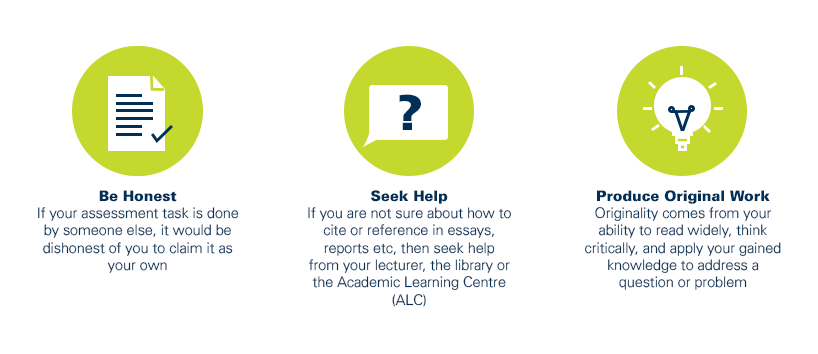
As a CQUniversity student you are expected to act honestly in all aspects of your academic work.
Any assessable work undertaken or submitted for review or assessment must be your own work. Assessable work is any type of work you do to meet the assessment requirements in the unit, including draft work submitted for review and feedback and final work to be assessed.
When you use the ideas, words or data of others in your assessment, you must thoroughly and clearly acknowledge the source of this information by using the correct referencing style for your unit. Using others’ work without proper acknowledgement may be considered a form of intellectual dishonesty.
Participating honestly, respectfully, responsibly, and fairly in your university study ensures the CQUniversity qualification you earn will be valued as a true indication of your individual academic achievement and will continue to receive the respect and recognition it deserves.
As a student, you are responsible for reading and following CQUniversity’s policies, including the Student Academic Integrity Policy and Procedure. This policy sets out CQUniversity’s expectations of you to act with integrity, examples of academic integrity breaches to avoid, the processes used to address alleged breaches of academic integrity, and potential penalties.
What is a breach of academic integrity?
A breach of academic integrity includes but is not limited to plagiarism, self-plagiarism, collusion, cheating, contract cheating, and academic misconduct. The Student Academic Integrity Policy and Procedure defines what these terms mean and gives examples.
Why is academic integrity important?
A breach of academic integrity may result in one or more penalties, including suspension or even expulsion from the University. It can also have negative implications for student visas and future enrolment at CQUniversity or elsewhere. Students who engage in contract cheating also risk being blackmailed by contract cheating services.
Where can I get assistance?
For academic advice and guidance, the Academic Learning Centre (ALC) can support you in becoming confident in completing assessments with integrity and of high standard.
What can you do to act with integrity?