Overview
Knowing and understanding literacy and numeracy teaching strategies and their application to teaching areas in secondary schools is the focus of this unit. In this unit you will learn how to identify literacy and numeracy needs of secondary school students so you are able to implement learning activities to address appropriate learning requirements for individuals and groups. You will explore contemporary strategies and approaches to teaching literacy and numeracy to enable you to plan, assess and report on individual student literacy and numeracy capabilities. You will investigate the techniques that will enable you to identify the specific literacy and numeracy deficiencies that students may have, so you are able to provide appropriate learning support. Pedagogical strategies to address the needs of learners in literacy and numeracy are developed, to enable the appropriate design, implementation and evaluation of teaching, learning and assessment strategies, that facilitate and enhance student learning. This unit also requires the development and maintenance of your personal literacy and numeracy skills together with critically reflective practices to enhance your professional learning.
Details
Pre-requisites or Co-requisites
Admission to a postgraduate course or completion of 72 credit points in an undergraduate course.
Important note: Students enrolled in a subsequent unit who failed their pre-requisite unit, should drop the subsequent unit before the census date or within 10 working days of Fail grade notification. Students who do not drop the unit in this timeframe cannot later drop the unit without academic and financial liability. See details in the Assessment Policy and Procedure (Higher Education Coursework).
Offerings For Term 2 - 2026
Attendance Requirements
All on-campus students are expected to attend scheduled classes - in some units, these classes are identified as a mandatory (pass/fail) component and attendance is compulsory. International students, on a student visa, must maintain a full time study load and meet both attendance and academic progress requirements in each study period (satisfactory attendance for International students is defined as maintaining at least an 80% attendance record).
Recommended Student Time Commitment
Each 6-credit Postgraduate unit at CQUniversity requires an overall time commitment of an average of 12.5 hours of study per week, making a total of 150 hours for the unit.
Class Timetable
Assessment Overview
Assessment Grading
This is a graded unit: your overall grade will be calculated from the marks or grades for each assessment task, based on the relative weightings shown in the table above. You must obtain an overall mark for the unit of at least 50%, or an overall grade of 'pass' in order to pass the unit. If any 'pass/fail' tasks are shown in the table above they must also be completed successfully ('pass' grade). You must also meet any minimum mark requirements specified for a particular assessment task, as detailed in the 'assessment task' section (note that in some instances, the minimum mark for a task may be greater than 50%). Consult the University's Grades and Results Policy for more details of interim results and final grades.
All University policies are available on the CQUniversity Policy site.
You may wish to view these policies:
- Grades and Results Policy
- Assessment Policy and Procedure (Higher Education Coursework)
- Review of Grade Procedure
- Student Academic Integrity Policy and Procedure
- Academic Progression Policy and Procedure
- Student Refund and Credit Balance Policy and Procedure
- Complaints Policy and Procedure
- Information and Communications Technology Acceptable Use Policy and Procedure
This list is not an exhaustive list of all University policies. The full list of University policies are available on the CQUniversity Policy site.
Feedback, Recommendations and Responses
Every unit is reviewed for enhancement each year. At the most recent review, the following staff and student feedback items were identified and recommendations were made.
Feedback from Student Response
Students requested more variety of teaching and assessment strategies with an explicit focus on literacy and numeracy
Further explicit strategies will be included to focus on the teaching and assessment of literacy and numeracy in secondary school classrooms.
- Identify and critique contemporary issues shaping the teaching of literacy and numeracy in secondary school teaching areas
- Effectively design pedagogical strategies that accomplish learning in literacy and numeracy for secondary school students
- Develop and maintain personal literacy and numeracy competence
- Reflect critically on professional practice.
Successful completion of this unit provides opportunities for students to demonstrate the Australian Professional Standards for Teachers focus areas of:
1.3 Students with diverse linguistic, cultural, religious and socioeconomic backgrounds
1.5 Differentiate teaching to meet the specific learning needs of students across the full range of abilities
2.1 Content and teaching strategies of the teaching area
2.3 Curriculum, assessment and reporting
2.5 Literacy and numeracy strategies
3.1 Establish learning goals
3.2 Plan, structure and sequence learning programs
3.3 Use teaching strategies
3.4 Select and use resources
6.2 Engage in professional learning and improve practice
6.4 Apply professional learning and improve student learning
Alignment of Assessment Tasks to Learning Outcomes
| Assessment Tasks | Learning Outcomes | |||
|---|---|---|---|---|
| 1 | 2 | 3 | 4 | |
| 1 - Portfolio - 50% | ||||
| 2 - Online Quiz(zes) - 20% | ||||
| 3 - Online Quiz(zes) - 20% | ||||
| 4 - Reflective Practice Assignment - 10% | ||||
Alignment of Graduate Attributes to Learning Outcomes
| Graduate Attributes | Learning Outcomes | |||
|---|---|---|---|---|
| 1 | 2 | 3 | 4 | |
| 1 - Knowledge | ||||
| 2 - Communication | ||||
| 3 - Cognitive, technical and creative skills | ||||
| 4 - Research | ||||
| 5 - Self-management | ||||
| 6 - Ethical and Professional Responsibility | ||||
| 7 - Leadership | ||||
| 8 - First Nations Knowledges | ||||
| 9 - Aboriginal and Torres Strait Islander Cultures | ||||
Textbooks
There are no required textbooks.
IT Resources
- CQUniversity Student Email
- Internet
- Unit Website (Moodle)
All submissions for this unit must use the referencing style: American Psychological Association 7th Edition (APA 7th edition)
For further information, see the Assessment Tasks.
r.vanderburg@cqu.edu.au
WEEK 1 - INTRODUCTION
Begin Date: 13 Jul 2026Module/Topic
Introduction to Teaching Literacy and Numeracy in Schools
Chapter
Humphry, S., Sharpe, T., & Cullen, T. (2015). Peeling the PEEL: Integrating language and literacy in the middle years. Literacy Learning: the Middle Years, 23(2), 53-62.
Events and Submissions/Topic
WEEK 2 - TEACHING LITERACY AND NUMERACY IN SECONDARY SCHOOLS
Begin Date: 20 Jul 2026Module/Topic
Teaching Literacy and Numeracy in Secondary Schools
Chapter
Penman, R. & Turnbull, S. (2007). Media literacy—concepts, research and regulatory issues. Australian Government, 1-51.
Munro, J. (2002). A systematic approach to teaching reading strategies in the secondary school and in an article entitled High Reliability Literacy Teaching Procedures : A means of fostering literacy learning across the curriculum. Idiom, 38(1), 23-31.
Events and Submissions/Topic
WEEK 3 - SOCIAL AND POLITICAL INFLUENCES ON LITERACY AND NUMERACY
Begin Date: 27 Jul 2026Module/Topic
Social and Political Influences on Literacy and Numeracy
Chapter
Gee, P. L. (1990) Social Linguistics and Literacies: Ideology in discourse, critical perspectives on literacy and education. London.
Numeracy: Demands and Opportunities Across the Curriculum. Australian Government: Department of Education, Science and Training. 1-6.
Events and Submissions/Topic
WEEK 4 - UNDERSTANDING MULTILITERACIES
Begin Date: 03 Aug 2026Module/Topic
Understanding Multiliteracies
Chapter
Unsworth, L. Changing dimensions of Literacies. In Teaching Multiliteracies across the curriculum: Changing Contexts of Text and Image in Classroom practice, 7-20. Open University Press.
Cazden C. Cope, B., Fairclough, N, Gee, J. Et al. (1996). A pedagogy of multiliteracies: Designing Social Futures. Harvard Educational Review, 66(1), 60-92.
Events and Submissions/Topic
WEEK 5 - SCAFFOLDING FOR LITERACY AND NUMERACY
Begin Date: 10 Aug 2026Module/Topic
Scaffolding for Literacy and Numeracy
Chapter
Vanderburg, R., & Trotter, P. (2021) How constructivist theories of development can be used to re-conceptualise NAPLAN as an opportunity to develop student resilience. Australian journal of Teacher Education, 46(9), 1-21.
Australian Education Research Organisation (AERO). (2021). Tried and tested: Explicit instruction. https://www.edresearch.edu.au/sites/default/files/2021-03/AERO-Tried-and-tested-guide-Explicit-instruction.pdf
Knight, B. A., Galletly, S. A., & Gargett, P. S. (2017). Managing cognitive load as the key to literacy development: Research directions suggested by crosslinguistic research and research on Initial Teaching Alphabet (i.t.a.). In R. Nata (Ed.), Progress in Education (Vol. 45, pp. 61-150). New York: Nova Science
Australian Education Research Organisation (AERO). (2024). Teach explicitly: Practice guide. https://www.edresearch.edu.au/sites/default/files/2024-02/teach-explicitly-aa.pdf
Helpful Professor Explains! (2023, May 28). Scaffolding in education (explained in 4 minutes) [Video]. YouTube. https://www.youtube.com/watch?v=JkhS69W_kg8
Australian Education Research Organisation (AERO). (2021). Tried and tested: Spacing and retrieval practice. https://www.edresearch.edu.au/sites/default/files/2021-09/tried-tested-spacing-retrieval-practice-aero.pdf
Australian Education Research Organisation (AERO). (2024). Extend and challenge: Practice guide for primary and secondary schools. https://www.edresearch.edu.au/sites/default/files/2024-11/AERO-practice-guide-extend-and-challenge-aa.pdf
InnerDrive. (n.d.). A brief guide to Rosenshine’s 10 principles of instruction. InnerDrive. https://www.innerdrive.co.uk/blog/guide-rosenshine-10-principles/
Events and Submissions/Topic
WEEK 6 -- ASSESSING LITERACY AND NUMERACY DEVELOPMENT
Begin Date: 17 Aug 2026Module/Topic
Assessing Literacy and Numeracy Development
Chapter
Rogers, S. L., Barblett, L. & Robinson, K. (2016) Investigating the impact of NAPLAN on students, parent and teacher emotional distress in independent school. The Australian Association for Research in Education, 43, 327-343.
Events and Submissions/Topic
Vacation Week
Begin Date: 24 Aug 2026Module/Topic
Chapter
Events and Submissions/Topic
WEEK 7 - LITERACY AND NUMERACY WEEK 1
Begin Date: 31 Aug 2026Module/Topic
Literacy Skills 1
Numeracy Skills 1
Chapter
See Moodle for Readings
Events and Submissions/Topic
Assessment Task 1 Due
Literacy Skills 1 Quiz
Numeracy Skills 1 Quiz
PLANNING FOR TEACHING LITERACY AND NUMERACY Due: Week 7 Wednesday (2 Sept 2026) 11:45 pm AEST
WEEK 8 - LITERACY AND NUMERACY WEEK 2
Begin Date: 07 Sep 2026Module/Topic
Literacy Skills 2
Numeracy Skills 2
Chapter
See Moodle for Readings
Events and Submissions/Topic
Literacy Skills 2 Quiz
Numeracy Skills 2 Quiz
WEEK 9 - LITERACY AND NUMERACY WEEK 3
Begin Date: 14 Sep 2026Module/Topic
Literacy Skills 3
Numeracy Skills 3
Chapter
See Moodle for Readings
Events and Submissions/Topic
Literacy Skills 3 Quiz
Numeracy Skills 3 Quiz
WEEK 10 - LITERACY AND NUMERACY WEEK 4 & 5
Begin Date: 21 Sep 2026Module/Topic
Literacy Skills 4
Numeracy Skills 4
Literacy Skills 5
Numeracy Skills 5
Chapter
See Moodle for Readings
Events and Submissions/Topic
Literacy Skills 4 Quiz
Numeracy Skills 4 Quiz
Literacy Skills 5 Quiz
Numeracy Skills 5 Quiz
PERSONAL REFLECTIVE STATEMENT
LITERACY SKILLS WEEKLY QUIZZES Due: Week 10 Friday (25 Sept 2026) 11:45 pm AEST
NUMERACY SKILLS WEEKLY QUIZZES Due: Week 10 Friday (25 Sept 2026) 11:45 pm AEST
PERSONAL REFLECTIVE STATEMENT Due: Week 10 Friday (25 Sept 2026) 11:45 pm AEST
Week 11
Begin Date: 28 Sep 2026Module/Topic
Chapter
Events and Submissions/Topic
Module/Topic
Chapter
Events and Submissions/Topic
Exam Week
Begin Date: 12 Oct 2026Module/Topic
Chapter
Events and Submissions/Topic
Vacation/Exam Week
Begin Date: 19 Oct 2026Module/Topic
Chapter
Events and Submissions/Topic
Use of Generative Artificial Intelligence (AI) in Assessment Materials
Generative artificial intelligence (AI) tools may have been used by academic/teaching staff in the design of this assessment task and/or associated marking resources (for example, for initial drafting, rubric development, or feedback scaffolding).
Any AI‑assisted content has been critically reviewed and refined by academic staff. The final assessment design, marking criteria, and feedback processes reflect academic judgement and comply with CQUniversity assessment and academic integrity requirements.
1 Portfolio
Assessment 1: Planning for Teaching Literacy and Numeracy
Assessment Type
Portfolio
Task Description
This assessment is designed to develop your understanding of the teacher's role in planning for literacy and numeracy within secondary teaching areas.
You are required to demonstrate how explicit teaching, modelling, worked examples, and scaffolding practices can be used to enhance student literacy and numeracy capabilities within your chosen teaching area. Your planning should reflect contemporary understandings of literacy and numeracy and demonstrate how teachers support diverse learners through a Multi-Tiered System of Supports (MTSS) framework.
For this task, complete the following sections.
Section A: Planning for Literacy and Numeracy
Part 1: Unit Overview
Select a unit of work or module from one of your teaching areas other than English.
The unit may be:
- a unit developed by a teacher
- a unit provided by QCAA
- a sample unit from the Australian Curriculum
- another approved curriculum source
Include the original unit document, or a link to the unit, as an appendix.
Provide a brief overview (approximately one paragraph) that identifies:
- the teaching area
- the year level
- the intended learning outcomes of the unit
- the source of the unit
If Mathematics is selected as the teaching area, you must focus on literacy capabilities in Parts 2–4.
Part 2: Literacy and Numeracy Teaching Activities
Design a sequence of 3–4 teaching and learning activities that demonstrate how literacy and numeracy will be explicitly taught within your chosen teaching area at specific points in the unit.
Across the sequence of activities, both literacy and numeracy capabilities must be addressed. At least one activity should focus primarily on literacy, and at least one activity should focus primarily on numeracy.
Your activities should demonstrate:
- explicit teaching
- teacher modelling
- worked examples
- guided practice
- scaffolding
- gradual release of responsibility
- support for diverse learners
- targeted support where additional intervention is required
Each activity should be presented on approximately one page and include:
- Activity title
- Placement within the unit
- Learning intention
- Description of the teaching and learning activity
- Literacy and/or numeracy focus
- Intended literacy and/or numeracy outcomes
- Resources and texts
- Student groupings
- Teaching strategies
- Explicit teaching, modelling and scaffolding approaches
- Assessment strategy
Assessment Requirement
Each activity must include a separate documented formal assessment strategy that provides evidence that students have acquired the literacy and/or numeracy skills being taught.
Examples may include:
- quizzes
- exit tickets
- written responses
- observation checklists
- short tests
- rubric-based assessments
- annotated work samples
Part 3: Literacy and Numeracy Capability Mapping
Provide an overview of how literacy and numeracy capabilities are developed across the unit.
This overview should map learning across the duration of the unit and identify where literacy and numeracy capabilities are:
- explicitly taught
- modelled
- practised
- scaffolded
- assessed
The overview may be presented as:
- a table
- timeline
- concept map
- visual organiser
- similar format
(Approximately 1–2 pages)
Part 4: Analysis of Literacy and Numeracy Demands
Consult the Australian Curriculum Literacy and Numeracy General Capabilities and analyse the literacy and numeracy demands within your selected unit.
Identify the literacy and numeracy knowledge, skills, language, representations and practices students require to successfully engage with the learning activities and achieve the intended learning outcomes.
Your analysis should also identify:
- potential barriers for learners
- literacy and numeracy challenges students may encounter
- supports required for students experiencing difficulties
- opportunities for explicit teaching, modelling and scaffolding
If Mathematics is selected as the teaching area, this section should focus on literacy demands.
This section may be presented as a discussion, table, diagram, concept map, or similar format.
(Approximately 1 page)
Write a theorised rationale (approximately 2 pages) explaining how your planned activities address the literacy and numeracy demands of your chosen teaching area.
Your rationale should address:
How do your activities address the literacy and numeracy demands of your chosen teaching subject area?
How do your activities align with contemporary teaching practices in your chosen teaching subject area?
How have you designed activities that explicitly address the discipline's literacy and numeracy demands?
How your activities help students understand that literacy and numeracy are essential capabilities beyond school and contribute to lifelong participation, wellbeing and success.
How your activities respond to diverse learning needs through a Multi-Tiered System of Supports (MTSS) framework, including additional guidance, scaffolding and instruction where required.
How explicit teaching, modelling, worked examples and scaffolding practices support learning based on contemporary understandings of how students learn.
How does your planning provide practical guidance for supporting Years 7–9 students experiencing difficulties with foundational literacy and numeracy skills?
How teachers can use planned supports and resources to implement an effective and sustainable MTSS approach.
Your rationale should also demonstrate understanding of:
Literacy
- Literacy as a socio-cultural practice
- explicit teaching of phonics and decoding in reading development
- reading comprehension
- disciplinary literacy
- writing across the curriculum
Numeracy
- mathematical fluency
- conceptual understanding
- problem solving
- mathematical reasoning
- application of numeracy across learning areas
Your response should consider how your unit of work addresses the effective teaching of literacy and numeracy within your chosen learning area, including the explicit teaching of phonics in reading development, the explicit teaching of reading and writing in subjects other than English, and the development of mathematical fluency, understanding, problem solving and reasoning. Consider how these capabilities are taught, practised and assessed throughout the unit, and how they support students' successful engagement with learning.
Additionally, your response should explain how your planning provides practical guidance for implementing a Multi-Tiered System of Supports (MTSS) framework to ensure all students receive the appropriate level of academic and well-being support based on their needs, particularly students in Years 7–9 who may be experiencing difficulties with foundational literacy and numeracy skills. You should also consider how the planned resources, teaching strategies, scaffolds, assessments and targeted supports are designed to equip teachers to implement an effective, impactful and sustainable MTSS framework.
Support your rationale with relevant:
- unit readings
- curriculum documents
- policy documents
- scholarly literature
- professional standards and frameworks where appropriate
Use of Generative Artificial Intelligence (Gen AI)
Within this assessment, the use of Gen AI is permitted at Level 2.
Students may use Gen AI for:
- planning and idea development
- content editing
- generating draft content for critique and review
- research support
Students remain responsible for critically evaluating, refining, and appropriately acknowledging any AI-generated content used in their work.
Please refer to the Moodle Assessment tile for specific details regarding acceptable use.
Please check the Moodle Assessment tile for specific details.
The 72-hour grace period applies only to Assessments 1 and 4.
The 72-hour grace period does not apply to Assessment 2 or Assessment 3. These assessments must be submitted by the published due date unless an approved extension has been granted through the University's Assessment Extension System.
If you are unable to submit Assessment 1 or Assessment 4 by the due date, you may submit within the 72-hour grace period without applying for an extension.
Important: The 72-hour grace period is included within any approved extension period. It is not added on top of an extension.
For example:
If you receive a 4-day extension, your new due date is 4 days after the original due date. You do not receive an additional 72-hour grace period after those 4 days.
Students who require more than 72 hours beyond the original due date must apply through the University's Assessment Extension System and provide the required supporting documentation.
Please ensure you submit extension requests as early as possible if circumstances arise that may affect your ability to meet assessment deadlines.
Week 7 Wednesday (2 Sept 2026) 11:45 pm AEST
Exam Week Friday (16 Oct 2026)
Feedback on this assessment response will be provided following moderation.
1. Knowledge and understanding of literacy and numeracy learning demands of a specified unit of work.
2. Knowledge and understanding of appropriate pedagogy to support literacy and numeracy within a particular unit of work, including the use of explicit teaching, modelling and scaffolding practices that support how a student’s brain learns.
3. Knowledge and understanding of how to respond to diverse learning needs of students through a multi-tiered system of supports with additional guidance, scaffolding or instruction where needed.
4. Knowledge and understanding of the theoretical principles underpinning literacy and numeracy teaching and learning, including the explicit teaching of phonics in early reading and the explicit teaching of reading and writing in subjects other than English and building of mathematical fluency, understanding, problem solving and reasoning.
5. Communication demonstrating personal literacy and numeracy competence.
- Identify and critique contemporary issues shaping the teaching of literacy and numeracy in secondary school teaching areas
- Effectively design pedagogical strategies that accomplish learning in literacy and numeracy for secondary school students
- Reflect critically on professional practice.
2 Online Quiz(zes)
Weekly Quizzes
High literacy standards are important to ensure that teacher education students have the requisite skills to meet the intellectual demands of teaching. Within accreditation requirements, pre-service teachers must meet a set minimum standard of literacy competence. To assist you in meeting the requirements for literacy competence, this task focuses on supporting your personal literacy competence.
Additionally, this task will assess your knowledge and understanding of phonemic awareness, phonics, fluency, vocabulary, comprehension and oral language; explicit reading and writing comprehension instruction; and how to explicitly deliver reading and writing instruction.
You will be assessed on your competence through 5 quizzes consisting of multiple-choice or one-word/short answers.
Each quiz carries a weightage of 10 points, making a total of 50 points for all 5 quizzes. These points will be aggregated to form a mark out of 20% for this task, providing a clear and transparent evaluation of your performance.
There will be a literacy test each week from Week 7 to Week 10, linking to Topics 2 - 6 as indicated below:
Quiz 1 will be in Week 7 and will link to Topic 1
Quiz 2 will be in Week 8 and will link to Topic 2
Quiz 3 will be in Week 9 and will link to Topic 3
Quiz 4 will be in Week 10 and will link to Topic 4
Quiz 5 will be in Week 10 and will link to Topic 5
AI Assessment scale tool:
Level 1: You must not use Al at any point during the assessment. You must demonstrate your core skills and knowledge. Any misuse of, or failure to disclose, the use of AI tools will be considered a breach of academic integrity.
The 72-hour grace period applies only to Assessments 1 and 4.
The 72-hour grace period does not apply to Assessment 2 or Assessment 3. These assessments must be submitted by the published due date unless an approved extension has been granted through the University's Assessment Extension System.
If you are unable to submit Assessment 1 or Assessment 4 by the due date, you may submit within the 72-hour grace period without applying for an extension.
Important: The 72-hour grace period is included within any approved extension period. It is not added on top of an extension.
For example:
If you receive a 4-day extension, your new due date is 4 days after the original due date. You do not receive an additional 72-hour grace period after those 4 days.
Students who require more than 72 hours beyond the original due date must apply through the University's Assessment Extension System and provide the required supporting documentation.
Please ensure you submit extension requests as early as possible if circumstances arise that may affect your ability to meet assessment deadlines.
Week 10 Friday (25 Sept 2026) 11:45 pm AEST
There will be a literacy test each week from Week 7 –- Week 10 linking to Topic 1 - 5.
The score for each quiz will be available on-line after the completion of each quiz.
You will be assessed on your personal literacy competence through 5 quizzes that will consist of multiple choice or one word/short answers. Each quiz will be based on the content covered within the Topic the Quiz links to.
- Develop and maintain personal literacy and numeracy competence
3 Online Quiz(zes)
Weekly Quizzes
High standards of numeracy are important to ensure that teacher education students have the requisite skills to meet the intellectual demands of teaching. Within accreditation requirements, pre-service teachers must meet a set minimum standard of numeracy competence. To assist you in meeting the requirements for numeracy competence, this task focuses on supporting your personal numeracy competence.
Additionally, this task will assess your knowledge and understanding of the six strands of mathematics: number, algebra, geometry, measurement, statistics and probability; and the four proficiencies: understanding, fluency, problem solving and reasoning.
Your personal competence will be evaluated through 5 quizzes, each of which will be in the format of multiple-choice or one-word/short answers. Each quiz carries a weightage of 10 points, contributing to a total of 50 points for this task, which will be aggregated to form a mark out of 20%.
There will be 10 points for each Quiz. (5 quizzes x 10 points per quiz = 50 points, aggregated to become a mark out of 20% for this task).
There will be a Numeracy test each week from Week 7 to Week 10, linking to Topics 2 - 6 as indicated below:
Quiz 1 will be in Week 7 and will link to Topic 1
Quiz 2 will be in Week 8 and will link to Topic 2
Quiz 3 will be in Week 9 and will link to Topic 3
Quiz 4 will be in Week 10 and will link to Topic 4
Quiz 5 will be in Week 10 and will link to Topic 5
AI Assessment scale tool:
Level 1: You must not use Al at any point during the assessment. You must demonstrate your core skills and knowledge. Any misuse of, or failure to disclose, the use of AI tools will be considered a breach of academic integrity.
The 72-hour grace period applies only to Assessments 1 and 4.
The 72-hour grace period does not apply to Assessment 2 or Assessment 3. These assessments must be submitted by the published due date unless an approved extension has been granted through the University's Assessment Extension System.
If you are unable to submit Assessment 1 or Assessment 4 by the due date, you may submit within the 72-hour grace period without applying for an extension.
Important: The 72-hour grace period is included within any approved extension period. It is not added on top of an extension.
The 72-hour grace period applies only to Assessments 1 and 4.
The 72-hour grace period does not apply to Assessment 2 or Assessment 3. These assessments must be submitted by the published due date unless an approved extension has been granted through the University's Assessment Extension System.
If you are unable to submit Assessment 1 or Assessment 4 by the due date, you may submit within the 72-hour grace period without applying for an extension.
Important: The 72-hour grace period is included within any approved extension period. It is not added on top of an extension.
For example:
If you receive a 4-day extension, your new due date is 4 days after the original due date. You do not receive an additional 72-hour grace period after those 4 days.
Students who require more than 72 hours beyond the original due date must apply through the University's Assessment Extension System and provide the required supporting documentation.
Please ensure you submit extension requests as early as possible if circumstances arise that may affect your ability to meet assessment deadlines.
Week 10 Friday (25 Sept 2026) 11:45 pm AEST
There will be a numeracy test each week from Week 7 –- Week 10 linking to Topic 1 - 5.
The score for each quiz will be available on-line after the completion of each quiz.
You will be assessed on your personal numeracy competence through 5 quizzes that will consist of multiple choice or one word/short answers. Each quiz will be based on the content covered within the Topic the Quiz links to.
- Develop and maintain personal literacy and numeracy competence
4 Reflective Practice Assignment
Assessment 4: Personal Reflective Statement
Assessment Type
Reflective Statement
Task Description
You are required to write a personal reflective statement of up to 1000 words that evaluates your literacy and numeracy capabilities as a pre-service teacher.
The purpose of this task is to encourage critical reflection on your current literacy and numeracy knowledge, skills and dispositions, and to identify areas for future professional growth. The reflection should demonstrate an understanding of the importance of ongoing professional learning and the role that literacy and numeracy capabilities play in effective teaching and student learning.
You may draw upon evidence from a range of sources, including:
- academic experiences
- assessment feedback
- literacy and numeracy learning activities completed during this unit
- LANTITE preparation and/or results
- professional experience placements
- personal reflections
- other relevant evidence
Both literacy and numeracy must be addressed within the reflection.
Your reflection should consider:
- your current strengths in literacy and numeracy, and the evidence that supports these strengths
- areas of literacy and numeracy that require further development
- how your literacy and numeracy capabilities may influence your future teaching practice
- professional learning opportunities that may support your continued development
- why ongoing professional learning is important for teachers
- how improvements in your own literacy and numeracy capabilities may contribute to improved student learning outcomes
The reflective statement should demonstrate your capacity to evaluate your own professional learning needs and identify strategies for continued growth as a future teacher.
Relevant Australian Professional Standards for Teachers
Standard 6.2 – Engage in professional learning and improve practice
Demonstrate an understanding of relevant and appropriate sources of professional learning for teachers.
Standard 6.4 – Apply professional learning and improve student learning
Demonstrate an understanding of the rationale for continued professional learning and its implications for improved student learning.
Length
Up to 1000 words
AI Assessment scale tool:
Level 2: You may use AI for planning, idea development, and research. Your final submission should show how you have developed and refined these ideas. Any misuse of, or failure to disclose, the use of AI tools will be considered a breach of academic integrity.
Gen AI content generation for you to critique and review.
Please refer to the Moodle Assessment tile for specific details.
Important Deadline Requirements:
This assessment must be completed and submitted before commencing your practical placement (PRAC). This requirement ensures that you can concentrate entirely on your practical experience without any lingering academic obligations.
Extension Policy: Extensions may be considered appropriately; however, any approved extension cannot extend beyond your PRAC commencement date. The assessment must be completed prior to starting your practical placement, regardless of any extension granted.
If you anticipate challenges meeting the deadline or would like to discuss a possible extension, please contact me as soon as possible to explore your options and ensure compliance with the PRAC timing requirements.
The 72-hour grace period applies only to Assessments 1 and 4.
The 72-hour grace period does not apply to Assessment 2 or Assessment 3. These assessments must be submitted by the published due date unless an approved extension has been granted through the University's Assessment Extension System.
If you are unable to submit Assessment 1 or Assessment 4 by the due date, you may submit within the 72-hour grace period without applying for an extension.
Important: The 72-hour grace period is included within any approved extension period. It is not added on top of an extension.
For example:
If you receive a 4-day extension, your new due date is 4 days after the original due date. You do not receive an additional 72-hour grace period after those 4 days.
Students who require more than 72 hours beyond the original due date must apply through the University's Assessment Extension System and provide the required supporting documentation.
Please ensure you submit extension requests as early as possible if circumstances arise that may affect your ability to meet assessment deadlines.
Week 10 Friday (25 Sept 2026) 11:45 pm AEST
Feedback on this assessment response will be provided following moderation.
Knowledge and understanding of your personal literacy and numeracy skills
Knowledge and understanding of an appropriate learning plan to improve your personal literacy and numeracy skills
Knowledge and understanding of why you need to develop your personal literacy and numeracy skills
Communication demonstrating personal literacy competence
- Reflect critically on professional practice.
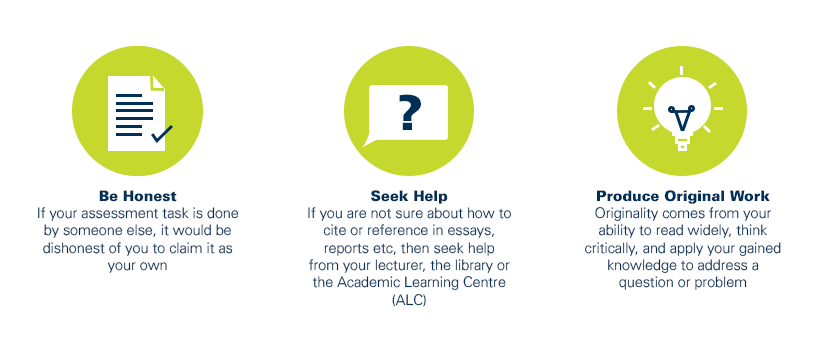
As a CQUniversity student you are expected to act honestly in all aspects of your academic work.
Any assessable work undertaken or submitted for review or assessment must be your own work. Assessable work is any type of work you do to meet the assessment requirements in the unit, including draft work submitted for review and feedback and final work to be assessed.
When you use the ideas, words or data of others in your assessment, you must thoroughly and clearly acknowledge the source of this information by using the correct referencing style for your unit. Using others’ work without proper acknowledgement may be considered a form of intellectual dishonesty.
Participating honestly, respectfully, responsibly, and fairly in your university study ensures the CQUniversity qualification you earn will be valued as a true indication of your individual academic achievement and will continue to receive the respect and recognition it deserves.
As a student, you are responsible for reading and following CQUniversity’s policies, including the Student Academic Integrity Policy and Procedure. This policy sets out CQUniversity’s expectations of you to act with integrity, examples of academic integrity breaches to avoid, the processes used to address alleged breaches of academic integrity, and potential penalties.
What is a breach of academic integrity?
A breach of academic integrity includes but is not limited to plagiarism, self-plagiarism, collusion, cheating, contract cheating, and academic misconduct. The Student Academic Integrity Policy and Procedure defines what these terms mean and gives examples.
Why is academic integrity important?
A breach of academic integrity may result in one or more penalties, including suspension or even expulsion from the University. It can also have negative implications for student visas and future enrolment at CQUniversity or elsewhere. Students who engage in contract cheating also risk being blackmailed by contract cheating services.
Where can I get assistance?
For academic advice and guidance, the Academic Learning Centre (ALC) can support you in becoming confident in completing assessments with integrity and of high standard.
What can you do to act with integrity?