Overview
This unit engages students with an integrated approach to Science, Technology, Engineering and Maths (STEM). The unit will equip students with the skills, knowledge and experience to deliver interdisciplinary STEM-based projects with an emphasis on computer-aided design (CAD), computational fluid dynamics (CFD) and computer numerical controlled machining. Students will use the engineering design process to research, design and develop a small C02 gas-powered car. This involves learning how to model design ideas using CAD software, virtually testing designs using CFD software, and documenting the project from start to finish to produce a design folio.
Details
Pre-requisites or Co-requisites
EDSE12026
Important note: Students enrolled in a subsequent unit who failed their pre-requisite unit, should drop the subsequent unit before the census date or within 10 working days of Fail grade notification. Students who do not drop the unit in this timeframe cannot later drop the unit without academic and financial liability. See details in the Assessment Policy and Procedure (Higher Education Coursework).
Offerings For Term 2 - 2026
Attendance Requirements
All on-campus students are expected to attend scheduled classes - in some units, these classes are identified as a mandatory (pass/fail) component and attendance is compulsory. International students, on a student visa, must maintain a full time study load and meet both attendance and academic progress requirements in each study period (satisfactory attendance for International students is defined as maintaining at least an 80% attendance record).
Recommended Student Time Commitment
Each 6-credit Undergraduate unit at CQUniversity requires an overall time commitment of an average of 12.5 hours of study per week, making a total of 150 hours for the unit.
Class Timetable
Assessment Overview
Assessment Grading
This is a graded unit: your overall grade will be calculated from the marks or grades for each assessment task, based on the relative weightings shown in the table above. You must obtain an overall mark for the unit of at least 50%, or an overall grade of 'pass' in order to pass the unit. If any 'pass/fail' tasks are shown in the table above they must also be completed successfully ('pass' grade). You must also meet any minimum mark requirements specified for a particular assessment task, as detailed in the 'assessment task' section (note that in some instances, the minimum mark for a task may be greater than 50%). Consult the University's Grades and Results Policy for more details of interim results and final grades.
All University policies are available on the CQUniversity Policy site.
You may wish to view these policies:
- Grades and Results Policy
- Assessment Policy and Procedure (Higher Education Coursework)
- Review of Grade Procedure
- Student Academic Integrity Policy and Procedure
- Academic Progression Policy and Procedure
- Student Refund and Credit Balance Policy and Procedure
- Complaints Policy and Procedure
- Information and Communications Technology Acceptable Use Policy and Procedure
This list is not an exhaustive list of all University policies. The full list of University policies are available on the CQUniversity Policy site.
Feedback, Recommendations and Responses
Every unit is reviewed for enhancement each year. At the most recent review, the following staff and student feedback items were identified and recommendations were made.
Feedback from Students
Lack of constructive feedback on Assessment Tasks.
Review Assessment Task feedback and update how constructive feedback is provided to students.
- Apply theories and pedagogies to plan and develop a STEM program based on a suite of design and construction activities
- Use skills sequences and procedures using CAD/CAM, virtual modelling techniques and appropriate discipline-specific teaching techniques
- Demonstrate problem-solving, planning, sequencing, implementing and assessing strategies to STEM applications and processes to promote STEM education including the application of innovation
- Critically analyse and evaluate the design and manufacture of STEM teaching and production processes
- Devise and use appropriate workplace health and safety and maintenance practices when engaging in design and manufacturing activities.
This unit aligns with the following Australian Professional Standards for Teachers (Graduate Career Stage):
Standard 2: Know the content and how to teach it
2.1 Content and teaching strategies of the teaching area
2.2 Content selection and organisation
Standard 4: Create and maintain supportive and safe learning environments
4.4 Maintain student safety
Standard 7: Engage professionally with colleagues, parents/carers and the community
7.2 Comply with legislative, administrative and organisational requirements
Alignment of Assessment Tasks to Learning Outcomes
| Assessment Tasks | Learning Outcomes | ||||
|---|---|---|---|---|---|
| 1 | 2 | 3 | 4 | 5 | |
| 1 - Online Quiz(zes) - 10% | |||||
| 2 - Portfolio - 15% | |||||
| 3 - Written Assessment - 25% | |||||
| 4 - Practical Assessment - 30% | |||||
| 5 - Written Assessment - 20% | |||||
Alignment of Graduate Attributes to Learning Outcomes
| Graduate Attributes | Learning Outcomes | ||||
|---|---|---|---|---|---|
| 1 | 2 | 3 | 4 | 5 | |
| 1 - Communication | |||||
| 2 - Problem Solving | |||||
| 3 - Critical Thinking | |||||
| 4 - Information Literacy | |||||
| 5 - Team Work | |||||
| 6 - Information Technology Competence | |||||
| 7 - Cross Cultural Competence | |||||
| 8 - Ethical practice | |||||
| 9 - Social Innovation | |||||
| 10 - First Nations Knowledges | |||||
| 11 - Aboriginal and Torres Strait Islander Cultures | |||||
Textbooks
There are no required textbooks.
IT Resources
- CQUniversity Student Email
- Internet
- Unit Website (Moodle)
All submissions for this unit must use the referencing style: American Psychological Association 7th Edition (APA 7th edition)
For further information, see the Assessment Tasks.
b.connolly@cqu.edu.au
r.cahill@cqu.edu.au
Week 1
Begin Date: 13 Jul 2026Module/Topic
STEM / F1 in Schools / Aerodynamics
Chapter
Work your way through the weekly materials for STEM, F1 in Schools, Aerodynamics
Events and Submissions/Topic
Complete quizzes 1 & 2
Week 2
Begin Date: 20 Jul 2026Module/Topic
Technical Specifications & CNC Machines
Chapter
Work your way through the weekly materials for Technical Specifications & CNC Machines
Events and Submissions/Topic
Complete quizzes 3 & 4
Week 3
Begin Date: 27 Jul 2026Module/Topic
Intro to Onshape
Chapter
Work your way through the weekly materials for Intro to Onshape
Events and Submissions/Topic
Week 4
Begin Date: 03 Aug 2026Module/Topic
Onshape tutorials
Chapter
Work your way through the weekly materials for Onshape car model.
Events and Submissions/Topic
Assessment Task 1 - Quizzes Due: Friday, 7 August 2026, 11:55 PM
Assessment Task 1: Multi-Choice Quizzes Due: Week 4 Friday (7 Aug 2026) 11:45 pm AEST
Week 5
Begin Date: 10 Aug 2026Module/Topic
Car Design
Chapter
Work your way through the weekly materials for Car design.
Events and Submissions/Topic
Week 6
Begin Date: 17 Aug 2026Module/Topic
Design Development
Chapter
Work your way through the weekly materials for Design Development CAD
Events and Submissions/Topic
Vacation Week
Begin Date: 24 Aug 2026Module/Topic
Chapter
Events and Submissions/Topic
Week 7
Begin Date: 31 Aug 2026Module/Topic
Design Assembly
Chapter
Work your way through the weekly materials for Design Assembly
Events and Submissions/Topic
Week 8
Begin Date: 07 Sep 2026Module/Topic
Assessment Task 2 Submission
Chapter
Work your way through the weekly materials to: Revise how to create an Onshape Drawing file by viewing tutorial clip. Create F1 in Schools Compliance Drawing pdf. Refer to the Technical Rules and Regulations. Annotate Drawing with dimensions, rules and regulations. Complete the Compliance Drawing for the folio. Submit the Compliance Drawings to Moodle and share your Onshape file with the Tutor
Events and Submissions/Topic
Assessment Task 2 due 4/9/2026: Submit the Compliance Drawings to Moodle and share your Onshape file with the Tutor
Week 9
Begin Date: 14 Sep 2026Module/Topic
Manufacturing Preparation
3-Day Compulsory Residential School: Assessment Task 4
Chapter
Work your way through the weekly materials for Residential School Manufacturing Preparation
Events and Submissions/Topic
Mackay – Whitsunday Anglican School 8.00am – 5.00pm. Tutor: Rowan Cahill
ITD Building: Saturday 19/9/26 – Monday 21/9/26
Week 10
Begin Date: 21 Sep 2026Module/Topic
3-Day Compulsory Residential School: Assessment Task 4
Chapter
Work your way through the weekly materials for Residential School Manufacturing Preparation
Events and Submissions/Topic
Bundaberg – Kepnock State High School 8.00am – 5.00pm. Tutor: Josh Horton
ITD Building: Tuesday 22/9/26 – Thursday 24/9/26
Assessment Task 4: Practical Assessment Due: Week 10 Thursday (24 Sept 2026) 11:45 pm AEST
Week 11
Begin Date: 28 Sep 2026Module/Topic
Assessment Task 5 Submission- Manufacturing Logbook
Chapter
Work your way through the materials to complete Assessment Task 5
1: With your car design complete, finish your design folio detailing your car design. Save your folio as a .PDF file using the following name structure Last name_First name_Design Folio.pdf
Submit your folio via Moodle.
2: Complete the Manufacturing Logbook. Submit Manufacturing Logbook via Moodle.
Events and Submissions/Topic
Assessment 5 - Manufacturing Logbook Due: Sunday, 9/10/2026
Week 12
Begin Date: 05 Oct 2026Module/Topic
Assessment Task 3 Submission - Design Folio
Chapter
Work your way through the materials to complete Assessment Task 3
1: With your car design complete, finish your design folio detailing your car design. Save your folio as a .PDF file using the following name structure Last name_First name_Design Folio.pdf
Submit your folio via Moodle.
2: Complete the Manufacturing Logbook. Submit Manufacturing Logbook via Moodle.
Events and Submissions/Topic
Assessment 3 - Design Folio Exemplar Due: 9/10/2026
Assessment Task 3: Design Folio Exemplar Due: Week 12 Friday (9 Oct 2026) 11:45 pm AEST
Assessment Task 5: Manufacturing Logbook Due: Week 12 Friday (9 Oct 2026) 11:45 pm AEST
Exam Week
Begin Date: 12 Oct 2026Module/Topic
Chapter
Events and Submissions/Topic
Vacation/Exam Week
Begin Date: 19 Oct 2026Module/Topic
Chapter
Events and Submissions/Topic
1 Online Quiz(zes)
The initial study introduces STEM education, F1 in Schools Challenge, Aerodynamics and CNC manufacture. Four quizzes require you to instigate the four topics on selected readings and media provided and online. Questions will be available on the Moodle website. Students have a maximum of 60 minutes per quiz. You are allowed two attempts for each quiz.
Use of Generative Artificial Intelligence agents (Gen AI)
Within this assessment, the use Gen AI agents is as follows:
- No Gen AI use at any point during this assessment.
Week 4 Friday (7 Aug 2026) 11:45 pm AEST
Vacation Week Friday (28 Aug 2026)
Students are assessed on the following criteria:
- Knowledge and understanding of design task
- Ability to express and develop an Idea
- Knowledge and application of CAD tools and processes
- Knowledge and application of Technical Rules and Regulations
- Application and evaluation of CFD testing
- Ability to present and communicate work effectively
- Apply theories and pedagogies to plan and develop a STEM program based on a suite of design and construction activities
- Use skills sequences and procedures using CAD/CAM, virtual modelling techniques and appropriate discipline-specific teaching techniques
- Demonstrate problem-solving, planning, sequencing, implementing and assessing strategies to STEM applications and processes to promote STEM education including the application of innovation
- Critically analyse and evaluate the design and manufacture of STEM teaching and production processes
- Devise and use appropriate workplace health and safety and maintenance practices when engaging in design and manufacturing activities.
2 Portfolio
Computer Aided Design (CAD) CO2 Car Model 15%
You are required to utilize computer aided design (CAD) software, and computational fluid dynamics (CFD) software to
model and test a car design. By following the CAD tutorials provided you will be shown how to create and modify a basic
race car suitable for side machining using OnShape.
To complete this task, you will need to register online with ‘OnShape’ and ‘Autodesk Flow Design’ from the OnShape
Education website. Use your student email to first register and then register the web-app.
https://www.onshape.com/en/education/
F1 Car model is to be submitted online via the course Moodle website in two parts.
1. The Onshape part file share link - share to r.cahill@cqu.edu.au
2. The drawing file (.pdf) titled Last name_First name_C02CAR Compliance Drawing
Use of Generative Artificial Intelligence agents (Gen AI)
Within this assessment, the use Gen AI agents is as follows:
- No Gen AI use at any point during this assessment.
Week 7 Friday (4 Sept 2026) 11:45 pm AEST
Week 9 Friday (18 Sept 2026)
S
Students are assessed on the following criteria:
- Knowledge and understanding of design task
- Ability to express and develop an Idea
- Knowledge and application of CAD tools and processes
- Knowledge and application of Technical Rules and Regulations
- Application and evaluation of CFD testing
- Ability to present and communicate work effectively
- Apply theories and pedagogies to plan and develop a STEM program based on a suite of design and construction activities
- Use skills sequences and procedures using CAD/CAM, virtual modelling techniques and appropriate discipline-specific teaching techniques
- Demonstrate problem-solving, planning, sequencing, implementing and assessing strategies to STEM applications and processes to promote STEM education including the application of innovation
- Critically analyse and evaluate the design and manufacture of STEM teaching and production processes
- Devise and use appropriate workplace health and safety and maintenance practices when engaging in design and manufacturing activities.
3 Written Assessment
Scenario:
As a teacher at a secondary school, you have been asked to run an after-school club. The principal has specified it should be a STEM based activity and suggested the F1 in Schools challenge. The challenge involves designing and making a miniature F1 race car. The car is to be made from balsa wood and be powered only by a single gas cylinder containing 8 grams of pressurised C02. It must be able to travel the 20-meter distance as quickly as possible, and withstand the forces of launch acceleration, track traversing and physical deceleration. In addition, its design and manufacture must adhere to detailed rules and regulations outlined in the Technical-Regulations for a cadet class competitor. To be prepared, you have decided to produce a design folio exemplar to be used when teaching the project.
The folio is to demonstrate how to approach a design problem by following the design process. Your work must demonstrate an understanding and application of the design process, key concepts regarding aerodynamics, F1 in Schools technical rules and regulations, as well as sketching and CAD skills. All work is to be collated and presented in the form of a PowerPoint presentation. A template is provided for the Design Folio Exemplar. It is to be submitted online via the Moodle website in the following format: Last name_First name_Design Folio
Use of Generative Artificial Intelligence agents (Gen AI)
Within this assessment, the use Gen AI agents is as follows:
- No Gen AI use at any point during this assessment.
Week 12 Friday (9 Oct 2026) 11:45 pm AEST
Vacation/Exam Week Friday (23 Oct 2026)
Students are assessed on the following criteria:
- Knowledge and understanding of design task
- Ability to express and develop an Idea
- Knowledge and application of CAD tools and processes
- Knowledge and application of Technical Rules and Regulations
- Application and evaluation of CFD testing
- Ability to present and communicate work effectively
- Apply theories and pedagogies to plan and develop a STEM program based on a suite of design and construction activities
- Use skills sequences and procedures using CAD/CAM, virtual modelling techniques and appropriate discipline-specific teaching techniques
- Demonstrate problem-solving, planning, sequencing, implementing and assessing strategies to STEM applications and processes to promote STEM education including the application of innovation
- Critically analyse and evaluate the design and manufacture of STEM teaching and production processes
- Devise and use appropriate workplace health and safety and maintenance practices when engaging in design and manufacturing activities.
4 Practical Assessment
During the Residential School, you will utilise computer aided design and manufacturing software and equipment to design and make a miniature CO2 gas powered balsa wood car. It is an opportunity to develop an understanding of how
technology can be used to make your ideas a reality. Completion of this task will enable you to demonstrate how to create cutting paths, set machine parameters, enter computer code, and operate and maintain a CNC router and 3D printer. Hand tools are applied during the finishing and assembly stages of the course. The CO2 race car will be assessed on completion during the Residential School. An A4 page of photos of the finished car is to be submitted via Moodle in the following format: Last name_First name_CO2 race Car
Use of Generative Artificial Intelligence agents (Gen AI)
Within this assessment, the use Gen AI agents is as follows:
- No Gen AI use at any point during this assessment.
Week 10 Thursday (24 Sept 2026) 11:45 pm AEST
Vacation/Exam Week Friday (23 Oct 2026)
Assessment Criteria
Students are assessed on the following criteria:
- Knowledge and understanding of design task
- Ability to express and develop an Idea
- Knowledge and application of CAD tools and processes
- Knowledge and application of Technical Rules and Regulations
- Application and evaluation of CFD testing
- Ability to present and communicate work effectively
- Apply theories and pedagogies to plan and develop a STEM program based on a suite of design and construction activities
- Use skills sequences and procedures using CAD/CAM, virtual modelling techniques and appropriate discipline-specific teaching techniques
- Demonstrate problem-solving, planning, sequencing, implementing and assessing strategies to STEM applications and processes to promote STEM education including the application of innovation
- Critically analyse and evaluate the design and manufacture of STEM teaching and production processes
- Devise and use appropriate workplace health and safety and maintenance practices when engaging in design and manufacturing activities.
5 Written Assessment
Task Description
During and post Residential School, you are required to produce a manufacturing logbook that documents the creation of the miniature CO2 race car. The logbook should describe the aim and objectives of each stage of manufacture, as well as outline relevant challenges, solutions, quality control measures and health & safety issues. The logbook will provide evidence of your work in the form of photos, screen shots, videos and annotations. It must demonstrate an understanding and application of computer aided design and manufacture as well as manual finishing processes. All work is to be collated and presented in the form of a PowerPoint presentation. A template is provided.
The Manufacturing logbook is to be submitted online via the Moodle website in the following format: Last name_First name_Manufacturing Logbook.
Use of Generative Artificial Intelligence agents (Gen AI)
Within this assessment, the use Gen AI agents is as follows:
- No Gen AI use at any point during this assessment.
Week 12 Friday (9 Oct 2026) 11:45 pm AEST
Vacation/Exam Week Friday (23 Oct 2026)
Students will be assessed on the following criteria:
- Ability to produce a quality and well finished product
- Ability to operate CNC Machinery skillfully and safely
- Ability to work autonomously with complex tasks
- Ability to investigate and evaluate the manufacturing process
- Ability to present and communicate work effectively
- Apply theories and pedagogies to plan and develop a STEM program based on a suite of design and construction activities
- Use skills sequences and procedures using CAD/CAM, virtual modelling techniques and appropriate discipline-specific teaching techniques
- Demonstrate problem-solving, planning, sequencing, implementing and assessing strategies to STEM applications and processes to promote STEM education including the application of innovation
- Critically analyse and evaluate the design and manufacture of STEM teaching and production processes
- Devise and use appropriate workplace health and safety and maintenance practices when engaging in design and manufacturing activities.
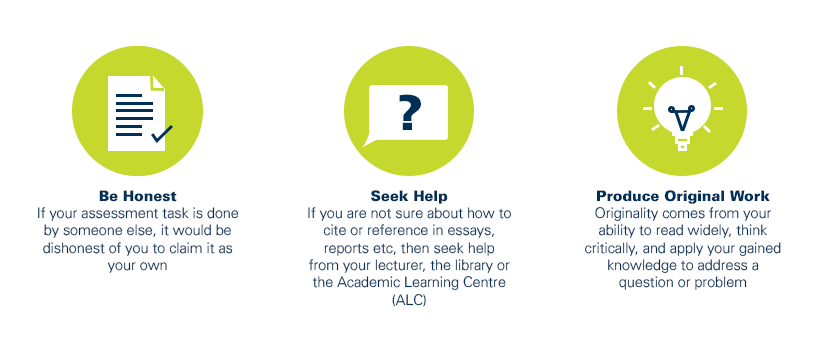
As a CQUniversity student you are expected to act honestly in all aspects of your academic work.
Any assessable work undertaken or submitted for review or assessment must be your own work. Assessable work is any type of work you do to meet the assessment requirements in the unit, including draft work submitted for review and feedback and final work to be assessed.
When you use the ideas, words or data of others in your assessment, you must thoroughly and clearly acknowledge the source of this information by using the correct referencing style for your unit. Using others’ work without proper acknowledgement may be considered a form of intellectual dishonesty.
Participating honestly, respectfully, responsibly, and fairly in your university study ensures the CQUniversity qualification you earn will be valued as a true indication of your individual academic achievement and will continue to receive the respect and recognition it deserves.
As a student, you are responsible for reading and following CQUniversity’s policies, including the Student Academic Integrity Policy and Procedure. This policy sets out CQUniversity’s expectations of you to act with integrity, examples of academic integrity breaches to avoid, the processes used to address alleged breaches of academic integrity, and potential penalties.
What is a breach of academic integrity?
A breach of academic integrity includes but is not limited to plagiarism, self-plagiarism, collusion, cheating, contract cheating, and academic misconduct. The Student Academic Integrity Policy and Procedure defines what these terms mean and gives examples.
Why is academic integrity important?
A breach of academic integrity may result in one or more penalties, including suspension or even expulsion from the University. It can also have negative implications for student visas and future enrolment at CQUniversity or elsewhere. Students who engage in contract cheating also risk being blackmailed by contract cheating services.
Where can I get assistance?
For academic advice and guidance, the Academic Learning Centre (ALC) can support you in becoming confident in completing assessments with integrity and of high standard.
What can you do to act with integrity?