Overview
This unit extends the skills and knowledge covered in EDVT11022 Textile Technology. You will explore fashion literacy and terminology in a variety of contexts. Through analysis and application of the principles and elements of design you will discern appropriate materials and fibres to create a personalised designed fashion product. In this unit you will develop the technical, procedural and safety skills and theoretical knowledge to unleash your fashion creativity. This unit equips you with the knowledge to engage in secondary schools and aligns with Home Economics, and Australian curriculum including the Design (General Syllabus) and Fashion Design (Applied Senior Syllabus).
Details
Pre-requisites or Co-requisites
Students must complete EDVT11022 prior to enrolment in this unit.
Important note: Students enrolled in a subsequent unit who failed their pre-requisite unit, should drop the subsequent unit before the census date or within 10 working days of Fail grade notification. Students who do not drop the unit in this timeframe cannot later drop the unit without academic and financial liability. See details in the Assessment Policy and Procedure (Higher Education Coursework).
Offerings For Term 1 - 2026
Attendance Requirements
All on-campus students are expected to attend scheduled classes - in some units, these classes are identified as a mandatory (pass/fail) component and attendance is compulsory. International students, on a student visa, must maintain a full time study load and meet both attendance and academic progress requirements in each study period (satisfactory attendance for International students is defined as maintaining at least an 80% attendance record).
Recommended Student Time Commitment
Each 6-credit Undergraduate unit at CQUniversity requires an overall time commitment of an average of 12.5 hours of study per week, making a total of 150 hours for the unit.
Class Timetable
Assessment Overview
Assessment Grading
This is a graded unit: your overall grade will be calculated from the marks or grades for each assessment task, based on the relative weightings shown in the table above. You must obtain an overall mark for the unit of at least 50%, or an overall grade of 'pass' in order to pass the unit. If any 'pass/fail' tasks are shown in the table above they must also be completed successfully ('pass' grade). You must also meet any minimum mark requirements specified for a particular assessment task, as detailed in the 'assessment task' section (note that in some instances, the minimum mark for a task may be greater than 50%). Consult the University's Grades and Results Policy for more details of interim results and final grades.
All University policies are available on the CQUniversity Policy site.
You may wish to view these policies:
- Grades and Results Policy
- Assessment Policy and Procedure (Higher Education Coursework)
- Review of Grade Procedure
- Student Academic Integrity Policy and Procedure
- Academic Progression Policy and Procedure
- Student Refund and Credit Balance Policy and Procedure
- Complaints Policy and Procedure
- Information and Communications Technology Acceptable Use Policy and Procedure
This list is not an exhaustive list of all University policies. The full list of University policies are available on the CQUniversity Policy site.
Feedback, Recommendations and Responses
Every unit is reviewed for enhancement each year. At the most recent review, the following staff and student feedback items were identified and recommendations were made.
Feedback from Student feedback direct to UC
The 3-day Residential School was insufficient to learn the required pedagogy and skills
Reassess the expectations of residential schools to ensure delivery of learning experiences is viable within the designated time
Feedback from Student feedback to UC
Volume of weekly content
Review volume of weekly content
Feedback from Student feedback to UC
Loved the creative process of the portfolio and garment creation
Maintain creative Design Process and practical tasks
- Explore fashion literacy and terminology within a variety of historical, economics, political, social, cultural and environmental contexts
- Analyse and apply the elements and principles of fashion design
- Discern appropriate materials and fibre selection for designed solutions
- Create a designed fashion product demonstrating technical, procedural and safety skills.
Alignment of Assessment Tasks to Learning Outcomes
| Assessment Tasks | Learning Outcomes | |||
|---|---|---|---|---|
| 1 | 2 | 3 | 4 | |
| 1 - Portfolio - 40% | ||||
| 2 - Portfolio - 60% | ||||
| 3 - Practical Assessment - 0% | ||||
Alignment of Graduate Attributes to Learning Outcomes
| Graduate Attributes | Learning Outcomes | |||
|---|---|---|---|---|
| 1 | 2 | 3 | 4 | |
| 1 - Communication | ||||
| 2 - Problem Solving | ||||
| 3 - Critical Thinking | ||||
| 4 - Information Literacy | ||||
| 5 - Team Work | ||||
| 6 - Information Technology Competence | ||||
| 7 - Cross Cultural Competence | ||||
| 8 - Ethical practice | ||||
| 9 - Social Innovation | ||||
| 10 - First Nations Knowledges | ||||
| 11 - Aboriginal and Torres Strait Islander Cultures | ||||
Textbooks
Complete Guide to Sewing: Step-By-Step Techniques for Making Clothes and Home Accessories
- (2022)
- Authors: Editors of Reader's Digest
- Reader's Digest
- Great Britain
- ISBN: 9781621458012
The Reader's Digest Complete Guide to Sewing (past and present editions) is an excellent resource for textiles and fashion design teachers and students. It includes step-by-step easy to follow instructions for many basic sewing techniques. It is not essential to purchase for this unit but will assist you as a companion for home or school tasks.
- Binding: Other
Fabric for Fashion: The Swatch Book
- Revised 2nd Edition (2021)
- Authors: Clive Hallett, Amanda Johnson
- Hachette Australia (distributed by ADS)
- Great Britain
- ISBN: 9781913947613
Fabric for Fashion: The Swatchbook is an excellent resource for textiles and fashion design teachers and students. It includes 142 swatches of widely used fabrics, from natural fibers like cotton, silk, wool, and linen to manmade options like bamboo and hemp. This book provides detailed information on fabrication, weights, and construction, helping students understand the structure, feel, and weight of different textiles. It’s a valuable tool for making informed textile choices based on a deep understanding of raw materials and fabric processes. A secondhand copy is okay to purchase.
- Binding: Hardcover
Nelson Textiles and Design Preliminary and HSC
- (2013)
- Authors: Lynda Peters, Christine Castle
- Nelson: A Cengage Company
- Melbourne Melbourne , VIC , Australia
- ISBN: ISBN-13: 9780170210713
This textbook is recommended. Textbook also used in EDVT11022 Textile Technology (do not accidentally purchase it twice). This textbook is still used in many Australian schools is a useful teaching resource. It contains many of the required foundational textiles and Fashion Design skills and concepts. A secondhand copy is okay to purchase.
- Binding: Other
IT Resources
- CQUniversity Student Email
- Internet
- Unit Website (Moodle)
- Adobe Photoshop (Adobe Creative Cloud student subscription recommended)
- MS Teams
All submissions for this unit must use the referencing style: American Psychological Association 7th Edition (APA 7th edition)
For further information, see the Assessment Tasks.
j.deagon@cqu.edu.au
Week 1
Begin Date: 09 Mar 2026Module/Topic
The fashion phenomenon
Chapter
Chapter 15, Nelsons Textile & Design: Historical design development, p. 219-235
Chapter 12, Nelsons Textile & Design: History of textiles and the ATCFAI, p.188-194
Events and Submissions/Topic
- Why do we wear clothes?
- What is Fashion?
- Impacts on Fashion
- Fashion history: what changes from decade to decade, and year to year?
- Fashion cycles
- Fashion terms
Week 2
Begin Date: 16 Mar 2026Module/Topic
Elements and Principles of Design and their Application Part 1
Chapter
Chapter 1 Nelsons Textile & Design: Elements and principles of design p. 2-25
Events and Submissions/Topic
- Different types of design: structural and aesthetic
- Elements + Principles = Good Design
- Elements
- Colour analysis
Week 3
Begin Date: 23 Mar 2026Module/Topic
Elements and Principles of Design and their Application Part 2
Chapter
Chapter 1 Nelsons Textile & Design: Elements and principles of design p. 2-25
Events and Submissions/Topic
- Elements + Principles = Good Design (continued)
- Principles
- Body types and body analysis
- Elements and Principles of Design: suiting body types
Week 4
Begin Date: 30 Mar 2026Module/Topic
Fabrics and fibres
Chapter
Chapter 4 Nelsons Textile & Design: Fibre structure and properties, p. 76-102
Chapter 10 Nelsons Textile & Design: Fabric testing, p. 151-166
Chapter 13 Nelsons Textile & Design: Quality of textiles, p. 203-210
Fabric for Fashion: The Swatch Book 2nd Edition with 125 Samples
Events and Submissions/Topic
- Characteristics
- Understanding fabric handle ~ draping, pleating, gathering etc
- Care labels
Week 5
Begin Date: 06 Apr 2026Module/Topic
Contemporary Fashion Part 1 - What is Portrayed
Chapter
Chapter 18 Nelsons Textile & Design: Factors Influencing Contemporary Designers, p. 268-286
Chapter 23 Nelsons Textile & Design: Market Place, p. 355-366
Events and Submissions/Topic
- Types of Fashion
- Fashion Categories
- Fashion Designers
- Trend Forecasting
- Creating the Look - adornment and accessories
- The ‘Me’ Factor - as consumer
Week 6
Begin Date: 13 Apr 2026Module/Topic
Contemporary Fashion Part 2 - Being Mindful
Chapter
Chapter 21 Nelsons Textile & Design: Appropriate textile technology and environmental sustainability, p. 326-336
Chapter 22 Nelsons Textile & Design: Current issues that affect the textile industry, p. 337-354
Events and Submissions/Topic
• Ethics in the fashion industry - human rights
• Caring for the planet
• Slow fashion
• Textile production impact on the environment
• The ‘Me’ factor - as a fashion teacher
Vacation Week
Begin Date: 20 Apr 2026Module/Topic
Chapter
Events and Submissions/Topic
Week 7
Begin Date: 27 Apr 2026Module/Topic
Designing: creating a collection, creating a design, fashion drawing
Chapter
Chapter 2 Nelsons Textile & Design: Communication techniques, p. 28-45.
Events and Submissions/Topic
- Design Process
- Fashion drawing - 2D, 3D, digital
- Creating a collection
Stage 1 - Foundations Due: Week 7 Friday (1 May 2026) 11:45 pm AEST
Week 8
Begin Date: 04 May 2026Module/Topic
Producing, Sequencing and Adapting our Designs Part 1
Chapter
See study guide in Moodle
Events and Submissions/Topic
- Taking accurate body measurements
- Pattern literacy - how to read a pattern and pattern envelope
- Pattern features - necklines, hemlines, sleeves, bodices etc
- Pattern drafting/making
Week 9
Begin Date: 11 May 2026Module/Topic
Producing, Sequencing and Adapting our Designs Part 2
Chapter
See study guide in Moodle
Events and Submissions/Topic
- Pattern modification and alterations
Week 10
Begin Date: 18 May 2026Module/Topic
Producing, Sequencing and Adapting our Designs Part 3
Chapter
See study guide in Moodle
Events and Submissions/Topic
- Construction steps
- Production plans
Week 11
Begin Date: 25 May 2026Module/Topic
Achieving a Professional Garment Finish
Chapter
See study guide in Moodle
Events and Submissions/Topic
- Toiles
- Workplace Health and Safety
- Home-made vs custom made vs shop bought
Week 12
Begin Date: 01 Jun 2026Module/Topic
Preparation for Residential School
Chapter
See study guide in Moodle
Events and Submissions/Topic
Exam Week
Begin Date: 08 Jun 2026Module/Topic
Chapter
Events and Submissions/Topic
Vacation/Exam Week
Begin Date: 15 Jun 2026Module/Topic
Chapter
Events and Submissions/Topic
Residential School
Begin Date: 30 Jun 2026Module/Topic
Venue: The Cathederal College, Rockhampton
Dates: Tuesday 30 June to Thursday 2 July 2026
Times: 8:30am to 5:00pm daily
All days inclusive and compulsory
Chapter
Events and Submissions/Topic
1 Portfolio
Assessment Intentions and Overview
Assessment is structured as a scaffolded Fashion Design project developed across three stages:
- Stage 1 – Foundations (AT1: 40%) – Weeks 1–6
- Stage 2 – Development (AT2: 60%) – Weeks 7–12
- Stage 3 – Construction (AT3: Pass/Fail Residential School)
Together, these stages guide you through the complete fashion design process — from conceptual investigation to final garment construction.
You will design one intended garment across the term. Each stage builds toward the successful construction of that garment at Residential School.
Although AT1 and AT2 are graded separately, they form two stages of one coherent design project. Stage 1 establishes knowledge and conceptual direction. Stage 2 refines and resolves the design. Stage 3 executes the garment in practice. The garment must be able to be made in 3 days at Residential School.
Continuity across all three stages is required.
Professional Context
This assessment forms part of your preparation as a secondary textiles and fashion educator. Assessment tasks require you to demonstrate:
- Professional design capability
- Application of the Design Process
- Ethical and sustainable decision-making
- Clear communication suitable for secondary classroom contexts
Your portfolio work should therefore function as both:
- A professional fashion design folio
- A model of practice transferable to school settings
Further detailed instructions, weekly task breakdowns and exemplars are provided in Moodle and tutorials.
Assessment Task 1 – Stage 1: Foundations (40%)
Purpose of Stage 1 – Foundations
Assessment Task 1 establishes the theoretical and technical foundations required for professional fashion design practice and future teaching contexts. In this stage, you will:
- Develop fashion literacy and terminology
- Analyse and apply the Elements and Principles of Design
- Investigate historical, cultural and contemporary fashion influences
- Explore sustainability and Slow Fashion contexts
- Examine fabrics, fibres and textile testing
- Begin identifying and exploring a proposed garment direction
From Week 1, you should begin considering the garment you intend to design and construct later in the term. Your investigations in AT1 must begin linking to this emerging design direction.
AT1 provides formative feedback at the midpoint of the term to help you refine and strengthen your concept before moving into full design development in AT2.
Your Task
Create a visually organised A3 portfolio ("look book" format) that demonstrates your understanding and application of foundational Fashion Design knowledge and skills.
Your portfolio should:
- Present completed learning activities clearly and professionally
- Include purposeful annotations that identify, explain and justify design decisions
- Demonstrate correct use of fashion terminology
- Show early thinking about your intended garment
As this unit purposefully aligns with initial teacher education, your portfolio should also communicate ideas clearly enough to be adapted for secondary classroom use.
Further guidance, examples and activity instructions will be provided in weekly Moodle learning materials and Zoom tutorials. A detailed checklist is available in the criteria sheet.
Format and Materials
- A3 Art Folio with removable pages (display folder or equivalent)
- Textile and art materials as directed in weekly Moodle content
- Final submission uploaded as a single PDF with clearly photographed A3 pages
AI Assessment Scale: Level 2
You may use AI tools for planning, idea generation and research support. Your final submission must clearly demonstrate your own development and refinement of ideas. Any AI-generated content must be critically evaluated and properly acknowledged. Misuse or non-disclosure may constitute a breach of academic integrity.
If you use AI, include your prompts and a brief note describing how you edited/verified outputs. Place this at the end of your PDF (1–2 pages maximum).
72-Hour Grace Period
The 72-hour grace period applies to this assessment. If you require more than 72 hours, you must apply through the Assessment Extension System.
Why This Matters
Stage 1 builds the foundation for your major design project. The knowledge, investigations and decisions you make here will shape the garment you design in Stage 2 and construct at Residential School. Think of AT1 as the research and concept-building phase of your professional design journey.
Week 7 Friday (1 May 2026) 11:45 pm AEST
It is anticipated that students will receive feedback 2 weeks after submission following completion of moderation.
- Interpret fashion literacy and fashion fundamentals in a variety of contexts
- Analyse the elements and principles of design
- Select materials, resources and techniques for specific purposes
- Demonstrate practice, skills and processes
- Communicate concepts and techniques to an intended audience
- Explore fashion literacy and terminology within a variety of historical, economics, political, social, cultural and environmental contexts
- Analyse and apply the elements and principles of fashion design
2 Portfolio
Assessment Task 2 – Stage 2: Development (60%)
Overview
Stage 2 represents the development phase of your Fashion Design journey. Building on the foundational investigations completed in AT1, you will refine and resolve your garment concept into a construction-ready design proposal.
You are not starting a new project. You are extending, strengthening and applying the work developed in Stage 1.
The garment designed in this assessment must be the garment constructed over 3-days at Residential School (AT3).
Design Context
Fashion designers often draw on personal experience, values and social issues to shape their creative work. In this assessment, you will respond to the following design brief:
Atelier Jolie is seeking designers to collaborate in their creation space. Your submission must reflect the philosophy of Slow Fashion and communicate your personal design philosophy.
Your garment and portfolio should demonstrate thoughtful design, ethical awareness and individual creative direction.
Purpose of Stage 2 – Development
This assessment moves from foundational knowledge to applied design thinking. You will:
- Refine and clearly articulate your Fashion Philosophy
- Develop a coherent garment concept aligned with the Slow Fashion brief
- Apply the Design Process (Explore → Develop → Plan → Evaluate)
- Produce resolved fashion drawings and/or technical representations
- Select and justify final fabrics, fibres and notions
- Draft or modify patterns using your own body measurements
- Develop a management plan and construction sequence
- Evaluate your design decisions against the brief and criteria
Your final proposal must be realistic, well planned, and achievable within the Residential School timeframe.
Your Task
Submit a comprehensive A3 Creative Portfolio that demonstrates the development and refinement of your intended garment.
Your portfolio should:
- Clearly show progression from initial concept (AT1) to final design
- Include annotated design drawings and development sketches
- Demonstrate application of the Elements and Principles of Design
- Justify material and fibre selection
- Include pattern development or modification
- Present a construction management plan and sequencing
- Evaluate your design decisions in relation to the brief
As we are preparing you for teaching in schools, your portfolio should communicate ideas clearly enough to be adapted as a secondary classroom model of a design folio.
Further detail, activity breakdowns and checklists are provided in weekly Moodle materials and tutorials.
Designed Solution (Garment)
You must design one garment (or a coordinated two-piece set) that:
- Reflects your Fashion Philosophy and Slow Fashion principles
- Is developed using your own body measurements
- Demonstrates a range of sewing skills (including at least one new skill)
- Is achievable within the Residential School timeframe
- Is fully constructed at Residential School
Your portfolio should prioritise evidence of design decision-making, planning, and justification rather than volume of pages.
Study Expectations
This is a major applied design project. A 6-credit point unit requires approximately 12.5 hours of study per week. Effective planning, time management and organisation are essential. The final garment design must be ready for construction at Residential School.
AI Assessment Scale: Level 3
You may use AI tools to assist with drafting text, generating ideas or refining visuals. However: You must critically evaluate and modify any AI-generated content. Any AI-generated images must be clearly acknowledged. You must include the exact prompt(s) used. Failure to appropriately disclose AI use may constitute a breach of academic integrity.
If you use AI, include your prompts and a brief note describing how you edited/verified outputs. Place this at the end of your PDF (1–2 pages maximum).
Submission
Submit your complete A3 portfolio as a single PDF with clearly photographed pages. The garment will be presented in person at Residential School.
Further submission details are provided in Moodle.
Why This Matters
Stage 2 demonstrates your ability to translate foundational knowledge into a resolved, professionally planned design. It prepares you not only to construct a garment, but to model the design process for future secondary students.
Portfolio due Week 12 on Friday 05/06/2026 11:45 PM. Garment due on final day of Residential School. See Submission Instructions.
2 weeks after the completion of Residential School and after Certification of Grades
- Use design practice, skills and processes to create fashion products
- Interpret fashion literacy and fashion fundamentals for specific purposes
- Apply the elements and principles of design to a design brief
- Sequence production and processes plans
- Adapt, generate and modify plans and resources
- Evaluate ideas, skills, processes and products against design criteria
- Communicate concepts and techniques to convey meaning an intended audience
- Explore fashion literacy and terminology within a variety of historical, economics, political, social, cultural and environmental contexts
- Analyse and apply the elements and principles of fashion design
- Discern appropriate materials and fibre selection for designed solutions
3 Practical Assessment
Assessment Task 3 – Stage 3: Construction (Pass/Fail)
Residential School – Post-Term Intensive
Overview
Stage 3 is the construction phase of your Fashion Design journey.
At Residential School, you will construct the garment developed and approved in Assessment Task 2.
This is the execution stage of your design process — translating your planned concept into a finished, professionally constructed garment.
Purpose of Stage 3 – Construction
This assessment confirms your ability to:
- Move from design concept to physical garment
- Demonstrate appropriate sewing and construction techniques
- Manage time, materials and equipment effectively
- Apply correct material and technique selection
- Work safely and professionally in a textiles studio environment
As a pre-service teacher, this stage also develops your capacity to model safe and competent studio practice consistent with secondary classroom expectations.
Your Task
During the Residential School, you must:
- Construct the garment designed in Assessment Task 2
- Demonstrate a range of appropriate garment construction skills
- Apply your planned construction sequence
- Manage resources efficiently within the allocated time
- Follow all Workplace Health and Safety (WHS) requirements
You may not redesign your garment at Residential School. The garment must align with your approved AT2 portfolio.
Requirements to Achieve a Pass
This assessment is Pass/Fail. To achieve a Pass, you must:
- Attend all scheduled days and sessions of Residential School
- Complete one garment during the Residential School
- Participate in all required practical activities
- Adhere to WHS requirements at all times
Failure to meet any of the above requirements will result in a Fail for this assessment task.
AI Assessment Scale: Level 1
AI tools do not apply to the practical construction component.
72-Hour Grace Period
The 72-hour grace period does not apply to Residential School. Attendance on all scheduled days is compulsory.
If unforeseen and extraordinary circumstances prevent attendance, you must contact the Unit Coordinator as soon as possible.
Why This Matters
Stage 3 demonstrates your readiness to confidently construct and model a designed fashion product — an essential professional capability for future secondary textiles and fashion educators.
8:30am to 5:00pm, 30 June to 2 July 2026, all times and days inclusive
Ongoing feedback provided during Residential School
- Create a designed fashion product
- Perform a range of practical skills
- Manage plans and resources
- Select appropriate materials and techniques
- Comply with Workplace Health and Safety requirements suitable for sewing environments
- Analyse and apply the elements and principles of fashion design
- Discern appropriate materials and fibre selection for designed solutions
- Create a designed fashion product demonstrating technical, procedural and safety skills.
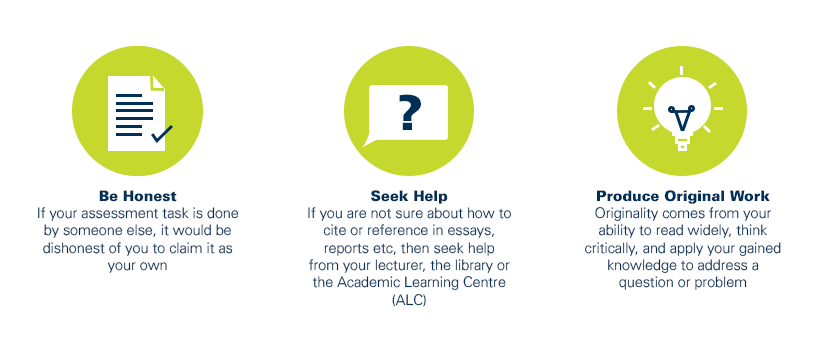
As a CQUniversity student you are expected to act honestly in all aspects of your academic work.
Any assessable work undertaken or submitted for review or assessment must be your own work. Assessable work is any type of work you do to meet the assessment requirements in the unit, including draft work submitted for review and feedback and final work to be assessed.
When you use the ideas, words or data of others in your assessment, you must thoroughly and clearly acknowledge the source of this information by using the correct referencing style for your unit. Using others’ work without proper acknowledgement may be considered a form of intellectual dishonesty.
Participating honestly, respectfully, responsibly, and fairly in your university study ensures the CQUniversity qualification you earn will be valued as a true indication of your individual academic achievement and will continue to receive the respect and recognition it deserves.
As a student, you are responsible for reading and following CQUniversity’s policies, including the Student Academic Integrity Policy and Procedure. This policy sets out CQUniversity’s expectations of you to act with integrity, examples of academic integrity breaches to avoid, the processes used to address alleged breaches of academic integrity, and potential penalties.
What is a breach of academic integrity?
A breach of academic integrity includes but is not limited to plagiarism, self-plagiarism, collusion, cheating, contract cheating, and academic misconduct. The Student Academic Integrity Policy and Procedure defines what these terms mean and gives examples.
Why is academic integrity important?
A breach of academic integrity may result in one or more penalties, including suspension or even expulsion from the University. It can also have negative implications for student visas and future enrolment at CQUniversity or elsewhere. Students who engage in contract cheating also risk being blackmailed by contract cheating services.
Where can I get assistance?
For academic advice and guidance, the Academic Learning Centre (ALC) can support you in becoming confident in completing assessments with integrity and of high standard.
What can you do to act with integrity?