Overview
Understanding how students learn and crafting learning experiences that align with the brain's processes is crucial for engaging learners. In this unit, you will acquire a foundation in educational neuroscience, understanding how students learn and how to manage challenging behaviour effectively. You will also delve into cultivating a growth mindset focused on continuous improvement to enhance student engagement, classroom management, and safety. Leveraging the latest insights from evidence-based research; you will gain the expertise and tools necessary to establish and sustain a safe and supportive learning environment that caters for the learning and well-being needs of all students.
Details
Pre-requisites or Co-requisites
Prerequisite EDFE11038 Professional Practice 1 - Introduction to Teaching
Important note: Students enrolled in a subsequent unit who failed their pre-requisite unit, should drop the subsequent unit before the census date or within 10 working days of Fail grade notification. Students who do not drop the unit in this timeframe cannot later drop the unit without academic and financial liability. See details in the Assessment Policy and Procedure (Higher Education Coursework).
Offerings For Term 1 - 2026
Attendance Requirements
All on-campus students are expected to attend scheduled classes - in some units, these classes are identified as a mandatory (pass/fail) component and attendance is compulsory. International students, on a student visa, must maintain a full time study load and meet both attendance and academic progress requirements in each study period (satisfactory attendance for International students is defined as maintaining at least an 80% attendance record).
Recommended Student Time Commitment
Each 6-credit Undergraduate unit at CQUniversity requires an overall time commitment of an average of 12.5 hours of study per week, making a total of 150 hours for the unit.
Class Timetable
Assessment Overview
Assessment Grading
This is a graded unit: your overall grade will be calculated from the marks or grades for each assessment task, based on the relative weightings shown in the table above. You must obtain an overall mark for the unit of at least 50%, or an overall grade of 'pass' in order to pass the unit. If any 'pass/fail' tasks are shown in the table above they must also be completed successfully ('pass' grade). You must also meet any minimum mark requirements specified for a particular assessment task, as detailed in the 'assessment task' section (note that in some instances, the minimum mark for a task may be greater than 50%). Consult the University's Grades and Results Policy for more details of interim results and final grades.
All University policies are available on the CQUniversity Policy site.
You may wish to view these policies:
- Grades and Results Policy
- Assessment Policy and Procedure (Higher Education Coursework)
- Review of Grade Procedure
- Student Academic Integrity Policy and Procedure
- Academic Progression Policy and Procedure
- Student Refund and Credit Balance Policy and Procedure
- Complaints Policy and Procedure
- Information and Communications Technology Acceptable Use Policy and Procedure
This list is not an exhaustive list of all University policies. The full list of University policies are available on the CQUniversity Policy site.
Feedback, Recommendations and Responses
Every unit is reviewed for enhancement each year. At the most recent review, the following staff and student feedback items were identified and recommendations were made.
Feedback from Students and staff
Provide more opportunities to interact.
Continue to enhance learner experience by regular recorded Zoom sessions.
- Utilise research into how students learn using the brain’s plasticity through engagement in their learning and appropriately challenging stretch goals
- Identify strategies to support student engagement in their learning using effective communication to maximise learning and wellness
- Demonstrate knowledge and practical approaches to managing challenging behaviour derived from theory, policy and good practice using informed professionalism.
Successful completion of this unit provides opportunities for students to engage with the Australian Professional Standards for Teachers (Graduate Career Stage) focus areas of:
1.2 Understand how students learn
3.1 Establish challenging learning goals
3.5 Use effective classroom communication
4.1 Support student participation
4.2 Manage classroom activities
4.3 Manage challenging behaviour
4.4 Maintain student safety
Successful completion of this unit also provides opportunities for students to engage with the following Learning Outcomes from the AITSL Core Content 1 – The Brain and Learning:
1.1 Knowledge of what it means to be a ‘novice’ learner in comparison to an ‘expert’. Knowledge of and skill in the related implications for practice.
1.2 Knowledge of the most efficient and effective process of knowledge acquisition in the brain, including the function of memory and the concept of cognitive overload.
1.3 Knowledge of the process that occurs in a novice brain during progression towards mastery. Knowledge of and skill in the need to adjust practice in response.
1.4 Knowledge and understanding of common neuromyths and the impact of their perpetuation.
Alignment of Assessment Tasks to Learning Outcomes
| Assessment Tasks | Learning Outcomes | ||
|---|---|---|---|
| 1 | 2 | 3 | |
| 1 - Project (applied) - 40% | |||
| 2 - Project (applied) - 50% | |||
| 3 - Online Quiz(zes) - 10% | |||
Alignment of Graduate Attributes to Learning Outcomes
| Graduate Attributes | Learning Outcomes | ||
|---|---|---|---|
| 1 | 2 | 3 | |
| 1 - Communication | |||
| 2 - Problem Solving | |||
| 3 - Critical Thinking | |||
| 4 - Information Literacy | |||
| 5 - Team Work | |||
| 6 - Information Technology Competence | |||
| 7 - Cross Cultural Competence | |||
| 8 - Ethical practice | |||
| 9 - Social Innovation | |||
| 10 - First Nations Knowledges | |||
| 11 - Aboriginal and Torres Strait Islander Cultures | |||
Textbooks
There are no required textbooks.
IT Resources
- CQUniversity Student Email
- Internet
- Unit Website (Moodle)
All submissions for this unit must use the referencing style: American Psychological Association 7th Edition (APA 7th edition)
For further information, see the Assessment Tasks.
d.j.petersen@cqu.edu.au
Week 1
Begin Date: 09 Mar 2026Module/Topic
Module 1: The Social Brain and Neuroplasticity
The Social Brain
Chapter
The Social Brain Micro-credential - BeDifferent.
Events and Submissions/Topic
Lecture 1.
Week 2
Begin Date: 16 Mar 2026Module/Topic
Module 1: The Social Brain and Neuroplasticity
Neuroplasticity:
Topic A - What is Neuroplasticity?
Topic B - Information Flow in the Brain.
Topic C - Valuable Ideas for your Teaching Using Neuroplasticity.
Topic D - Science of Learning and Top 10 Achievement Boosters.
Topic E - Worked Examples and Scaffolding.
Topic F - The Adolescent Brain - Under Construction.
Topic G - Stress - Distress and Eustress + Resilience.
Chapter
McTighe & Willis (2019), Upgrade Your Teaching: Understanding by Design meets Neuroscience.
Introduction & Chapter 1, 2 & 3
Events and Submissions/Topic
Lecture 2.
Week 3
Begin Date: 23 Mar 2026Module/Topic
Module 2: Cognitive Load and Neuromyths
Cognitive Load:
Topic A - Cognitive Load.
Topic B - Understanding Differences Between Novice and Experts.
Topic C - Memory: An Overview for Teachers.
Topic D - Brain Conditions for Learning.
Topic E - Techniques to Help Memory.
Topic F - Sleep and Memory.
Topic G - Inviting Classrooms
Topic H - Why Brain Uniqueness Matters in Teaching?
Chapter
McTighe & Willis (2019), Upgrade Your Teaching: Understanding by Design meets Neuroscience.
Chapter 2 & 5.
Events and Submissions/Topic
Lecture 3.
Week 4
Begin Date: 30 Mar 2026Module/Topic
Module 2: Cognitive Load and Neuromyths
Neuromyths:
Topic A - What are Neuromyths?
Topic B - Impact of Neuromyths on Teaching.
Topic C - Evidence-Based Teaching Strategies.
Topic D - Teaching with the Brain in Mind: A Multisensory Approach to Learning.
Chapter
McTighe & Willis (2019), Upgrade Your Teaching: Understanding by Design meets Neuroscience.
Chapter 6
Events and Submissions/Topic
Lecture 4.
Assessment Task 1: The Social Brain Digital Badge Due: Week 4 Monday (30 Mar 2026) 11:59 pm AEST
Week 5
Begin Date: 06 Apr 2026Module/Topic
Module 3: Managing Challenging Behaviour
Topic A - Classroom Management - Key Principles.
Chapter
Australian Education Research Organisation. (2023). Classroom management resources: User guide. https://www.edresearch.edu.au/sites/default/files/2023-12/classroom-management-resources-user-guide-aa.pdf
Events and Submissions/Topic
Lecture 5.
Assessment Task 2: The Brain and Learning: implications for teaching Due: Week 5 Friday (10 Apr 2026) 11:59 pm AEST
Week 6
Begin Date: 13 Apr 2026Module/Topic
Module 3: Managing Challenging Behaviour
Topic B - Preparing your Classroom, Classroom Management Skills and Responding to Disengaged and Disruptive Behaviours.
Chapter
Australian Education Research Organisation. (2023). Classroom management resources: User guide. https://www.edresearch.edu.au/sites/default/files/2023-12/classroom-management-resources-user-guide-aa.pdf
Events and Submissions/Topic
Lecture 6.
Vacation Week
Begin Date: 20 Apr 2026Module/Topic
Chapter
Events and Submissions/Topic
Week 7
Begin Date: 27 Apr 2026Module/Topic
Module 3: Managing Challenging Behaviour
Topic C - PBL & Dr Bill Rogers
Chapter
Australian Education Research Organisation. (2023). Classroom management resources: User guide. https://www.edresearch.edu.au/sites/default/files/2023-12/classroom-management-resources-user-guide-aa.pdf
Events and Submissions/Topic
Lecture 7.
Week 8
Begin Date: 04 May 2026Module/Topic
Module 3: Managing Challenging Behaviour
Topic D - Behaviour Management Theories.
Chapter
Australian Education Research Organisation. (2023). Classroom management resources: User guide. https://www.edresearch.edu.au/sites/default/files/2023-12/classroom-management-resources-user-guide-aa.pdf
Events and Submissions/Topic
Lecture 8.
Week 9
Begin Date: 11 May 2026Module/Topic
Module 4: Managing Tricky Teens
Topic A: De-escalation of Risk Behaviour, Interventions and Intensive Support
Chapter
Australian Education Research Organisation. (2023). Classroom management resources: User guide. https://www.edresearch.edu.au/sites/default/files/2023-12/classroom-management-resources-user-guide-aa.pdf
Events and Submissions/Topic
Lecture 9.
Assessment Task 3: Practical approaches to manage challenging behaviour Due: Week 9 Friday (15 May 2026) 11:59 pm AEST
Week 10
Begin Date: 18 May 2026Module/Topic
Chapter
Events and Submissions/Topic
Week 11
Begin Date: 25 May 2026Module/Topic
Chapter
Events and Submissions/Topic
Week 12
Begin Date: 01 Jun 2026Module/Topic
Chapter
Events and Submissions/Topic
Exam Week
Begin Date: 08 Jun 2026Module/Topic
Chapter
Events and Submissions/Topic
Vacation/Exam Week
Begin Date: 15 Jun 2026Module/Topic
Chapter
Events and Submissions/Topic
1 Online Quiz(zes)
Complete “The Social Brain” micro-credential and quiz to build your understanding of how social and emotional factors influence student learning. To pass, you’ll need to score at least 16 out of 20 on the quiz to earn the official CQU Digital Badge (20 hours). You are allowed multiple attempts to achieve at least 16 correct.
The Social Brain short course and quiz are available here.
The microcredential is assessed using an online quiz, with the students required to answer a range of questions that relate to the brain and learning, specifically:
- novice vs expert learners;
- how the brain learns, retains and masters information;
- mental modes and schemas;
- features of biologically primary vs. biologically secondary knowledge acquisition and the importance of teacher-led instruction for secondary knowledge acquisition;
- how a learner’s brain develops from early childhood through to young adult,, including the development of executive functions and the implications for teaching;
- research evidence that shows why the use of self-directed approaches as a starting point for novices is ineffective and should be avoided;
- how the brain moves information through working memory into long-term memory, how to optimise this process and the potential barriers to this process;
- the limits of working memory including how cognitive overload occurs, and the common causes of cognitive overload;
- the most effective teaching practices to reduce cognitive overload including explicit instruction, scaffolding, and clearly structured content that connects new information to prior learning;
- how the brain applies attained knowledge to solve problems by accessing memory or combining and re-combining memory to generate possible solutions;
- why teaching practices must adapt as a student’s familiarity with the knowledge of a subject increases, including when to move from scaffolded practice to independent practice, and why this is important;
- the use of worked examples and engagement strategies is outlined, including how to progressively increase task complexity. This section explains how to transition from basic worked examples to more challenging problem‑solving activities as students become more confident with the subject matter;
- the negative impacts of pedagogical choices based on neuromyths.
Week 4 Monday (30 Mar 2026) 11:59 pm AEST
All assessments have a 72-hour grace period after the stated deadline during which no penalty will be applied.
Week 6 Monday (13 Apr 2026)
The quiz has 20 items from a bank of items, and you are allowed multiple attempts to do the quiz. Once you achieve 16 items correct or more out of 20, you are eligible for the CQU Professional Development Certificate of 20 hours that is produced electronically for you in The Social Brain short course.
In completing this task, you will demonstrate a knowledge and understanding of the following:
- Core Content Criteria 1: Novice vs. Expert Learners – Neuroplasticity - Knowledge of and understanding of the related implications for practice of what it means to be a ‘novice’ learner in comparison to an ‘expert’ and the processes that occur during progression from novice towards mastery and how to adjust teaching practice in response.
- Core Content Criteria 2: How the Brain Learns, Retains, and Masters Information - Applied understanding of processes of knowledge acquisition in the brain, including the function of memory and the concept of cognitive overload including explicit instruction, scaffolding, and clearly structured content that connects new information to prior learning.
- Core Content Criteria 3: Neuromyths - Knowledge and understanding of common neuromyths and the impact of their perpetuation.
AI Assessment Scale: Level 1
You must not use AI at any point during this assessment. You must demonstrate your core skills and knowledge. Any misuse or lack of disclosure regarding the use of AI tools will be considered a breach of academic integrity.
- Identify strategies to support student engagement in their learning using effective communication to maximise learning and wellness
2 Project (applied)
Create an engaging, evidence-informed teacher resource (approximately 2,200 words) that explains key concepts about the brain and learning, with a clear focus on how this knowledge can be applied in diverse Australian classrooms. Your resource must demonstrate your ability to translate neuroscience insights into practical teaching strategies that support student learning and related implications for practice. Draw upon your own classroom experience by substantiating your research and learning with practical examples from the classroom.
Your response should be presented using the following structure and prompts:
1. Introduction
Your personal position on why understanding neuroeducation is important to teachers.
2. Novice vs. Expert Learners – Neuroplasticity
Knowledge of and understanding of the related implications for practice of what it means to be a ‘novice’ learner in comparison to an ‘expert’ and the processes that occur during progression from novice towards mastery and how to adjust teaching practice in response.
3. How the Brain Learns, Retains, and Masters Information
Understanding of processes of knowledge acquisition in the brain, including the function of memory and the concept of cognitive overload.
4. Neuromyths
Knowledge and understanding of common neuromyths and the impact of their continued use.
5. Conclusion
What are the broader implications for teaching practice?
6. References
Week 5 Friday (10 Apr 2026) 11:59 pm AEST
All assessments have a 72-hour grace period after the stated deadline during which no penalty will be applied.
Vacation Week Friday (24 Apr 2026)
Task Completion - The main requirements of the task are addressed, demonstrating an understanding of the subject matter.
Understanding and application of the core content related to the Brain and Learning:
- Core Content Criteria 1: Novice vs. Expert Learners – Neuroplasticity - Knowledge of and understanding of the related implications for practice of what it means to be a ‘novice’ learner in comparison to an ‘expert’ and the processes that occur during progression from novice towards mastery and how to adjust teaching practice in response.
- Core Content Criteria 2: How the Brain Learns, Retains, and Masters Information - Applied understanding of processes of knowledge acquisition in the brain, including the function of memory and the concept of cognitive overload.
- Core Content Criteria 3: Neuromyths - Knowledge and understanding of common neuromyths and the impact of their perpetuation.
- Academic Writing, Presentation and Referencing.
Word Count:
The word count is considered from the first word of the introduction to the last word of the conclusion. It excludes the cover page, abstract, contents page, reference page and appendices. It includes in-text references and direct quotations. Word count for this assignment: 2200 words maximum.
AI Assessment Scale: Level 3
You may use AI to assist with specific tasks such as drafting text, refining, and evaluating your work. You must critically evaluate and modify any AI-generated content. Any misuse or lack of disclosure regarding AI tools will be considered a breach of academic integrity.
- Utilise research into how students learn using the brain’s plasticity through engagement in their learning and appropriately challenging stretch goals
- Identify strategies to support student engagement in their learning using effective communication to maximise learning and wellness
3 Project (applied)
Create a written resource for use by beginning teachers on Practical Approaches to Managing Student Behaviour of about 2,500 words. Chiefly use our resources from Modules 3 and 4 and our ‘textbook’, Classroom management resources. Your resource is to have these headings:
1. Evidence-Based Approaches
2. Prevention and Proactive Management Strategies
3. De-escalation Techniques and Intervention Methods
4. Building Positive Relationships and Support Networks
5. Conclusion
6. References
Week 9 Friday (15 May 2026) 11:59 pm AEST
All assessments have a 72-hour grace period after the stated deadline during which no penalty will be applied.
Week 11 Friday (29 May 2026)
Task Completion - The main requirements of the task are addressed, demonstrating an understanding of the subject matter.
Understanding and application of the core content related to Classroom Management:
- Core Content Criteria 1: Rules and Routines - Understanding of the role of rules and routines in establishing a structured, safe, and positive classroom environment.
- Core Content Criteria 2: Proactive Practices - Understanding of the efficacy of proactive practices in preventing misbehaviour and/or disengagement, including the role of high-quality instruction as a proactive practice.
- Core Content Criteria 3: Proactive Practices - Proactive practices, including setting high expectations, building positive relationships, providing structure, and setting ambitious, achievable and personalised goals.
- Core Content Criteria 4: Proactive Practices - Ability to practise and apply techniques that positively and effectively manage behaviour in classroom contexts, including the use of calm, consistent and proportional responses, behaviour modelling and feedback that gives attention to the desired behaviour rather than the undesired behaviour.
- Core Content Criteria 5: Whole-school behaviour frameworks - Understanding of common whole-school behaviour frameworks.
- Academic Writing, Presentation and Referencing.
Word Count:
The word count is considered from the first word of the introduction to the last word of the conclusion. It excludes the cover page, abstract, contents page, reference page and appendices. It includes in-text references and direct quotations. Word count for this assignment: 2500 words maximum.
AI Assessment Scale: Level 3
You may use AI to assist with specific tasks such as drafting text, refining, and evaluating your work. You must critically evaluate and modify any AI-generated content. Any misuse or lack of disclosure regarding AI tools will be considered a breach of academic integrity.
- Utilise research into how students learn using the brain’s plasticity through engagement in their learning and appropriately challenging stretch goals
- Demonstrate knowledge and practical approaches to managing challenging behaviour derived from theory, policy and good practice using informed professionalism.
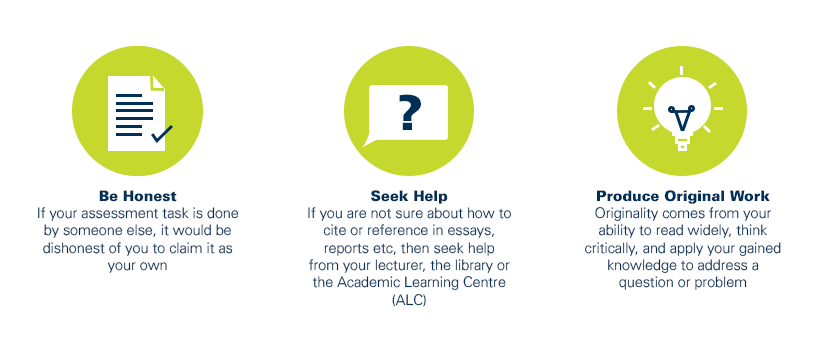
As a CQUniversity student you are expected to act honestly in all aspects of your academic work.
Any assessable work undertaken or submitted for review or assessment must be your own work. Assessable work is any type of work you do to meet the assessment requirements in the unit, including draft work submitted for review and feedback and final work to be assessed.
When you use the ideas, words or data of others in your assessment, you must thoroughly and clearly acknowledge the source of this information by using the correct referencing style for your unit. Using others’ work without proper acknowledgement may be considered a form of intellectual dishonesty.
Participating honestly, respectfully, responsibly, and fairly in your university study ensures the CQUniversity qualification you earn will be valued as a true indication of your individual academic achievement and will continue to receive the respect and recognition it deserves.
As a student, you are responsible for reading and following CQUniversity’s policies, including the Student Academic Integrity Policy and Procedure. This policy sets out CQUniversity’s expectations of you to act with integrity, examples of academic integrity breaches to avoid, the processes used to address alleged breaches of academic integrity, and potential penalties.
What is a breach of academic integrity?
A breach of academic integrity includes but is not limited to plagiarism, self-plagiarism, collusion, cheating, contract cheating, and academic misconduct. The Student Academic Integrity Policy and Procedure defines what these terms mean and gives examples.
Why is academic integrity important?
A breach of academic integrity may result in one or more penalties, including suspension or even expulsion from the University. It can also have negative implications for student visas and future enrolment at CQUniversity or elsewhere. Students who engage in contract cheating also risk being blackmailed by contract cheating services.
Where can I get assistance?
For academic advice and guidance, the Academic Learning Centre (ALC) can support you in becoming confident in completing assessments with integrity and of high standard.
What can you do to act with integrity?