Overview
In this unit, you will engage in authentic learning experiences that introduce you to the policies, ideologies and practices that underpin the Home Economics discipline. Internationally, the profession focuses on achieving optimal and sustainable health and wellbeing for individuals, families and communities in their everyday living environments. To understand this professional aim, you will explore policy texts and social trends that impact on the health and wellbeing of individuals, families and communities and develop the skills to interact with service organisations that support people in challenging times. You will select a local community-based experience to examine social innovation in action. Through guided self-reflective practice, you will explore how to develop meaningful relationships with self and others, and how to take action and implement positive change in people's lives in professional, ethical and culturally appropriate ways.
Details
Pre-requisites or Co-requisites
There are no requisites for this unit.
Important note: Students enrolled in a subsequent unit who failed their pre-requisite unit, should drop the subsequent unit before the census date or within 10 working days of Fail grade notification. Students who do not drop the unit in this timeframe cannot later drop the unit without academic and financial liability. See details in the Assessment Policy and Procedure (Higher Education Coursework).
Offerings For Term 1 - 2026
Attendance Requirements
All on-campus students are expected to attend scheduled classes - in some units, these classes are identified as a mandatory (pass/fail) component and attendance is compulsory. International students, on a student visa, must maintain a full time study load and meet both attendance and academic progress requirements in each study period (satisfactory attendance for International students is defined as maintaining at least an 80% attendance record).
Recommended Student Time Commitment
Each 6-credit Undergraduate unit at CQUniversity requires an overall time commitment of an average of 12.5 hours of study per week, making a total of 150 hours for the unit.
Class Timetable
Assessment Overview
Assessment Grading
This is a graded unit: your overall grade will be calculated from the marks or grades for each assessment task, based on the relative weightings shown in the table above. You must obtain an overall mark for the unit of at least 50%, or an overall grade of 'pass' in order to pass the unit. If any 'pass/fail' tasks are shown in the table above they must also be completed successfully ('pass' grade). You must also meet any minimum mark requirements specified for a particular assessment task, as detailed in the 'assessment task' section (note that in some instances, the minimum mark for a task may be greater than 50%). Consult the University's Grades and Results Policy for more details of interim results and final grades.
All University policies are available on the CQUniversity Policy site.
You may wish to view these policies:
- Grades and Results Policy
- Assessment Policy and Procedure (Higher Education Coursework)
- Review of Grade Procedure
- Student Academic Integrity Policy and Procedure
- Academic Progression Policy and Procedure
- Student Refund and Credit Balance Policy and Procedure
- Complaints Policy and Procedure
- Information and Communications Technology Acceptable Use Policy and Procedure
This list is not an exhaustive list of all University policies. The full list of University policies are available on the CQUniversity Policy site.
Feedback, Recommendations and Responses
Every unit is reviewed for enhancement each year. At the most recent review, the following staff and student feedback items were identified and recommendations were made.
Feedback from SUTE Data
Assessment feedback provided in a timelier manner
Provide timely feedback on assessment
Feedback from SUTE Data
UC helped students to understand learning from different perspectives
Continue to provide real-world learning experiences for students
Feedback from UC Reflection
Student misuse of AI tools in assessments, affecting academic integrity
Clearer AI use guidelines added to assessment briefs and tutorials
- Critically evaluate a range of policy texts and social trends pertaining to individuals, families and communities
- Critically analyse complex factors that impact health and wellbeing for individuals, families and communities
- Identify and communicate with service organisations that support individuals, families and communities in a changing society
- Interact with individuals and service organisations in professional, ethical and culturally appropriate ways
- Reflect on relevant points of view (perspectives) and on how alternative perspectives impact the health and wellbeing of individuals, families and communities.
Alignment of Assessment Tasks to Learning Outcomes
| Assessment Tasks | Learning Outcomes | ||||
|---|---|---|---|---|---|
| 1 | 2 | 3 | 4 | 5 | |
| 1 - Report - 30% | |||||
| 2 - Project (applied) - 30% | |||||
| 3 - Reflective Practice Assignment - 40% | |||||
Alignment of Graduate Attributes to Learning Outcomes
| Graduate Attributes | Learning Outcomes | ||||
|---|---|---|---|---|---|
| 1 | 2 | 3 | 4 | 5 | |
| 1 - Communication | |||||
| 2 - Problem Solving | |||||
| 3 - Critical Thinking | |||||
| 4 - Information Literacy | |||||
| 5 - Team Work | |||||
| 6 - Information Technology Competence | |||||
| 7 - Cross Cultural Competence | |||||
| 8 - Ethical practice | |||||
| 9 - Social Innovation | |||||
| 10 - First Nations Knowledges | |||||
| 11 - Aboriginal and Torres Strait Islander Cultures | |||||
Textbooks
There are no required textbooks.
IT Resources
- CQUniversity Student Email
- Internet
- Unit Website (Moodle)
- MS Teams
All submissions for this unit must use the referencing style: American Psychological Association 7th Edition (APA 7th edition)
For further information, see the Assessment Tasks.
j.deagon@cqu.edu.au
Week 1
Begin Date: 09 Mar 2026Module/Topic
Topic 1: Communities – social justice and organisations that support individuals and families
Chapter
Readings available via eReading List
International Federation for Home Economics. (2008). IFHE Position Statement: Home Economics in the 21st Century.
Deagon, J. (2021). I Do, We Do, You Do Home Economics: Explicit Instruction Connecting Content with Ideology. CEPS Journal.
World Health Organisation. (n.d.). Health Promotion Glossary of Terms 2021.
Events and Submissions/Topic
Introduction to Home Economics, social justice and health promotion principles that underpin this unit's focus.
Week 2
Begin Date: 16 Mar 2026Module/Topic
Topic 2: Service in community
Chapter
Readings available via eReading List
World Health Organisation. (2022). Geneva Charter for Well-Being.
World Health Organisation. (2023). Achieving well-being A global framework for integrating well-being into public health utilizing a health promotion approach.
Farber, K. (2017). Real and relevant: a guide for service and project-based learning, second edition (2nd ed.). Rowman & Littlefield Publishers.
Events and Submissions/Topic
Introduction to service learning.
Investigate and identify health and wellbeing service providers in your local community.
Week 3
Begin Date: 23 Mar 2026Module/Topic
Topic 3: Communities – meaning and purpose in society
Chapter
Readings available via eReading List
Deagon, J. & Pendergast. D., (2014). Home economists’ views and perceptions of spiritual health and wellbeing: A collective affirmation statement. Journal of the Home Economics Institute of Australia, 21(2), 2–12
Events and Submissions/Topic
Research a health and wellbeing issue in your local community.
Week 4
Begin Date: 30 Mar 2026Module/Topic
Topic 4: Individuals – Personal needs
Chapter
Readings available via eReading List
Ch2. Problem-Creating versus Problem-Solving. (2020). In M. Neenan & W. Dryden, Cognitive Behavioural Coaching: A Guide to Problem-Solving and Personal Development (3rd ed., Vol. 1, pp. 27–40). Routledge.
Events and Submissions/Topic
Investigate, select and prepare to approach an organisation about service opportunities.
Week 5
Begin Date: 06 Apr 2026Module/Topic
Topic 5: Individuals - Wellbeing and mental health
Chapter
Readings available via eReading List
Australian Institute of Health and Welfare. (2024). Australia’s health 2024: in brief.
Events and Submissions/Topic
Approach and negotiate with selected organisation about availability and expectations for service work.
Exploration of a health and wellbeing issue Due: Week 5 Friday (10 Apr 2026) 11:45 pm AEST
Week 6
Begin Date: 13 Apr 2026Module/Topic
Topic 6: Families – Family forms and cultural diversity
Chapter
Readings available via eReading List
Australian Institute of Family Studies. (n.d.). Facts and Figures
Facts and figures | Australian Institute of Family Studies
Events and Submissions/Topic
Commence community-based activity.
Vacation Week
Begin Date: 20 Apr 2026Module/Topic
Chapter
Events and Submissions/Topic
Week 7
Begin Date: 27 Apr 2026Module/Topic
Topic 7: Families – Conflict resolution, values, communication, roles
Chapter
Readings available via eReading List
Events and Submissions/Topic
Commence or continue community-based activity.
Week 8
Begin Date: 04 May 2026Module/Topic
Topic 8: Families – Social issues
Chapter
Readings available via eReading List
Events and Submissions/Topic
If required, continue community-based activity.
Week 9
Begin Date: 11 May 2026Module/Topic
Topic 9: Families - Housing for diverse families
Chapter
Readings available via eReading List
Events and Submissions/Topic
If required, continue community-based activity.
Week 10
Begin Date: 18 May 2026Module/Topic
Topic 10: Individuals – Resilience and respectful relationships
Chapter
Readings available via eReading List
Events and Submissions/Topic
The community-based activity to be completed this week. Thank the organisation for their support and the opportunity they provided.
Community-based Activity Due: Week 10 Friday (22 May 2026) 11:45 pm AEST
Week 11
Begin Date: 25 May 2026Module/Topic
Topic 11: Individuals – Sense of belonging and self-worth
Chapter
Readings available via eReading List
Events and Submissions/Topic
Edit, revise and finalise reflective practice assessment.
Week 12
Begin Date: 01 Jun 2026Module/Topic
Reflection and Revision
Chapter
Events and Submissions/Topic
Exam Week
Begin Date: 08 Jun 2026Module/Topic
Chapter
Events and Submissions/Topic
Vacation/Exam Week
Begin Date: 15 Jun 2026Module/Topic
Chapter
Events and Submissions/Topic
1 Report
Purpose and structure of this unit's assessment
As an emerging educator or health professional, you will become an active and visible member of the community in which you live and work. This role requires more than disciplinary knowledge—it requires the ability to identify local health and wellbeing issues, understand how these issues affect individuals, families, and communities, and engage professionally with the organisations that support them.
The three assessment items in this unit are intentionally interconnected and differ from traditional university assignments. Rather than working in isolation, they have been designed to promote authentic, real-world learning through inquiry, community engagement, and reflective practice.
Across these three assessments, you will:
- investigate a local health or wellbeing issue using evidence and research;
- engage with your community through a planned, applied activity; and
- reflect on your learning and professional development as it unfolds.
Together, these tasks will support the development of key professional capabilities, including effective communication, critical thinking, disciplinary knowledge, cultural sensitivity, leadership, and reflective practice. This assessment structure is designed to prepare you not only for academic success but for confident, community‑connected professional practice.
Important: You are strongly encouraged to read all three assessment tasks together before you begin, as each task builds on the previous one:
- Assessment Item 1: Report
- Assessment Item 2: Community-based activity (applied project)
- Assessment Item 3: Reflection
Item 1: Exploration of a health and wellbeing issue (written report 1500 words)
Assessment Item 1 provides the foundational knowledge for your community-based activity (Item 2) and your reflective task (Item 3). Through this report, you will investigate a health and wellbeing issue relevant to your local area and examine how community organisations respond to that issue in practice.
You may choose to share this report with your selected community organisation to seek feedback or guidance. For this reason, your report must be professionally written, clearly structured, and evidence-based.
Report Requirements
Your written report must address all of the following components
1. Identify community service in your local area
Locate a range of community services within approximately 5–10 kilometres of your home or current geographic location that support individuals, families, or communities.
You must:
- present this information in a table that includes:
- organisation name
- purpose / services offered
- location
- contact details
- identify a minimum of ten (10) suitable organisations
- include face-to-face, telehealth, or online services where appropriate
- ensure services are government agencies or registered organisations
- exclude blogs, personal websites, or unverified sources
This section demonstrates your awareness of the local service landscape and prepares you to select an appropriate organisation for later assessments.
2. Select a focus health and wellbeing issue
Choose one health and wellbeing issue that is relevant to your local community.
From your list of organisations, identify one organisation that directly addresses this issue. This organisation will become the focus of your analysis and may later become your community partner.
3. Research and analyse the selected issue
Your analysis must include the following components.
a. Relevant Statistics
Use credible and authoritative sources, such as:
- Australian Bureau of Statistics (ABS)
- World Health Organization (WHO)
Include national, state, and/or local data that helps explain the scope, prevalence, or impact of the issue.
b. Background information about your selected organisation
Provide clear and detailed information about the organisation, including:
- philosophy and mission
- client groups or target population
- services provided
- key personnel or organisational structure
- funding sources
- relevant background or history
c. Approaches used to address the issue
Analyse different approaches used to address the issue, including:
- strategies or interventions that have been effective
- strategies that have been less successful
- benefits and barriers associated with different approaches
d. Academic support
Support your analysis by using a minimum of three (3) peer-reviewed academic journal articles. These sources must be used to inform your discussion of approaches, effectiveness, and best practice.
e. Recommendations for best practice
Based on your research, identify evidence-informed strategies for addressing the issue, including:
- recognised best-practice approaches
- effective ways to engage and communicate with clients (e.g. individuals, families, community groups)
- consideration of the broader social or environmental context
f. Additional considerations
Discuss complexities or contextual factors that influence the issue, such as:
- cultural sensitivity
- geographic or access challenges
- funding limitations
- education or literacy levels
- social determinants of health
- any other relevant factors affecting individuals, families or communities
Guidelines for completing your report
- Use CQUniversity Library databases to locate academic journal articles.
- Critically evaluate all information for credibility, accuracy, and reliability.
- Avoid using inappropriate or unverified internet sources.
Your report must follow a formal report structure (see sample provided) and include:
- title page
- introduction (approximately 250 words) identifying the issue
- body (approximately 1000 words)
- conclusion (approximately 250 words)
- reference list
Word count: is calculated from the first word of the introduction to the last word of the conclusion. It excludes the title page, abstract, table of contents, reference list, and appendices, but includes in-text citations and direct quotations.
Additional requirements:
- images or diagrams may be included only if they add value or improve clarity
- use a table when listing local services, but the majority of the report must be written in full sentences and structured paragraphs
- edit and proofread your work carefully
- you are encouraged to use Studiosity for feedback
- developing high-level academic literacy is an essential professional skill
Use APA 7th Edition for all in-text citations and your reference list.
More information is available in the Assessment Section in Moodle.
AI Assessment Scale: Level 2
You may use AI for planning, idea development, and research. Your final submission should show how you have developed and refined these ideas. Any misuse or lack of disclosure regarding AI tools will be considered a breach of academic integrity.
72-Hour Grace Period:
The 72-hour grace period applies to this assessment. If you need longer than 72 hours, you must apply through the Assessment Extension System.
Week 5 Friday (10 Apr 2026) 11:45 pm AEST
Vacation Week Monday (20 Apr 2026)
It is anticipated that students will receive feedback 2 weeks after submission following completion of moderation.
- Identify service organisations that support individuals, families and communities in challenging circumstances
- Select and analyse sources of information, academic literature and social trends relating to health and wellbeing issues
- Evaluate complex factors that impact health and wellbeing for individuals, families and communities
- Demonstrate professional levels of personal literacy and knowledge of academic writing conventions
- Critically evaluate a range of policy texts and social trends pertaining to individuals, families and communities
- Critically analyse complex factors that impact health and wellbeing for individuals, families and communities
- Identify and communicate with service organisations that support individuals, families and communities in a changing society
2 Project (applied)
Item 2: Community-based activity rationale
An essential skill for educators and health professionals is the ability to identify, approach, communicate with, and sustain relationships with community organisations. This assessment has been designed to help you develop these skills in an authentic, supported way.
This learning experience has two key purposes:
- to provide experience interacting with people and organisations in real-world and sometimes challenging circumstances; and
- to build your confidence and strategies for initiating and maintaining professional communication with a potential community partner.
Through this community-based service experience, you will gain first-hand insight into the complexities of community engagement, along with practical strategies for navigating challenges, negotiating expectations, and contributing meaningfully to a partner organisation.
Types of Projects
You may choose one of the following types of community-based projects: direct service or indirect service.
Direct Service Projects
A direct service project involves active engagement with a community organisation and its day-to-day activities, often including direct interaction with people accessing the service.
Examples include (but are not limited to):
- assisting at a food bank or community kitchen
- supporting activities at a youth or community centre
If you choose a direct service project, you must comply with:
- the organisation’s health and safety procedures; and
- current government advice relevant to the setting.
Indirect Service Projects
An indirect service project focuses on behind-the-scenes work that supports the organisation without primarily interacting with clients.
Examples include (but are not limited to):
- collecting or analysing data to help assess service impact
- completing administrative or office-based tasks
- developing educational, promotional, or awareness materials
Eligible Organisations
To be eligible, an organisation must meet both of the following criteria:
- You already have a relationship or strong connection with the organisation; and
- The organisation provides some form of public service, broadly defined.
Organisations must be non‑partisan, meaning they are not aligned with or promoting a particular political or religious agenda.
Faith‑based organisations (for example, the Salvation Army) are acceptable provided they deliver a community or social service beyond spiritual activities.
Most Not‑for‑Profit organisations and Non‑Government Organisations (NGOs) meet these criteria.
If you wish to work with an organisation that does not fit these categories—such as:
- a social enterprise or social business
- a specifically religious institution
- an organisation currently working toward NGO status
you must contact your lecturer for approval before commencing the project.
Time Commitment and Project Hours
There is no fixed number of hours required for this project, as each project will vary depending on the organisation and the nature of your work. However, the following expectations apply:
- Minimum contact time: You must complete at least two (2) days of direct contact with the community organisation and its people (in person or virtual, depending on the context).
- Estimated total time commitment: You should allow approximately 15–25 hours of work outside your allocated university study time.
- Recommended timing: All project hours (contact and non-contact) should be completed between Weeks 6–10 of the term.
- Communication expectation: You are responsible for clearly negotiating your availability, schedule, and any limitations with the organisation.
Your total time may include:
- direct contact with the organisation (on-site or virtual)
- indirect service tasks (emails, planning, follow-up, research)
- travel to and from the organisation
- informal engagement and time spent interacting with people in the organisation
The balance between direct and indirect hours will depend on the organisation and the nature of your project.
How the work is structured
The purpose of community-based engagement is to co-design a project that benefits both your academic learning and the community partner. This collaborative approach to knowledge creation is supported through a series of structured briefs. Detailed instructions and guidelines will be covered in weekly tutorials and the Assessment section on Moodle.
You will work in consultation with the organisation to determine:
- the specific activities you will undertake
- agreed timelines
- any final products or outputs (if applicable)
Because each project is unique, these decisions will be shaped by the organisation’s needs, your skills, and your available time.
As early as possible, you must identify a key contact person within the organisation. This person should be willing and able to discuss your project with you. You will meet with them (in person or virtually) to discuss:
- their role and availability
- the organisation’s expectations
- how your project can meaningfully contribute to the community
Establishing this relationship early is essential for a smooth, respectful, and productive partnership.
What to submit
You must submit one document (Word or PDF) using the provided template. Your submission must include:
- the organisation(s) you contacted
- dates of communication and on-site (or virtual) engagement
- activities undertaken
- challenges and successes encountered throughout the project
Why a templated submission?
The template is designed to help you practice professional record-keeping, an essential skill for teachers and allied professionals.
Your work will be assessed on:
- the quality and depth of your reflections; and
- the accuracy, clarity, and completeness of your records.
AI Assessment Scale: Level 2
You may use AI for planning, idea development, and research. Your final submission should show how you have developed and refined these ideas. Any misuse or lack of disclosure regarding AI tools will be considered a breach of academic integrity.
72-Hour Grace Period:
The 72-hour grace period applies to this assessment. If you need longer than 72 hours, you must apply through the Assessment Extension System.
Week 10 Friday (22 May 2026) 11:45 pm AEST
The community-based activity must be completed within timeframes that support the completion of Assessment Task 3 requirements.
- Experience complex factors that impact health and wellbeing for individuals, families and communities.
- Communicate with service organisations that support individuals, families and communities.
- Interact with individuals and service organisations in professional, ethical and culturally appropriate ways.
- Critically analyse complex factors that impact health and wellbeing for individuals, families and communities
- Identify and communicate with service organisations that support individuals, families and communities in a changing society
- Interact with individuals and service organisations in professional, ethical and culturally appropriate ways
3 Reflective Practice Assignment
Item 3: Reflection on learning experiences
In this assessment, you will critically examine how organisations design and deliver services that support the health and wellbeing of individuals, families and communities through community‑based initiatives. You will analyse and reflect on the complex social, cultural and structural issues influencing service provision, and evaluate how personal and societal biases, perceptions and attitudes can shape health and wellbeing outcomes. Your reflections should clearly demonstrate your ability to identify, deconstruct and critically question these influences in alignment with your service-learning experience.
Complete a suite of reflective practice questions including:
- Unit topics
- Health and wellbeing issues
- Human-centred / client focus
- Self-focus / personal development
- Future professional practice
Template and further information about Reflective Practice Questions are available in Assessment Section in Moodle.
AI Assessment Scale: Level 2
You may use AI for planning, idea development, and research. Your final submission should show how you have developed and refined these ideas. Any misuse or lack of disclosure regarding AI tools will be considered a breach of academic integrity.
72-Hour Grace Period:
The 72-hour grace period applies to this assessment. If you need longer than 72 hours, you must apply through the Assessment Extension System.
Week 12 Tuesday (2 June 2026) 11:45 pm AEST
Feedback on the final assessment task will be provided prior to certification of grades
- Reflect on a range of complex issues relating to how organisations provide services to individuals, families and communities through community-based health and wellbeing initiatives.
- Deconstruct biases, perceptions and attitudes that impact the health and wellbeing of individuals, families and communities.
- Demonstrate professional levels of personal literacy and knowledge of academic writing conventions
- Reflect on relevant points of view (perspectives) and on how alternative perspectives impact the health and wellbeing of individuals, families and communities.
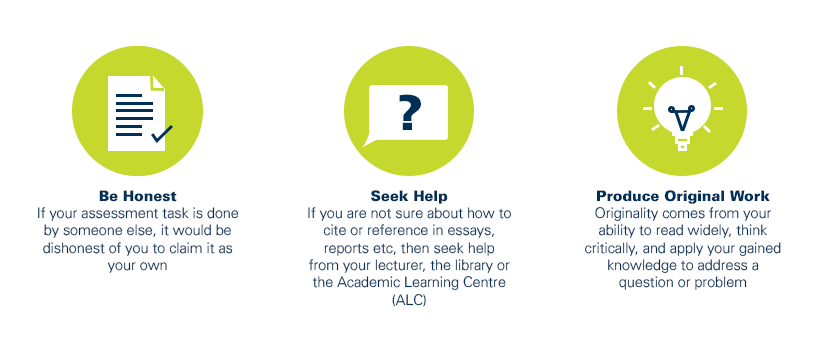
As a CQUniversity student you are expected to act honestly in all aspects of your academic work.
Any assessable work undertaken or submitted for review or assessment must be your own work. Assessable work is any type of work you do to meet the assessment requirements in the unit, including draft work submitted for review and feedback and final work to be assessed.
When you use the ideas, words or data of others in your assessment, you must thoroughly and clearly acknowledge the source of this information by using the correct referencing style for your unit. Using others’ work without proper acknowledgement may be considered a form of intellectual dishonesty.
Participating honestly, respectfully, responsibly, and fairly in your university study ensures the CQUniversity qualification you earn will be valued as a true indication of your individual academic achievement and will continue to receive the respect and recognition it deserves.
As a student, you are responsible for reading and following CQUniversity’s policies, including the Student Academic Integrity Policy and Procedure. This policy sets out CQUniversity’s expectations of you to act with integrity, examples of academic integrity breaches to avoid, the processes used to address alleged breaches of academic integrity, and potential penalties.
What is a breach of academic integrity?
A breach of academic integrity includes but is not limited to plagiarism, self-plagiarism, collusion, cheating, contract cheating, and academic misconduct. The Student Academic Integrity Policy and Procedure defines what these terms mean and gives examples.
Why is academic integrity important?
A breach of academic integrity may result in one or more penalties, including suspension or even expulsion from the University. It can also have negative implications for student visas and future enrolment at CQUniversity or elsewhere. Students who engage in contract cheating also risk being blackmailed by contract cheating services.
Where can I get assistance?
For academic advice and guidance, the Academic Learning Centre (ALC) can support you in becoming confident in completing assessments with integrity and of high standard.
What can you do to act with integrity?