Overview
In Professional Practice 3 (Catholic School Placement), you will prepare for and complete an assessable professional experience placement (20 days) in a Catholic school as a required component of your acceptance into the Catholic Education strand of your course. You will participate in tutorials, practical workshops and your school placement, which comprises a four-week continuous block. Your learning in this unit is designed around two integrated modules. In the first module, you will enhance your ability to design, adapt, implement and assess teaching sequences that cater for the diverse needs of learners in mainstream classrooms. You will develop knowledge of the purposes of using assessment for learning and practices for interpreting student data that inform differentiation practices. In addition, you will learn and apply teaching practices for setting learning goals, modifying lessons plans and learning sequences, adapting pedagogical approaches and using feedback techniques that are responsive to students’ learning needs. In the second module of this unit, you will build your knowledge and understanding of the particular strategies, rituals, traditions and resources that characterise the Religious life of Catholic school communities. You will use this knowledge to reflect on the responsibilities of teachers within the Catholic schooling system and the nature of partnerships with parents / carers and the school community in supporting engagement and participation in the important personal and communal faith rituals of the Catholic tradition.
Details
Pre-requisites or Co-requisites
Students must have successfully completed RELG13001, EDCU13020 and either EDFE12042 or EDFE11039 or equivalent to enrol in this unit.
Important note: Students enrolled in a subsequent unit who failed their pre-requisite unit, should drop the subsequent unit before the census date or within 10 working days of Fail grade notification. Students who do not drop the unit in this timeframe cannot later drop the unit without academic and financial liability. See details in the Assessment Policy and Procedure (Higher Education Coursework).
Offerings For Term 3 - 2026
Attendance Requirements
All on-campus students are expected to attend scheduled classes - in some units, these classes are identified as a mandatory (pass/fail) component and attendance is compulsory. International students, on a student visa, must maintain a full time study load and meet both attendance and academic progress requirements in each study period (satisfactory attendance for International students is defined as maintaining at least an 80% attendance record).
Recommended Student Time Commitment
Each 6-credit Undergraduate unit at CQUniversity requires an overall time commitment of an average of 12.5 hours of study per week, making a total of 150 hours for the unit.
Class Timetable
Assessment Overview
Assessment Grading
This is a pass/fail (non-graded) unit. To pass the unit, you must pass all of the individual assessment tasks shown in the table above.
All University policies are available on the CQUniversity Policy site.
You may wish to view these policies:
- Grades and Results Policy
- Assessment Policy and Procedure (Higher Education Coursework)
- Review of Grade Procedure
- Student Academic Integrity Policy and Procedure
- Academic Progression Policy and Procedure
- Student Refund and Credit Balance Policy and Procedure
- Complaints Policy and Procedure
- Information and Communications Technology Acceptable Use Policy and Procedure
This list is not an exhaustive list of all University policies. The full list of University policies are available on the CQUniversity Policy site.
Feedback, Recommendations and Responses
Every unit is reviewed for enhancement each year. At the most recent review, the following staff and student feedback items were identified and recommendations were made.
Feedback from SUTE
Assessment relevance
Maintain current assessment tasks
- Use assessment strategies to monitor and make judgments on student achievement and modify strategies and resources to promote learning
- Select and apply teaching methods that effectively scaffold learning for students of varying ability levels and needs
- Write explicit learning goals and task-specific standards for the purpose of analysing work samples and assessment data to provide timely feedback on progress and design interventions to address specific learning issues
- Investigate theological, liturgical, pastoral and practical principles underpinning the religious life of Catholic school communities.
- Reflect on the strategies, practices and responsibilities of teachers in Catholic schools for engaging with stakeholders to support the religious life of the Catholic school.
- Reflect critically on all aspects of professional learning and practice using professional knowledge, feedback, self-evaluation and evidence for Australian Professional Standards for Teachers.
Successful completion of this unit provides opportunities for students to engage with the Australian Professional Standards for Teachers (Graduate Career Stage) focus areas of:
1.1 Physical, social and intellectual development and characteristics of students
1.2 Understand how students learn
1.3 Students with diverse linguistic, cultural, religious and socioeconomic backgrounds
1.5 Differentiate teaching to meet the specific learning needs of students across the full range of abilities
2.1 Content and teaching strategies of the teaching area
2.2 Content selection and organisation
2.3 Curriculum, assessment and reporting
2.5 Literacy and numeracy strategies
2.6 Information and Communication Technology (ICT)
3.1 Establish challenging learning goals
3.2 Plan, structure and sequence learning programs
3.3 Use teaching strategies
3.4 Select and use resources
3.5 Use effective classroom communication
3.6 Evaluate and improve teaching programs
3.7 Engage parents/carers in the educative process
4.1 Support student participation
4.2 Manage classroom activities
4.4 Maintain student safety
4.5 Use ICT safely, responsibly and ethically
5.1 Assess student learning
5.2 Provide feedback to students on their learning
5.3 Make consistent and comparable judgements
5.4 Interpret student data
5.5 Report on student achievement
6.1 Identify and plan professional learning needs
6.2 Engage in professional learning and improve practice
6.3 Engage with colleagues and improve practice
6.4 Apply professional learning and improve student learning
7.1 Meet professional ethics and responsibilities
7.2 Comply with legislative, administrative and organisational requirements
7.3 Engage with the parents/carers
7.4 Engage with professional teaching networks and broader communities
Outcomes combine these standards with the knowledge and understanding required to be eligible for accreditation to teach in a Catholic school.
Alignment of Assessment Tasks to Learning Outcomes
| Assessment Tasks | Learning Outcomes | |||||
|---|---|---|---|---|---|---|
| 1 | 2 | 3 | 4 | 5 | 6 | |
|
1.
Assessment 1
(Pass/Fail )
Written Assessment
|
||||||
|
2.
Assessment 2
(Pass/Fail )
Practical Assessment
|
||||||
|
3.
Assessment 3
(Pass/Fail )
Professional Practice Placement
|
||||||
|
4.
Assessment 4
(Pass/Fail )
Reflective Practice Assignment
|
||||||
Alignment of Graduate Attributes to Learning Outcomes
| Graduate Attributes | Learning Outcomes | |||||
|---|---|---|---|---|---|---|
| 1 | 2 | 3 | 4 | 5 | 6 | |
| 1 - Communication | ||||||
| 2 - Problem Solving | ||||||
| 3 - Critical Thinking | ||||||
| 4 - Information Literacy | ||||||
| 5 - Team Work | ||||||
| 6 - Information Technology Competence | ||||||
| 7 - Cross Cultural Competence | ||||||
| 8 - Ethical practice | ||||||
| 9 - Social Innovation | ||||||
| 10 - First Nations Knowledges | ||||||
| 11 - Aboriginal and Torres Strait Islander Cultures | ||||||
Textbooks
There are no required textbooks.
Additional Textbook Information
I can't change the enrolment number. The enrolled students would not be more than 45.
A supplementary text has been suggested:

IT Resources
- CQUniversity Student Email
- Internet
- Unit Website (Moodle)
All submissions for this unit must use the referencing style: American Psychological Association 7th Edition (APA 7th edition)
For further information, see the Assessment Tasks.
g.busch@cqu.edu.au
m.elsmore@cqu.edu.au
m.vanderburg@cqu.edu.au
Week 1
Begin Date: 09 Nov 2026Module/Topic
Placement and PP3
What is differentiation?
Religion
The Religious Life of the School - Christian Prayer
Chapter
Chapter 1 – Differentiation: An Overview - Tomlinson, C. A. (2013) in Assessment and student success in a differentiated classroom
Part 1: A Brief Primer on Differentiation - Tomlinson, C. A. (2002) in Differentiation in Practice.
Chapter 1: Rigor & Differentiation Blackburn, B. R. (2018) in Rigor and Differentiation in the Classroom: Tools and Strategies.
What is distinctive about Christian prayer?
Events and Submissions/Topic
Week 2
Begin Date: 16 Nov 2026Module/Topic
Placement and PP3
How students learn best - Learning Theories, Profiles, Interests, and Readiness
Religion
The Religious Life of the School - Liturgy and Worship
Chapter
Howell, J. (2014).
Chapter 9 - Understanding your students (pp. 273 - 313).
Chapter 2: Learning Portraits. Blackburn, B. R. (2018) in Rigor and Differentiation in the Classroom: Tools and Strategies.
Geake, J. (2008). Neuromythologies in education. Educational Research (Windsor), 50(2), 123–133.
The Mass Part 1 & 2 (The Catholic Way)
Events and Submissions/Topic
Student Placement Declaration and Confidentiality Agreement due on Friday, 20th November, 2026.
The Declaration is accessed and submitted through Sonia.
Week 3
Begin Date: 23 Nov 2026Module/Topic
Placement and PP3
Differentiation - Students' Learning Environment and Curriculum Alignment
Religion
The Religious Life of the School - Ritualising Everyday Life and Living the Gospel
Chapter
Chapter 6: Managing the Rigorous, Differentiated Classroom Blackburn, B. R. (2018). Rigor and Differentiation in the classroom: Tools and strategies.
Chapter 8: Pedagogy: the agency that connects teaching with learning. Sections 8.3 & 8.4 Churchill, R. (Ed.). (2022) in Teaching : making a difference (5th edition.)
Befriending Context and Tradition: Evangelisation and Catholic Schools
Events and Submissions/Topic
Week 4
Begin Date: 30 Nov 2026Module/Topic
Placement and PP3
Differentiation and assessment
Religion
The Religious Life of the School - Spiritual Formation
Chapter
Chapter 2 - Assessment and Differentiation: A Framework for Understanding Tomlinson, Carol Ann., and Tonya R. Moon (2013), in Assessment and Student Success in a differentiated classroom.
Chapter 5: Differentiating a Rigorous Demonstration of Learning Blackburn, B. R. (2018) in Rigor and Differentiation in the Classroom: Tools and Strategies.
Catholic teacher formation in the land down under
Events and Submissions/Topic
Week 5
Begin Date: 07 Dec 2026Module/Topic
Placement and PP3
Engaging students in the learning
Religion
The Religious Life of the School - Witness to the wider community and Authentic Christian Community
Chapter
Chapter 4: Understanding and motivating students Churchill, R. (Ed.). (2022) in Teaching: making a difference (5th edition.)
Chapter 4: Differentiating Instructional Support to Increase Rigor Blackburn, B. R. (2018). Rigor and Differentiation in the Classroom: Tools and Strategies
The way of Jesus, the way to discipleship
Events and Submissions/Topic
Week 6
Begin Date: 14 Dec 2026Module/Topic
Placement and PP3
Assessment preparation
Religion
The Religious Life of the School - Ethos and Charism
Chapter
No new content this week
Charism: A Spiritual Gift
Events and Submissions/Topic
Mid-Term Break
Begin Date: 21 Dec 2026Module/Topic
Chapter
Events and Submissions/Topic
Week 7
Begin Date: 04 Jan 2027Module/Topic
Placement and PP3
Placement Preparation - Unit Planning and pre-moderation
Religion
The Religious Life of the School - Sense of the Sacred
Chapter
Develop a teaching and learning plan. Australian Education Research Organisation (March, 2025).
What is spirituality?
Events and Submissions/Topic
Week 8
Begin Date: 11 Jan 2027Module/Topic
Placement and PP3
Placement Preparation - Lesson Planning, evaluations and evidence of learning
Religion
The Religious Life of the School - Justice in your school community
Chapter
Shared resources embedded in Moodle materials
Social Justice
Events and Submissions/Topic
Week 9
Begin Date: 18 Jan 2027Module/Topic
Placement and PP3
Placement Preparation - Observations, daily professional reflections, daily and weekly planning
Religion
The Religious Life of the School - Action for Justice
Chapter
Shared resources embedded in Moodle materials
Charity and Justice
Events and Submissions/Topic
Week 10
Begin Date: 25 Jan 2027Module/Topic
Placement and PP3
Reflection on evidence of learning
Religion
The Religious Life of the School - Reflection on action for justice
Chapter
Shared resources embedded in Moodle materials
Theological Reflection for Mission
Events and Submissions/Topic
Week 11
Begin Date: 01 Feb 2027Module/Topic
No tutorial
Chapter
Events and Submissions/Topic
Professional Practice 3 - Block placement commences
Week 12
Begin Date: 08 Feb 2027Module/Topic
No tutorial
Chapter
Events and Submissions/Topic
Professional Practice 3 - Week 2 of Block placement
1 Written Assessment
This assessment task has two parts.
Part 1: Mandatory Pre-placement Requirement
The university’s Work Integrated Learning Policy and Procedure requires all students to complete a Student Placement Declaration and Confidentiality Agreement on an annual basis. The Agreement outlines expectations for your participation in this unit and for the appropriate conduct of students when representing the university in professional workplaces. The form requires your acknowledgement of these expectations.
You are required to complete the Agreement prior to Census Date for this unit. You will access the electronic agreement called “Student Placement Declaration and Confidentiality Agreement” from the drop-down menu under the Forms tab in Sonia. Click add to commence your response to the form. You should respond to all statements and submit the form by the due date (Friday, 20th November, 2026). Failure to submit the form by this date may result in cancellation of your enrolment in this unit.
You will be able to save a copy of the completed form to your desktop by clicking on the printer icon at the top of the form and selecting “Save as pdf”. A copy of the completed form should be uploaded to the Moodle site for EDFE12044 Professional Practice 3 through the link for submission of this task.
Grace Period Statement
The 72-Hour grace period does NOT apply to this task. This is because this task is confirmation of the University's Work Integrated Learning Policy and Procedure and is related to professional placement which has a fixed schedule. If you require an extension of time for submission without academic penalty being applied, you will need to use the normal Assessment Extension System process and apply for an extension which will be considered by the Unit Coordinator or their delegate.
Part 2: Part 2 has 2 parts. You must complete both Part A and Part B as outlined below.
Part A: The Religious Life of the school is oganised into four interrelated components which complement the classroom teaching and learning of Religion.
Propose how classroom and school practices could embed each of the four components of the Religious Life of the school within a Catholic primary school setting.
(Maximum length for this section: 500 words.)
Part B: Reflect on the responsibilities that teachers in the Catholic Education system have for facilitating, teaching and building learners' understandings of the Religious Life of the School. (Length: 750 words)
Evidence of engagement with the unit learning materials must be apparent in your submission.
Use of Generative Artificial Intelligence agents (Gen AI)
Within this assessment, the use of Gen AI agents is as follows:
Level 2: AI Integration (Authentic Professional Use)
GenAI is integrated as a collaborative professional tool. Within this task, this can be used for iterative refinement of drafts, data analysis support, generating structured content for review, or workflow automation.
Student Declaration (GenAI used)
When submitting this assessment task, please include the following statement on the front page of your submitted assessment response:
I confirm that I used Generative AI only as permitted for this assessment. I can explain how I used it, the judgements I made, and how I developed the submitted work. I confirm that any Generative AI use in this assessment was permitted, responsible, and transparent and has been appropriately acknowledged. GenAI was used for [briefly state purpose, e.g. brainstorming/ editing/ drafting/ analysis], and I accept responsibility for the accuracy, integrity, and final content of this submission.
Grace Period
The 72‑hour grace period is available after the assessment due date to support students who experience unexpected difficulties that prevent them from submitting on time. This means you have an extra 72 hours to submit this task without any academic penalty. If you need longer than 72 hours, you will need to use the normal Assessment Extension System process and apply for an extension of time for submission without academic penalty being applied
Word Count
At CQUniversity, the word count is considered from the first word of the introduction to the last word of the conclusion. It excludes the cover page, abstract, contents page, reference page and appendices. It includes in-text references and direct quotations. Word count for this task is 1 200 words.
Week 6 Friday (18 Dec 2026) 11:55 pm AEST
Feedback on this assessment task will be provided following moderation and in sufficient time to inform the submission of Assessment Task 2 for the unit. Assessment return will take account of the two week vacation period and university closure for Christmas.
Knowledge and understanding of the role of the Religious Life of Catholic schools
Critical synthesis and reflection of the responsibilities of teachers in the Catholic system in relation to the Religious Life of the School
Accurate use of relevant sources to support synthesis and reflection
Accurate use of APA referencing conventions and written expression
- Investigate theological, liturgical, pastoral and practical principles underpinning the religious life of Catholic school communities.
- Reflect on the strategies, practices and responsibilities of teachers in Catholic schools for engaging with stakeholders to support the religious life of the Catholic school.
2 Practical Assessment
Using unit materials, create a resource that would be suitable for an information session for adults (e.g. parents and carers) about the structure and purpose of, and engagement with, the Religious Life of the School. The resource can be created in a form of your choice, such as a PowerPoint presentation with notes pages, a video, information booklet or article. This resource should consider the diversity of adults' religious affiliation and understanding of contemporary Catholic schooling and invite engagement while conveying key points. (Note that word limits do not apply to this section of the assessment task due to the variety of modes suitable for creation of the resource.)
The resource should be accompanied by a brief written reflection of approximately 250 words on the understandings you have gained through the design process about strategies for working effectively, sensitively and professionally with parents and carers and broader school communities in Catholic Education.
Evidence of engagement with the unit learning materials must be apparent in your submission.
Use of Generative Artificial Intelligence agents (Gen AI)
Within this assessment, the use of Gen AI agents is as follows:
GenAI is integrated as a collaborative professional tool. Within this task, this can be used for iterative refinement of drafts, data analysis support, generating structured content for review, or workflow automation.
Student Declaration:
When submitting this assessment task, please include the following statement on the front page of your submitted assessment response:
I confirm that I used Generative AI only as permitted for this assessment. I can explain how I used it, the judgements I made, and how I developed the submitted work. I confirm that any Generative AI use in this assessment was permitted, responsible, and transparent and has been appropriately acknowledged. GenAI was used for [briefly state purpose, e.g. brainstorming/ editing/ drafting/ analysis], and I accept responsibility for the accuracy, integrity, and final content of this submission.
72-hour Grace Period
The 72‑hour grace period is available after the assessment due date to support students who experience unexpected difficulties that prevent them from submitting on time. This means you have an extra 72 hours to submit this task without any academic penalty. If you need longer than 72 hours, you will need to use the normal Assessment Extension System process and apply for an extension of time for submission without academic penalty being applied.
Word Count
At CQUniversity, the word count is considered from the first word of the introduction to the last word of the conclusion. It excludes the cover page, abstract, contents page, reference page and appendices. It includes in-text references and direct quotations. Word count for this task is 1200 words.
Week 10 Monday (25 Jan 2027) 11:45 pm AEST
Feedback on this final assessment task for the Religion module of the unit will be provided following moderation and in line with university policy on certification of grades.
Knowledge and understanding of the structure and purpose of, and engagement with, the Religious Life of the School.
Synthesis of concepts and implementation processes related to the facilitation of the Religious Life of the School.
Consideration of the diverse composition of the audience and appropriate communication methods in the design of the resource
Reflection on strategies for working sensitively and professionally with parents and carers and the broader school community in Catholic Education
- Investigate theological, liturgical, pastoral and practical principles underpinning the religious life of Catholic school communities.
- Reflect on the strategies, practices and responsibilities of teachers in Catholic schools for engaging with stakeholders to support the religious life of the Catholic school.
3 Professional Practice Placement
Placement (Assessable Block)
You are required to undertake a 4-week (20-day) supervised block placement in a school setting as detailed below.
During your placement, you will complete all tasks outlined in the Professional Practice 3 Information and Guidelines Booklet. These tasks include:
- the development of a class profile to be used for modifying teaching sequences to cater for the needs of all
learners, - design and implement a range of learning sequences across the curriculum,
- design (where possible) and implement formative and summative assessment to monitor learning,
- interpret assessment data in order to differentiate and cater for learning needs,
- make judgments on the quality of learners' work, reflect on practice, and
- observe your supervising teacher (and others) to develop your pedagogical abilities.
Application of curriculum, pedagogical and technological knowledge across a range of learning areas will also be key features of the professional practice block where you will be expected to engage in observation, team teaching and continuous teaching as the placement progresses. The placement is scheduled as per the Professional Practice calendar and all components of the placement must be
completed.
An up-to-date working portfolio must be maintained throughout the placement and include all observation, planning, assessment instruments and records, a full class profile, classroom management plan, evaluation and reflection conducted throughout the placement. Refer to the Professional Practice 3 Information and Guidelines Booklet for further detail regarding the working portfolio.
This task addresses aspects of the following Australian Professional Standards for Teachers:
1.1, 1.2, 1.3, 1.5, 2.1, 2.2, 2.3, 2.5, 2.6, 3.1, 3.2, 3.3, 3.4, 3.5, 3.6, 4.1, 4.2, 4.4, 4.5, 5.1, 5.2, 5.3, 5.4, 5.5, 6.1, 6.2, 6.3,6.4, 7.1, and 7.4.
Assessment for the placement will be completed by the Supervising Teacher using the electronic final summative report. The electronic report uses the same standards and descriptors as the sample report included in the Professional Practice 3 Information and Guidelines Booklet. Your WILL NOT be required to upload a copy of your report through Moodle. Your grade for the placement will be extracted from Sonia.
Use of Generative Artificial Intelligence agents (Gen AI)
GenAI may be used for basic support only. Within this task, this can be used for brainstorming, initial drafting, simple research assistance, or basic idea generation.
72-hour Grace Period
The 72‑hour grace period is available after the assessment due date to support students who experience unexpected difficulties that prevent them from submitting on time. This means you have an extra 72 hours to submit this task without any academic penalty. If you need longer than 72 hours, you will need to use the normal Assessment Extension System process and apply for an extension of time for submission without academic penalty being applied
The electronic report for the placement will be submitted via Sonia on completion of the four-week assessable block.
Feedback on this assessment task will be provided by the supervising teacher on CQUniversity's electronic report. Final signed copies of the report will be available to students via Sonia Online.
Assessment criteria are outlined in detail in the Professional Practice 3 Information and Guidelines Booklet. Assessment criteria are drawn from the Australian Professional Standards for Teachers (Graduate Career Stage).
- Use assessment strategies to monitor and make judgments on student achievement and modify strategies and resources to promote learning
- Select and apply teaching methods that effectively scaffold learning for students of varying ability levels and needs
- Write explicit learning goals and task-specific standards for the purpose of analysing work samples and assessment data to provide timely feedback on progress and design interventions to address specific learning issues
- Reflect on the strategies, practices and responsibilities of teachers in Catholic schools for engaging with stakeholders to support the religious life of the Catholic school.
- Reflect critically on all aspects of professional learning and practice using professional knowledge, feedback, self-evaluation and evidence for Australian Professional Standards for Teachers.
4 Reflective Practice Assignment
To complete this task, you will select artefacts (samples of evidence) from the working portfolio that you maintained throughout your professional experience placement to describe and explain your teaching practice and pedagogical decision-making in one learning sequence. You will reflect on the evidence to analyse the impact of your practice on student learning.
The artefacts that you select should focus on a sequence of learning/unit on a specific topic/concept/curriculum descriptor leading to a culminating point (summative assessment) where a judgement could be made on student learning. The artefacts should be annotated to identify the ways in which they exemplify each stage of the teaching and learning cycle outlined below. The selected examples should be embedded within a commentary of no more than 250 words for each practice that responds to the self-reflection prompts provided and that evaluates the effectiveness of your enacted practice and its impact on student learning.
Practice 1: Planning
Using excerpts of your planning from a learning sequence (e.g. unit overview or lesson plans) implemented during your placement (and other artefacts such as class profiles, diagnostic assessment, work samples, etc), explain how you:
(a) planned for alignment between curriculum, teaching and learning, and assessment in the sequence of lessons or learning experiences
(b) collected readiness and profiling information on students’ learning needs and prior knowledge of the content of the learning sequence to inform your planning
(c) set learning goals and planned instructional steps throughout the lesson sequence to cater for learners with different abilities and characteristics
Practice 2: Teaching
Using selected artefacts (e.g. excerpts or examples from lessons you planned, taught and evaluated during the chosen teaching and learning cycle), describe and explain how you:
(a) used a range of teaching strategies to scaffold learning and support student engagement
(b) selected and used resources and differentiated your teaching to support the diverse learning needs in your class
(c) reflected on the impact of your planning decisions on student learning to make ‘in the moment’ adjustments to lessons or learning experiences and plan for ‘next steps’ teaching throughout the learning sequence (i.e. What changes did you make to your initial planning during teaching and why did you make these changes? How did you use information from one or more lessons in the sequence to adapt or modify follow-up lessons?)
Practice 3: Assessing and recording learning
Using selected artefacts (e.g. samples of student work, examples of formative assessment or checks for learning in lessons, lesson reflections, records of student responses to questioning, etc), analyse the impact of your planning and teaching on student learning outcomes by explaining how you:
(a) embedded checks for learning or formative assessment strategies into your planning and teaching to monitor student learning
(b) interpreted data and assessment information to adjust or modify lessons to improve learning outcomes for students of different abilities and characteristics
(c) provided feedback to students on their progress and achievement of learning goals. (Where possible, link your commentary for this practice to evidence of achievement in both formative and summative assessment.)
Generative AI Guidance Level
Level 1: AI-Assisted (Guided Collaboration)
GenAI may be used for basic support only. Within this task, this can be used for brainstorming, initial drafting, simple research assistance, or basic idea generation.
Student Declaration
When submitting this assessment task, please include the following statement on the front page of your submitted assessment response:
I confirm that I used Generative AI only as permitted for this assessment. I can explain how I used it, the judgements I made, and how I developed the submitted work. I confirm that any Generative AI use in this assessment was permitted, responsible, and transparent and has been appropriately acknowledged. GenAI was used for editing and drafting, and I accept responsibility for the accuracy, integrity, and final content of this submission.
Grace Period Statement
The 72‑hour grace period is available after the assessment due date to support students who experience unexpected difficulties that prevent them from submitting on time. This means you have an extra 72 hours to submit this task without any academic penalty. If you need longer than 72 hours, you will need to use the normal Assessment Extension System process and apply for an extension of time for submission without academic penalty being applied
Word Count
At CQUniversity, the word count is considered from the first word of the introduction to the last word of the conclusion. It excludes the cover page, abstract, contents page, reference page and appendices. It includes in-text references and direct quotations. Word count for this task is 1 200 words.
Your Reflection on evidence of practice task is due one week after completion of the four-week placement block.
Feedback on the task will be provided following moderation.
Demonstrated ability to profile learners and interpret data to develop differentiated teaching and learning (APST 1.5, 5.2, 5.4)
Demonstrated capacity to plan for and implement teaching and assessment strategies that are responsive to students' learning needs (APST 2.1, 3.1, 3.2, 3.4, 5.1)
Demonstrated ability to interpret formative assessment data and provide valid and appropriate feedback to learners (APST 5.2, 5.4)
Demonstrated knowledge and understanding of how students learn (APST 1.2)
Personal competence in written academic communication using evidence from placement and unit materials
- Reflect on the strategies, practices and responsibilities of teachers in Catholic schools for engaging with stakeholders to support the religious life of the Catholic school.
- Reflect critically on all aspects of professional learning and practice using professional knowledge, feedback, self-evaluation and evidence for Australian Professional Standards for Teachers.
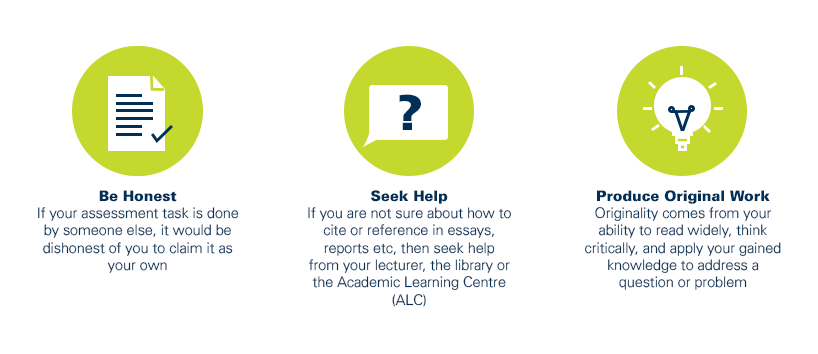
As a CQUniversity student you are expected to act honestly in all aspects of your academic work.
Any assessable work undertaken or submitted for review or assessment must be your own work. Assessable work is any type of work you do to meet the assessment requirements in the unit, including draft work submitted for review and feedback and final work to be assessed.
When you use the ideas, words or data of others in your assessment, you must thoroughly and clearly acknowledge the source of this information by using the correct referencing style for your unit. Using others’ work without proper acknowledgement may be considered a form of intellectual dishonesty.
Participating honestly, respectfully, responsibly, and fairly in your university study ensures the CQUniversity qualification you earn will be valued as a true indication of your individual academic achievement and will continue to receive the respect and recognition it deserves.
As a student, you are responsible for reading and following CQUniversity’s policies, including the Student Academic Integrity Policy and Procedure. This policy sets out CQUniversity’s expectations of you to act with integrity, examples of academic integrity breaches to avoid, the processes used to address alleged breaches of academic integrity, and potential penalties.
What is a breach of academic integrity?
A breach of academic integrity includes but is not limited to plagiarism, self-plagiarism, collusion, cheating, contract cheating, and academic misconduct. The Student Academic Integrity Policy and Procedure defines what these terms mean and gives examples.
Why is academic integrity important?
A breach of academic integrity may result in one or more penalties, including suspension or even expulsion from the University. It can also have negative implications for student visas and future enrolment at CQUniversity or elsewhere. Students who engage in contract cheating also risk being blackmailed by contract cheating services.
Where can I get assistance?
For academic advice and guidance, the Academic Learning Centre (ALC) can support you in becoming confident in completing assessments with integrity and of high standard.
What can you do to act with integrity?