Overview
Assessment and Reporting builds students' knowledge and understanding of the purposes of assessment and processes for using assessment techniques and tools for monitoring, informing, improving and enhancing student learning. Students develop formats for recording assessment data and information to meet reporting and accountability standards in contemporary educational contexts. Students understand curriculum, pedagogy and assessment as inter-related components that need to be considered together in the creation of effective learning programs and use principles of effective design to create formative, diagnostic and summative assessment that is responsive to the needs of different students and educational contexts.
Details
Pre-requisites or Co-requisites
There are no requisites for this unit.
Important note: Students enrolled in a subsequent unit who failed their pre-requisite unit, should drop the subsequent unit before the census date or within 10 working days of Fail grade notification. Students who do not drop the unit in this timeframe cannot later drop the unit without academic and financial liability. See details in the Assessment Policy and Procedure (Higher Education Coursework).
Offerings For Term 1 - 2026
Attendance Requirements
All on-campus students are expected to attend scheduled classes - in some units, these classes are identified as a mandatory (pass/fail) component and attendance is compulsory. International students, on a student visa, must maintain a full time study load and meet both attendance and academic progress requirements in each study period (satisfactory attendance for International students is defined as maintaining at least an 80% attendance record).
Recommended Student Time Commitment
Each 6-credit Undergraduate unit at CQUniversity requires an overall time commitment of an average of 12.5 hours of study per week, making a total of 150 hours for the unit.
Class Timetable
Assessment Overview
Assessment Grading
This is a graded unit: your overall grade will be calculated from the marks or grades for each assessment task, based on the relative weightings shown in the table above. You must obtain an overall mark for the unit of at least 50%, or an overall grade of 'pass' in order to pass the unit. If any 'pass/fail' tasks are shown in the table above they must also be completed successfully ('pass' grade). You must also meet any minimum mark requirements specified for a particular assessment task, as detailed in the 'assessment task' section (note that in some instances, the minimum mark for a task may be greater than 50%). Consult the University's Grades and Results Policy for more details of interim results and final grades.
All University policies are available on the CQUniversity Policy site.
You may wish to view these policies:
- Grades and Results Policy
- Assessment Policy and Procedure (Higher Education Coursework)
- Review of Grade Procedure
- Student Academic Integrity Policy and Procedure
- Academic Progression Policy and Procedure
- Student Refund and Credit Balance Policy and Procedure
- Complaints Policy and Procedure
- Information and Communications Technology Acceptable Use Policy and Procedure
This list is not an exhaustive list of all University policies. The full list of University policies are available on the CQUniversity Policy site.
Feedback, Recommendations and Responses
Every unit is reviewed for enhancement each year. At the most recent review, the following staff and student feedback items were identified and recommendations were made.
Feedback from SUTE feedback
Unit materials
Unit materials will be updated to reflect the current curriculum.
Feedback from Staff feedback
Assessment tasks
Assessment tasks will be reviewed.
- Apply knowledge of the principles of effective assessment to critique, recommend or select practices, tools and techniques that support learning
- Interpret data from various sources to inform the development of assessment
- Construct and use a range of assessment tools for formative and summative assessment of elements of the curriculum
- Engage in feedback and moderation processes to make consistent and comparable judgments against task criteria
- Adapt assessment strategies to cater for diverse learning needs and provide opportunities for inclusive participation in assessment and the demonstration of learning
- Develop recording mechanisms for reporting learner progress and communicating information about the quality of learning to students, parents and carers.
Successful completion of this unit provides opportunities for students to engage with the Australian Professional Standards for Teachers (Graduate Career Stage) focus areas of:
1.1 Physical, social and intellectual development and characteristics of students
1.2 Understand how students learn
2.3 Curriculum, assessment and reporting
4.1 Support student participation
5.1 Assess student learning
5.2 Provide feedback to students on their learning
5.3 Make consistent and comparable judgements
5.4 Interpret student data
5.5 Report on student achievement
Alignment of Assessment Tasks to Learning Outcomes
| Assessment Tasks | Learning Outcomes | |||||
|---|---|---|---|---|---|---|
| 1 | 2 | 3 | 4 | 5 | 6 | |
| 1 - Written Assessment - 50% | ||||||
| 2 - Written Assessment - 50% | ||||||
Alignment of Graduate Attributes to Learning Outcomes
| Graduate Attributes | Learning Outcomes | |||||
|---|---|---|---|---|---|---|
| 1 | 2 | 3 | 4 | 5 | 6 | |
| 1 - Communication | ||||||
| 2 - Problem Solving | ||||||
| 3 - Critical Thinking | ||||||
| 4 - Information Literacy | ||||||
| 5 - Team Work | ||||||
| 6 - Information Technology Competence | ||||||
| 7 - Cross Cultural Competence | ||||||
| 8 - Ethical practice | ||||||
| 9 - Social Innovation | ||||||
| 10 - First Nations Knowledges | ||||||
| 11 - Aboriginal and Torres Strait Islander Cultures | ||||||
Textbooks
Assessment and reporting - Celebrating Student Achievement
- Edition: 5th (2019)
- Authors: Laurie Brady and Kerry Kennedy
- Pearson
- Melbourne Melbourne , VIC , Australia
- ISBN: 9781488615863
- Binding: Paperback
IT Resources
- CQUniversity Student Email
- Internet
- Unit Website (Moodle)
All submissions for this unit must use the referencing style: American Psychological Association 7th Edition (APA 7th edition)
For further information, see the Assessment Tasks.
c.murdoch@cqu.edu.au
Week 1 - Assessment in the context of the learning cycle
Begin Date: 09 Mar 2026Module/Topic
Principles of pedagogy – curriculum, learning and learners. Contextualised and responsive.
Pedagogical approaches, practices and strategies.
You will be able to:
- Define assessment and the role/s of assessment in the learning design cycle.
- Recognise the role of the Australian Curriculum’s Achievement Standards
- Be aware of key terms in relation to assessment.
- Start to explore the concept of assessment and student success.
- Become familiar with assessment practices and strategies relevant to a range of contexts.
Chapter
Brady, L. & Kennedy, K.J. (2019) Assessment and reporting: Celebrating student achievement. Pearson Education Australia.
Chapter 1 – Contexts for assessment and reporting (pp.2-14)
Events and Submissions/Topic
Week 2 - Principles of assessment and attributes of good assessment tasks
Begin Date: 16 Mar 2026Module/Topic
You will be able to:
- Identify the principles and attributes of assessment
- Explore the concept of educational equity
- Consider the range of ways to maximise student engagement
- Evaluate the values underlying assessment practices
Chapter
Brady, L. & Kennedy, K.J. (2019) Assessment and reporting: Celebrating student achievement. Pearson Education Australia.
Chapter 2 – Assessment and learning (pp.16-29)
Chapter 3 – Assessment Concepts and values (pp.30-41)
Events and Submissions/Topic
Week 3 - Designing quality assessment tasks
Begin Date: 23 Mar 2026Module/Topic
You will be able to:
- Describe a range of assessment tasks/tools indicating their purposes, benefits, limitation and consideration for use.
- Identify a range of assessment task considerations (technique, mode, conditions)
- Identify feasibility criteria for selecting assessment strategies, particularly for formative/monitoring assessment.
- Name the common errors that distort results (valid? assessable? reliable?)
Chapter
Brady, L. & Kennedy, K.J. (2019) Assessment and reporting: Celebrating student achievement. Pearson Education Australia.
Chapter 4 - Strategies for assessing student achievement (pp.42-69)
Australian Education Research Organisation (AERO). (2022). Formative assessment.
https://www.edresearch.edu.au/summaries-explainers/explainers/formative-assessment
Events and Submissions/Topic
Week 4 - Designing marking guides using task specific standards
Begin Date: 30 Mar 2026Module/Topic
You will be able to:
- Identify the process of working from curriculum to task-specific standards
- Recognise the role of moderation processes (before and after assessment takes place)
- Understand the importance of monitoring literacy and numeracy progress across Learning Areas
Chapter
https://www.youtube.com/watch?v=WsDgfC3SjhM
In this video, Grant Wiggins explains why backwards design is an important way of designing lessons. Within this video, he discusses how criteria in which to assess a task and/or learning objectives.
Reading
Queensland Curriculum and Assessment Authority (2019). Task specific standards
https://www.qcaa.qld.edu.au/downloads/aciq/general-resources/assessment/ac_develop_task-specific_standards.pdf
Events and Submissions/Topic
Week 5 - Feedback practices
Begin Date: 06 Apr 2026Module/Topic
Assessment 'for' learning
You will be able to:
- Describe practices that promote effective feedback.
- Identify forms that feedback can take and the qualities that identify good feedback.
- Analyse feedback to inform teaching decisions.
- Apply learning to a specific context.
Chapter
Brady, L. & Kennedy, K.J. (2019) Assessment and reporting: Celebrating student achievement. Pearson Education Australia.
Chapter 5: Strategies for self- and peer assessment (pp.71-84)
Australian Education Research Organisation (AERO). (2021). Tried and tested: Formative assessment.
https://www.edresearch.edu.au/sites/default/files/2021-03/AERO-Tried-and-tested-guide-Formative-assessment.pdf
New South Wales Government: Education (n.d.). Feedback practices and strategies
https://education.nsw.gov.au/teaching-and-learning/professional-learning/teacher-quality-and-accreditation/strong-start-great-teachers/refining-practice/feedback-to-students/feedback-practices-and-strategies
Events and Submissions/Topic
Week 6 - Moderation and Reporting
Begin Date: 13 Apr 2026Module/Topic
Mading standards-based judgements
Keeping track of student learning
You will be able to:
- Describe the process of making judgements on summative tasks and student assessment folios
- Explain why it is important to maintain records of student assessments
- Describe the use of data to inform improvement within and beyond the classroom
- Identify the purposes of and audiences for reporting.
Chapter
Brady, L. & Kennedy, K.J. (2019) Assessment and reporting: Celebrating student achievement. Pearson Education Australia.
Chapter 6: Keeping Track of Student Learning: making judgments and recording results (pp.86-95)
Chapter 7: Principles & Strategies for Reporting Student Achievement in the Classroom (pp.98-119)
Events and Submissions/Topic
Vacation Week
Begin Date: 20 Apr 2026Module/Topic
Chapter
Events and Submissions/Topic
Week 7 - Alignment and differentiation
Begin Date: 27 Apr 2026Module/Topic
Planning and teaching: the students
You will be able to:
- Describe the ways in which different assessment practices may be informed by learning area, level of schooling and characteristics of students.
- Evaluate the impact of school context on decisions about assessment.
- Explain different assessment practices in terms of the different strategies adopted
Chapter
Brady, L. & Kennedy, K.J. (2019) Assessment and reporting: Celebrating student achievement. Pearson Education Australia.
Chapter 10: Cases of Assessment and Reporting Practice (pp.146-157)
eReading list
Tomlinson, C. A. (2012). How to differentiate instruction in mixed-ability classrooms. ASCD.
Events and Submissions/Topic
Week 8 - Inclusivity; curriculum and assessment
Begin Date: 04 May 2026Module/Topic
Student Diversity
The C.A.S.E process
Inclusivity
You will be able to:
- Describe the expectations for inclusive education
- Explain and use the CASE model
- Describe the possible uses of the General Capabilities dimension of the Australian Curriculum
Chapter
eReading list
Chapter 7 and 8: Davis, S. & Dargusch, J. (2010). Learning Management and Assessment in Lynch, D. & Knight, B.A., (Eds), The theory and practice of learning management. Frenches Forest: Pearson Education, pp. 117-135.
Events and Submissions/Topic
Week 9 - Data, accountability and impact
Begin Date: 11 May 2026Module/Topic
The use of data to inform teaching and learning.
Continuous improvement
You will be able to:
- Evaluate the ways in which students, teachers, schools and systems may use NAPLAN test data
- Describe the operation of NAPLAN in assessing and reporting.
- Consider alignment between data sets.
Chapter
Brady, L. & Kennedy, K.J. (2019) Assessment and reporting: Celebrating student achievement. Pearson Education Australia.
Chapter 8: The Australian Curriculum & NAPLAN (pp.120-131)
Chapter 9: Benchmarking and monitoring - National Assessment (pp.134-144)
Events and Submissions/Topic
Week 10 - Fostering student independence
Begin Date: 18 May 2026Module/Topic
Assessment 'as' learning
Assessment practices to foster student agency and independence
You will be able to:
- Describe various key elements and contextual factors in the implementation of self- and peer assessment.
- Evaluate the suitability of various self-and peer- assessment strategies for classroom use
Chapter
Brady, L. & Kennedy, K.J. (2019) Assessment and reporting: Celebrating student achievement. Pearson Education Australia
Chapter 5: Strategies for self- and peer assessment(pp.72-83)
Events and Submissions/Topic
Week 11 - Data Literacy
Begin Date: 25 May 2026Module/Topic
Evidence informed decision making
Teacher response to data sets
Trends and patterns
You will be able to:
- Identify the principles of effective data-informed practice
- Develop a ‘cycle of inquiry’ plan informed by student data.
Chapter
Events and Submissions/Topic
Week 12 - Review
Begin Date: 01 Jun 2026Module/Topic
Assessment Task 2
Chapter
Events and Submissions/Topic
Exam Week
Begin Date: 08 Jun 2026Module/Topic
Chapter
Events and Submissions/Topic
Vacation/Exam Week
Begin Date: 15 Jun 2026Module/Topic
Chapter
Events and Submissions/Topic
1 Written Assessment
The principles of pedagogy refer to the lens through which teachers make professional, evidence-informed decisions to ensure all students experience success and improved student learning and achievement. They are used to determine the pedagogical approaches, practices and teaching strategies that are most appropriate. There are three broad principles underpinning these decisions about effective pedagogy:
- Pedagogy reflects the disciplinary and inter disciplinary nature of the curriculum content.
- Pedagogy recognises how learning occurs as a process based on evidence and the nature of learning
- Pedagogy is appropriate to the age, nature and diversity of the learner and the context in which they are learning.
The alignment of curriculum, teaching, assessing and reporting is informed by the three dimensions of the Australian Curriculum.
Teachers have a repertoire of effective approaches, practices and strategies and use them to implement well designed teaching programs and lessons.
- Approaches: the process undertaken in response to beliefs or philosophies or teaching and learning, based on various theories.
- Practices: how teachers teach the curriculum and move students through the learning process, responding to the diverse needs of all learners.
- Teaching strategies: methods or techniques of instruction for teaching employed to maximise student learning.
They regularly evaluate all aspects of their teaching practice to ensure they are meeting the learning needs of their students. They interpret and use student assessment data to diagnose barriers to learning and to challenge students to improve their performance.
When monitoring and measuring the evidence of teacher impact, key questions include:
- Did learners achieve growth in the learning that was taught? How do you know?
- Did students achieve at the expected level (as described by the Australian Curriculum Achievement Standard for the subject and year level)? How do you know?
- Were students engaged? How do you know?
Through collaborative practices such as moderation, the success or otherwise of the pedagogies employed determine future actions. Teachers use available data sets associated with teaching and learning to inform teaching and learning.
Commence the process of creating an assessment package for a unit of work (HASS). Use knowledge of the Australian Curriculum Learning Area (HASS), the General Capabilities (NB Literacy and Personal and Social Capability) dimensions and the Principles of Assessment to inform your work.
In preparing the task response you are to begin the process of developing a unit of work, using the planning process described in the Moodle, to align Curriculum, Teaching and Assessing.
You will:
- Create a summative assessment task, marking guide and formative assessment tools for the HASS Learning Area, informed by the General Capabilities (NB Literacy Proficiencies and Personal and Social Capability).
- Your assessment task must be contextualised to a school setting with the characteristics of that school apparent in the task requirements, appropriate to and informed by the curriculum selections made.
- The marking guide is to be written as task specific standards (Learning Area and Year Level Achievement Standard: knowledge and inquiry skills) and informed by the General Capabilities (NB Literacy).
- Examples of the work that students are expected to create (as per the task description and task specific standards) to be ‘at’ and ‘above’ year level expectations, with annotations of the observable features, will be included. Student work samples are moderated (compared to the Year level Achievement Standard) to ensure consistency of reporting.
- You will create formative assessment tools to that could be used to as evidence of targeted subject knowledge and skills, literacy and/or social capability development within the context of the HASS unit. Data from these tasks would inform feedback conversations between the teacher and students.
**Ensure that you understand the full range of requirements of both Assessment Tasks for this unit before selecting the Year Level and (subject) knowledge component.
Your submission is in the form of a report that is structured as follows. Your report reflects your application of the theory in the design of summative and formative assessment tools.
- An introductory statement that shows your understanding of the purposes of assessment and the broad pedagogical principles that are used to determine the pedagogical approaches, practices and teaching strategies that are most appropriate in particular classrooms. Discuss how you would align curriculum, pedagogy and assessment with a focus on learning in the delivery of this unit. (500 – 1000 words)
- Describe the organisational and structural elements of the Australian Curriculum and explain how they shape teaching practices (Planning, Teaching, Assessing and Recording Learning and Managing the learning environment). (500 words)
- Discuss the process of front-ending assessment. Draw on specific aspects of key documents that informed your work. (500 words)
- Commentate on the knowledge and sources that informed the development of key aspects of the assessment tools that you have prepared. Your commentary will be in the form of annotations linked to the features of the tools. The tools are:
- a summative task (that may have multiple parts) that articulates the context considerations (technique, mode and conditions),
- the marking guide (task specific standards) and
- formative tasks (which may take a range of forms NB Questions to reveal information to inform teaching).
Your commentary (500 words) is to be embedded in the tools listed which are part of your submission.
- Describe the evidence found in the student work samples that are representative of the summative task that you have designed, being enacted. Draw focus to the differences between work ‘at’ and work ‘above’ year level expectations. Annotate the alignment to the year level achievement standard elements, supplemented by relevant text and language features (determined by technique and mode), identified for this task. (300 words)
- References (not counted in word limit)
You must submit:
- A report (Word document) including sections listed above
- Assessment tools embedded with annotations
- Work samples labelled “at” and “above” year level with observable feature annotations
WORD COUNT for written assignments: The word count is considered from the first word of the introduction to the last word of the conclusion. It excludes the cover page, abstract, contents page, reference page and appendices. It includes in-text references and direct quotations.
Word count for AT1: 2000 words maximum
Your task may be penalised for not adhering to the word count.
The use of Gen AI agents is as follows:
AI too scale level: Level 2 - You may use AI for planning, idea development, and research. Your final submission should show how you have developed and refined these ideas. Any misuse or lack of disclosure regarding the use of AI tools will be considered a breach of academic integrity.
Please note: The 72-Hour grace period applies to Assessment Task 1.
If you need longer than 72 hours, you will still need to use the normal Assessment Extension System process.
Week 7 Monday (27 Apr 2026) 10:45 pm AEST
Feedback on this assessment response will be provided in sufficient time to allow for academic support and advice as necessary to inform students' responses to the next assessment task.
Assessment will be marked against the following criteria:
- Understanding of relevant current policy and initiatives in education and use of contemporary theory and research. (5.1)
- Ability to effectively select a range of evidence-based assessment practices to evaluate progress, adjust instruction, provide targeted feedback, and support learning. (1.1, 1.2)
- Skills in data gathering, analysis, interpretation and development of appropriate learning and assessment strategies. (1.2, 5.1, 5.4)
- Engagement in moderation processes, monitoring student progress and providing feedback, and reflective practice to improve student learning. (5.2, 5.3)
- Preparation to effectively communicate in the classroom, utilising appropriate technology/ICT and strategies to support student engagement. (3.5, 4.5)
- Effective written communication skills are demonstrated in the assessment package report, using appropriate referencing.
- Apply knowledge of the principles of effective assessment to critique, recommend or select practices, tools and techniques that support learning
- Interpret data from various sources to inform the development of assessment
- Construct and use a range of assessment tools for formative and summative assessment of elements of the curriculum
2 Written Assessment
Continue to develop an assessment package for a unit of work (HASS). Use knowledge of a ‘typical’ class (class profile) to make appropriate adjustments which reflect Universal Design , Understanding by Design Principles and Principles of Assessment.
The completed teaching sequence and assessment tools must include evidence of how formative and summative assessment tasks have been adjusted (differentiated) ensure all student are able to access the curriculum, whilst maintaining curriculum intent.
Assessment design choices must be justified in terms of the attributes of effective assessment.
In preparing the task response you are to continue the development of a unit of work, using the planning process started in AT1, to align Curriculum, Teaching and Assessing. You will:
- Develop the schedule of teaching. For each key lesson articulate the Learning Intent (described in curriculum documents) and Success Criteria (evidence to inform decision to progress or pause) and describe other learning (literacy) routines that would support learning.
- Annotate on the planning sequences and associated tools, the planning considerations, relevant to the attributes of assessment (accessibility, reliability, validity). Describe key approaches, practices and teaching strategies, you will use to teach the knowledge and skills assessed in the culminating task.
- Demonstrate how formative assessment practices are an integral and ongoing part of the learning process and used to provide informative feedback for both students and teachers. Describe how you have planned learning to maximise students’ engagement and scheduled feedback/feedforward conversations with students using evidence gathered at key junctures within the sequence and how you will management (collation and storage) of information.
- Critically reflect on what your planning considerations: including
-
- the design of summative tasks that you have developed and adjusted,
- the accompanying marking guide and
- the design, scheduling and interrogation of formative tasks.
Draw on key theories and provide examples from the unit, the task sheet and task specific standards criteria and formative tools in the justification section of the task response.
5. Describe the characteristics of 2 contrasting groups of learners in the class and a student with accessibility considerations (class profile). Plan for and highlight evidence of adjustments made to assessment tools/practices that provided access whilst retaining curriculum intent. Explain how you would differentiate teaching of this unit (Tier 1).
6. Demonstrate how data is collected would be used inform teaching and reporting to parents and other parties
Your submission is in the form of a report that is structured as follows. Your report reflects your understanding of the employment of pedagogical practices for diverse learning needs and measuring the evidence of impact on achievement, engagement and motivation.
- An Introductory statement that shows your understanding of employing pedagogical considerations to meet diverse learning needs of students, incorporate references to relevant reading and policy documents. Links should be made to the (curriculum), student considerations (school and student data) and the way assessment attributes, principles and practices will be incorporated to maximise teaching efficacy and inform the evaluation of teaching programs (500-1000 words).
- Discussion about how the Understanding by Design principles and interrogation of student data interact with curriculum to influence design and delivery of learning sequences. Draw focus to how you would respond to student data and diverse learning needs to plan for differentiation (Tier 1 responses) specific to the curriculum identified. Describe routines for literacy learning considerations, embedded in your unit of work, to illustrate your points. (500 words)
- An overview of curriculum focuses, relevant checks for learning, and learning experiences/pedagogy that scaffold the summative assessment with clear alignment (backwards design) demonstrated. The process of planning, as described in the task preparation process, will include annotations that draw attention to the application of the theory of EDED13433: Assessment and Reporting. Your work must be informed by the mapping of the Australian Curriculum. The sequence of your plan for teaching will be presented in tabular form with your commentary explaining you planning considerations expressed in a row below each step. For each formative task, prepare two ‘feedback to student’ statements. Explain planned differentiation for each stage of the learning sequence, in response to the class profile/data.
- Justification which details how adjustments to the design of the authentic summative task demonstrates planning for student access specific to groups and individuals. Details about the modifications or considerations that were made to meet the specific needs of groups/ individuals profiled, specifically explained. (300 words)
- Description of how student data is collected, collated, interrogated and used to inform reporting. A written cognitive commentary, specific to the HASS learning area with the audience being parents/caregivers, relevant to students working ‘at’ and ‘above’ year level expectations is to be included. (300 words).
- References (not counted in word limit)
WORD COUNT for written assignments: The word count is considered from the first word of the introduction to the last word of the conclusion. It excludes the cover page, abstract, contents page, reference page and appendices. It includes in-text references and direct quotations.
Word count for AT2: 2000 words maximum
Your task may be penalised for not adhering to the word count.
The use of Gen AI agents is as follows:
AI tool scale level: Planning - You may use AI for planning, idea development, and research. Your final submission should show how you have developed and refined these ideas. Any misuse or lack of disclosure regarding the use of AI tools will be considered a breach of academic integrity.
Please note: The 72-Hour grace period applies to Assessment Task 2.
If you need longer than 72 hours, you will still need to use the normal Assessment Extension System process.
Week 12 Monday (1 June 2026) 11:45 pm AEST
Feedback on the final assessment task will be provided following moderation and prior to the date of certification of grades for the term.
Assessment will be marked against the following criteria:
- Knowledge and understanding of data informed practice in the alignment of curriculum, pedagogy and assessment evidenced by the creation of effective tools and tasks. (5.1, 5.2, 5.5)
- Knowledge of and skill in planning and sequencing content and tasks, using data generated to evaluate teaching programs. (2.3, 3.6)
- Knowledge and theory of an MTSS framework, the direct relationship to evidence-based teaching practices (including but not limited by: developing language, engaging with feedback, metacognition and reflecting, making connections and questioning) and skill in how to practically implement tier 1 practices in the classroom. (1.1, 1.2, 3.5, 4.1)
- Communication with students (timely feedback) and parents (reporting) (5.2, 5.5)
- Engagement in moderation processes, including monitoring student progress in relation to standards, providing appropriate feedback, and reflective practice to improve student learning. (5.2, 5.3)
- Effective written communication skills using appropriate referencing
- Apply knowledge of the principles of effective assessment to critique, recommend or select practices, tools and techniques that support learning
- Interpret data from various sources to inform the development of assessment
- Construct and use a range of assessment tools for formative and summative assessment of elements of the curriculum
- Engage in feedback and moderation processes to make consistent and comparable judgments against task criteria
- Adapt assessment strategies to cater for diverse learning needs and provide opportunities for inclusive participation in assessment and the demonstration of learning
- Develop recording mechanisms for reporting learner progress and communicating information about the quality of learning to students, parents and carers.
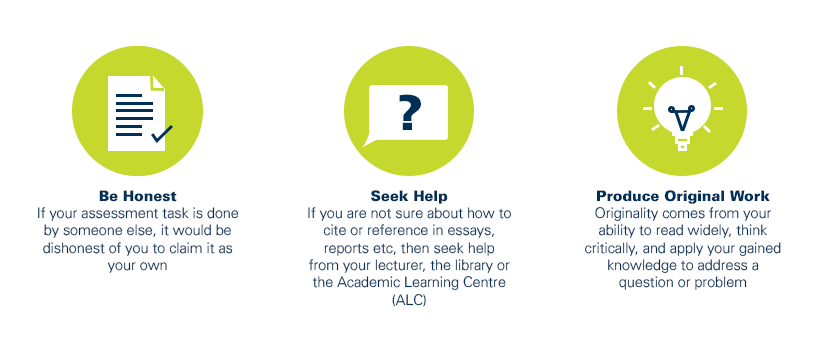
As a CQUniversity student you are expected to act honestly in all aspects of your academic work.
Any assessable work undertaken or submitted for review or assessment must be your own work. Assessable work is any type of work you do to meet the assessment requirements in the unit, including draft work submitted for review and feedback and final work to be assessed.
When you use the ideas, words or data of others in your assessment, you must thoroughly and clearly acknowledge the source of this information by using the correct referencing style for your unit. Using others’ work without proper acknowledgement may be considered a form of intellectual dishonesty.
Participating honestly, respectfully, responsibly, and fairly in your university study ensures the CQUniversity qualification you earn will be valued as a true indication of your individual academic achievement and will continue to receive the respect and recognition it deserves.
As a student, you are responsible for reading and following CQUniversity’s policies, including the Student Academic Integrity Policy and Procedure. This policy sets out CQUniversity’s expectations of you to act with integrity, examples of academic integrity breaches to avoid, the processes used to address alleged breaches of academic integrity, and potential penalties.
What is a breach of academic integrity?
A breach of academic integrity includes but is not limited to plagiarism, self-plagiarism, collusion, cheating, contract cheating, and academic misconduct. The Student Academic Integrity Policy and Procedure defines what these terms mean and gives examples.
Why is academic integrity important?
A breach of academic integrity may result in one or more penalties, including suspension or even expulsion from the University. It can also have negative implications for student visas and future enrolment at CQUniversity or elsewhere. Students who engage in contract cheating also risk being blackmailed by contract cheating services.
Where can I get assistance?
For academic advice and guidance, the Academic Learning Centre (ALC) can support you in becoming confident in completing assessments with integrity and of high standard.
What can you do to act with integrity?