Overview
The unit Indigenous Studies and Learning develops knowledge and understanding of historical factors that impact on the engagement of Aboriginal and Torres Strait Islander learners and families in education and care settings. The policy and action of governments and media representations are analysed, discussed and compared with indigenous perspectives on race relations and past events with an emphasis on developing understanding and appreciation of contemporary Indigenous Australian identity and culture. Pedagogies for working effectively and appropriately with indigenous Australians, families and communities including current systemic initiatives and policies are evaluated in terms of their suitability for students in rural, remote and urban Australian communities. You will consider Aboriginal and Torres Strait Islander world views and your own and others attitudes to Indigenous people to defend the selection of teaching strategies aimed at promoting reconciliation and effective learning relationships with students, families and communities.
Details
Pre-requisites or Co-requisites
To be eligible to enrol in this unit, students must be enrolled in CC12, CC13, or CC14. Pre-requisite of EDFE12043 for students enrolled in CC13.
Important note: Students enrolled in a subsequent unit who failed their pre-requisite unit, should drop the subsequent unit before the census date or within 10 working days of Fail grade notification. Students who do not drop the unit in this timeframe cannot later drop the unit without academic and financial liability. See details in the Assessment Policy and Procedure (Higher Education Coursework).
Offerings For Term 3 - 2026
Attendance Requirements
All on-campus students are expected to attend scheduled classes - in some units, these classes are identified as a mandatory (pass/fail) component and attendance is compulsory. International students, on a student visa, must maintain a full time study load and meet both attendance and academic progress requirements in each study period (satisfactory attendance for International students is defined as maintaining at least an 80% attendance record).
Recommended Student Time Commitment
Each 6-credit Undergraduate unit at CQUniversity requires an overall time commitment of an average of 12.5 hours of study per week, making a total of 150 hours for the unit.
Class Timetable
Assessment Overview
Assessment Grading
This is a graded unit: your overall grade will be calculated from the marks or grades for each assessment task, based on the relative weightings shown in the table above. You must obtain an overall mark for the unit of at least 50%, or an overall grade of 'pass' in order to pass the unit. If any 'pass/fail' tasks are shown in the table above they must also be completed successfully ('pass' grade). You must also meet any minimum mark requirements specified for a particular assessment task, as detailed in the 'assessment task' section (note that in some instances, the minimum mark for a task may be greater than 50%). Consult the University's Grades and Results Policy for more details of interim results and final grades.
All University policies are available on the CQUniversity Policy site.
You may wish to view these policies:
- Grades and Results Policy
- Assessment Policy and Procedure (Higher Education Coursework)
- Review of Grade Procedure
- Student Academic Integrity Policy and Procedure
- Academic Progression Policy and Procedure
- Student Refund and Credit Balance Policy and Procedure
- Complaints Policy and Procedure
- Information and Communications Technology Acceptable Use Policy and Procedure
This list is not an exhaustive list of all University policies. The full list of University policies are available on the CQUniversity Policy site.
Feedback, Recommendations and Responses
Every unit is reviewed for enhancement each year. At the most recent review, the following staff and student feedback items were identified and recommendations were made.
Feedback from SUTE feedback
Assessment tasks
Peer-review of tasks 2 and 3 with First Nations colleagues to redesign appropriate new assessment tasks.
Feedback from SUTE Teacher feedback
Exceptional teaching
Continue to reflect on teaching practice and incorporate new skills into teaching to demonstrate further flexibility, passion and understanding.
- Use correct terminology and protocols when referring to Aboriginal and Torres Strait Islander peoples, culture and histories
- Analyse the impact of deficit views of Aboriginal and Torres Strait Islander students on learning and engagement
- Analyse and respond to representations of Aboriginal and Torres Strait Islander peoples in contemporary and historical texts and their impact on race relations with non-Indigenous Australians
- Critique government policies and approaches to the education of Aboriginal and Torres Strait Islander students in past and present society
- Explain the effect of Aboriginal and Torres Strait Islander world views and the concept of relatedness on the learning styles of indigenous students
- Justify the use of strategies that cater for the diversity of experience, identity and linguistic background of contemporary Aboriginal and Torres Strait Islander students and communities
- Evaluate the capacity of current programs and initiatives for Aboriginal and Torres Strait Islander students, parents/carers, families and communities for promoting engagement and participation in education and care.
Successful completion of this unit provides opportunities for students to engage with the Australian Professional Standards for Teachers (Graduate Career Stage) focus areas of:
1.3 Students with diverse linguistic, cultural, religious and socioeconomic backgrounds
1.4 Strategies for teaching Aboriginal and Torres Strait Islander student
2.4 Understand and respect Aboriginal and Torres Strait Islander people to promote reconciliation between Indigenous and non Indigenous Australians
2.5 Literacy and numeracy strategies
3.5 Use effective classroom communication
3.7 Engage parents/carers in the educative process
4.1 Support student participation
7.3 Engage with the parents/carers
In addition, competency elements from the Diploma of Children's Services (Early Childhood Education and Care) are taught and assessed in this unit.
Alignment of Assessment Tasks to Learning Outcomes
| Assessment Tasks | Learning Outcomes | ||||||
|---|---|---|---|---|---|---|---|
| 1 | 2 | 3 | 4 | 5 | 6 | 7 | |
|
1.
Assessment 1
(Pass/Fail )
Online Quiz(zes)
|
|||||||
|
2.
Assessment 2
(50% of unit )
Written Assessment
|
|||||||
|
3.
Assessment 3
(50% of unit )
Written Assessment
|
|||||||
Alignment of Graduate Attributes to Learning Outcomes
| Graduate Attributes | Learning Outcomes | ||||||
|---|---|---|---|---|---|---|---|
| 1 | 2 | 3 | 4 | 5 | 6 | 7 | |
| 1 - Communication | |||||||
| 2 - Problem Solving | |||||||
| 3 - Critical Thinking | |||||||
| 4 - Information Literacy | |||||||
| 5 - Team Work | |||||||
| 6 - Information Technology Competence | |||||||
| 7 - Cross Cultural Competence | |||||||
| 8 - Ethical practice | |||||||
| 9 - Social Innovation | |||||||
| 10 - First Nations Knowledges | |||||||
| 11 - Aboriginal and Torres Strait Islander Cultures | |||||||
Textbooks
Learning and Teaching in Aboriginal and Torres Strait Islander Education
- Edition: 4 (2021)
- Authors: Neil Harrison and Juanita Sellwood
- Oxford University Press
- Oxford Oxford , England
- ISBN: 9780190329396
This textbook should be in the library as has been used for a few years now.
IT Resources
- CQUniversity Student Email
- Internet
- Unit Website (Moodle)
All submissions for this unit must use the referencing style: American Psychological Association 7th Edition (APA 7th edition)
For further information, see the Assessment Tasks.
a.britton@cqu.edu.au
m.vanderburg@cqu.edu.au
Week 1
Begin Date: 09 Nov 2026Module/Topic
Topic 1a: Understanding Aboriginal and Torres Strait Islander Children
Topic 1b: Inclusive Australian History
Chapter
Tutorial 1a
1) Chapter 1 (Harrison & Sellwood): Beginning teachers in Aboriginal and Torres Strait Islander Communities
2) White Privilege and Male Privilege + Unpacking the Invisible Knapsack (2 chapters) pp. 30 – 45 (McIntosh).
3) Gulanga Good Practice guide
4) Australian Professional Standards for Teachers (AITSL, 2017)
Tutorial 1b
1) Chapter 2 (Harrison & Sellwood): Our shared Australian story
2) Terminology Guide
3) Aboriginal and Torres Strait Islander Histories and Cultures (ACARA
Events and Submissions/Topic
Week 2
Begin Date: 16 Nov 2026Module/Topic
Topic 2a: Inclusive Australian History - continued
Topic 2b: The Impacts of Past Policies on Australian Indigenous Cultures and Identities
Chapter
Tutorial 2a
1) Chapter 3 (Harrison & Sellwood): Teaching about the Stolen Generations
2) Closing the Gap Report 2025
Tutorial 2b
1. Advancing Aboriginal and Torres Strait Islander Education and Training (QLD Government)
2. Community Guide to the UN Declaration on the Rights of Indigenous Peoples
3. Good Morning Mr Sarra (Chapter 8)
Events and Submissions/Topic
Week 3
Begin Date: 23 Nov 2026Module/Topic
Topic 3a: The Impacts of Past Policies on Australian Indigenous Cultures and Identities - continued
Topic 3b: Culture and Identity: Ways of Knowing, Learning and Being.
Chapter
Tutorial 3a
1) Chapter 6 (Harrison & Sellwood): Trauma-aware schooling practices
2) Bringing them Home (Read, 1998)
3) https://www.abc.net.au/news/2023-10-08/voice-referendum-1967-cherbourg-ruth-hegarty/102935126
Tutorial 3b
Events and Submissions/Topic
Assessment Task 1: Indigenous Terminology/Protocols Quiz Due: Week 3 Thursday (27 Nov 2026) 11:45 pm AEST
AT1: Online Quiz Due: Week 3 Thursday (26 Nov 2026) 11:45 pm AEST
Week 4
Begin Date: 30 Nov 2026Module/Topic
Topic 4a: Quality Educational Practices for Indigenous Learners: The 8 Ways of Learning
Topic 4b: Quality Educational Practices for Indigenous Learners: The Curriculum and Behaviour Management Strategies
Chapter
Tutorial 4a
1. Chapter 7 (Harrison & Sellwood): Ways of Teaching Traditional Knowledges
2. 8 Aboriginal ways of learning factsheet.
3. Aboriginal Pedagogy – 8 Ways.
4. Silkwood School
Tutorial 4b
1. The Australian Curriculum V9: https://v9.australiancurriculum.edu.au/
2. Effective Behaviour Management Strategies for Australian Aboriginal and Torres Strait Islander Students: A Literature Review
Events and Submissions/Topic
1st of December 2026 is Census date. This is the last date for students to withdraw from the course without incurring penalty fees.
Week 5
Begin Date: 07 Dec 2026Module/Topic
Topic 5a: Quality Educational Practices for Indigenous Learners: Learning on Country, from Country
Topic 5b: Quality Educational Practices for Indigenous Learners: The Role of Language in the Classroom
Chapter
Tutorial 5a
1. Chapter 9 (Harrison & Sellwood, 2021): Learning from Country
2. Beginnings: living and learning in remote Aboriginal schools (p. 1 – 34)
Tutorial 5b
1. Chapter 8 (Harrison & Sellwood, 2016): The role of a student’s first language in the classroom
2. Aboriginal and Torres Strait Islander Language Statement
Events and Submissions/Topic
Guest Speaker in tutorial
Week 6
Begin Date: 14 Dec 2026Module/Topic
Topic 6a: Relationships, Community Partnerships and Strategies for Indigenous Education
Chapter
Tutorial 6a
1. Chapter 8 (Harrison & Sellwood, 2021): Building Community Partnerships
Events and Submissions/Topic
Assessment Task 2: Written Assessment
Due: Week 6 Thursday 17th December 2026 11:45 pm AEST
Response to a letter Due: Week 6 Thursday (17 Dec 2026) 11:45 pm AEST
Mid-Term Break
Begin Date: 21 Dec 2026Module/Topic
Chapter
Events and Submissions/Topic
Week 7
Begin Date: 04 Jan 2027Module/Topic
Chapter
Events and Submissions/Topic
Week 8
Begin Date: 11 Jan 2027Module/Topic
Chapter
Events and Submissions/Topic
Drop in Session for Assessment Task 3
Week 9
Begin Date: 18 Jan 2027Module/Topic
Chapter
Events and Submissions/Topic
Week 10
Begin Date: 25 Jan 2027Module/Topic
Chapter
Events and Submissions/Topic
Drop in Session for Assessment Task 3
Week 11
Begin Date: 01 Feb 2027Module/Topic
Chapter
Events and Submissions/Topic
Drop in Session for Assessment Task 3
Week 12
Begin Date: 08 Feb 2027Module/Topic
Chapter
Events and Submissions/Topic
Assessment Task 3: Written Assessment
Due: Week 12 Thursday 11th February 2027 11:45 pm AEST
White Paper Plan Due: Week 12 Thursday (11 Feb 2027) 11:45 pm AEST
Exam Week
Begin Date: 15 Feb 2027Module/Topic
Chapter
Events and Submissions/Topic
We are running this subject as an intensive with all tutorials in the first half of the term. In January there will be one drop in session regarding the assessment, as there are no tutorials. The content in this subject can be heavy, so the tutorials are set up as guides to support you in your learning and help walk you through the learning content within this subject. I look forward to walking with you through this subject - Amelia.
1 Online Quiz(zes)
While Assessment Task 1 does not contribute towards your final grade, you MUST achieve 100% on this particular assessment to be eligible to continue with this Unit. You are able to undertake Assessment Task 1 as many times as you like to achieve the 100% pass mark.
You MUST complete Assessment 1 by Thursday 27th November 2026 (Week 3).
After that time Assessment Task 1 will not be available for you to undertake.
Please note that you will not be able to access assessment tasks 2 and 3 unless you have completed and passed assessment task 1 - the quiz.
When you have finished the quiz, please ensure that you have ticked the check box, otherwise AT2 will not be available.
GENERATIVE AI GUIDANCE LEVEL
No GenAI Use
GenAI may not be used for this task.
GRACE PERIOD STATEMENT
72-hour Grace Period does NOT apply to this task
The 72-Hour grace period does NOT apply to this task. This is because this task is a timed/scheduled online test and the assessment due date is fixed. If you require an extension of time for submission without academic penalty being applied, you will need to use the normal Assessment Extension System process and apply for an extension which will be considered by the Unit Coordinator or their delegate.
Week 3 Thursday (26 Nov 2026) 11:45 pm AEST
Online in Moodle
Quiz results are marked automatically and are available immediately upon completion.
Assessment Criteria:
This assessment task quiz 1 tests your knowledge and understanding of protocols and terminology associated with working with Aboriginal and Torres Strait Islander peoples. Using the correct terminology and understanding the protocols shows respect to First Nations peoples.
This assessment specifically addresses Standards 1.4 and 2.4 of the Australian Professional Standards for Teachers and is designed to measure your ability to:
· Demonstrate broad knowledge and understanding of the impact of culture, cultural identity and linguistic background on the education of students from Aboriginal and Torres Strait Islander backgrounds. (APST 1.4)
· Demonstrate broad knowledge of, understanding of and respect for Aboriginal and Torres Strait Islander histories, cultures and languages. (APST 2.4)
- Use correct terminology and protocols when referring to Aboriginal and Torres Strait Islander peoples, culture and histories
2 Written Assessment
Expectations for your written response:
Your letter, of no more than 2000 (+/-10%) words, must respond to Amy's request and be addressed to your State and Federal members of parliament that represent your electorates. You can also, if you wish, address it to the education ministers and shadow ministers of your State and Federal Governments.
Your letter must:
1. be written in a scholarly manner, which includes supporting all your assertions with references to scholarly literature. This means that the majority of the sources you cite should be articles from peer-reviewed journals, books, and credible websites. All resources must be from the eReading list in the unit and the unit materials. You must include our prescribed textbook. If you wish to use alternative peer-reviewed resources, please seek UC approval via the online forum in Moodle.
2. use references from the Unit readings to show your knowledge and understanding of the impact of government policy and past and present representations on culture and identity of Aboriginal and Torres Strait Islander peoples and students (APST2.4) (criteria 2).
3. include your own reflections on the impact of our shared Australian history (and your cultural background) on the attitudes and views you have formed of Aboriginal and Torres Strait Islander people as students and learners.
4. explicitly name and analyse your participation in three (3) learning experiences associated with studying this Unit that have shaped your understanding on the importance of teachers’ acknowledgment, recognition, and respect for Indigenous history, culture and languages (APST2.4), (criteria 1).
5. explain effective teaching strategies for supporting the identity needs of Aboriginal and Torres Strait Islander students, and how you would promote reconciliation between Indigenous and non-Indigenous peoples, within classroom contexts and the broader school community by:
· acknowledging and teaching our shared Australian history,
· paying respect to the local Indigenous culture by embedding Indigenous perspectives into your curriculum and encouraging all of your students to take pride in the local Indigenous culture, and
· developing strong relationships with the local Indigenous community through effective and sensitive communication (APST 1.4), (criteria 3).
GENERATIVE AI Guidance Levels:
Level 2: AI Integration (Authentic Professional Use)
GenAI is integrated as a collaborative professional tool. Within this task, this can be used for data analysis support and generating structured content for review.
Student Declaration (No GenAI used)
When submitting this assessment task, please include the following statement on the front page of your submitted assessment response:
I confirm that I completed this assessment independently and did not use Generative AI or any other unauthorised assistance.
Student Declaration (GenAI used)
When submitting this assessment task, please include the following statement on the front page of your submitted assessment response:
I confirm that I used Generative AI only as permitted for this assessment. I can explain how I used it, the judgements I made, and how I developed the submitted work. I confirm that any Generative AI use in this assessment was permitted, responsible, and transparent and has been appropriately acknowledged. GenAI was used for [briefly state purpose, e.g. brainstorming/ editing/ drafting/ analysis], and I accept responsibility for the accuracy, integrity, and final content of this submission.
Including these statements ensures emphasis remains appropriately placed on the foundational values of academic integrity. Student declarations should clarify responsibilities and expectations, rather than impose a requirement to document and substantiate every aspect of ordinary drafting activity.
72-hour Grace Period applies to this task
The 72‑hour grace period is available after the assessment due date to support students who experience unexpected difficulties that prevent them from submitting on time. This means you have an extra 72 hours to submit this task without any academic penalty. If you need longer than 72 hours, you will need to use the normal Assessment Extension System process and apply for an extension of time for submission without academic penalty being applied.
Word Count
At CQUniversity, the word count is considered from the first word of the introduction to the last word of the conclusion. It excludes the cover page, abstract, contents page, reference page and appendices. It includes in-text references and direct quotations. Word count for this task is 2000 words +/-10%.
Week 6 Thursday (17 Dec 2026) 11:45 pm AEST
Online via Moodle
Assessments will be returned once moderation has taken place
Assessment Criteria:
A. demonstrate your knowledge and understanding of the diverse Australian Indigenous histories, cultures, and languages.
B. analyse the impact of historical government policy and past and present representations on culture and identity of Australian Indigenous peoples and students.
C. critically reflect on Indigenous and non-Indigenous perspectives and the impact of diverse views on engagement and participation in education and care settings.
D. use culturally appropriate language and academic conventions to construct a convincing and persuasive argument (criteria 4, APST 2.4).
Learning Outcomes Assessed:
· Use correct terminology and protocols when referring to Aboriginal and Torres Strait Islander peoples, culture and histories
· Analyse the impact of deficit views of Aboriginal and Torres Strait Islander students on learning and engagement
· Analyse and respond to representations of Aboriginal and Torres Strait Islander peoples in contemporary and historical texts and their impact on race relations with non-Indigenous Australians
· Critique government policies and approaches to the education of Aboriginal and Torres Strait Islander students in past and present society
· Evaluate the capacity of current programs and initiatives for Aboriginal and Torres Strait Islander students, families, and communities for promoting engagement and participation in education and care.
- Use correct terminology and protocols when referring to Aboriginal and Torres Strait Islander peoples, culture and histories
- Analyse the impact of deficit views of Aboriginal and Torres Strait Islander students on learning and engagement
- Analyse and respond to representations of Aboriginal and Torres Strait Islander peoples in contemporary and historical texts and their impact on race relations with non-Indigenous Australians
- Critique government policies and approaches to the education of Aboriginal and Torres Strait Islander students in past and present society
- Evaluate the capacity of current programs and initiatives for Aboriginal and Torres Strait Islander students, parents/carers, families and communities for promoting engagement and participation in education and care.
3 Written Assessment
Throughout this Unit, you have examined a range of strategies and resources appropriate for working with Australian Indigenous learners, families, and communities; and for the teaching of our shared Australian history in respectful ways that promote reconciliation.
For this task, you are asked to design a "White Paper" plan (for a specific school) that describes and justifies a set of school-wide and individual teacher strategies that engage Indigenous students in learning in educational settings, and that leads to reconciliation between Indigenous and non-Indigenous Australians.
You will choose a school to research for this assessment task.
You MUST identify four (4) school-based and six (6) individual teaching strategies that show consideration of students' cultural, linguistic and identity needs (APST 1.4 criteria 1 + 2) AND strategies for working effectively and sensitively with families and communities to support the learning and engagement of Aboriginal and Torres Strait Islander students. (APST 1.4 + 2.4, criteria 1). Your strategies will demonstrate how reconciliation may be achieved at both a school and classroom level. (APST 2.4, Criteria 3). Strategies should be a combination of what is already in place at your chosen school + some of your own ideas, based on the school’s ethos.
Your work is to be presented as a written “White Paper” in a scholarly report format that explains each of your design strategies with one or two brief examples, the reasons for their choice and how they relate to the school you have been allocated. Your White Paper (scholarly report) will, in no more than 1500 words (+/-10%), clearly explain WHY and HOW your strategies would meet the learning, language, cultural and identity needs of Indigenous learners as well as identify any limitations on the effectiveness of these strategies in your allocated school (APST 1.4, criteria 4). Your White Paper should consider the diversity of needs of Aboriginal and Torres Strait Islander students in your allocated school. The White Paper MUST be supported by references taken from the Unit and our eReading list. You must include our prescribed textbook.
Your submission MUST demonstrate extensive knowledge and a broad understanding of teaching strategies that are responsive to the learning strengths and needs of students from diverse linguistic, cultural, religious and socioeconomic backgrounds.
Additionally, you will need to demonstrate a broad knowledge and understanding of Aboriginal and Torres Strait Islander histories, cultures and languages. Your submission MUST be written in a sensitive and respectful manner adhering to correct cultural protocols and terminology.
GENERATIVE AI Guidance Levels:
Level 2: AI Integration (Authentic Professional Use)
GenAI is integrated as a collaborative professional tool. Within this task, this can be used for data analysis support and generating structured content for review.
Student Declaration (No GenAI used)
When submitting this assessment task, please include the following statement on the front page of your submitted assessment response:
I confirm that I completed this assessment independently and did not use Generative AI or any other unauthorised assistance.
Student Declaration (GenAI used)
When submitting this assessment task, please include the following statement on the front page of your submitted assessment response:
I confirm that I used Generative AI only as permitted for this assessment. I can explain how I used it, the judgements I made, and how I developed the submitted work. I confirm that any Generative AI use in this assessment was permitted, responsible, and transparent and has been appropriately acknowledged. GenAI was used for [briefly state purpose, e.g. brainstorming/ editing/ drafting/ analysis], and I accept responsibility for the accuracy, integrity, and final content of this submission.
Including these statements ensures emphasis remains appropriately placed on the foundational values of academic integrity. Student declarations should clarify responsibilities and expectations, rather than impose a requirement to document and substantiate every aspect of ordinary drafting activity.
72-hour Grace Period applies to this task
The 72‑hour grace period is available after the assessment due date to support students who experience unexpected difficulties that prevent them from submitting on time. This means you have an extra 72 hours to submit this task without any academic penalty. If you need longer than 72 hours, you will need to use the normal Assessment Extension System process and apply for an extension of time for submission without academic penalty being applied.
Word Count
At CQUniversity, the word count is considered from the first word of the introduction to the last word of the conclusion. It excludes the cover page, abstract, contents page, reference page and appendices. It includes in-text references and direct quotations. Word count for this task is 1500 words +/-10%.
Week 12 Thursday (11 Feb 2027) 11:45 pm AEST
Online via Moodle
Assessments will be returned once moderation has taken place.
Assessment Criteria:
· Knowledge and understanding of the impact of Indigenous cultural identity on learning (APST 1.4)
· Application of knowledge of Indigenous cultures to the selection of strategies for relationship building that support educational equity and performance (APST 2.4)
· Knowledge of language backgrounds and the diversity of student characteristics that affect the learning of Aboriginal and Torres Strait Islander students (APST 1.4)
· Understanding of a school’s role in promoting reconciliation between Indigenous and non-Indigenous Australians (APST 2.4)
· Use of authoritative sources to justify strategy selection (APST 1.4)
Learning Outcomes Assessed:
· Use correct, respectful terminology and protocols when referring to Aboriginal and Torres Strait Islander peoples, culture and histories
· Explain the effect of Aboriginal and Torres Strait Islander world views and the concept of relatedness on the learning styles of Indigenous students
· Justify the use of strategies that cater for the diversity of experience, identity and linguistic background of contemporary Aboriginal and Torres Strait Islander students and communities
· Evaluate the capacity of current programs and initiatives for Aboriginal and Torres Strait Islander students, families and communities for promoting engagement and participation in education and care.
- Use correct terminology and protocols when referring to Aboriginal and Torres Strait Islander peoples, culture and histories
- Explain the effect of Aboriginal and Torres Strait Islander world views and the concept of relatedness on the learning styles of indigenous students
- Justify the use of strategies that cater for the diversity of experience, identity and linguistic background of contemporary Aboriginal and Torres Strait Islander students and communities
- Evaluate the capacity of current programs and initiatives for Aboriginal and Torres Strait Islander students, parents/carers, families and communities for promoting engagement and participation in education and care.
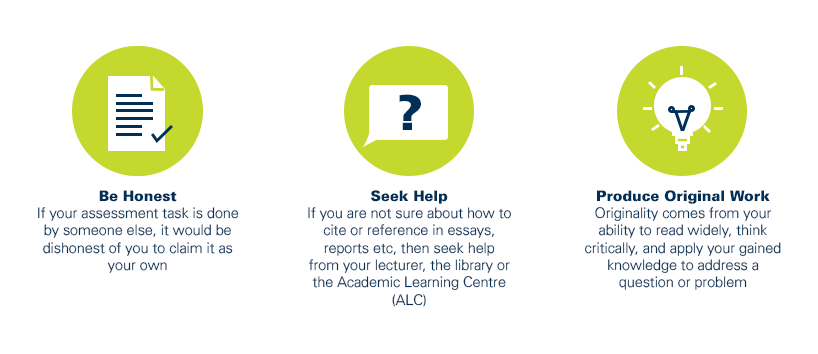
As a CQUniversity student you are expected to act honestly in all aspects of your academic work.
Any assessable work undertaken or submitted for review or assessment must be your own work. Assessable work is any type of work you do to meet the assessment requirements in the unit, including draft work submitted for review and feedback and final work to be assessed.
When you use the ideas, words or data of others in your assessment, you must thoroughly and clearly acknowledge the source of this information by using the correct referencing style for your unit. Using others’ work without proper acknowledgement may be considered a form of intellectual dishonesty.
Participating honestly, respectfully, responsibly, and fairly in your university study ensures the CQUniversity qualification you earn will be valued as a true indication of your individual academic achievement and will continue to receive the respect and recognition it deserves.
As a student, you are responsible for reading and following CQUniversity’s policies, including the Student Academic Integrity Policy and Procedure. This policy sets out CQUniversity’s expectations of you to act with integrity, examples of academic integrity breaches to avoid, the processes used to address alleged breaches of academic integrity, and potential penalties.
What is a breach of academic integrity?
A breach of academic integrity includes but is not limited to plagiarism, self-plagiarism, collusion, cheating, contract cheating, and academic misconduct. The Student Academic Integrity Policy and Procedure defines what these terms mean and gives examples.
Why is academic integrity important?
A breach of academic integrity may result in one or more penalties, including suspension or even expulsion from the University. It can also have negative implications for student visas and future enrolment at CQUniversity or elsewhere. Students who engage in contract cheating also risk being blackmailed by contract cheating services.
Where can I get assistance?
For academic advice and guidance, the Academic Learning Centre (ALC) can support you in becoming confident in completing assessments with integrity and of high standard.
What can you do to act with integrity?