Overview
Curriculum Foundations and Decision-making builds students’ knowledge and understanding of the key learning theories of behaviourism, humanism, constructivism, social-constructivism and connectivism as a basis for exploring pedagogical approaches to curriculum construction and decision-making. Analysis and critique of the view of learners and approaches to teaching and learning articulated in the Early Years Learning Framework and Australian Curriculum documents are an important focus of this unit. Students reflect on how learners are positioned to make transitions to new learning contexts and evaluate strategies for designing authentic relevant curriculum and environments for diverse learner groups with a focus on inquiry, active investigation and problem-solving. Students collaborate in groups to apply these strategies across selected learning contexts including early years settings to either: (a) the design and presentation of child-centred open-ended learning experiences; or (b) the creation of a learning environment with possibilities for developing literate, numerate, scientific, technological or environmental understandings
Details
Pre-requisites or Co-requisites
There are no requisites for this unit.
Important note: Students enrolled in a subsequent unit who failed their pre-requisite unit, should drop the subsequent unit before the census date or within 10 working days of Fail grade notification. Students who do not drop the unit in this timeframe cannot later drop the unit without academic and financial liability. See details in the Assessment Policy and Procedure (Higher Education Coursework).
Offerings For Term 2 - 2026
Attendance Requirements
All on-campus students are expected to attend scheduled classes - in some units, these classes are identified as a mandatory (pass/fail) component and attendance is compulsory. International students, on a student visa, must maintain a full time study load and meet both attendance and academic progress requirements in each study period (satisfactory attendance for International students is defined as maintaining at least an 80% attendance record).
Recommended Student Time Commitment
Each 6-credit Undergraduate unit at CQUniversity requires an overall time commitment of an average of 12.5 hours of study per week, making a total of 150 hours for the unit.
Class Timetable
Assessment Overview
Assessment Grading
This is a graded unit: your overall grade will be calculated from the marks or grades for each assessment task, based on the relative weightings shown in the table above. You must obtain an overall mark for the unit of at least 50%, or an overall grade of 'pass' in order to pass the unit. If any 'pass/fail' tasks are shown in the table above they must also be completed successfully ('pass' grade). You must also meet any minimum mark requirements specified for a particular assessment task, as detailed in the 'assessment task' section (note that in some instances, the minimum mark for a task may be greater than 50%). Consult the University's Grades and Results Policy for more details of interim results and final grades.
All University policies are available on the CQUniversity Policy site.
You may wish to view these policies:
- Grades and Results Policy
- Assessment Policy and Procedure (Higher Education Coursework)
- Review of Grade Procedure
- Student Academic Integrity Policy and Procedure
- Academic Progression Policy and Procedure
- Student Refund and Credit Balance Policy and Procedure
- Complaints Policy and Procedure
- Information and Communications Technology Acceptable Use Policy and Procedure
This list is not an exhaustive list of all University policies. The full list of University policies are available on the CQUniversity Policy site.
Feedback, Recommendations and Responses
Every unit is reviewed for enhancement each year. At the most recent review, the following staff and student feedback items were identified and recommendations were made.
Feedback from UC 2025
Assessment
Review assessment tasks.
Feedback from UC 2025
Course materials
Course materials to be updated.
Feedback from UC 2025 and student feedback
Activities for student engagement
Development of relevant activities in tutorials and Moodle weekly materials.
- Identify key ideas, contemporary influences and conflicting perspectives on curriculum development and planning
- Evaluate the application of key learning theories to the goals and priorities of 21st century learning
- Summarise the view of learners, teaching and learning articulated in current national curriculum documents and policies specific to educational and/or early childhood settings
- Analyse examples of teaching practice to evaluate the selection of teaching strategies for child-centred learning for students with a diverse range of interests, backgrounds and needs
- Design learning opportunities that incorporate a range of resources and strategies to promote language development, curiosity, inquiry, imagination, self-expression, higher-order thinking and problem-solving in a range of settings and learning areas.
Successful completion of this unit provides opportunities for students to engage with the Australian Professional Standards for Teachers (Graduate Career Stage) focus areas of:
1.1 Physical, social and intellectual development and characteristics of students
1.2 Understand how students learn
1.3 Students with diverse linguistic, cultural, religious and socioeconomic backgrounds
2.5 Literacy and numeracy strategies
2.6 Information and Communication Technology (ICT)
3.1 Establish challenging learning goals
3.3 Use teaching strategies
3.4 Select and use resources
6.4 Apply professional learning and improve student learning
In addition, competency elements from the Diploma of Children’s Services (Early Childhood Education and Care) are taught and assessed in this unit.
Alignment of Assessment Tasks to Learning Outcomes
| Assessment Tasks | Learning Outcomes | ||||
|---|---|---|---|---|---|
| 1 | 2 | 3 | 4 | 5 | |
| 1 - Written Assessment - 50% | |||||
| 2 - Practical and Written Assessment - 50% | |||||
Alignment of Graduate Attributes to Learning Outcomes
| Graduate Attributes | Learning Outcomes | ||||
|---|---|---|---|---|---|
| 1 | 2 | 3 | 4 | 5 | |
| 1 - Communication | |||||
| 2 - Problem Solving | |||||
| 3 - Critical Thinking | |||||
| 4 - Information Literacy | |||||
| 5 - Team Work | |||||
| 6 - Information Technology Competence | |||||
| 7 - Cross Cultural Competence | |||||
| 8 - Ethical practice | |||||
| 9 - Social Innovation | |||||
| 10 - First Nations Knowledges | |||||
| 11 - Aboriginal and Torres Strait Islander Cultures | |||||
Alignment of Assessment Tasks to Graduate Attributes
| Assessment Tasks | Graduate Attributes | ||||||||||
|---|---|---|---|---|---|---|---|---|---|---|---|
| 1 | 2 | 3 | 4 | 5 | 6 | 7 | 8 | 9 | 10 | 11 | |
| 1 - Written Assessment - 50% | |||||||||||
| 2 - Practical and Written Assessment - 50% | |||||||||||
Textbooks
There are no required textbooks.
IT Resources
- CQUniversity Student Email
- Internet
- Unit Website (Moodle)
All submissions for this unit must use the referencing style: American Psychological Association 7th Edition (APA 7th edition)
For further information, see the Assessment Tasks.
l.m.shannon@cqu.edu.au
Week 1 WHAT IS CURRICULUM?
Begin Date: 13 Jul 2026Module/Topic
What is Curriculum?
Chapter
Churchill, R., Godinho, S., Johnson, N F., Keddie, A., Letts, W., Lowe, K, … Vick, M. (2024). Teaching: making a difference (6th ed.). Milton, Qld: John Wiley & Sons Australia. Chapter 6.1 Exploring notions of curriculum
Events and Submissions/Topic
Week 2 CURRICULUM FOR ENGAGEMENT
Begin Date: 20 Jul 2026Module/Topic
Curriculum for engagement
Chapter
Killen, R. (2013). Effective teaching strategies: lessons from research and practice (6th ed.). South Melbourne, VIC: Cengage. Total pages xvii, 410 p., 1 - 21, 111-129
Sharon K., Seidman, E. & Raza, M. (2019) Improving 21st Century teaching skills: The key to effective 21st Century learners.Research in Comparative & International Education Vol. 14(1) 99–117
Events and Submissions/Topic
Week 3 THE AUSTRALIAN CURRICULUM (AC)
Begin Date: 27 Jul 2026Module/Topic
The Australian Curriculum
Chapter
Australian Curriculum, Assessment and Reporting Authority (ACARA). (2026). Australian Curriculum. https://www.australiancurriculum.edu.au
Marsh, C. J. (2014). Marsh’s becoming a teacher, S. Pittaway & M. Clarke, Eds.; 6th Ed., Pearson Australia; Pearson Australia. pp. 74–86.
Events and Submissions/Topic
Week 4 THE EARLY YEARS LEARNING FRAMEWORK (EYLF)
Begin Date: 03 Aug 2026Module/Topic
The Early Years Learning Framework (EYLF)
Chapter
Australian Government Department of Education [AGDE] (2022). Belonging, Being and Becoming: The Early Years Learning Framework for Australia (V2.0). Australian Government Department of Education for the Ministerial Council.
Belonging, Being and Becoming: The Early Years Learning Framework for Australia V2.0, 2022
Cheeseman, S., Sumsion, J., & Press, F. (2014). Infants of the knowledge economy: The ambition of the Australian Governments Early Years Learning Framework. Pedagogy, Culture & Society, 22(3), p.p. 405-424.
Churchill, R., Godinho, S., Johnson, N F., Keddie, A., Letts, W., Lowe, K, … Vick, M. (2024). Teaching: making a difference (6th ed.). Milton, Qld: John Wiley & Sons Australia. Chapter 3.2 How the brain learns - contemporary scientific insights
Events and Submissions/Topic
Week 5 HOW DOES LEARNING HAPPEN?
Begin Date: 10 Aug 2026Module/Topic
How does learning happen?
Chapter
Churchill, R., Godinho, S., Johnson, N F., Keddie, A., Letts, W., Lowe, K, … Vick, M. (2024). Teaching: making a difference (6th ed.). Milton, Qld: John Wiley & Sons Australia. Chapter 3.1 Domains of learning.
Groundwater-Smith, S., Ewing, R & Le Cornu, R. (2023). Teaching challenges and dilemmas (7th ed.). South Melbourne, Victoria: Harcourt Australia. Chapter 4 The Nature of Learning.
Events and Submissions/Topic
Week 6 MOTIVATING AND FACILITATING LEARNING
Begin Date: 17 Aug 2026Module/Topic
Motivating and facilitating learning
Chapter
Churchill, R., Godinho, S., Johnson, N F., Keddie, A., Letts, W., Lowe, K, … Vick, M. (2024). Teaching: making a difference (6th ed.). Milton, Qld: John Wiley & Sons Australia. Chapter 4.2 Motivating students.
Events and Submissions/Topic
Vacation Week
Begin Date: 24 Aug 2026Module/Topic
Chapter
Events and Submissions/Topic
AT1 Comparative Analysis - Written Assessment 50%
COMPARATIVE ANALYSIS Due: Vacation Week Monday (24 Aug 2026) 11:59 pm AEST
Week 7 FOSTERING ACTIVE LEARNING AND PROMOTING ENGAGEMENT
Begin Date: 31 Aug 2026Module/Topic
Fostering active learning and promoting engagement
Chapter
Churchill, R., Godinho, S., Johnson, N F., Keddie, A., Letts, W., Lowe, K, … Vick, M. (2024). Teaching: making a difference (6th ed.). Milton, Qld: John Wiley & Sons Australia. Chapter 9.4 Challenge and engagement.
Events and Submissions/Topic
Week 8 INQUIRY LEARNING AS ONE CURRICULUM APPROACH
Begin Date: 07 Sep 2026Module/Topic
Inquiry learning as one curriculum approach
Chapter
Churchill, R., Godinho, S., Johnson, N F., Keddie, A., Letts, W., Lowe, K, … Vick, M. (2024). Teaching: making a difference (6th ed.). Milton, Qld: John Wiley & Sons Australia. Chapter 7.6 Inquiry based pedagogy
Events and Submissions/Topic
Week 9 TEACHING STRATEGIES IMPORTANT FOR CHILDREN'S ACTIVE PARTICIPATION
Begin Date: 14 Sep 2026Module/Topic
Strategies important for children's active participation
Chapter
Churchill, R., Godinho, S., Johnson, N F., Keddie, A., Letts, W., Lowe, K, … Vick, M. (2024). Teaching: making a difference (6th ed.). Milton, Qld: John Wiley & Sons Australia. Chapter 8.4 Collaborative pedagogy: establishing the classroom culture.
Events and Submissions/Topic
Week 10 INTERACTIVE TOOLS FOR PROMOTING INQUIRY AND ACQUISITION OF KNOWLEDGE
Begin Date: 21 Sep 2026Module/Topic
Interactive tools promoting inquiry and acquisition of knowledge
Chapter
Churchill, R., Godinho, S., Johnson, N F., Keddie, A., Letts, W., Lowe, K, … Vick, M. (2024). Teaching: making a difference (6th ed.). Milton, Qld: John Wiley & Sons Australia. Chapter 8.4 Collaborative pedagogy: establishing the classroom culture.
Churchill, R., Godinho, S., Johnson, N F., Keddie, A., Letts, W., Lowe, K, … Vick, M. (2024). Teaching: making a difference (6th ed.). Milton, Qld: John Wiley & Sons Australia. Chapter 10.4 Planning for teaching and learning with digital technologies.
Events and Submissions/Topic
Week 11 MEETING TASK REQUIREMENTS
Begin Date: 28 Sep 2026Module/Topic
Meeting task requirements
Chapter
Events and Submissions/Topic
Week 12 Check in - Q and A session
Begin Date: 05 Oct 2026Module/Topic
Check in - Q and A session
Chapter
Events and Submissions/Topic
AT2 Observation of teaching practice and learning design - Practical and Written Assessment 50%
LEARNING DESIGN Due: Week 12 Thursday (8 Oct 2026) 11:59 pm AEST
Exam Week
Begin Date: 12 Oct 2026Module/Topic
Chapter
Events and Submissions/Topic
Vacation/Exam Week
Begin Date: 19 Oct 2026Module/Topic
Chapter
Events and Submissions/Topic
1 Written Assessment
This task requires you to summarise, compare and analyse the audience, organisation, relationship to social context and view of learners, teaching and learning outlined in two current curriculum documents that frame the work of educators in Australian early learning settings and schools. These documents are The Early Years Learning Framework (EYLF) and the Australian Curriculum.
Your response to this task should be no more than 2000 words and should be organised according to the headings in sections 1-5 outlined below. In each section, you will need to examine BOTH the Early Years Learning Framework and the Australian Curriculum and compare them according to their similarities and differences on the key points outlined in the section headings. Your conclusion will evaluate each document in terms of how it is designed to help teachers create meaningful and relevant curriculum for diverse student groups and individuals.
Your response must include references to unit readings and the documents themselves to support your discussion, comparison and evaluation. Tutorial activities, group discussions, online forums and formative assessment opportunities for examining each document according to the section headings for this assessment will occur throughout the term.
Format for developing your assessment response
1. Introduction Identify each curriculum document and the intended users or audience, i.e. the learners and teachers the framework has been designed for and the purpose that each framework is designed to achieve.
2. Organisation of the curriculum documents In this section, create a summary of each curriculum framework and its organisation and content. The summary should provide answers to the following key questions for EACH curriculum framework:
· What is included in the curriculum framework?
· What is the focus for learning specified in the curriculum framework?
· What information is given about what will be learned, when it will be learned and how it will be learned in each curriculum document?
· How will learning be assessed?
At the end of this summary, briefly identify the main similarities and differences in the approach to curriculum design taken for each document and explain why you think these differences have occurred. Suggest ways in which their organisation and key features will affect how the curriculum is used and implemented by teachers in schools or early learning sites.
3. Social, political and cultural influences
Provide a brief summary of “external factors” such as key social, political or cultural influences that you think have informed the development of each curriculum framework and compare and evaluate how successful each framework is in responding to the priorities for learning in the 21st century. Discuss any problems or issues that might affect the learning outcomes for different student groups as a result of these influences and back up your claims with examples and references from unit readings or the curriculum documents.
4. View of learners, learning and teaching
Summarise the view of learners and learning embedded in each document. Consider the responses to the following questions to construct your summary and support the point of view you are proposing. What learning theories are evident? What role do the documents imply for learners and for teachers? How do the frameworks support engagement and motivation for learning?
5. Evaluation
Evaluate the success of each document in terms of meeting the needs of diverse student groups and individuals. What implications can you draw about the way these documents should be used by teachers in the design of meaningful and relevant curriculum?
AI Assessment scale tool:
Level 3 AI Collaboration AI may be used to help complete the task, including idea generation, drafting, feedback, and refinement. Students should critically evaluate and modify the AI suggested outputs, demonstrating their understanding.
72 Hour Grace Period: If you are unable to submit Assessment Task by the due date, you may submit within the 72-hour grace period without applying for an extension.
To note: The 72-hour grace period is included within any approved extension period. It is not added on top of an extension. For example: If you receive a 4-day extension, your new due date is 4 days after the original due date. You do not receive an additional 72-hour grace period after those 4 days.
Students who require more than 72 hours beyond the original due date must apply through the University's Assessment Extension System and provide the required supporting documentation
Vacation Week Monday (24 Aug 2026) 11:59 pm AEST
Knowledge of the key elements and organisation of current curriculum documents.
Ability to identify and evaluate ways in which current curriculum documents are influenced by contemporary social and cultural contexts and respond to issues of diversity and equity
Application of knowledge of key learning theories to views of learning embedded in curriculum documents (
Ability to draw implications from the analysis for educators as curriculum decision-makers
Ability to construct a comparative analysis using professional levels of personal literacy
- Identify key ideas, contemporary influences and conflicting perspectives on curriculum development and planning
- Evaluate the application of key learning theories to the goals and priorities of 21st century learning
- Summarise the view of learners, teaching and learning articulated in current national curriculum documents and policies specific to educational and/or early childhood settings
- Communication
- Critical Thinking
- Information Literacy
- Information Technology Competence
2 Practical and Written Assessment
This assessment task focuses on the design of student-centred learning and consists of two parts.
Part A
On the Moodle site for this unit you will find short video clips demonstrating learning in a particular setting. Choose one of the videos and complete a 500-word observation that answers the following questions:
· How are the students learning in this sample of teaching practice?
· What does the teacher do to facilitate student learning?
· How does the learning experience achieve some or all of these outcomes:
1. encourage learners’ independence and autonomy
2. assist in the development of thinking skills
3. promote real-life learning
4. embed meaningful literacy and/ or numeracy learning
5. allow for creativity and imagination
6. provide for child-centred or student-centred learning that caters for a diverse range of interests, needs and backgrounds
7. provide creative and / or challenging opportunities to stimulate learning in a developmentally appropriate way.
Part B
Use the knowledge gained from unit readings and your observation from Part A above to design a learning environment or open-ended learning experience. Your planning should focus on an environmental or sustainability topic or issue that is developmentally appropriate for learners in a chosen educational setting, i.e. a school/ year level or other early learning setting. A template for recording your planning will be provided on the unit Moodle site and will require you to document the following:
· An outline for an open-ended inquiry or investigation into a real-world environmental issue suitable for diverse learner groups
· Opportunities for enhancing literacy, numeracy or learning using technology in the activities the learners complete,
· Opportunities for social interaction and discussion between learners about the learning focus
· Opportunities for learners to engage in problem-solving and higher-order thinking
AI Assessment scale tool:
Level 3 AI Collaboration - AI may be used to help complete the task, including idea generation, drafting, feedback, and refinement. Students should critically evaluate and modify the AI suggested outputs, demonstrating their understanding.
72 Hour Grace Period: If you are unable to submit Assessment Task by the due date, you may submit within the 72-hour grace period without applying for an extension.
To note: The 72-hour grace period is included within any approved extension period. It is not added on top of an extension. For example: If you receive a 4-day extension, your new due date is 4 days after the original due date. You do not receive an additional 72-hour grace period after those 4 days.
Students who require more than 72 hours beyond the original due date must apply through the University's Assessment Extension System and provide the required supporting documentation
Week 12 Thursday (8 Oct 2026) 11:59 pm AEST
Ability to identify the relationship between observed teaching strategies and learning outcomes
Knowledge and understanding of constructivist approaches to curriculum development that promote relevance, engagement and higher-order thinking for learners from diverse backgrounds
Ability to create opportunities for meaningful integration of literacy, numeracy and ICTs into curriculum planning
Knowledge of ways in which social interaction promotes learning
Application of pedagogical approaches consistent with the learning outcomes underpinning current curriculum frameworks
- Analyse examples of teaching practice to evaluate the selection of teaching strategies for child-centred learning for students with a diverse range of interests, backgrounds and needs
- Design learning opportunities that incorporate a range of resources and strategies to promote language development, curiosity, inquiry, imagination, self-expression, higher-order thinking and problem-solving in a range of settings and learning areas.
- Communication
- Problem Solving
- Critical Thinking
- Information Literacy
- Team Work
- Information Technology Competence
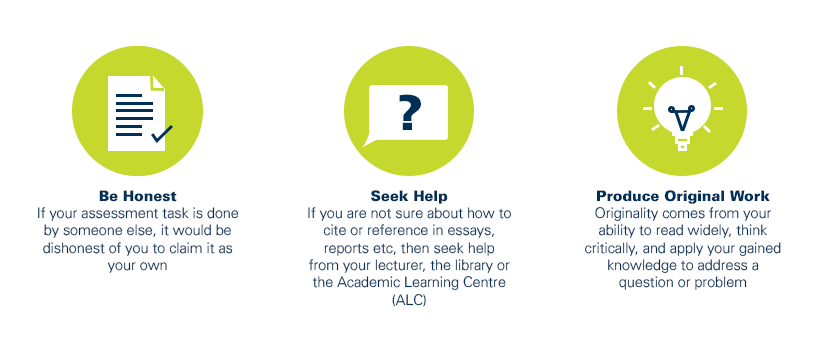
As a CQUniversity student you are expected to act honestly in all aspects of your academic work.
Any assessable work undertaken or submitted for review or assessment must be your own work. Assessable work is any type of work you do to meet the assessment requirements in the unit, including draft work submitted for review and feedback and final work to be assessed.
When you use the ideas, words or data of others in your assessment, you must thoroughly and clearly acknowledge the source of this information by using the correct referencing style for your unit. Using others’ work without proper acknowledgement may be considered a form of intellectual dishonesty.
Participating honestly, respectfully, responsibly, and fairly in your university study ensures the CQUniversity qualification you earn will be valued as a true indication of your individual academic achievement and will continue to receive the respect and recognition it deserves.
As a student, you are responsible for reading and following CQUniversity’s policies, including the Student Academic Integrity Policy and Procedure. This policy sets out CQUniversity’s expectations of you to act with integrity, examples of academic integrity breaches to avoid, the processes used to address alleged breaches of academic integrity, and potential penalties.
What is a breach of academic integrity?
A breach of academic integrity includes but is not limited to plagiarism, self-plagiarism, collusion, cheating, contract cheating, and academic misconduct. The Student Academic Integrity Policy and Procedure defines what these terms mean and gives examples.
Why is academic integrity important?
A breach of academic integrity may result in one or more penalties, including suspension or even expulsion from the University. It can also have negative implications for student visas and future enrolment at CQUniversity or elsewhere. Students who engage in contract cheating also risk being blackmailed by contract cheating services.
Where can I get assistance?
For academic advice and guidance, the Academic Learning Centre (ALC) can support you in becoming confident in completing assessments with integrity and of high standard.
What can you do to act with integrity?