Overview
Universally, play is recognised as a context for learning with the child’s right to play and the benefits of play enshrined in the national and international policy context. As both a context and process, play enables children to question, to theorise, to create, to wonder and to imagine. The pedagogical approaches adopted by teachers within early childhood settings are informed by a range of sources including understandings about how young children learn, emerging research and relevant learning frameworks. In this unit, you will research early learning theory and contemporary research to explicate how and why play pedagogies align with children’s development and characteristics as learners. The central role of educators in creating environments that support children’s play will also be examined. You will be asked to consider the challenges that educators may encounter as they enact play pedagogies. A focus on critically reflective practice will support your analysis of the contemporary context and an interrogation of your personal assumptions about play.
Details
Pre-requisites or Co-requisites
There are no requisites for this unit.
Important note: Students enrolled in a subsequent unit who failed their pre-requisite unit, should drop the subsequent unit before the census date or within 10 working days of Fail grade notification. Students who do not drop the unit in this timeframe cannot later drop the unit without academic and financial liability. See details in the Assessment Policy and Procedure (Higher Education Coursework).
Offerings For Term 1 - 2026
Attendance Requirements
All on-campus students are expected to attend scheduled classes - in some units, these classes are identified as a mandatory (pass/fail) component and attendance is compulsory. International students, on a student visa, must maintain a full time study load and meet both attendance and academic progress requirements in each study period (satisfactory attendance for International students is defined as maintaining at least an 80% attendance record).
Recommended Student Time Commitment
Each 6-credit Postgraduate unit at CQUniversity requires an overall time commitment of an average of 12.5 hours of study per week, making a total of 150 hours for the unit.
Class Timetable
Assessment Overview
Assessment Grading
This is a graded unit: your overall grade will be calculated from the marks or grades for each assessment task, based on the relative weightings shown in the table above. You must obtain an overall mark for the unit of at least 50%, or an overall grade of 'pass' in order to pass the unit. If any 'pass/fail' tasks are shown in the table above they must also be completed successfully ('pass' grade). You must also meet any minimum mark requirements specified for a particular assessment task, as detailed in the 'assessment task' section (note that in some instances, the minimum mark for a task may be greater than 50%). Consult the University's Grades and Results Policy for more details of interim results and final grades.
All University policies are available on the CQUniversity Policy site.
You may wish to view these policies:
- Grades and Results Policy
- Assessment Policy and Procedure (Higher Education Coursework)
- Review of Grade Procedure
- Student Academic Integrity Policy and Procedure
- Academic Progression Policy and Procedure
- Student Refund and Credit Balance Policy and Procedure
- Complaints Policy and Procedure
- Information and Communications Technology Acceptable Use Policy and Procedure
This list is not an exhaustive list of all University policies. The full list of University policies are available on the CQUniversity Policy site.
Feedback, Recommendations and Responses
Every unit is reviewed for enhancement each year. At the most recent review, the following staff and student feedback items were identified and recommendations were made.
Feedback from tutorials emails forums
Interpreting assessment tasks
Model for students how to unpack assessment task/s
Feedback from Tutorials
Referencing conventions
Continue unpacking referencing during tutorials
- Synthesise knowledge of child development, learning theory, contemporary research and a commitment to inclusive practice to recommend how and why play pedagogies align with children’s stages of development and characteristics as learners
- Communicate a deep understanding of the role of the teacher/educator, including their role in creating supportive environments and supporting children's play in play spaces
- Synthesise knowledge of the key principles of play and theoretical concepts included in the principles of play (agency, child rights, identity, culture, participation, sociality) to explicate the affordances provided within play spaces
- Identify personal assumptions about play and articulate how these assumptions may influence pedagogical practice and curriculum decision making
- Engage with critically reflective practice to support analysis of the contemporary context
- Analyse and represent contemporary considerations/challenges when enacting play pedagogies and propose ways to address such challenges/considerations.
This unit contributes to meeting the curriculum content requirements outlined by the Australian Children's Education & Care Quality Authority (ACECQA).
Alignment of Assessment Tasks to Learning Outcomes
| Assessment Tasks | Learning Outcomes | |||||
|---|---|---|---|---|---|---|
| 1 | 2 | 3 | 4 | 5 | 6 | |
| 1 - Portfolio - 50% | ||||||
| 2 - Creative work - 50% | ||||||
Alignment of Graduate Attributes to Learning Outcomes
| Graduate Attributes | Learning Outcomes | |||||
|---|---|---|---|---|---|---|
| 1 | 2 | 3 | 4 | 5 | 6 | |
| 1 - Knowledge | ||||||
| 2 - Communication | ||||||
| 3 - Cognitive, technical and creative skills | ||||||
| 4 - Research | ||||||
| 5 - Self-management | ||||||
| 6 - Ethical and Professional Responsibility | ||||||
| 7 - Leadership | ||||||
| 8 - First Nations Knowledges | ||||||
| 9 - Aboriginal and Torres Strait Islander Cultures | ||||||
Textbooks
There are no required textbooks.
IT Resources
- CQUniversity Student Email
- Internet
- Unit Website (Moodle)
- ZOOM
- Microsoft Teams (both microphone and webcam capability)
- Microsoft tools
- Prescribed Textbook: Arthur, L., Beecher, B., Death, E., Dockett, S., & Farmer, S. (2025). Programming & planning in early childhood settings (9th ed.). Cengage.
All submissions for this unit must use the referencing style: American Psychological Association 7th Edition (APA 7th edition)
For further information, see the Assessment Tasks.
y.carrizo@cqu.edu.au
g.busch@cqu.edu.au
Week 1
Begin Date: 09 Mar 2026Module/Topic
What is play?
Chapter
Moodle unit's content week 1
Topic 1 e-library
Arthur, L., Beecher, B., Death, E., Dockett, S., & Farmer, S. (2024). Programming & planning in early childhood settings (9th ed.). Cengage.
Early Childhood Australia. (2023). Statement of play. https://earlychildhoodaustralia.org.au
Gowrie New South Wales. (n.d.). Types of play for early childhood development. https://gowriensw.com.au
Lastwood Media. (2020, February 10). PLAYed [Video]. Vimeo.
(Recording link via CQU: https://cqu.zoom.us/rec/share/KWGohOwnh9hb1UFN-poJEhefm0aYpkoCXkuzM4a3DTj1Ga5axEZ_pRgMhv9hqZ9S.cmrIRuxx9G1Kp5Ou?Passcode=@*&eft2z)
UNICEF. (n.d.). First-ever International Day of Play. https://unicef.org
Events and Submissions/Topic
Week 2
Begin Date: 16 Mar 2026Module/Topic
The importance of play
Chapter
Moodle unit's content week 2
Topic 1 e-library
Arthur, L., Beecher, B., Death, E., Dockett, S., & Farmer, S. (2024). Programming & planning in early childhood settings (9th ed.). Cengage.
Early Childhood Australia. (2023). Statement of play. https://earlychildhoodaustralia.org.au
Gowrie New South Wales. (n.d.). Types of play for early childhood development. https://gowriensw.com.au
Lastwood Media. (2020, February 10). PLAYed [Video]. Vimeo.
(Recording link via CQU: https://cqu.zoom.us/rec/share/KWGohOwnh9hb1UFN-poJEhefm0aYpkoCXkuzM4a3DTj1Ga5axEZ_pRgMhv9hqZ9S.cmrIRuxx9G1Kp5Ou?Passcode=@*&eft2z)
UNICEF. (n.d.). First-ever International Day of Play. https://unicef.org
Events and Submissions/Topic
Week 3
Begin Date: 23 Mar 2026Module/Topic
The role of play in learning, development and wellbeing
Chapter
Moodle unit's content week 3
Topic 2 e-library
Australian Journal of Environmental Education – Carrizo, Y., Knight, L., & Harris, D. X. (2025). Decolonising dust: Rewilding the microworlds of early childhood pedagogies. Australian Journal of Environmental Education, 41(2), 261–277. https://doi.org/10.1017/aee.2025.27
Education Hub – Little, H. (2020, December 2). Promoting children's risky play in outdoor learning environments. https://theeducationhub.org.nz
Little, H. (2017, July). Risky play outdoors: Embracing the possibilities to support active play. Macquarie University. https://earlychildhoodaustralia.org.au
Raising Children Network. (2018, June 5). Risk in play: How it helps child development [Video]. YouTube. https://youtu.be
Staines, J. (2022, June 2). Embedding Aboriginal and Torres Strait Islander perspectives through program and practice. NSW Department of Education. https://education.nsw.gov.au
Yelland, N. (2021). Being playful with multimodal literacies. Every Child, 27(4), 10–13. https://cqu-a.alma.exlibrisgroup.com
YouTube. (n.d.). Child’s right to play [Video]. https://youtube.com
Events and Submissions/Topic
Week 4
Begin Date: 30 Mar 2026Module/Topic
Resources for play
Chapter
Moodle unit's content week 4
Topic 2 e-library
Australian Journal of Environmental Education – Carrizo, Y., Knight, L., & Harris, D. X. (2025). Decolonising dust: Rewilding the microworlds of early childhood pedagogies. Australian Journal of Environmental Education, 41(2), 261–277. https://doi.org/10.1017/aee.2025.27
Education Hub – Little, H. (2020, December 2). Promoting children's risky play in outdoor learning environments. https://theeducationhub.org.nz
Little, H. (2017, July). Risky play outdoors: Embracing the possibilities to support active play. Macquarie University. https://earlychildhoodaustralia.org.au
Raising Children Network. (2018, June 5). Risk in play: How it helps child development [Video]. YouTube. https://youtu.be
Staines, J. (2022, June 2). Embedding Aboriginal and Torres Strait Islander perspectives through program and practice. NSW Department of Education. https://education.nsw.gov.au
Yelland, N. (2021). Being playful with multimodal literacies. Every Child, 27(4), 10–13. https://cqu-a.alma.exlibrisgroup.com
YouTube. (n.d.). Child’s right to play [Video]. https://youtube.com
Events and Submissions/Topic
Week 5
Begin Date: 06 Apr 2026Module/Topic
Outdoor play, risky play, nature play
Chapter
Moodle unit's content week 5
Topic 2 e-library
Australian Journal of Environmental Education – Carrizo, Y., Knight, L., & Harris, D. X. (2025). Decolonising dust: Rewilding the microworlds of early childhood pedagogies. Australian Journal of Environmental Education, 41(2), 261–277. https://doi.org/10.1017/aee.2025.27
Education Hub – Little, H. (2020, December 2). Promoting children's risky play in outdoor learning environments. https://theeducationhub.org.nz
Little, H. (2017, July). Risky play outdoors: Embracing the possibilities to support active play. Macquarie University. https://earlychildhoodaustralia.org.au
Raising Children Network. (2018, June 5). Risk in play: How it helps child development [Video]. YouTube. https://youtu.be
Staines, J. (2022, June 2). Embedding Aboriginal and Torres Strait Islander perspectives through program and practice. NSW Department of Education. https://education.nsw.gov.au
Yelland, N. (2021). Being playful with multimodal literacies. Every Child, 27(4), 10–13. https://cqu-a.alma.exlibrisgroup.com
YouTube. (n.d.). Child’s right to play [Video]. https://youtube.com
Events and Submissions/Topic
Week 6
Begin Date: 13 Apr 2026Module/Topic
Play-based learning and intentionality
Chapter
Moodle unit's content week 6
Topic 3 e-library
ACECQA. (2018). What is critical reflection? https://acecqa.gov.au
ACECQA. (2019). Critical reflection in practice [Video]. YouTube. (4:05 min). https://youtube.com
ACECQA. (2018, February). The environment as the third teacher. https://acecqa.gov.au
Australian Education Research Organisation. (2023, November 14). Introduction: Play-based learning and intentionality. https://edresearch.edu.au
Carrizo, Y., & Harris, D. X. (2025). Becoming-with dust and the more-than-human. In T. Doughty, J. Deszcz-Tryhubczak, & J. Grafton (Eds.), Children’s literatures, cultures, and pedagogies in the Anthropocene (1st ed.). Bloomsbury Academic. https://www.bloomsburycollections.com
Gowrie Australia – Miller, M. (2011). Critical reflection. Reflections, 45. https://eprints.qut.edu.au
State Government of Victoria. (2023). Environments for learning. https://vic.gov.au
AGECS. (2025, April 2). Intentionally outside [Video]. YouTube. (1 hr 20 min). https://youtu.be
AGECS. (2025, May 19). Bush Kinder as places of learning with Coral Campbell [Video]. YouTube. (1 hr 23 min). https://youtu.be
Events and Submissions/Topic
Assessment 1 due
Creative Visual Ethnography Portfolio Due: Week 6 Thursday (16 Apr 2026) 11:45 pm AEST
Vacation Week
Begin Date: 20 Apr 2026Module/Topic
No tutorials
Chapter
Events and Submissions/Topic
Week 7
Begin Date: 27 Apr 2026Module/Topic
Planning learning environments
Chapter
Moodle unit's content week 7
Topic 3 e-library
ACECQA. (2018). What is critical reflection? https://acecqa.gov.au
ACECQA. (2019). Critical reflection in practice [Video]. YouTube. (4:05 min). https://youtube.com
ACECQA. (2018, February). The environment as the third teacher. https://acecqa.gov.au
Australian Education Research Organisation. (2023, November 14). Introduction: Play-based learning and intentionality. https://edresearch.edu.au
Carrizo, Y., & Harris, D. X. (2025). Becoming-with dust and the more-than-human. In T. Doughty, J. Deszcz-Tryhubczak, & J. Grafton (Eds.), Children’s literatures, cultures, and pedagogies in the Anthropocene (1st ed.). Bloomsbury Academic. https://www.bloomsburycollections.com
Gowrie Australia – Miller, M. (2011). Critical reflection. Reflections, 45. https://eprints.qut.edu.au
State Government of Victoria. (2023). Environments for learning. https://vic.gov.au
AGECS. (2025, April 2). Intentionally outside [Video]. YouTube. (1 hr 20 min). https://youtu.be
AGECS. (2025, May 19). Bush Kinder as places of learning with Coral Campbell [Video]. YouTube. (1 hr 23 min). https://youtu.be
Events and Submissions/Topic
Week 8
Begin Date: 04 May 2026Module/Topic
Teaching strategies
Chapter
Moodle unit's content week 8
Topic 4 e-library
Arthur, L., Beecher, B., Death, E., Dockett, S., & Farmer, S. (2025). Programming & planning in early childhood settings (9th ed.). Cengage.
Australian Education Research Organisation. (2023, November 14). Introduction: Play-based learning and intentionality. https://edresearch.edu.au
Hanen Centre – Lowry, L. (2014, June 26). What is behaviour regulation? And what does it have to do with language development? https://hanen.org
Events and Submissions/Topic
Week 9
Begin Date: 11 May 2026Module/Topic
Pedagogies to support social and emotional learning
Chapter
Moodle unit's content week 9
Topic 4 e-library
Arthur, L., Beecher, B., Death, E., Dockett, S., & Farmer, S. (2025). Programming & planning in early childhood settings (9th ed.). Cengage.
Hanen Centre – Lowry, L. (2014, June 26). What is behaviour regulation? And what does it have to do with language development? https://hanen.org
Events and Submissions/Topic
Assessment 2 due
Group Performance and Video Presentation Due: Week 9 Thursday (14 May 2026) 11:45 pm AEST
Week 10
Begin Date: 18 May 2026Module/Topic
Documenting play
Chapter
Moodle unit's content week 1
Topic 5 e-library
ACECQA. (2018). NQF series: Documentation [Video]. YouTube. (10:09 min). https://youtube.com
Australian Education Research Organisation. (2024, September 18). Early childhood learning trajectories. https://edresearch.edu.au
ECA Learning Hub. (2023). Perspectives on documentation and co-design: Interviews [Video]. YouTube. (6:46 min). https://youtube.com
Events and Submissions/Topic
Week 11
Begin Date: 25 May 2026Module/Topic
Chapter
Events and Submissions/Topic
Week 12
Begin Date: 01 Jun 2026Module/Topic
Chapter
Events and Submissions/Topic
Exam Week
Begin Date: 08 Jun 2026Module/Topic
Chapter
Events and Submissions/Topic
Vacation/Exam Week
Begin Date: 15 Jun 2026Module/Topic
Chapter
Events and Submissions/Topic
Prescribed Textbook
Arthur, L., Beecher, B., Death, E., Dockett, S., & Farmer, S. (2024). Programming & Planning in Early Childhood Settings (9th edn). Cengage.
Assessment Conditions and Requirements (Applicable to All Assessments in This Unit)
Use of Artificial Intelligence (AI) – Level 3
Students may use generative AI tools to assist with drafting, refining, and evaluating their work. Any AI‑generated content used must be critically reviewed, edited, and integrated by the student to ensure that the final submission reflects their own academic thinking and communication.
AI Disclosure Requirement:
All assessments must include a brief statement on the cover page outlining:
which AI tool(s) were used
which section(s) they supported
how the tool(s) were used
AI tools must also be included in the reference list using APA 7 style.
Failure to disclose AI use, or inappropriate use of AI tools, will be treated as an academic integrity breach.
72‑Hour Grace Period
A 72‑hour grace period applies to all assessments in this unit.
If additional time beyond the grace period is required, students must apply through the Assessment Extension System following standard university procedures.
Ethical Requirements — No Images, Video, or Audio of Children
To ensure compliance with ethical and legal standards, students must not include any photos, videos or voice recordings of children in their assessment submissions.
Only de‑identified materials may be used.
Students are responsible for ensuring no identifiable child information appears in their work.
1 Portfolio
Assessment 1 - Creative Visual Ethnography Portfolio
Weighting: 50%
Due Date: Thursday 16th April 11:45 pm AEST (week 6)
Word Count: 1800 words
Task Type: Individual task
Format: Flexible – choose a platform that suits your creativity (e.g., Canva, Padlet, PowerPoint, Book Creator or similar).
Font: Any font, minimum size 12
Referencing: APA7 style. Minimum 10 sources from the unit’s materials and e-reading list on Moodle. All internet-sourced images must also be referenced.
GenAI Use: Level 3 for drafting and refinement
Submission Guidelines
This assessment will be explained further during tutorials. Please attend tutorials, watch the recordings and review all materials provided in Moodle.
Submit your assessment through Moodle only. Email submissions will not be accepted.
Drafts will not be reviewed or marked by the lecturer.
All components must be submitted in one document, including the reference list and any required links.
Photos, videos or voices of children must not be included in this task.
Task Description
In this individual task, you will apply the research methodology of visual ethnography to examine two learning environments (play spaces):
One located in a public space
One in an early learning service (or use high-quality internet images if access is not possible).
Your goal is to analyse these spaces to identify the affordances for play opportunities and how they reflect the principles outlined in the Early Childhood Australia Statement on Play (2023), with particular emphasis on Principle Six: The Role of Adults.
You will document and interpret the spaces creatively, then analyse how their design supports play and aligns with the ECA principles. Consider the following guiding questions:
How does the space recognise children’s agency?
How does it enable open-ended play and support participation?
How does it promote motor development?
How does it afford opportunities for imaginative play, physical play, play with peers, and solitary play?
How does it support friendships and social–emotional development?
What is the role of adults in these spaces, and how do they influence children’s play experiences?
Creative Approach:
You are encouraged to explore arts-based and digital methods to document and interpret the spaces. This can include:
Photography and Collage: Combine original photos with creative layouts or digital montages.
Sketches and Artistic Renderings: Hand-drawn or digital sketches, watercolour impressions, or symbolic representations.
Mixed-Media Journal: Integrate drawings, reflective writing, and visual notes.
AI-Assisted Visualisation: Use generative AI tools (e.g., Canva, Adobe Firefly, DALL·E) to create artistic interpretations of the spaces.
Acknowledgement required: Mention any AI use at the start of your submission and in the reference list.
Soundscapes or Short Video Clips: Capture ambient sounds or create a short film montage to complement your visual ethnography.
Creative Mapping: Transform pathway mapping into an abstract or conceptual artwork that reflects movement and interaction in the space.
Steps to Complete the Task:
1. Visit Two Play Spaces
One in a public space (that you physically visit)
One in an early learning service (or use internet images if access is not possible)
2. Document the Spaces Creatively
Use photos, sketches, drawings, journal entries, film clips, signs, symbols, and mapping of pathways.
Artistic interpretations and AI-generated visuals are welcome (with acknowledgement).
3. Analyse the Spaces
Focus on how the design and affordances support:
Children’s agency
Open-ended play and participation
Motor development
Imaginative and social play
Friendships and social-emotional skills
Role of adults (Principle Six of the ECA Statement on Play)
4. Create Your Portfolio
Present your work as a photo essay, poster display, digital portfolio, or mixed-media collage.
Include an 1800-word analytical statement that explains your interpretation and analysis, supported by unit readings and APA7 referencing.
Important information:
Word count for this assignment: 1800 words maximum
The word count is considered from the first word of the introduction to the last word of the conclusion. It excludes the cover page, abstract, contents page, reference page and appendices. It includes in-text citations and direct quotations.
AI: level 3
You may use AI to assist with this task, such as drafting text, refining, and evaluating your work. You must critically evaluate and modify any AI-generated content.
Any misuse or failure to disclose information regarding AI tools will be considered a breach of academic integrity.
Disclosure: Include a short note on your assessment cover page listing any AI tools used, which sections they were used in, and how they were used. Also, list the AI tool(s) in your reference list, following APA 7 style.
72-Hour Extension
The 72-Hour grace period applies to this assessment
If you need longer than 72 hours, you'll still need to use the normal Assessment Extension System process.
No photos, videos or voices of children
To ensure ethical and legal compliance, photos, videos, or voice recordings of children must not be included in this task. Please use only de‑identified materials, written observations, diagrams, or descriptions that do not reveal a child’s identity.
Week 6 Thursday (16 Apr 2026) 11:45 pm AEST
Week 8 Friday (8 May 2026)
Assessment criteria
1. Quality and Creativity of Visual Ethnographic Documentation
Effectively and ethically documents two play spaces using creative, multimodal or arts‑based methods.
Demonstrates originality and thoughtful interpretation through visuals (e.g., photography, sketches, collage, mapping, AI‑generated imagery).
Shows clear attention to detail, composition, and purpose in representing the spaces.
All images comply with ethical requirements (no photos, videos, or voices of children).
2. Analysis of Play Affordances and Space Design
Provides a deep and insightful analysis of how each space supports children’s play, agency, participation, motor development, imagination, and social–emotional learning.
Demonstrates clear links between visual evidence and analytical interpretation.
Critically evaluates the role of adults in relation to Principle Six of the ECA Statement on Play (2023).
Shows understanding of how play environments shape learning relationships, interactions, and opportunities.
3. Application of Theory and Scholarly Literature
Integrates at least 10 scholarly sources from the unit’s materials and e‑reading list.
Uses relevant early childhood theories, play principles, and visual ethnography methodology to support analysis.
Shows strong alignment with the ECA Statement on Play (2023), especially regarding adult roles.
Demonstrates critical thinking, synthesis of ideas, and well‑supported academic argumentation.
4. Communication, Structure, and Academic Presentation
Presents work in a clear, cohesive, and engaging portfolio format (e.g., Canva, Padlet, PowerPoint, Book Creator).
Includes an 1800‑word analytical statement that is well‑organised, clearly written, and logically structured.
Uses APA7 referencing consistently for all text citations, image citations, and sources.
Visual and written elements are integrated smoothly to create a coherent narrative.
All required components are included in one single submission.
5. Ethical and Responsible Use of GenAI Tools
Discloses all AI tools used, how they were used, and which sections were generated or refined with AI (Level 3 use).
Demonstrates critical evaluation and adaptation of AI‑generated content.
Meets academic integrity requirements for transparent and ethical AI use.
- Synthesise knowledge of child development, learning theory, contemporary research and a commitment to inclusive practice to recommend how and why play pedagogies align with children’s stages of development and characteristics as learners
- Communicate a deep understanding of the role of the teacher/educator, including their role in creating supportive environments and supporting children's play in play spaces
- Synthesise knowledge of the key principles of play and theoretical concepts included in the principles of play (agency, child rights, identity, culture, participation, sociality) to explicate the affordances provided within play spaces
2 Creative work
Assessment 2 – Group Performance and Video Presentation
Weighting: 50%
Due Date: Thursday 14th May 11:45 pm AEST (week 9)
Task Type: Group Task, work in groups of 3–4 members. Form your group following your lecturer’s instructions. Document contributions and decisions for transparency. Ensure equal participation and respect for diverse ideas.
Format:
Video Performance: 3–5 minutes
Written Component: 1000 words plus visuals (complementary to the video, not a transcript).
Creative platforms such as Canva, Padlet, PowerPoint, or other suitable tools may be used
Font: Any font, minimum size 12
Referencing: APA7 style, minimum 10 sources from unit materials and e-reading list on Moodle
Use of AI: Level 3
Submission Guidelines
This assessment will be explained further during tutorials. Please attend tutorials, watch the recordings and review all materials provided in Moodle.
Submit your assessment through Moodle only. Email submissions will not be accepted.
Drafts will not be reviewed or marked by the lecturer.
All components must be submitted in one document, including the reference list and any required links.
Photos, videos or voices of children must not be included in this task.
Task Description
Play is recognised as a context for learning, with the child’s right to play and the benefits of play enshrined in national frameworks such as the Early Years Learning Framework (EYLF) and National Quality Standard (NQS) (AGDE, 2022; Australian Children’s Education and Care Quality Authority, 2024), as well as international policy texts. While play is universally valued, implementing play-based pedagogical practices can present challenges and considerations for educators.
This group task requires you to:
Follow instructions from your lecturer to form a group.
Identify challenges and considerations educators may encounter when implementing play-based learning with young children.
Critically reflect on these issues (AGDE, 2022, p.18).
Drawing inspiration from Loris Malaguzzi and the Hundred Languages of Children, which recognises children’s multiple ways of expressing and understanding, prepare a creative representation or installation that illustrates your analysis of these challenges and considerations.
Present your creative representation as a performance captured in a 3–5 minute video, where all group members participate and take on roles such as educator, parent, child, centre director, and narrator to dramatise the challenges/implications and possible solutions.
Use props, costumes, and video features (such as captions, transitions, background music, or visual effects) to enhance creativity and engagement.
Accompany the video with a written text (1000 words) that complements the video by explaining the challenges/considerations identified and possible strategies to address them, supported by relevant literature (minimum 10 references). The written work should expand on the ideas presented in the video, not repeat them verbatim.
Important information:
Word count for this assignment: 1000 words maximum
The word count is considered from the first word of the introduction to the last word of the conclusion. It excludes the cover page, abstract, contents page, reference page and appendices. It includes in-text citations and direct quotations.
Video length
Minimum 3 minimum, maximum 5 minutes
Video access
The link to the video must be included in the written component and should be accessible to the marking team. This ensures they can view your performance easily. Use a reliable platform (e.g., YouTube unlisted link, OneDrive, or Moodle upload) and test the link before submission.
AI: level 3
You may use AI to assist with this task, such as drafting text, refining, and evaluating your work. You must critically evaluate and modify any AI-generated content.
Any misuse or failure to disclose information regarding AI tools will be considered a breach of academic integrity.
Disclosure: Include a short note on your assessment cover page listing any AI tools used, which sections they were used in, and how they were used. Also, list the AI tool(s) in your reference list, following APA 7 style.
72-Hour Extension
The 72-Hour grace period applies to this assessment
If you need longer than 72 hours, you'll still need to use the normal Assessment Extension System process.
No photos, videos or voices of children
To ensure ethical and legal compliance, photos, videos, or voice recordings of children must not be included in this task. Please use only de‑identified materials, written observations, diagrams, or descriptions that do not reveal a child’s identity.
Week 9 Thursday (14 May 2026) 11:45 pm AEST
Week 12 Friday (5 June 2026)
Assessment criteria
1. Identification and Critical Analysis of Challenges in Play‑Based Learning
Clearly identifies and explains key challenges and considerations educators face when implementing play‑based pedagogies.
Demonstrates critical reflection drawing on the EYLF (AGDE, 2022) and relevant NQS expectations.
Integrates multiple perspectives (e.g., child, educator, family, leadership).
Shows strong linkage between challenges and current early childhood theories and practices.
2. Creativity, Clarity, and Effectiveness of the Group Video Performance
Presents a cohesive, engaging 3–5 minute performance with meaningful participation from all group members.
Uses creative elements—performance, props, narration, costumes, visual effects—to communicate ideas effectively.
Demonstrates inspiration from Loris Malaguzzi and the Hundred Languages of Children.
Enhances understanding of play‑based learning challenges through multimodal representation.
Meets ethical requirements (no children’s images, videos, or voices).
3. Quality of Written Component and Integration With Video
The written text (1000 words) extends and deepens the ideas presented in the video rather than repeating it.
Provides clear, well‑structured academic analysis supported by at least 10 scholarly references from unit materials and the e‑reading list.
Connects theory, research, and policy to practical implications shown in the video.
Demonstrates clarity, cohesion, academic writing quality, and appropriate use of visuals.
Uses APA7 referencing accurately throughout.
4. Group Collaboration, Equity, and Documentation of Contributions
Shows evidence of respectful and equitable group collaboration.
Includes clear documentation of each member’s contributions and group decision‑making processes.
Reflects shared responsibility and the integration of diverse ideas.
Roles are distributed fairly and contribute meaningfully to the final product.
5. Ethical and Responsible Use of GenAI Tools
GenAI use aligns with Level 3 guidelines (drafting, refining, evaluating).
Includes a transparent disclosure statement detailing the tools used, how they were used, and how content was critically revised.
Demonstrates ethical and academically responsible use of AI.
6. Technical Quality, Presentation Standards, and Accessibility
Video is accessible, clear, and uploaded via a functional link.
Written component meets formatting guidelines and is visually coherent.
All materials are compiled into one complete submission with working links and a reference list.
- Identify personal assumptions about play and articulate how these assumptions may influence pedagogical practice and curriculum decision making
- Engage with critically reflective practice to support analysis of the contemporary context
- Analyse and represent contemporary considerations/challenges when enacting play pedagogies and propose ways to address such challenges/considerations.
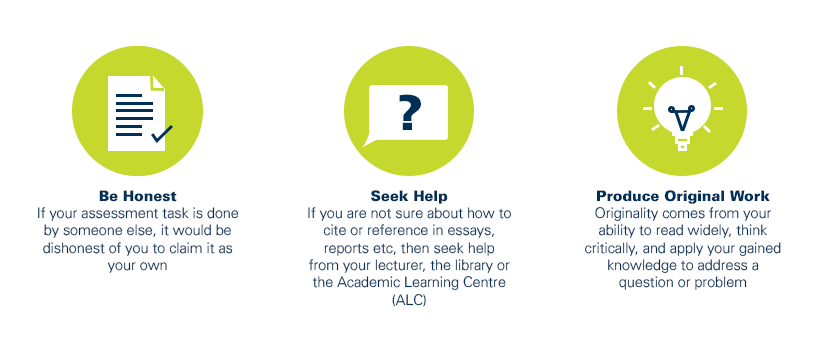
As a CQUniversity student you are expected to act honestly in all aspects of your academic work.
Any assessable work undertaken or submitted for review or assessment must be your own work. Assessable work is any type of work you do to meet the assessment requirements in the unit, including draft work submitted for review and feedback and final work to be assessed.
When you use the ideas, words or data of others in your assessment, you must thoroughly and clearly acknowledge the source of this information by using the correct referencing style for your unit. Using others’ work without proper acknowledgement may be considered a form of intellectual dishonesty.
Participating honestly, respectfully, responsibly, and fairly in your university study ensures the CQUniversity qualification you earn will be valued as a true indication of your individual academic achievement and will continue to receive the respect and recognition it deserves.
As a student, you are responsible for reading and following CQUniversity’s policies, including the Student Academic Integrity Policy and Procedure. This policy sets out CQUniversity’s expectations of you to act with integrity, examples of academic integrity breaches to avoid, the processes used to address alleged breaches of academic integrity, and potential penalties.
What is a breach of academic integrity?
A breach of academic integrity includes but is not limited to plagiarism, self-plagiarism, collusion, cheating, contract cheating, and academic misconduct. The Student Academic Integrity Policy and Procedure defines what these terms mean and gives examples.
Why is academic integrity important?
A breach of academic integrity may result in one or more penalties, including suspension or even expulsion from the University. It can also have negative implications for student visas and future enrolment at CQUniversity or elsewhere. Students who engage in contract cheating also risk being blackmailed by contract cheating services.
Where can I get assistance?
For academic advice and guidance, the Academic Learning Centre (ALC) can support you in becoming confident in completing assessments with integrity and of high standard.
What can you do to act with integrity?