Overview
Early Childhood education and care services have an important role in ensuring that Australia’s vision for all children to thrive in their early years will be accomplished. Enacting curriculum with children to ensure their holistic development requires thoughtful decision making that draws on professional knowledge, knowledge of children and local contexts, and understandings of the relevant learning framework. As you examine approaches to curriculum that are responsive to children, you will consider also how the way we view children impacts our work with them. You will research and apply strategies for gathering data about children’s learning with particular attention given to sharing information with stakeholders. You will analyse the learning of children to document their curiosities, capabilities, discoveries, knowledge skills, theories and involvement in learning. Drawing on your engagement with observing, assessing and documenting learning, you will reflect critically to determine implications for your future learning and practice and your responsibilities in relation to child safety.
Details
Pre-requisites or Co-requisites
There are no requisites for this unit.
Important note: Students enrolled in a subsequent unit who failed their pre-requisite unit, should drop the subsequent unit before the census date or within 10 working days of Fail grade notification. Students who do not drop the unit in this timeframe cannot later drop the unit without academic and financial liability. See details in the Assessment Policy and Procedure (Higher Education Coursework).
Offerings For Term 1 - 2026
Attendance Requirements
All on-campus students are expected to attend scheduled classes - in some units, these classes are identified as a mandatory (pass/fail) component and attendance is compulsory. International students, on a student visa, must maintain a full time study load and meet both attendance and academic progress requirements in each study period (satisfactory attendance for International students is defined as maintaining at least an 80% attendance record).
Recommended Student Time Commitment
Each 6-credit Postgraduate unit at CQUniversity requires an overall time commitment of an average of 12.5 hours of study per week, making a total of 150 hours for the unit.
Class Timetable
Assessment Overview
Assessment Grading
This is a graded unit: your overall grade will be calculated from the marks or grades for each assessment task, based on the relative weightings shown in the table above. You must obtain an overall mark for the unit of at least 50%, or an overall grade of 'pass' in order to pass the unit. If any 'pass/fail' tasks are shown in the table above they must also be completed successfully ('pass' grade). You must also meet any minimum mark requirements specified for a particular assessment task, as detailed in the 'assessment task' section (note that in some instances, the minimum mark for a task may be greater than 50%). Consult the University's Grades and Results Policy for more details of interim results and final grades.
All University policies are available on the CQUniversity Policy site.
You may wish to view these policies:
- Grades and Results Policy
- Assessment Policy and Procedure (Higher Education Coursework)
- Review of Grade Procedure
- Student Academic Integrity Policy and Procedure
- Academic Progression Policy and Procedure
- Student Refund and Credit Balance Policy and Procedure
- Complaints Policy and Procedure
- Information and Communications Technology Acceptable Use Policy and Procedure
This list is not an exhaustive list of all University policies. The full list of University policies are available on the CQUniversity Policy site.
Feedback, Recommendations and Responses
Every unit is reviewed for enhancement each year. At the most recent review, the following staff and student feedback items were identified and recommendations were made.
Feedback from Student feedback
Tutorials
Continue to enact tutorials that are interactive and supportive
- Synthesise approaches to curriculum that are responsive to children to create a multimedia presentation
- Appraise perspectives of children embedded in the selected policy text/s and explicate how such views impact how teachers work with young children
- Research and apply strategies for gathering data about children’s learning with particular attention given to sharing information with important stakeholders (families), including Aboriginal and Torres Strait Island families and explain challenges for educators
- Analyse the learning behaviour of children to document their curiosities, capabilities, discoveries, knowledge skills, theories and involvement in learning
- Generate visual documentation to make visible your analysis of children’s learning
- Explicate links to the practices outlined in Belonging, Being and Becoming: Early Years Learning Framework for Australia
- Reflect critically on the impact of your observations of children on future learning and practice
- Identify and describe the regulatory environment and responsibilities of educators in relation to duty of care and child safety in early childhood education and care settings.
This unit contributes to meeting the curriculum content requirements outlined by the Australian Children's Education & Care Quality Authority (ACECQA).
Alignment of Assessment Tasks to Learning Outcomes
| Assessment Tasks | Learning Outcomes | |||||||
|---|---|---|---|---|---|---|---|---|
| 1 | 2 | 3 | 4 | 5 | 6 | 7 | 8 | |
| 1 - Presentation - 40% | ||||||||
| 2 - Written Assessment - 60% | ||||||||
| 3 - Online Test - 0% | ||||||||
Alignment of Graduate Attributes to Learning Outcomes
| Graduate Attributes | Learning Outcomes | |||||||
|---|---|---|---|---|---|---|---|---|
| 1 | 2 | 3 | 4 | 5 | 6 | 7 | 8 | |
| 1 - Knowledge | ||||||||
| 2 - Communication | ||||||||
| 3 - Cognitive, technical and creative skills | ||||||||
| 4 - Research | ||||||||
| 5 - Self-management | ||||||||
| 6 - Ethical and Professional Responsibility | ||||||||
| 7 - Leadership | ||||||||
| 8 - First Nations Knowledges | ||||||||
| 9 - Aboriginal and Torres Strait Islander Cultures | ||||||||
Textbooks
There are no required textbooks.
IT Resources
- CQUniversity Student Email
- Internet
- Unit Website (Moodle)
No referencing style set.
j.souter@cqu.edu.au
g.busch@cqu.edu.au
Week 1 Historical, theoretical and philosophical perspectives
Begin Date: 09 Mar 2026Module/Topic
Historical, theoretical and philosophical perspectives
Chapter
Events and Submissions/Topic
Week 2 Images of Children
Begin Date: 16 Mar 2026Module/Topic
Images of Children
Chapter
Events and Submissions/Topic
Week 3 Policy context
Begin Date: 23 Mar 2026Module/Topic
Policy context
Chapter
Events and Submissions/Topic
Week 4 Role of the Educator
Begin Date: 30 Mar 2026Module/Topic
Role of the Educator
Chapter
Events and Submissions/Topic
Week 5 Curriculum approaches and pedagogies Part A
Begin Date: 06 Apr 2026Module/Topic
Curriculum approaches and pedagogies Part A
Chapter
Events and Submissions/Topic
Week 6 Curriculum approaches and pedagogies Part B
Begin Date: 13 Apr 2026Module/Topic
Curriculum approaches and pedagogies Part B
Chapter
Events and Submissions/Topic
Vacation Week
Begin Date: 20 Apr 2026Module/Topic
Chapter
Events and Submissions/Topic
Week 7 Documenting and assessing learning
Begin Date: 27 Apr 2026Module/Topic
Documenting and assessing learning
Chapter
Events and Submissions/Topic
Week 8 Collaborative documentation and analysis
Begin Date: 04 May 2026Module/Topic
Collaborative documentation and analysis
Chapter
Events and Submissions/Topic
Week 9 Assessment for learning
Begin Date: 11 May 2026Module/Topic
Assessment for learning
Chapter
Events and Submissions/Topic
Week 10 Evaluation and Critical Reflection
Begin Date: 18 May 2026Module/Topic
Evaluation and Critical Reflection
Chapter
Events and Submissions/Topic
Week 11
Begin Date: 25 May 2026Module/Topic
Chapter
Events and Submissions/Topic
Week 12
Begin Date: 01 Jun 2026Module/Topic
Chapter
Events and Submissions/Topic
Exam Week
Begin Date: 08 Jun 2026Module/Topic
Chapter
Events and Submissions/Topic
Vacation/Exam Week
Begin Date: 15 Jun 2026Module/Topic
Chapter
Events and Submissions/Topic
1 Presentation
This assessment task is made up of 3 parts along with your reference list –
1. Part A,
2. Part B and
3. An Infographic Presentation
Part A: Drawing on both the principles and practices in the EYLF and set text, you are required to provide a synthesis of the approach/es to curriculum embedded in the EYLF. This synthesis must be supported with key references from the unit. (approximately 600 words)
Part B: Several theoretical perspectives inform the EYLF, and these can “challenge traditional ways of seeing children, teaching and learning” (AGDE, 2022, p. 13). Review and outline the view of children embedded in the EYLF and the NQS. You are asked to consider the assumptions about children contained in the EYLF and in Quality area 1 of the NQS. (approximately 600 words)
Infographic Presentation: The synthesis derived from Part A and B will be used to create an engaging Infographic. You can use a suitable multimedia resource such as Canva etc to assist with your Infographic design. (equivalent to 500 words). The use of graphics, images, graphs can be used to make your infographic presentation as engaging as possible to your audience. The use of charactures is not suitable for professional teaching practice as they often refer to a picture, description, or imitation of a person in which certain striking characteristics are exaggerated in order to create a comic or grotesque effect. (approximately 500 words)
NOTE: ensure you are using references to the unit content only in your assessment task
Reference List
· Minimum 7 references from unit content only (e.g., eReadings, lecture materials, prescribed readings).
· Use APA 7th edition referencing style. NOTE: ensure you are using references to the unit content only in your assessment task
· References are not included in the word count.
Submission Checklist
✅ Part A – Approaches to curriculum (600 words)
✅ Part B – View of children in the EYLF & NQS #1 (600 words)
✅ Infographic Presentation – synthesis of Parts A & B (500 words)
✅ Reference List – 7 unit-based sources. References are not included in word count
IMPORTANT - Parts A, B and Reference list MUST be submitted in a single word document. References must come from unit content only and be integrated into both parts A, B and Infographic
Vacation Week Monday (20 Apr 2026) 11:45 pm AEST
Due: End of break week, Sunday 26th April 11:45pm (AEST)
As per University policy
- Synthesise approaches to curriculum that are responsive to children to create a multimedia presentation
- Appraise perspectives of children embedded in the selected policy text/s and explicate how such views impact how educators work with young children
- Synthesise approaches to curriculum that are responsive to children to create a multimedia presentation
- Appraise perspectives of children embedded in the selected policy text/s and explicate how such views impact how teachers work with young children
2 Written Assessment
“The planning cycle describes the process educators follow in planning, documenting, responding to and supporting children’s learning” (AGDE, 2022, p. 27). As part of the planning process, educators draw on “professional knowledge, their knowledge of children and local contexts, and their understanding of the Vision, Principles, Practices and Learning Outcomes” (AGDE, 2022, p. 27) outlined in the Early Years Learning Framework.
NOTE: This assessment task is a group task of 2 to 3 students maximum and has three components along with your reference list:
1. Part A
2. Part B – this section is not submitted but informs Part C
3. Part C (complete sections 1 & 2)
Part A: As a group, you will research and provide an overview of a range of approaches or methods teachers use for gathering data about children’s learning (500 words)
Part B: The focus of the next part of the task is observing and listening to children as they engage in learning experiences, play, and routines during their time in an early learning service. You are asked to select 1 video from the list provided on the Moodle site. As you spend time viewing the selected videos, you are required to reflect on the following:
· What competencies are the children demonstrating?
· How are they learning?
· What ideas/interests are they exploring? What are they curious about? What kinds of questions are they posing? Are they exploring theories?
· What insights have you gained about their dispositions?
· How are they navigating social relationships?
· How is the teacher interacting with the children? Are the children supporting the learning of others as they interact with each other?
You may notice other interesting aspects of the recordings also.
NOTE: You are not required to submit Part B. The purpose of Part B is to activate your curiosity about what is happening to encourage you to think deeply about what you are observing. This section will help you complete Part C.
Part C: Following your initial wonderings about and analysis of what you have observed, noticed and heard in your selected videos, you are asked to complete the following 2 parts (1 & 2):
1. Create a piece of pedagogical documentation (500) for the selected video observations, analysis and notes. “Documentation is an integral and structuring part of the educational theories and teaching practices, as it gives value to and makes explicit, visible and assessable the nature of the individual and group learning processes of both the children and the adults, processes which are identified by means of observation and which become the common wealth” (Rinaldi, 2013, p. 33). The documentation needs to focus on children’s curiosities, capabilities, discoveries, knowledge skills, theories and involvement in learning and include:
· Explicating the links to the learning outcomes outlined in the EYLF (2022) or relevant framework in the state of territory.
· Reflecting on the assumptions about children that were evident in the video scenarios that you observed and consider what this means for your future practice.
2. Design and prepare 1 Invitation to Play (500 words) that demonstrates your groups ability to reflect on the observed children’s interests and explorations in the video and set up an invitation to play that extends of these reflections.
Your invitation to play must include concept plans including drawings or graphics of the design plan and lay-out and a list of materials and resources.
You must also provide in their rationale an explanation of how the invitation reflects the children’s interests documented in your visual documentation. This is where your links to references come in.
Submission Checklist
✅ Part A – Methods for gathering data (500 words)
✅ Part C – Visual documentation (500 words) & Invitation to Play design plan and set-up video (500 words)
✅ Reference List – 7 unit-based sources
Week 12 Monday (1 June 2026) 11:45 pm AEST
Due: End of week 12, Sunday 12th June 11:45pm (AEST)
As per University policy
· Research and apply strategies for gathering data about children’s learning with particular attention given to sharing information with important stakeholders (families),including Aboriginal and Torres Strait Island families and explain challenges for educators (Assignment 2)
· Analyse the learning behaviour of children to document their curiosities, capabilities, discoveries, knowledge skills, theories and involvement in learning. (Assignment 2)
· Generate visual documentation to make visible your analysis of children’s learning
· Explicate links to the practices outlined in Belonging, Being and Becoming:Early Years Learning Framework for Australia (Assignment 2)
· Reflect critically on the impact of your observations of children on your future
learning and practice. (Assignment 2)
- Research and apply strategies for gathering data about children’s learning with particular attention given to sharing information with important stakeholders (families), including Aboriginal and Torres Strait Island families and explain challenges for educators
- Analyse the learning behaviour of children to document their curiosities, capabilities, discoveries, knowledge skills, theories and involvement in learning
- Generate visual documentation to make visible your analysis of children’s learning
- Explicate links to the practices outlined in Belonging, Being and Becoming: Early Years Learning Framework for Australia
- Reflect critically on the impact of your observations of children on future learning and practice
3 Online Test
REQUIRED: Mandatory National Child Safety Training. This must be completed prior to you commencing your first Placement for this course or your Placement allocation will be cancelled. From 27 February 2026, all persons with management and control, nominated supervisors, persons in day-to-day charge, staff, volunteers and students in the early childhood education and care (ECEC) sector must complete mandatory national child safety training in Geccko. Geccko is the Australian Government Department of Education’s online learning platform for the ECEC sector. As a University student who will be undertaking Placement in an Early Childhood Education and Care setting, you will be required to undertake the FOUNDATION TRAINING before you can start your Placement for this course.
Information pertaining to how this is accomplished will be provided during tutorials and on the Moodle site
Students need to print or save their completion certificate from Geccko and upload a copy into SONIA. Each certificate includes a unique certificate number. Your Placement site may also ask you to present your completion certificates when you undertake your Pre-Placement Centre visit/interview.
Here is the link to the Australian Government Department of Education to complete your FOUNDATION TRAINING - https://www.education.gov.au/early-childhood/about/quality-and-safety/mandatory-national-child-safety-training?fbclid=IwY2xjawPal0FleHRuA2FlbQIxMQBzcnRjBmFwcF9pZAwzNTA2ODU1MzE3MjgAAR7uEWHkg06uKwU8RBMqElphvTo1geJQ7BiEHulXxrrV1SOf-aCxiktWxH770g_aem_juTWzr7lbCZvPNvjrdPoxw
No submission method provided.
- Identify and describe the regulatory environment and responsibilities of educators in relation to duty of care and child safety in early childhood education and care settings.
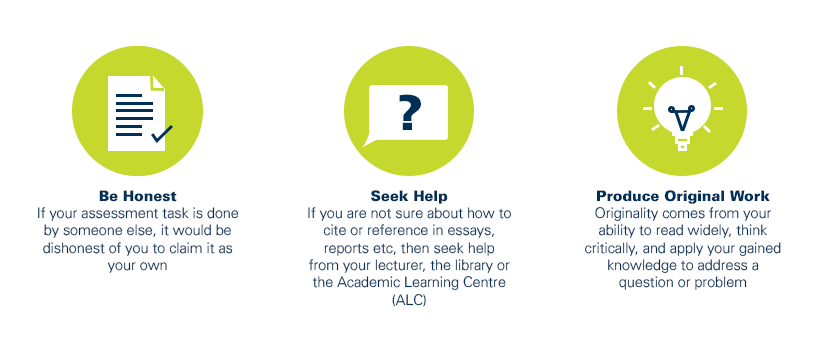
As a CQUniversity student you are expected to act honestly in all aspects of your academic work.
Any assessable work undertaken or submitted for review or assessment must be your own work. Assessable work is any type of work you do to meet the assessment requirements in the unit, including draft work submitted for review and feedback and final work to be assessed.
When you use the ideas, words or data of others in your assessment, you must thoroughly and clearly acknowledge the source of this information by using the correct referencing style for your unit. Using others’ work without proper acknowledgement may be considered a form of intellectual dishonesty.
Participating honestly, respectfully, responsibly, and fairly in your university study ensures the CQUniversity qualification you earn will be valued as a true indication of your individual academic achievement and will continue to receive the respect and recognition it deserves.
As a student, you are responsible for reading and following CQUniversity’s policies, including the Student Academic Integrity Policy and Procedure. This policy sets out CQUniversity’s expectations of you to act with integrity, examples of academic integrity breaches to avoid, the processes used to address alleged breaches of academic integrity, and potential penalties.
What is a breach of academic integrity?
A breach of academic integrity includes but is not limited to plagiarism, self-plagiarism, collusion, cheating, contract cheating, and academic misconduct. The Student Academic Integrity Policy and Procedure defines what these terms mean and gives examples.
Why is academic integrity important?
A breach of academic integrity may result in one or more penalties, including suspension or even expulsion from the University. It can also have negative implications for student visas and future enrolment at CQUniversity or elsewhere. Students who engage in contract cheating also risk being blackmailed by contract cheating services.
Where can I get assistance?
For academic advice and guidance, the Academic Learning Centre (ALC) can support you in becoming confident in completing assessments with integrity and of high standard.
What can you do to act with integrity?