Overview
Young children are curious and active inquirers about their world, including STEM (science, technology, engineering and mathematics) and sustainability focussed curiosities. Through play, children investigate, experiment, test hypotheses, imagine and explore ideas. There is growing recognition that education about sustainability supports children’s active role in contributing to a sustainable future. A national focus on both STEM and sustainability in curriculum texts has pedagogical implications for teachers. In this unit, you will consolidate your knowledge in STEM disciplines and identify the pedagogies required to support children’s engagement and participation in STEM, drawing on and making links to relevant curriculum frameworks and policy texts. Drawing on key literature pertaining to sustainability, you will generate strategies that support child participation in building a sustainable, democratic, equitable and just society. The implications for your practice in early childhood contexts will be explicated. Case studies and scenarios from other countries will be included in the unit materials.
Details
Pre-requisites or Co-requisites
There are no requisites for this unit.
Important note: Students enrolled in a subsequent unit who failed their pre-requisite unit, should drop the subsequent unit before the census date or within 10 working days of Fail grade notification. Students who do not drop the unit in this timeframe cannot later drop the unit without academic and financial liability. See details in the Assessment Policy and Procedure (Higher Education Coursework).
Offerings For Term 1 - 2026
Attendance Requirements
All on-campus students are expected to attend scheduled classes - in some units, these classes are identified as a mandatory (pass/fail) component and attendance is compulsory. International students, on a student visa, must maintain a full time study load and meet both attendance and academic progress requirements in each study period (satisfactory attendance for International students is defined as maintaining at least an 80% attendance record).
Recommended Student Time Commitment
Each 6-credit Postgraduate unit at CQUniversity requires an overall time commitment of an average of 12.5 hours of study per week, making a total of 150 hours for the unit.
Class Timetable
Assessment Overview
Assessment Grading
This is a graded unit: your overall grade will be calculated from the marks or grades for each assessment task, based on the relative weightings shown in the table above. You must obtain an overall mark for the unit of at least 50%, or an overall grade of 'pass' in order to pass the unit. If any 'pass/fail' tasks are shown in the table above they must also be completed successfully ('pass' grade). You must also meet any minimum mark requirements specified for a particular assessment task, as detailed in the 'assessment task' section (note that in some instances, the minimum mark for a task may be greater than 50%). Consult the University's Grades and Results Policy for more details of interim results and final grades.
All University policies are available on the CQUniversity Policy site.
You may wish to view these policies:
- Grades and Results Policy
- Assessment Policy and Procedure (Higher Education Coursework)
- Review of Grade Procedure
- Student Academic Integrity Policy and Procedure
- Academic Progression Policy and Procedure
- Student Refund and Credit Balance Policy and Procedure
- Complaints Policy and Procedure
- Information and Communications Technology Acceptable Use Policy and Procedure
This list is not an exhaustive list of all University policies. The full list of University policies are available on the CQUniversity Policy site.
- Synthesise contemporary research pertaining to STEM to explore the importance of teaching it as an integrated suite of disciplines
- Generate possibilities for a STEM focussed inquiry that enables young children to represent and communicate their emerging theories and identify links to the relevant curriculum framework
- Communicate an analysis of the pedagogical implications with consideration given to supporting children to explore and represent their ideas
- Examine the literature to distil strategies to facilitate child participation in building a sustainable, democratic, equitable and just society and articulate reflections on the provocations presented in the literature
- Analyse observations of practice to explicate pedagogies that promote a focus on sustainability
- Implement and document a sustainability focussed project with children which documents their voices and representations and provides reflections on the importance of listening to children.
This unit contributes to meeting the curriculum content requirements outlined by the Australian Children's Education & Care Quality Authority (ACECQA).
Alignment of Assessment Tasks to Learning Outcomes
| Assessment Tasks | Learning Outcomes | |||||
|---|---|---|---|---|---|---|
| 1 | 2 | 3 | 4 | 5 | 6 | |
| 1 - Written Assessment - 50% | ||||||
| 2 - Portfolio - 50% | ||||||
Alignment of Graduate Attributes to Learning Outcomes
| Graduate Attributes | Learning Outcomes | |||||
|---|---|---|---|---|---|---|
| 1 | 2 | 3 | 4 | 5 | 6 | |
| 1 - Knowledge | ||||||
| 2 - Communication | ||||||
| 3 - Cognitive, technical and creative skills | ||||||
| 4 - Research | ||||||
| 5 - Self-management | ||||||
| 6 - Ethical and Professional Responsibility | ||||||
| 7 - Leadership | ||||||
| 8 - First Nations Knowledges | ||||||
| 9 - Aboriginal and Torres Strait Islander Cultures | ||||||
Textbooks
There are no required textbooks.
IT Resources
- CQUniversity Student Email
- Internet
- Unit Website (Moodle)
- Microsoft Access
- Zoom
- Microsoft Teams
- Microsoft tools
All submissions for this unit must use the referencing style: American Psychological Association 7th Edition (APA 7th edition)
For further information, see the Assessment Tasks.
y.carrizo@cqu.edu.au
g.busch@cqu.edu.au
Week 1
Begin Date: 09 Mar 2026Module/Topic
Week 1 | What is STEM and why is it important?
Chapter
Moodle content week 1
Library e-reading
ACARA. (2017). Learning continuum for the general capabilities: Creative and critical thinking. https://v8.australiancurriculum.edu.au
Australian Curriculum, Assessment and Reporting Authority. (2010). Critical and creative thinking (Version 8.4). https://v8.australiancurriculum.edu.au
Hammond, L. (n.d.). The importance of STEM in early childhood education. Gowrie NSW. https://gowriensw.com.au
Knaus, M. (2023). Growing minds – the importance of STEM in early childhood. NSW Government. https://education.nsw.gov.au
Van Meeteren, B. (2015). Engineering in preschool? The children are already working on that! Teaching Young Children, 8(3), 30–31. https://cqu-a.alma.exlibrisgroup.com
Events and Submissions/Topic
Week 2
Begin Date: 16 Mar 2026Module/Topic
Week 2 | Pedagogical approaches to teaching STEM: Science and engineering
Chapter
Moodle content week 2
Library e-reading
Australian Education Research Organisation. (2024, September). Early childhood learning trajectories. https://edresearch.edu.au
Major, A. (2018). What does engineering look like in early childhood? Museum of Science. https://blog.eie.org
O’Connor, G., & Rosicka, C. (2020). Science inquiry skills: Science in the early years. Australian Council for Educational Research. https://research.acer.edu.au
Ramanathan, G., Cosso, S., & Pool, J. (2024). Engineering in preschool: What little minds can teach us about big skills. Early Childhood Education Journal, 52(6), 1245–1257. https://doi.org/10.1007/s10643-023-01512-9
Events and Submissions/Topic
Week 3
Begin Date: 23 Mar 2026Module/Topic
Week 3 | Play as a rich context for teaching STEM
Chapter
Moodle content week 3
Library e-reading
Children Practice Research. (2021). Children learn science in nature play long before they get to school classrooms and labs. The Sector. https://thesector.com.au
Childhood Nature Play. (2022). 10 play types. https://childhoodnatureplay.com
Childhood Nature Play. (2022). Nature play strategies. https://childhoodnatureplay.com
Fleer, M. (2022). The March of the Ants. Monash University. https://monash.edu
Fleer, M. (2022). Possum in the house. Monash University. https://monash.edu
Fleer, M. (2023). How the Conceptual PlayLab approach to STEM can foster innovation in preschoolers. Monash University. https://monash.edu
Green Leaves Early Learning. (2024). Learning through play: Pulley system fun. https://greenleaveselc.com.au
The Education Hub. (2023). STEM learning through nature play. https://theeducationhub.org.nz
Monash University. (n.d.). PlayWorlds in action [Video]. https://monash.edu
Monash University. (2023). Create your own PlayWorld. https://monash.edu
Knaus, M. (2023). Growing minds – the importance of STEM in early childhood. NSW Government. https://education.nsw.gov.au
Events and Submissions/Topic
Week 4
Begin Date: 30 Mar 2026Module/Topic
Week 4 | Innovative approaches to teaching STEM: Maths and numeracy
Chapter
Moodle content week 4
Library e-reading
Australian Curriculum. (2025). Understand this learning area: Mathematics. https://v9.australiancurriculum.edu.au
Australian Curriculum (Version 8.4). (n.d.). National Numeracy Learning Progression. https://v8.australiancurriculum.edu.au
CELA – Viknarasah, K. (2021, July 26). How we can introduce numeracy in the early years. https://cela.org.au
Gifford, S., Gripton, C., Williams, H., Lancaster, A., Bates, K., Williams, A., Gilligan‑Lee, K., & Borthwick, A. (2022). Spatial reasoning in early childhood. Early Childhood Maths Group. https://doi.org/10.31234/osf.io/jnwpu
Greenberg, J. (2012). More, all gone, empty, full: Math talk every day in every way. Young Children. https://naeyc.org
MacDonald, A. (2022). Patterning: Kindergarten research insights. QCAA. https://qcaa.qld.edu.au
Gowrie NSW. (n.d.). Numeracy in early learning. https://gowriensw.com.au
The Australian Association of Mathematics Teachers & Early Childhood Australia. (2023). Position paper on early childhood mathematics. https://earlychildhoodaustralia.org.au
Events and Submissions/Topic
Week 5
Begin Date: 06 Apr 2026Module/Topic
Week 5 | Drawing on the affordances of technologies to support STEM
Chapter
Moodle content week 5
Library e-reading
AITSL. (2016). Inquiry learning in play spaces [Video]. https://aitsl.edu.au
Christensen, M., & McFadden, A. (2018). STEM practice in early childhood settings. Every Child, 24(2), 28–29. https://cqu-a.alma.exlibrisgroup.com
Illinois Early Learning Project. (n.d.). Illinois Early Learning Project. https://illinoisearlylearning.org
Pelo, A. (2014). Finding the questions worth asking. Exchange Press. https://ccie-catalog.s3.amazonaws.com
Queensland Government Department of Education. (2019). Age‑appropriate pedagogies: Inquiry learning. https://earlychildhood.qld.gov.au
Snider, K. (2017). Three phases of the project approach. Project Approach KC. https://projectapproachkc.org
Curiale, K. (2010). Up Up and Away: The Airplane Project. Illinois Early Learning Project. https://illinoisearlylearning.org
Events and Submissions/Topic
Week 6
Begin Date: 13 Apr 2026Module/Topic
Week 6 | STEM for infants and toddlers
Chapter
Moodle content week 6
Library e-reading
Bucher, E., & Pindra, S. (2020). Infant and toddler STEAM: Supporting interdisciplinary experiences with our youngest learners. Young Children, 75(2). https://cqu-a.alma.exlibrisgroup.com
Fleer, M. (2019). AU STEM PlayWorlds for infants and toddlers [Video]. YouTube. https://youtube.com
Events and Submissions/Topic
Vacation Week
Begin Date: 20 Apr 2026Module/Topic
Chapter
Events and Submissions/Topic
Assessmemt 1 due
Mapping Possibilities for STEM Inquiry in Early Childhood Due: Vacation Week Monday (20 Apr 2026) 11:45 pm AEST
Week 7
Begin Date: 27 Apr 2026Module/Topic
Chapter
Moodle content week 7
Library e-reading
Australian Curriculum. (n.d.). Sustainability. https://australiancurriculum.edu.au
Carrizo, Y., Knight, L., & Harris, D. X. (2025). Decolonising dust: Rewilding the microworlds of early childhood pedagogies. Australian Journal of Environmental Education, 41(2), 261–267. https://doi.org/10.1017/aee.2025.27
Carrizo, Y., & Harris, D. X. (2025). Becoming‑with dust and the more‑than‑human. In T. Doughty, J. Deszcz‑Tryhubczak, & J. Grafton (Eds.), Children’s literatures, cultures, and pedagogies in the Anthropocene (pp. 155–168). Bloomsbury Academic.
MacDonald, J., Butler, K., & Alla, K. (2023). Engaging young children (0–5 years) in nature play. AIFS. https://aifs.gov.au
OMEP Australia. (2024). Pathways to sustainability in early childhood. https://omepaustralia.org.au
UN. (2023). Take action for the Sustainable Development Goals. https://un.org
NSW Government – Warren, J. (2024). Exploring the 3 dimensions of sustainability in ECEC. https://education.nsw.gov.au
ACARA. (2024). K–6 picture book guide: Sustainability. NSW Government. https://education.nsw.gov.au
ECA Learning Hub. (2013). Embedding sustainable practices (Part 1 of 3) [Video]. YouTube. https://youtube.com
Events and Submissions/Topic
Week 8
Begin Date: 04 May 2026Module/Topic
Week 8 | Embedding Indigenous Knowledges
Chapter
Moodle content week 8
Library e-reading
ACECQA. (n.d.). Engaging with Aboriginal communities. https://acecqa.gov.au
AIATSIS. (2025). Map of Indigenous Australia. https://aiatsis.gov.au
Dharawal Words. (n.d.). A reference for learning about Dharawal language and culture. https://dharawalwords.com.au
NSW AECG Inc. (2024). AECG regions. https://aecg.nsw.edu.au
Queensland Government Department of Education. (2020). Engaging communities: empowering futures. https://indigenousportal.education.qld.gov.au
Reconciliation Australia. (2017). Build relationships with community [Video]. YouTube. https://youtube.com
QCAA. (2025). Reflecting on Aboriginal and Torres Strait Islander perspectives in kindergarten [Video]. YouTube. https://youtube.com
Ziemer, T., & Lee, E. (2021). Reflections: Learning on Country. Lady Gowrie. (via Moodle).
Creighton, B., & Guy, P. (2023). Connecting to Country. JCP. https://journals.sfu.ca
Events and Submissions/Topic
Week 9
Begin Date: 11 May 2026Module/Topic
Week 9 | Listening to and documenting children’s voices
Chapter
Moodle content week 9
Library e-reading
Deans, J., & Wright, S. (2021). STEAM through sensory-based action‑reaction learning. In C. Cohrssen & S. Garvis (Eds.), Embedding STEAM in early childhood education and care (pp. 135–153). Springer. https://doi.org/10.1007/978-3-030-65624-9_7
Hatzigianni, M., Gregoriadis, A., Moumoutzis, N., Christoulakis, M., & Alexiou, V. (2021). Integrating design thinking, digital technologies, and the arts to explore peace, war and social justice concepts with young children. In Embedding STEAM in early childhood education and care (pp. 21–40). Springer. https://doi.org/10.1007/978-3-030-65624-9_2
Mindstretchers Academy. (2018). Talking and thinking floorbooks [Video]. YouTube. https://youtube.com
Warden, C. (2019). How to effectively reflect, record and engage children. Early Childhood Australia. https://thespoke.earlychildhoodaustralia.org.au
TED. (n.d.). How every child can thrive by five – Molly Wright [Video]. https://youtube.com
Carrizo, Y., & Harris, D. X. (2025). Becoming-with dust and the more-than-human. In Children’s literatures, cultures, and pedagogies in the Anthropocene (pp. 155–168). Bloomsbury Academic.
Events and Submissions/Topic
Assessment 2 due
Group Podcast or Digital Storytelling Series – Sustainability In Early Childhood Education Due: Week 9 Thursday (14 May 2026) 11:45 pm AEST
Week 10
Begin Date: 18 May 2026Module/Topic
Week 10 | Review & Preparation for Assessment 2
Chapter
Moodle content week 10
Library e-reading
Review materials and prescribed textbook
Events and Submissions/Topic
Week 11
Begin Date: 25 May 2026Module/Topic
Chapter
Events and Submissions/Topic
Week 12
Begin Date: 01 Jun 2026Module/Topic
Chapter
Events and Submissions/Topic
Exam Week
Begin Date: 08 Jun 2026Module/Topic
Chapter
Events and Submissions/Topic
Vacation/Exam Week
Begin Date: 15 Jun 2026Module/Topic
Chapter
Events and Submissions/Topic
Prescribed Textbook and Resources
Cohrssen, C., & Garvis, S. (Eds.). (2021). Embedding STEAM in early childhood education and care (1st ed.). Springer International Publishing. https://doi.org/10.1007/978-3-030-65624-9
ACECQA. (2022). The Early Years Learning Framework for Australia. Australian Government Department of Education for the Ministerial Council. https://acecqa.gov.au
Dovigo, F., & Alici, S. (2025). Promoting transformative practices for sustainability in early childhood education and care: Cultivating critical, participatory and emancipatory approaches (1st ed.). Routledge.
Assessment Conditions and Requirements (Applicable to All Assessments in This Unit)
Use of Artificial Intelligence (AI) – Level 3
Students may use generative AI tools to assist with drafting, refining, and evaluating their work. Any AI‑generated content used must be critically reviewed, edited, and integrated by the student to ensure that the final submission reflects their own academic thinking and communication. AI Disclosure Requirement: All assessments must include a brief statement on the cover page outlining: which AI tool(s) were used which section(s) they supported how the tool(s) were used AI tools must also be included in the reference list using APA 7 style. Failure to disclose AI use, or inappropriate use of AI tools, will be treated as an academic integrity breach.
72‑Hour Grace Period
A 72‑hour grace period applies to all assessments in this unit. If additional time beyond the grace period is required, students must apply through the Assessment Extension System following standard university procedures.
Ethical Requirements — No Images, Video, or Audio of Children
To ensure compliance with ethical and legal standards, students must not include any photos, videos or voice recordings of children in their assessment submissions. Only de‑identified materials may be used. Students are responsible for ensuring no identifiable child information appears in their work.
1 Written Assessment
Assessment 1
Written Assessment - Mapping Possibilities for STEM Inquiry in Early Childhood
Weighting: 50%
Due date: Monday 20th April 2026, 11:45pm (AEST)
Task Type: Individual task
Referencing Style: American Psychological Association 7th Edition (APA 7th edition)
Word count: 1800 words plus visuals
Format: Flexible – choose a platform that suits your creativity (e.g., Canva, Padlet, PowerPoint, Book Creator, or similar).
Font: Any clear font, minimum size 12
Referencing: Unit's materials and e-reading list from Moodle (minimum 10 sources from the ones provided). Images taken from the internet must also be referenced.
GenAI Use: Level 3
Submission Guidelines
This assessment will be explained further during tutorials. Please attend tutorials, watch the recordings and review all materials provided in Moodle.
Submit your assessment through Moodle only. Email submissions will not be accepted.
Drafts will not be reviewed or marked by the lecturer.
All components must be submitted in one document, including the reference list and any required links.
Photos, voices or videos of children must not be included in this task.
Overview
This assessment invites you to explore the importance and possibilities of STEM in early childhood education through two creative components:
A reflective narrative that synthesises literature and policy.
A scenario-based inquiry plan presented as a journey of discovery.
You are encouraged to use storytelling, visual thinking and multimodal formats to communicate your ideas, while aligning with curriculum frameworks and pedagogical principles.
Part 1: STEM in Story and Reflection – Literature and Policy Review
Write a personal teaching story that illustrates your understanding of STEM in early childhood. You may choose to present this as:
A journal entry from your teaching practice.
A letter to a colleague or future educator.
A day-in-the-life story of a teacher or child engaging with STEM.
Your story should include:
Why STEM matters in early childhood
Use a real or imagined moment with children to illustrate how STEM supports curiosity, problem-solving and exploration.
How STEM works best when integrated
Reflect on how children naturally blend science, technology, engineering and maths in play and inquiry.
The power of real-world contexts
Describe a moment where children engaged with STEM through everyday experiences, such as building with recycled materials, exploring shadows, or mixing water and sand.
Connections to the EYLF (AGDE, 2022) and unit’s Moodle materials
Highlight key principles and practices (pp. 14–26) that align with your story, such as:
Learning through play
Inquiry-based learning
Holistic development
Relationships and belonging
Part 2: Scenario-Based Inquiry Planning
Select one scenario provided by your lecturer and reimagine it as a STEM adventure. Present your planning as a storybook, illustrated map, or inquiry journal that unfolds the scenario as a journey of discovery.
Include the following sections:
a. Children’s Inquiry Focus
Identify a central problem or inquiry topic.
Suggest potential questions children might ask.
Describe what aspects of the world children may be curious about in relation to the scenario.
Use storytelling or visual elements to bring this inquiry to life.
b. Web of Possibilities
Create a mind map, flowchart or illustrated web showing the directions the inquiry could take.
Think broadly about the learning opportunities the scenario could afford.
Highlight connections to different STEM disciplines.
c. Teacher’s Role and Planning
Write a reflective journal entry or plan to describe:
How will you guide and support children’s investigations?
Investigative processes you will use (e.g., observation, experimentation, documentation).
How children will represent and communicate their ideas (e.g., clay, drawing, painting, digital tools).
How will you scaffold key concepts and language?
Resources you will use (books, digital texts, images).
Implications for the learning environment as the “third teacher.”
d. Curriculum Connections
Link your inquiry to:
The Early Years Learning Framework for Australia (AGDE, 2022).
Analytical, Critical and Creative Thinking.
Integration across STEM disciplines (Science, Technology, Engineering, Mathematics).
The unit’s Moodle materials
Scenarios
Please select one of the following scenarios for your assessment 1:
Babies (0–18 months)
Light and Movement
Sunlight streams through a window and reflects off a hanging mobile. Babies lying on mats notice shifting patterns on the floor. They track the light with their eyes, reach towards the moving shapes, and respond with kicks or vocal sounds. Over time, they observe how patterns change in relation to the mobile’s movement and the sun’s position.
Textures and Touch
Babies explore a basket of textured objects: smooth wooden rings, soft cloth squares, and bumpy balls. They grasp, mouth and rub items against their skin. Some return to familiar textures repeatedly, while others compare two objects side by side. Their actions show curiosity about differences in surface, weight, and temperature.
Toddlers (18 months–3 years)
Rolling and Speed
Toddlers discover cardboard tubes and balls in the construction area. They roll balls down tubes and notice how speed changes with slope and surface. They begin adjusting angles, stacking blocks to make ramps and comparing which ball reaches the bottom first. Their play evolves into testing predictions about “fast” and “slow.”
Water and Flow
After water play, toddlers notice puddles forming on the outdoor path. They stomp and splash, then start pouring water from cups into puddles. They watch ripples spread and objects float or sink. Some begin moving water between containers, observing how volume and flow change.
Pre-Kinder (3–4 years)
Colour Mixing
Children use clear cups of coloured water: red, blue, yellow and begin pouring two colours together. They notice new colours forming and start predicting outcomes before mixing. They compare shades and experiment with adding more or less of each colour, exploring cause and effect.
Shadow Play
On a sunny day, children notice their shadows stretching across the playground. They jump, run, and trace shadows with chalk. They compare sizes at different times and begin asking why shadows move and change shape. Some test shadows with toys and objects, noticing patterns.
Kinder (4–5 years)
Floating and Sinking
Children collect natural and classroom objects, such as leaves, stones, and plastic lids, and test them in a water tub. They predict which will float or sink and record results. They begin asking why some heavy things float and experiment with wrapping or changing objects to see if the outcomes change.
Ramp Races
Children build ramps using planks and blocks. They roll balls down and notice differences in speed and distance. They start testing which ramp makes the ball go the furthest, adjusting the height and surface texture. Their play becomes focused on comparing results and refining designs.
Sound and Distance
Children use cardboard tubes as pretend telephones. They speak through one end and listen at the other, noticing how sound changes. They try longer and shorter tubes, compare which carries sound better and begin asking why sound travels differently.
Building Strong Structures
Children use blocks and recycled materials to build towers and bridges. They notice some collapse while others stay strong. They start experimenting with wider bases, different shapes and adding supports. Their play shifts towards testing which designs hold more weight.
Important information:
Word count for this assignment: 1800 words maximum
The word count is considered from the first word of the introduction to the last word of the conclusion. It excludes the cover page, abstract, contents page, reference page and appendices. It includes in-text citations and direct quotations.
AI: level 3
You may use AI to assist with this task, such as drafting text, refining, and evaluating your work. You must critically evaluate and modify any AI-generated content.
Any misuse or failure to disclose information regarding AI tools will be considered a breach of academic integrity.
Disclosure: Include a short note on your assessment cover page listing any AI tools used, which sections they were used in, and how they were used. Also, list the AI tool(s) in your reference list, following APA 7 style.
72-Hour Extension
The 72-Hour grace period applies to this assessment
If you need longer than 72 hours, you'll still need to use the normal Assessment Extension System process.
No photos, videos or voices of children
To ensure ethical and legal compliance, photos, videos, or voice recordings of children must not be included in this task. Please use only de‑identified materials, written observations, diagrams, or descriptions that do not reveal a child’s identity.
Vacation Week Monday (20 Apr 2026) 11:45 pm AEST
Week 9 Friday (15 May 2026)
Assessment criteria
Your work will be assessed using the following criteria:
1. Understanding and Interpretation of STEM in Early Childhood
Demonstrates a clear and accurate understanding of the importance of STEM in early childhood education.
Explains how STEM supports curiosity, inquiry, problem‑solving, and exploration in young children.
Shows insight into how STEM naturally integrates across play and real‑world contexts.
Draws meaningfully on the EYLF (AGDE, 2022) principles and practices (pp. 14–26) to support conceptual understanding.
2. Quality and Depth of Reflective Narrative (Part 1)
Creates an engaging, coherent teaching story (journal entry, letter, day‑in‑the‑life narrative, etc.).
Uses storytelling effectively to illuminate STEM concepts demonstrated in children’s play and inquiry.
Integrates theory, research, and policy to deepen the narrative (minimum 10 unit‑provided sources).
Shows reflective thinking about practice, learning, relationships, and pedagogy.
Communicates professionally and creatively while maintaining academic integrity.
3. Design and Representation of the Scenario‑Based STEM Inquiry (Part 2)
Clearly identifies a central inquiry focus from the selected scenario.
Presents children’s possible questions, curiosities, and investigative directions.
Uses a multimodal format (map, storybook, flowchart, inquiry journal, etc.) to creatively represent the inquiry journey.
Shows originality, thoughtful design, and appropriate use of visuals (all ethically sourced and referenced).
Demonstrates alignment between children’s inquiry behaviours and STEM learning opportunities.
4. Web of Possibilities: Breadth and Integration of STEM Concepts
Provides a rich, well‑structured web, mind map, or diagram that shows multiple possible inquiry pathways.
Highlights clear connections across STEM disciplines (Science, Technology, Engineering, Mathematics).
Identifies broad learning opportunities, including unintended or emergent possibilities.
Shows an ability to think expansively about pedagogy, discovery, and inquiry‑driven learning.
5. Teacher’s Role, Planning, and Pedagogical Intentionality
Demonstrates strong understanding of inquiry‑based teaching approaches.
Clearly describes the teacher’s role in scaffolding, observing, extending thinking, and using language intentionally.
Identifies suitable documentation practices, investigative processes, and representation strategies.
Connects planning decisions to resources, environment design, and the concept of the learning environment as the “third teacher.”
Reflects critically on how teacher choices foster meaningful STEM learning.
6. Curriculum, Framework, and Unit Material Alignment
Accurately links the inquiry to:
The Early Years Learning Framework (AGDE, 2022)
Creative and Critical Thinking
Relevant STEM disciplinary concepts
Weekly unit materials and required readings
Demonstrates sound understanding of curriculum frameworks, their intent, and their role in guiding practice.
7. Academic Writing, Presentation and Use of Multimodal Elements
Presents the work clearly, logically, and creatively using a chosen digital platform (e.g., Canva, Padlet, PowerPoint, Book Creator).
Integrates visuals in ways that enhance understanding and support the written analysis.
Demonstrates correct APA7 referencing for all text sources and internet images.
Maintains readability (font size ≥12) and meets the 1800‑word limit.
Submits all required components in one complete document.
8. Ethical and Responsible Use of Generative AI (Level 3)
Uses AI appropriately for drafting, refinement, or evaluation—not content generation.
Critically reviews and edits any AI‑assisted content to ensure originality and accuracy.
Includes a clear AI disclosure statement on the cover page.
Lists AI tools in the reference list following APA7 guidelines.
Demonstrates academic integrity in all uses of AI.
9. Ethical Requirements: No Children’s Images, Audio, or Video
Complies fully with the requirement to avoid photos, videos, or voice recordings of children.
Uses only de‑identified materials such as sketches, written descriptions, diagrams, or symbolic representations.
Ensures all visuals meet ethical and legal standards.
- Synthesise contemporary research pertaining to STEM to explore the importance of teaching it as an integrated suite of disciplines
- Generate possibilities for a STEM focussed inquiry that enables young children to represent and communicate their emerging theories and identify links to the relevant curriculum framework
- Communicate an analysis of the pedagogical implications with consideration given to supporting children to explore and represent their ideas
2 Portfolio
Assessment 2
Group Podcast or Digital Storytelling Series – Sustainability In Early Childhood Education
Weighting: 50%
Due: Thursday 14th May 2026, 11:45pm (AEST)
Task Type: Group Task, work in groups of 3–4 members. Form your group following your lecturer’s instructions. Document contributions and decisions for transparency. Ensure equal participation and respect for diverse ideas.
Format: Flexible – choose a platform that suits your creativity (e.g., Canva, Padlet, PowerPoint, Book Creator or similar).
Font: Any clear font, minimum size 12
Referencing Style: American Psychological Association 7th Edition (APA 7th edition)
GenAI Use: Level 3
Submission Guidelines
This assessment will be explained further during tutorials. Please attend tutorials, watch the recordings and review all materials provided in Moodle. Submit your assessment through Moodle only. Email submissions will not be accepted.
Drafts will not be reviewed or marked by the lecturer.
All components must be submitted in one document, including the reference list and any required links. Links must be active and accessible, and they should be pasted inside the document for easy access. Submit one document that includes working links to your podcast audio/video, portfolio, reflection, and reference list.
This task includes:
✔ Podcast episode or narrated digital story (4-5 minutes)
✔ Creative Portfolio with visuals and text (1000 words)
✔ Reflection (400 words)
✔ APA7 Reference List (Minimum 10 scholarly sources from unit materials and Moodle eReadings)
Photos, voices or videos of children must not be included in this task.
Overview
Sustainability is a foundational principle in the Early Years Learning Framework (EYLF), encompassing environmental, social, and economic dimensions:
Environmental sustainability: Caring for and improving the natural world.
Social sustainability: Inclusion, fairness, and respectful relationships within resilient communities.
Economic sustainability: Development without compromising environmental or social wellbeing (AGDE, 2022, p. 17).
Task Description
This assessment consists of three integrated parts designed to explore sustainability in early childhood education through research, creative media and reflective practice. Your group will work collaboratively to produce:
Part 1: Research Roundtable
Create a 4 to 5-minute podcast episode or narrated digital story in a conversational style (like a professional panel discussion).
Each group member shares insights from one scholarly article from the unit’s Moodle site (no external resources).
Discuss and debate key ideas, implications for practice and provocations raised by the readings.
Goal: Demonstrate understanding of sustainability concepts and their relevance to early childhood education.
Part 2: Creative Portfolio (1000 words + visuals)
Connect theory to practice by presenting sustainability in action through two components:
A. Observation of Sustainability Practices
Describe 2–3 (in total) specific practices observed during placement that demonstrate:
Environmental sustainability (e.g., recycling, gardening).
Social sustainability (e.g., inclusion, fairness).
Economic sustainability (e.g., reducing waste).
Make explicit links to:
EYLF principles and practices (AGDE, 2022).
National Quality Standard (NQS) (Quality Areas 1 & 3).
Unit’s materials (Moodle site).
Use photos of environments (without children), diagrams, or symbolic visuals.
B. Child-Led Sustainability Project
Identify a topic of interest related to sustainability that emerged from children’s engagement during your placement.
Design and describe a small potential project based on this interest:
What is the goal/focus of the project?
What materials and resources would you use?
How would you set up the environment?
How would you involve children in planning and doing the project?
Document the project creatively:
Children’s voices (through captions or role-play text).
Drawings, props, or symbolic visuals.
Evidence of children’s thinking and engagement.
Link the project to EYLF, NQS principles and unit’s materials.
Reflect on:
§ How would you support children’s inquiry and participation?
§ What strategies would you use to listen to children’s ideas and voices?
§ Why is listening to children important for meaningful sustainability education?
Part 3: Group Reflection (400 words)
· How did working in a group influence your understanding of sustainability in early childhood education? What key insights/learning have you gained from the literature, NQS, EYLF and completing this collaborative task about sustainability in early childhood education?
· How did your group work together to complete this task (e.g., roles, communication, challenges, and strategies)? Was the workload shared equally? Reflect on the strengths each member brought to the group and how these contributed to the final outcome.
Important information:
Word count for this assignment: 1800 words maximum
The word count is considered from the first word of the introduction to the last word of the conclusion. It excludes the cover page, abstract, contents page, reference page and appendices. It includes in-text citations and direct quotations.
AI: level 3
You may use AI to assist with this task, such as drafting text, refining, and evaluating your work. You must critically evaluate and modify any AI-generated content.
Any misuse or failure to disclose information regarding AI tools will be considered a breach of academic integrity.
Disclosure: Include a short note on your assessment cover page listing any AI tools used, which sections they were used in, and how they were used. Also, list the AI tool(s) in your reference list, following APA 7 style.
72-Hour Extension
The 72-Hour grace period applies to this assessment
If you need longer than 72 hours, you'll still need to use the normal Assessment Extension System process.
No photos, videos or voices of children
To ensure ethical and legal compliance, photos, videos, or voice recordings of children must not be included in this task. Please use only de‑identified materials, written observations, diagrams, or descriptions that do not reveal a child’s identity.
Week 9 Thursday (14 May 2026) 11:45 pm AEST
Week 12 Friday (5 June 2026)
Assessment Criteria
Your work will be assessed according to the following criteria:
1. Understanding of Sustainability Concepts in Early Childhood Education
Demonstrates a well‑developed understanding of the three dimensions of sustainability (environmental, social, economic) as defined in the EYLF (AGDE, 2022).
Explores sustainability in ways that show depth, accuracy, and connection to early childhood practice.
Integrates key ideas from the unit’s readings, scholarly sources, and the National Quality Standard (particularly QA1 and QA3).
Shows analytical insight into why sustainability matters for children, communities, and educational settings.
2. Quality and Effectiveness of the Podcast or Digital Storytelling Episode
Presents a clear, engaging 4–5 minute group episode in a conversational or panel‑style format.
Each group member contributes meaningfully, sharing insights from one scholarly reading from the Moodle site.
Demonstrates strong synthesis of ideas, critical discussion, and the ability to link theory with implications for practice.
Audio/visual elements (music, narration, pacing, transitions, captions, effects) enhance clarity and audience engagement.
The recording is accessible through a working link within the submitted document.
Complies with ethical requirements (no images, videos, or voices of children).
3. Creative Portfolio: Observation and Documentation of Sustainability Practices
Clearly and accurately describes 2–3 observed sustainability practices from placement (environmental, social, economic).
Connects observations to the EYLF (AGDE, 2022), NQS, and unit materials, demonstrating strong theoretical linkage.
Uses visuals effectively (diagrams, photos of environments, symbolic representations) to support explanation.
Shows depth of analysis in interpreting practice through a sustainability lens.
Communicates ideas coherently and professionally (1000 words + visuals).
4. Design of the Child‑Led Sustainability Project
Identifies a relevant sustainability topic based on children’s observed interests.
Describes a thoughtful, developmentally appropriate sustainability project that reflects children’s agency and inquiry.
Considers the role of the environment, materials, and teacher planning to support sustainability learning.
Demonstrates creativity through multimodal documentation (captions, children’s imagined dialogue, drawings, artefacts, maps).
Links project decisions to EYLF, NQS, and unit materials.
Explains how children’s voices and ideas shape the learning process and why listening is essential in sustainability education.
5. Group Reflection on Collaboration and Learning (400 words)
Clearly explains how the group worked together, negotiated roles, solved challenges, and distributed workload.
Reflects on key learning gained from the task, including insights about sustainability, pedagogy, teamwork, and professional responsibility.
Identifies each member’s strengths and how these contributed to the quality of the final product.
Shows honesty, self‑awareness, and professional reflection.
6. Academic Writing, Referencing, and Presentation Quality
Uses clear, coherent academic writing appropriate to the assessment type (podcast, portfolio, and reflection).
Integrates a minimum of 10 scholarly sources from the unit materials and Moodle e‑readings.
Uses APA 7 referencing accurately for all texts and visuals.
Presents all components in one well‑organised document with active, accessible links.
Uses a readable font (minimum size 12) and consistent formatting.
7. Ethical and Responsible Use of GenAI (Level 3)
Uses AI appropriately for drafting, refining, or evaluating, not for generating full assessment content.
Demonstrates critical editing and academic ownership of any AI‑supported work.
Includes a clear AI disclosure statement on the cover page, detailing which tools were used and how.
Lists AI tools in the reference list using APA 7.
Meets all academic integrity requirements.
8. Ethical Requirements: No Children’s Images, Audio, or Video
Complies fully with the requirement to exclude photos, voices, or videos of children.
Uses only environment‑based photos, diagrams, icons, or symbolic representations.
Ensures privacy and confidentiality are maintained throughout.
- Examine the literature to distil strategies to facilitate child participation in building a sustainable, democratic, equitable and just society and articulate reflections on the provocations presented in the literature
- Analyse observations of practice to explicate pedagogies that promote a focus on sustainability
- Implement and document a sustainability focussed project with children which documents their voices and representations and provides reflections on the importance of listening to children.
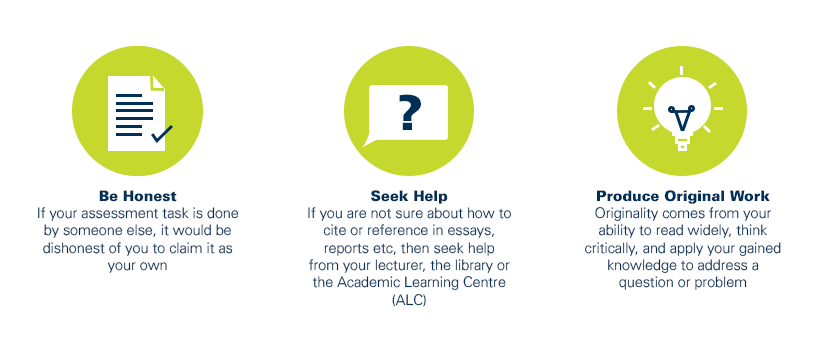
As a CQUniversity student you are expected to act honestly in all aspects of your academic work.
Any assessable work undertaken or submitted for review or assessment must be your own work. Assessable work is any type of work you do to meet the assessment requirements in the unit, including draft work submitted for review and feedback and final work to be assessed.
When you use the ideas, words or data of others in your assessment, you must thoroughly and clearly acknowledge the source of this information by using the correct referencing style for your unit. Using others’ work without proper acknowledgement may be considered a form of intellectual dishonesty.
Participating honestly, respectfully, responsibly, and fairly in your university study ensures the CQUniversity qualification you earn will be valued as a true indication of your individual academic achievement and will continue to receive the respect and recognition it deserves.
As a student, you are responsible for reading and following CQUniversity’s policies, including the Student Academic Integrity Policy and Procedure. This policy sets out CQUniversity’s expectations of you to act with integrity, examples of academic integrity breaches to avoid, the processes used to address alleged breaches of academic integrity, and potential penalties.
What is a breach of academic integrity?
A breach of academic integrity includes but is not limited to plagiarism, self-plagiarism, collusion, cheating, contract cheating, and academic misconduct. The Student Academic Integrity Policy and Procedure defines what these terms mean and gives examples.
Why is academic integrity important?
A breach of academic integrity may result in one or more penalties, including suspension or even expulsion from the University. It can also have negative implications for student visas and future enrolment at CQUniversity or elsewhere. Students who engage in contract cheating also risk being blackmailed by contract cheating services.
Where can I get assistance?
For academic advice and guidance, the Academic Learning Centre (ALC) can support you in becoming confident in completing assessments with integrity and of high standard.
What can you do to act with integrity?