Overview
In this unit, you will adopt an holistic view of learning and wellbeing and apply knowledge of the general capabilities of Personal and Social Competence and Sustainability that underpin the Australian curriculum to examine the rationale, aims and content of the Personal, Social and Community Health strand of the Australian curriculum: Health and Physical Education. You will evaluate the strength of the Health strand in facilitating the connectedness of children, families and community with each other and with the environment for sustainable futures. You will explore these concepts personally by identifying strategies that support their own wellbeing as members of a profession and reflect on their own experiences as they position children as active informed citizens of the future. You will observe children’s experiences in a range of learning, natural and social environments to identify the contributions children make to sustainable futures as they build and exercise personal and social competence. You will engage with research that documents both the impact of nature and natural play on health and wellbeing and the effects on healthy lifestyles of a disconnection from nature. You will apply knowledge gained from a policy analysis into public expressions of commitment to healthy, sustainable ways of living to their engagement with the curriculum strand. The implications of these factors for children and futures are analysed and students propose strategies and pedagogical approaches for implementing the Health strand of the curriculum in ways that optimise the transition of young children to formal school environments and that create learning environments as places of belonging for children and families and as sites for cultivating dispositions and knowledge necessary for sustainability where children are active agents in shaping healthy futures.
Details
Pre-requisites or Co-requisites
There are no requisites for this unit.
Important note: Students enrolled in a subsequent unit who failed their pre-requisite unit, should drop the subsequent unit before the census date or within 10 working days of Fail grade notification. Students who do not drop the unit in this timeframe cannot later drop the unit without academic and financial liability. See details in the Assessment Policy and Procedure (Higher Education Coursework).
Offerings For Term 2 - 2026
Attendance Requirements
All on-campus students are expected to attend scheduled classes - in some units, these classes are identified as a mandatory (pass/fail) component and attendance is compulsory. International students, on a student visa, must maintain a full time study load and meet both attendance and academic progress requirements in each study period (satisfactory attendance for International students is defined as maintaining at least an 80% attendance record).
Recommended Student Time Commitment
Each 6-credit Undergraduate unit at CQUniversity requires an overall time commitment of an average of 12.5 hours of study per week, making a total of 150 hours for the unit.
Class Timetable
Assessment Overview
Assessment Grading
This is a graded unit: your overall grade will be calculated from the marks or grades for each assessment task, based on the relative weightings shown in the table above. You must obtain an overall mark for the unit of at least 50%, or an overall grade of 'pass' in order to pass the unit. If any 'pass/fail' tasks are shown in the table above they must also be completed successfully ('pass' grade). You must also meet any minimum mark requirements specified for a particular assessment task, as detailed in the 'assessment task' section (note that in some instances, the minimum mark for a task may be greater than 50%). Consult the University's Grades and Results Policy for more details of interim results and final grades.
All University policies are available on the CQUniversity Policy site.
You may wish to view these policies:
- Grades and Results Policy
- Assessment Policy and Procedure (Higher Education Coursework)
- Review of Grade Procedure
- Student Academic Integrity Policy and Procedure
- Academic Progression Policy and Procedure
- Student Refund and Credit Balance Policy and Procedure
- Complaints Policy and Procedure
- Information and Communications Technology Acceptable Use Policy and Procedure
This list is not an exhaustive list of all University policies. The full list of University policies are available on the CQUniversity Policy site.
Feedback, Recommendations and Responses
Every unit is reviewed for enhancement each year. At the most recent review, the following staff and student feedback items were identified and recommendations were made.
Feedback from Student feedback
References and practical resources
Continue to update references and practical resources
- Identify and discuss the contextual knowledge including knowledge of diversity needed to support the wellbeing and engagement of young children
- Identify, discuss and represent how the wellbeing of children, self and others can be enhanced by educators’ attitudes, actions and relationships with others
- Synthesise research obtained from multiple sources including interviews with children to draw implications for pedagogical decisions for teaching health and sustainability
- Describe strategies for implementing curriculum that creates responsive and healthy early childhood environments and contributes to personal, social and community sustainability
- Identify strategies to facilitate child participation in building a sustainable, democratic, equitable and just society by critically reflecting on curriculum aims and the diversity of children’s experience
- Engage in professional learning to evaluate and enhance education for health and wellbeing in early childhood contexts and classrooms.
Successful completion of this unit provides opportunities for students to engage with the Australian Professional Standards for Teachers (Graduate Career Stage) focus areas of:
1.1 Physical, social and intellectual development and characteristics of students
1.2 Understand how students learn
2.1 Content and teaching strategies of the teaching area
3.3 Using teaching strategies
3.5 Use effective classrrom communication
3.7 Engage parents/carers in the educative process
4.1 Support student participation
4.4 Maintain student safety
6.2 Engage in professional learning and improve practice
6.4 Apply professional learning and improve student learning
7.2 Comply with legislative administrative and organisational requirements
7.3. Engage with the parents/carers
Additionally students build understandings required by the registering body for early childhood (ACECQA – Australian Children’s Education and Care Quality Authority) including child health, wellbeing and safety and early childhood pedagogies.
Alignment of Assessment Tasks to Learning Outcomes
| Assessment Tasks | Learning Outcomes | |||||
|---|---|---|---|---|---|---|
| 1 | 2 | 3 | 4 | 5 | 6 | |
| 1 - Portfolio - 60% | ||||||
| 2 - Written Assessment - 40% | ||||||
Alignment of Graduate Attributes to Learning Outcomes
| Graduate Attributes | Learning Outcomes | |||||
|---|---|---|---|---|---|---|
| 1 | 2 | 3 | 4 | 5 | 6 | |
| 1 - Communication | ||||||
| 2 - Problem Solving | ||||||
| 3 - Critical Thinking | ||||||
| 4 - Information Literacy | ||||||
| 5 - Team Work | ||||||
| 6 - Information Technology Competence | ||||||
| 7 - Cross Cultural Competence | ||||||
| 8 - Ethical practice | ||||||
| 9 - Social Innovation | ||||||
| 10 - First Nations Knowledges | ||||||
| 11 - Aboriginal and Torres Strait Islander Cultures | ||||||
Alignment of Assessment Tasks to Graduate Attributes
| Assessment Tasks | Graduate Attributes | ||||||||||
|---|---|---|---|---|---|---|---|---|---|---|---|
| 1 | 2 | 3 | 4 | 5 | 6 | 7 | 8 | 9 | 10 | 11 | |
| 1 - Portfolio - 60% | |||||||||||
| 2 - Written Assessment - 40% | |||||||||||
Textbooks
There are no required textbooks.
IT Resources
- CQUniversity Student Email
- Internet
- Unit Website (Moodle)
All submissions for this unit must use the referencing style: American Psychological Association 7th Edition (APA 7th edition)
For further information, see the Assessment Tasks.
a.britton@cqu.edu.au
Week 1 - Introduction to Health & Sustainability in Early Childhood Contexts
Begin Date: 13 Jul 2026Module/Topic
An introduction to Health and Sustainability in early childhood contexts. What does this mean for teachers?
The week's focus:
- the global impact of health issues on our society and the sustainability of a healthy life
- the picture of Australian health issues, physical and mental
- how global and Australian health issues influence us as teachers and the children in our classrooms
- an awareness of the Australian Curriculum: Health and Physical Education - Personal, Social & Community Health Strand
Chapter
A detailed list of resources and readings will be available in the weekly topics on Moodle
The Australian Curriculum: Health and Physical Understanding - Personal, Social and Community Health strand.
It is expected that students will contribute to their own learning by accessing the material on the Moodle site and engaging in tutorials and further research.
Events and Submissions/Topic
It is expected that you will supplement your learning in EDEC11030 through independent research in conjunction with the materials included in the Weekly Moodle Units. When searching for journal articles on the unit topics be sure to use the university library search and google scholar to find credible sources of information that are current and relevant.
The texts listed below are very relevant to the content of this unit and the assessment tasks. These texts are not mandatory but you may find these helpful during your research.
1. Garvis, S. & Pendergast, D. (eds). (2017). Health and wellbeing in childhood. Melbourne: Cambridge University Press.
2. Davis, J. M. (2015). Young children and the environment: Early education for sustainability (2nd ed.). Melbourne: Cambridge University Press.
3. Elliot, S. (2015). Sustainability and the early years learning framework. Mt Victoria: Pademelon Press
Week 2 - Social Determinants of Health and Wellbeing
Begin Date: 20 Jul 2026Module/Topic
What are the social determinants of health and wellbeing?
The week's focus:
- society's impact of physical and mental health and wellbeing
- the protective and risk factors that influence sustainable practices
- aspects of the Australian Curriculum strands that support teaching and learning content in the classroom connected to health and wellbeing.
Chapter
Embedded links in Moodle
Independent Research
Australian Curriculum
Events and Submissions/Topic
Week 3 - Examining social and emotional learning
Begin Date: 27 Jul 2026Module/Topic
Why is it important to examine social and emotional learning & identify strategies to support this area?
The week's focus:
- the importance of healthy social and emotional development in all of us
- how the research into brain science can help our wellbeing
- the role that stream of consciousness and mindfulness play our health
- how the Australian Curriculum is related to this thinking and research.
Chapter
Embedded links in Moodle
Independent Research
Australian Curriculum
Events and Submissions/Topic
Week 4 - Wellbeing & Resilience
Begin Date: 03 Aug 2026Module/Topic
What does wellbeing and resilience in children and adults mean?
The week's focus:
- What resilience looks like, sounds like and feels like
- Methods of building your own resilience level
- Strategies to build resilience with children in the early years
- Where this fits into the Australian Curriculum.
Chapter
Embedded links in Moodle
Independent Research
Australian Curriculum
Events and Submissions/Topic
Week 5 - Building a Strong Sense of Identity
Begin Date: 10 Aug 2026Module/Topic
How does building a strong sense of identity relate to health and sustainability for both teachers and children?
This week's focus:
• the importance of having a strong sense of identity
• self reflection and self acceptance
• what this means to us as teachers of children
Chapter
Embedded links in Moodle
Independent Research
Events and Submissions/Topic
Week 6 - World Health Organisation
Begin Date: 17 Aug 2026Module/Topic
What is the World Health Organisation and how does it relate to health and sustainability?
This week's focus:
- the role of the WHO in terms of global health goals
- the influence that the WHO has on Australia
- how this organisation is linked to sustainable futures
- what this means for our curriculum content in the classroom.
Chapter
Embedded links in Moodle
Independent Research
Events and Submissions/Topic
Monday 17 August Assessment Task 1 due
Self reflective portfolio Due: Week 6 Monday (17 Aug 2026) 11:45 pm AEST
Vacation Week
Begin Date: 24 Aug 2026Module/Topic
There are no tutorials this week. It is hoped that you will use this time to finalise your first assessment task.
Chapter
Review of all Moodle resources and independent research to contribute to the submission of Assessment Task 1.
Events and Submissions/Topic
Week 7 - Health and Wellbeing in Diverse Contexts of Australia
Begin Date: 31 Aug 2026Module/Topic
How do we support health and wellbeing in diverse cultural contexts and students?
This week's focus:
- health and wellbeing of students in diverse cultural contexts and EAL/D students
- the societal influences on health and wellbeing in remote communities
- the health and wellbeing in diverse cultural regional and urban areas.
Chapter
Embedded links in Moodle
Independent Research
Events and Submissions/Topic
Week 8 - Environmental Sustainability and the Connection Between Children and Nature
Begin Date: 07 Sep 2026Module/Topic
Why should we examine nature and nature play in an effort to identify belonging, wellbeing and sustainability?
This week's focus:
- the connection between nature and playing in nature
- the influence that nature has on wellbeing
- how caring for the environment adds to the feeling of belonging
- different forms of sustainability that can be incorporated into classroom practice.
Chapter
Embedded links in Moodle
Independent Research
Events and Submissions/Topic
Week 9 - Connecting Children, Families and Communities to Nature
Begin Date: 14 Sep 2026Module/Topic
How are children, families and the environment connected to contribute to sustainable futures?
The week's focus:
- the importance of an holistic approach to sustainable futures
- the connections between the child, family, community and environment
- the community spirit that extends nationally and globally to contribute to sustainable futures.
Chapter
Embedded links in Moodle
Independent Research
Events and Submissions/Topic
Week 10 - Positive and Proactive Initiatives
Begin Date: 21 Sep 2026Module/Topic
What are the implications for children, families, communities, teachers when positive, proactive health and wellbeing strategies are implemented?
This week's focus:
- positive, proactive health and wellbeing strategies
- implications for children families and communities when sustainable practices are adopted
Chapter
Embedded links in Moodle
Independent Research
Events and Submissions/Topic
Week 11 - Sustainable Teaching Strategies
Begin Date: 28 Sep 2026Module/Topic
What does health, wellbeing and sustainable teaching mean in the 21st Century?
This week's focus:
- the strategies and benefits of implementing sustainable teaching strategies
- accessing supportive organisations
- what it means to be a teacher in the 21st Century.
Chapter
Embedded links in Moodle
Independent Research
Events and Submissions/Topic
Week 12 - Share, Review & Reflect
Begin Date: 05 Oct 2026Module/Topic
Self reflection and peer discussion of personal strategies. Sharing session.
Chapter
Moodle Resources
Tutorial Discussions
Events and Submissions/Topic
Assessment 2 Due Friday 9/10/2026
Written Assessment Due: Week 12 Friday (9 Oct 2026) 11:45 pm AEST
Exam Week
Begin Date: 12 Oct 2026Module/Topic
Chapter
Events and Submissions/Topic
Vacation/Exam Week
Begin Date: 19 Oct 2026Module/Topic
Chapter
Events and Submissions/Topic
1 Portfolio
Assessment task 1 - Strategies for wellbeing and learning (Weighting 60% and total of 2 300 words)
The purpose of this task is to provide you with an opportunity to reflect on your own personal physical and mental health, wellbeing, self-care and coping strategies to identify how these relate to the classroom context. Links will be made between your knowledge, skills, experiences and strategies and how this can be effectively used in a professional setting to support the health and wellbeing of children in your future classroom.
Part A (equivalent to 500 words)
Conduct a self-study of wellness, wellbeing and personal self-care and coping strategies so as to create a personal/professional wellness and wellbeing strategy for the beginning years of teaching.
Part A will be presented as a timescape/timeline, which may include photographs, anecdotes, stories, poems and artefacts displayed digitally in a Word, PowerPoint, Wix, Prezi, or other to illustrate experiences, relationships or events that have supported or challenged your wellbeing, coping strategies and self-care and how these can support your personal/professional wellness and wellbeing as a graduate teacher. Examples of ways to represent the timescape/timeline will be explored during tutorials.
Part B (equivalent to 1 800 words)
Develop a ‘child-centred wellbeing and learning strategy’ for children which focuses on the role of educators in the early years to promote holistic wellbeing and health for children in the classroom. Links for involving parents /carers in supporting child-centred wellbeing need to be identified and included.
Part B of the assessment task needs to be multimodal and can be submitted as a reflective written piece, a series of reflective blog entries, website, movie, narrative, timescape/timeline, or any combination of these. Discussions about optional formats will be conducted during tutorials.
Your reflections must make reference to your understanding of the rationale, aims and content of the Australian curriculum: Health and Physical Education along with other sources of curriculum decision-making for educators, such as the Early Years Learning Framework with regards to health and wellbeing in the early years.
It is expected that you are creative in your response to the task and that it provides a reflection of the value you place on physical and mental health and wellbeing for yourself and children in your future classrooms.
Note: This assessment submission can include and encourages the use of graphic organisers, images and visual components and further support documents will be embedded within the weekly unit materials in Moodle and discussed during tutorials.
Within this assessment, the use of Microsoft Copilot, Chat GPT or other Gen AI agents is as follows:
• No Gen AI use at any point during this assessment.
Week 6 Monday (17 Aug 2026) 11:45 pm AEST
Assignment to be submitted via Moodle
Assessments will be marked, moderated and returned to students in a timely manner that provides sufficient feedback for the completion of Assessment Task 2.
- Personal reflection on own mental, physical health and wellbeing and the implementation of personal coping strategies
- Personal/professional wellness and wellbeing strategy conceptualised and represented to show how a sustainable future can be achieved in the early years of teaching
- The teacher's role in implementing strategies and attitudes for supporting 'child-centred wellbeing and learning' for children in the early years is identified
- Respectful strategies for involving parents/carers in the supporting child-centred wellbeing are identified
- Reflections link to the Australian Curriculum: Health and Physical Education and additional research that inform curriculum decision-making
- Presentation is organised, coherent and presented using multimodal representations and supported by recent research with references following the APA referencing
- Identify and discuss the contextual knowledge including knowledge of diversity needed to support the wellbeing and engagement of young children
- Identify, discuss and represent how the wellbeing of children, self and others can be enhanced by educators’ attitudes, actions and relationships with others
- Describe strategies for implementing curriculum that creates responsive and healthy early childhood environments and contributes to personal, social and community sustainability
- Communication
- Critical Thinking
- Information Literacy
- Cross Cultural Competence
- Ethical practice
2 Written Assessment
Assessment Task 2 (equivalent of 2000 words) - Weighting of 40%
The purpose of this task is to build on and broaden the awareness and knowledge developed from completing Assessment Task 1. Task 2 requires you to look more broadly at health and sustainability and link it to children's experiences and the wider community with reference to the Australian Curriculum: Health and Physical Education and the Early Years Learning Framework.
The task:
You are required to gather information from a range of sources to develop a health and sustainability 'portfolio'. The portfolio will contain interview data and strategies that guide health, well being and sustainable practices within early childhood contexts and, where applicable, involve the family and wider community. It is expected that the word count for this assignment is used to guide a concise and focused response to the task.
The portfolio will contain:
Interview data (conversations between child and adult) from a child or children that is used to draw implications for pedagogical decisions for teaching health and sustainability (ie what places, spaces or activities do children engage in or want to engage in to promote environmental sustainability and sustainable health and well being; what does the child know and understand about what 'environment' and 'sustainability' mean).
Interview data will be supported by photos or children's drawings representing the documentation of children's understanding of environmental and sustainable practices.
The analysis of the data will underpin the formation of:
- 3 strategies to support sustainable futures in the environment that can be implemented within the early childhood classroom and broader community
- 3 strategies to support personal health and well being (not taken from AT1) that can be implemented in the early childhood classroom and shared with families.
The interview data and strategies are to be supported by:
- Researched information that validates the analysis of the data and selection of classroom strategies
- Links between sustainable environmental practices and health and well being must be evident and supported by reference to the Australian Curriculum : Health and Physical Education learning area with particular reference to the personal, social and community health strand, along with reference to the Early Years Learning Framework outcomes.
This task requires you to consider the weekly unit content on Moodle, policy documents, Australian Curriculum: Health and Physical Education (personal, social and community health strand), the Early Years Learning Framework, additional independent research, conversations with children and others, personal and observed experiences to complete this task.
You are asked to gather information from children through a range of methods, including conversations during nature walks, engaging in representative drawings of sustainable practices, collage construction activities and interviews/conversations. This information will be used to represent children’s view of sustainable environments and sustainable well being practices.
It is important to acknowledge and represent the ‘voice of the child’ to acknowledge their agency. The interviews (conversations) and produced artifacts will inform the development of a child/parent friendly portfolio that provides classroom and family strategies for health, well being and sustainable living.
Connections to community awareness should be visible as well as connections to nature and the environment.
The portfolio of written and researched information and images will be presented as a PowerPoint, Weebly or Prezi presentation (or other digital format). If using a web based format - a word document with the website link is to be uploaded through Moodle. If using a PowerPoint this will be uploaded through Moodle (please be mindful of upload limits and the size of images). It is expected that headings will be used throughout the portfolio to highlight the aspect of health, well being and sustainability addressed in each section.
Note: This assessment submission can include and encourages the use of graphic organisers, images and visual components and further support documents will be embedded within the weekly unit materials in Moodle and discussed during tutorials.
Within this assessment, the use of Microsoft Copilot, Chat GPT or other Gen AI agents is as follows:
• No Gen AI use at any point during this assessment.
Week 12 Friday (9 Oct 2026) 11:45 pm AEST
The assignment is due on or before the designated date and time.
Assessment Task 2 will be returned to students within appropriate timeframes that accommodate, marking, moderation and the finalisation of grades.
- The 'child's voice' is heard using a variety of respectful strategies to assess the child's understanding of sustainability and well being issues.
- Synthesises information researched using a various methods to identify children’s knowledge of sustainability and well being issues and practices and identifies how children's knowledge influences teaching pedagogy.
- Demonstration of knowledge and understanding of the concepts, substance and structure of the Australian Curriculum: Health and Physical Education (personal, social and community health)
- Identify strategies to encourage children to involve parents/carers in developing sustainability and well being practices in the home or community.
- Identification of strategies to facilitate child mental and physical health and participation in building a sustainable, democratic, equitable and just society.
- Information presented is supported by research and in accordance with accepted academic conventions including spelling, grammar, paragraphing and accurate use of APA7 referencing. Adherence to the word limit is demonstrated.
Note: This assessment submission can include and encourages the use of graphic organisers, images and visual components and further support documents will be embedded within the weekly unit materials in Moodle and discussed during tutorials.
Within this assessment, the use of Microsoft Copilot, Chat GPT or other Gen AI agents is as follows:
• No Gen AI use at any point during this assessment.
- Synthesise research obtained from multiple sources including interviews with children to draw implications for pedagogical decisions for teaching health and sustainability
- Describe strategies for implementing curriculum that creates responsive and healthy early childhood environments and contributes to personal, social and community sustainability
- Identify strategies to facilitate child participation in building a sustainable, democratic, equitable and just society by critically reflecting on curriculum aims and the diversity of children’s experience
- Engage in professional learning to evaluate and enhance education for health and wellbeing in early childhood contexts and classrooms.
- Communication
- Critical Thinking
- Information Literacy
- Team Work
- Cross Cultural Competence
- Ethical practice
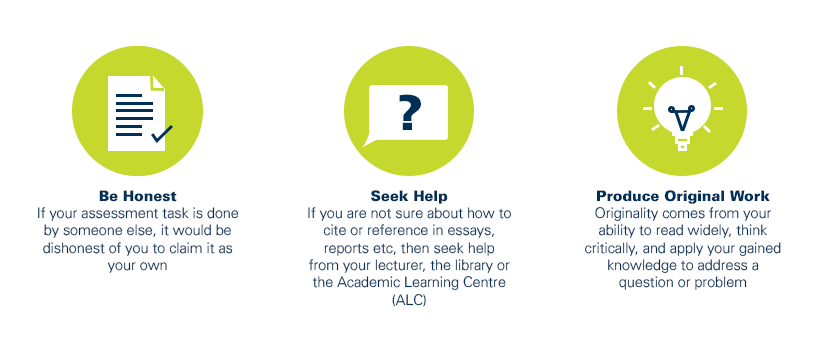
As a CQUniversity student you are expected to act honestly in all aspects of your academic work.
Any assessable work undertaken or submitted for review or assessment must be your own work. Assessable work is any type of work you do to meet the assessment requirements in the unit, including draft work submitted for review and feedback and final work to be assessed.
When you use the ideas, words or data of others in your assessment, you must thoroughly and clearly acknowledge the source of this information by using the correct referencing style for your unit. Using others’ work without proper acknowledgement may be considered a form of intellectual dishonesty.
Participating honestly, respectfully, responsibly, and fairly in your university study ensures the CQUniversity qualification you earn will be valued as a true indication of your individual academic achievement and will continue to receive the respect and recognition it deserves.
As a student, you are responsible for reading and following CQUniversity’s policies, including the Student Academic Integrity Policy and Procedure. This policy sets out CQUniversity’s expectations of you to act with integrity, examples of academic integrity breaches to avoid, the processes used to address alleged breaches of academic integrity, and potential penalties.
What is a breach of academic integrity?
A breach of academic integrity includes but is not limited to plagiarism, self-plagiarism, collusion, cheating, contract cheating, and academic misconduct. The Student Academic Integrity Policy and Procedure defines what these terms mean and gives examples.
Why is academic integrity important?
A breach of academic integrity may result in one or more penalties, including suspension or even expulsion from the University. It can also have negative implications for student visas and future enrolment at CQUniversity or elsewhere. Students who engage in contract cheating also risk being blackmailed by contract cheating services.
Where can I get assistance?
For academic advice and guidance, the Academic Learning Centre (ALC) can support you in becoming confident in completing assessments with integrity and of high standard.
What can you do to act with integrity?