Overview
You will engage with the national policy landscape to understand how it is both responsive to contemporary issues facing young children and their families in the 21st century and aspirational, articulating goals for the future. You will analyse policy texts that focus on strategies for providing equitable access to high quality education and care for children with special needs and their families. You will articulate how policies reflect the values and agendas of government, contemporary research/reports, beliefs about children and childhood and expectations for how early childhood services and educators contribute to implementing policy that addresses disadvantage and builds a democratic, equitable and just society. Central to this unit is an understanding of the social construction of childhood, of the educator and of what is valued for children in the 21st century. You will explicate and analyse the dominant images and constructions of children and childhood that are evident in policy texts and policy discourse and derive implications of policy for practice and ethical considerations and responsibilities.
Details
Pre-requisites or Co-requisites
There are no requisites for this unit.
Important note: Students enrolled in a subsequent unit who failed their pre-requisite unit, should drop the subsequent unit before the census date or within 10 working days of Fail grade notification. Students who do not drop the unit in this timeframe cannot later drop the unit without academic and financial liability. See details in the Assessment Policy and Procedure (Higher Education Coursework).
Offerings For Term 2 - 2026
Attendance Requirements
All on-campus students are expected to attend scheduled classes - in some units, these classes are identified as a mandatory (pass/fail) component and attendance is compulsory. International students, on a student visa, must maintain a full time study load and meet both attendance and academic progress requirements in each study period (satisfactory attendance for International students is defined as maintaining at least an 80% attendance record).
Recommended Student Time Commitment
Each 6-credit Undergraduate unit at CQUniversity requires an overall time commitment of an average of 12.5 hours of study per week, making a total of 150 hours for the unit.
Class Timetable
Assessment Overview
Assessment Grading
This is a graded unit: your overall grade will be calculated from the marks or grades for each assessment task, based on the relative weightings shown in the table above. You must obtain an overall mark for the unit of at least 50%, or an overall grade of 'pass' in order to pass the unit. If any 'pass/fail' tasks are shown in the table above they must also be completed successfully ('pass' grade). You must also meet any minimum mark requirements specified for a particular assessment task, as detailed in the 'assessment task' section (note that in some instances, the minimum mark for a task may be greater than 50%). Consult the University's Grades and Results Policy for more details of interim results and final grades.
All University policies are available on the CQUniversity Policy site.
You may wish to view these policies:
- Grades and Results Policy
- Assessment Policy and Procedure (Higher Education Coursework)
- Review of Grade Procedure
- Student Academic Integrity Policy and Procedure
- Academic Progression Policy and Procedure
- Student Refund and Credit Balance Policy and Procedure
- Complaints Policy and Procedure
- Information and Communications Technology Acceptable Use Policy and Procedure
This list is not an exhaustive list of all University policies. The full list of University policies are available on the CQUniversity Policy site.
Feedback, Recommendations and Responses
Every unit is reviewed for enhancement each year. At the most recent review, the following staff and student feedback items were identified and recommendations were made.
Feedback from Student evaluation
Communication
Continue to respond to emails in a prompt manner
- Access, evaluate and report on professional literature that supports the development of policy related to access and participation of children with special needs (including behaviour) in early childhood education and care services
- Explicate the contextual issues and underpinning social values that propelled the development of policy for young children with special educational needs
- Analyse the representation of children with special needs (including behaviour) in policy documents
- Engage with literature and professional ethics and responsibilities to reflect on stakeholder roles, implementation issues and implications for practice of policy in action
- Describe and discuss the implications for practice that are derived from the central concepts/values/principles embedded in the policy
- Justify the importance of strong partnerships between children, parents, carers and families, and the broader community in creating responsive and healthy early childhood environments and contributing to sustainable futures
- Identify and implement strategies to facilitate child participation in building a sustainable, democratic, equitable and just society and critically reflect on the child’s perspective
Successful completion of this unit provides opportunities for students to engage with the Australian Professional Standards for Teachers (Graduate Career Stage) focus areas of:
1.1 Physical, social and intellectual development and characteristics of students
1.2 Understand how students learn
1.6 Strategies to support full participation of students with disability
3.7 Engage parents/carers in the educative process
4.1 Support student participation
4.3 Managing challenging behaviour
6.2 Engage in professional learning and improve practice
6.4 Apply professional learning and improve student learning
7.1 Meet professional ethics and responsibilities
7.2 Comply with legislative, administrative and organisational requirements
7.3 Engage with the parents/carers
 Additionally students build understandings required by the registering body for early childhood (ACECQA - Australian Children's Education and Care Quality Authority) including socially inclusive practice, ethical and professional practice and research.
Alignment of Assessment Tasks to Learning Outcomes
| Assessment Tasks | Learning Outcomes | ||||||
|---|---|---|---|---|---|---|---|
| 1 | 2 | 3 | 4 | 5 | 6 | 7 | |
| 1 - Written Assessment - 60% | |||||||
| 2 - Written Assessment - 40% | |||||||
Alignment of Graduate Attributes to Learning Outcomes
| Graduate Attributes | Learning Outcomes | ||||||
|---|---|---|---|---|---|---|---|
| 1 | 2 | 3 | 4 | 5 | 6 | 7 | |
| 1 - Communication | |||||||
| 2 - Problem Solving | |||||||
| 3 - Critical Thinking | |||||||
| 4 - Information Literacy | |||||||
| 5 - Team Work | |||||||
| 6 - Information Technology Competence | |||||||
| 7 - Cross Cultural Competence | |||||||
| 8 - Ethical practice | |||||||
| 9 - Social Innovation | |||||||
| 10 - First Nations Knowledges | |||||||
| 11 - Aboriginal and Torres Strait Islander Cultures | |||||||
Textbooks
There are no required textbooks.
IT Resources
- CQUniversity Student Email
- Internet
- Unit Website (Moodle)
All submissions for this unit must use the referencing style: American Psychological Association 7th Edition (APA 7th edition)
For further information, see the Assessment Tasks.
m.g.wyland@cqu.edu.au
Week 1: Unpacking Policy
Begin Date: 13 Jul 2026Module/Topic
- Key policies in Early Childhood Education
- Exploring Policy
- The changing policy context
- Sources of contemporary policy texts
- Evidence based approaches for specific needs and disabilities
Chapter
Please see the links on Moodle. A detailed reading list is provided.
Events and Submissions/Topic
- Introduction to the unit materials.
- Unpacking Assessment 1 and Assessment 2 requirements.
- Reviewing key ideas from weekly readings and core literature.
Week 2: Significant policies shaping the early childhood education context
Begin Date: 20 Jul 2026Module/Topic
- Melbourne Declaration (Education Council, 2008)
- Alice Springs (Mpartnwe) Declaration (Education Council, 2019)
- National Partnership Agreement on Early Childhood Education (Council of Australian Government [COAG], 2009)
- National Quality Framework (NQF) (ACECQA, 2018)
- Early Years Learning Framework (EYLF) (AGDE, 2022)
- Key messages, perspective, advocacy and agency for each policy
Chapter
Please see the links on Moodle. A detailed reading list is provided.
Events and Submissions/Topic
- Read each policy closely and identify the key messages, perspectives, advocacy positions, and implications for practice.
- Explore the purpose of each policy and the historical and contemporary influences that shaped it.
- Ask questions about the assessment requirements and discuss them in class or on the Q&A Moodle page.
Week 3: Social construction of childhood and interrogating dominant images of childhood
Begin Date: 27 Jul 2026Module/Topic
- Images of childhood
- Construction of childhood
- 'Normalised' practices and assumptions
- Outdoor play, nature play, risky play
- Natural environments and forest schools
- What is risky play and its importance
- Supervision and guidance
- Shifting notions of childhood
Chapter
Please see the links on Moodle. A detailed reading list is provided.
Events and Submissions/Topic
- Explore how childhood is socially constructed and examine dominant images of childhood.
- Question what childhood is and how it has been understood over time.
- Consider key historical perspectives and the sociology of childhood.
- Reflect on your own assumptions about childhood and what it means to be a child.
Week 4: Social construction of childhood and interrogating dominant images of childhood
Begin Date: 03 Aug 2026Module/Topic
- Childhood innocence
- Myths of childhood (view three videos on Moodle)
- Child as threat or monster
- Surveillance and control
Chapter
Please see the links on Moodle. A detailed reading list is provided.
Events and Submissions/Topic
- Discuss the image of the innocent child.
- Review portrayals of children as threats or “monsters”.
- Reflect on how significant policies construct and represent the child.
Week 5: Multiple perspectives of childhood
Begin Date: 10 Aug 2026Module/Topic
- Critically examining language in written policy and texts.
- Multiple perspectives of the dominant image of a child.
- How policy changes and the researchers' perspective
- The unspoken message in policy
- Inclusion as an Early Childhood Priority'
- International Influence on policy: The Reggio Emilia Approach
Chapter
Please see the links on Moodle. A detailed reading list is provided.
Events and Submissions/Topic
Revisit the significant policies from multiple perspectives to identify the dominant image of the child they promote. This will involve:
- Critically examining the language used in each policy.
- Considering perspectives from across the early childhood community, including children with disabilities and their families.
- Identifying and reflecting on the unspoken messages embedded in policy language.
Week 6: Stakeholders and pedagogical approaches
Begin Date: 17 Aug 2026Module/Topic
- Who are the stakeholders in the field of ECEC?
- The Government sector
- Early childhood sector organisations
- Families as important voices in the development of policy
- The pedagogical approaches in Australian early childhood settings
Chapter
Please see the links on Moodle. A detailed reading list is provided.
Events and Submissions/Topic
- Identify the stakeholders involved in policy creation and recognise whose voices are unheard or underrepresented.
- Analyse how stakeholder perspectives appear or are missing in policy.
- Evaluate the influence of these stakeholders on pedagogical approaches in early childhood education and care.
Vacation Week
Begin Date: 24 Aug 2026Module/Topic
Chapter
Events and Submissions/Topic
Week 7: Understanding community professional networks regarding policy
Begin Date: 31 Aug 2026Module/Topic
- Community expectations and needs
- Holistic approach to Early Childhood Education and Care
- Professional Community Networks
- Readings to support the need for supportive Early Childhood Services Networks
Chapter
Please see the links on Moodle. A detailed reading list is provided.
Events and Submissions/Topic
Assessment 1: Policy Analysis Task Description
Due: Friday 4th September 11.45pm AEST
Word Count: 2000 words
Level 2 GEN AI Planning is permitted for this assessment
Weighting: 60%
A 72-hour grace period is available after the assessment due date to support students who experience unexpected difficulties that prevent them from submitting on time.
Policy Analysis Due: Week 7 Friday (4 Sept 2026) 11:45 pm AEST
Week 8: Teacher action research
Begin Date: 07 Sep 2026Module/Topic
- Teacher agency and teacher research
- The value of teacher research
- The cycle of inquiry
- Empowering and advocacy
Chapter
Please see the links on Moodle. A detailed reading list is provided.
Events and Submissions/Topic
Engage with teacher research to understand how early childhood educators contribute to the professional body of knowledge and reclaim their role as experts in the field.
Examine how teacher research strengthens teacher agency and increases educators’ influence on policy affecting early childhood education.
This will involve:
- Exploring teacher agency and the role of research.
- Recognising the value and impact of teacher‑led research.
- Applying the cycle of inquiry.
- Considering how research empowers teachers and supports advocacy.
Week 9: Using a critical lens to examine policy
Begin Date: 14 Sep 2026Module/Topic
- What is a critical lens?
- Reader response lens and socio-economi lens
- Diverse abilities lens and political lens
Chapter
Please see the links on Moodle. A detailed reading list is provided.
Events and Submissions/Topic
Analyse centre‑based policies through a critical lens to understand their impact on children, parents, carers, families, and the broader community.
Evaluate how policy creates opportunities for stakeholders to collaborate in building sustainable, responsive learning environments that uphold children’s needs and rights.
This will involve viewing policy through:
- A reader‑response lens
- A socio‑economic lens
- A diverse‑abilities lens
- A political lens
Week 10: Building and sustaining community partnerships
Begin Date: 21 Sep 2026Module/Topic
- Families as partners
- Services for children and their families
- Building community partnerships
Chapter
Please see the links on Moodle. A detailed reading list is provided.
Events and Submissions/Topic
Explore the benefits of building and sustaining community partnerships, recognising parents and families as children’s first teachers (MCEETYA, 2008).
Examine how educators can foster a strong sense of community by working collaboratively with families and the wider community. Evaluate how sustainable partnerships enhance learning experiences and support young children’s rights and wellbeing.
This will involve:
- Considering parents and families as genuine partners.
- Discussing how services can be designed to support children and their families.
- Developing educator agency for building sustainable community partnerships.
Week 11: Implications for children
Begin Date: 28 Sep 2026Module/Topic
- The child's view of teaching and care practices
- Evaluating how policy empowers and engages children
- Responding to the child's needs and rights
Chapter
Please see the links on Moodle. A detailed reading list is provided.
Events and Submissions/Topic
Explore what the policy means for children, how it supports their empowerment, and whether it upholds their needs and rights.
This includes:
- Considering the child’s perspective and how they might experience the teaching and care practices described in the policy.
- Identifying how the policy empowers children, gives them a voice, and involves them in decision‑making.
- Evaluating whether the policy and everyday practices meet children’s needs and uphold their rights.
Week 12: Policy as advocacy for children's rights
Begin Date: 05 Oct 2026Module/Topic
- Current state of play
- Collaborative advocacy and action
- Influencing policy through advocacy and action
Chapter
Please see the links on Moodle. A detailed reading list is provided.
Events and Submissions/Topic
Assessment 2: Research Centre-Based Policy and Procedure
Due Date: Friday 9th October 2026 11.45pm AEST
A 72-hour grace period is available after the assessment due date to support students who experience unexpected difficulties that prevent them from submitting on time.
Level 2 GEN AI Planning is permitted for this assessment.
Weighting: 40%
Word count: 2000-2500 words.
Referencing Style: American Psychological Association (7th Edition)
Research Centre-Based Policy and Procedure Due: Week 12 Friday (9 Oct 2026) 11:45 pm AEST
Exam Week
Begin Date: 12 Oct 2026Module/Topic
Chapter
Events and Submissions/Topic
Vacation/Exam Week
Begin Date: 19 Oct 2026Module/Topic
Chapter
Events and Submissions/Topic
1 Written Assessment
Level 2 AI Planning is permitted for this task.
Government policy is underpinned by a commitment to providing equitable access to high-quality education that is free from discrimination for all children, including those with special needs and/or disabilities. Further to this, the goals of the Alice Springs (Mparntwe) Declaration commit to encouraging children themselves and parents, carers, families and the broader community to hold high expectations for improving educational outcomes and reducing the effect of disadvantage caused by disability. You are required to select an early childhood policy that contributes to improving outcomes for children with special educational needs, including children with disability and complete your analysis. Suitable policies for this task may include:
Early Years Learning Framework;
QKLG – QLD Kindergarten Learning Guideline;
National Quality Standard.
The analysis is 2000 words and will explicate and discuss the following:
- the history of the policy
- the values and beliefs privileged in the policy
- justifications for policy implementation
- dominant images evident in the policy
- whose interests are privileged and or silenced in the policy
- key stakeholder roles for policy implementation
- accountability measures for implementation
- management of implementation and accountability
- ethical considerations
- implications for practice including strategies for inclusion and participation of young children with special needs and/or disabilities in mainstream settings
Week 7 Friday (4 Sept 2026) 11:45 pm AEST
72-hour grace period applies to the submission of this assessment.
Week 9 Friday (18 Sept 2026)
Assessment Criteria:
Criterion 1:
Access and evaluate an early childhood policy describing: The historical social values and contextual issues that have shaped the policy related to access and participation of children with special needs; in addition to the underpinning legislative requirements and the resulting dominant images of children with special needs.
Criterion 2:
Examine policy to identify and discuss:
Whose values, beliefs and interests are privileged and silenced; how these are used to justify the policy implementation and any research of how students learn and this informs the implications for teaching (Australian Professional Standards for Teachers 1.2).
Criterion 3:
Reflect upon and consider the professional ethics related to the policy in terms of:
The role stakeholders play in practicing the key principles described in the codes of ethics and conduct; including the application of accountability measures (Australian Professional Standards for Teachers 7.1).
Criterion 4:
Develop and recommend implications for practice:
Based on the knowledge and understanding of the physical, social, and intellectual development of students (Australian Professional Standards for Teachers 1.1); that includes strategies for involving parents/carers in the educative process (Australian Professional Standards for Teachers 3.7) and strategies for inclusion, differentiation and participation of young children with special needs and/or disability in mainstream settings (Australian Professional Standards for Teachers 1.2, 1.6).
Criterion 5:
Academic detail:
Student presents information in accordance with accepted academic conventions including spelling, grammar, paragraphing and accurate use of APA style and APA referencing.
Referencing Style: American Psychological Association (7th Edition)
Submission: Online
- Learning Outcomes Assessed:
1. Access, evaluate, and report on professional literature that supports the development of policy related to access and participation of children with special needs in early childhood education and care services
2. Explicate the contextual issues and underpinning social values that propelled the development of policy for young children with special educational needs
3. Analyse the representation of children with special needs in policy documents
4. Engage with literature and professional ethics and responsibilities to reflect on stakeholder roles, implementation issues, and implications for the practice of policy in action
5. Describe and discuss the implications for practice that are derived from the central concepts/values/principles embedded in the policy
- Access, evaluate and report on professional literature that supports the development of policy related to access and participation of children with special needs (including behaviour) in early childhood education and care services
- Explicate the contextual issues and underpinning social values that propelled the development of policy for young children with special educational needs
- Analyse the representation of children with special needs (including behaviour) in policy documents
- Engage with literature and professional ethics and responsibilities to reflect on stakeholder roles, implementation issues and implications for practice of policy in action
- Describe and discuss the implications for practice that are derived from the central concepts/values/principles embedded in the policy
2 Written Assessment
Level 2 AI Planning is permitted for this assessment task.
You are required to access a policy and procedure document from an early childhood education and care service that contributes to improving outcomes for children with special educational needs, including children with disabilities; and investigate the role professional literature, ethics, and stakeholders played in the policy development. You will analyse the policy, and accompanying procedural document if applicable, to identify and describe the central concepts/values/principles embedded in the policy.
In addition to this, you will interview an early childhood teacher from that service about their understanding of the policy, any implementation issues and implications for practice, not only for early childhood professionals, but also for children, parents, carers, families, and the broader community. Guiding questions for the interview are:
- What role did professional literature, ethics, research and the various stakeholders play in policy development?
- What key messages from the policy document influence your practices in implementing inclusive practices to support student participation and engagement in the classroom activities?
- How did you learn about the policy and the implications for your teaching practice and work with families?
- How does the policy and procedural document support your work with students with special needs and their families?
You will describe the teacher's understanding and implementation of the policy and begin to draw conclusions about the ways in which the policy values children's empowerment and engages them, their families and communities in creating a sustainable learning environment that is responsive to the child's needs and rights.
Finally, you will develop recommendations for policy review drawing on the central concepts of agency, democracy, social and cultural responsiveness, equity and respect for diversity.
Week 12 Friday (9 Oct 2026) 11:45 pm AEST
72-hour grace period applies to the submission of this assessment.
Vacation/Exam Week Friday (23 Oct 2026)
Assessment Criteria:
Criterion 1: Analyse the organizational inclusion/special needs policy; Provide insights related to the role professional literature, ethics and stakeholders played in the policy development; Identify the central concepts / values /principles embedded within the policy, and the influence this has in supporting inclusive student participation and engagement in classroom activities (APST 4.1); Identify connections between the relevant legislative, administrative and organisational policies and processes required for teachers (APST 7.2)
Criterion 2: Examine the procedures derived from the policy; explores implementation issues and implications for relevant and appropriate sources of professional learning for teachers (APST 6.2) to inform and support the development of effective partnerships with families which are sensitive and confidential (APST 7.3);
Criterion 3: Research teacher understanding of policy; identify the impact on children, parents, carers, families and the broader community, and the opportunities for these stakeholders to work together to create a sustainable learning environment that is responsive to the child’s needs and rights.
Criterion 4: Develop recommendations for policy review which include strategies to facilitate child participation in building a sustainable, democratic, equitable and just society and critically reflect on the child’s perspective; A broad range of strategies for involving parents/carers in the educative process (APST 3.7); a rationale for continued professional learning and the implications for improved student learning (APST 6.4).
Criterion 5: Academic detail; Student presents information in accordance with accepted academic conventions including spelling, grammar, paragraphing and accurate use of APA formatting and APA referencing.
Submission: Online
Referencing Style: American Psychological Association (7th Edition)
Level 2 AI planning is permitted for this submission.
Learning Outcomes
Assessed:
- Engage with literature and professional ethics and responsibilities to reflect on stakeholder roles, implementation issues and implications for practice of policy in action
- Describe and discuss the implications for practice that are derived from the central concepts/values/principles embedded in the policy
- Justify the importance of strong partnerships between children, parents, carers and families, and the broader community in creating responsive and healthy early childhood environments and contributing to sustainable futures
- Identify and implement strategies to facilitate child participation in building a sustainable, democratic, equitable and just society and critically reflect on the child’s perspective
- Engage with literature and professional ethics and responsibilities to reflect on stakeholder roles, implementation issues and implications for practice of policy in action
- Describe and discuss the implications for practice that are derived from the central concepts/values/principles embedded in the policy
- Justify the importance of strong partnerships between children, parents, carers and families, and the broader community in creating responsive and healthy early childhood environments and contributing to sustainable futures
- Identify and implement strategies to facilitate child participation in building a sustainable, democratic, equitable and just society and critically reflect on the child’s perspective
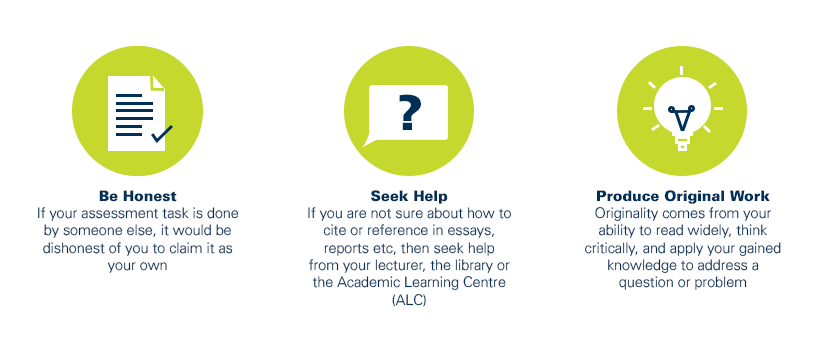
As a CQUniversity student you are expected to act honestly in all aspects of your academic work.
Any assessable work undertaken or submitted for review or assessment must be your own work. Assessable work is any type of work you do to meet the assessment requirements in the unit, including draft work submitted for review and feedback and final work to be assessed.
When you use the ideas, words or data of others in your assessment, you must thoroughly and clearly acknowledge the source of this information by using the correct referencing style for your unit. Using others’ work without proper acknowledgement may be considered a form of intellectual dishonesty.
Participating honestly, respectfully, responsibly, and fairly in your university study ensures the CQUniversity qualification you earn will be valued as a true indication of your individual academic achievement and will continue to receive the respect and recognition it deserves.
As a student, you are responsible for reading and following CQUniversity’s policies, including the Student Academic Integrity Policy and Procedure. This policy sets out CQUniversity’s expectations of you to act with integrity, examples of academic integrity breaches to avoid, the processes used to address alleged breaches of academic integrity, and potential penalties.
What is a breach of academic integrity?
A breach of academic integrity includes but is not limited to plagiarism, self-plagiarism, collusion, cheating, contract cheating, and academic misconduct. The Student Academic Integrity Policy and Procedure defines what these terms mean and gives examples.
Why is academic integrity important?
A breach of academic integrity may result in one or more penalties, including suspension or even expulsion from the University. It can also have negative implications for student visas and future enrolment at CQUniversity or elsewhere. Students who engage in contract cheating also risk being blackmailed by contract cheating services.
Where can I get assistance?
For academic advice and guidance, the Academic Learning Centre (ALC) can support you in becoming confident in completing assessments with integrity and of high standard.
What can you do to act with integrity?